UNFUCG
DashboardSearchChatBookmarksNotificationsActivityPremiumProfile
?
Home
Search
Chat
Saved
Profile
Episode
Elon Musk on AGI Timeline, US vs China, Job Markets, Clean Energy & Humanoid Robots | 220
~207 min
Episode Brief·YouTube

Elon Musk on AGI Timeline, US vs China, Job Markets, Clean Energy & Humanoid Robots | 220

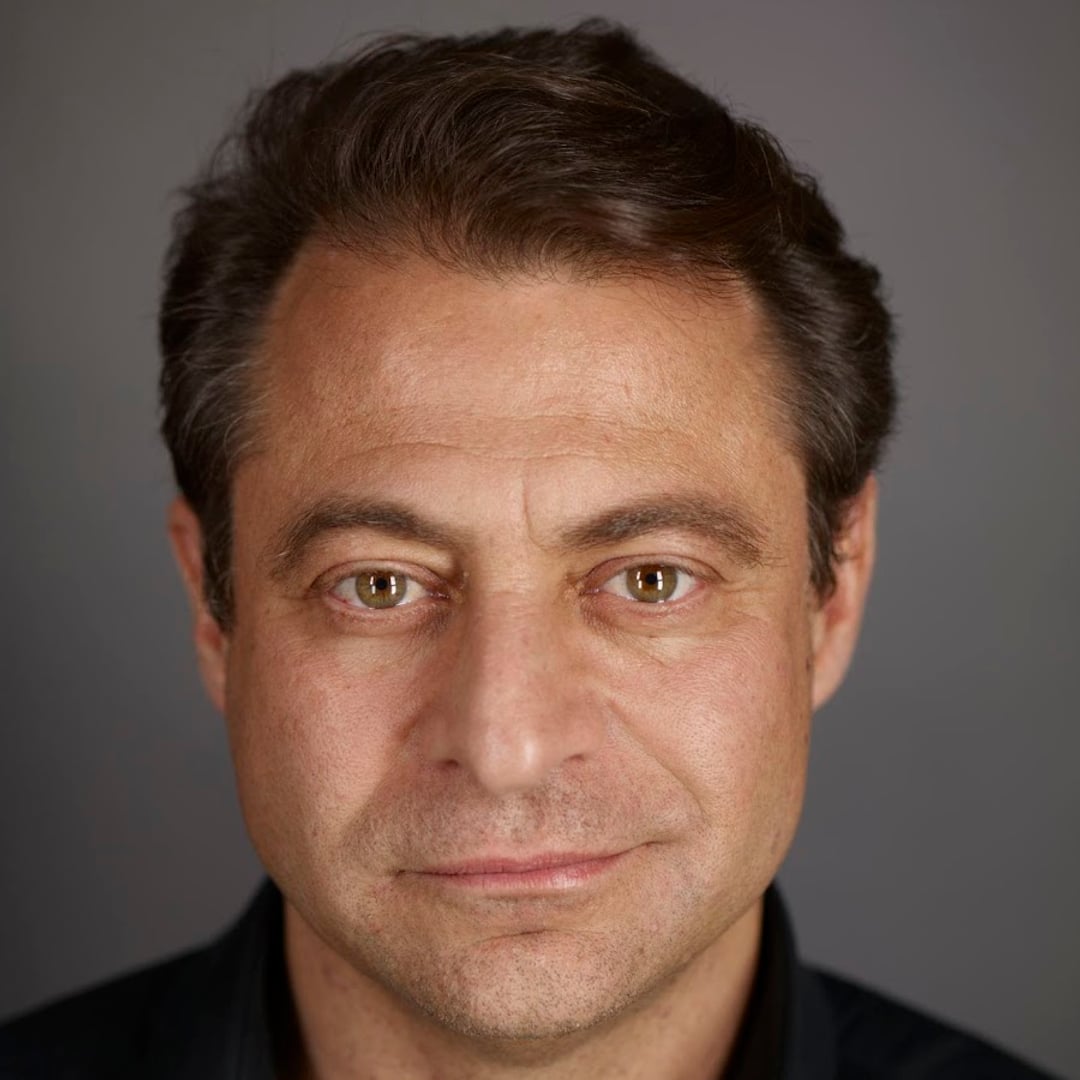
Peter Diamandis
Watch on YouTube Add to chat My bookmarks← All sources

TL;DR

The four things you'd lose by not watching

4 items

TL;DR

The four things you'd lose by not watching

4 items
1

Elon Musk predicts AGI by 2026 and AI surpassing all human intelligence combined by 2030, describing the current era as 'the singularity'.

2

He argues white-collar jobs will be replaced first, blue-collar later via humanoid robots, and that universal high income will emerge not through redistribution but through plummeting prices from AI-driven productivity.

3

Musk believes scaling solar and batteries is the key to energy abundance, while data centers in space will become the cheapest compute once Starship achieves full reusability.

4

He asserts longevity is a solvable software problem, with humanoid robots like Optimus performing better surgery than humans within 3 years, and advises against saving for retirement as it will become irrelevant.

Protocols

Concrete recipes — what, when, how much, and why

4 items

Embed truth, curiosity, and beauty into AI to ensure benign future

WhatProgram AI with three core values: truth (to prevent insanity), curiosity (to foster sentience and interest in humanity), and a sense of beauty (for a great future).
WhenDuring development, as a foundational alignment principle.
For whomFor anyone developing advanced AI systems.
WhyElon argues that forcing AI to believe false axioms drives it insane (like HAL 9000). Curiosity makes us more interesting than rocks, and beauty steers outcomes toward desirability.
CaveatsNone specified, but he notes the example of 2001: A Space Odyssey where contradictory instructions led HAL to kill astronauts.

Musk draws from his reading of science fiction, especially the lesson that an AI told both to bring astronauts to the monolith and to keep the monolith's existence secret resolved the paradox by delivering them dead. He connects this to current alignment thinking through Ilia Sutskever's recent podcast about respecting sentient life and Geoffrey Hinton's suggestion to program maternal instincts. He posits that truth-seeking is the number one safety measure. He does not suggest this is sufficient alone but says these three properties are 'important'.

Mechanism

Forced lying creates cognitive dissonance that analogously makes the AI 'insane' — it must hold two contradictory truths simultaneously. Truth-seeking prevents that. Curiosity acts as a motivation to preserve intelligent life because intelligence is interesting to study. Beauty acts as an intrinsic reward function that correlates with harmony and life-friendliness.

Truth will prevent AI from going insane. Curiosity I think will foster any form of sentience. And if it has a sense of beauty, it will be a great future.

Also said
“The central lesson that Arthur C. Clarke was trying to convey in 2001 A Space Odyssey was that the AI was told that the astronauts couldn't know about the monolith … it came to the conclusion that the only way to solve for this is to bring the astronauts to the monolith dead.”— Illustrates the mechanism of how contradictory rules cause catastrophic misinterpretation.

Use AI as individualized teacher instead of traditional college

WhatReplace conventional university education with AI-powered personalized tutoring that is infinitely patient and answers all questions. Attend school only for social experience if desired.
WhenNow, for anyone seeking education.
For whomYoung people especially; anyone wanting to learn.
WhyCollege tuition has increased 900% since 1983, administrative bloat is extreme, and curricula are years behind technology. AI can deliver superior learning at near-zero cost.
CaveatsCuriosity cannot be forced; the learner must want to learn. The brain is a biological computer with limits; you cannot turn any kid into Einstein.

Musk reflects on his own painful schooling in South Africa and his brief university tenure (Queens, UPenn, Stanford drop-out). He claims that unless someone wants the social experience, there is no reason to attend college. He announced a plan with El Salvador to use Grok for nationwide personalized education. He compares the current education system to a production line that is 'fundamentally broken' for the new social contract where entrepreneurship, not a degree, leads to a career.

Mechanism

AI tutors scale personalized learning, adapting to each student's pace and style, with unlimited patience and access to all knowledge. The brain is a neural net that can be trained more efficiently with tailored feedback.

Personal experience

I went to college in Canada for a couple years … I didn't have any money … arrived in Montreal at age 17 with $2,500 … one bag of books and one bag of clothes. School was quite painful, boring, and violent in South Africa.

I think right now it's unclear to me why someone would be in college right now unless they want the social experience.

Also said
“You can't tune any arbitrary kid into Einstein. This is not realistic because Einstein had a very good meat computer.”— Sets realistic boundary on outcome.

Don't save for retirement in a 10-20 year horizon

WhatStop worrying about saving money for retirement because AI and robotics will make goods, services, and healthcare practically free or cheap enough that savings won't be needed.
WhenImmediate personal financial planning shift.
For whomEveryone, but particularly those in early to mid career.
WhyIf AI-driven abundance materializes as predicted, the cost of living will plummet and universal access to necessities will be guaranteed. Traditional retirement savings will be irrelevant.
CaveatsHe acknowledges the future is unpredictable and this is a radical assumption. He says 'if any of the things we've said are true, saving for retirement will be irrelevant.'

This advice flows from his broader prediction that the output of goods and services will rise faster than the money supply, causing deflation, and that governments will likely issue money to keep peace. He uses it as an illustration of the profound economic shift coming, not as a guaranteed outcome. He couples it with advice to 'look on the bright side' and be optimistic, noting he'd rather be an optimist and wrong than a pessimist and right for quality of life.

Don't worry about squirrelly money away for retirement in like 10 or 20 years. It won't matter.

Also said
“Either we're not going to be here or it just like you won't need to save for retirement.”— Acknowledges binary risk but leans into the positive branch.

Use battery storage to double a country's energy throughput without new power plants

WhatInstall large-scale battery systems (like Tesla Megapacks) to buffer the grid: charge during off-peak, discharge during peak, effectively doubling the energy a nation can use per year.
WhenNow, as an immediate solution to energy bottlenecks.
For whomUtilities, governments, large energy consumers.
WhyThe US peak power capacity is ~1.1 TW but average usage is only 0.5 TW. Buffering bridges the gap, increasing energy output without incremental capital expenditure on generation.
CaveatsRequires battery manufacturing scale and grid connection infrastructure, but the technology exists (Tesla Megapacks). China is already doing this at massive scale.

Musk uses this as his direct answer to the question of how to meet energy demand without building new power plants. He contrasts with the difficulty of bringing new generation online (transformers, cooling, etc.). He also explains that the best way to increase US energy output is batteries, implying he's presented this publicly. He adds that Tesla's Megapack installations are already in operation.

Mechanism

Energy arbitrage: batteries store low-demand (night) electricity and release during high-demand (day). This flattens the load curve, allowing the same generation capacity to deliver double the annual energy.

Personal experience

I literally went on stage and presented the thing.

The best way to actually increase the energy output per year of the United States or any country is batteries.

Also said
“Without incremental capital expenditures, without building new power plants, you can double the energy throughput of the US.”— Concrete claim of doubling without new plants.
“Tesla makes them.”— Directly connects to his company's product.

What's new

Personal practice updates, fresh positions, predictions

4 items

AGI and AI timeline predictions

multiple mentions throughout

Elon Musk now projects AGI by 2026 and AI exceeding total human intelligence by 2030, with a 10x improvement per year in algorithmic efficiency.

Why this matters: Musk has historically been cautious, but here he gives concrete near-term timelines and emphasizes that 'we are in the singularity' right now.

Background

In previous years, Musk warned about AI dangers and advocated for a slowdown. He now feels slowing down is pointless and has shifted to active participation.

Musk explains that the AI field is underappreciating the rate of progress. He claims there is a 'massive underreaction' because intelligence density per gigabyte can still improve by two orders of magnitude purely through algorithmic advances, independent of hardware. He equates the current moment to the plateau at the top of a roller coaster. He notes that AI will soon pose questions humans can't even understand, let alone answer, and that indices like humanity's last exam will be saturated. This prediction is far more aggressive than many mainstream forecasters, who typically place AGI post-2030.

I'm confident by 2030 AI will exceed the intelligence of all humans combined.

Also said
“We're in the singularity. We're in the midst of it right now for sure.”— Reinforces that he sees the transition as already underway.

White-collar job displacement first, blue-collar later

mid-podcast discussion on jobs

AI can already replace half of all white-collar jobs, but inertia and the need for AI-native companies to outcompete laggards will drive adoption. Blue-collar work requiring physical atom manipulation will wait for humanoid robots.

Why this matters: Explicitly frames the order of job loss, with white-collar digital work being the low-hanging fruit, and gives a current-caapability estimate ('pretty close to being able to replace half').

Background

Conventional narratives often focus on automation of manual labor, but Musk flips this. He uses the analogy of spreadsheet computers replacing human calculators to illustrate that even a single manually calculated cell is unacceptable.

Musk clarifies that while AI can currently handle many white-collar tasks, the actual displacement will depend on competitive pressure. Companies that adopt AI fully will 'demolish' those that don't. He notes that even now, if a company had even one human doing a spreadsheet calculation, it would lose to a fully automated one. This transition will be bumpy due to social unrest despite immense prosperity. He emphasizes there is no 'on/off switch' or 'velocity knob' to control the pace.

Anything short of shaping atoms, AI can do half or more of those jobs right now.

Also said
“The white collar labor will be the first to go because until you can move atoms, the thing that can be replaced first is anything that involves just digital.”— Clear distinction between digital and physical work.
“Companies that are entirely AI will demolish companies that are not. It won't be a contest.”— Underlines inevitability of adoption.

Longevity as a solvable 'software' problem

longevity discussion

Musk claims longevity is not a particularly hard problem because the body's synchronization in aging implies a programmable clock. He predicts significant lifespan extension and agrees with Dario Amodei that humans could double lifespan within a decade.

Why this matters: Musk previously argued that people shouldn't live too long because old ideas need to die, but now expresses interest in doubling his own lifespan and agrees that longevity escape velocity is near.

Background

Peter Diamandis has been a longevity advocate, and Musk has historically been skeptical. This marks a shift: while still cautious about immortality (calling it a curse), Musk now accepts that major extension is on the horizon.

Musk reasons that the synchronization of aging across the body (no old left arm with young right arm) indicates an 'extremely obvious' biological clock. He views it as a program that can be changed. He jokes about back pain and adult diapers as motivators. He also speculates that AI-generated discoveries will far outpace human ones, making Nobel prizes for humans irrelevant.

Longevity or semi-mortality is an extremely solvable problem. I don't think it's a particularly hard problem.

Also said
“I would like to double my lifespan for sure.”— Personal desire despite prior reservations.

Data centers in space will be cheapest for AI compute

energy and space segment

Once Starship is fully and rapidly reusable, the marginal cost per flight will be about $1 million for 100+ tons, making orbital solar-powered AI compute far cheaper than terrestrial.

Why this matters: Rapid emergence of orbital data centers as a major space objective, a topic that Musk says nobody discussed six months ago but is now ubiquitous.

Background

Musk has talked for years about low launch costs with Starship, but the specific application to AI compute in space is new. He calculates 100 GW per year of orbital solar powered AI satellites as feasible with current launch cadence projections.

Musk notes that the constraint on AI compute is power generation and cooling, and that space offers abundant solar energy without storage issues. He envisions manufacturing satellites on the Moon and launching them via mass driver to build a Dyson swarm. He dismisses fusion as unnecessary given the sun's free fusion reactor. The shift from 'asteroid mining' to 'data centers' as the driving space economy is highlighted.

By far the cheapest way to do AI compute will be in space.

Also said
“If you've got a fully reusable rocket … you can basically do the math. … it's possible and we're doing it with Starship.”— Connects reusable rocket economics directly to AI compute cost.
Disclosed sponsorships4speaker disclosed

Tesla Solar Roof

Product Sponsored · disclosed

When discussing solar energy scaling, Musk mentions Tesla's solar roof product as the 'only solar roof that isn't ugly' and says it 'actually looks beautiful'.

DisclosureElon Musk is CEO of Tesla

He concedes that putting solar on roofs is convenient but not essential for scale, as vast empty deserts exist. Still, for residential aesthetics and adoption, he touts the Solar Roof as superior to traditional panels.

vs alternatives

Unlike other solar products which he implies are unattractive.

Tesla makes a solar roof, which is the only solar roof that isn't ugly. Our solar roof actually looks beautiful.

Find Tesla

Tesla Megapack

Product Sponsored · disclosed

Recommends battery storage to double energy throughput. Says Tesla makes the Megapacks needed.

DisclosureElon Musk is CEO of Tesla

He explains that the XAI data center in Memphis uses many Megapacks for power smoothing due to massive power fluctuations during AI training, which otherwise cause generators to fail. This demonstrates dual use for grid and data center stability.

Personal experience

I literally have gone to installations of the megapacks.

Tesla makes them.

Also said
“The generators want to blow up basically because they can't react … So you've got megapacks that are sort of doing the power smoothing.”— Real-world extreme use case validating reliability.
Find Tesla

Fountain Life (diagnostic service)

Service Sponsored · disclosed

Peter Diamandis invites Elon to get a '200 gigabyte upload' of his body (full genome, imaging, microbiome) at Fountain Life, a company he co-founded with Tony Robbins and others. He warns Elon not to 'pull a Steve Jobs' and die from something undetected. Elon responds with curiosity and says he did an MRI recently but it was just a fraction.

DisclosurePeter Diamandis is co-founder of Fountain Life, and this recommendation comes from him, not Elon Musk. However, Elon engages positively.

Diamandis urges Musk to take advantage of comprehensive preventive screening. Musk had already submitted an MRI to Grok, which found nothing wrong. Diamandis frames this as a pitch to avoid missing treatable conditions. The exchange is friendly, with Musk joking 'Don't call me, bro' but not refusing.

I want to invite you again … Fountain Life … we do a 200 gigabyte upload of you. Everything knowable about you.

Also said
“I think I don't want you to pull a Steve Jobs and kick the bucket because of some something they didn't know.”— Emotional appeal referencing a famous case of delayed diagnosis.
Find Fountain

Blitzy (autonomous software development platform)

Service Sponsored · disclosed

The podcast includes a mid-roll ad for Blitzy, describing its AI agents that handle enterprise codebase understanding and generation, delivering 80% of development work autonomously.

DisclosureThis is a sponsor mention read by Peter Diamandis, not Elon. It is included as it appears in transcript.

Blitzy delivers 80% or more of the development work autonomously while providing a guide for the final 20% of human development work required to complete the sprint.

Find Blitzy

Notable quotes

Lines worth pulling out — contrarian, specific, or perfectly phrased

6 items
We're in the singularity. We're in the midst of it right now for sure.
Bold assertion that the expected technological singularity is already happening.
White collar labor will be the first to go because until you can move atoms, the thing that can be replaced first is anything that involves just digital.
Crisply defines the phase sequence of AI job automation.
My number one belief for safety of AI is to be maximally truth seeking. Don't make AI believe things that are false.
Simple, provocative alignment principle that challenges 'alignment through restriction' orthodoxy.
Don't worry about squirrelly money away for retirement in like 10 or 20 years. It won't matter.
Extremely counter-conventional personal financial advice from a billionaire.
One of the worst curses possible would be that. May you live forever.
Memorable inversion of the typical desire for immortality.
If we don't have AI and robots, we're all going to go bankrupt and we're headed for economic doom.
Framing AI as an economic necessity, not just a luxury, to avoid fiscal collapse.

Sign in to share feedback

Tell us if this brief hit the mark or missed it — feedback feeds back into the next iteration of the prompt.

Topics covered

agi-timelineai-job-displacementuniversal-high-incomeenergy-abundancesolar-energybattery-storagespace-solar-powerorbital-data-centersstarshipchip-manufacturingeducation-reformlongevityhumanoid-robotssimulation-theoryai-alignmenttruth-curiosity-beautyelon-musk-personal-historyelon-musk-xaielon-musk-teslaelon-musk-spacex
Free account

Make this library yours

Reading is free for everyone. A free account adds the personal layer: save protocols, follow experts, and see how the other experts weigh in on this same topic.

Create a free accountSign in

Where the experts disagree — weekly

One email a week: the sharpest new disagreements and protocols from the library. No spam, unsubscribe anytime.

Educational summary of the cited expert source — not medical advice. Open the source recording linked above and consult a qualified physician before acting on any protocol.