
UNFUCG
DashboardSearchChatBookmarksNotificationsActivityPremiumProfile
?
Home
Search
Chat
Saved
Profile
Episode
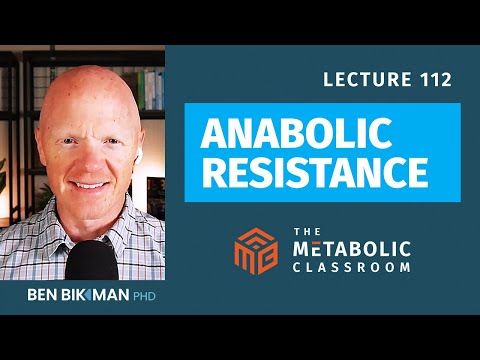
112: The Link Between Muscle Loss, Aging and Obesity: Anabolic Resistance Explained w/Dr. Ben Bikman
~34 min
Episode Brief·YouTube

112: The Link Between Muscle Loss, Aging and Obesity: Anabolic Resistance Explained w/Dr. Ben Bikman

Ben Bikman
Watch on YouTube Add to chat My bookmarks← All sources

TL;DR

The four things you'd lose by not watching

4 items

TL;DR

The four things you'd lose by not watching

4 items
1

Anabolic resistance—blunted muscle protein synthesis in response to protein and exercise—drives sarcopenia, hiking all-cause mortality 20–30%, a risk that dwarfs LDL cholesterol.

2

Aging and obesity independently trigger anabolic resistance through hormonal decline, inflammation, and impaired insulin-mediated nutrient delivery; older adults need ~3–4 g leucine per meal (double the young) and must rely on animal protein to overcome the deficit.

3

Resistance training is the single most potent anabolic stimulus; a recent RCT showed combining whey/casein, creatine, vitamin D, calcium, and omega-3 improved lean mass and strength in older obese individuals.

4

The 2024 Van Loon study proved that a vegan meal matched for calories and protein yields significantly lower muscle protein synthesis than an omnivorous meal in older adults—cementing that plant proteins are inadequate for overcoming anabolic resistance.

Protocols

Concrete recipes — what, when, how much, and why

5 items

High-intensity (relative) resistance training to reverse anabolic resistance

WhatRegular resistance exercise—body weight, calisthenics, or weight lifting—performed at a high intensity relative to your current ability.
WhenThroughout life, with emphasis on consistency; no specific frequency given.
DoseNot specifed; emphasis on 'relative' effort: enough volume/intensity to challenge muscles within your current capacity.
For whomEveryone, particularly older adults and those with obesity-induced anabolic resistance.
WhyMechanical loading is the strongest activator of the mTor pathway, restoring muscle protein synthesis even in the elderly; diet alone is insufficient.
CaveatsMust be relative to current strength, not compared to younger self; proper form to avoid injury.

Dr. Bikman stressed that resistance training is the single most potent anabolic stimulus, outranking any dietary change. He referenced bed rest studies showing rapid muscle loss and amplified anabolic resistance, demonstrating that movement is essential. He acknowledged that many listeners groan at the thought of exercise, but insisted, 'changing your diet will not be enough.' Even in 70-year-olds, resistance training can reverse anabolic resistance, because the mechanical signal activates mTor more robustly than nutrients or hormones. He defined resistance training broadly to include calisthenics and bodyweight moves, not just gym equipment.

Mechanism

Resistance exercise creates mechanical tension on muscle fibers, which is transduced through cell adhesion complexes and integrins into activation of the PI3K/AKT pathway, culminating in mTor kinase activation. mTor then phosphorylates key transcription factors like S6K1 and 4E-BP1, driving ribosomal biogenesis and protein translation, essentially turning on the muscle-building machinery.

Resistance training remains the most potent anabolic stimulus. If you are listening to this I'm afraid you are going to need ... you have to get up and do something. Changing your diet will not be enough.

Also said
“Even in older adults some high volume or some high-intensity resistance training which is relative ... that is the strongest signal. That mechanical loading will activate mTor more than anything else.”— Highlights that relative intensity, not absolute load, is key for activation.
“Anabolic resistance is reversible even in 70 year olds. You can restore some stimulus.”— Reinforces the efficacy of resistance training in the very old.

Animal-protein-focused meals delivering 3–4 g leucine per serving

WhatChoose high-quality animal protein sources (whey, beef, dairy, eggs) at every meal to provide at least 3–4 g of leucine, surpassing the anabolic threshold for older muscles.
WhenEach meal, especially post-exercise and after overnight fasting.
Dose3–4 grams of leucine per meal (approximately 30–40 g of high-quality animal protein).
For whomOlder adults, post-menopausal women, anyone with obesity or anabolic resistance; younger individuals can also benefit.
WhyAging muscle requires double the leucine of young muscle to trigger peak protein synthesis; plant proteins fail to hit this threshold.
CaveatsAvoid relying on plant proteins; they are insufficient to overcome anabolic resistance.

Drawing on studies that identified leucine thresholds, Dr. Bikman noted that older adults need ~3–4 g leucine per meal to fully activate mTor and protein synthesis, nearly double the young. He highlighted that the 2024 Van Loon study confirmed this principle in a real-meal context: when protein and calories were matched, animal protein outperformed vegan protein dramatically. Consequently, he advised listeners to prioritize animal proteins—whey, casein, beef, etc.—because they are denser in leucine and more effective at pushing the anabolic lock. He said animal proteins are 'critical' for older adults, while 'young people can get away with these inferior cruddy proteins,' though he still saw no reason to eat them.

Mechanism

Leucine is a potent signal for the mTor complex via the leucine sensor Sestrin2; when intracellular leucine rises, Sestrin2 releases inhibition on GATOR2, which ultimately activates Rag GTPases and brings mTor to the lysosome for activation. This triggers muscle protein synthesis.

Older adults need about 3 to four grams of leucine per meal to hit peak synthesis. And that's almost double what you need in in a younger person.

Also said
“Focus on animal protein. It is the best to help overcome anabolic resistance.”— Directs action toward specific protein sources.
“The animal-based protein source stimulated significantly higher muscle protein synthesis than the vegan meal or protein source.”— Cites the direct empirical evidence backing leucine threshold.

Multi-ingredient supplement stack: whey/casein + creatine + vitamin D + calcium + omega-3

WhatDaily supplementation with a combination of whey and casein protein, creatine, vitamin D3, calcium, and omega-3 fatty acids to synergistically improve muscle mass and strength.
WhenDaily, presumably split with meals and post-exercise.
DoseSpecific doses not provided; the recommendation is based on an RCT showing benefit in older obese individuals using unspecified doses of each component.
For whomOlder obese individuals; likely beneficial for anyone with anabolic resistance.
WhyThe combination works synergistically: protein provides amino acids, creatine activates muscle gene expression, vitamin D supports anabolic signaling, calcium aids contraction, and omega-3 reduces inflammation.
CaveatsThe exact optimal doses are not discussed; individual tolerance and medical conditions should be considered.

Dr. Bikman referenced a recent randomized controlled trial that found older obese participants who combined whey protein and casein with creatine, vitamin D, calcium, and omega-3 experienced significant improvements in lean mass and strength. He framed this as a multi-factorial approach that addresses multiple anabolic resistance drivers simultaneously: high-quality protein for leucine threshold, creatine to directly stimulate muscle gene expression, vitamin D to ‘grease the skids’ of anabolic signaling, and omega-3 to dampen inflammation that otherwise promotes muscle breakdown. He did not specify doses, but the mention supports the idea that stacking targeted supplements is more effective than any single one.

Mechanism

Creatine enhances muscle protein gene expression by increasing myogenic regulatory factors and satellite cell activity; vitamin D interacts with VDR receptors in muscle, promoting calcium handling and protein synthesis; omega-3 EPA/DHA incorporate into cell membranes and resolve inflammation by downregulating NF-κB, thus removing the catabolic signal that blunts anabolic pathways.

Personal experience

The speaker declared, 'I am an advocate of creatine and I am an advocate of vitamin D3. I think both of those ought to be a part of your intervention for improving anabolic resistance.'

A recent randomized control trial showed that combining whey protein and casein, ... with creatine and vitamin D and calcium and omega-3, improved lean mass and strength in older obese individuals.

Also said
“Creatine not only directly activates muscle protein gene expression, the genes that directly feed into muscle protein.”— Adds mechanistic justification for including creatine in the stack.
“Vitamin D helps ... it kind of greases the skids which is appropriate because it's itself a fatty molecule.”— Memorable metaphor explaining vitamin D’s role in anabolic signaling.

Omega-3 supplementation to reduce inflammation and restore anabolic signaling

WhatTake omega-3 fatty acid supplements daily to lower systemic inflammation and improve muscle responsiveness to anabolic stimuli.
WhenDaily, with meals to enhance absorption.
DoseNot specified in the lecture; typical anti-inflammatory doses range from 2–4 g EPA/DHA.
For whomAnyone with obesity-induced anabolic resistance, older adults, and those with chronic low-grade inflammation.
WhyOmega-3s counteract the inflammation from hypertrophic fat cells that otherwise inhibits mTor signaling and promotes muscle protein degradation.
CaveatsNot explicitly provided; high doses may affect blood clotting in susceptible individuals.

Dr. Bikman highlighted that hypertrophic fat cells secrete pro-inflammatory cytokines like TNF-alpha and CRP, which activate transcription factors NF-κB and STAT3 in muscle, leading to enzymes that tag proteins for destruction. This inflammatory signal is a direct contributor to anabolic resistance. Omega-3 fatty acids are well-known for their anti-inflammatory properties and, as he stated, 'some of the evidence that supports the use of omega-3 in promoting muscle growth in humans is because of the anti-inflammatory effects.' By dampening this catabolic signal, omega-3s help restore the muscle’s ability to respond to anabolic cues such as protein and exercise. He tied this into why interventions that improve insulin sensitivity (like resistance training, weight loss, and omega-3s) are effective at restoring anabolic signaling.

Mechanism

EPA and DHA incorporate into cell membrane phospholipids, displacing arachidonic acid and reducing the production of pro-inflammatory eicosanoids. They also activate PPARs and GPR120, which inhibit NF-κB translocation, thereby reducing the transcription of muscle atrogenes that drive protein breakdown.

Omega-3s are known to be anti-inflammatory. Perhaps some of the evidence that supports the use of omega-3 in promoting muscle growth in humans is because of the anti-inflammatory effects.

Also said
“This is why interventions that improve insulin sensitivity, like resistance training, weight loss, and omega-3 supplements are effective at restoring some anabolic signaling.”— Positions omega-3 as part of a broader insulin-sensitizing, anabolic-restoring strategy.

HMB (β-hydroxy β-methylbutyrate) supplementation for older adults

WhatSupplement with HMB to boost muscle protein synthesis by up to 20%.
WhenDaily, presumably in divided doses; timing not specified.
DoseNo dose given; typical clinical studies often use 1.5–3 g/day.
For whomOlder adults with anabolic resistance.
WhyHMB has been demonstrated to directly increase muscle protein synthesis in older adults.
CaveatsNot explicitly mentioned; as a leucine metabolite, it may be less effective in the presence of adequate leucine intake.

HMB ... been shown to boost muscle protein synthesis in older adults by up to 20%.

What's new

Personal practice updates, fresh positions, predictions

4 items

Obesity induces anabolic resistance even in young individuals.

Obesity, through hypertrophic fat cells, inflammation, insulin resistance, and ceramide buildup, causes the same blunted muscle anabolic response as aging, independently of age.

Why this matters: Shifts anabolic resistance from an aging-only phenomenon to a metabolic state driven by fat cell health, explaining rapid muscle loss in young obese or deconditioned athletes.

Background

Anabolic resistance was first described in gerontology and largely attributed to aging. The idea that it can occur in younger adults with obesity is less emphasized in public discussion.

Dr. Bikman explained that obesity creates anabolic resistance through a distinct but overlapping set of mechanisms: hypertrophic (enlarged) fat cells secrete pro-inflammatory cytokines like TNF-alpha and C-reactive protein, which directly disrupt anabolic signaling and promote muscle protein breakdown. Simultaneously, insulin resistance blunts insulin’s anti-catabolic protection, while excess free fatty acids from failing fat cells accumulate in muscle (myosteatosis) and form ceramides. These ceramides jam the AKT-mTor pathway. He emphasized that it’s fat cell size—not total fat mass—that drives the problem. As evidence, he cited professional soccer players who lost 10–15% muscle function within weeks during the off-season, illustrating how rapid fat gain can trigger anabolic resistance in young, supposedly healthy individuals. This re-frames obesity as a state that can prematurely age muscle.

Obesity even in younger individuals can induce some similar resistance to these anabolic signals.

Also said
“In fact, there's a human study showing that in professional soccer players during the off season, they can have a 10 to 15% reduction in muscle function in just weeks.”— Shows the real-world speed of muscle decline from short-term fat gain in young athletes.
“It's not a matter of fat mass but more specifically a matter of the size of the fat cells that matters most.”— Clarifies that hypertrophic fat cells, not overall adiposity, are the trigger.

Insulin’s muscle effect is primarily anti-catabolic, not anabolic.

Insulin does not directly stimulate muscle protein synthesis; its main role is suppressing muscle protein breakdown, and insulin resistance lifts that brake, accelerating muscle loss.

Why this matters: Challenges the common belief that insulin is a direct muscle-building hormone, reframing it as a preservation signal.

Background

Insulin is often called an anabolic hormone and is assumed to promote muscle growth similarly to how it drives fat storage. The nuance of its anti-catabolic role is rarely discussed.

Dr. Bikman clarified that insulin directly inhibits proteolysis (protein breakdown) rather than signaling muscle protein synthesis. He stated that studies in isolated muscle cells and whole-muscle human experiments demonstrate insulin does not directly boost synthesis. Its muscle-sparing effect comes from shutting down catabolism, so when an insulin-resistant muscle fails to respond, breakdown continues unchecked. He also noted that insulin facilitates amino acid uptake into muscle (though not essential for synthesis), so insulin resistance may slightly dampen the supply side. This dual hit—less uptake and uncontrolled breakdown—makes insulin resistance a central driver of anabolic wasting. The common finding of elevated branched-chain amino acids in diabetic individuals, he argued, is a consequence of muscle catabolism, not a cause of insulin resistance.

Insulin acts as an anti-proteolytic signal. It's an anti-catabolic signal suppressing muscle protein breakdown. It does not directly stimulate muscle protein synthesis.

Also said
“Insulin is not essential for the building up of the muscle for the anabolic side. As much as insulin is an anabolic hormone, insulin's effect on muscle protein synthesis and muscle mass is more so on the other side where it is reducing the catabolism or the breakdown.”— Emphasizes the misattribution of insulin’s role and its true mechanism.
“In insulin resistant individuals the suppression of the catabolism is blunted and so the muscle continues to degrade protein even in the presence of insulin.”— Explains the practical impact of insulin resistance on muscle loss.

Plant protein is insufficient for older adults with anabolic resistance.

A 2024 study by Luke Van Loon showed that older adults synthesise significantly less muscle protein from a vegan meal versus an omnivorous meal matched for protein and calories, directly challenging plant-based muscle-building claims.

Why this matters: Many advocate plant proteins for muscle health, but this data indicates that older muscles require high-leucine animal proteins to overcome anabolic resistance.

Background

Prior to this study, the general assumption was that as long as total protein is matched, source doesn’t matter dramatically for muscle. Dr. Bikman’s retelling highlights a sharp divergence.

The Van Loon (2024) study provided an omnivorous meal (animal protein) and a vegan meal that were identical in total protein content and total calories. In older adults, the animal protein group showed significantly higher muscle protein synthesis rates. Dr. Bikman connected this to the concept of anabolic threshold: older muscles are less sensitive and need a stronger leucine ‘poke’ (3–4 g per meal) that animal proteins readily deliver but plant proteins often lack. He called plant proteins ‘inferior’ and ‘cruddy’ for this population. He also highlighted that even young individuals might get away with plant proteins, but older adults cannot afford to rely on them.

Do not waste your time or stomach space on plant protein. Don't waste your time. That Van Loon study made it very, very clear. Animal proteins are critical in older adults.

Also said
“Both meals were matched for calories and protein content. ... The animal-based protein source stimulated significantly higher muscle protein synthesis than the vegan meal or protein source.”— States the controlled nature of the study, underscoring that the difference is due to protein quality.
“Young people can get away with these inferior cruddy proteins. Although I'd still say, why waste your time and money on this?”— Broadens the recommendation beyond the elderly, though the punchline targets older adults.

Elevated branched-chain amino acids are a marker, not a cause, of muscle insulin resistance.

High circulating BCAAs in insulin-resistant and diabetic individuals result from muscle catabolism, not the cause of insulin resistance, flipping the common narrative.

Why this matters: Many functional medicine circles blame BCAAs for insulin resistance; Dr. Bikman explicitly reverses the direction of causality.

Background

Observational studies have linked high BCAA levels with insulin resistance, and some peg them as dietary drivers. The field has a debate, but Dr. Bikman offers a clear mechanistic view.

He explained that inflammation from hypertrophic fat cells activates NF-κB and STAT3 transcription factors, which upregulate enzymes that tag muscle proteins for destruction. The resultant breakdown leaks amino acids, including BCAAs, into the bloodstream. Therefore, high plasma BCAAs are a biomarker of muscle wasting due to insulin resistance, not a dietary culprit. He said, 'It's not that the branched chain amino acids are causing the muscle insulin resistance. It's that they are a consequence of the muscle insulin resistance.' This distinction matters for dietary recommendations: restricting BCAA intake might not fix the underlying catabolic state.

It's not that the branched chain amino acids are causing the muscle insulin resistance. It's that they are a consequence of the muscle insulin resistance.

Also said
“This is a reason why in insulin resistant individuals, especially people with type two diabetes, you will uniformly see elevated levels of branched chain amino acids.”— Builds the clinical observation before the causal flip.

Recommendations

Products, supplements, and tools mentioned in the episode

4 items

Creatine monohydrate

Supplement

Dr. Bikman advocates for creatine as part of an anabolic resistance intervention, citing its direct effects on muscle protein gene expression and its inclusion in a successful RCT.

He noted that creatine not only increases strength and performance but directly stimulates muscle protein gene expression. He referenced the RCT where adding creatine to a multi-ingredient stack improved lean mass and strength in older obese individuals. He did not specify a brand or form, but the recommendation is general.

Personal experience

The speaker stated, 'I am an advocate of creatine ... I think both of those [creatine and vitamin D3] ought to be a part of your intervention.'

Creatine not only directly activates muscle protein gene expression, the genes that directly feed into muscle protein.

Also said
“I am an advocate of creatine and I am an advocate of vitamin D3.”— Personal endorsement by the expert.
Find Creatine

Vitamin D3 (cholecalciferol)

Supplement

Recommended as a key component of the supplement stack for anabolic resistance; Dr. Bikman says it 'greases the skids' of anabolic signaling.

He metaphorically described vitamin D3 as a fatty molecule that helps oil the machinery of muscle anabolic signaling. He referenced the RCT where it was part of the effective combination. He did not provide a specific dose, but his personal advocacy suggests regular supplementation.

Personal experience

The speaker stated, 'I am an advocate of vitamin D3. I think both of those ought to be a part of your intervention.'

Vitamin D helps ... it kind of greases the skids which is appropriate because it's itself a fatty molecule.

Also said
“I am an advocate of creatine and I am an advocate of vitamin D3.”— Confirms personal, consistent endorsement.
Find Vitamin

Omega-3 fatty acids (EPA/DHA)

Supplement

Promoted for their anti-inflammatory action to restore muscle anabolic signaling, particularly in the context of obesity and aging.

Dr. Bikman explained that omega-3s likely aid muscle growth by reducing the inflammation that drives anabolic resistance. He referenced the RCT where omega-3 was part of an effective multi-ingredient stack and noted that interventions improving insulin sensitivity, including omega-3s, restore anabolic signaling. He did not recommend a specific brand or dose.

Interventions that improve insulin sensitivity, like resistance training, weight loss, and omega-3 supplements are effective at restoring some anabolic signaling.

Find Omega-3

Whey (and casein) protein powders

Supplement

Recommended as a convenient way to deliver high-quality, leucine-rich animal protein, especially for older adults.

Dr. Bikman stressed that animal proteins, particularly from dairy like whey and casein, are superior for overcoming anabolic resistance. He highlighted the RCT that used whey and casein with other supplements to improve lean mass and strength. He encouraged listeners to focus on animal protein and not waste stomach space on plant proteins, implying that supplemental powders can help meet the leucine threshold.

vs alternatives

He explicitly compared to plant proteins, stating they are 'inferior cruddy proteins' and that the Van Loon study proved they are insufficient for older adults.

Focus on animal protein. It is the best to help overcome anabolic resistance.

Find Whey
Disclosed sponsorships2speaker disclosed

InsuliniQ.com metabolic health platform

Service Sponsored · disclosed

Offers courses, coaching, consultations, and a 10-day free community trial to improve metabolic health.

DisclosureDr. Ben Bikman is the founder. The service is promoted at the beginning and end of the episode.

Looking to improve your own metabolic health? Visit insuliniq.com for courses, coaching, consultations, and a 10-day free community membership trial.

Find InsuliniQ.com

BenBickman.com Insider membership

Service Sponsored · disclosed

Provides exclusive content, ad-free podcasts, live stream Q&A access for deeper metabolic health science.

DisclosureDr. Ben Bikman’s exclusive content subscription; promoted at the beginning and end.

To dive deep into the science behind metabolic health, become an insider at benbickman.com, where you'll enjoy my exclusive content, add free podcasts, live stream Q&A access, and more.

Find BenBickman.com

Notable quotes

Lines worth pulling out — contrarian, specific, or perfectly phrased

5 items
Sarcopenia ... face a 20 to 30% higher risk of all-cause mortality compared to those with healthy muscle mass. Just to put that in perspective, that kind of number blows other things like LDL cholesterol out of the water.
Provocative ranking of muscle mass as a stronger mortality predictor than a widely feared lab marker.
Do not waste your time or stomach space on plant protein. Don't waste your time. That Van Loon study made it very, very clear. Animal proteins are critical in older adults.
Unapologetic, blunt dismissal of plant proteins for muscle, backed by a specific new study.
Insulin's effect on muscle protein synthesis and muscle mass is more so on the other side where it is reducing the catabolism or the breakdown. It does not directly stimulate muscle protein synthesis.
Clarifies a widely misunderstood aspect of insulin biology—countering the oversimplified ‘insulin builds muscle’ notion.
Anabolic resistance is reversible even in 70 year olds.
Offers a hopeful, actionable takeaway that late-life muscle decline is not inevitable.
It's not that the branched chain amino acids are causing the muscle insulin resistance. It's that they are a consequence of the muscle insulin resistance.
Flipping the causal arrow on a hotly debated metabolic topic from muscle biology.

Sign in to share feedback

Tell us if this brief hit the mark or missed it — feedback feeds back into the next iteration of the prompt.

Topics covered

anabolic-resistancesarcopeniamuscle-mortality-linkaging-and-muscle-lossobesity-and-anabolic-resistancemTor-pathwayleucine-thresholdanimal-vs-plant-proteinVan-Loon-study-2024insulin-anti-catabolic-roleinsulin-resistance-muscle-catabolismceramides-myosteatosishypertrophic-fat-cellsinflammation-muscle-wastingomega-3-supplementationresistance-training-stimuluscreatine-supplementvitamin-D-muscleHMB-supplementpeptides-BPC157
Free account

Make this library yours

Reading is free for everyone. A free account adds the personal layer: save protocols, follow experts, and see how the other experts weigh in on this same topic.

Create a free accountSign in

Where the experts disagree — weekly

One email a week: the sharpest new disagreements and protocols from the library. No spam, unsubscribe anytime.

Educational summary of the cited expert source — not medical advice. Open the source recording linked above and consult a qualified physician before acting on any protocol.