UNFUCG
DashboardSearchChatBookmarksNotificationsActivityPremiumProfile
?
Home
Search
Chat
Saved
Profile
Episode
Who is the most effective Polish sniper? Przemysław Wójtowicz uncensored.
~106 min
Episode Brief·YouTube

Who is the most effective Polish sniper? Przemysław Wójtowicz uncensored.

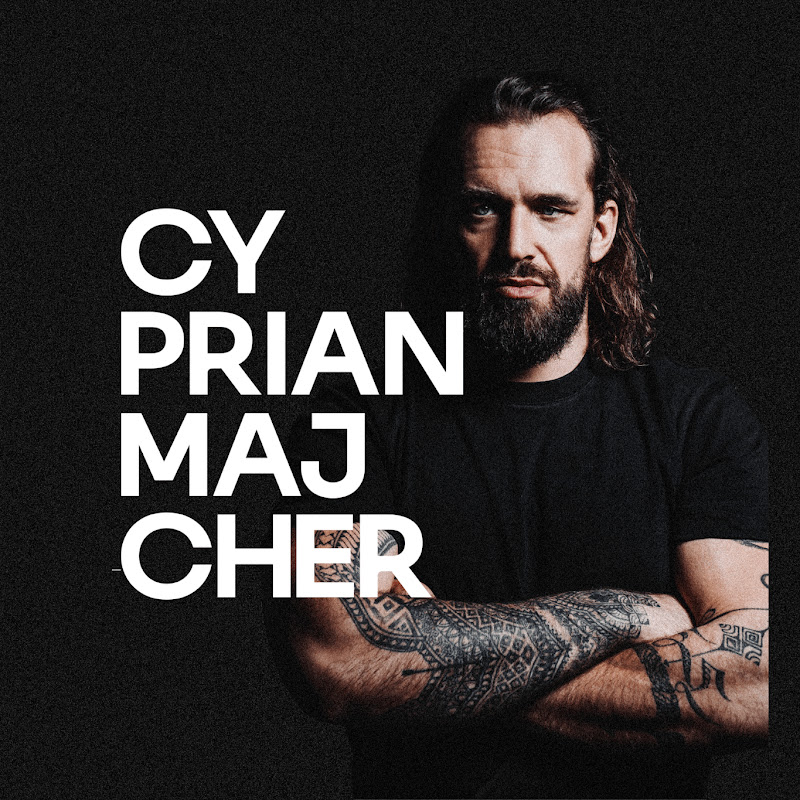
Cyprian Majcher
Watch on YouTube Add to chat My bookmarks← All sources

TL;DR

The four things you'd lose by not watching

4 items

TL;DR

The four things you'd lose by not watching

4 items
1

Przemysław Wójtowicz, a former Polish sniper, reveals he once lay in wait for 5 days in Afghanistan to take a single shot, and that his longest confirmed kill was 1403 meters, though he downplays it compared to sport shooters who now hit targets at 2 miles.

2

He criticizes the current Polish military as being 'for anyone,' with recruits motivated by money rather than calling, and describes the neglect of veterans, including being abandoned at a military hospital upon return from Afghanistan.

3

He advocates that snipers are craftsmen, not artists, and that the real villains are politicians who start wars; he now finds purpose in helping wounded veterans through extreme sports and diving expeditions.

4

He states he would not join the military again knowing what he knows now, but doesn't regret his service because of the people he met.

Protocols

Concrete recipes — what, when, how much, and why

8 items

Always be certain before pulling the trigger

WhatA sniper must be absolutely sure that when they squeeze the trigger, they will hit the target. Never shoot randomly or without full confidence.
WhenEvery shot, especially in combat.
For whomSnipers and precision shooters.
WhyIndiscriminate shooting is criminal and ineffective; a sniper's role is precise elimination, not suppressive fire.
CaveatsMistakes happen, but the mindset must be one of certainty, not hope.

Wójtowicz emphasizes that a sniper who shoots at anyone anywhere is a war criminal. He contrasts the discipline of snipers with regular infantry: in Vietnam, it took 22,000 rounds to kill one enemy soldier, while sniper units averaged 1.3 rounds per kill. This demonstrates that snipers do not fire blindly. He says that a sniper must have the maturity to avoid unnecessary risks and that this comes with experience. Young snipers often pay with their lives for overconfidence, so senior snipers and commanders must temper their eagerness.

Mechanism

The protocol is psychological and ethical: it prevents collateral damage, conserves ammunition, and maintains the sniper's concealment. A missed shot reveals position and endangers the team.

Personal experience

He recounts a moment in Afghanistan when he had a coyote in his sights but chose not to shoot, recognizing the natural order. This illustrates the discipline of only shooting when necessary.

A sniper should always know that if they pull the trigger, they will hit

Also said
“A sniper who would just shoot at anyone anywhere is a criminal and a war bandit”— Defines the ethical boundary.
“for one killed Vietcong soldier during the Vietnam conflict there were 22,000 rounds of ammunition... however... regarding sniper subunits in Vietnam, for one Vietcong soldier there were 1.3 rounds”— Statistical proof of sniper precision.

Physical conditioning for snipers: balanced endurance and strength

WhatTrain to be between a bodybuilder and a marathoner: capable of marching dozens of kilometers with gear, swimming long distances, crawling for extended periods without food or water, but not overly bulky.
WhenOngoing physical preparation.
DoseNot specified, but implies consistent, varied training.
For whomAspiring snipers and special forces candidates.
WhyPure endurance athletes lack strength, while bodybuilders lack endurance and their oversized muscles can become oxygen-deprived, leading to failure during prolonged operations.
CaveatsAvoid extreme specialization; functional fitness is key.

Wójtowicz explains that a sniper must be able to endure long periods of immobility, carry heavy loads, and still fight effectively. He witnessed a GROM soldier fail a selection in Ireland because his legs gave out—his large muscles were under-oxygenated. This illustrates that bulk without endurance is a liability. The ideal is a person who can handle both the physical demands of movement and the static demands of observation.

Mechanism

Large muscles require more oxygen; during prolonged exertion, they can become hypoxic and fail. A balanced physique with efficient cardiovascular capacity ensures sustained performance.

Personal experience

He shares the story of a colleague from GROM who had to drop out of a selection halfway due to leg failure from oversized muscles, while Wójtowicz himself completed it without issue.

we are looking for someone in between, so that it is a person who can endure a lot, meaning they will march several dozen kilometers with gear... will be able to crawl for a very long time when we lay them down without water, without food for a longer time, they will not complain

Also said
“a marathoner indeed can endure a lot but is too weak, and a bodybuilder, someone who is bulked up, I have often seen strong but not enduring, they will not cross the desert”— Direct comparison of extremes.
“halfway through that selection, that boy from the GROM unit unfortunately had to give up because his legs simply failed, his large muscles were under-oxygenated”— Real-world example of muscle failure.

Use a balaclava instead of face paint

WhatFor camouflage, wear a balaclava (kominiarka) rather than painting your face.
WhenDuring operations where concealment is needed.
For whomSnipers and tactical operators.
WhyFace paint requires makeup remover and extra gear; a balaclava can be quickly removed to blend in as a civilian, and it's simpler.
CaveatsIn some environments, a balaclava may be too hot; adapt as needed.

Wójtowicz argues that soldiers often paint their faces, but he advises against it because modern balaclavas are effective and practical. He explains that if you need to exfiltrate in civilian clothes, you can simply take off the balaclava and wrap a scarf or turban, whereas face paint would require carrying micellar water or other removers—an unnecessary burden. Minimalism is key; he criticizes soldiers who attach excessive gear like combat axes to their kit.

Mechanism

Practicality and reduced signature: a balaclava provides instant camouflage and can be doffed quickly to change appearance.

Personal experience

He observes that many soldiers on the range carry unnecessary items; he advocates for carrying only essentials.

soldiers paint themselves but I wouldn't get too into that because today we have such nice little balaclavas, just go in, pay... if I change into civilian clothes, then obviously I take off that balaclava, at most I wrap some kind of scarf or turban

Also said
“and with a face painted like that, well, it's not like women do makeup and you take some makeup remover, some micellar water, another piece of junk you would have to carry with you, imagine carrying liquid for makeup”— Highlights the impracticality of face paint.

Carry secateurs as a multi-purpose sniper tool

WhatInclude a pair of secateurs (pruning shears) in your kit for cutting vegetation quietly, clearing sight lines, and as a last-resort weapon.
WhenDuring reconnaissance, setting up a hide, or close-quarters emergency.
For whomSnipers and fieldcraft practitioners.
WhySecateurs allow silent, precise cutting of branches and grass without the movement and noise of a knife or saw, preserving concealment.
CaveatsMust be sharp and easily accessible.

Wójtowicz explains that when building a hide, you often need to trim vegetation to create a firing port or to attach camouflage. Using a knife would cause excessive movement and noise, potentially giving away your position. Secateurs let you cut cleanly and quickly. He also notes that in a worst-case scenario, the secateurs can serve as an improvised weapon. This small tool replaces several bulkier items and aligns with the principle of minimalism.

Mechanism

The tool's design provides leverage for cutting woody stems quietly, reducing visual and auditory signature.

Personal experience

He describes scenarios: cutting a bush to attach to your camouflage, trimming grass that blocks the scope, or cutting your own gear straps. He emphasizes that he always carries one.

among other things, such a thing is even a pair of secateurs. What is a secateur needed for? Firstly, to cut something very delicately and quickly... I approach and calmly cut it out with the secateurs

Also said
“when I lie down in the grass, it suddenly turns out that the grass is blocking my scope's objective lens, so I can also cut it off”— Specific use case for maintaining sight picture.
“in the worst critical situation, the same secateurs can serve as a weapon”— Dual-purpose capability.

Account for air density, not humidity, when calculating long-range shots

WhatWhen preparing a shot, adjust for atmospheric pressure and temperature (air density), but ignore humidity as it has negligible effect.
WhenBefore any long-range engagement.
For whomSnipers and precision rifle shooters.
WhyAir density is the primary atmospheric factor affecting bullet trajectory; a change in altitude can cause a 2-meter difference at 1000 meters.
CaveatsWind remains the biggest ballistic factor and must be read carefully.

Wójtowicz details that at sea level with 1000 hPa, a rifle is zeroed. At 2500 m altitude in Afghanistan, pressure drops to 820-850 hPa, causing a 2-meter point-of-impact shift at 1 km—a guaranteed miss if uncorrected. Temperature changes throughout the day also alter density: a rise from 7°C to 27°C reduces density, making the bullet fly higher and farther. He stresses that many shooters mistakenly believe humidity matters, but it does not. He recommends using a weather meter (anemometer) to measure conditions and adjust turrets or holdovers accordingly.

Mechanism

Lower air density reduces drag, flattening trajectory and reducing drop. Higher density increases drag. Pressure and temperature are the main drivers; humidity's effect is orders of magnitude smaller.

Personal experience

He mentions that civilian long-range shooters now walk their dogs with a Kestrel to practice reading wind, and that this knowledge has advanced thanks to sport shooters, not the military.

if we were in Afghanistan at an altitude of 2500 m where the pressure ranges between 820 and 850 hPa, it would turn out that, for example, a shot fired at a kilometer would differ by as much as 2 meters, so that is a guaranteed miss

Also said
“humidity has no effect on it, people sometimes think so, we even watch those American movies, someone there checks weather conditions before a shot and talks about humidity, such a factor is not taken into account at all”— Debunks a common myth.
“if, for example, we lie down at the position in the morning and have a temperature of 7 degrees, but at noon we already have 27, then that density has decreased, which means the bullet will fly farther, higher”— Illustrates diurnal temperature effect.

Plan civilian transition before leaving the military

WhatEvery soldier should have a detailed plan for civilian life before leaving service, to avoid the shock of self-sufficiency.
WhenDuring the final months or years of service.
For whomAll service members approaching discharge.
WhyIn the military, housing, food, and salary are provided; in civilian life, nothing happens automatically, and many veterans struggle to adapt.
CaveatsThe plan must be realistic and actionable.

Wójtowicz explains that soldiers often become 'disabled' in the sense that they are not used to managing their own lives. When the structure of military life disappears, they find themselves lost. He advises that before stepping into the civilian world, a soldier must carefully think through how they will earn a living, where they will live, and how they will handle daily responsibilities. He himself had a plan to continue teaching and training, which eased his transition.

Mechanism

Psychological and practical preparation reduces the shock of losing institutional support and helps prevent depression, homelessness, or family breakdown.

Personal experience

He says he tried to extend his service to teach more people, and he had already started thinking about his post-military life, which helped him.

every soldier, before leaving the military unit and taking that step into the civilian world, meaning among normal people, should think it through carefully, that is, arrange some plan in their head

Also said
“soldiers are often disabled, they don't cope in civilian life, because, see, disabled in the sense of not mentally disabled, you don't have to worry about salary, often about a home, about clothes, food, and when that suddenly ends, it turns out you are scratching your head”— Describes the dependency that develops.

Daily 5 km run and 50 push-ups

WhatMaintain a baseline fitness routine of running 5 km and doing 50 push-ups every day.
WhenDaily, regardless of other training.
Dose5 km run, 50 push-ups.
For whomSpeaker (anecdotal), but applicable to anyone seeking functional fitness.
WhyKeeps a minimum level of physical readiness, even with disabilities.
CaveatsHe is disabled with shrapnel and a leg injury, so he adapts; others should adjust to their capacity.

Wójtowicz mentions that despite being a disabled veteran with 12 shrapnel fragments still in his body and a leg that feels like wood, he maintains this routine. He hasn't missed a day in two weeks at the time of recording. This discipline reflects his military mindset and helps him stay capable for his work training others and participating in veteran sports competitions.

Mechanism

Cardiovascular and muscular maintenance; the routine is simple and sustainable.

Personal experience

He says, 'I will run those 5 km daily and do those 50 push-ups' and notes that he tries to exercise every day, even though he is not an athlete.

I will run those 5 km daily and do those 50 push-ups

Also said
“For the last two weeks, I don't remember having a break in training, even though I am not some athlete”— Consistency despite limitations.

Rehabilitation through extreme sports and expeditions

WhatUse activities like Arctic expeditions, diving, and competitive sports to rehabilitate wounded veterans physically and psychologically.
WhenAs part of a structured veteran support program.
DoseMulti-day expeditions (e.g., 7 days in the Arctic) or regular training sessions.
For whomWounded veterans, especially those with physical injuries and PTSD.
WhyChallenging experiences rebuild confidence, provide camaraderie, and offer a sense of purpose that mimics the intensity of military service.
CaveatsRequires proper safety measures and experienced guides; not a substitute for professional mental health care.

Wójtowicz co-founded a foundation that pioneered underwater rehabilitation for wounded soldiers in Europe. He describes taking veterans to the Arctic, where they ski with rifles while watching for polar bears, an experience that is unique and empowering. He also participates in the Invictus Games (biathlon and swimming). He believes that giving veterans these opportunities fills the gap left by the lack of state support and helps them rediscover their strength.

Mechanism

Physical exertion releases endorphins; mastering extreme environments rebuilds self-efficacy; shared hardship strengthens social bonds, countering isolation.

Personal experience

He says that by taking a veteran on such a trip, he gives them a 'trip of a lifetime,' and that he himself benefits by feeling like a better person. He notes that he never received such support, so he provides it to others.

we started rehabilitation of wounded soldiers through diving and the effect of water

Also said
“if I take a guy, for example, on an expedition to the Arctic, where for 7 days we will walk with rifles watching out for polar bears... that is, one could say, a unique thing”— Example of the extreme nature of the rehab.

What's new

Personal practice updates, fresh positions, predictions

5 items

Military decline and mass recruitment

Wójtowicz argues that today's Polish military accepts anyone, lowering standards, and that soldiers join for money, not calling, in stark contrast to his era when only a select few became professional soldiers.

Why this matters: A decorated veteran openly criticizes the current state of the armed forces, claiming that mass recruitment has turned the military into 'anything' and that even special forces are affected.

Background

In the past, compulsory military service existed, but becoming a professional soldier was rare and reserved for those with a true calling. Now, voluntary service offers a salary of 5500 PLN for basic training, which he compares unfavorably to hard-working civilians in garages or supermarkets.

Wójtowicz contends that the quality of soldiers has plummeted because recruits are drawn by financial incentives rather than a sense of duty. He notes that many of his experienced colleagues who returned to service or stayed in are deeply frustrated. He also mocks the idea that soldiers who served on missions in Romania or Latvia, or guarded borders, should be called veterans, suggesting a confusion of terms. He believes that the current generation lacks the dedication and resilience of earlier soldiers, and that the military's expansion has diluted its effectiveness, including within special forces.

Personal experience

He contrasts his own path: he entered the military when it was difficult to become a professional soldier, and he served alongside people who joined out of vocation. He now sees that many of the best soldiers have left, leaving behind 'freshmen' with little experience.

today the military is for anyone... this mass recruitment of anything causes the military itself to become anything, including special forces

Also said
“if a young 20-year-old man going into the current voluntary basic military service... receives a salary for practically nurturing a rifle he doesn't even know how to use... 5500 PLN, so when we look at a hard-working person in a car workshop or in a Biedronka, well, it makes one's hair stand on end”— Highlights the financial disparity that he believes attracts the wrong people.
“if someone calls themselves a veteran and was on a mission in Romania or on a mission in Latvia or guarded fences along the border of our country, well, something here seems to have gotten mixed up, confused with concepts”— Shows his disdain for what he sees as diluted veteran status.

Snipers as craftsmen, not artists

Wójtowicz rejects the romanticized image of snipers as exceptional artists, insisting they are skilled craftsmen performing a military job like any other.

Why this matters: He directly challenges the media and public glorification of snipers, which he believes is harmful and unrealistic.

Background

Movies like American Sniper and media coverage often portray snipers as lone heroes with almost superhuman abilities. Wójtowicz says this creates a false narrative and puts real snipers at risk by making them public figures.

He explains that the best armies, such as Canada's, treat snipers as craftsmen, not artists. In Poland, however, after he was wounded, the media turned him into a celebrity, which he resents because it exposed him and forced him into a public role he never wanted. He wrote his book only because people kept asking for his story, not out of a desire for fame. He emphasizes that a sniper is just a soldier with a specific specialty, and that the real responsibility lies with politicians who start wars.

Personal experience

After being wounded in Afghanistan, he became a public figure against his will, with newspapers trumpeting his actions. He felt exposed and compares his situation to that of Chris Kyle, who was killed after becoming famous. He says his book would never have been written if not for public demand.

A sniper is not any artist, they are a craftsman, and let's not treat them as if they are someone exceptional, they perform their military job just like everyone else

Also said
“here, someone is immediately made into an artist, like me. When I was wounded in Afghanistan, I immediately ceased to be, so to speak, a private person, all those newspapers started trumpeting”— Illustrates the unwanted celebrity status thrust upon him.
“that book would never have been written because I was not eager to write down and tell my story, it was people who wanted to listen to it”— Shows his reluctance to share his story.

Would not join the military again

If he had the knowledge he has now, Wójtowicz would not enlist, though he does not regret his service because of the people he met.

Why this matters: A highly decorated sniper openly states he would choose a different path, offering a rare, candid reflection on the cost of military life.

Background

He joined the military out of childhood fascination and later found his calling as a sniper by chance. After decades of service, including combat and injury, his perspective has shifted.

He explains that he would instead study and contribute to Poland in a different way, without having to follow orders that are not his own or get involved in conflicts that are not his. He emphasizes that he does not regret the time served because it allowed him to meet incredible people and shaped who he is, but he would not willingly choose that path again. He advises young people to only join if they feel an irresistible inner calling, comparing it to being in love.

Personal experience

He says, 'If you had the knowledge you have now, would you join the military again? No.' He elaborates that he would study, and that he doesn't regret a single day because of the people, but the knowledge of what it truly entails would deter him.

If you had the knowledge you have now, would you join the military again? No.

Also said
“I do not regret the time, I would not take it back, I met so many wonderful people on my path, even though it was often bad, I still do not regret a single day of service”— Clarifies that his refusal is not born of regret but of a changed understanding.
“if someone does not have to forcefully go to the military... go, man, study, learn, you will act just as much for the benefit of Poland as that soldier, and even better, only you will not have to carry out orders that are not yours”— His advice to young people.

Helping veterans as self-therapy

Wójtowicz finds that his work rehabilitating wounded veterans through extreme sports and expeditions helps him cope with his own low self-esteem and trauma, making him feel like a better person.

Why this matters: He frames his charitable work not just as altruism but as a personal psychological necessity, revealing vulnerability.

Background

After being wounded and experiencing neglect upon return, he co-founded a foundation that uses diving, Arctic expeditions, and other activities to rehabilitate veterans. He says this was partly because he didn't receive such support himself.

He describes taking a veteran on a 7-day Arctic expedition with rifles, watching for polar bears, as a life-changing experience that few can have. He believes that by giving others what he lacked, he fills a void in himself. He admits that veterans often have very low self-esteem, and he shares that he sometimes doesn't believe in himself. Each successful step in helping others reassures him that he is not worthless. He sees it as a kind of karma: 'throw behind you, find in front of you.'

Personal experience

He says, 'each such step makes me sure that I am not scum' (each such step makes me sure that I am not scum). He also shares that he sometimes has low self-esteem, and that helping others makes him feel like a better person.

each such step makes me sure that I am not scum

Also said
“just because I didn't receive something doesn't mean I shouldn't give it to someone else”— His philosophy of giving what he didn't receive.
“I throw behind me, I find in front of me”— His personal mantra about karma.

Wars as American adventures

Wójtowicz bluntly states that the wars in Iraq and Afghanistan were American adventures, not patriotic missions, and that soldiers are merely tools of politicians.

Why this matters: A combat veteran dismisses the official narrative of the War on Terror, calling it an American venture with little to do with Polish patriotism.

Background

Poland participated in the US-led interventions in Iraq and Afghanistan. Many soldiers and politicians framed it as fighting terrorism and defending freedom.

He says that every soldier who sets foot on Afghan soil knows they are there only to survive, earn some money, and not bring shame to the country. He respects the Afghan fighters, especially the mujahideen, for their cunning and resilience, and notes that many soldiers never actually saw a Taliban fighter. He believes the real enemy is often not a simple Afghan but foreign fighters from all over the world. He also points out that the Taliban is an ideology, not a nationality, and that clan warfare complicated the conflict. He concludes that the wars were senseless, but he cannot turn back time.

Personal experience

He says he went to Afghanistan to come back alive with his men, earn money, and not disgrace Poland. He feels no guilt because he did nothing shameful, but he sees no sense in what happened.

these are all American adventures, both Iraq and Afghanistan

Also said
“every person who sets foot on Afghan soil, being a sane-thinking person, realizes that I came here for only one purpose: to return home whole with my people, earn some money, and not bring shame to the fatherland”— His personal motivation for deployment.
“it is not the sniper who is the worst in all this, the worst are the politicians, they are the ones who start everything, the soldier is only their tool”— Shifts blame to politicians.

Recommendations

Products, supplements, and tools mentioned in the episode

5 items

Secateurs (pruning shears)

Tool

Recommended as an essential multi-purpose tool for snipers to cut vegetation, clear sight lines, and serve as a last-resort weapon.

He explains that secateurs allow silent, precise cutting without the noise and movement of a knife. They can be used to trim grass blocking a scope, cut branches for camouflage, or even cut your own gear. In an emergency, they can be a weapon.

vs alternatives

Compared to a knife, it's quieter and more efficient for vegetation; compared to a saw, it's smaller and faster.

Personal experience

He always carries one and describes specific scenarios where it proved invaluable.

among other things, such a thing is even a pair of secateurs

Also said
“when I lie down in the grass, it suddenly turns out that the grass is blocking my scope's objective lens, so I can also cut it off”— Practical use case.
Find Secateurs

Balaclava (kominiarka)

Tool

Recommended over face paint for camouflage, as it can be quickly removed to blend in as a civilian.

He argues that face paint requires additional remover and is impractical for quick changes of appearance. A balaclava can be stowed and replaced with a scarf or turban for exfiltration in civilian clothes.

vs alternatives

Compared to face paint, it's simpler, requires no extra liquids, and allows rapid identity change.

Personal experience

He observes soldiers on the range carrying excessive gear and advocates minimalism.

today we have such nice little balaclavas, just go in, pay... if I change into civilian clothes, then obviously I take off that balaclava

Find Balaclava

Kestrel weather meter (anemometer)

Tool

Used by civilian long-range shooters to measure wind speed and atmospheric conditions for ballistic calculations.

He mentions that serious sport shooters now carry a Kestrel even while walking their dogs, constantly reading wind by observing its effects on leaves, dust, and mirage. This practice has advanced ballistic knowledge more than the military.

vs alternatives

Compared to estimating wind by feel alone, a weather meter provides objective data for more accurate adjustments.

Personal experience

He notes that his civilian colleagues achieve high results using such tools, and that the military now benefits from their experience.

my colleagues, even civilian shooters today who achieve high results in precision long-range shooting, also know how to walk with a so-called anemometer, that is a weather station, a wind meter, for example with a dog on a walk

Find Kestrel

Custom sniper uniform with reinforced hood and attachment points

Tool

A uniform designed for snipers with a wire-reinforced hood that can be shaped over a scope, reinforced knees/elbows, pockets for camouflage, and the ability to insert insulation pads.

He learned from a Canadian veteran who served in Somalia, Iraq, Afghanistan, and the Arctic. The uniform allows the sniper to attach natural vegetation for camouflage, provides protection from cold and heat, and has a large hood that can be formed into a canopy over the optic. It is made in the same camouflage pattern as the Polish army.

vs alternatives

Compared to standard issue uniforms, it offers specialized features for snipers without looking different from regular infantry at a distance.

Personal experience

He uses this uniform and praises its functionality.

a sniper's uniform should look a little different, meaning it should have several, as you say, attributes to which we can not only attach a certain type of camouflage... but above all, it will be appropriately durable in the right places, it will have pockets, reinforcements, it will have a hood reinforced with wire

Find Custom

Study and contribute to Poland as a civilian rather than joining the military without a calling

Practice

He advises young people that unless they feel an irresistible inner calling to serve, they should pursue education and civilian careers, as they can help the country just as much without having to follow orders they disagree with.

He compares the calling to being in love—a pain that compels you. If you don't feel that, don't join. He believes that studying and working in civilian fields can benefit Poland as much as military service, and you avoid being a tool in conflicts that are not your own.

vs alternatives

Contrasts with the romanticized view of military service as the ultimate patriotic act.

Personal experience

He says he would not join again knowing what he knows now, and he would study instead.

if someone does not have to forcefully go to the military... go, man, study, learn, you will act just as much for the benefit of Poland as that soldier, and even better, only you will not have to carry out orders that are not yours

Find Study
Disclosed sponsorships3speaker disclosed

His first autobiography (untitled in transcript, brought to the interview)

Book Sponsored · disclosed

The book tells his story from a boy in Nowa Huta to an elite sniper, and a portion of proceeds goes to families of fallen soldiers.

DisclosureAuthor is the speaker; he brought the book and discussed it.

He mentions that he wrote the book because people kept asking for his story, not out of a desire for fame. He is the first soldier writing a book to donate part of the income to the families of the fallen. The book is described as 'not for polite boys,' containing blood and not necessarily tears.

vs alternatives

Unlike other military memoirs, he claims his is the first to financially support fallen soldiers' families.

Personal experience

He says he didn't want to write it but felt compelled by public interest. He also notes that after being wounded, the media made him a public figure, which led to the book.

the first thing I thought of was to share part of my income with someone, because I still have two hands, I can work, and those boys are no longer here

Also said
“This is not a book for polite boys, this story is blood and not necessarily tears”— Tagline from the book.
Find His

Zanim naciśniesz spust (Before You Pull the Trigger)

Book Sponsored · disclosed

A technical book about sniper training and the history of Polish marksmanship, including a training target he co-developed.

DisclosureAuthor is the speaker; upcoming book co-written with a colleague.

He announces that the book will be released in July. It focuses on sniper training methods and the history of precision shooting in Poland. It also describes a 'trenażer' target designed to train shooting at the edges of a body armor plate, teaching snipers to aim for unprotected areas.

vs alternatives

Unlike his first autobiographical book, this is a technical manual.

Personal experience

He co-created the training target with a colleague and includes it in the book.

my second book will be released soon, exactly in July, Zanim naciśniesz spust, in it we describe a trainer

Find Zanim

Trenażer target (body armor edge trainer)

Tool Sponsored · disclosed

A hollow target that forces shooters to aim at the edges (head, limbs) rather than the center mass where body armor would stop the bullet.

DisclosureCo-developed by the speaker and a colleague, featured in his upcoming book.

He explains that beyond 800 meters, a 7.62x51mm round may not reliably penetrate body armor. The trenażer trains snipers to hit unprotected areas like the face, arms, or legs, which is much harder at long range. The target is empty in the center, so only edge hits count.

vs alternatives

Compared to standard silhouette targets, it specifically addresses the challenge of defeating body armor at extended ranges.

Personal experience

He co-invented it and uses it in training.

recently we invented such a target, a trainer, together with my colleague... it is a shooting target that is empty in the middle and we shoot only at its edges, so as not to shoot at that ballistic plate at a distance

Find Trenażer

Notable quotes

Lines worth pulling out — contrarian, specific, or perfectly phrased

6 items
A sniper who would just shoot at anyone anywhere is a criminal and a war bandit
A stark ethical line drawn by a combat sniper, defining indiscriminate shooting as criminal.
today the military is for anyone... this mass recruitment of anything causes the military itself to become anything, including special forces
Blistering critique of the current state of the Polish military from an insider.
it is not the sniper who is the worst in all this, the worst are the politicians, they are the ones who start everything, the soldier is only their tool
Shifts moral responsibility from the trigger-puller to the decision-makers.
A sniper is not any artist, they are a craftsman
Deflates the myth of the sniper as a heroic artist, reframing the role as a trade.
If you had the knowledge you have now, would you join the military again? No.
A decorated veteran's blunt refusal to repeat his path, despite no regrets.
every soldier's job consists solely and exclusively of taking life or scaring and demolishing what someone else built
Unflinching definition of a soldier's job, stripping away euphemism.

Sign in to share feedback

Tell us if this brief hit the mark or missed it — feedback feeds back into the next iteration of the prompt.

Topics covered

sniper-mindsetmilitary-criticismballisticsveteran-neglectafghanistan-experiencesniper-trainingphysical-fitnesscamouflagepolitics-of-warpersonal-transformationhazing-in-militarysniper-toolslong-range-shootingveteran-rehabilitationbook-writing
Free account

Make this library yours

Reading is free for everyone. A free account adds the personal layer: save protocols, follow experts, and see how the other experts weigh in on this same topic.

Create a free accountSign in

Where the experts disagree — weekly

One email a week: the sharpest new disagreements and protocols from the library. No spam, unsubscribe anytime.

Educational summary of the cited expert source — not medical advice. Open the source recording linked above and consult a qualified physician before acting on any protocol.