
UNFUCG
DashboardSearchChatBookmarksNotificationsActivityPremiumProfile
?
Home
Search
Chat
Saved
Profile
Episode
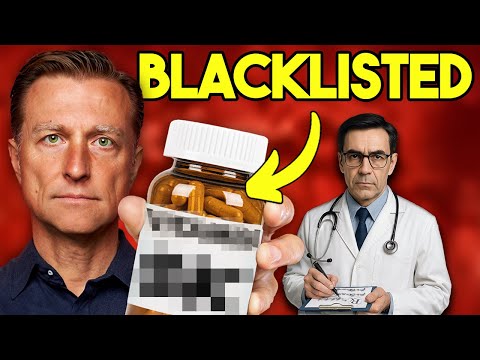
The Vitamin Harvard Quietly Buried
~8 min
Episode Brief·YouTube

The Vitamin Harvard Quietly Buried

Eric Berg
Watch on YouTube Add to chat My bookmarks← All sources

TL;DR

The four things you'd lose by not watching

4 items

TL;DR

The four things you'd lose by not watching

4 items
1

Eric Berg claims Harvard suppresses vitamin D research because it threatens big pharma's profits, especially dermatology companies that sell synthetic vitamin D while instilling sun phobia.

2

A daily dose of at least 10,000 IU vitamin D3 is needed for immune health, and low doses used in negative studies are intentionally ineffective.

3

The Coimbra protocol uses high-dose vitamin D to treat autoimmune disease with ~90% success, overcoming genetic 'vitamin D resistance' that standard blood tests miss.

4

Cod liver oil (1 tbsp = 10,000 IU) and 20 minutes of sun provide natural vitamin D; home testing should confirm levels above 50 ng/mL.

Protocols

Concrete recipes — what, when, how much, and why

4 items

Daily 10,000 IU vitamin D3

WhatTake at least 10,000 international units of vitamin D3 every day to maintain adequate levels and support immune function.
WhenDaily, ongoing.
DoseAt least 10,000 IU per day.
For whomGeneral adult population, especially those not getting adequate sun exposure or with autoimmune risk.
WhyMost people need this amount to achieve protective blood levels; lower doses used in negative studies are ineffective.
CaveatsIndividual needs vary; optimal dosing may require testing. Genetic vitamin D resistance could necessitate higher doses under supervision. Excess calcium should be monitored.

Berg states that the common RDA (400-800 IU) is far too low and that 10,000 IU daily is the baseline for health. He references the immune system's widespread vitamin D receptors and its role in fighting inflammation, cancer, and viruses. He dismisses studies that show no benefit by pointing out their tiny doses, implying that big pharma influences trial design to keep the vitamin from gaining credibility. For people who cannot get daily sun, 10,000 IU via supplement or a tablespoon of cod liver oil is presented as a practical alternative.

Mechanism

Vitamin D functions as a steroid hormone, modulating the expression of hundreds of genes. It binds to the vitamin D receptor on immune cells, reducing pro-inflammatory cytokines and enhancing antimicrobial peptides like cathelicidin. It also plays a role in cell differentiation and apoptosis, offering anticancer effects. A minimum serum level is required to keep these pathways active.

You really need at least 10,000 IUs every single day to maintain a healthy vitamin D level.

Also said
“Every aspect of your immune system has receptors for vitamin D.”— Explains why daily vitamin D is foundational for immunity.
“All you have to do to sort that out is to look at the studies that don't show a favorable outcome. And almost in every one of those studies, the amount of vitamin D that they use is so tiny.”— Justifies the high-dose recommendation by exposing study design flaws.

Sun exposure as therapy for skin and systemic health

WhatExpose skin to sunlight to produce vitamin D endogenously and treat eczema, psoriasis, and other conditions.
WhenAs tolerated, ideally during midday for 20 minutes, avoiding burn.
DoseAbout 20 minutes of sun exposure produces ~10,000 IU vitamin D.
For whomAnyone, especially those with inflammatory skin conditions, low vitamin D, or who want a natural source.
WhySunlight converts cholesterol in the skin to vitamin D; historically used in sanitariums to prevent tuberculosis and other diseases before antibiotics.
CaveatsAvoid burning; prolonged burning may increase non-melanoma skin cancer risk. Paradoxically, melanoma is claimed to be tied to deficiency, not sun exposure.

Berg challenges the public health messaging that sun avoidance is universally beneficial. He traces the origins of sun phobia to dermatology companies that sold synthetic vitamin D while suppressing the free natural alternative. He says that prior to antibiotics, sanitariums around the world used controlled sunbathing to combat TB. He also asserts that the most lethal skin cancer, melanoma, frequently appears on body parts that never see the sun, indicating a causal role of vitamin D deficiency. Thus, sensible sun exposure is reclaimed as a vital health practice rather than a danger.

Mechanism

UVB radiation photolyzes 7-dehydrocholesterol in the epidermis to previtamin D3, which thermally isomerizes to D3. This is the same molecule obtained from supplements, but sun-derived D3 may have longer half-life and additional benefits such as nitric oxide release and immune regulation in the skin.

Out of all the remedies that you can do for eczema and psoriasis, the sun is one of the best remedies. And it causes the cholesterol in your skin to turn into vitamin D.

Also said
“Back in the early 1900s, we had sanitariums all over the world to get sunbathing, sun treatment. They would basically lay out the sun to prevent TB and to handle various health conditions until we developed something called antibiotics.”— Historical precedent for therapeutic sun use before pharmaceutical suppression.
“The most dangerous skin cancer. really stemming from a vitamin D deficiency. It usually originates in areas that are not exposed to the sun.”— Reverses the common fear that sun causes the deadliest skin cancer.

Coimbra protocol (high-dose vitamin D for autoimmunity)

WhatUse physician-supervised very high doses of vitamin D3 to treat autoimmune diseases, as developed by Dr. Cícero Coimbra.
WhenOngoing, tailored to the individual's response and laboratory monitoring.
DoseHigh doses (not specified; often in the range of thousands of IUs per kilogram of body weight per day).
For whomPeople with autoimmune conditions (e.g., multiple sclerosis, lupus, rheumatoid arthritis, psoriasis, vitiligo).
WhyOvercomes vitamin D resistance caused by genetic polymorphisms, leading to ~90% effectiveness in autoimmune remission.
CaveatsRequires strict medical supervision, monitoring of serum calcium, parathyroid hormone, and vitamin D levels. Not for self-treatment due to risk of hypercalcemia.

Berg highlights the work of Dr. Coimbra, which he learned about in a recent interview. The protocol rests on the concept of ‘vitamin D resistance’ — certain individuals have genetically impaired D receptors or enzymatic defects, meaning standard serum levels do not reflect tissue activity. By pushing doses far above the norm, the protocol saturates those resistant receptors, restoring immune regulation. Berg says the protocol yields ‘90 percentile’ effectiveness, positioning it as a game changer for autoimmune patients who have few effective, non-immunosuppressive options.

Mechanism

High-dose vitamin D promotes T regulatory cell expansion and suppresses pathogenic Th17/Th1 responses that drive autoimmunity. It restores the tolerogenic function of dendritic cells and enhances expression of anti-inflammatory cytokines. The high doses are necessary to overcome the partial resistance caused by VDR gene variants or CYP24A1 overexpression that accelerates D3 degradation.

Personal experience

Berg reports interviewing Dr. Coimbra and learning about the protocol and vitamin D resistance directly from him.

Dr. Combbere from Brazil who developed the COMBRE protocol for autoimmune diseases, the results of using high doses of vitamin D3, it's in the 90 percentile as far as effectiveness.

Also said
“There's something called vitamin D resistance. And this has to do with a genetic issue with vitamin D. If your genes have some type of problem, you are vulnerable to having a vitamin D deficiency because there really is no test that you can know for sure if the vitamin D in your blood is going deep into the tissues into the cells.”— Explains the genetic rationale behind the need for high doses.

Home vitamin D blood level testing

WhatTest your vitamin D status using a home blood spot kit to ensure levels are above 50 ng/mL.
WhenBaseline testing and periodically to adjust supplementation.
DoseOne finger-prick blood spot, mailed for analysis.
For whomAnyone, particularly those with autoimmune risk, chronic illness, or on high-dose supplementation.
WhyVitamin D deficiency is widespread, and genetic resistance makes tissue status uncertain; testing guides appropriate dosing.
CaveatsHome tests reflect total 25(OH)D but do not directly measure free or tissue-level D. Clinical correlation may be needed. Follow instructions carefully to avoid contamination.

Berg emphasizes that without testing, one cannot know if they are truly sufficient because blood levels might not reflect intracellular availability. He explicitly recommends aiming for at least 50 ng/mL. He offers a linked home test kit that uses a blood spot on filter paper, bypassing the need for a doctor's appointment. This aligns with his broader theme of empowering individuals to take control of their health outside the conventional medical system.

Personal experience

Berg provides a link to a kit he endorses, implying personal use or confidence in at-home testing.

I'll put the link down below where you can order a kit and you do a little blood spot on a piece of paper, send it in and you can find out your vitamin D levels.

Also said
“I would recommend to make sure your levels are above 50 nanograms per milliliter.”— Specifies the target threshold for vitamin D status.

What's new

Personal practice updates, fresh positions, predictions

3 items

Harvard suppression of positive vitamin D research

Berg alleges Harvard University refuses to publish or promote findings that favor vitamin D because it competes with pharmaceutical drugs, which fund the institution.

Why this matters: Directly accuses one of the world's most respected academic institutions of systematic bias on behalf of big pharma.

Background

The broader context is pharmaceutical companies have a long history of influencing medical research and education, but Berg narrows this to a specific instance: Harvard's silence on vitamin D despite tens of thousands of studies.

Berg argues that vitamin D is a profound threat to big pharma because it can inexpensively address many conditions treated with lucrative drugs. Harvard, heavily funded by pharma, cannot afford to publicize this. He ties this to a campaign by two dermatology companies (Leoarma and Elmroll) that developed synthetic vitamin D products while promoting sun avoidance. The 'disinformation playbook' (five pillars: fake trials, blitzing scientists, diversion, screen, fix) explains how this system operates. Dr. William Grant, cited by Berg, states that government-sponsored RCTs are designed on drug models, not nutrient models, guaranteeing they show no benefit. The result is a controversy manufactured to protect profits.

Big pharma is terrified of vitamin D3. They have great influence over universities especially Harvard University. Harvard will not publish anything positive about vitamin D.

Also said
“The main example of this for vitamin D is all the government sponsored vitamin D randomized control trials which are designed based on guidelines for pharmaceutical drugs not nutrients and as a result they don't show any benefit of vitamin D.”— Grant's explanation of how flawed trials are used to cast doubt on vitamin D.
“Big pharma funds all the un medical universities to fund clinical trials. gives them lots of money and encourages them to ignore vitamin D.”— Directly states the funding conflict that silences positive research.

Vitamin D resistance – a genetic cause of deficiency despite normal blood levels

Dr. Coimbra (of the Coimbra protocol) revealed to Berg that some people have genetic polymorphisms that render their vitamin D receptors unresponsive, creating 'vitamin D resistance.' Standard blood tests may show adequate levels, but tissues remain deficient.

Why this matters: Introduces a new mechanism explaining why many people don't respond to normal vitamin D doses and why autoimmune conditions may require high-dose therapy.

Background

Vitamin D insufficiency is common, but the concept of 'resistance' is not widely discussed outside specialized fields. Berg brings it to a lay audience as a key reason people fail to improve even with supplementation.

Berg recounts an interview with Dr. Coimbra, who explained that genetic defects in vitamin D receptors or activation can prevent the hormone from entering cells, leading to persistent deficiency. There is currently no clinical test that reveals tissue-level vitamin D status. Therefore, people with autoimmune diseases or chronic inflammation may need much higher doses than the general population to overcome this resistance. This insight underpins the rationale for the Coimbra protocol and Berg's insistence on targeting at least 50 ng/mL in blood, which he sees as a minimum for ensuring tissue saturation.

Personal experience

Berg states he learned about vitamin D resistance directly from Dr. Coimbra in a recent interview.

There's something called vitamin D resistance. And this has to do with a genetic issue with vitamin D. If your genes have some type of problem, you are vulnerable to having a vitamin D deficiency because there really is no test that you can know for sure if the vitamin D in your blood is going deep into the tissues into the cells.

Also said
“You may be seriously deficient or vulnerable to having an immune problem like some autoimmune disease.”— Links genetic resistance to autoimmune risk, motivating higher vitamin D targets.

Dermatology companies orchestrated the sun phobia campaign while selling synthetic vitamin D

Two dermatology-focused pharmaceutical companies, Leoarma and Elmroll, allegedly started the public health messaging to avoid the sun while simultaneously marketing products containing synthetic vitamin D.

Why this matters: Frames the widespread sun-avoidance advice as a profit-driven campaign rather than pure public safety, turning the skin cancer narrative on its head.

Background

Public health organizations have long recommended sun protection to prevent skin cancer. Berg claims the initiative originated with companies that stood to profit from vitamin D cream sales, a hidden conflict of interest.

Berg says that both Leoarma and Elmroll developed past products with synthetic vitamin D—one combined with a corticosteroid, another as pure vitamin D—targeted at skin problems. Simultaneously, they promoted the idea that sun causes skin cancer, creating a lucrative market. Berg then argues that the most dangerous skin cancer (melanoma) often appears in sun-protected areas and is actually linked to vitamin D deficiency, not sun exposure. This inversion suggests the demonization of the sun was a strategic maneuver to replace a free natural source with a patented pharmaceutical alternative.

Both of these companies have developed products in the past that had the ingredients of synthetic vitamin D. One drug they combined vitamin D with corticosteroid cream. Another drug was just vitamin D. And what were these for? Skin problems. These are the two companies that started this sun phobia stay out of the sun campaign while they sell you their vitamin D products.

Also said
“The most dangerous skin cancer. really stemming from a vitamin D deficiency. It usually originates in areas that are not exposed to the sun.”— Counters the sun-cancer link, adding support to the claim that sun avoidance is misguided.

Recommendations

Products, supplements, and tools mentioned in the episode

2 items

Cod liver oil

Supplement

Presented as a whole-food source of vitamin D3 that delivers 10,000 IU per tablespoon.

Berg recommends cod liver oil as an easy way to hit the 10,000 IU daily target without relying on supplements or sun. He notes that one tablespoon supplies the same amount of vitamin D3 as 20 minutes of sun exposure, making it a natural, nutrient-dense option. Cod liver oil also provides omega-3 fatty acids and vitamin A, offering broader health benefits.

vs alternatives

Compared to isolated vitamin D3 supplements and sun exposure. Cod liver oil is a food-based source with additional nutrients but may have taste or oxidation concerns.

Cod liver oil also has a good amount of vitamin D. One tablespoon of cod liver oil can give you 10,000 IUs of vitamin D3.

Also said
“That's 20 minutes in the sun.”— Provides an equivalency that reinforces the high potency of cod liver oil.
Find Cod

Therapeutic sunbathing (sensible sun exposure)

Practice

Deliberate, non-burning sun exposure to treat skin conditions and raise vitamin D levels.

Berg frames sunbathing as a cost-free, historically validated medical intervention that was systematically discredited by profit-driven pharmaceutical campaigns. He recommends it particularly for eczema and psoriasis, and implies that regular sun exposure can reduce the risk of melanoma by preventing vitamin D deficiency. The practice is positioned as a counter to the institutionalized sun phobia.

vs alternatives

Vs. synthetic vitamin D creams or oral supplements; sunbathing provides full-spectrum UVB and UVA with endogenous vitamin D, along with nitric oxide and other photoproducts. However, it requires access to sunlight and carries a risk of burning if not managed.

Out of all the remedies that you can do for eczema and psoriasis, the sun is one of the best remedies.

Also said
“Back in the early 1900s, we had sanitariums all over the world to get sunbathing, sun treatment.”— Historical support for the medical legitimacy of sun therapy.
Find Therapeutic
Disclosed sponsorships1speaker disclosed

Home vitamin D blood spot test kit (via Berg's link)

Product Sponsored · disclosed

An at-home testing service that measures vitamin D levels from a dried blood spot.

DisclosureBerg states he will put a link below to a kit, implying an affiliate relationship or personal endorsement.

Consistent with his message of self-empowerment, Berg advocates home testing. He explains the process: a simple finger prick, blood applied to filter paper, mailed to a lab, and the result returned. This allows individuals to verify their levels without navigating the medical system, which he portrays as hostile to vitamin D. The link in the video description suggests a commercial partnership or affiliate commission.

vs alternatives

Compared to standard venipuncture and lab testing; home kit is more convenient but may be slightly less accurate. It also avoids doctor gatekeeping.

If you haven't had your vitamin D tested, it'd probably be a good idea to get it tested. And if you want more information about doing a home test, I will put that link down below.

Find Home

Notable quotes

Lines worth pulling out — contrarian, specific, or perfectly phrased

6 items
Big pharma is terrified of vitamin D3.
Opener that frames the entire discussion as an underdog expose.
Harvard will not publish anything positive about vitamin D.
Specific, damning claim of censorship at the highest academic level.
All you have to do to sort that out is to look at the studies that don't show a favorable outcome. And almost in every one of those studies, the amount of vitamin D that they use is so tiny.
Simple heuristic to detect biased research; actionable for the skeptical viewer.
The most dangerous skin cancer. really stemming from a vitamin D deficiency. It usually originates in areas that are not exposed to the sun.
Inverts the conventional skin cancer narrative completely.
There's something called vitamin D resistance. And this has to do with a genetic issue with vitamin D. If your genes have some type of problem, you are vulnerable to having a vitamin D deficiency because there really is no test that you can know for sure if the vitamin D in your blood is going deep into the tissues into the cells.
Introduces a critical concept that explains why standard dosing often fails, with deep implications for autoimmune disease management.
Big pharma and the medical system are not happy with vitamin D because it reduces their income and profits.
A stark, unapologetic statement from Dr. William Grant on the financial conflict behind the controversy.

Sign in to share feedback

Tell us if this brief hit the mark or missed it — feedback feeds back into the next iteration of the prompt.

Topics covered

vitamin-dbig-pharma-influenceharvard-suppressiondisinformation-playbooksun-exposurecod-liver-oilvitamin-d-testingvitamin-d-resistancecoimbra-protocolautoimmune-diseaseskin-cancercholesterolsanitariumsseed-oilsdermatology-companiesmichael-holickdr-william-grant
Free account

Make this library yours

Reading is free for everyone. A free account adds the personal layer: save protocols, follow experts, and see how the other experts weigh in on this same topic.

Create a free accountSign in

Where the experts disagree — weekly

One email a week: the sharpest new disagreements and protocols from the library. No spam, unsubscribe anytime.

Educational summary of the cited expert source — not medical advice. Open the source recording linked above and consult a qualified physician before acting on any protocol.