UNFUCG
DashboardSearchChatBookmarksNotificationsActivityPremiumProfile
?
Home
Search
Chat
Saved
Profile
Episode
The unknown face of Joanna Jędrzejczyk – who really is the Polish queen of the UFC?
~83 min
Episode Brief·YouTube

The unknown face of Joanna Jędrzejczyk – who really is the Polish queen of the UFC?

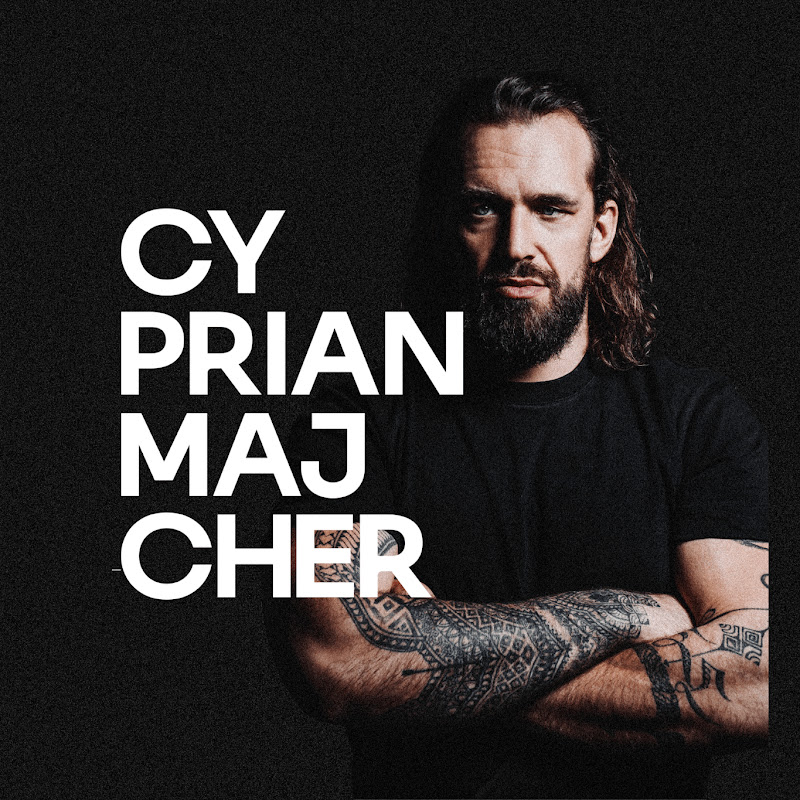
Cyprian Majcher
Watch on YouTube Add to chat My bookmarks← All sources

TL;DR

The four things you'd lose by not watching

4 items

TL;DR

The four things you'd lose by not watching

4 items
1

Joanna Jędrzejczyk, 38-year-old former UFC champion, moved to the USA to finally take care of herself after years of giving everything to sport and others — she still feels the hunger to fight, but won't return for money, only for the UFC.

2

As a manager of fighters (including Jakub Wikłacz and Robert Ruchała), she uses her own painful experiences with agencies to protect them financially and negotiate better contracts; she secured them UFC debuts without participating in the Contender Series and rates twice as high as the base.

3

She rejects the label of 'masculine energy' — emphasizes that at home she is warm and feminine, and the warrior role is a mask necessary in the octagon; criticizes men who cheat while wearing wedding rings and women without financial independence.

4

Faith in God and internal tools replace a sports psychologist for her; in moments of weakness she recorded herself, shouting 'fuck this sport', then surrendered the burden to God and moved on — this teaches that everyone has the strength within to bear a crisis.

Protocols

Concrete recipes — what, when, how much, and why

4 items

surrendering the burden to God in a moment of crisis

WhatWhen during preparation or in personal life you feel you have no strength and want to quit everything, stop, name your state, and then consciously surrender it to God – stop fighting, let it work.
WhenIn moments of extreme mental and physical exhaustion, when the inner dialogue says: 'I can't do it, why am I doing this'.
DoseOnce, in a moment of crisis; it is not a daily routine, but an intervention at the hardest point.
For whomBelievers (Christians), but the mechanism also works for non-believers – it's about the act of surrendering to something greater than one's own ego.
WhyJoanna discovered that when she hits the wall, her own strength ends – then God has the greatest effect, because she stops fighting Him. This brings relief and allows her to gather herself for further action.
CaveatsIt does not replace daily work and rest; it is a tool for ultimate moments, not for laziness.

Joanna recorded a video during preparation, shouting: 'Fuck this sport, I have no more strength. Why am I doing this? I'm killing myself.' Then, as she says, she surrendered it to God and found the strength to get up and finish training. She emphasizes that faith alone is not enough – you also have to do your part every day. But in the worst moments, this act of surrender is crucial. For her, it's part of a larger life philosophy: God gives tools, and we have to use them, not running away from responsibility.

Mechanism

Joanna explains: 'at that moment, when you say: God, I have no more strength, He has the greatest effect, because you are not fighting Him.' From a psychological perspective, it is an act of acknowledging one's own helplessness and giving up control, which lowers tension and frees mental resources. From a faith perspective – surrendering the burden to God allows you to feel that you are not alone, which reduces fear.

Personal experience

Joanna admits she recorded such moments on her phone. She says: 'I have a video where I record myself, saying: Fuck this sport... And you know what? Exactly at that moment, when you say: God, I have no more strength, He has the greatest effect.' It works in such a way that she doesn't fight God, but surrenders her burden, then gets up and moves on.

Exactly at that moment, when you say: 'God, I have no more strength', He has the greatest effect, because you are not fighting Him.

Also said
“Fuck this sport. I have no more strength. Why am I doing this? I'm killing myself.”— An authentic recording that captures the scale of the crisis.

instead of looking for the perfect moment – start now

WhatStop postponing life for later; don't wait for the perfect day, place or situation – act here and now, because they will never come.
WhenDaily, as a general principle for making life decisions and taking on challenges.
DoseA constant attitude, not a one-time exercise.
For whomAnyone struggling with procrastination or fear of starting.
WhyJoanna notices that many people waste time waiting for ideal conditions that will never appear. Throughout her career, she was guided by giving her maximum regardless of the circumstances.
CaveatsIt does not mean a lack of planning; it's about breaking the paralysis before the first step, not about chaotic action.

Joanna refers to her own experience from her career: she never waited for everything to be perfect. Even when she felt like 'reheated shit' before a fight, she went out and played her role. Today she translates this into everyday life: she simply acts, doesn't wait for permission. She says she is the smith of her own fate and creates her own present.

Mechanism

Psychological mechanism: perfectionism breeds fear, and waiting for the perfect moment paralyzes. Immediate action lowers the entry threshold and triggers a positive reinforcement loop – 'even if you are very scared, try to give your maximum, you will be satisfied'.

Personal experience

When asked what she would wish for her 38th birthday, she answered that she would like people to start living, not to wait for the perfect moment. She talks about her approach: 'I flew above the sidewalks from a young age and I was an ordinary gray girl, but I always believed I would achieve success' – this is proof that she didn't wait.

Don't wait, really don't waste time. No.

Also said
“Even if we are very scared, let's really try to at least give our maximum and I guarantee you, if you dare to try, you will be satisfied.”— A specific encouragement to overcome fear through action.
“It is here and now. And we are somewhere the smiths of our own fate.”— Emphasizes agency and not postponing life.

dealing with fear of fighting and pressure – put on the mask, but don't become it

WhatFor the duration of facing the opponent (face-off) or the fight, adopt the role of a confident person – even if you feel fear inside; then consciously step out of it. This is not acting, it's a tool.
WhenDirectly before public confrontations (competitions, negotiations) and during them.
DoseFor the duration of the event; the key is to step out of this role after it ends.
For whomAthletes, businessmen, anyone facing situations judged by others.
WhyIt allows you to keep a cool head and mental dominance, even when you are internally shattered. It protects opponents from your weakness, and you from giving up.
CaveatsYou must not identify with the mask permanently – there must be a clear boundary; at home you have to be authentic. Otherwise it leads to burnout and loss of self.

Joanna describes in detail the weigh-in moment before the fight with Rose Namajunas: after a murderous weight cut (7 kg in 14 hours) she had to go out and look strong. She says: 'I had to go out and simply play my role.' It wasn't pretending – it was a necessity to keep the word given to fans and the opponent. She behaved similarly at face-offs: she adjusted her crown to be the 'main queen', although inside she felt fear. Today she emphasizes that this ability to step out of roles is the key to balance: you cannot be the CEO at home and drill the children.

Mechanism

It's a role separation technique: psychologically you create distance between yourself and the situation, which reduces perceived stress. Joanna compares it to putting on a mask to feel comfortable and confident, but without becoming someone else. It works like an anchor – a known, repeatable role gives safety, even when the inside screams something else.

Personal experience

Joanna admits that sometimes she felt like 'reheated shit' and that she cried during preparation. Despite that, at the weigh-in or face-off she 'went out and played her role'. This ability allowed her to survive her career and currently uses it in managing fighters (she teaches them how to build an image without losing authenticity).

It was some role that I had to perform and it's not an acting role that I had to play, because people think so. It was a role that I simply had to work through and simply present myself in it as best as possible.

Also said
“Even if we are very scared, let's really try to at least give our maximum.”— Shows that despite inner fear, you can maintain external strength.
“Me then, so battered. I was always ashamed when I went to morning trainings.”— Reveals the contrast between the public warrior and private shame after bruises.
“You go home, you have a child, you have a wife, you have a husband, you have a role and in each role you have to be a torpedo – you cannot come and drill everyone.”— Emphasizes the importance of separating roles.

building women's financial independence as a shield against violence

WhatWomen should strive for their own income and material independence, so they are not forced to stay in harmful relationships due to lack of means.
WhenConstantly, through education, work or own business.
For whomWomen in relationships, especially those without income.
WhyJoanna sees that many women sit at home without their own money and endure cheating or violence, because they have nothing to leave on. She says it's a form of exploitation, and her own experience taught her that money gives comfort and a way out of trouble.
CaveatsIt's not about money replacing relationships, but about giving security and choice.

Joanna returns to the topic of male and female energy, emphasizing that weak women are often those without their own income, who 'have to stay with their husband'. She talks about guys looking for weaker partners to dominate. She contrasts this with her own principles and her own path: she didn't tolerate cheating, because she had her own livelihood. She believes that money doesn't buy happiness, but provides stabilization and the ability to help loved ones, which is crucial in a crisis.

Mechanism

Economic mechanism: lack of means makes you dependent on the partner and lowers the tolerance threshold for harm. Having your own money gives psychological strength to say 'stop', because you are not threatened by poverty.

Personal experience

Joanna tells that she herself didn't have to tolerate cheating, because she earned and had a choice. She also saw women who were stuck in bad relationships due to lack of money. Today as a manager she teaches fighters to take care of income outside the fight, because that gives freedom of choice in contract and life.

These are those weak women who are at home and are dependent, because abuse by exploitation is also the exploitation of a woman who has no income of her own, who has to be at home and has to stay with that husband.

Also said
“Money can give happiness, because you can realize things you want to realize. And a sense of comfort, stabilization and peace, that when someone is sick, a close family member, a serious illness or something, money won't buy life, but very often helps in improvement.”— Shows the pragmatic power of money without glorifying it.

What's new

Personal practice updates, fresh positions, predictions

3 items

fighting the label of masculine energy

Joanna rejects the 'masculine energy' attributed to her, emphasizing that at home she is calm and feminine, and the warrior role is only a mask for the octagon.

Why this matters: Instead of confirming the stereotype, she shows how women in combat sports are unfairly pigeonholed; she says that being an assertive businesswoman does not mean dominating in a relationship.

Repeatedly in interviews she heard that her successes and way of being are 'masculine energy'. Joanna explains that at home she is different – calm, feminine, doesn't dominate her partner. She admits that in the octagon she adopted a combative attitude, but that doesn't mean she is like that all the time. She notices that many women who manage their lives and don't want to be dependent face the same label. She considers it a harmful simplification, and what decides whether someone is feminine is what they do behind closed doors, not their public image.

Personal experience

She tells how at a party she met an older, established man who was not at all impressed by her achievements – he simply talked to her like a cool girl. This gave her a feeling that she can be perceived normally, and not only through the prism of sport.

I never dominate in a relationship like that, I'll be honest, the fact that I do business, and that often for someone is already a direction that I am strong, I am in masculine energy.

Also said
“I believe that I am feminine and I know what I do in a relationship, what I did in a relationship, how I behave at home, or when all doors are closed.”— Emphasizes that judgments are based on limited visibility, not on real life.
“You don't have to be a famous person for a guy to tell you that you are in masculine energy, because we'll go back to that disco where I meet those men with wedding rings with GPS.”— Points to the commonness of the phenomenon of labeling independent women.

manager of fighters: not just negotiations, but protection from mistakes

As the manager of Jakub Wikłacz and Robert Ruchała, she purposefully protects them from what she herself experienced cooperating with agencies: lack of psychological, tax and financial exploitation support.

Why this matters: She breaks the standards of a manager – combines business with a mission, teaches fighters where 'the money lies' outside the octagon, and provides them with holistic care, not just contractual.

Joanna after ending her UFC career did not go into commentary, but took up management. She describes how her former managers didn't help in negotiations, didn't care about image, and even shifted responsibility onto her ('go to Dejna, because he likes you more'). That's why now she provides her own fighters with full service: legal, tax, media and psychological. She emphasizes that it's not enough to secure a good contract – you have to show where additional sources of income are (sponsors, collaborations) and prepare for financial management. For her protégés she negotiated sponsorship contracts with Betcick and introduces them to media (e.g. Dzień dobry TVN). Her goal is for fighters not to have to go through the same as she did – being alone in a system that squeezes you out.

Personal experience

She reports a specific situation: after winning a title defense she asked the manager to arrange a fight at the Madison Square Garden event, and he replied that she should go to the UFC boss herself, because he likes her more. She resigned from that cooperation immediately. Today she makes sure that her fighters have a manager who really cares about them, and not just takes a percentage.

I simply want to protect fighters from what I was not protected from, cooperating with many agencies.

Also said
“I told them, when they came to me with requests, I told them that it won't be easy, it will take several long months. But I didn't have it easy. It wasn't like I pulled out my phone to Dejna and called.”— Shows that getting a contract for the fighters required laborious, real negotiations, and not just connections.
“There are such topics, sometimes these managers wait until the end. Or like I heard from a manager, when I won my second defense: 'Well, go to Dejna, because he likes you more.' No god damn, so I have to be a fighter, present myself outside the octagon and still manage myself.”— Illustrates a typical problem she wants to avoid for her protégés.

single by choice – rejecting relationship pressure

After breaking up with a partner who cheated on her, Joanna consciously chooses to be single, rejecting the pressure from family and society to 'be with someone'; she emphasizes that she is not looking for just anyone for appearances.

Why this matters: As an icon of sport and femininity, she breaks the stereotype that a strong woman must be single 'by choice', and not because she can't find a partner.

Joanna talks about her life choices in the context of love. She admits that after ending a long-term relationship in which cheating occurred, she purposefully does not enter another one for the principle of 'just to be with someone'. She criticizes men who cheat with wedding rings on their fingers, and women who stay in unhappy relationships due to lack of financial means. For her, independence is key: she wants to create with a partner, not be dependent on him. She says that many people accuse her that by choosing a career she gave up a family, but she does not perceive it as a loss – she enjoys the life she has. Her solitude is a space for development, not a lack.

Personal experience

She describes how after the breakup she heard from her mom: 'Asia, but maybe you should already be' – as if she should tolerate cheating for the sake of peace. She rejected that. Today she is a happy single woman, who sometimes goes on dates and has interest from men, but feels no pressure.

I just want to live in harmony with myself and that's why sometimes someone will tell you that you will be alone, because you didn't accept something like that. Well no, I don't agree to that.

Also said
“Weak is when a guy who has a wedding ring hits on you and leaves his woman.”— Specifies what she rejects in relationships – hypocrisy and lack of respect.
“Terribly, because, because it's just a role simply. I found a niche, I went into this sport, it chose me, it was meant to be, I simply fulfilled myself.”— Shows that the label of 'strong woman' is an external simplification of her life choices.

Recommendations

Products, supplements, and tools mentioned in the episode

1 item

The courage to be disliked

Book

Joanna posted a photo of this book on her Instagram Stories and recommends it in the context of courage to live your own way, even if others criticize you.

Personal experience

She says that every day she has the courage to be disliked – both in sport and in personal life. Choosing a career and life outside the scheme exposed her to hate, but she always preferred to be transparent than to pretend to be someone else. This book fits into her philosophy of not caring about others' judgment.

Every day I have the courage to be disliked. Every day. And I think that, that I just chose a career and chose to be different, not living in a scheme.

Find The
Disclosed sponsorships4speaker disclosed

Jumiso – comfort of conversation

Tool Sponsored · disclosed

Mentioned as the sponsor of the episode, which provides comfort of conversation. No deeper substantive recommendation, rather a standard insert.

DisclosureChannel partner; advertisement in the podcast.

Comfort of conversation is provided by Jumiso.

Find Jumiso

Soulflaps

Supplement Sponsored · disclosed

Advertisement during the episode; product based on organic mushroom ingredients. No personal recommendation from Joanna, it's a sponsor.

DisclosurePodcast partner; natural mushroom supplements. Discount code in the episode description.

The partner of this podcast is Soulflaps. Natural supplements inspired by the intelligence of nature based on organic mushroom ingredients.

Find Soulflaps

SFD – sugar-free supplements and functional food

Supplement Sponsored · disclosed

Another sponsor; healthy sugar-free products. This is not a personal recommendation of the guest, but the host.

DisclosureEpisode partner; discount code in the description.

The partner of the episode is SFD. Sugar-free supplements and functional food.

Find SFD

XTB – Polish investment app

Service Sponsored · disclosed

Host's advertisement at the beginning of the episode. Unrelated to Joanna, but worth noting as a recommended tool for learning to invest.

DisclosureChannel partner; code 'Cyprian' gives a financial management course.

The channel partner is XTB, a Polish investment app used by one and a half million people worldwide. Registering with the code Cyprian you can get a financial management course from scratch.

Find XTB

Notable quotes

Lines worth pulling out — contrarian, specific, or perfectly phrased

4 items
Fuck this sport. I have no more strength. Why am I doing this? I'm killing myself.
Honest, self-recorded video from the worst moment of preparation – debunks the myth of the always motivated champion.
People think that Joanna Jędrzejczyk's life after her career is almost ideal, but it's not like that, because I try to work on myself every day.
Hits the common belief that fame means no problems; shows an authentic struggle with everyday life.
Money can give happiness, because you can realize things you want to realize. And a sense of comfort, stabilization and peace, that when someone is sick... money won't buy life, but very often helps.
Honesty about the role of money rarely seen in athletes – without taboo, with a touch of pragmatism.
These are those weak women who are at home and are dependent, because abuse by exploitation is already also the exploitation of a woman who has no income of her own...
A strong stance on the connection between economic violence and the lack of a way out of toxic relationships.

Sign in to share feedback

Tell us if this brief hit the mark or missed it — feedback feeds back into the next iteration of the prompt.

Topics covered

self-caremoving-to-usafighter-managementmale-vs-female-energyrelationshipsinfidelityfinancial-independencefaith-and-godovercoming-fearpreparation-strugglesksw-negotiationsufc-debutsconor-mcgregorjake-paul-boxingbook-recommendationslife-philosophygratitudemental-toughnesssingle-life-choiceaging-in-sport
Free account

Make this library yours

Reading is free for everyone. A free account adds the personal layer: save protocols, follow experts, and see how the other experts weigh in on this same topic.

Create a free accountSign in

Where the experts disagree — weekly

One email a week: the sharpest new disagreements and protocols from the library. No spam, unsubscribe anytime.

Educational summary of the cited expert source — not medical advice. Open the source recording linked above and consult a qualified physician before acting on any protocol.