UNFUCG
DashboardSearchChatBookmarksNotificationsActivityPremiumProfile
?
Home
Search
Chat
Saved
Profile
Episode
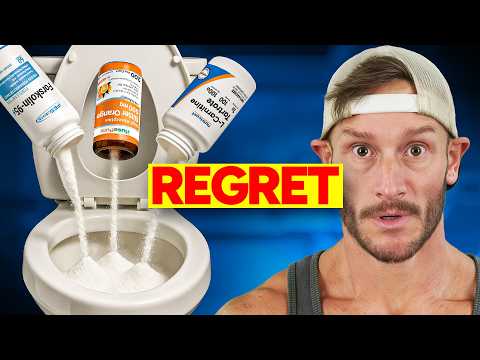
I Highly Recommend You NEVER Take These Supplements (especially to lose fat)
~36 min
Episode Brief·YouTube

I Highly Recommend You NEVER Take These Supplements (especially to lose fat)

Thomas DeLauer
Watch on YouTube Add to chat My bookmarks← All sources

TL;DR

The four things you'd lose by not watching

4 items

TL;DR

The four things you'd lose by not watching

4 items
1

Forskolin: A study of 715 people found 10.5% had adverse events (91% GI, mostly diarrhea), so any weight loss is likely from diarrhea — not worth the risk.

2

Chromium picolinate: Meta-analyses show at best ~0.5 kg weight loss, unadjusted for confounders like caffeine and exercise, making it a useless fat burner despite marketing hype.

3

Bitter orange (synephrine): All studies showing a metabolic boost included up to 528 mg of caffeine; pure synephrine failed to raise metabolic rate — the magic is just caffeine.

4

Creatine is a cheap, research-backed alternative that builds lean mass, improves recovery, and indirectly supports fat loss — the speaker says it outperforms all the hyped fat burners.

Protocols

Concrete recipes — what, when, how much, and why

3 items

Chromium as a glucose-response experiment

WhatTake chromium picolinate with a higher-carbohydrate meal and use a glucose monitor to see whether it blunts your postprandial spike. Do not take it expecting weight loss.
WhenWith a meal that contains a meaningful amount of carbohydrates.
Dose200–400 mcg per day (as used in the cited studies); speaker doesn’t give a specific personal dose, but suggests the range used in research.
For whomPeople curious about chromium’s effect on their glucose control, especially those with poor post-meal glucose regulation; not recommended as a weight loss tool.
WhyChromium may enhance GLUT4 translocation and glucose disposal, but the effect is individually variable. Self-experimentation reveals whether you are a responder.
CaveatsDo not use this protocol expecting meaningful fat loss; the weight-loss effect is clinically negligible. Over-reliance without glucose monitoring can lead to placebo-based compliance. Some people will see no benefit.

The speaker dismantles chromium’s weight-loss reputation by showing that meta-analyses yield at most 0.5 kg fat loss — likely an artifact of confounding variables like caffeine and exercise. However, he separates the mineral’s possible glucose-management role from the fat-burner hype. Because chromium is an essential trace element, it is not worthless; he suggests a pragmatic, data-driven approach: take it before a carb-containing meal and track your blood sugar response. If your glucose curve improves, it may help you indirectly by stabilizing energy and appetite. If not, you haven’t wasted much money. This shifts chromium from a blanket recommendation to a personalized biohack.

Mechanism

Chromium facilitates insulin receptor signaling and GLUT4 translocation to the cell membrane, increasing glucose uptake into muscle and fat cells, thereby potentially reducing postprandial blood glucose excursions.

I suggest people take chromium with a meal that has higher carbohydrates and monitor your glucose with it and see if it actually helps.

Peri-workout carnitine for fat oxidation

WhatTake carnitine only during the window around your workout (pre, intra, or post) to replenish training-induced depletion and support fatty acid transport into mitochondria. Avoid taking it at other times without exercise.
WhenAround the workout period; the exact timing (before, during, or after) is not specified, but the key is coupling it with exercise.
DoseNo specific dose given; common supplemental doses are 1–2 g L-carnitine L-tartrate or similar forms.
For whomPeople who train hard and may be experiencing carnitine depletion; not for sedentary individuals.
WhyIntense training depletes carnitine, so restoring it when demand is high may boost fatty acid oxidation. Without exercise, extra carnitine above baseline does not increase fat burning.
CaveatsTaking carnitine multiple times per day without exercise provides no fat-loss benefit. It is not a stand-alone fat burner. The literature shows no advantage beyond restoring a deficiency.

The speaker acknowledges carnitine’s essential role in fat metabolism but stresses that supplementation is only beneficial when there is a deficit. Studies show no effect of carnitine on resting fat oxidation in the absence of exercise. However, hard training creates a meaningful dip below baseline, so a small dose taken around the workout window can help the body utilize fat for fuel during and after exercise. This protocol avoids the common mistake of popping carnitine multiple times daily with the hope of burning more fat, which the literature does not support. It is a use-it-or-lose-it supplement that must be paired with physical activity.

Mechanism

Carnitine shuttles long-chain fatty acids across the inner mitochondrial membrane via the carnitine palmitoyltransferase (CPT) system, enabling beta-oxidation. Training reduces intramuscular carnitine, so supplementation around exercise helps maintain transport capacity.

Taking carnitine without exercise is not going to do you any good.

Also said
“if you're going to exercise, then sure, it could have an impact. But what we're seeing in the literature is that anything above and beyond your baseline of where you should be is not going to be advantageous. But if you're training a lot, you're dipping below baseline a lot.”— Clarifies the conditional effectiveness of carnitine based on training status.

Daily creatine monohydrate for body composition

WhatTake a standard daily dose of creatine monohydrate (typically 3–5 g) to increase strength, lean mass, recovery, and indirectly support fat loss through a higher metabolic rate.
WhenAny consistent time daily; often post-workout or with a meal, but timing is not critical as long as it is taken regularly.
Dose3–5 g per day (industry standard; the speaker does not specify a dose, but this is the widely researched amount).
For whomAnyone looking to improve body composition and performance, especially those engaged in resistance training or high-intensity exercise.
WhyCreatine helps regenerate ATP rapidly during exercise, enabling greater training intensity and muscle accretion, which raises resting metabolism. Additional benefits on recovery and inflammation may further improve body composition.
CaveatsInitial water retention may increase scale weight, but this is intramuscular water, not fat. Long-term net effect on fat loss is positive through increased muscle mass. Very cheap, but some non-responders exist.

The speaker contrasts creatine with the four fat burners he debunks, noting that creatine’s evidence base is robust, while the others are based on confounded or misinterpreted data. He reframes the common fear of ‘creatine makes you gain weight’ by pointing out that the weight gain is lean mass and water inside the muscle, not fat, and that this raises your metabolism, making it easier to lose actual fat in the long run. He implies that if you had to pick one supplement for body recomposition on a budget, creatine would be it — not the exotic extracts that dominate fat-loss marketing. This positions creatine as a practical, evidence-based choice for those truly interested in losing fat, not just scale weight.

Mechanism

Creatine phosphate donates a phosphate group to ADP to reform ATP quickly during short-duration, high-intensity efforts. Elevated phosphocreatine stores enhance repeated-bout performance, leading to greater muscle hypertrophy over time. Increased muscle mass elevates basal metabolic rate, and some evidence suggests creatine reduces exercise-induced inflammatory markers and improves recovery.

It's an energy producing supplement. It's going to help you create more or have more available creatine phosphate to immediately produce ATP when you need it on demand.

Also said
“It's potentially going to help you build muscle... revs up your metabolism.”— Links the ergogenic effect to metabolic rate, which is the indirect fat-loss mechanism.

What's new

Personal practice updates, fresh positions, predictions

4 items

forskolin-diarrhea-revelation

A large study (n=715) reveals that 10.5% of users develop adverse events, 91% gastrointestinal, mostly diarrhea; weight loss may be explained by GI distress, not enhanced lipolysis, debunking the marketing narrative.

Why this matters: Overturns the popular belief that forskolin is a safe, effective fat burner and highlights how in vitro lipase data was misapplied to human outcomes.

Background

Forskolin was promoted because in vitro it increased hormone-sensitive lipase, the enzyme that liberates fatty acids, leading people to assume it would drive fat loss in humans.

The speaker explains that initial studies showed promising lipolysis markers, but when you look at actual human trials, the story falls apart. A 30-day study with 250 mg forskolin alongside a caloric deficit and exercise found that both groups lost the same amount of weight, yet advocates cherry-pick this as evidence. More damning, a separate survey of 715 people documented a 10.5% adverse event rate; 91% of those were GI issues, and 80% of those were diarrhea. The effect was dose-dependent. The speaker concludes that any weight loss is likely driven by gastrointestinal distress, not metabolic magic, making forskolin a waste of money and a source of unnecessary discomfort.

So yeah, you're going to lose weight. Congratulations. You're going to have diarrhea.

Also said
“if you look at the literature that's trying to promote forcolin, they'll say, hey, the forscolin group lost weight. Both groups lost the same amount of weight.”— Reveals that even positive-seeming studies show no advantage for forskolin.

chromium-weight-loss-myth

Cochrane and Obesity Reviews meta-analyses show chromium picolinate yields at best 0.5 kg weight loss, clinically negligible and confounded by unmeasured variables like caffeine and exercise, demolishing its reputation as a fat burner.

Why this matters: Confronts the common marketing claim that chromium drives meaningful weight loss, exposing the weak and confounded evidence behind it.

Background

Chromium was hyped for weight loss via improved insulin signaling and GLUT4 translocation, suggesting better glucose control could indirectly reduce body weight.

The speaker cites a Cochrane review of 9 studies (200–400 mcg/day) where the pooled result looked slightly favorable but was never adjusted for confounders — some trials included caffeine or exercise, muddying the attribution. A second meta-analysis in Obesity Reviews (11 studies, 8–26 weeks) found an average weight loss of only 0.5 kg. He argues this is not clinically meaningful and likely reflects a minor glucose-lowering effect that might help some metabolically unhealthy individuals, not a direct fat-loss effect. The recommendation shifts from 'take it to lose weight' to 'if you're curious, test it with a glucose monitor, but don't expect magic.'

What we're looking at with the weight loss studies, it's pretty weak.

Also said
“there was about a 0.5 kg weight loss when chromium was added in. So does that mean that it's tremendous for weight loss? No.”— Directly quantifies the trivial effect size.

bitter-orange-caffeine-deception

A meta-analysis of 20 studies found that all favorable metabolic rate increases with bitter orange (synephrine) disappear when caffeine is removed; only 1 of 9 caffeine-free studies showed a tiny effect, proving caffeine is the real active ingredient.

Why this matters: Exposes a widespread marketing trick where bitter orange is sold as a thermogenic, when the true driver is high-dose caffeine added to the formulas.

Background

Bitter orange extract (synephrine) is advertised as a potent fat-burning ingredient that revs up metabolism, often included in so-called 'stimulant-free' or 'natural' fat burners.

The speaker cites a paper in the International Journal of Medical Sciences that reviewed 20 studies. Every one of the studies showing a positive effect on resting metabolic rate included caffeine, often up to 528 mg — equivalent to roughly five cups of coffee. When the analysis isolated the nine studies that used bitter orange without caffeine, only one demonstrated a pathetically small increase; the other eight showed no benefit. He concludes that the metabolic boost attributed to synephrine is entirely explained by the caffeine, rendering pure bitter orange worthless for fat loss. This calls into question the entire product category unless consumers check for hidden caffeine.

I rest my case. I'm pretty sure it's the caffeine that's doing the job here.

Also said
“Every single study that showed favorable results with bitter orange or cinephrine, guess what? They also had caffeine in them.”— Simplifies the damning pattern found across the literature.

creatine-as-overlooked-fat-loss-aid

Creatine is repositioned as a superior indirect fat-loss supplement because it builds lean mass, elevates metabolism, improves recovery, and reduces inflammation — outperforming the hyped fat burners like forskolin, chromium, bitter orange, and standalone carnitine.

Why this matters: Flips the narrative that creatine causes water-weight gain and should be avoided during cutting, instead framing it as a proven body recomposition tool.

Background

Creatine is traditionally feared during weight loss due to initial water retention, but it is one of the most researched sports supplements for strength and muscle gain.

The speaker argues that creatine increases phosphocreatine stores, enabling faster ATP regeneration during high-intensity efforts, leading to greater strength and muscle accretion. More lean mass means a higher resting metabolic rate, which naturally supports fat loss over time. He alludes to additional literature showing improved recovery and lower inflammatory markers, which could help preserve muscle during a deficit and shift body composition toward lower body fat. Unlike the other four supplements he debunked, creatine has a robust, consistent evidence base and is extremely cheap. He explicitly says it 'probably works better than these other four,' making it the real practical recommendation for anyone wanting to lose fat and improve physique.

the literature on creatine is very, very, very strong, whereas the literature on things like bitter orange are a complete joke.

Also said
“It's an energy producing supplement. It's going to help you create more or have more available creatine phosphate to immediately produce ATP when you need it on demand. So, it's going to get you stronger.”— Explains the ergogenic mechanism that translates into metabolic benefits.

Recommendations

Products, supplements, and tools mentioned in the episode

3 items

Creatine Monohydrate

Supplement

Recommended as a well-researched, inexpensive supplement for strength, muscle gain, recovery, and indirect fat loss — the speaker says it is more effective than the four overhyped fat burners discussed.

Throughout the episode, the speaker positions creatine as the practical alternative to the flawed weight-loss supplements. He highlights that creatine is one of the most studied supplements, with a consistent signal for improving body composition and performance. Unlike forskolin, chromium, bitter orange, and carnitine, the benefits of creatine are not derived from short-term metabolic tricks but from building metabolically active muscle and improving recovery. He suggests that anyone serious about fat loss should consider creatine over the more exotic options that dominate marketing.

vs alternatives

When compared to forskolin (causes diarrhea), chromium picolinate (negligible 0.5 kg weight loss), bitter orange (requires high caffeine to work), and standalone carnitine (ineffective without exercise), creatine stands out for its robust evidence base, clear ergogenic and body-composition benefits, and extremely low cost.

creatine is one of the most researched supplements that is out there next to caffeine.

Also said
“It's going to help you create more or have more available creatine phosphate to immediately produce ATP when you need it on demand.”— Explains the fundamental mechanism that leads to better training and lean mass gains.
Find Creatine

Chromium Picolinate (conditional)

Supplement

Not recommended for weight loss, but the speaker says it is a cheap mineral that may be worth experimenting with alongside a glucose monitor if you want to see whether it improves your post-meal blood sugar.

The speaker clarifies that chromium is not a fat burner despite heavy marketing. The meta-analyses show a maximum of 0.5 kg weight loss, which is not clinically meaningful. However, because chromium is an essential trace mineral and is inexpensive, he doesn't recommend discarding it entirely. Instead, he frames it as a personal experiment: take it with a carb-heavy meal and monitor your glucose. If you see a benefit, great; if not, you're only out a small amount of money. This shifts chromium from a must-have to an optional, data-driven supplement.

vs alternatives

Unlike creatine, which has clear body-composition and performance evidence, chromium's effects are so small and confounded that the speaker considers it virtually useless for meaningful weight loss. He contrasts it with his suggestion to test it only for glucose management.

My suggestion with chromium is not to throw it in the trash. It's relatively inexpensive.

Find Chromium

L-Carnitine (peri-workout only)

Supplement

Only recommended if you are training hard and want to support fat utilization around exercise; ineffective as a stand-alone fat burner and should not be taken multiple times per day without activity.

The speaker reiterates that carnitine is essential for fat transport, but supplementation above baseline does not boost fat burning unless a deficiency exists. Hard training depletes carnitine, so taking it near a workout can help facilitate fatty acid oxidation during recovery. However, he strongly warns against using it as a casual daily supplement when you're not exercising, as the literature shows no benefit. This recommendation turns carnitine from a general 'fat burner' into a training-specific ergogenic aid.

vs alternatives

Compared to creatine, which works without needing to be tied to a specific workout, carnitine’s benefits are contingent on exercise timing, and the effect is limited to restoring a deficit rather than supercharging fat loss beyond baseline.

if you're going to take it as a fat burner without exercise, it's not really worth it.

Also said
“carnitine is absolutely critical for fat metabolism.”— Acknowledges the biological importance while clarifying its conditional efficacy.
Find L-Carnitine
Disclosed sponsorships1speaker disclosed

Bond Charge Red Light Therapy Blanket

Product Sponsored · disclosed

A flexible, sleeping-bag-style blanket emitting 660 nm red light for full-body photobiomodulation at home, positioned as a convenient and affordable alternative to expensive red-light therapy beds.

DisclosureSpeaker provides an affiliate link and a code below the video for 25% off Bond Charge products.

The speaker promotes the Bond Charge blanket as a breakthrough in red light therapy accessibility. He explains that many people need full-body coverage but end up paying for expensive sessions in commercial red-light beds. This blanket uses 660 nm wavelength diodes embedded in a flexible fabric, allowing the user to crawl inside like a sleeping bag and get whole-body exposure. He cites adoption by the military, professional athletes, and sports teams as evidence of efficacy and underscores that the science behind red light therapy is now too strong to dismiss. The price point, combined with the 25% discount code, makes it a cost-effective home solution compared to repeated bed sessions.

vs alternatives

Compared to commercial red light therapy beds, the blanket offers similar 660 nm therapy with full body coverage at a one-time purchase price, eliminating per-session costs and travel.

you can't make fun of me for red light therapy anymore because the science is way too strong.

Also said
“the military uses it. Professional athletes use it. Sports teams use it.”— Reinforces the credibility and widespread adoption of red light therapy.
Find Bond

Notable quotes

Lines worth pulling out — contrarian, specific, or perfectly phrased

5 items
So yeah, you're going to lose weight. Congratulations. You're going to have diarrhea.
Sarcastic and blunt dismissal of forskolin’s weight-loss claims, directly linking the effect to GI distress.
I rest my case. I'm pretty sure it's the caffeine that's doing the job here.
Conclusive statement after debunking bitter orange, encapsulating the entire argument in one line.
Taking carnitine without exercise is not going to do you any good.
Crisp, actionable rule that contradicts the way carnitine is often marketed and consumed.
the literature on creatine is very, very, very strong, whereas the literature on things like bitter orange are a complete joke.
High rhetorical contrast that underscores the speaker’s confidence and makes memorably clear which supplement to trust.
Every single study that showed favorable results with bitter orange or cinephrine, guess what? They also had caffeine in them.
Turns the supplement industry’s selling point into its fatal flaw — a must-remember fact for evaluating fat burners.

Sign in to share feedback

Tell us if this brief hit the mark or missed it — feedback feeds back into the next iteration of the prompt.

Topics covered

forskolinchromium-picolinatebitter-orangesynephrinecarnitinecreatinered-light-therapysupplement-scamsfat-loss-mythscaffeine-benefitsmeta-analysesglucose-controlexercise-supplement-strategybody-compositionatp
Free account

Make this library yours

Reading is free for everyone. A free account adds the personal layer: save protocols, follow experts, and see how the other experts weigh in on this same topic.

Create a free accountSign in

Where the experts disagree — weekly

One email a week: the sharpest new disagreements and protocols from the library. No spam, unsubscribe anytime.

Educational summary of the cited expert source — not medical advice. Open the source recording linked above and consult a qualified physician before acting on any protocol.