
UNFUCG
DashboardSearchChatBookmarksNotificationsActivityPremiumProfile
?
Home
Search
Chat
Saved
Profile
Episode
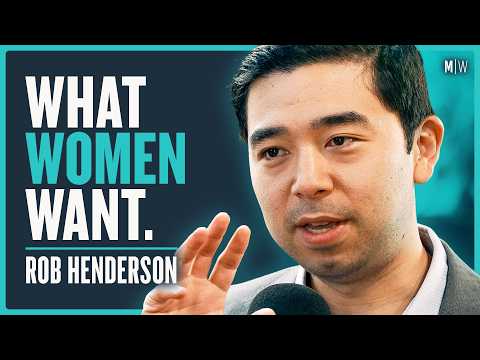
Why Women Say They Want One Thing But Date Another - Rob Henderson
~124 min
Episode Brief·YouTube

Why Women Say They Want One Thing But Date Another - Rob Henderson

Chris Williamson
Watch on YouTube Add to chat My bookmarks← All sources

TL;DR

The four things you'd lose by not watching

4 items

TL;DR

The four things you'd lose by not watching

4 items
1

Political ideology mismatches in dating may arise because traits like ambition and self-sufficiency—which women find attractive—cluster with conservative voting patterns, not because women secretly desire right-wing ideology.

2

The ‘sneaky fucker’ strategy (kleptogamy) explains why some men adopt feminist language to bypass mate competition, as illustrated by the Harry Sison story; this is incentivized by women’s stated preference for progressive partners.

3

Rich advice on selecting a romantic partner: prioritize emotional stability, clarity, and openness; give relationships at least six months to reveal true character and travel together as a stress test; mate value is relative to your realistic alternatives, not absolute.

4

The Netflix series ‘Adolescence’ is a fictionalized, politically convenient narrative that does not reflect real incel violence data; actual incels have high rates of anxiety and depression, not violent extremism, and the show risks being used to justify online censorship.

Protocols

Concrete recipes — what, when, how much, and why

6 items

Test emotional baseline return

WhatWhen dating, observe how quickly a person can calm down and return to their emotional baseline after getting upset, angry, or irritated.
WhenDuring the first months of dating, especially in moments of minor conflict or stress.
DoseObserve over multiple incidents; no specific duration, but a pattern will emerge within 3–6 months.
For whomAnyone evaluating a potential long-term partner.
WhyLow neuroticism and ability to self-regulate are strong predictors of relationship satisfaction and lower conflict. People who spiral out and seek more reasons for anger are poorer long-term partners.
CaveatsEveryone gets angry; the key is the return speed and whether they can label their emotions. Some inability to regulate may stem from clinical conditions like borderline personality disorder, which requires professional help.

David Bus advises looking for emotional baseline return. Henderson elaborates: people high in neuroticism not only feel worse but objectively experience more conflicts. The inability to distinguish fine shades of negative emotion (e.g., frustration vs. rage) impairs communication, making arguments escalate. A healthy partner identifies and verbalizes what they feel rather than making you guess. Henderson references research on borderline personality disorder, which involves an extreme version of this, but the trait exists on a spectrum. He notes that during conflict, communication is even more crucial, and those who shut down or expect mind-reading amplify problems.

Mechanism

High neuroticism is linked to objective increases in interpersonal disputes and a tendency to overstate suffering. Emotion regulation ability reflects lower neuroticism and higher agreeableness, which correlate with relationship stability.

One of the things you want to look for is are they able to or how quickly do they return to their emotional baseline.

Also said
“All of us, regardless of our personality traits and our temperaments, we're capable of getting angry... but some of us are able to sort of take a step back, take a couple of breaths and sort of detach and think about the situation rationally.”— Describes the specific behavior of a good partner.

Wait 6 months before serious commitment

WhatDelay major relationship decisions (moving in, marriage, merging lives) until you have been together at least six months.
WhenAfter first starting to date someone you like.
DoseAt minimum six months; longer is better to see them across seasons and life stresses.
For whomAnyone in a new romantic relationship.
WhyPeople mask their true selves during the initial infatuation period. Around the six-month mark, the novelty fades and their real personality emerges, including how they handle bad days, sleep deprivation, and stress.
CaveatsThis is a rule of thumb; some people may reveal themselves earlier or later. The key is to see them in enough varied situations.

Henderson cites psychologist Shant T. Smith's work that after about six months, partners begin to let their guard down. Early excitement buffers against everyday irritations; once that fades, you see their default state. He notes that even jet lag or a tough workday will reveal different sides of a person. This aligns with the earlier point about emotional baseline—six months provides enough data points to assess it reliably. The advice is not to rush, because many people leap into commitment based on the curated selves of the first weeks.

Mechanism

The honeymoon phase is characterized by high dopamine and oxytocin, which suppresses critical evaluation. As neurochemicals normalize, ingrained behavioral patterns resurface. The 6-month mark is when the 'best behavior' facade cracks enough to see stable traits like neuroticism and agreeableness.

About a six-month mark, the rule of thumb is after about six months, you do start to learn about that person... how they handle pressure, what they're like when they're sleep-deprived, what they're like when they're having a bad day at work.

Also said
“When you're first dating someone that you like, you're on your best behavior... You're showing each other the best versions of yourself.”— Explains why the initial period is misleading.

Travel together on a stressful trip

WhatTake a long, potentially uncomfortable trip together to observe how your partner handles unpredictability and stress.
WhenAfter a few months of dating, before formal commitment.
DoseAt least one trip that involves travel fatigue, delays, or unfamiliar environments.
For whomCouples considering long-term commitment.
WhyTravel strips away routine comforts and forces both people to react to novel, sometimes unpleasant situations—revealing true emotional regulation, flexibility, and compatibility.
CaveatsIntentionally engineering a nightmare trip is not necessary; even a normal trip with minor hiccups is revealing. Also, one bad trip is not conclusive.

Chris attributes this advice to Joe Rogan, who emphasized going on a long journey to a stressful place. Henderson agrees, linking it to the jet-lag and sleep-deprivation scenarios. The point is to see the partner 'out of the rosy glow of everyday predictable life.' This protocol works synergistically with the six-month rule and emotional baseline check, offering a concentrated stress test that might condense learnings otherwise taken months to surface.

Mechanism

Under cognitive load and physical discomfort, the prefrontal cortex's ability to regulate limbic responses weakens, so impulsivity and neuroticism become more visible. Stress tests mimic the unpredictable challenges of a shared life.

You got to go on a long trip and you got to go somewhere stressful and you got to go on a long journey. ... Put as much sort of like stress test the relationship.

Also said
“Travel coach, you know, like put on as much sort of like stress test the relationship seal hell week.”— Emphasizes intentionally choosing humble travel conditions.

Communicate openly instead of playing guessing games

WhatDuring relationship conflict, explicitly state your feelings and avoid expecting your partner to read your mind; inquire about your partner’s thoughts without assuming.
WhenWhenever you feel upset, misunderstood, or notice tension.
DoseOngoing practice throughout the relationship.
For whomAll couples, especially those prone to passive-aggressive patterns.
WhyAuthenticity and clear communication strongly predict relationship satisfaction. Expecting mind-reading (the 'guessing game') is a red flag that erodes trust and builds resentment.
CaveatsOvercommunication about trivial annoyances can also be detrimental; the advice applies most to significant relational issues. Delivery matters—gentle, diplomatic expression works better than blunt accusations.

Henderson references a study showing that authenticity in a relationship—agreeing with statements like 'I’ll usually tell my partner things that are on my mind even if there’s a chance he or she may not understand me'—correlates with satisfaction. He warns that people who are low in authenticity often end up with similarly deceptive partners. The 'guessing game'—where one partner expects the other to know why they’re upset—is a red flag because it signals low emotional clarity and a test of care. The healthier alternative is to say, 'This is what I’m feeling, this is what’s upsetting me,' allowing the partner to respond appropriately. He adds that communication during periods of emotional tension is even more vital, as that’s when the relationship is truly tested.

Mechanism

Authenticity builds trust because it signals low manipulativeness and high honesty-humility. When both partners are transparent, they can problem-solve instead of spiraling into misinterpretation. The dyadic effect ensures that authentic people tend to pair with each other.

If you really cared about me, you should know how I’m feeling... That's a red flag. A more healthy relationship style would be to just say, 'This is what I'm feeling. This is what's upsetting me.'

Also said
“I'll usually tell my partner things that are on my mind even if there's a chance he or she may not understand me.”— Example item from the authenticity scale.

Prioritize finding a partner during college/university years

WhatActively seek a long-term romantic partner while in higher education, as the density of eligible, like-minded, high-potential mates will never be higher.
WhenDuring undergraduate and graduate studies, especially in early 20s.
DoseContinuous openness, not obsessive; integrate socializing and dating into college life.
For whomYoung adults in university settings who desire marriage or long-term partnership.
WhyThe mating pool shrinks dramatically after college; people become more set in their ways, geographically scattered, and encumbered by career demands, making it harder to find a compatible partner later.
CaveatsDoes not mean rushing into marriage with the first person; the earlier protocols (6-month rule, travel test) still apply. Not all must marry young; atypical life paths exist but are not the optimal path for most people.

Henderson recounts the Princeton mom letter (Susan Patton, 2013) where she advised female Princeton students to find a husband on campus because they would never again be surrounded by so many men worthy of them. The advice was met with fury as anti-feminist. Henderson agrees that both men and women face a drastically diminished mating market after college. He contrasts the ‘startup marriage’ (building a life together from scratch) with the ‘capstone marriage’ (finding a partner only after everything else is established), noting the latter is harder because you become rigid. Chris adds Louise Perry’s lamp analogy: it’s easier to build a house around a lamp than to find a lamp that fits a perfectly built house—life is the house, the partner is the lamp.

Mechanism

Proximity and repeated exposure facilitate attraction (mere-exposure effect). College creates a high-density environment of similarly-aged, ambitious individuals with aligned life stages. Post-college, assortative mating becomes harder because the local pool shrinks and people’s lifestyles diverge.

You're never going to be surrounded by so many men who are worthy of you.

Also said
“If you are with a man who's less intelligent than you, you're never really going to be fully satisfied.”— Another line from the Princeton mom letter emphasizing assortative matching on intelligence.
“It's way easier to build a house around a lamp than it is to find a lamp that fits the perfect house.”— Chris’s succinct analogy for why early partnership is easier.

Look for high conscientiousness in a partner

WhatChoose a romantic partner who is hardworking, diligent, organized, and reliable.
WhenDuring the vetting process of a potential long-term partner.
DoseAssess via observation of their daily habits, work ethic, and follow-through over time.
For whomAny individual seeking a stable, mutually supportive long-term relationship.
WhyConscientiousness is the strongest Big Five predictor of career success and also correlates with relationship stability; surprisingly, a partner’s conscientiousness even predicts your own career success.
CaveatsExcessive conscientiousness can tip into rigidity; aim for moderate-to-high, not extreme. Also, conscientiousness alone does not guarantee kindness or emotional intelligence—it must be paired with other green flags.

Henderson highlights that while intelligence (IQ) is important for career success, conscientiousness rivals it. Even more striking, one study found that controlling for your own conscientiousness, your partner’s level still predicts your career outcomes, because a diligent partner creates a supportive, organized home environment that enables better work performance. In relationship terms, high conscientiousness reduces impulsivity and flightiness, contributing to stability. He contrasts this with traits like low impulse control, aggressiveness, and flightiness (often clustered with low conscientiousness and high neuroticism) which predict mistreatment. This advice aligns with the earlier red flags about tattoos and piercings as signaling low impulse control.

Mechanism

Conscientious partners help structure life (appointments, emails, deadlines), reducing chaos and stress. This reliable support indirectly boosts the other partner’s professional performance, as shown by studies controlling for one’s own conscientiousness.

Even when you control for the participants own level of conscientiousness, their romantic partner's conscientiousness predicts their own career success.

Also said
“Conscientiousness has the strongest predictive power for how successful someone's going to be in their career.”— Establishes the trait's importance beyond relationships.

What's new

Personal practice updates, fresh positions, predictions

4 items

woke-fishing-and-sneaky-fucker-strategy

06:30

Men increasingly adopt progressive feminist language as a mating strategy to appear kind and non-threatening, mirroring the evolutionary strategy of kleptogamy (‘sneaky fucker’) where males disguise dominance signals to gain sexual access.

Why this matters: Provides an evolutionary explanation for the phenomenon of men feigning left-wing views to attract women, linking it to a documented biological tactic seen in other species.

Background

Conventional wisdom holds that political homophily drives partner choice, but the dating market reveals a mismatch: many women express left-leaning values yet find traits associated with conservative men attractive. This creates an incentive structure for men to misrepresent.

Rob Henderson analyzes the Harry Sison story—a left-wing TikTok star for the Democratic National Committee who was exposed for duplicitously getting nudes from multiple women by pretending to be a sensitive, feminist ally. Henderson notes that the outrage stemmed not from the behavior itself (a young famous guy getting nudes is unremarkable) but from the hypocrisy of a self-professed feminist doing it. He then draws a parallel to the evolutionary biology concept of kleptogamy: males who adopt feminine or submissive appearances to avoid provoking dominant rival males, letting them get close to females. This ‘sneaky fucker’ tactic is now incentivized in human dating because signaling progressive values can disarm both female skepticism and male competition. Henderson highlights how social media amplifies these false signals because people mistake applause for a person’s words as evidence of their private character.

A lot of guys are kind of adopting this... if it's the case that women want the handsome guy but then also sort of politically leftwing, this is just going to incentivize a lot of camouflage.

Also said
“This wouldn't be a thing unless it had some basis in reality unless somewhere in the world that actually paid off as a strategy.”— Emphasizes that ‘woke fishing’ emerges because it succeeds.
“Harry Sison... would say things like, 'I'm interested in women more for their bodies. I like their minds.' He also said something like, 'I don't have a roster.' If you know the word roster, you have a roster.”— Illustrates the deceptive language used to appear harmless.

asymmetry-in-sexual-performance-blame

28:00

Societal discourse blames men for both male erectile dysfunction and female orgasm difficulties, while women are never held responsible for male arousal problems—an asymmetry Chris Williamson dubs 'men not erect, women most affected'.

Why this matters: A rarely articulated double standard in sexual accountability, framed with evolutionary reasoning and research on women’s sense of accomplishment from male orgasm.

Background

Common narratives around sex focus on male inadequacy: men can't find the clitoris, men need to learn female bodies, men's ED is their own failure. No equivalent blame falls on women for a man's inability to get or maintain an erection.

Henderson and Williamson discuss how when a woman cannot reach orgasm, the conversation places the burden on the man—he must make her comfortable, learn her body, perhaps even attend to her emotional needs beforehand. Yet when a man experiences erectile dysfunction, the same discourse does not suggest the woman’s lack of skill or effort is at fault; it remains the man’s failing. Williamson coins the phrase 'men not erect, women most affected' to mirror the earlier framing of 'men floundering, women most affected.' Henderson adds that research shows women derive a strong sense of satisfaction from bringing their male partner to orgasm—likely because, evolutionarily, male orgasm is essential for reproduction, whereas female orgasm is not. He also notes that male sexual response is far less variable; thus, the 'bar' for a woman performing adequately is lower, while the man is held to a narrow mechanical standard. This creates an ironic situation where female sexual complexity is used to simultaneously excuse women from responsibility and blame men for both partners’ difficulties.

I saw Ralph Dan tweet something about this... women essentially feel like extremely satisfied when their male partner has an orgasm and they feel very dissatisfied when they don't. like they feel the sense of accomplishment by bringing their male partner to completion.

Also said
“No one is saying your head game is weak, Julia. Step it up.”— Williamson's provocative summary of the asymmetry.
“Male variability is reduced... the complexity of your sexuality and what brings you to be aroused and to have an orgasm, it's much more varied for women than for men.”— Highlights the biological reason the double standard is paradoxical.

adolescence-show-as-fictionalized-propaganda

38:00

The Netflix series ‘Adolescence’ portrays a white 13-year-old boy from an intact family stabbing a girl after being radicalized online, but the statistics on knife crime, Andrew Tate fandom, and incel violence contradict this narrative—the show may be a tool to build consensus for online censorship.

Why this matters: A direct challenge to the mainstream media's uncritical embrace of the show as a documentary, using data and the ‘male sedation hypothesis’ to argue real-world incel violence is far lower than predicted.

Background

Since the show's release, politicians and commentators have called for it to be screened in schools and Parliament as a cautionary tale about toxic masculinity and online radicalization.

Henderson dissects ‘Adolescence’ with skepticism. First, he notes that knife crime in the UK is not predominantly committed by white 13-year-olds from working-class, intact homes. Second, polling shows Andrew Tate’s biggest fans in the UK are black (41%) and Asian (30%) males, yet the stereotype centers on white incels. Third, the boy is prepubescent, making it hard to believe his primary grievance is sexual frustration. He cites William Costello’s observation that the real sting was being called an incel—a slur—not sexual deprivation. Henderson ties this to the ‘male sedation hypothesis’ (Chris Williamson’s idea): despite young men’s deteriorating mental health, social isolation, and sexlessness, there is surprisingly little incel violence. The paper by Buss and Costello asked ‘Why is there not more incel violence?’ given historical patterns where a surplus of unmarried low-status men leads to unrest. The answer might be that modern sedatives—video games, porn, online communities—pacify rather than radicalize. Thus, the show creates a fictional crisis. Henderson speculates that its real function may be to manufacture consent for stricter online speech controls: ‘one point of this whole series is to essentially help to create crystallize a consensus that we need to increase the level of censorship online.’

Personal experience

Chris Williamson shares how he was invited on multiple panel shows to defend the ‘pro-men’ side but refused, realizing it was a no-win fight about a fictional scenario designed to generate outrage.

If you look at the statistics for who commits knife crimes, it's not really like white 13-year-old working-class boys.

Also said
“Why is there not more incel violence? ... We're not really seeing as much as you would predict based on the sort of historical trend and pattern.”— Challenges the show's premise with Buss and Costello's research.
“If the belief among sort of policy makers and taste makers and cultural influencers is, oh, like you know, these accounts, this ideology is leading boys to stab girls, then we need to start shutting down accounts.”— Explicitly states the censorship incentive.

relationship-satisfaction-driven-by-relative-mate-value-not-similarity

50:00

Despite assortative mating, similarity in personality or education does not strongly predict relationship success; what matters more is whether your partner is superior to your realistic romantic alternatives, grading on a curve rather than an absolute checklist.

Why this matters: Flips the conventional ‘find someone like you’ advice, emphasizing that satisfaction hinges on perceived relative mate value and that insecurity arises when one partner believes they could do better.

Background

Traditional narratives emphasize compatibility via shared values and traits; this insight from David Bus’s work suggests that even if couples are similar, happiness depends on the local mating market.

Henderson explains that people do not evaluate partners against an objective ideal but against what they believe they realistically can attract. Bus’s research shows that if a partner is better than the available alternatives, satisfaction is high; if they fall short, and especially if the individual rates themselves as more attractive than their partner, dissatisfaction and dissolution risks increase. This explains why dating apps might have caused a spike in instability: they artificially inflate the perception of endless better options. Henderson also connects this to the ‘capstone vs. startup’ marriage model—when people delay marriage until they’ve built a complete life, they expect a partner to slot into a fixed world, making fit harder. Conversely, building a life together (startup marriage) creates flexibility. He notes that despite much advice on career success, society stigmatizes explicit learning about relationship success, perhaps because needing such advice signals low mate value. The meta-lesson is to treat romantic skill-building as seriously as career preparation.

If your partner is basically better quality than the alternatives realistic alternatives around you, then people tend to be happy. If the person is kind of less attractive than potential realistic alternatives around you, people tend to be less satisfied.

Also said
“That was especially true for people who evaluated themselves as being more attractive than their own partner.”— Pinpoints the most dangerous dynamic.
“Most women would rather share John F. Kennedy than have Bobo the clown all to themselves.”— Illustrates the principle that absolute exclusivity is less important than partner status.

Recommendations

Products, supplements, and tools mentioned in the episode

2 items

Outraged by Kirk Gray

Book

Rob Henderson references this book to explain the moral diad theory (vulnerable feelers vs. thinking doers) that underlies asymmetrical empathy toward different groups.

Henderson describes Gray's framework: entities are perceived along two dimensions—vulnerability and agency. Conservatives tend to attribute both to everyone, while liberals split groups, viewing marginalized groups as vulnerable feelers (sensitive, helpless) and dominant groups as thinking doers (agentic, unfeeling). This explains why suffering among men is met with calls for self-improvement while women’s struggles are met with societal reforms. The theory is applied to various dyads (cop/criminal, male/female) and is used to make sense of the 2024 election dynamics and the scapegoating of white men.

vs alternatives

Contrasts with other books on moral psychology by focusing on dyadic perception rather than moral foundations.

Kirk Gray talks about... what he calls moral diad theory and how you know basically we categorize people into two different types... vulnerable feelers and thinking doers.

Find Outraged

How the Mind Works by Steven Pinker

Book

Henderson quotes a famous line from this book to illustrate female mate preferences for high-status men: 'most women would rather share John F. Kennedy than have Bobo the clown all to themselves.'

This famous line in Steven Pinker's famous book, How the Mind Works... most women would rather share John F. Kennedy than have Bobo the clown all to themselves.

Find How
Disclosed sponsorships1speaker disclosed

Troubled by Rob Henderson

Book Sponsored · disclosed

At the end of the episode, Henderson promotes his memoir, which covers his life story and the experiences that shaped his views, likely including the luxury beliefs concept.

DisclosureRob Henderson is the author. He mentions it as his book, available in paperback.

You can buy my book. It's out in paperback. Troubled by Rob Henderson.

Find Troubled

Notable quotes

Lines worth pulling out — contrarian, specific, or perfectly phrased

6 items
Most women would rather share John F. Kennedy than have Bobo the clown all to themselves.
Perfectly crystallizes the willingness of many women to accept non-exclusive access to high-status men over monogamy with a low-status man, a recurring theme in Henderson's argument.
Don't judge a book by its cover — and yet people put a great deal of effort into designing book covers. This tweet is not about book covers.
A witty, memorable reversal that underscores the episode's point that our appearance and self-presentation are honest signals of our personality traits, despite the cliché to ignore appearances.
The lows, not the highs, that make or break a relationship.
Challenging the common focus on compatibility and shared joy, this line emphasizes that a couple's ability to navigate bad times is the true test of longevity.
Men not erect, women most affected.
Chris Williamson's provocative framing that highlights the double standard in sexual responsibility, boiled down into a memorable, repeatable phrase.
If the belief among policy makers and cultural influencers is that this ideology is leading boys to stab girls, then we need to start shutting down accounts.
Reveals Henderson's suspicion that the Adolescence show may be a manufactured moral panic to pave the way for online censorship, a spicy contrarian take.
You're never going to be surrounded by so many men who are worthy of you.
The controversial Princeton mom letter line that encapsulates the argument for prioritizing mate search during college, still contentious years later.

Sign in to share feedback

Tell us if this brief hit the mark or missed it — feedback feeds back into the next iteration of the prompt.

Topics covered

assortative-matingpolitical-dating-mismatchwoke-fishingsneaky-fucker-kleptogamyharry-sisonleonardo-dicaprio-datingfemale-shame-as-mate-guardingmen-floundering-women-affectedsex-ratio-hypothesisorgasm-equity-asymmetrymoral-diad-theoryadolescence-netflix-critiquemale-sedation-hypothesisincel-violence-mythemotional-baseline-returnsix-month-rule-relationshipstravel-stress-testauthenticity-in-relationshipsconscientiousness-partner-effecttattoos-impulse-control
Free account

Make this library yours

Reading is free for everyone. A free account adds the personal layer: save protocols, follow experts, and see how the other experts weigh in on this same topic.

Create a free accountSign in

Where the experts disagree — weekly

One email a week: the sharpest new disagreements and protocols from the library. No spam, unsubscribe anytime.

Educational summary of the cited expert source — not medical advice. Open the source recording linked above and consult a qualified physician before acting on any protocol.