
UNFUCG
DashboardSearchChatBookmarksNotificationsActivityPremiumProfile
?
Home
Search
Chat
Saved
Profile
Episode
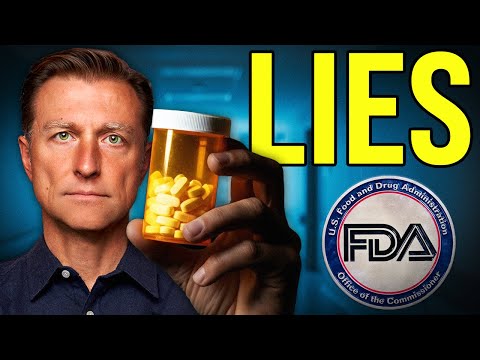
7 Natural Remedies Big Pharma is Hiding (These Prescription Meds Were Never Meant to Cure You)
~16 min
Episode Brief·YouTube

7 Natural Remedies Big Pharma is Hiding (These Prescription Meds Were Never Meant to Cure You)

Eric Berg
Watch on YouTube Add to chat My bookmarks← All sources

TL;DR

The four things you'd lose by not watching

4 items

TL;DR

The four things you'd lose by not watching

4 items
1

The FDA's 1938 redefinition of 'drug' as anything that treats disease created a prior restraint on speech, making it illegal to claim that natural remedies can prevent or treat illness, effectively granting Big Pharma a monopoly over health information.

2

Seven natural remedies—St. John's Wort, red yeast rice, black cohosh, berberine, lavender oil, saw palmetto, and wormwood—have been shown in randomized controlled trials to outperform or match prescription drugs with significantly fewer side effects, yet these findings cannot be legally communicated to consumers.

3

Most pharmaceutical drugs work by inhibiting a single enzyme, managing symptoms without addressing root causes, which is why patients rarely come off them; in contrast, natural approaches target underlying metabolic imbalances like insulin resistance, zinc deficiency, and chronic stress.

4

The explosion of recognized diseases from under 200 in 1900 to over 17,000 today, including the pathologization of normal states like shyness or grief, fuels a profitable cycle of disease awareness and lifelong medication.

Protocols

Concrete recipes — what, when, how much, and why

4 items

Reduce insulin resistance to lower DHT

WhatReduce carbohydrate intake, eat less frequently, and avoid junk food to reverse insulin resistance.
WhenOngoing dietary change.
For whomMen with high DHT symptoms (male pattern baldness, benign prostatic hyperplasia) and signs of insulin resistance.
WhyInsulin resistance raises androgens like DHT, causing hair loss and prostate enlargement; correcting it addresses the root cause rather than just inhibiting the enzyme.
CaveatsConsult a healthcare provider before making significant dietary changes, especially if on medication for diabetes or other conditions.

Berg explains that finasteride only blocks the enzyme, but the real problem is metabolic. He details that insulin resistance stems from excessive carbohydrate consumption, frequent eating, and processed foods. By adopting a lower-carb, less frequent eating pattern, the body can restore insulin sensitivity, thereby reducing the hormonal cascade that leads to elevated DHT. He also notes that stress, liver issues, and zinc deficiency contribute, but diet is the primary lever. This approach, he implies, could make drugs unnecessary for many men.

Mechanism

High insulin levels stimulate androgen production, increasing the substrate (testosterone) available for conversion to DHT by 5-alpha reductase. Lowering insulin through diet reduces this drive, normalizing DHT levels.

The number one reason why your DHT is too high is because you have insulin resistance.

Also said
“Too much insulin raises androgens, especially this type of androgen right here.”— Clarifies the hormonal link.
“Insulin resistance comes from too many carbs, eating too frequently, eating junk food.”— Specifies the dietary causes to target.

Optimize zinc levels to control DHT

WhatEnsure adequate dietary zinc or consider supplementation to maintain normal DHT levels.
WhenDaily, as part of a balanced diet.
For whomIndividuals with low zinc status or high DHT symptoms (hair loss, prostate enlargement).
WhyZinc naturally inhibits 5-alpha reductase, keeping DHT in check; deficiency leads to elevated DHT and associated symptoms.
CaveatsExcessive zinc intake can cause toxicity and interfere with copper absorption; test levels before supplementing and consult a healthcare provider.

Berg points out that many people are deficient in zinc, and that this deficiency is a common but overlooked driver of high DHT. He doesn't specify food sources or dosages, but the implication is that correcting a zinc shortfall can naturally lower DHT without the side effects of drugs. This aligns with his broader message that addressing nutritional root causes can resolve what are often treated as chronic conditions.

Mechanism

Zinc acts as a cofactor that modulates the activity of 5-alpha reductase, reducing the conversion of testosterone to DHT. Adequate zinc levels help maintain hormonal balance.

Another cause of this would be low zinc in the body because zinc naturally controls this and keeps this at a normal level.

Also said
“And how many people are deficient in zinc? A lot of people.”— Emphasizes the prevalence of the deficiency.

Reduce chronic stress to lower cortisol and DHT

WhatImplement stress-reduction techniques (e.g., meditation, exercise, adequate sleep) to lower cortisol.
WhenDaily practice.
For whomIndividuals with high stress levels and DHT-related symptoms.
WhyHigh cortisol from chronic stress can increase androgens, contributing to elevated DHT.
CaveatsStress management is supportive; address other root causes like diet and zinc status concurrently.

Berg briefly mentions chronic stress as a factor that can raise cortisol and thereby androgens. While he doesn't elaborate on specific stress-reduction protocols, the mention underscores the importance of a holistic approach that includes mental and emotional health. This entry is light on detail but consistent with his root-cause philosophy.

Mechanism

Chronic stress elevates cortisol, which can disrupt the hypothalamic-pituitary-gonadal axis and increase androgen production, providing more substrate for DHT synthesis.

Another cause of this would be high levels of chronic stress that can increase cortisol.

Support liver function to regulate hormones

WhatMaintain liver health through diet and lifestyle to prevent excess free testosterone.
WhenOngoing.
For whomThose with known liver issues or high DHT symptoms.
WhyA healthy liver produces sex hormone-binding globulin (SHBG) that binds testosterone; liver dysfunction leads to more free testosterone available for conversion to DHT.
CaveatsConsult a doctor for liver health assessment; specific interventions not provided.

Berg notes that liver problems can cause higher free testosterone, which then converts to DHT. He doesn't offer a detailed protocol, but the implication is that supporting liver health—through diet, avoiding toxins, and managing conditions like fatty liver—can help normalize hormone levels. This is a brief point in his broader argument about root causes.

Mechanism

The liver synthesizes SHBG, which binds circulating testosterone and reduces the fraction that can be converted to DHT. Impaired liver function lowers SHBG, increasing free testosterone and subsequent DHT production.

If you have a liver problem, you'll have more free testosterone to then turn into this because one purpose of the liver is to protect you against too many hormones.

What's new

Personal practice updates, fresh positions, predictions

4 items

fda-drug-definition-prior-restraint

The FDA's definition of a drug as anything intended to treat, cure, or prevent disease creates an unconstitutional prior restraint on speech, suppressing truthful information about natural remedies.

Why this matters: This legal framework, established in 1938, gives the government power to censor health claims about foods and nutrients, directly contradicting First Amendment protections against prior restraints.

Background

Before the Federal Food, Drug, and Cosmetic Act, natural substances could be freely discussed for their health benefits. The redefinition classified even common foods like prune juice or garlic as drugs if any disease claim is made, effectively granting the FDA and pharmaceutical industry control over health communication.

Berg argues that this definition means any statement that a nutrient reduces disease risk turns that nutrient into an unapproved drug, subject to FDA enforcement. He cites legal scholars who note that the Founding Fathers explicitly forbade prior restraints—government requiring approval before speech. The result is that at the point of sale, consumers are deprived of truthful, potentially life-saving information. Berg himself avoids selling anything when discussing natural remedies to stay within legal bounds, but he sees this as a violation of free speech that stifles innovation and harms public health.

Personal experience

Berg states: 'This is why when I do videos on all these natural remedies that help diseases, I am never selling anything.' He frames this as a necessary precaution to avoid legal repercussions while still educating the public.

If a natural remedy or a plant or an herb or even a food does anything to improve this abnormal state of your body, it is now classified as a drug.

Also said
“The American people have been deprived of truthful information essential to their health.”— Highlights the real-world consequence of the FDA's censorship on consumer knowledge.
“That's a prior restraint, and that's what the founding fathers forbad.”— Frames the issue as a constitutional violation, not just a regulatory overreach.

drugs-inhibit-enzymes-dont-cure

Most drugs work by inhibiting a single enzyme in a biochemical pathway, managing symptoms without correcting the underlying cause, which explains why patients remain on medication indefinitely.

Why this matters: Challenges the common perception that medications 'fix' health problems, instead portraying them as lifelong symptom patches.

Background

Pharmaceuticals are typically marketed as treatments that address disease, but Berg contends they are designed only to block specific enzymatic reactions, leaving root causes untouched.

Using the example of finasteride (Propecia/Proscar), which inhibits 5-alpha reductase to lower DHT and treat hair loss and prostate enlargement, Berg illustrates that the drug never asks why DHT is elevated in the first place. He shows a complex biochemical chart and explains that a drug merely stops one enzyme, while the rest of the body's machinery continues to malfunction. This is why patients never 'finish' a course of medication—the underlying issue persists. He contrasts this with natural remedies that may have milder effects but address broader imbalances, and notes that drugs, being more potent enzyme inhibitors, carry greater side effect burdens, such as post-finasteride syndrome causing sexual dysfunction.

Personal experience

Berg suggests a thought experiment: 'I would love to just have you ask your doctor and say, "How long do I have to take this before it corrects it?" Because it doesn't correct it.'

Most drugs, not all of them, but most of them inhibit an enzyme... it does nothing with the underlying cause.

Also said
“This is why when you start taking a drug, you never really come off the drug because it never corrects anything.”— Reinforces the idea of perpetual dependency.
“Drugs don't fix anything. They just patch things up enough to reduce some of the symptoms and manage those symptoms.”— Succinctly summarizes the core critique of pharmaceutical intervention.

insulin-resistance-root-cause-high-dht

Elevated DHT, the hormone behind male pattern baldness and prostate enlargement, is primarily driven by insulin resistance from high-carb diets, frequent eating, and junk food, not merely an overactive 5-alpha reductase enzyme.

Why this matters: Shifts the focus from a localized enzyme problem to a systemic metabolic issue, offering a dietary solution instead of a drug.

Background

Conventional treatment with finasteride targets the enzyme that converts testosterone to DHT, ignoring upstream factors. Berg argues this is why the drug never corrects the problem.

Berg explains that insulin resistance, caused by excessive carbohydrate intake, frequent meals, and processed foods, raises insulin levels, which in turn stimulates androgen production, particularly DHT. This explains why men with insulin resistance often experience hair loss and benign prostatic hyperplasia. He also identifies chronic stress (elevating cortisol), liver dysfunction (reducing sex hormone-binding globulin and increasing free testosterone), and zinc deficiency (zinc naturally inhibits 5-alpha reductase) as contributing factors. By addressing insulin resistance through diet, the root cause can be corrected, potentially eliminating the need for enzyme-inhibiting drugs.

The number one reason why your DHT is too high is because you have insulin resistance.

Also said
“Too much insulin raises androgens, especially this type of androgen right here.”— Directly links insulin to the specific androgen involved in hair loss and prostate issues.
“Insulin resistance comes from too many carbs, eating too frequently, eating junk food.”— Identifies the dietary behaviors that drive the root cause.

disease-inflation-pathologization

The number of recognized diseases has exploded from under 200 in 1900 to over 17,000 today, with normal human experiences like grief, shyness, or pre-speech nervousness being labeled as disorders, expanding the market for pharmaceuticals.

Why this matters: Exposes how the medical industry creates 'disease awareness' to drive drug sales, even for conditions that are not pathological.

Background

The FDA's definition of disease as 'any abnormal mental or body condition' allows for the medicalization of everyday life, turning risk factors and normal emotional states into treatable conditions.

Berg lists examples: attention deficit disorder for poor focus, adjustment disorder for grief, social anxiety disorder for shyness, performance disorder for nervousness before a speech. He notes that one doesn't even need to be sick—risk factors like high cholesterol or pre-diabetes are treated as diseases and medicated. This expansion, he argues, is a deliberate strategy to create a perpetual cycle of diagnosis and drug prescription, benefiting the pharmaceutical industry at the expense of genuine health.

Personal experience

Berg adds a personal touch: 'I think I had that one,' referring to performance disorder, implying he too has been labeled by this system.

In 1900, we had less than 200 diseases. Now we have over 17,000 diseases.

Also said
“If you're shy, you have social anxiety disorder. If you're nervous before a speech, you have performance disorder.”— Illustrates how normal traits are pathologized.
“You don't even have to be sick to have a disease. You could have a risk factor like let's say your cholesterol is high.”— Highlights the expansion into pre-disease states.

Recommendations

Products, supplements, and tools mentioned in the episode

6 items

Red Yeast Rice

Supplement

Meta-analysis of 15 RCTs showed 45% cardiovascular risk reduction vs 30% for statins, with less than half the side effects.

Berg presents red yeast rice as a natural alternative to statins, referencing a meta-analysis that found superior risk reduction and significantly fewer adverse effects. He implies that statins, while widely prescribed, come with muscle pain and other issues, making red yeast rice a compelling option—if patients were allowed to hear about it.

Red yeast rice worked better than statins.

Also said
“A 45% reduction for red yeast rice versus only a 30% reduction for statins in long-term trials.”— Provides the specific risk reduction numbers.
“Plus the side effects were less than half.”— Emphasizes the tolerability advantage.
Find Red

Black Cohosh

Supplement

In an RCT of 89 menopausal women over 12 weeks, black cohosh reduced symptoms by 80% vs 60% for hormone replacement therapy.

Berg references a study where black cohosh outperformed HRT for menopausal symptoms. He suggests that HRT carries known risks, while black cohosh offers a safer, more effective natural alternative. The data, he argues, is strong but suppressed by the regulatory environment.

Black kohash worked better than hormone replacement therapy.

Also said
“There was a reduction by 80% for the black kohash and only a 60% reduction for hormone replacement therapy.”— Quantifies the difference in symptom relief.
Find Black

Berberine

Supplement

RCT of 116 type 2 diabetics over 3 months: berberine reduced A1C by 12% vs 11% for metformin, with fewer side effects.

Berg highlights berberine as a natural compound that matched metformin in lowering blood sugar, with a better side effect profile. He presents it as a viable alternative for diabetes management, noting that metformin can cause gastrointestinal distress, while berberine was better tolerated in the study.

Bourberine worked better than metformin for type 2 diabetes.

Also said
“There was less side effects with the bourberine than metformin.”— Highlights the tolerability advantage.
Find Berberine

Lavender Oil

Supplement

221 anxiety patients over 10 weeks: lavender oil reduced anxiety scores by 16 points vs 14 for lorazepam, with only 1/5th the side effects.

Berg presents lavender oil as an effective anxiolytic, outperforming a benzodiazepine with far fewer adverse effects. He emphasizes the safety advantage, as benzodiazepines carry risks of dependence and sedation. This study, he argues, demonstrates that a natural extract can be a superior first-line option for anxiety.

Lavender oil better than laorazzipam for anxiety.

Also said
“Showed lavender oil reduced anxiety scores by 16 points versus larazzipam only reduced it by 14 points with only 1/5if of the side effects.”— Quantifies both efficacy and the dramatic side effect difference.
Find Lavender

Saw Palmetto

Supplement

RCT of 140 patients over 48 weeks: saw palmetto reduced lower urinary tract symptoms by 5.8 points vs 5.2 for tamsulosin, with fewer side effects.

Berg notes that saw palmetto, a natural herb, matched the alpha-blocker tamsulosin in improving urinary symptoms associated with benign prostatic hyperplasia, with a better safety profile. He implies it is a viable alternative that patients are not told about due to the FDA's restrictions on health claims.

Salt pull metal better than tempsin for lower urinary tract symptoms.

Also said
“These natural herbs reduce the symptoms by 5.8 points versus the drug only 5.2 points with much less side effects.”— Provides the specific symptom score improvement.
Find Saw

Wormwood

Supplement

Wormwood showed 80% remission rate in Crohn's disease vs 65% for mesalazine.

Berg cites a study where wormwood, an herb, achieved higher remission rates than the standard drug for Crohn's disease, suggesting a natural option for inflammatory bowel disease. He presents this as another example of a natural remedy outperforming a pharmaceutical, yet the information is suppressed.

Wormwood. It worked better than misalazine for Crohn's disease.

Also said
“Wormwood showed a remission rate of 80% versus only 65% for the drug.”— Quantifies the remission rate advantage.
Find Wormwood

Notable quotes

Lines worth pulling out — contrarian, specific, or perfectly phrased

6 items
Drugs were never designed to cure you. It's 100% true.
Bold opening statement that sets the contrarian tone, directly challenging the purpose of pharmaceuticals.
If a natural remedy or a plant or an herb or even a food does anything to improve this abnormal state of your body, it is now classified as a drug.
Encapsulates the FDA's expansive definition that turns everyday substances into regulated drugs, stifling natural health claims.
The American people have been deprived of truthful information essential to their health.
A sweeping indictment of the regulatory system, framing it as a public health injustice.
Most drugs, not all of them, but most of them inhibit an enzyme... it does nothing with the underlying cause.
Simplifies the mechanism of pharmaceuticals and highlights their failure to address root causes, explaining lifelong dependency.
The number one reason why your DHT is too high is because you have insulin resistance.
Directly links a common metabolic condition to hair loss and prostate issues, shifting the narrative from genetics to diet.
40 to 70% of all drugs originated from nature or a microbe or marine life. But then this ancient remedy that stood the test of time... is now considered folklore or quackery.
Points out the irony that many pharmaceuticals are derived from natural sources while the original remedies are dismissed as unscientific.

Sign in to share feedback

Tell us if this brief hit the mark or missed it — feedback feeds back into the next iteration of the prompt.

Topics covered

fda-drug-definitionprior-restraintnatural-remedies-vs-drugsst-johns-wortred-yeast-riceblack-cohoshberberinelavender-oilsaw-palmettowormwoodenzyme-inhibitionroot-cause-medicineinsulin-resistance-dhtzinc-deficiencydisease-inflation
Free account

Make this library yours

Reading is free for everyone. A free account adds the personal layer: save protocols, follow experts, and see how the other experts weigh in on this same topic.

Create a free accountSign in

Where the experts disagree — weekly

One email a week: the sharpest new disagreements and protocols from the library. No spam, unsubscribe anytime.

Educational summary of the cited expert source — not medical advice. Open the source recording linked above and consult a qualified physician before acting on any protocol.