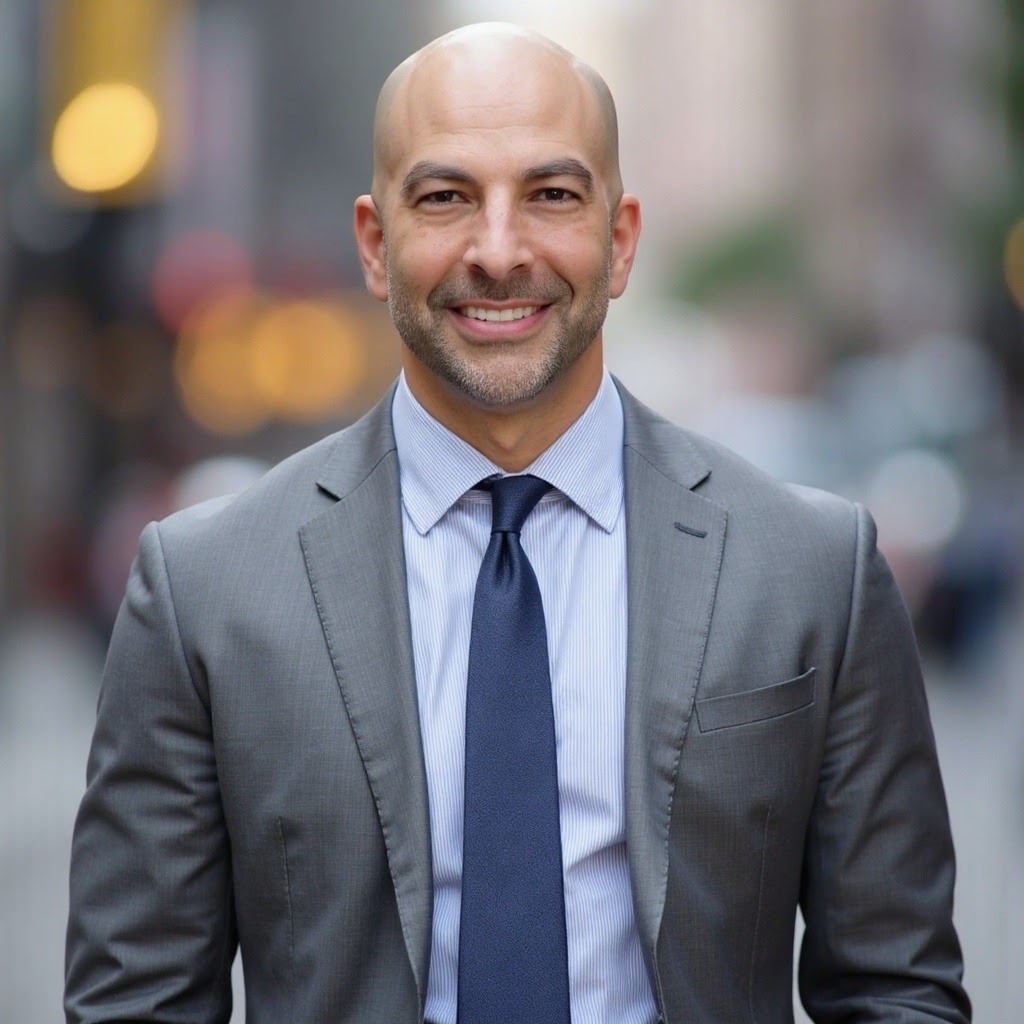
Apolo Ohno threw away his 1998 Olympic berth through deliberate self-sabotage, spent 9 days alone in a beach cabin in Washington state to confront himself, and returned fully committed — going on to win 8 Olympic medals across three Games (2002, 2006, 2010).
2
Every training decision was filtered through a 'zero regrets' test: would he arrive at the Olympic start line knowing he had left no stone unturned? For Vancouver 2010 that meant starving himself catabolic from 165 lbs down to 142–146 lbs and rebuilding his entire skating cadence from scratch.
3
Psychological warfare was Apolo's true competitive edge over technically superior Korean skaters. He deliberately chose training ordeals — 45-lb vest hill sprints, 48-minute single-leg lateral jump sets — with no physiological upside, purely to manufacture mental hardness that opponents couldn't match.
4
At age 27, facing a career-low 2009 World Championships, Apolo made a radical bet: abandon his proven 2002/2006 style, go catabolic, hire a live-in strength coach, and show up in Vancouver as an unrecognizable athlete the Korean coaches (who had studied him for 15 years) couldn't prepare for.
Protocols
Concrete recipes — what, when, how much, and why
7 items
Temptation bundling for endurance base work
WhatOnly watch motivating content (race tapes, specific podcasts, personally addictive media) while performing low-intensity endurance training on a stationary bike or similar equipment. The content is off-limits in any other context.
WhenDuring all steady-state aerobic training sessions
DoseApplied to every aerobic session — the restriction makes both the training and the content more valuable
For whomAthletes or fitness trainees who struggle with adherence to low-intensity aerobic work
WhyPairing intrinsically motivating content with low-stimulation training converts the latter from a chore into a privileged experience, increasing adherence without requiring willpower.
CaveatsRequires genuinely addictive content to pair; casual interest does not produce the same effect. Does not transfer to high-intensity intervals where cognitive focus is required.
Apolo describes watching skating tapes exclusively during stationary bike sessions in his basement. The tapes were not available to him at any other time — only during training. This created a double incentive: he wanted to watch the tapes AND he needed to train. The combination made skipping the session costly in both dimensions. This is a practical application of behavioral economics (temptation bundling) that Apolo arrived at through intuition rather than formal study. The principle transfers to any repeated behavior where the aversive component (effort, discomfort, boredom) can be paired with a highly desirable reward that is otherwise restricted.
Mechanism
Operant conditioning: the restricted reward (tape access) creates a conditioned association between training and anticipated pleasure, reducing the psychological friction that typically precedes low-intensity endurance sessions.
Personal experience
Apolo watched skating tapes ONLY on the stationary bike in his basement — never elsewhere. This made both the training and the tape-watching feel like a reward.
I would only watch skating tapes on the stationary bike in the basement — never anywhere else. So the only way I got to watch them was to train.
Adverse-condition training for psychological hardening
WhatDeliberately choose the worst available training conditions: heaviest snowfall, darkest early morning, coldest temperatures, rain. Use the discomfort others avoid as a competitive advantage generator.
WhenYear-round, with deliberate scheduling around predicted bad weather windows
DoseApplied to outdoor training sessions; no minimum duration specified
For whomCompetitive athletes in any endurance or skill-dependent sport where mental resilience is a factor in race-day execution
WhyIf competitors train only in comfortable conditions, training in adverse conditions creates a psychological edge that translates to race-day performance when conditions are often uncontrollable.
CaveatsOveruse can lead to overtraining if adverse conditions (cold, darkness) are used to extend already high training volume. The psychological benefit diminishes if the adverse conditions become routine.
Apolo describes a specific psychological disposition: when it snowed heavily outside and others retreated indoors, he felt most compelled to go out. This was not masochism but calculated competitive strategy. If his opponents were not training in those conditions, every session he completed in adversity was net competitive advantage accumulation. The 45-lb weighted vest hill sprint protocol on the Manitou Incline in Colorado Springs was an extreme version of this — the physiological benefit beyond the first set was marginal, but the psychological narrative it created ('I do things my opponents will not do') was directly performance-relevant. Apolo arrived at Olympic start lines having completed training his opponents had categorically refused, which he believed made the race outcome partially pre-determined in his favor.
Mechanism
Repeated exposure to controllable adversity builds stress tolerance and reduces the threat-appraisal response to race-day environmental variables. Creates a competitive narrative ('I trained in conditions you didn't') that supports confidence during high-pressure events.
Personal experience
Apolo says the harder it snowed outside, the fewer people were out, and the more he wanted to be training in it. He found weather-induced adversity to be a reliable psychological fuel source.
The harder it snowed outside, the less people that were outside, the more I wanted to be out there — because I knew they weren't training.
Also said
“I wore a 45-pound weight vest and I'd go up this incline five times back to back doing skating jumps every 25 steps on one leg — there's no physiological benefit after the first set but the psychological advantage you create is mental hardness that no one else would do.”— Explicit articulation of the psychological-over-physiological rationale for extreme training
Race visualization with environmental audio pre-loading
WhatRecord the actual crowd noise and environmental audio from the target competition venue. Play that audio through headphones while performing mental rehearsal visualization of the race, including specific contingency scenarios (fall recovery, being blocked, final lap positioning).
WhenIn the training camp leading up to major competition; particularly in the weeks before the Olympic Games
DoseSession length not specified; practiced with sports psychologist David Cresswell at the Olympic Training Center
For whomHigh-stakes competitive athletes who must perform in extremely loud, unfamiliar environments under high pressure
WhyMulti-sensory visualization with realistic audio input produces more durable memory consolidation of competitive scenarios than silent visualization, reducing novelty-stress response on competition day.
CaveatsRequires access to venue recordings or realistic crowd noise approximations. Does not substitute for physical competition experience.
Working with sports psychologist David Cresswell at the Colorado Springs Olympic Training Center, Apolo developed a multi-modal pre-competition mental preparation practice. The crowd noise element addressed a specific vulnerability: Olympic arenas produce a sensory environment that has no equivalent in training — 15,000+ spectators, media lights, competitor presence, and the weight of four years of preparation converging. By pre-loading that sensory context through audio during visualization, Apolo could run through race scenarios (including failures and recoveries) in a state closer to the actual arousal level of competition. The practice also included breathing exercises, positive self-talk scripting, and meditation.
Mechanism
Sensory pre-loading creates state-dependent memory associations — the emotional and physiological state during visualization more closely matches the competition state, improving transfer of rehearsed responses to the actual event.
Personal experience
Apolo worked with sports psychologist David Cresswell and describes the audio-enhanced visualization as one of the most impactful psychological preparation tools he used across his career.
I would record crowd noise from the venue and play it through headphones while I was doing visualization — running through every possible scenario in the race, including what I would do if I fell or got blocked.
Also said
“Working with David Cresswell at the Olympic Training Center changed my mental approach entirely — we did meditation, breathing, positive self-talk, and visualization together.”— Places the audio visualization within a broader sports psychology practice framework
Corner mechanics rehearsal during car commute
WhatDrive to the training rink in the exact body position required for short-track corner mechanics: weight shifted to the right hip, left hip elevated, right shoulder depressed. Treat the daily commute as corner position practice.
WhenEvery drive to the training facility
DoseDuration of the commute; repeated daily throughout competitive season
For whomShort-track speed skaters; the principle generalizes to any sport requiring deliberate practice of a specific positional pattern that can be replicated outside of formal training.
WhyExploits an otherwise unproductive time window to accumulate additional repetitions of the correct postural and weight distribution pattern for corner mechanics.
CaveatsRequires the athlete to be the driver; does not apply in carpools or public transit contexts. Specific to the postural mechanics of short-track corner execution.
This is an example of Apolo's broader philosophy of eliminating boundaries between training and non-training time. Rather than compartmentalizing athletic practice into ice sessions, he looked for every available moment to reinforce competition-relevant movement patterns. The car commute protocol is modest in isolation but represents an approach to skill acquisition — maximizing total deliberate repetitions — that compounded significantly across a 12-year career. The physical position required for the commute (weight on right hip, left hip raised, right shoulder down) directly mimics the body mechanics required to execute the left-turn corners that constitute most of short-track racing.
Mechanism
Motor learning: distributing practice repetitions across multiple daily contexts (rather than massed in formal training sessions) improves retention and automaticity of movement patterns.
Personal experience
Apolo explicitly described driving to the rink in skating position as part of his routine preparation, treating the commute as an extension of technical training.
I would drive to the rink sitting in skating position — weight on the right hip, left hip up, right shoulder down — every single drive, because it's another repetition of the corner mechanics.
Catabolic weight cut to eliminate sport-irrelevant mass
WhatStrategically reduce upper body muscle mass that contributes to total body weight but provides no direct performance benefit in the target sport. Eliminate upper body strength work, adopt a caloric deficit, and allow natural catabolism to shed the mass while preserving leg power.
WhenIn the off-season or extended preparation period before a major competition; requires 6–12 months
DoseApolo dropped from 165 lbs to 142–146 lbs across the 2009–2010 preparation cycle
For whomEndurance and power-to-weight athletes whose sport requires moving body mass over a distance or against gravity (cycling climbers, skaters, gymnasts, rowers)
WhyIn speed skating, body weight that does not contribute to force application to the ice is a liability. Upper body muscle mass increases total mass-to-power ratio without improving the power-generating capacity of the sport-specific muscles (quadriceps, glutes, hip flexors).
CaveatsRisk of losing leg muscle if deficit is too aggressive. Requires careful monitoring of leg press strength as a proxy for sport-specific power retention. Apolo maintained identical or improved leg press numbers (1400 to 1900+ lbs) even while dropping 20+ lbs of total body weight, which he monitored as the key validation metric.
This is the same principle Lance Armstrong applied to become a dominant Tour de France climber after surviving cancer: eliminate every gram of muscle that does not directly contribute to watts applied to the pedal. Armstrong shed upper body mass that had supported his earlier career as a one-day classics specialist. Ohno applied this insight to skating: his leg press numbers were the key metric — as long as those held or improved, the weight loss was working. The practical implementation involved discontinuing all upper body resistance training and establishing a controlled caloric deficit sufficient to drive catabolism of upper body muscle without depleting lower body stores. The combination of reduced body weight and maintained leg power meant improved power-to-weight ratio in the sport-specific movement plane.
Mechanism
Selective catabolism exploits the use-it-or-lose-it principle: without training stimulus, upper body muscle atrophies on a standard caloric deficit while heavily-trained lower body muscle is preserved by continued training load.
Personal experience
Apolo describes this as 'excruciating' — the deliberate decision to go catabolic felt psychologically counterintuitive after years of strength training emphasis. He relied on strength coach John Shaffer to override his intuitions about training volume.
I had to improve cadence, lower body weight, maintain strength — really have to just get an incredible aerobic base. And so I went catabolic. I had to shed the muscle that wasn't being used in the sport, like Lance did for climbing.
Also said
“My leg press numbers went from 1400 pounds to over 1900 pounds across three Olympics, even as I dropped from 165 to 142 pounds total body weight — that's the proof the method worked.”— Provides the key metric that validated the catabolic approach — sport-specific power increased despite total mass reduction
Manitou Incline as mental conditioning tool
WhatPerform repeated ascents of the Manitou Incline (1 mile of former cog railroad steps near Colorado Springs, approximately 2,000 feet of elevation gain) carrying a 40-lb weighted vest, at maximum sustainable effort.
WhenDuring off-ice summer training preparation blocks
DoseMultiple ascents per session; Apolo's best time was approximately 17:36–17:38 (average: 20–24 minutes)
For whomStrength and conditioning athletes seeking a combined cardiovascular and psychological hardening protocol; particularly useful for athletes whose sport requires explosive short-duration performance but who need mental resilience under sustained discomfort.
WhyCombines genuine cardiovascular stress (despite the sport-specificity mismatch for a 90-second sprint event) with psychological hardening that no ice-based training can replicate. The incline is painful regardless of fitness level, creating a consistent adversity exposure.
CaveatsApolo retrospectively acknowledges this training was physiologically suboptimal for his event — his races lasted 90 seconds, not 17 minutes. The value was primarily psychological: 90–95% mental by his own estimate.
The Manitou Incline became Apolo's off-season sanctuary during his 2009 rebuild at the Colorado Springs Olympic Training Center. He describes it as a place where no matter how fit you become, it still hurts — providing a reliable adversity exposure regardless of fitness improvements. The weighted vest additions converted an already severe ascent into something categorically beyond what other athletes would willingly attempt. Apolo acknowledges that when his live-in coach John Shaffer finally arrived and saw the training plan, he immediately told Apolo to stop the long endurance sessions because they were 'training the sprint out of his body' — reinforcing that the value was mental, not metabolic. The Incline served as a psychological reset point: a place Apolo could return to that represented the earliest, most committed version of his athletic identity.
Mechanism
Sustained maximal cardiovascular stress with no ceiling effect (fitness improvements don't eliminate the pain) provides reliable stress inoculation. Repeated exposure to this stimulus builds tolerance for discomfort that transfers to competitive performance.
Personal experience
Apolo describes the Manitou Incline as 'my sanctuary' during the 2009 rebuild — a place where he reconnected with his foundational competitive identity after the career-low 2009 World Championships.
I used the Manitou Incline in Colorado Springs — one mile of cog railroad steps going straight up. I used to go up it with weight vests and jumps. You can get a little bit faster at it, but you hurt just the same no matter how fast or slow you go.
Also said
“How much of that training do you think was for your brain versus your body? 90%, 95% — I was probably doing everything wrong physiologically. There's no reason I should be going for 3-hour bike rides when my races last no more than two and a half minutes.”— Apolo's explicit retrospective assessment of the psychological versus physiological split in his off-season training
Solo isolation training for psychological reinvention
WhatAfter a significant competitive setback or period of plateau, spend an extended block (weeks to months) training entirely alone — no teammates, no coaching staff, no competitive reference points. Use the isolation to rebuild identity and approach from first principles.
WhenPost-setback, at a transition point between competitive cycles; requires access to basic training infrastructure without team environment
DoseApolo spent approximately February to late May 2009 (3–4 months) in complete solo training at Colorado Springs
For whomElite athletes who have reached a performance plateau or who need to fundamentally reinvent their competitive approach
WhyTeam training environments create social reference points and norms that can constrain individual reinvention. Solo training removes these constraints and creates psychological space to attempt fundamental changes in technique, approach, or physical profile without social risk.
CaveatsRisk of training errors without qualified oversight. Apolo acknowledges he was doing physiologically suboptimal training (long aerobic sessions for a sprint event) that was later corrected by his arriving coach. Best used as a transitional phase followed by reintegration with qualified support.
When Apolo returned to Colorado Springs after the 2009 World Championships, the US team had relocated its training base to Salt Lake City in 2007. He was alone in the facility — no teammates, no coaches, just his bike and a training plan he devised himself. The isolation was both circumstantial and chosen: he could have joined the team in Utah immediately. The decision to remain alone was about creating conditions where he could make radical changes without the social friction of team observers expecting the familiar Apolo. The psychological freedom of training without an audience was itself a training stimulus — he was reinventing not just his physical profile but his competitive identity.
Mechanism
Removal of social comparison and performance expectations creates psychological space for identity reinvention. Without teammates tracking one's performance, radical changes can be attempted without the threat of loss of status that team environments implicitly impose.
Personal experience
Apolo chose Colorado Springs specifically because no other team members were there — he wanted the isolation of training alone to facilitate the full reinvention he needed.
I arrived back there in 2009 and I was the only guy there — everyone else was training in Utah. And I set up a little training plan and I just trained solo. I needed to go back to that space of where I started.
What's new
Personal practice updates, fresh positions, predictions
8 items
Korean short-track dominance through technique, not power
Korean programs develop athletes through obsessive technical drilling from age 8, not weight-room strength. All Korean skaters look virtually identical on ice because technique is so standardized. They start 4:30 AM technical drills and have virtually no weight training in their program.
Why this matters: Upends the assumption that elite Olympic performance requires heavy strength work; Korea's approach proves technique efficiency is more decisive in short-track than raw power output.
Background
Apolo entered a sport where the United States had never been dominant at the Olympic level in short-track. Korea had built a systematic production machine that churned out technically identical, highly efficient skaters.
Apolo describes watching Korean skaters with a mixture of awe and tactical calculation. Their program is built around eliminating all technical waste — every movement on the ice is optimized for corner mechanics and pack positioning. The United States, by contrast, had athletes with different body types, different training histories, and vastly different physical approaches. Apolo recognized early that he could never out-technique the Koreans on their terms, so his competitive strategy had to be built around psychological advantages and tactical race-day execution rather than trying to skate a cleaner technical race. This realization drove his entire approach to training, particularly his emphasis on creating mental conditions that others simply would not enter.
Personal experience
Apolo says he learned Korean to communicate with opponents and coaching staff, and spent significant time studying Korean training videos to understand what he was up against.
Their whole career is built around this technical efficiency that is insane — they start drilling at 4:30 in the morning, and all the athletes look identical skating because the technique is so standardized.
Also said
“The Koreans don't lift weights — they win on technique efficiency, and that's all they focus on.”— Explains the structural difference in athletic development philosophy between US and Korean programs
Eric Heiden's 1980 five-gold physiological profile
Speed skating physiologist research into Eric Heiden revealed that his blood lactate during maximal effort was roughly half that of his peers, and he reportedly held approximately 600+ watts climbing Old La Honda Road in 14.5 minutes — suggesting an extraordinary oxidative capacity that enabled his historic five-gold sweep in 1980.
Why this matters: Provides a rare concrete physiological window into what 'genetic outlier' actually means in elite sport — not just 'trying harder' but measurably different lactate kinetics.
Background
Heiden won all five speed skating events at the 1980 Lake Placid Olympics, a feat never replicated. Attia and Ohno discuss what made Heiden physically exceptional rather than just motivationally superior.
Peter Attia introduces Heiden's physiology to illustrate how some athletes combine elite aerobic machinery with exceptional lactate handling. The 14.5-minute Old La Honda time at that wattage is a benchmark that professional cyclists rarely match. The low lactate profile means Heiden was able to sustain efforts that would acidify muscle in ordinary athletes without experiencing the same performance degradation. Ohno uses this as a contrast point: his own competitive approach had to be built around tactical and psychological advantages because he could not assume he had Heiden-level physiological gifts. The conversation becomes a meditation on how different athletes compensate for different physiological profiles through training strategy.
Heiden's lactate was roughly half of his peers at maximal effort, and reportedly he was holding something like six hundred watts up Old La Honda in about fourteen and a half minutes.
Deliberate self-sabotage as a psychological performance trigger
Apolo consciously identifies a recurring pattern in his career: he would under-train or manufacture adversity specifically to recreate the visceral feeling of losing, because the hunger that followed a loss was his most powerful performance fuel. Without that hunger he would coast.
Why this matters: Inverts the conventional sports psychology narrative of 'always be at your best' — elite performance sometimes requires deliberately engineering failure to reset motivational state.
Background
After his dominant 2002 Salt Lake City performance, Apolo struggled with sustaining the hunger that had driven him to that peak. Winning came too easily and the fear of losing that had sharpened him early in his career began to fade.
Apolo describes this pattern as something he shared with Michael Phelps: both athletes performed best when operating out of a directed anger or acute hunger following a setback. When winning felt automatic, the sharpness degraded. Ohno's solution was to deliberately engineer situations where he could experience the sting of defeat — whether by under-preparing for a race or by manufacturing other competitive pressure. He frames this not as self-destructive behavior but as a psychological calibration tool to restore the motivational state that produced his best racing. This is a striking departure from the 'always optimize' mindset that dominates modern performance coaching.
Personal experience
Apolo says he would sometimes intentionally not prepare fully for a race so that if he lost, the experience of losing would re-ignite his competitive fire for subsequent races.
If I was winning too often I needed to throw in a little self-sabotage — a monkey wrench in there to lose a race and then get that feeling of losing back, because I forgot what that tasted like.
Also said
“Michael swims very well when he's angry — very well. And he needs to. I was very similar.”— Establishes that this pattern is shared across elite athletes, not a personal quirk
Vancouver 2010 transformation: catabolic weight cut plus cadence rebuild
After a career-low 2009 World Championships, Apolo spent several months in solo training at the Colorado Springs Olympic Training Center, deliberately going catabolic to shed upper body mass from 165 to 142–146 lbs, simultaneously rebuilding his skating cadence entirely — showing up in Vancouver as a physically unrecognizable athlete.
Why this matters: Demonstrates that elite athletes near career-end can fundamentally reinvent their physical and technical profile rather than optimizing an aging one — a high-stakes strategy with no guarantee of success.
Background
By 2009, Apolo's body had stiffened, his equipment felt off, and longtime training partner Ian Baranski told him bluntly: 'You are not the same athlete you used to be.' The Korean coaches had 15 years of data on Apolo's style.
The transformation strategy was built on a core insight: the Korean coaching staff had meticulously studied Apolo's skating patterns, corner mechanics, cadence, and body language for over a decade. Showing up as the same athlete would mean skating into a game they had already solved. By deliberately going catabolic — eliminating upper body lifts, adopting a caloric deficit similar to the approach Lance Armstrong used for climbing stages — and rebuilding his cadence from scratch, Apolo forced the opposing coaches to start their analysis over. The approach paid off when he arrived at the Vancouver practice ice and overheard rival coaching staff saying 'we don't even recognize Apolo — the guy we trained to beat didn't show up.' That confirmation, before a single competitive race had been skated, was what Apolo describes as 'the win' — everything after was execution.
Personal experience
Apolo says arriving in Vancouver and hearing that coaches didn't recognize him felt like the real victory — the competitive result was downstream of that transformation confirmation.
The first thing we heard via the chatter was: we don't even recognize Apolo — the guy we trained to beat didn't show up. New guy, new cadence, new rhythm, new style of training, new technique. That's exactly what we wanted.
Also said
“I a week after the World Championships packed my bags and drove all the way to Colorado Springs and checked myself into the Olympic Training Center and began training — solo, nobody else was there.”— Establishes the complete isolation and self-directed nature of the transformation period
Flow state as the true addiction driving elite athletic careers
Apolo and Attia discuss how the rare experience of flow — time dilating, effort feeling effortless, performance exceeding expectations — is the true addictive substrate behind elite athletic competition, and that this state requires genuine consequence (danger, failure, competitive stakes) to access.
Why this matters: Reframes elite sport not as pursuit of medals or recognition but as pursuit of a neurological state that requires high consequence conditions to unlock.
Background
Near the end of the episode, Attia draws on his own racecar driving experience to parallel Apolo's description of perfect-race experiences.
Apolo describes his 'perfect race' — the 500-meter final in Torino 2006 — not as a physical peak but as a flow experience where the 90-second race felt like five minutes, he felt he was producing zero lactic acid, and his positioning felt effortless. He describes this as feeling 'like Neo from the Matrix.' The conversation then broadens: both men recognize that flow requires genuine consequence — physical danger, competitive stakes, real possibility of failure — because without consequence the psychological conditions that force the nervous system into flow are not present. This explains why elite athletes often find post-career flow most readily in high-stakes activities like racecar driving, combat sports, or entrepreneurship with real financial risk, rather than recreational sport.
Personal experience
Apolo says he now sometimes enters flow states during conversations that are deeply engaging, or during solo gym sessions, but that the intensity of athletic flow with real consequence at stake is qualitatively different.
I feel like I produce zero lactic acid in my body and it felt like I just was simply significantly faster than everybody else — I feel like Neo from the Matrix. And I don't say that with any exaggeration.
Also said
“You have to care enough about the outcome to get in that state — there has to be some form of consequence, physical danger or psychological pressure, to almost force yourself into that realm.”— Articulates the conditions required for flow state access
Short-track vs long-track: contact sport vs time trial
Short-track (111m oval, fixed blade, full-contact pack racing) and long-track (400m oval, clap skate, time trial) are fundamentally different sports sharing only the surface they occur on. The clap skate revolution of 1995–97 reshuffled the entire long-track competitive hierarchy overnight by requiring complete technique rebuilds.
Why this matters: Illustrates how equipment innovation can render accumulated expertise obsolete, relevant to any domain where technology changes the performance landscape.
Background
Most viewers conflate short-track and long-track speed skating. Apolo competed only in short-track, a contact sport requiring tactical positioning and pack strategy rather than pure aerobic power.
The clap skate — which allows the heel to detach from the blade at the end of the stride, enabling a longer push — was developed but largely ignored until Dutch athletes perfected its use in the mid-1990s. Within two Olympic cycles, nearly every long-track world record had been broken and the competitive rankings had reshuffled because technique transfer from fixed-blade skating to clap skate was non-trivial. Athletes who had trained for decades in the old technique found their competitive edge had evaporated. Attia and Ohno use this as an example of technological disruption in sport, comparable in its suddenness to how GPS technology changed orienteering or how carbon fiber changed cycling.
The clap skate revolution changed who was competitive in long track — it rewrote the rankings overnight because the technique transfer was non-trivial, and the people who had dominated under the old system found themselves suddenly behind.
9-day solo cabin retreat as career reset mechanism
After throwing away his 1998 Olympic qualifying opportunity through deliberate self-sabotage, Apolo drove to a remote cabin on the Washington coast and spent 9 days alone — no training, no external input — confronting himself. He returned to the sport with a total commitment he had previously been unwilling to make.
Why this matters: Provides a concrete protocol for using deliberate isolation to force psychological confrontation with the gap between stated commitment and actual behavior.
Background
Apolo had been skating competitively since age 12 but had never fully committed because he was testing whether he could succeed with minimum effort. At 15–16 he had the talent to qualify for the 1998 Olympics but deliberately sabotaged the opportunity.
The decision to go to the cabin was made by Apolo's father after exhausting conventional interventions. Yuki Ohno drove his son to the remote Washington coast, left him there with minimal provisions, and told him he would return in 9 days. The isolation forced Apolo to confront the question: do I actually want this career, or am I coasting on talent and avoiding the commitment that real success requires? The insight that emerged was that his self-sabotage pattern came from a fear of full commitment — if he never gave everything, he could never truly fail. The retreat broke that pattern by making the uncommitted path feel more frightening than the committed one. Apolo returned and began training with the intensity that eventually carried him to Salt Lake City in 2002.
Personal experience
Apolo says he journaled extensively during the 9 days, and that the experience was the most important single event of his athletic career.
My dad drove me to this remote cabin on the Washington coast and left me there for 9 days with nothing — no training, no one to talk to — just to figure out whether I actually wanted this or not.
Also said
“That 9 days changed everything. I came back a completely different person — fully committed in a way I had never been before.”— Confirms the permanent psychological shift produced by the isolation period
Medals in a sock drawer: past success as liability
Apolo keeps his Olympic medals in a sock drawer and never displays them, because referencing past victories creates the wrong psychological framing going into future competition. He deliberately maintains an underdog identity regardless of his actual record.
Why this matters: Counterintuitive finding about elite psychology: visible reminders of past success can undermine competitive hunger rather than sustaining it.
Background
This habit developed after 2002 Salt Lake City when Apolo noticed that his dominant performance had paradoxically made subsequent training harder by eroding the hunger that had produced it.
The sock drawer protocol is part of a broader identity management strategy. Apolo describes wanting to walk into every practice and every race as the underdog — someone who must prove himself again, not someone defending an established position. Displaying medals would create a narrative of 'I have already succeeded' which conflicts with the motivational state he needs. This psychological discipline extends to how he interacts with teammates: he deliberately showed only a controlled, robotic exterior (stoic, never showing pain) while reserving his actual emotional state for one trusted training partner. The gap between public persona and internal reality was a competitive tool, not just a personality trait.
Personal experience
Apolo says he keeps the medals in a sock drawer at home and almost never takes them out — he wants his mental frame to be 'I am the underdog' every single day.
I keep my medals inside my sock drawer in my house. I never bring them out — I don't want to think about that. I want to think about: I'm the underdog every day.
Recommendations
Products, supplements, and tools mentioned in the episode
3 items
Sports psychologist engagement (David Cresswell at US Olympic Training Center)
Service
Apolo worked with sports psychologist David Cresswell at the Colorado Springs Olympic Training Center across multiple Olympic cycles. The work included visualization protocols, meditation, breathing exercises, positive self-talk, and emotional pattern observation.
Apolo credits his sports psychology work with Cresswell as transformative for his competitive longevity. The practical tools developed included the audio-enhanced visualization protocol (recording crowd noise to pre-load during mental rehearsal), breathing exercises drawn from meditation practices, and systematic observation of his own emotional response patterns in lower-stakes competitive settings (including watching badminton and other sports for pattern recognition). The sports psychology integration is notable because Apolo pursued it before such work was mainstream in US Olympic programs.
vs alternatives
Self-directed mental preparation (which Apolo also used, including journaling) was insufficient for developing the systematic tools that professional sports psychology provided — particularly the structured visualization protocols.
Personal experience
Apolo worked with Cresswell extensively during his 2002–2010 career span, describing the relationship as one of the most important performance-enhancement investments he made.
Working with David Cresswell at the Olympic Training Center changed my mental approach entirely — we did meditation, breathing, positive self-talk, and visualization together.
Live-in strength and conditioning coach during final Olympic preparation cycle
Service
Apolo hired John Shaffer to live with him in Salt Lake City during the 2009–2010 preparation cycle for Vancouver. Shaffer's constant presence enabled real-time training adjustments, including overriding Apolo's own counterproductive long-duration endurance sessions.
The live-in arrangement was unusual even at elite Olympic levels. Its value was specifically the ability to course-correct in real time: when Apolo arrived in Utah still doing physiologically suboptimal 3-hour bike rides and 2-hour runs, Shaffer immediately identified these as counterproductive for a 90-second sprint event and stopped them. Without constant access, these conversations happen weekly at best and training errors compound. Shaffer also provided the relentless positivity that Apolo describes as essential psychological support — 'he believes nothing can't be accomplished through strength and focus' — which complemented the more realistic assessment from Apolo's father and the honest feedback from training partner Ian Baranski.
vs alternatives
Remote coaching relationships and periodic check-ins were insufficient for the real-time feedback and psychological support that Apolo needed during a fundamental reinvention cycle.
Personal experience
Apolo credits John Shaffer as one of three essential people (alongside his father and training partner Ian Baranski) who made the Vancouver transformation possible.
I invited John Shaffer back into my home and he said: no more of these two-hour runs — what are you doing? This is so 1960. You're wasting your time and you're actually training the sprint out of your body.
Journaling during transitions, setbacks, and periods of uncertainty
Practice
Apolo journaled extensively during the 9-day cabin isolation that reset his career at age 15–16, and returned to journaling at the 2009 World Championships when his performance had declined and he needed to think clearly about whether to continue competing.
Journaling served Apolo as a tool for making implicit beliefs and fears explicit — putting them on the page where they could be examined rather than allowing them to operate as background anxiety. During the cabin isolation, the journal became a structured conversation with himself about commitment and identity. At the 2009 Worlds, journaling helped him process a poor competitive performance without letting the emotional response drive impulsive decisions. The practice was not daily-discipline journaling but situational journaling: deployed specifically during high-stakes uncertain periods where clarity was needed.
vs alternatives
Conversation with coaches or teammates was insufficient because Apolo deliberately concealed his internal state from them for competitive reasons — the journal allowed processing that he could not share externally.
Personal experience
Apolo journaled during the 9-day cabin retreat and during competitive setbacks, using it primarily as a tool for decision-making under uncertainty rather than as a regular emotional processing habit.
During those 9 days I journaled constantly — trying to figure out what I actually wanted, what I was afraid of, whether I was willing to make the commitment this sport required.
Written immediately after the 2010 Vancouver Olympics, the book describes the 'zero regrets' philosophy and the transformation process that led to Apolo's Vancouver performance. Ghostwritten but based on Apolo's first-person account.
DisclosureApolo Ohno is the author
Apolo acknowledges the book was written while he was still in the immediate post-Olympic mental frame and lacks the perspective he has developed since. He notes with self-deprecating humor that he did not actually write it himself — a ghostwriter handled the prose. The book's value is as a primary source account of the Vancouver preparation cycle and the psychological philosophy Apolo developed, rather than as a reflective analysis of his full career.
Personal experience
Apolo wrote the book immediately after Vancouver and says it captures his thinking in that moment but would be different if written with 8+ years of post-career perspective.
My book was called Zero Regrets — I wrote that right after the Olympic Games. It's kind of a snippet into my life, the mind frame I was in right after Vancouver.
Lines worth pulling out — contrarian, specific, or perfectly phrased
8 items
My whole career, 80% of my races were won before I got to the start line — the other competitors were racing for second.
Defines the psychological objective of all pre-competition preparation — making the outcome a foregone conclusion through superior mental and physical readiness
I wore a 45-pound weight vest and I'd go up this incline five times back to back doing skating jumps every 25 steps on one leg — there's no physiological benefit after the first set but the psychological advantage you create is mental hardness that no one else would do.
The clearest single statement of Apolo's core competitive philosophy: psychological advantage through training ordeals that opponents categorically refuse
I keep my medals inside my sock drawer in my house. I never bring them out — I don't want to think about that. I want to think about: I'm the underdog every day.
Counterintuitive identity management principle from an 8x Olympic medalist — deliberately suppressing evidence of past success to preserve competitive hunger
The harder it snowed outside, the less people that were outside, the more I wanted to be out there.
Distills the adverse-condition training philosophy in a single phrase — others' comfort-seeking is your competitive opportunity
If I was winning too often I needed to throw in a little self-sabotage — a monkey wrench in there to lose a race and then get that feeling of losing back, because I forgot what that tasted like.
Reveals the paradoxical psychology of elite performance: deliberate defeat as a tool for resetting motivation
I feel like I produce zero lactic acid in my body and it felt like I just was simply significantly faster than everybody else — I feel like Neo from the Matrix. And I don't say that with any exaggeration.
Articulates the phenomenology of flow state in competitive sport — the hallmark is effortlessness rather than strain at peak performance
You can always be better, you can always be better — perfection is seemingly unattainable but that's your goal and you don't stop until you get there.
Apolo's father's core teaching, which became Apolo's career-long operating philosophy — the pursuit of an asymptote, not a destination
A failure is not a failure — a failure is a data point. You extract what you can from it and you apply it to the next attempt.
Reframes failure as information rather than verdict — the cognitive foundation of athletic resilience
Sign in to share feedback
Tell us if this brief hit the mark or missed it — feedback feeds back into the next iteration of the prompt.
Reading is free for everyone. A free account adds the personal layer: save protocols, follow experts, and see how the other experts weigh in on this same topic.
Educational summary of the cited expert source — not medical advice. Open the source recording linked above and consult a qualified physician before acting on any protocol.