
UNFUCG
DashboardSearchChatBookmarksNotificationsActivityPremiumProfile
?
Home
Search
Chat
Saved
Profile
Episode
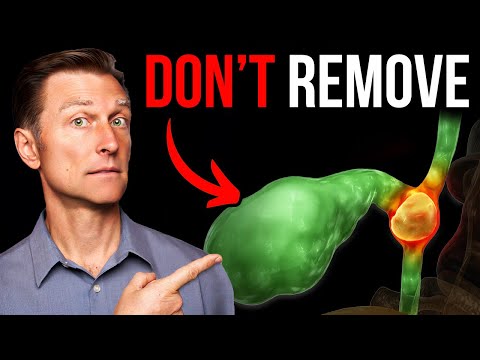
Never Get Your Gallbladder Removed
~15 min
Episode Brief·YouTube

Never Get Your Gallbladder Removed

Eric Berg
Watch on YouTube Add to chat My bookmarks← All sources

TL;DR

The four things you'd lose by not watching

4 items

TL;DR

The four things you'd lose by not watching

4 items
1

Over 3,000 gallbladder removal surgeries are performed daily in the US, yet the organ has critical functions beyond bile storage: concentration of bile for fat and fat-soluble vitamin absorption, cholesterol regulation, antimicrobial activity, detoxification, and thyroid hormone activation.

2

Oral bile salts can dissolve gallstones without surgery; one study showed 50% dissolution within 2 years, another nearly 80% within 6–12 months — making informed consent about alternatives essential.

3

Removing the gallbladder carries long-term risks including 11% higher colon cancer, 60% higher liver cancer, 22% higher pancreatic cancer, and 45% higher bile duct cancer, plus diarrhea, gastritis, depression, and bile acid malabsorption.

4

The primary driver of gallstones is insulin resistance from high carbohydrate intake, seed oils, and frequent eating, leading to low bile production and weak gallbladder contraction; a low-carb diet with intermittent fasting can concentrate bile and help dissolve stones.

Protocols

Concrete recipes — what, when, how much, and why

3 items

Oral bile salt therapy for gallstone dissolution and digestion support

WhatTake purified bile salts (such as TUDCA) orally after each meal to dissolve existing gallstones and support fat digestion.
WhenAfter every meal, ongoing until stones resolve or as maintenance.
DoseNot specified in the video; he references clinical studies achieving dissolution in 6–24 months but does not give a personal or specific dosage.
For whomIndividuals with gallstones, those who have had their gallbladder removed (to compensate for lost storage), people with hypothyroidism (since bile helps activate thyroid hormones), and anyone with fat malabsorption.
WhyBile salts replace the deficient bile that led to stone formation, directly solubilizing cholesterol stones and improving absorption of fats and fat-soluble vitamins.
CaveatsOral bile salts have very few side effects compared to gallbladder removal; however, he did not discuss contraindications. The protocol assumes the stone is cholesterol-based.

Berg presents oral bile salts as the primary non-surgical alternative. He describes how concentrated bile can break down cholesterol stones, citing studies where 50% of patients had stone dissolution within 2 years, and another where nearly 80% achieved dissolution within 6–12 months. He emphasizes that this approach has minimal side effects, especially relative to surgery. He mentions TUDCA (transcribed as 'tatka') and purified bile salts as the form to take. While he does not provide a specific dose, the protocol is framed as long-term and meal-dependent, mimicking the natural postprandial release of concentrated bile. He also notes that bile salts can help those who already lack a gallbladder deal with chronic bile insufficiency and that they improve thyroid function by activating thyroid hormones. The underlying concept is that supplementing bile externally can compensate for the liver's low output and the gallbladder's weak ejection, thereby addressing the root deficiency.

Mechanism

The liver produces bile from cholesterol, which is then concentrated in the gallbladder. In gallstone disease, bile salt concentration is too low relative to cholesterol, leading to precipitation. Ingesting exogenous bile salts increases the bile acid pool size, shifting the cholesterol solubility equilibrium and allowing solid cholesterol to dissolve back into micelles. Additionally, bile salts act as detergents that emulsify dietary fats, enabling pancreatic lipase to work effectively and allowing the absorption of fat-soluble vitamins (A, D, E, K) and omega-3 fatty acids. By restoring proper bile flow, the feedback loop that signals the gallbladder to contract may also improve, and the increased bile can help scavenge excess cholesterol, reducing stone formation risk.

You have oral bile salts. That's right. Just taking bile salts. In one study I read 50% of the people had the gallstones dissolved within two years. In another study it was just under 80% within six to 12 months. ... And I do want to emphasize this. The oral bile salts have very little side effects, especially compared to the removal of the gallbladder.

Also said
“Something like tatka and purified bile salts.”— Specifies the type of bile salt supplement (TUDCA) he recommends, giving a concrete product category.
“bile can also influence your thyroid because it can trigger your thyroid hormones to make them work better. This is why people with a hypothyroid problem that they end up taking more bile salts or or improving the bile salts... will then improve the function of the thyroid.”— Expands the protocol's benefits beyond digestion to thyroid support, appealing to a wider audience.

Low-carb, intermittent fasting dietary protocol for gallstone reversal

WhatAdopt a diet low in carbohydrates and free of seed oils, combined with intermittent fasting to reduce insulin, concentrate bile, and dissolve gallstones.
WhenOngoing lifestyle change; intermittent fasting schedule not specified, but implies reducing meal frequency to allow bile to concentrate.
DoseLow-carb is defined by avoidance of sugars and refined carbs; intermittent fasting involves eating less frequently without specific hours given. No termination date—intended as long-term management.
For whomAnyone with gallstones, insulin resistance, fatty liver, or metabolic syndrome; also those wishing to prevent stones.
WhyHigh insulin from frequent high-carb eating causes a fatty liver and weak gallbladder contraction, reducing bile output. Fasting concentrates bile and allows it to dissolve stones.
CaveatsHe does not address potential initial discomfort in those with severe stones when gallbladder contraction increases. Not appropriate for type 1 diabetics without medical supervision.

Berg identifies insulin resistance as the dominant cause of gallstones. He points to a diet high in carbohydrates, sugars, and seed oils, combined with frequent eating, as the perfect storm that elevates insulin, which in turn suppresses liver bile synthesis and weakens gallbladder contraction. The result is bile stasis and stone formation. The therapeutic shift is to drastically reduce carbohydrate intake and eliminate seed oils, which lowers insulin and allows the liver to produce adequate bile. Intermittent fasting further enhances this by extending the period when bile is not being diluted by constant food intake, allowing it to become super-concentrated and capable of dissolving existing stones. He contrasts this with the standard advice of frequent small meals and low fat, arguing that those practices worsen the condition. He notes that people who fast have more concentrated bile, directly supporting stone dissolution. This protocol is thus a root-cause intervention targeting the metabolic dysfunction, not merely symptom relief.

Mechanism

Insulin resistance increases hepatic de novo lipogenesis, promoting fatty liver and reducing the liver's ability to synthesize and secrete bile acids. High insulin also impairs gallbladder smooth muscle responsiveness to cholecystokinin (CCK), the hormone that triggers contraction. By lowering dietary carbohydrates and eating less frequently, insulin levels drop, insulin sensitivity improves, hepatic fat decreases, and bile acid synthesis increases. Concurrently, the gallbladder rests and concentrates bile between meals, and when eventually stimulated by a fatty meal, releases a potent bolus of concentrated bile that can solubilize cholesterol crystals and small stones. The anti-inflammatory effect of removing seed oils reduces systemic inflammation that may further impair bile flow.

People that do intermittent fasting, they don't eat very frequently, have more concentrated bile that helps dissolve the stone. And this is why one of the big root causes and important actions to correct gallstones is to get on a low carb diet and do intermittent fasting.

Also said
“the person is consuming too many carbohydrates or sugars, seed oils, and they're eating too frequently, too.”— Lists the exact dietary culprits that must be eliminated for the protocol to be effective.
“What's going to happen is your liver is not going to make enough bile, and the gallbladder itself is going to be weak.”— Explains the downstream effect of the diet on bile deficiency and gallbladder dysfunction.

Gallbladder contraction protocol using bitter greens, citrus, and acidifiers

WhatWith meals, consume bitter greens (arugula, radish), celery, sauerkraut, lemon/lime juice, and optionally take apple cider vinegar or betaine hydrochloride to increase stomach acidity and stimulate bile release.
WhenAt the start of or during meals, especially those containing fats.
DoseNo specific dosage; suggests adding a serving of bitter greens, a squeeze of citrus, or a teaspoon of apple cider vinegar. Betaine HCl should be dosed according to label instructions.
For whomIndividuals with gallbladder stagnation, bloating after fatty meals, or suspected hypochlorhydria; those aiming to prevent stone formation by improving bile dynamics.
WhyAdequate stomach acid is required to trigger the gallbladder to contract and release bile; many people with gallbladder issues have low stomach acid. These foods and supplements enhance acidity and bile flow.
CaveatsBetaine HCl should not be taken by those with active ulcers or gastritis unless supervised. Citrus may irritate sensitive stomachs; start slowly.

Berg connects stomach function to gallbladder health, noting that you need strong hydrochloric acid in the stomach to signal the gallbladder to release bile. If acid is low, the gallbladder doesn't receive the proper cue, leading to bile stasis and stone formation. He recommends adding acidic components: apple cider vinegar, betaine hydrochloride, or citrus juices. Additionally, bitter greens like arugula and radish, and fermented foods like sauerkraut, stimulate bile flow through taste receptors and acidic content. He mentions that even celery can help. Herbs such as turmeric, ginger, milk thistle, parsley, and cilantro are also cited as gallbladder contractors. This protocol is designed to be layered on top of dietary changes to ensure that whatever bile is produced actually gets ejected into the intestine when needed, rather than sitting and forming sludge or stones.

Mechanism

The presence of acid in the duodenum stimulates the release of secretin, which in turn promotes bile flow. Additionally, stomach acid is required for the proper release of CCK, the primary hormone that causes gallbladder contraction. Bitter compounds in greens and herbs stimulate vagal afferents and directly increase bile secretion and gallbladder emptying. By enhancing these physiological triggers, the protocol helps move bile out of the gallbladder on a regular basis, preventing the supersaturation and precipitation of cholesterol.

taking more acid and adding apple cider vinegar or betain hydrochloride can also increase the acidity which will then trigger the release of the bile from the gallbladder because you need a strong acid in your stomach to be able to trigger that and a lack of acid could be the reason why things aren't flowing through there as well.

Also said
“So in other words, your stomach problem is causing the gallbladder problem. So you really have to kind of connect the dots.”— Emphasizes the upstream cause-effect relationship that this protocol addresses.
“Certain herbs can also increase the contraction of the gallbladder like turmeric, ginger, milk thistle, parsley, cilantro.”— Expands the protocol to include herbal adjuncts that further support gallbladder motility.

What's new

Personal practice updates, fresh positions, predictions

5 items

Doctors claim no alternatives to gallbladder removal

Surgeons often tell patients there are no other options for gallstone disease, but effective non-surgical alternatives exist: oral bile salts, EDTA chelation, mechanical stone extraction, and lithotripsy.

Why this matters: He cites clinical studies showing oral bile salts dissolve stones in 50–80% of cases, contradicting the standard surgical narrative and emphasizing the need for full informed consent.

Background

Gallbladder removal is one of the most common surgeries, with a default assumption that a stone-producing gallbladder must be removed. Patients are rarely offered dietary or pharmacological options.

Berg argues that surgeons routinely tell patients 'there are no other options,' which he labels a lie. He describes oral bile salts as a low-side-effect alternative, referencing a study where 50% of participants had gallstones dissolve within two years, and another showing nearly 80% dissolution within six to twelve months. He also mentions EDTA, a chelator that binds calcium and other minerals to pull stones out of the body, mechanical extraction of stones while preserving the gallbladder, and lithotripsy using sound waves to break stones. He stresses that surgery should remain an option for life-threatening situations, but patients deserve to know all alternatives and risks. The mainstream system, he argues, fails to provide this transparency.

there are no other options when you have a gallbladder issue. Right? Your gallbladder is killing you. You need to remove it. There are no other options. That is a lie. There are other options. You have oral bile salts.

Also said
“In one study I read 50% of the people had the gallstones dissolved within two years. In another study it was just under 80% within six to 12 months.”— Provides quantitative evidence supporting oral bile salt therapy as an effective non-surgical intervention.
“Here's one EDTA. This is a chilator. A chelator means claw. And you could take it and it connects to calcium and other minerals and it locks it up and it pulls it out of the body.”— Introduces EDTA as a lesser-known alternative that chemically binds and removes mineral components of stones.
“there's also another alternative, mechanical extraction of the gall stone without taking the gallbladder out.”— Shows that stone removal can be achieved while preserving the organ, countering the notion that the gallbladder itself is diseased.

Gallstones are a bile deficiency, not a cholesterol excess problem

A gallstone forms from super-concentrated cholesterol combined with very low bile salts, meaning the root cause is insufficient bile production and flow, not high dietary cholesterol.

Why this matters: It flips the conventional advice to lower cholesterol and instead focuses on improving bile quantity and quality, pointing to insulin resistance as the true underlying culprit.

Background

Standard medical guidance often portrays gallstones as a cholesterol management problem, leading to low-fat diets that may worsen bile deficiency and stone formation.

Berg explains that a gallstone is a super-concentrated cholesterol stone, but the formation equation is high cholesterol plus very low bile salts. So stones result from a lack of bile, meaning the gallbladder isn't contracting properly or the liver isn't producing enough bile. He then connects this to insulin resistance: high insulin from excessive carbs, seed oils, and frequent eating leads to a fatty liver and weak gallbladder contraction, reducing bile output. Therefore, the solution is not lowering cholesterol but addressing the metabolic dysfunction that cripples bile production. He also notes that the gallbladder concentrates bile, and without enough bile, cholesterol precipitates out, forming stones.

a gall stone is a super concentrated cholesterol stone usually. Okay. So, it's made from too much cholesterol. So, should we just lower our cholesterol? Now, there's another piece of the puzzle that you really need to know. It's a high level of super concentrated cholesterol with a very low amount of bile salts and then that equals a formation of a gall stone. So in reality, stones come from a lack of bile.

Also said
“What's going to happen is your liver is not going to make enough bile, and the gallbladder itself is going to be weak. It's not going to be able to contract fully to release that bile.”— Connects insulin resistance directly to reduced bile production and gallbladder dysfunction, deepening the mechanism.

Low-fat and low-cholesterol diets increase gallstone risk

Bile is made from cholesterol, so restricting dietary cholesterol and fat reduces bile synthesis, paradoxically raising the likelihood of stone formation.

Why this matters: It challenges the widespread public health advice to eat a low-fat diet to prevent gallbladder issues, instead promoting cholesterol-rich and fatty fish as protective.

Background

For decades, people with gallbladder problems have been told to avoid fats and cholesterol to reduce stone burden, but Berg asserts this advice is counterproductive.

Berg states plainly that people on low-fat diets are more at risk for gallstones than those who consume adequate fats. The liver requires cholesterol to manufacture bile; without it, bile production drops. He highlights that fatty fish—specifically the DHA omega-3—has the most potent effect on stimulating bile synthesis, which he suggests makes evolutionary sense. Other helpful fats include those from meat and olive oil, while seed oils are to be avoided for their inflammatory effects. He also points out that cholesterol-rich foods like butter, eggs, shellfish, and liver are essential for bile production, and egg yolks and liver additionally supply choline, a key nutrient for bile. Thus, a low-fat approach sabotages the body's own mechanism for preventing stones.

people that are on a low-fat diet are more at risk for a gall stone than people that are not on a low-fat diet.

Also said
“What type of fat encourages the liver to make more bile or synthesize more bile out of all the fats possible? Well, apparently it's fatty fish that have the most potent effect on the bile production.”— Specifies which fat is most beneficial, providing actionable dietary guidance beyond just 'eat fat'.
“But the other thing that triggers the liver to make more bile is cholesterol foods, butter, eggs, shellfish, seafood, liver. And it just so happens that egg yolks and liver are high in choline.”— Names specific cholesterol-rich foods that directly support bile synthesis and choline status.

Pregnancy-related gallstones may resolve without surgery

Estrogen inhibits bile salt production and release, causing transient stones during pregnancy or birth control use; after estrogen normalizes, stones often disappear, eliminating the need for surgery.

Why this matters: It provides a strong rationale for watchful waiting rather than immediate cholecystectomy in women whose stones appear during a high-estrogen state.

Background

Some surgeons recommend gallbladder removal even when gallstones are diagnosed during pregnancy, assuming the stones will persist or cause complications.

Berg explains that estrogen directly suppresses bile salt synthesis and gallbladder contraction, creating a temporary environment where stones can form. Once the hormonal spike resolves—after childbirth or stopping birth control pills—bile flow normalizes and the stone may dissolve. He emphatically advises getting a second opinion if surgery is urged under these circumstances. This insight also extends to women on oral contraceptives who develop gallstones, linking the condition to elevated estrogen rather than a permanent gallbladder defect. The underlying principle is that the stone is a symptom of a hormone-driven bile stagnation, not an irreversible organ failure.

if someone tells you that, I would definitely get a second opinion because estrogen has a huge influence on the gallstone. And as soon as you get through your pregnancy and estrogen normalizes, is the gallstone going to stay there or is it going to go away?

Also said
“Same thing with birth control pills, right? You have this spike in estrogen and all of a sudden you end up with a gall stone. Well, it's estrogen. Estrogen inhibits the production of bile salts and the release of bile salts from your gallbladder.”— Broadens the estrogen theory beyond pregnancy to include oral contraceptives, highlighting the hormone's direct role in stone formation.

Insulin resistance is the primary root cause of gallstones

High insulin from a diet rich in carbs, seed oils, and frequent eating cripples liver bile production and weakens gallbladder contraction, making insulin resistance the 'elephant in the room' for gallstone disease.

Why this matters: It unifies multiple dietary and lifestyle factors under a single metabolic explanation and directly prescribes low-carb eating and intermittent fasting as the foundational remedy.

Background

Gallstones are often treated as an isolated surgical issue without addressing the metabolic context, but Berg insists the condition is a manifestation of systemic insulin resistance.

Berg states that the biggest reason for gallstones is high insulin, especially with insulin resistance. He has created hundreds of videos on how insulin resistance causes fatty liver, weight gain, and high blood pressure. In the gallbladder, it translates to the liver producing insufficient bile and the gallbladder's smooth muscle failing to contract fully to expel bile. This results in bile stasis and stone formation. He specifically calls out carbohydrates, sugars, seed oils, and frequent eating as the dietary drivers. The antidote is a low-carb diet combined with intermittent fasting, which he says leads to more concentrated bile that helps dissolve stones. He also links antibiotic use to microbially-produced bile disruption and weight gain, further supporting the gut-liver axis. This reframes gallstones from a local plumbing problem to a metabolic syndrome that can be reversed through dietary intervention.

the biggest reason why people have gallstones, the elephant in the room is high levels of insulin, especially if you have insulin resistance. ... What's going to happen is your liver is not going to make enough bile, and the gallbladder itself is going to be weak. It's not going to be able to contract fully to release that bile.

Also said
“People that do intermittent fasting, they don't eat very frequently, have more concentrated bile that helps dissolve the stone.”— Provides a direct mechanism linking fasting to stone dissolution, reinforcing the dietary prescription.
“the person is consuming too many carbohydrates or sugars, seed oils, and they're eating too frequently, too.”— Lists the specific dietary factors that elevate insulin and drive gallbladder dysfunction.

Recommendations

Products, supplements, and tools mentioned in the episode

6 items

Purified bile salts (TUDCA or ox bile)

Supplement

Recommended as a direct alternative to gallbladder removal, taken after meals to dissolve gallstones and support fat digestion. Mentioned in context of studies showing up to 80% stone dissolution within 6–12 months.

Berg frames oral bile salts as the most important non-surgical intervention. He specifically names 'tatka' (TUDCA) and purified bile salts as the supplements of choice. The therapy is positioned as low-side-effect and physiologically rational, mimicking the body's own bile. He recommends its use not only for active gallstones but also for post-cholecystectomy patients who suffer from bile insufficiency, and for hypothyroid individuals to improve thyroid hormone activation. The recommendation is grounded in clinical studies, and he stresses it should be discussed as an option before consenting to surgery.

vs alternatives

Compared to gallbladder removal, which carries risks of cancer, diarrhea, and bile acid malabsorption, oral bile salts have very few side effects and preserve the organ. He also contrasts with EDTA chelation and lithotripsy as other non-surgical modalities, but positions bile salts as the simplest first-line approach.

You have oral bile salts. That's right. Just taking bile salts. ... Something like tatka and purified bile salts.

Also said
“The oral bile salts have very little side effects, especially compared to the removal of the gallbladder.”— Highlights the safety advantage over surgery.
Find Purified

EDTA (ethylenediaminetetraacetic acid)

Supplement

An alternative oral chelator that binds calcium and other minerals to help dissolve gallstones.

Berg introduces EDTA as another option for those seeking to avoid surgery. He describes it as a 'chelator' that acts like a claw, binding calcium and minerals that may be components of gallstones, and pulling them out of the body. He provides no specific dosage or protocol, simply presenting it as one of the several alternatives to gallbladder removal. The mention is brief, but he includes it to reinforce that multiple non-surgical pathways exist.

vs alternatives

EDTA is positioned alongside oral bile salts, mechanical extraction, and lithotripsy. It is a chemical dissolution method, whereas bile salts work by restoring natural bile acid balance. EDTA may be more aggressive in mineral binding but less physiological.

Here's one EDTA. This is a chilator. A chelator means claw. And you could take it and it connects to calcium and other minerals and it locks it up and it pulls it out of the body.

Find EDTA

Choline supplement

Supplement

Choline is essential for bile production and fat digestion; taking it as a supplement mimics the effect of bile.

Berg highlights that egg yolks and liver are rich in choline, a crucial nutrient for making bile. He then states that taking choline as a supplement is 'kind of like taking a type of bile to help you digest fats.' This positions choline as a supportive supplement for those with gallbladder insufficiency or difficulty digesting fats, as it aids the liver's ability to synthesize bile salts.

vs alternatives

Unlike direct bile salt supplements, choline supports the body's own production. It is a precursor, not a replacement, and may be used in conjunction with bile salts for comprehensive support.

if you took choline as a supplement, it's kind of like taking a type of bile to help you digest fats.

Find Choline

Betaine hydrochloride (HCl)

Supplement

Used to increase stomach acidity, which is necessary to trigger gallbladder contraction and bile release.

Berg explains that low stomach acid is often an upstream cause of gallbladder problems because the signal for bile release depends on strong gastric acid. Betaine hydrochloride is recommended as a direct way to supplement acid, especially for those who experience bloating or indigestion after meals. He suggests that adding this acidifier can 'increase the acidity which will then trigger the release of the bile from the gallbladder.' It is part of the broader protocol to unblock bile flow.

vs alternatives

Compared to apple cider vinegar (a milder acid), betaine HCl provides a more potent and standardized acid dose. It directly addresses hypochlorhydria, whereas bile salts work downstream.

betain hydrochloride can also increase the acidity which will then trigger the release of the bile from the gallbladder.

Find Betaine

Apple cider vinegar

Supplement

A natural source of acetic acid that can be taken with meals to improve stomach acidity and stimulate gallbladder contraction.

Mentioned alongside betaine HCl and citrus as an acidifying agent. Berg views apple cider vinegar as an accessible, food-based method to enhance stomach acid, thereby promoting the cholecystokinin signal for gallbladder emptying. He does not specify a dose, but implies it can be used regularly with meals.

vs alternatives

It is a gentler, more holistic alternative to betaine HCl, suitable for those who prefer a food-based approach. However, it may be less effective for severe hypochlorhydria.

adding apple cider vinegar or betain hydrochloride can also increase the acidity which will then trigger the release of the bile from the gallbladder.

Find Apple

Gallbladder-stimulating herbs (turmeric, ginger, milk thistle, parsley, cilantro)

Supplement

A group of herbs that can be consumed as food or supplements to increase gallbladder contraction and support bile flow.

Berg lists these herbs as natural agents that help the gallbladder contract and release bile. He does not specify forms or dosages, simply noting they can be incorporated into the diet. Turmeric and milk thistle have well-known hepatobiliary effects, while parsley and cilantro are common culinary herbs. This recommendation fits into the overall strategy of using bitter, aromatic, and carminative plants to promote digestive secretions.

vs alternatives

Unlike isolated bile salts or acidifiers, these herbs work through multiple pathways—bitter stimulation, anti-inflammatory effects, and direct smooth muscle relaxation—offering a broader, lower-risk approach for mild sluggishness.

Certain herbs can also increase the contraction of the gallbladder like turmeric, ginger, milk thistle, parsley, cilantro.

Find Gallbladder-stimulating

Notable quotes

Lines worth pulling out — contrarian, specific, or perfectly phrased

6 items
a gall stone is a super concentrated cholesterol stone usually... So in reality, stones come from a lack of bile.
Succinctly flips the common belief that gallstones are simply a cholesterol problem, reframing them as a bile deficiency condition.
If you have your gallbladder removed, your risk of colon cancer goes up by 11%. The risk of liver cancer goes up by 60%. The risk of pancreatic cancer goes up by 22%. And the risk of bile duct cancer goes up by 45%.
Presents stark, specific cancer risk statistics that are rarely discussed in surgical consultations, making a powerful case for organ preservation.
In one study I read 50% of the people had the gallstones dissolved within two years. In another study it was just under 80% within six to 12 months.
Provides strong numerical evidence for the efficacy of oral bile salts, contradicting the notion that surgery is the only reliable solution.
the biggest reason why people have gallstones, the elephant in the room is high levels of insulin, especially if you have insulin resistance.
Directly ties gallstones—a seemingly local surgical issue—to systemic metabolic dysfunction, redefining the condition as a dietary disease.
people that are on a low-fat diet are more at risk for a gall stone than people that are not on a low-fat diet.
Challenges a cornerstone of conventional dietary advice, claiming that fat avoidance actually promotes gallstones, with the counterintuitive implication that eating more cholesterol and fat is protective.
estrogen inhibits the production of bile salts and the release of bile salts from your gallbladder. That's what it does.
Highlights a hormonal mechanism that explains pregnancy- and birth control-related gallstones, supporting a wait-and-see approach over immediate surgery.

Sign in to share feedback

Tell us if this brief hit the mark or missed it — feedback feeds back into the next iteration of the prompt.

Topics covered

gallbladder-functionsbile-concentrationgallstone-formationbile-salt-deficiencyinsulin-resistancelow-fat-diet-mythestrogen-and-gallstonesgallbladder-removal-riskscancer-risk-post-cholecystectomybile-acid-malabsorptionoral-bile-salt-therapyedta-chelationlithotripsyintermittent-fastinglow-carb-dietbile-stimulating-foodsstomach-acidhypothyroidism-linkcholestrol-and-bilefatty-fish-DHA
Free account

Make this library yours

Reading is free for everyone. A free account adds the personal layer: save protocols, follow experts, and see how the other experts weigh in on this same topic.

Create a free accountSign in

Where the experts disagree — weekly

One email a week: the sharpest new disagreements and protocols from the library. No spam, unsubscribe anytime.

Educational summary of the cited expert source — not medical advice. Open the source recording linked above and consult a qualified physician before acting on any protocol.