
UNFUCG
DashboardSearchChatBookmarksNotificationsActivityPremiumProfile
?
Home
Search
Chat
Saved
Profile
Episode
The Worst Dog Food in the World
~12 min
Episode Brief·YouTube

The Worst Dog Food in the World

Eric Berg
Watch on YouTube Add to chat My bookmarks← All sources

TL;DR

The four things you'd lose by not watching

4 items

TL;DR

The four things you'd lose by not watching

4 items
1

Most commercial dog food is over 50% hidden sugar from refined corn and starches, yet labels don't disclose carbohydrate content—a loophole that masks metabolic harm.

2

Meat and bone meal, chicken byproduct meal, and animal digest can contain euthanized pets, roadkill, and diseased animals, with traces of pentobarbital, a euthanasia drug.

3

Animal fat often includes recycled restaurant seed oils preserved with carcinogenic BHA/BHT, and soybean meal is processed with hexane, a gasoline solvent.

4

To protect your dog, avoid meat byproducts, corn, wheat, artificial colors, and preservatives; look for named meat meals and calculate hidden carbs using the method in the description.

Protocols

Concrete recipes — what, when, how much, and why

4 items

calculate-carbs-in-dog-food

WhatUse the method provided in the video description to calculate the carbohydrate content of your dog's food, since labels don't disclose it.
WhenWhen evaluating a new dog food or if your dog shows signs of metabolic issues (obesity, lethargy, diabetes).
For whomAll dog owners, especially those with overweight or diabetic dogs.
WhyMost dog foods are over 50% hidden sugar, and knowing the carb percentage helps you choose a lower-carb, species-appropriate diet.
CaveatsThe exact method is not detailed in the video; refer to the description link.

The speaker emphasizes that dog food labels lack a nutritional facts panel, so carbohydrate and sugar content are hidden. He has calculated that the average bag contains 48% carbs. He promises to provide a way to calculate it in the description, empowering owners to uncover the true composition. This is a crucial step to avoid feeding a high-glycemic diet that leads to metabolic disease.

Mechanism

High carbohydrate intake spikes blood glucose and insulin, promoting fat storage, fatty liver, and insulin resistance, eventually leading to diabetes and other chronic conditions.

Personal experience

I already did the calculations on the average bag of dog food, and this is on the low end. But the amount of carbohydrates in an average bag of dog food, is literally 48%.

I'm going to put how to find out in the description.

Also said
“They don't tell you how much sugar or carb that's in that product, but there is a way to find out”— Reinforces the existence of a workaround.

avoid-meat-byproducts-corn-wheat-artificials

WhatWhen selecting dog food, avoid any product containing meat byproducts, corn, wheat, artificial preservatives (BHA, BHT, ethoxyquin), or artificial colors.
WhenEvery time you purchase dog food; make it a non-negotiable filter.
For whomAll dog owners.
WhyThese ingredients are linked to cancer, metabolic disease, hormonal disruption, and nutritional deficiencies.
CaveatsSome 'byproduct' meals may be legally defined but still include rendered waste; the safest approach is to choose foods with named meat meals (e.g., 'chicken meal', 'salmon meal') and no ambiguous terms.

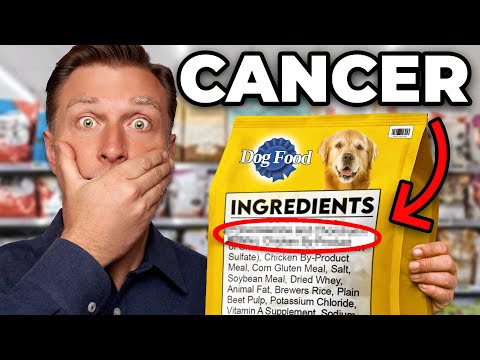
The speaker walks through a typical dog food label, pointing out that ground corn, meat and bone meal, soybean meal, animal fat with BHA, corn gluten meal, chicken byproduct meal, artificial colors, animal digest, and wheat middlings are all red flags. He then shows a better alternative that uses white fish meal, salmon meal, peas, lentils, and no artificial additives. His core advice is to study the label and reject anything with these harmful ingredients. This simple rule can dramatically reduce the toxic load and improve a dog's health.

Mechanism

Corn and wheat are high-glycemic starches that spike blood sugar; meat byproducts can contain carcinogens and drug residues; artificial preservatives and colors are known carcinogens and neurotoxins.

you just want to look start studying the label, but definitely you want to have something without added uh meat byproducts, wheat or corn, artificial preservatives or colorings

Also said
“When your dog starts getting fat, they start having dental problems. They start developing arthritis. They start getting cataracts, mood issues, blood sugar issues, diabetes. Look to the food because that's where it's really coming from.”— Connects the ingredients to common canine health problems.

choose-named-meat-meals

WhatOpt for dog foods that list specific named meat meals (e.g., 'white fish meal', 'salmon meal', 'chicken meal') as primary protein sources, rather than generic 'meat meal', 'meat and bone meal', or 'byproduct meal'.
WhenWhen comparing dog food options.
For whomAll dog owners.
WhyNamed meals come from a single species and are less likely to include rendered waste from unknown sources; they also tend to be higher quality.
CaveatsEven named meals can vary in quality, but they are a significant step up from the four Ds. Also, look for meals that are the first ingredient.

The speaker contrasts the generic 'meat and bone meal' and 'chicken byproduct meal' with the better example that includes 'white fish herring meal', 'white fish meal', and 'salmon meal'. He notes that salmon meal is much better than soybean meal. This specificity indicates a more controlled and transparent supply chain. While he doesn't endorse a brand, he uses this label as a model of what to look for.

Salmon meal. That's much better than the soybean meal.

Also said
“White fish herring meal. White fish meal source of glucosamine with uh chondroitin sulfate.”— Shows a desirable ingredient with added joint support.

read-ingredient-list-not-front-label

WhatIgnore the marketing images and claims on the front of the bag; flip to the ingredient list and scrutinize every item.
WhenBefore buying any dog food.
For whomAll dog owners.
WhyThe front of the bag often shows appealing pictures of steak and vegetables, but the ingredient list reveals the true contents, which are often waste products.
CaveatsIngredients are listed by weight, so the first few are the majority. Look for whole food ingredients and avoid the red flags discussed.

The speaker points out a dog food bag that looks like a healthy meal with steak, peas, and carrots, but the ingredient list starts with ground whole grain corn, meat and bone meal, etc. This illustrates the deceptive marketing. He urges owners to become label-literate and not be swayed by pretty pictures.

Wow. Look at that steak and the peas and the carrot in the background. Looks like a wonderfully healthy meal for your animal until we get down to these ingredients right here.

What's new

Personal practice updates, fresh positions, predictions

5 items

hidden-carbohydrates-in-dog-food

Dog food contains around 48% carbohydrates, mostly from refined corn and starches, yet labels are not required to list sugar or carb content, creating a hidden metabolic burden.

Why this matters: Reveals that the majority of dry dog food is essentially hidden sugar, driving obesity, fatty liver, and diabetes in dogs, and that the labeling loophole prevents owners from knowing.

Background

Pet food labels in the U.S. do not include a nutritional facts panel like human food, so carbohydrate and sugar content are not disclosed. Owners often assume dog food is protein-rich, but the first ingredient is often corn.

The speaker explains that the corn used is dent corn or field corn, a subsidized, GMO crop often contaminated with glyphosate and aflatoxin. This refined starch acts like sugar, spiking blood glucose. He calculated that an average bag contains 48% carbs, and over 50% of the food is effectively hidden sugar. This leads to metabolic syndrome in dogs: fatty liver, obesity, type 2 diabetes, and other issues. The lack of labeling is a regulatory loophole that keeps owners in the dark. He provides a method to calculate carbs (in the video description) so owners can assess their own dog's food.

Personal experience

I already did the calculations on the average bag of dog food, and this is on the low end. But the amount of carbohydrates in an average bag of dog food, is literally 48%.

Over 50% of your dog food is basically hidden sugar, which is going to create metabolic issues like a fatty liver, obesity, eventually type two diabetes, and a whole bunch of other issues.

Also said
“They don't list any sugar or starch or carbs on the label. That is a loophole.”— Highlights the regulatory gap that conceals the carbohydrate load.
“What's really interesting about that is they don't list any sugar or starch or carbs on the label. ... In dog food, they don't have to list it.”— Reinforces the lack of transparency.

four-ds-in-meat-meal

Meat and bone meal, chicken byproduct meal, and animal digest are made from the 'four Ds'—dead, dying, diseased, or disabled animals—including euthanized pets and roadkill, with traces of pentobarbital.

Why this matters: Exposes that rendered protein sources in dog food can include companion animals and zoo animals, and that the euthanasia drug pentobarbital survives rendering and ends up in the food.

Background

Rendering plants process animal waste into meat and bone meal, which is a common protein source in pet food. The FDA allows this as long as pathogens are destroyed, but there is little oversight on the source animals.

The speaker details that the 'four Ds' encompass dead, dying, diseased, and disabled animals. This includes roadkill, zoo animals, and even euthanized dogs and cats. The drug used for euthanasia, pentobarbital, has been detected in a high percentage of certain dog foods. Rendering involves cooking at high temperatures, which kills pathogens but also destroys any remaining nutritional value. The lack of traceability means owners have no idea what species or health status went into the meal. This practice is legal but raises serious ethical and health concerns.

They call it the four Ds. Okay? because the source of where they're getting that meat could come from dead animals, dying animals, diseased animals, or disabled animals. I'm talking about roadkill, zoo animals, even pets like other dogs that have been euthanized.

Also said
“the common drug that they use to kill these animals is called pentobarbatl. and they're finding that drug in a high percentage of certain types of dog food”— Adds the specific drug contamination finding.
“as long as they kill the pathogens, the microbes, it's legal.”— Underscores the regulatory permissiveness.

seed-oils-hidden-in-animal-fat

The 'animal fat' ingredient in dog food often includes recycled restaurant seed oils, which are highly oxidized and carcinogenic, and is preserved with BHA/BHT, banned in Europe.

Why this matters: Reveals that the fat source is not pure animal fat but a blend with used cooking oils, introducing oxidized lipids and synthetic preservatives linked to cancer.

Background

Pet food labels can list 'animal fat' without specifying the source. The phrase 'source of omega-6 fatty acids' is a clue that seed oils have been added, as animal fat is predominantly saturated.

The speaker noticed the parenthetical 'source of omega-6 fatty acids' on the label, which is unusual for animal fat. Upon investigation, he found that manufacturers are legally allowed to mix in seed oils—often recycled from restaurants—with the animal fat. These oils are highly oxidized from repeated heating, making them carcinogenic and damaging to mitochondria. Additionally, the fat blend is preserved with BHA and BHT, synthetic antioxidants that are known carcinogens and banned in Europe but permitted in the U.S. The seed oils are also GMO, bringing glyphosate residues.

Legally, they can also stick in with the animal fat, wherever that came from. Seed oils, not from this cold expeller pressed organic seed oils. I'm talking about the seed oils that have been highly oxidized from restaurants that they recycle that they end up putting in the pet food

Also said
“That's going to give you a highly oxidized fat that from my viewpoint is like carcinogenic because that is going to destroy the mitochondria and the different cellular structures.”— Explains the biological harm mechanism.
“they have to preserve it with like uh something called BHA or BHT. Well, these also are known carcinogens. Uh and they're banned in Europe, but they're okay to sell in the US.”— Adds the preservative carcinogen angle.

soybean-meal-dangers

Soybean meal in dog food is GMO, processed with hexane (a gasoline solvent), and contains phytonutrients that disrupt thyroid and testosterone, making it an inappropriate protein for dogs.

Why this matters: Highlights that a common plant protein source is extracted with a neurotoxic solvent and can cause hormonal imbalances in dogs.

Background

Soybean meal is a cheap protein filler used in many pet foods. It is not fermented like traditional soy products, but rather industrially processed.

The speaker argues that dogs are not biologically adapted to consume soy. The soybean meal used is GMO, so it carries glyphosate. The extraction process uses hexane, a chemical found in gasoline, to isolate the protein, leaving a highly refined, incomplete protein. Phytonutrients in soy can interfere with thyroid function and lower testosterone, and if a pregnant dog consumes it, it may affect the offspring. This makes soybean meal a problematic ingredient beyond just being a filler.

First of all, a dog is never meant to consume soybeans. ... You're getting a highly processed GMO has been through hexane, which is a solvent, a chemical that's in gasoline.

Also said
“certain phytonutrients in soy can affect the thyroid. Uh it can affect testosterone. If your dog is pregnant, that can affect the offspring to a certain degree.”— Specifies the hormonal risks.

artificial-colors-and-carcinogenic-additives

Dog foods contain artificial colors (Red 40, Yellow 6, Blue 2) linked to neurological issues and tumors, and other additives like ethoxyquin and acrylamide that are carcinogenic.

Why this matters: These synthetic dyes serve no nutritional purpose and are added for visual appeal to owners, not dogs, while introducing health risks.

Background

Artificial colors are common in low-quality pet foods to make them look more appealing, mimicking vegetables or meat. Ethoxyquin is a preservative sometimes used in fish meals, and acrylamide forms when starchy ingredients are cooked at high heat.

The speaker questions why food coloring is added to dog food, noting it's for the owner's perception, not the dog. Red 40, Yellow 6, and Blue 2 have been associated with neurological problems and tumor formation in studies. Additionally, wheat middlings and other carbohydrate waste may contain ethoxyquin, a preservative banned in Europe due to cancer risk. The high-temperature cooking of starches also produces acrylamide, a known carcinogen that particularly affects the liver. These additives compound the toxic load in commercial dog food.

why are they putting uh food coloring in the dog food? Is it for the dog? ... We don't need to put food coloring in dog food. And that's going to come with a package because we know, at least in humans, it creates a lot of problems neurologically, but also there's been some data that shows it can actually trigger tumor formation.

Also said
“there's another added ingredient that's banned in Europe, but of course it's uh legal in the US. Ethoxyquin, which has been known to trigger cancer.”— Adds another carcinogenic additive.
“when they cook a lot of this carbohydrate in high temperatures, that can form acryumide. ... that's another thing that can trigger cancer and other problems, especially for the liver.”— Explains acrylamide formation.

Recommendations

Products, supplements, and tools mentioned in the episode

1 item

Choose grain-free dog food with named meat meals and no artificial additives

Practice

The speaker does not endorse a specific brand but shows an example ingredient list that includes white fish meal, salmon meal, peas, lentils, flaxseed, and no corn, wheat, soy, byproducts, or artificial colors/preservatives. He advises avoiding canola oil as well.

After dissecting a typical low-quality dog food, the speaker presents a better alternative label. It features whole food ingredients like white fish herring meal, white fish meal (a source of glucosamine and chondroitin), peas, lentils, dried ground potatoes, dried plain beet pulp, flax seed, salmon meal, pea fiber, natural flavor, and dried chicory root. He notes that canola oil is not ideal but overall this is far superior. He encourages owners to use this as a template: look for named meat meals, avoid meat byproducts, corn, wheat, artificial preservatives, and colors. This practice is the actionable takeaway from the entire video.

vs alternatives

Compared to the typical dog food with ground corn, meat and bone meal, soybean meal, animal fat with BHA, corn gluten meal, chicken byproduct meal, artificial colors, and animal digest, this better option eliminates the most harmful ingredients and provides species-appropriate nutrition.

White fish herring meal. White fish meal source of glucosamine with uh chondroitin sulfate. Okay. Peas, lentil, that's fine. I'm not crazy about the canola oil. Dried ground potatoes. Okay, fine. Dried plain beet pulp. Flax seed. Salmon meal. That's much better than the soybean meal.

Also said
“I don't want to actually get into uh certain brands I'm recommending, but you just want to look start studying the label”— Clarifies that he is not pushing a specific brand but a label-reading practice.
Find Choose

Notable quotes

Lines worth pulling out — contrarian, specific, or perfectly phrased

5 items
Over 50% of your dog food is basically hidden sugar, which is going to create metabolic issues like a fatty liver, obesity, eventually type two diabetes, and a whole bunch of other issues.
Shocking statistic that reframes dry dog food as a high-sugar product.
They call it the four Ds. Okay? because the source of where they're getting that meat could come from dead animals, dying animals, diseased animals, or disabled animals. I'm talking about roadkill, zoo animals, even pets like other dogs that have been euthanized.
Graphic revelation of what goes into meat meal.
Legally, they can also stick in with the animal fat, wherever that came from. Seed oils, not from this cold expeller pressed organic seed oils. I'm talking about the seed oils that have been highly oxidized from restaurants that they recycle that they end up putting in the pet food
Exposes the practice of blending used cooking oil into dog food fat.
They don't list any sugar or starch or carbs on the label. That is a loophole.
Highlights a regulatory gap that keeps owners ignorant.
When your dog starts getting fat, they start having dental problems. They start developing arthritis. They start getting cataracts, mood issues, blood sugar issues, diabetes. Look to the food because that's where it's really coming from.
Directly ties common canine ailments to diet, empowering owners to take action.

Sign in to share feedback

Tell us if this brief hit the mark or missed it — feedback feeds back into the next iteration of the prompt.

Topics covered

dog-food-ingredientshidden-carbslabel-loopholeglyphosateaflatoxinfour-dsmeat-and-bone-mealpentobarbitalrenderingsoybean-mealhexaneanimal-fatseed-oilsbha-bhtcorn-gluten-mealchicken-byproduct-mealartificial-colorsanimal-digestwheat-middlingsethoxyquin
Free account

Make this library yours

Reading is free for everyone. A free account adds the personal layer: save protocols, follow experts, and see how the other experts weigh in on this same topic.

Create a free accountSign in

Where the experts disagree — weekly

One email a week: the sharpest new disagreements and protocols from the library. No spam, unsubscribe anytime.

Educational summary of the cited expert source — not medical advice. Open the source recording linked above and consult a qualified physician before acting on any protocol.