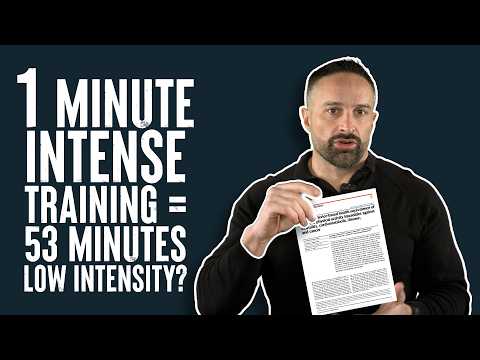
The claim '1 minute vigorous activity equals 53 minutes light activity for mortality' comes from statistical substitution modeling, not direct measurement, and likely suffers from confounding by pre-existing health limitations in light-activity groups.
2
Total physical activity volume — regardless of intensity — is the dominant predictor of reduced all-cause mortality, cardiovascular disease, and cancer risk; similar total work yields similar mortality outcomes.
3
Walking and other light activities still independently lower mortality, CVD, and cancer risk; they are not worthless, especially for people with physical or health limitations who cannot do vigorous exercise.
4
The take‑home: do whatever activity you will actually stick to, accumulate as much volume as possible, and don’t fall for all‑or‑nothing hot takes that devalue light movement.
Protocols
Concrete recipes — what, when, how much, and why
1 item
Choose the physical activity intensity you will actually sustain
WhatPick the level of physical exertion — light, moderate, or vigorous — that you enjoy and can stick to consistently, and do that regularly.
WhenDaily or several times per week, depending on your lifestyle and recovery.
DoseNo fixed dose; the goal is consistent adherence and accumulation of total work.
For whomAnyone who finds vigorous exercise physically or psychologically prohibitive; people with physical or health limitations; individuals who simply don’t enjoy high-intensity work.
WhyCompliance is the limiting factor in exercise for many people. If you hate or cannot do vigorous activity, forcing yourself into it often leads to quitting entirely, whereas light activity you enjoy will be maintained and still cuts mortality, CVD, and cancer risk.
CaveatsIf you can do vigorous activity and enjoy it, by all means include it — it’s a very time-efficient way to hit volume and likely provides extra cardiorespiratory adaptation. The recommendation is not anti-vigorous; it’s anti-all-or-nothing.
Norton emphasizes the psychological and practical reality that many people interpret intense exercise mandates as binary: either you go hard or you do nothing. He points out that studies like the one discussed can be weaponized to undermine light activity, making people who are already struggling to move feel like their efforts are pointless. He explicitly says, “If you hate doing vigorous physical activity and all you will do is light activity, it’s still better than doing nothing.” This protocol is a permission slip to do what you can sustain. The mortality data show that walking, slow cycling, or other low-intensity movements will still lower your risk, so the best exercise is the one you’ll actually do long term. The ultimate goal is to avoid dropping activity altogether because you think only high-intensity counts.
If you hate doing vigorous physical activity and all you will do is light activity, it’s still better than doing nothing.
Also said
“Don’t just look at it as like, ‘Well, if I can’t do vigorous physical activity, it’s not worth doing anything at all.’ No, no, no. It is still worth it.”— Directly addresses the all-or-nothing mindset and reinforces the adherance-first philosophy.
“If you have the wherewithal and you enjoy vigorous physical activity, absolutely do it.”— Shows the recommendation isn’t anti-vigorous; it’s tailored to the individual’s capacity and preference.
Notable quotes
Lines worth pulling out — contrarian, specific, or perfectly phrased
4 items
Total physical activity was dominant. It is the total amount of physical activity you do that is the biggest predictor of reducing your risk of mortality, risk of cardiovascular disease, risk of cancer.
Surprisingly forceful, unambiguous statement that reframes the entire exercise-for-longevity conversation away from intensity and toward volume.
Walking will still reduce your risk of mortality. Walking will reduce your risk of cardiovascular disease. Walking will reduce your risk of cancer.
A direct, trilogistic affirmation that the simplest, most accessible form of movement delivers the same three major protections; a powerful counter to the idea that light activity is useless.
What matters the most is just that you are physically active, whatever that looks like.
Distills the entire 2+ minute argument into a single, permissive, and actionable sentence that validates any form of movement.
If you hate doing vigorous physical activity and all you will do is light activity, it's still better than doing nothing.
Directly confronts the all-or-nothing mindset with a practical, psychology-aware nudge that prioritizes adherence over intensity.
Sign in to share feedback
Tell us if this brief hit the mark or missed it — feedback feeds back into the next iteration of the prompt.
Reading is free for everyone. A free account adds the personal layer: save protocols, follow experts, and see how the other experts weigh in on this same topic.
Educational summary of the cited expert source — not medical advice. Open the source recording linked above and consult a qualified physician before acting on any protocol.