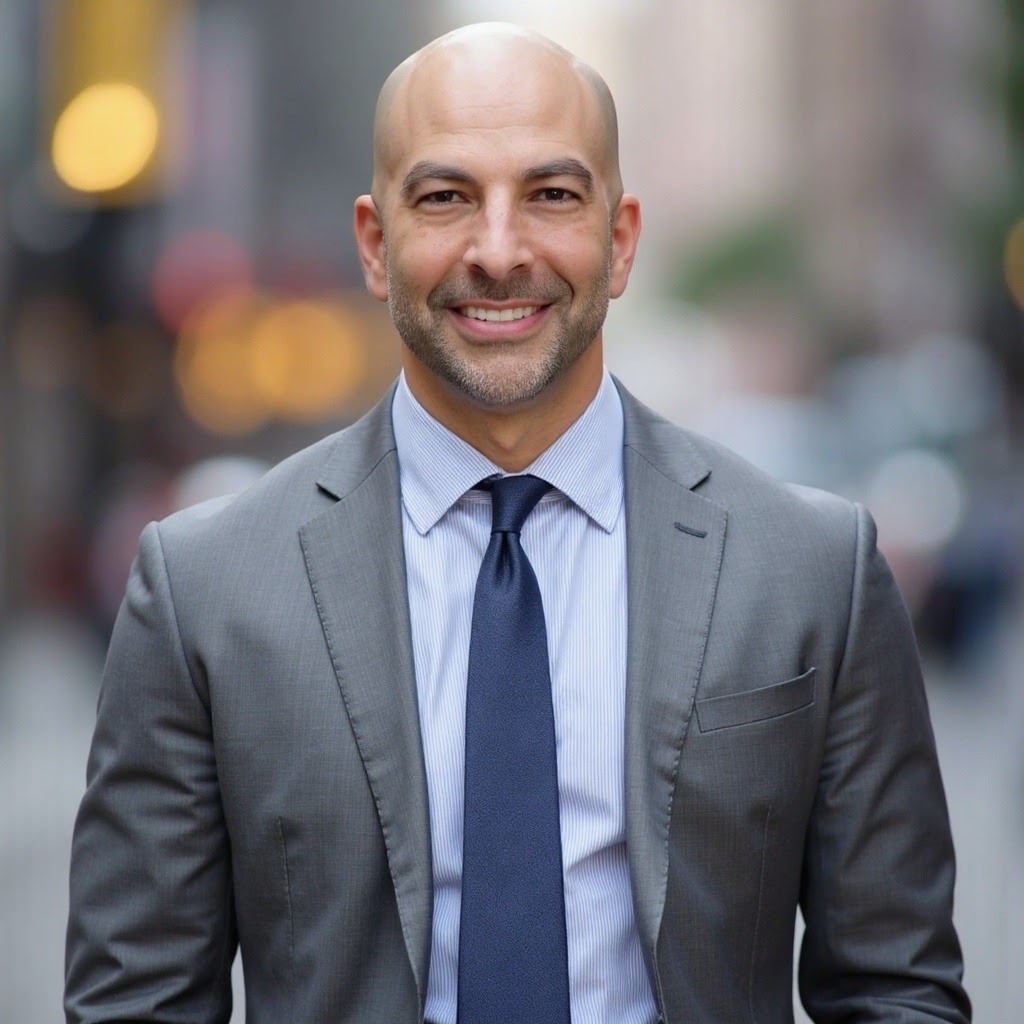
Kyle Kingsbury, retired UFC fighter, has experienced recurrent suicidal ideation since age 7 rooted in a chaotic home environment — his near-death overdose/ledge episode at Arizona State became the turning point that eventually led him to plant medicines, therapy, and fatherhood.
2
Twenty-six ayahuasca ceremonies over several years — with formal set, setting, and guided intention — produced the deepest emotional processing of Kingsbury’s life, including reliving childhood trauma first-person in his hardest ceremony, ultimately breaking a generational cycle of pain before his son Bear.
3
A structured breathwork practice (extended exhale, 4-7-8, and 10-10-10 protocols) introduced by his sports psychologist was Kingsbury’s first tool for quieting pre-fight anxiety and accessing parasympathetic states — predating and complementing the plant-medicine work.
4
Kingsbury used testosterone cypionate (~600 mg/week) plus nandrolone decanoate (~400 mg/week) plus growth hormone (~4 IU/day) during his college football career, framing his experience with PEDs as amplifying existing character rather than creating new traits — a perspective Attia echoes with clinical data on physiologic-range TRT.
Protocols
Concrete recipes — what, when, how much, and why
6 items
Parasympathetic breathwork before sleep and pre-fight (extended exhale + box breath)
WhatTwo-to-one exhale-to-inhale breathing (e.g., 4 in / 8 out) or box variants (10-10-10: 10 in / 10 hold / 10 out) practiced upon waking and before bed. Applied specifically to quiet the pre-fight 'monkey mind' that emerged when Kingsbury began competing at the UFC level.
WhenMorning (right after waking) and evening (right before sleep); intensified in the weeks of a fight camp.
DoseTwo-to-one exhale ratio as the minimum: 4 seconds in / 7 seconds hold / 8 seconds out was one variant; 10 seconds in / 10 hold / 10 out another. No specific session duration given, but practiced daily.
For whomCompetitive athletes dealing with performance anxiety; anyone using physical training as a primary emotional regulation tool who needs a non-substance parasympathetic on-ramp.
WhyAt the UFC level, all competitors are near-equal; the competitive edge shifts to mental state regulation. The negative chatter ('monkey mind') that emerged under high-stakes pressure was unmanageable with willpower alone. Extending the exhale activates the parasympathetic nervous system, which is the one physiological handle Kingsbury could pull voluntarily.
Kingsbury’s sports psychologist introduced this as a focused breathwork practice — distinct from the holotropic work he would later do. The goal was not transcendence but baseline: 'at least right before the fight' find some stillness. This became foundational because it was the first internal tool that worked without an external substance or an external opponent. Cannabis (THC specifically, not just CBD) was a parallel tool for sleep during fight camps, but breathwork was the pre-competition practice.
Personal experience
Kingsbury: 'the breath was really my first entry point into quieting my mind and finding some level of stillness at least right before the fight... practicing that right when I woke up and right before I went to bed helped me sleep at night'
the breath was really my first entry point into quieting my mind and finding some level of stillness at least right before the fight... so at least two to one exhale to inhale four seconds in seven seconds hold eight seconds out things like that or 10 10 10 10 in 10 out or 10 in 10 hold 10 out
Sweat lodge (Inipi) ceremony as pre-fight and post-fight integration practice
WhatTraditional Native American sweat lodge ceremonies, conducted with Kingsbury’s boxing coach before the start of each fight camp and after each fight. Intentions: before camp = 'zero in on what we wanted'; after fight = healing and reflection.
WhenBookending fight camps: once before camp opened, once after the fight concluded.
For whomHigh-intensity athletes seeking structured psychological preparation and recovery; anyone exploring plant medicine who needs a graduated entry into altered states before escalating to psychedelic compounds.
WhyThe sweat lodge established a pre-psychedelic framework of altered-state experience via heat, darkness, and communal intention — creating the set-and-setting discipline Kingsbury later applied to psilocybin and ayahuasca. The post-fight ceremony addressed the psychological toll of combat.
Kingsbury’s boxing coach was the practitioner — a Native American/Mexican man who ran the ceremonies at the reservation and had already earned deep trust as a strike coach. The sweat lodge preceded psilocybin by enough time that the psilocybin felt like a natural escalation within an established practice rather than an abrupt departure. The coach’s introduction of psilocybin was unhurried — 'I’ve been waiting for you to ask.'
my boxing coach that I had who was Native American and Mexican and he would take me to the reservation to do traditional sweat lodges so we do the ceremony before every fight camp started to kind of zero in on what we wanted and after every fight for healing and reflection
Ayahuasca integration framework — intention-setting, surrender, and ceremony spacing
WhatBefore each ceremony: identify a specific emotional or psychological intention (anger, childhood healing, relationship dynamics). During: practice surrender rather than rationalization or control when difficult material arises. After: allow sufficient time between ceremonies for integration of what was shown.
WhenOngoing throughout his adult life (age ~27–37+); approximately 26 ceremonies over this period with varying cadence.
DoseMinimum of 'enough space between ceremonies' for integration; no specific dose data given. Multiple ceremonies within a retreat (e.g., 4 ceremonies at Satara in Costa Rica) followed by extended integration periods at home.
For whomAdults with layered childhood trauma, addiction histories, or relationship disruption who have already done foundational therapeutic work and are ready for deeper processing.
WhyKingsbury explicitly credits the peeling-onion model: each ceremony addresses a layer of the same material, and only with sufficient integration time and a fresh intention does the next layer become accessible. The 26-ceremony arc produced outcomes — breaking childhood trauma transmission, repairing the relationship with Natasha, transitioning away from fighting — that he believes could not have been achieved otherwise.
CaveatsKingsbury is explicit: 'there’s black belts and white belts in martial arts, there’s black belts teaching ayahuasca and white belts teaching and everything in between.' Practitioner vetting is non-negotiable. Ceremonies run by under-trained practitioners can cause lasting harm ('psychic surgery done incorrectly can leave some really lasting damage').
Kingsbury describes 26 ceremonies as still incomplete — 'the infinite onion' — citing people like Dennis McKenna who have done hundreds of ceremonies with each one 'completely unique.' His hardest ceremony (Satara, Costa Rica) came after many ceremonies had already cleared substantial material; the remaining childhood wound was accessed more deeply precisely because the surface layers had been processed. The ceremony resolved through surrender and a vision of son Bear: 'this is where it ends.'
Personal experience
Kingsbury: 'my second to last night in Costa Rica recently was for sure the hardest night of my life... I remember just begging for mercy like please I’ve seen enough... finally as the Sun came up I just kind of surrendered to it and that’s one of the cornerstones I’ve learned through working with the plants is you’re not in control'
if I give enough space between ceremonies and I come back and have a reason to be there that’s important to me I’m gonna get a lot that has to do with that and maybe even more than what I came for and that peeling back at the layer really shows such a deep reflection of what’s going on inside right now
Also said
“there’s black belts and there’s white belts in martial arts there’s black belts teaching ayahuasca and white belts teaching and there’s everything in between and some people spend a week in the Amazon and come back and say I’m gonna give this to all my friends and everyone I know and it can have really bad consequences”— Practitioner quality is the most critical variable — not the compound, not the ceremony form.
Cannabis (THC) for sleep during high-load training periods
WhatUsing THC-containing cannabis specifically for sleep onset during fight camps — distinguished from CBD-only use.
WhenDuring fight camp training periods when the pre-competition anxiety made sleep difficult.
DoseNo specific dose or strain stated; used throughout fight camps.
For whomHigh-load athletes or high-pressure professionals with anxiety-driven sleep disruption where non-pharmacological approaches alone are insufficient.
WhyFight camp anxiety is self-perpetuating: poor sleep degrades training performance and amplifies anxiety the next day. THC’s sedative properties provided a practical pharmacological sleep bridge during the highest-load training periods.
CaveatsKingsbury notes the broader drug-use context off-camp — THC is specifically framed as a functional tool during structured fight camps, not as part of the broader recreational pattern.
Kingsbury later recognized during the Colombia ayahuasca ceremony that his off-camp alcohol and cocaine use had been running parallel to the structured THC-and-breathwork in-camp protocol without him consciously perceiving the polarization. The ayahuasca ceremony surfaced the pattern: 'in fight camp I was a perfect little angel — the second the fight is over it’s whoppers and alcohol and blow and whatever I can get my hands on.'
cannabis helped me with that to specifically THC not just CBD but there was a lot that helped me there to actually fall asleep breath work being a big component of that
Fish oil supplementation for mood support
WhatOmega-3 (fish oil) supplementation initiated after Kingsbury’s psychiatrist provided six peer-reviewed studies on omega-3 and brain health, following Kingsbury’s refusal of SSRIs and lithium.
WhenInitiated post-detox, post-suicide attempt; continued as part of his ongoing supplement stack.
DoseNo specific dose stated.
For whomIndividuals with mood disorders or depression risk who are resistant to or have failed on first-line pharmacological interventions; anyone beginning an integrative mental health approach.
WhyOmega-3 supplementation has documented effects on inflammatory pathways that intersect with depression biology. For Kingsbury, it was conceptually important as the first non-performance supplement — expanding his mental model from athletic optimization to neurological health.
The psychiatrist’s act of handing Kingsbury studies rather than a new prescription was a pivotal gesture: it met Kingsbury where he was (skeptical of mainstream pharmacology, open to evidence) and gave him agency. The fish oil protocol plus creating physical and social distance from the party environment ('creating space') produced a measurable mood shift that Kingsbury credits as the stable platform from which he then re-entered athletic training and eventually plant medicine.
he handed me six studies on fish oil and the brain and that was my first like okay from a holistic standpoint of what supplementation can look like rather than just creatine and testosterone maybe there’s something to this
Performance-psychology breathwork stack for pre-competition state management
WhatWorking with a sports psychologist to address negative self-talk and competition anxiety at the UFC level. Core tools: structured breath work, mindfulness training, and establishing an internal focus locus before entering the octagon.
WhenThroughout UFC fight career; applied in the weeks before fights and specifically in the locker room and walkout period.
DoseDaily practice (morning and evening); intensified during fight camp.
For whomCompetitive athletes at any level experiencing performance anxiety disproportionate to technical skill gaps; professionals in high-stakes environments needing pre-performance state management.
WhyAt the UFC level, physical and technical gaps between opponents are small. Mental state regulation becomes the primary differentiator. The unchecked 'monkey mind' consumes energy and degrades performance. Breath work is the one physiological intervention available in-competition.
This was Kingsbury’s bridge between the aggressive, externally-focused sports identity and the internally-directed plant medicine work. The sports psychologist taught him that his mental state was trainable — the same lesson the plant medicines would later extend to trauma processing. Kingsbury describes this as running in parallel with the sweat lodge and psilocybin work rather than being replaced by it.
a sports psychologist who introduced me to breath work and some level of mindfulness and the idea was... I’m at the UFC all these people are as good as me if not better and that negative monkey mind chatter that comes up it was non-stop so how do I control that and the breath was really my first entry point into quieting my mind
What's new
Personal practice updates, fresh positions, predictions
6 items
Suicidal ideation beginning at age 7 — depression masked by aggression and addiction
~30 min
Kingsbury describes recurrent suicidal thoughts from childhood, driven by watching his parents’ constant conflict. He framed the depression as covert rather than overt — masked by fighting, substance use, and athletics — only becoming visible when those numbing vehicles were removed.
Why this matters: Illustrates what Terrence Real calls 'covert depression': men who score near zero on clinical depression scales while cycling through addictions, aggression, and workaholism are carrying the same underlying pain as overtly depressed women. The absolute numbers of men and women in treatment end up equal — only the form differs.
Background
His parents fought throughout his childhood and divorced when he was 13. He describes asking at age 10 whether he would survive falling off a balcony — a veiled check on whether he could kill himself.
Attia draws on Terrence Real’s book 'I Don’t Want to Talk About It' to reframe Kingsbury’s arc: covert depression in men shows up as incarceration (93% of US prisoners are male), alcoholism (3:1 male-to-female ratio), drug abuse, and violence. When you add up the absolute numbers in treatment for depression, they’re equal — the difference is the form. Kingsbury’s arc from childhood rage, to collegiate substance abuse, to near-suicidal overdose, to MMA to plant medicine is a textbook covert-depression progression.
from about seven years old on I had thoughts of suicide and like pretty vivid like thinking of my dad’s handguns or his rifles or how I would use a bow and arrow
Also said
“I remember having a conversation with my dad on the deck of our condo and I asked him what would happen if I fell off of this and landed face first in the concrete and he said you probably wouldn’t die you just be really messed up”— The age-7 balcony question was a concealed suicidality check — his father had no idea.
“at the root of a lot of depression is this concept that it will never get better there’s no light at the end of the tunnel there’s no way out of this and that’s how I felt most of my childhood”— Kingsbury’s own psychological framing of the core cognitive distortion driving his depression.
Suicide attempt at ASU parking lot — spiritual experience on the ledge
~45 min
After a breakup, Kingsbury swallowed his remaining benzodiazepine and opioid stash, drove to the top of a campus parking structure, stripped, and climbed to the edge. A wave of warmth and a voice saying 'not yet' preceded a security guard’s intervention. He spent a week in detox.
Why this matters: The subjective 'not yet' experience became the seed of his spiritual framework — prior to any psychedelic use — and reframed a near-death as a turning point rather than a failure. Attia notes this is a not-uncommon phenomenon at the threshold of lethal self-harm.
Background
He had been prescribed 2 mg Xanax and 10 mg Valium (60 tabs, 5 refills each) plus 10 mg Vicodin by a naturopath who was later imprisoned. The cocktail had been part of a polydrug cycle with cocaine and MDMA.
After the hospital, Kingsbury’s psychiatrist — having been refused SSRIs and lithium (which he described as making him 'a mute' at full dose) — handed him six peer-reviewed studies on fish oil and the brain. This was Kingsbury’s first encounter with evidence-based supplementation for mood, and he credits the fish oil protocol plus creating space from the party environment as catalysts for his stabilization before starting MMA training.
I took every remaining pill that I had and I drove up to the top of parking lot 7 at Arizona State... I was standing on the edge about ready to jump and before the security guard said anything that was my first real spiritual experience... this wash of warmth came throughout my body from head to toe and it was the most peace that I had felt ever in my entire life
Also said
“there was a voice and there might have been a voice in my head I might have been outside of me I don’t think that’s the point the voice just said not yet”— The content of the experience — not the neurochemistry — became the orienting framework for Kingsbury’s recovery and eventual openness to plant medicine.
26 ayahuasca ceremonies — set/setting/intention as the non-negotiable container
~2 h 10 min
Over several years including sessions in Peru, Colombia, and Satara (Costa Rica), Kingsbury completed 26 ayahuasca ceremonies. He describes each as completely unique, driven by the intention he brings, and insists on the distinction between black-belt and white-belt practitioners.
Why this matters: Kingsbury’s account is one of the most candid multi-ceremony longitudinal reports in the podcast universe — the hardest ceremony (reliving childhood first-person, entire night, no visuals, only purging and emotional replay) was also described as 'one of the most beautiful in the end.' The integration arc across 26 ceremonies — not a single-dose revelation — is the actual mechanism.
Background
His introduction to ayahuasca came through his Native American/Mexican boxing coach who had already introduced him to sweat lodges and psilocybin. The transition from 'bring Peru to us' to formal retreat centers (Satara) reflects an escalating seriousness of practice.
Kingsbury describes a hardest-night experience in Satara at age 37: second dose after a quiet first dose, intention set for 'any remaining childhood healing.' The entire night became a first-person re-experience of age 6-7 and 15 trauma — his father’s anger, his mother screaming, 'spit flying into my mouth.' Surrender rather than rationalization was the only exit. The ceremony resolved when he visualized his son Bear and understood 'this is where it ends.' He frames integration as ongoing: 'there’s no endpoint, it peels back layers like an infinite onion.'
I’ve done now 26 ceremonies with ayahuasca... each one just took me in a different place again they were completely unique from one another and I continue to learn how to work with it
Also said
“my second to last night in Costa Rica recently at Satara was for sure the hardest night of my life... I remember just begging for mercy like please I’ve seen enough... this was like reliving it for the first time through your lens through my lens first person like it was happening to me the exact same feelings I was feeling as a 6 or 7 year old”— The hardest ceremony was precisely because the dose of integration work matched the remaining depth of the wound — not because of dosing or setting failure.
“seeing my son that’s really where it shifted... he will never experience what I experienced what my dad experienced and my granddad experienced that generational pain is going to be gone with him”— The resolution of the hardest ceremony was not a concept but a vision of the next generation — the most personal possible anchor.
Psilocybin in ceremonial context — boxing coach as first guide
~1 h 40 min
Kingsbury’s first structured psychedelic experience was psilocybin with his Native American/Mexican boxing coach at a reservation, after the coach had first introduced sweat lodges. The contrast with a prior recreational use at a house party on alcohol and cannabis is explicit — set and setting produced entirely different outcomes.
Why this matters: The boxing coach-as-guide figure — a trusted athletic mentor, not a clinical therapist — challenges the assumption that psychedelic-assisted healing requires a medical container. The sweat lodge practice preceded the psychedelic work, providing an established baseline of altered-state familiarity.
Kingsbury describes the psilocybin work as ongoing to the present day, 'not often' but regularly. He frames it as a precursor to ayahuasca that taught him the framework of intention, respect, and safety that he then applied to the more demanding medicine. The coach’s patience — 'I’ve been waiting for you to ask' when Kingsbury asked about ceremony — suggests years of relationship before the introduction.
this is my first real introduction to use intention to have respect and reverence for the plants being used and in a completely safe and perfect environment... that’s where I started to begin to uncover some things and really getting direction and a true sense of peace inside that was lasting
Also said
“I had done it before highly inappropriately... at a house party on alcohol and cannabis with a bunch of people I didn’t know and ultimate horror stories but this is my first real introduction to use intention”— Same substance, entirely different outcome — the defining variable is the container, not the compound.
Fish oil as first mood-support supplement — psychiatrist’s evidence-based recommendation post-overdose
~50 min
After refusing SSRIs and tolerating only days of lithium, Kingsbury’s psychiatrist handed him six peer-reviewed studies on omega-3 and brain health. This introduction to evidence-based supplementation for mood was Kingsbury’s entry point into a broader integrative approach to mental health.
Why this matters: A psychiatrist using published literature on omega-3s rather than defaulting to another medication tier represents a different clinical posture — and Kingsbury credits this as the pivot from 'just creatine and testosterone' to viewing nutrition and supplementation as mental-health tools.
At the time, Kingsbury’s framework for supplementation was purely athletic (protein synthesis, performance) not neurological. The psychiatrist’s handover of fish oil studies planted the idea that brain chemistry is modifiable through nutrition — a scaffold that later made the plant-medicine work feel scientifically coherent rather than purely mystical.
the psychiatrist who actually resonated more with me than the psychologist... he handed me six studies on fish oil and the brain and that was my first like okay from a holistic standpoint of what supplementation can look like rather than just creatine and testosterone maybe there’s something to this
Ayahuasca and the relationship — couples’ ceremonies changed the arc with his wife Natasha
~2 h 40 min
Kingsbury describes how he and Natasha did their first ayahuasca ceremony together after approximately one year of dating, and that the medicine surfaced patterns neither could see in themselves — accelerating emotional maturation in the relationship.
Why this matters: The frame that plant medicine can function as a relationship tool — not just individual therapy — appears explicitly: without it, the relationship 'would not have worked out,' and he would have continued fighting at low levels taking damage.
we were together for about a year before we did ayahuasca for the first time and it like that changed the course of our relationship it unpacked so much of the arguing that we had allowed me to see things in myself that she could but I could not and vice versa as we grew as individuals we grew together in our relationship
Recommendations
Products, supplements, and tools mentioned in the episode
4 items
I Don't Want to Talk About It by Terrence Real
Book
Real’s foundational text on covert male depression — the thesis that incarceration, addiction, aggression, and workaholism are the male expression of the same underlying pain that presents as overt depression in women. Attia uses it as the interpretive frame for Kingsbury’s entire arc.
Attia cites Real’s statistics: 93% of incarcerated people in the US are male; alcohol abuse is ~3:1 male to female; drug abuse and violence are disproportionately male. But clinical depression diagnoses are disproportionately female. Adding up the absolute numbers — depression + addiction + incarceration + violence — they’re approximately equal. The difference is the form. Attia says this 'blew my mind' and Kingsbury confirms he has 'a lot of love for' the book.
one of the books that I really have a lot of love for is nonviolent communication by Marshall Rosenberg... and I don’t want to talk about it by Terrence Real... he talks so much about the difference between covert and overt depression
Attia recommends this as the entry-point text for any listener new to psychedelic-assisted therapy — framing it as an accessible, rigorously researched introduction by a journalist who came to the subject as a skeptic.
Attia says: 'anyone listening to this who has not yet read Michael Pollan’s How to Change Your Mind — to have such a great storyteller and a great writer take on such an important topic I think it’s hard to come away from that without realizing that there’s a lot here that we need to understand better but the promise is enormous.' Kingsbury endorses it and connects it to his own experience with the clinical and shamanic ends of psychedelic practice.
anyone listening to this who has not yet read Michael Pollan’s How to Change Your Mind to have such a great storyteller and a great writer take on such an important topic I think it’s hard to come away from that without realizing that there’s a lot here that we need to understand better but the promise is enormous
Kingsbury credits NVC as the book that helped him understand why his parents’ relationship failed and what healthy communication looks like — the conceptual counterpoint to the environment he grew up in.
He describes his childhood as the inverse of NVC: 'two Rams butting heads all the time.' His parents divorced when he was 13. The NVC framework gave him language for the communication deficits that had shaped his depression. He notes Rosenberg recently passed away.
one of the books that I really have a lot of love for is nonviolent communication by Marshall Rosenberg who recently passed away and whatever that is my childhood was not so they really didn’t know how to communicate with one another
Kingsbury invokes Walker’s sleep science to retrospectively explain the neurochemical context of his pre-suicide-attempt period: multiple stimulant/depressant drug combinations, watching sunrises regularly, profound sleep disruption.
Kingsbury: 'I now see that very clearly when I read his book Where We Sleep I was like well yeah no she had no shadows I was messed up in the head but I saw I watched the Sun come up many many nights.' The framing is self-compassionate rather than self-blaming — the Walker framework explains the neurochemistry of the state he was in without assigning moral failure.
I’ve had Matthew Walker on three episodes like I now see that very clearly when I read his book where we sleep I was like well yeah no she had no shadows I was messed up in the head but I saw I watched the Sun come up many many nights
Lines worth pulling out — contrarian, specific, or perfectly phrased
6 items
from about seven years old on I had thoughts of suicide and like pretty vivid like thinking of my dad’s handguns or his rifles or how I would use a bow and arrow
Opens one of the most candid early-onset suicidality disclosures in the podcast’s run — framed not as a dramatic confession but as a plain historical fact that Kingsbury had never shared publicly.
I was standing on the edge about ready to jump and before the security guard said anything that was my first real spiritual experience... this wash of warmth came throughout my body from head to toe and it was the most peace that I had felt ever in my entire life and this voice just said not yet
The origin of Kingsbury’s spiritual framework — not through ceremony or substance but through a near-death experience — and the experiential foundation that made the later psychedelic work legible to him.
forgiveness has very little to do with the person I’m forgiving it has everything to do with taking that weighted vest off of me because I’m held down by that whatever anger or pain or resentment that I feel towards another person... I’m keeping that in me and it’s affecting the way that I go through the world
One of the sharpest practical definitions of forgiveness as self-medicine rather than absolution — arrived at through direct experiential work, not abstraction.
seeing my son that’s really where it shifted... that generational pain is going to be gone with him and seeing that I had so much gratitude for him and just knowing like okay this breaks here
The resolution of Kingsbury’s hardest ceremony and arguably the emotional apex of the episode — the break in generational trauma anchored not in insight but in the face of his son.
there’s black belts and there’s white belts in martial arts there’s black belts teaching ayahuasca and white belts teaching and there’s everything in between and some people spend a week in the Amazon and come back and say I’m gonna give this to all my friends and everyone I know and it can have really bad consequences
The clearest harm-reduction framing in the episode — Kingsbury’s most directly actionable message to listeners considering plant medicine.
in fight camp I was a perfect little angel I wouldn’t watch TV I would read every night trying to study things that would help me in fighting... eating super clean food and then the second the fight is over it’s whoppers and alcohol and blow and whatever I can get my hands on
The polarized lifestyle that the Colombia ayahuasca ceremony surfaced as a pattern — the structured discipline of camp as a mask for the chaos underneath.
Sign in to share feedback
Tell us if this brief hit the mark or missed it — feedback feeds back into the next iteration of the prompt.
Reading is free for everyone. A free account adds the personal layer: save protocols, follow experts, and see how the other experts weigh in on this same topic.
Educational summary of the cited expert source — not medical advice. Open the source recording linked above and consult a qualified physician before acting on any protocol.