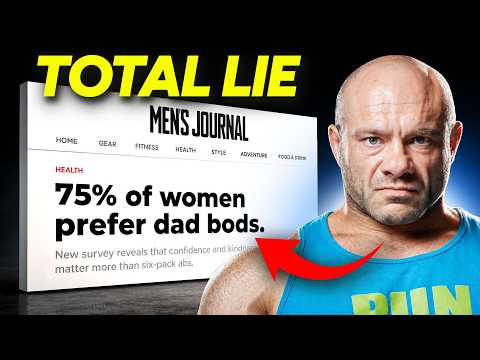
A cross-cultural study (China, Lithuania, UK) found that college-aged women and men rated male bodies at 13-14% body fat as most attractive, with BMI 23-27 and shoulder-to-waist ratio ~1.57 also peaking, challenging the fitness belief that leaner is always better.
2
Body fat percentage was a stronger predictor of attractiveness than shoulder-to-waist ratio, and the optimal range aligns with evolutionary predictions for health and muscle anabolism (10-15% body fat).
3
Mike Israetel advises that for most men, getting lean enough for facial definition and a visible waist taper (around 12-15% body fat) is sufficient; further leanness yields diminishing returns, and other factors like style, grooming, and social skills matter more.
4
He recommends using RP Hypertrophy and RP Diet Coach apps, and his upcoming book 'The Aesthetic Revolution' for practical guidance on achieving an attractive physique without over-dieting.
Protocols
Concrete recipes — what, when, how much, and why
5 items
Achieve 'fit enough' leanness: facial definition and waist taper
WhatDiet down until you have visible facial definition (jawline, cheekbones) and a clear waist-to-shoulder taper with no belly overhang and some abdominal visibility, then stop focusing on further fat loss for attractiveness.
WhenAs a primary body composition goal for maximizing attractiveness to the average person.
DoseFor most reasonably trained men, this occurs between 10-17% body fat, centered around 12-15%.
For whomMen seeking to optimize physical attractiveness to the general population (not specifically fitness enthusiasts).
WhyBeyond this point, additional leanness does not increase average appeal and can make you appear wiry, harsh, obsessive, and irritable. The majority of attraction is determined by other factors like style, grooming, and social skills.
CaveatsIndividual fat distribution and facial genetics shift the exact number; those with fatter faces may need to go lower (~10%), those with lean faces can be higher (~17%). Having more muscle mass shifts the window upward. If you store fat primarily in the midsection, you'll need to be leaner to avoid belly overhang.
Mike bases this protocol on the study's finding that 13-14% body fat was rated most attractive, combined with real-world factors the study missed (facial fat, ab visibility). He emphasizes that the goal is not a single number but a checklist: jawline and cheekbones showing, waist clearly smaller than shoulders, no belly overhang, some ab visibility, without a dehydrated competition face. He notes that for a reasonably trained man, this checklist is usually met between 10-17% body fat. He also stresses that once you achieve this, further dieting yields diminishing returns because other aspects of attraction (clothing, posture, grooming, movement, voice, status, personality) dominate. He advises spending effort on those instead. He shares that even women who like bodybuilders often prefer them off-season rather than stage-lean.
Mechanism
Attractiveness cues are subconsciously evaluated based on evolutionary signals of health and fertility. A moderate body fat level with visible muscle definition and facial bone structure signals good health, hormonal balance, and genetic quality, whereas extreme leanness can signal resource scarcity or obsessive behavior.
Personal experience
Mike admits that as a fitness industry person, he used to think 13% was fat, but he's 'gone insane.' He now recognizes that the average person's preference aligns with health and well-being, and he finds it liberating.
If you want a single actionable rule, get lean enough for facial definition, a little lean face. Have a visible waist taper, smaller waist, bigger shoulders. As soon as you get that, you're fit enough.
Also said
“For a reasonably trained person, a reasonably trained man, facial fat, belly overhang, etc., shoulder-to-waist ratio, all that stuff I just said, probably peaks somewhere between 10 and 17% body fat, with the center of mass about 12 to 15% body fat.”— Provides the numerical range for the protocol.
“It is almost certain that having more muscle shifts that entire window upward. So, if you are more jacked, if you have a bigger shoulder-to-waist ratio, and you have more ab thickness, uh you can be a few percent fat higher and still be very attractive.”— Adds nuance about muscle mass.
Adjust body fat target based on facial fat storage genetics
WhatDetermine whether your face stores fat easily or leans out quickly. If you have a 'fatter face,' aim for the lower end of the attractive range (~10% body fat) to achieve chiseled features. If you have a naturally lean face, you can stay at the higher end (~17%) without looking gaunt.
WhenWhen setting a personal body fat goal for attractiveness.
Dose~10% body fat for fatter face; ~17% for leaner face.
For whomMen with noticeable individual variation in facial fat storage.
WhyFacial definition (jawline, cheekbones) is a key attractiveness cue that emerges at different body fat levels for different people. The study's average of 13-14% may not optimize facial aesthetics for everyone.
CaveatsThis is a rough guideline; also consider abdominal fat storage and overall muscle mass. Going too low for your face type can make you look emaciated ('Skeletor').
Mike explains that the DEXA images in the study did not show faces, so the ratings missed a critical real-world variable. He gives the example of a man who needs 9% body fat for a chiseled face versus one who has it at 19%. If the first man only diets to 14%, he may still have a round face; if the second diets to 9%, he may look sickly. Therefore, the 'fit enough' checklist must include facial definition, and the body fat percentage to achieve that is individual. He advises that if you genetically have a fatter face, going close to 10% will do good things; if you have a lean face, staying around 17% is better than getting freaky lean. This personalization prevents over-dieting and under-dieting.
Mechanism
Facial fat deposits are influenced by genetics and hormonal factors. Some men lose facial fat early in a diet, revealing bone structure at higher body fat percentages; others retain facial fat until very low levels. Attractiveness research indicates that facial adiposity is a strong cue for health and mate value, so optimizing it is important.
If you have genetically a fatter face, going down to close to 10% body fat will really, really do good things for you. If you genetically have a very lean face and very good body proportions, being closer to 17% body fat is probably going to do you much better than getting freaky lean and having weird jawlines, and people run scared from you.
Also said
“One guy will need to be 9% fat in order to have that nice chiseled face look. Another guy will need to be at 19% fat only and he's already got well ahead on the chiseled face situation.”— Illustrates the wide range of individual variation.
Time social efforts for off-season leanness, not post-diet shredded
WhatAvoid pursuing romantic or sexual opportunities immediately after a strict diet or contest prep when you are very lean and irritable. Instead, engage socially when you are at a more moderate, sustainable body fat (e.g., 11-12%) and feeling good.
WhenAfter completing a fat loss phase or competition; during maintenance or off-season.
DoseNot a dose; a timing strategy. Wait until you've regained some body fat and are in a good mood.
For whomMen who compete in bodybuilding or undergo extreme diets for leanness.
WhyStage-lean physiques can appear wiry, harsh, and obsessive, and the associated irritability from dieting reduces social appeal. Women (and men) generally prefer the fuller, healthier look of an off-season body.
CaveatsA small minority of women specifically prefer the shredded look, but they are rare and often within the fitness subculture. If you are dating within that niche, adjust accordingly.
Mike directly addresses the common mistake of finishing a 12-week diet or contest prep and immediately hitting bars and clubs to capitalize on the new physique. He says that's not your best time; you're likely irritable and your look may be too extreme. He cites that even women who like competitors typically prefer them off-season. He recommends enjoying social activities when you're 'just vibing' at 11.5-12.5% body fat, which is both attractive and sustainable. This aligns with the study's finding that moderate body fat is preferred.
Mechanism
Extreme leanness often involves dehydration, low energy, and psychological stress, which manifest in facial expressions, posture, and social interaction. Evolutionarily, a very lean state may signal resource scarcity or illness, reducing attractiveness.
Personal experience
Mike speaks from experience in the bodybuilding world, noting that competitors often get more attention off-season.
After you finish contest prep or 12-week diet and you go and like go to bars and clubs and hit on women, that's not your best time to be hitting on women. When you're off season just vibing and you're at, you know, 11 and 1/2 or 12 and 1/2%, that's actually the time when you're most attractive.
Also said
“It's very likely that dropping into the stage lean death phase zone just tends to reduce your average appeal because it can be read as wiry, harsh, obsessive, and frankly irritable, which you're probably irritable cuz you're so pissed you don't get to eat Cheetos all the time.”— Explains the psychological and perceptual downsides.
Redirect effort to muscle, style, and social skills after reaching basic leanness
WhatOnce you have achieved facial definition and a visible waist taper, shift your primary focus from further fat loss to building muscle (optional), improving clothing style, grooming, posture, movement, voice, and social ease.
WhenAfter reaching the 'fit enough' threshold (approximately 12-15% body fat with good facial definition and no belly overhang).
DoseOngoing lifestyle focus.
For whomMen who are already reasonably lean and want to maximize overall attractiveness.
WhyExtreme leanness contributes only a small fraction to overall attractiveness; the majority comes from non-body-fat factors like style, grooming, personality, status, and social skills. Diminishing returns set in quickly below the threshold.
CaveatsIf you are above the threshold, prioritize getting leaner first. Muscle building is optional but can shift the attractive body fat window upward.
Mike emphasizes that the study only looked at body shape in isolation, missing clothing, posture, grooming, movement, voice, status, and personality. He states that if you think getting to 12.5% body fat will make you optimally attractive, you're leaving 90% of attraction on the table. He advises that after achieving basic leanness, you should spend effort on adding muscle (though optional), improving style, and becoming more socially at ease. He notes that being super lean is mostly for impressing other men on Instagram or a tiny fraction of fitness-oriented women. This protocol is a direct application of the study's limitations and the real-world hierarchy of attraction factors.
Mechanism
Attraction is multi-faceted; evolutionary psychology suggests that while body composition signals health, other cues like resource display (clothing, status), social competence, and genetic quality (facial symmetry, movement) are equally or more important in mate selection.
Personal experience
Mike, as a bodybuilder, acknowledges the temptation to keep dieting but advocates for a more balanced approach.
If you want to attract more females and males, I suppose, spend the rest of your effort on adding muscle, potentially, though that's optional, improving your style, improving your social ease, and so on and so forth, stuff that has to do with bodies and faces. Improve your grooming, etc., etc., etc.
Also said
“The being super lean is mostly for other men on Instagram or very fitness industry lean this preferring females. That's a very small fraction of females.”— Highlights the limited audience for extreme leanness.
“If I just get to 12 and 1/2% body fat, I'll be the optimally attractive, you're leaving 90% of attraction on the table still.”— Quantifies the importance of non-body-fat factors.
Adjust leanness target based on fat distribution pattern
WhatIf you tend to store fat predominantly in your abdomen, aim for a lower body fat percentage to avoid belly overhang. If your fat goes to thighs, butt, and arms, you can maintain a higher body fat percentage and still look in great shape.
WhenWhen setting personal body composition goals.
DoseLeaner for abdominal fat storers (likely below 12%); up to 20% for limb storers.
For whomMen with distinct fat distribution patterns.
WhyBelly overhang is a major unattractive cue, while fat on limbs is less detrimental to the V-taper and overall appearance. Genetics determine where fat is stored, so the same body fat percentage can look very different.
CaveatsThis is a general guideline; individual preferences vary. Even with favorable distribution, excessive body fat will eventually obscure muscle definition.
Mike uses himself as an example: almost all his fat goes to his gut, so he must be very lean to look presentable. In contrast, someone whose fat goes to thighs and butt 'won the fucking lottery' and can look great at 20% body fat. He says this with humor but underscores that the study's average doesn't capture this variation. This protocol complements the facial fat protocol, giving a fuller picture of how to individualize the 'fit enough' target.
Mechanism
Fat storage patterns are genetically determined and influenced by hormones. Abdominal fat is more strongly associated with metabolic dysfunction and may be subconsciously perceived as a health risk, whereas peripheral fat is less alarming.
Personal experience
Mike shares that he personally has to be very lean because of his abdominal fat storage pattern.
If you're like me and almost all the fat that you ever gain goes to your gut, then for you to look presentable, you have to be very lean. If your fat mostly goes to your thighs and to your butt and to your arms and not to your midsection, you won the fucking lottery and at 20% body fat, you look like you're in great shape and fuck you on that.
What's new
Personal practice updates, fresh positions, predictions
5 items
13-14% body fat is the attractiveness peak, not extreme leanness
A study of 283 raters across three countries found that male bodies at 13-14% body fat were rated most attractive, with both very lean (5.9%) and obese (37.2%) bodies rated lower, contradicting the common fitness industry assumption that leaner is always more attractive.
Why this matters: This challenges the pervasive belief among fitness enthusiasts that getting as lean as possible maximizes sexual attractiveness. The finding is robust across cultures and genders, suggesting a biological basis.
Background
Previously, many in the fitness community assumed that lower body fat percentages (e.g., 8-10%) were universally more attractive, driven by bodybuilding standards and social media. This study provides empirical evidence that average preferences peak at a moderate level.
The study used 15 black-and-white DEXA images of men with body fat ranging from 5.9% to 37.2%, faces blurred and height hidden. Raters sorted the images by attractiveness. The moderate adiposity group (middle five images) consistently won. The most attractive cluster was around 13-14% body fat, corresponding to a BMI of 23-27 and a shoulder-to-waist ratio of about 1.57. The results were statistically indistinguishable between male and female raters and across China, Lithuania, and the UK. This suggests that human attraction to male bodies is tuned to a moderate leanness that signals health and fertility, not extreme muscularity or leanness. Mike Israetel, a bodybuilder and PhD in sport physiology, admitted he was surprised and had to confront his own bias that '13% is fat.' He now sees this as liberating: the body fat range where you feel best, are healthiest, and most anabolic (10-15%) is also the most attractive.
Personal experience
Mike shared that as a fitness industry person, his initial reaction was '13% is fat,' but he acknowledged he's 'gone insane' from extreme standards. He now appreciates that the average person's preference aligns with health and well-being.
In this study, and we'll bring in other studies later when we discuss this in more depth, 13 to 14% body fat was rated as most attractive by hundreds of college-aged women, by the way, as well as college-aged men.
Also said
“Body fat percent showed a peaked relationship with attractiveness, with the middle levels rated the highest. Remember, we had five lean people, five moderate people, and five fatter people. The moderate category won.”— Confirms the peaked relationship rather than a linear trend.
“The most attractive male bodies seemed on average to cluster around 13 to 14% body fat.”— Specific number from the study.
Body fat percentage outweighs shoulder-to-waist ratio in attractiveness
When analyzed together, body fat percentage explained more variance in attractiveness ratings than shoulder-to-waist ratio across all three countries, meaning leanness is a stronger cue than V-taper.
Why this matters: Fitness culture often emphasizes building wide shoulders and a narrow waist as the ultimate male aesthetic. This study suggests that achieving a moderate body fat level is more impactful and easier to change than bone structure.
Background
The 'golden ratio' and V-taper have long been touted as key to male attractiveness. This study directly compared the predictive power of adiposity vs. shoulder-to-waist ratio.
The researchers measured shoulder-to-waist ratio from the DEXA images. While a ratio of about 1.57 was associated with peak attractiveness, extreme ratios did not confer additional benefit. When body fat percentage and shoulder-to-waist ratio were entered into a model, adiposity was the stronger predictor. In China and Lithuania, shoulder-to-waist ratio added little once body fat was accounted for; in the UK, both mattered but body fat still dominated. Mike interprets this as good news because changing body fat through diet is far more feasible than altering skeletal shoulder width or waist structure. He also notes that having more muscle can shift the optimal body fat window upward, so building muscle still helps, but extreme leanness is not required.
When body fat percent, or as it's known as adiposity, the amount of fat you have, and shoulder-to-waist ratio were considered together, body fat percent explained more variance across all three populations. ... How lean you were, or in this case moderately lean, explained more of people's attraction to you than the shoulder to waist ratio.
Also said
“Both are important, but leanness is more important. You guys, this is really good news cuz it's much easier to change how lean you are than to change how wide your shoulders are and how narrow your waist is.”— Practical implication.
Males and females rate male attractiveness similarly
Contrary to Mike's expectation, male and female raters showed no statistical difference in how they ranked the attractiveness of male bodies based on body fat, BMI, and shoulder-to-waist ratio.
Why this matters: It challenges the assumption that men (especially fitness-oriented men) would overvalue extreme leanness and muscularity, while women might prefer a softer look. The alignment suggests a shared, possibly evolved, template.
Background
Many assume that men and women have different standards for male attractiveness, with men idolizing bodybuilders and women preferring more 'dad bod' types. This study found no such divergence.
The study included both male and female raters from the three countries. Mike admitted he would not have predicted this result, thinking that men would rank the most shredded and extreme shoulder-to-waist ratios highest. Instead, both genders converged on the moderate adiposity group. This finding strengthens the argument that attractiveness judgments are rooted in evolutionary cues of health and fertility that are universally recognized, regardless of the rater's sex. It also implies that if you're trying to appeal to women, you don't need to worry that male gym standards are distorting your target; the average woman sees what the average man sees.
Personal experience
Mike said, 'I would not have seen it. Scott, would you have seen that coming? I thought that the guys would just make all the shredded dudes and the shoulder to waist ratios of a million the hottest.'
Males and females doing the rating rated roughly the same statistically undifferentiably to who was attractive and who wasn't based on what body fat, BMI, and shoulder waist ratio.
Also said
“So, like all the 15 people they had to sort, pretty much everyone did roughly the same job between the two genders.”— Reinforces the finding.
Optimal attractiveness range aligns with health and muscle anabolism
The 10-15% body fat range that maximizes attractiveness also coincides with the range for best health, muscle building, and daily well-being, creating a 'sweet spot' where looking good, feeling good, and performing well overlap.
Why this matters: It's a rare convergence of multiple goals, meaning men don't have to sacrifice health or happiness to be attractive. This contradicts the idea that one must suffer to look good.
Background
Previously, some might have thought that peak attractiveness required unsustainable leanness that compromises energy, libido, and muscle growth. This study, combined with physiological knowledge, shows the opposite.
Mike points out that from an evolutionary perspective, the healthiest BMI (low 20s to mid-high 20s) is what we'd expect to be most attractive, and the study confirmed that. He then connects this to practical bodybuilding: the best body fat range for bulking (10-15%) is also where you feel mentally and physically best, with good recovery and minimal diet misery. He finds it 'neat' that women and men prefer that same range. He jokes that it would suck if you felt best at 12% but women loved you at 3%, but that's not the case. This alignment means you can pursue attractiveness without extreme dieting, and you can trust that maintaining a healthy, athletic body composition is sufficient.
Personal experience
Mike reflects on how he used to think extreme leanness was necessary, but now sees the convergence as 'really awesome.'
Your best body fat for bulking in most cases is 10 to 15%. Your best body fat for health is 10 to 15%. Your best body fat for feeling good day-to-day and like vibing and having mental energy and physical energy and recovery and just being happy versus diet miserable is 10 to 15%. And hey, check this out. The average female and male prefers you for that good old-fashioned, you know, what at 10 to 15%.
Also said
“It's very likely about 13-ish percent fat. And it's exactly where we'd expect to land on evolutionary grounds of maximum health and maximum muscle anabolism, which is actually really cool.”— Ties the number to evolutionary and physiological reasoning.
Facial fat distribution creates individual variation in optimal body fat
The body fat percentage at which a man's face looks chiseled varies widely; some need to be as low as 9% while others look defined at 19%. Therefore, the study's average of 13-14% may not be optimal for everyone.
Why this matters: It adds crucial nuance to the headline number, explaining why some men look gaunt at 10% while others still have a baby face at 15%. This personalization is often missing in fitness advice.
Background
Most discussions of attractive body fat treat it as a single number. Mike introduces the concept that facial fat storage genetics dramatically shift the ideal.
Mike explains that the DEXA images in the study did not show faces, so the ratings were based purely on body shape. In real life, facial leanness (jawline, cheekbones) is a major attractiveness cue. He gives examples: one man might need to be 9% body fat to have a chiseled face, while another at 19% already has it. If the first man diets to 14%, he may still have a round face that some women find less attractive; if the second man diets to 9%, he may look like 'Skeletor' and scare people. Therefore, the optimal body fat for an individual must account for where they lose fat first. He also notes that abdominal fat visibility (belly overhang) is another key cue not captured in the DEXA images. This means the real-world optimum is a checklist: jawline showing, waist smaller than shoulders, no belly overhang, some ab visibility, without a dehydrated competition face.
Personal experience
Mike uses himself as an example of someone who stores fat in the gut and must be very lean to look presentable.
Different guys will get their best jawline cheek bone ab situation at different body fat percents. One guy will need to be 9% fat in order to have that nice chiseled face look. Another guy will need to be at 19% fat only and he's already got well ahead on the chiseled face situation.
Also said
“If you have genetically a fatter face, going down to close to 10% body fat will really, really do good things for you. If you genetically have a very lean face and very good body proportions, being closer to 17% body fat is probably going to do you much better than getting freaky lean and having weird jawlines, and people run scared from you.”— Direct actionable advice based on facial fat genetics.
Disclosed sponsorships3speaker disclosed
The Aesthetic Revolution by Mike Israetel
Book Sponsored · disclosed
Mike mentions his upcoming book as a resource that covers practical advice on getting lean and jacked, upcoming technologies, and the emotional debate around focusing on appearance.
DisclosureMike Israetel is the author and promotes it during the video.
The book is described as covering three main areas: (1) practical how-to for achieving an attractive physique, (2) cool technologies and innovations coming to help with leanness and muscularity, and (3) an emotional component addressing whether focusing on external appearance is toxic or bad. He ties it to the video's theme by noting that people appraise attractiveness subconsciously, which is a topic in the book. It goes on sale mid-June, with a pre-sale link in the video description. He jokes about including naked pictures of himself but the editor refused.
Uh it's uh going on sale mid-June, and uh we'll throw a pre-sale link into the bottom of this video so you know when it comes out. But, uh you can buy it, and basically I talk about a lot of stuff, mostly sort of three things. One, practically how do you get lean and jacked to be your best looking self. Two is what kind of cool amazing technologies and innovations are coming down the pipeline to help us get more lean and jacked and better looking. And three is a bit more of an emotional component of like, you know, should people focus on like their external appearance, or is that toxic and bad?
Lines worth pulling out — contrarian, specific, or perfectly phrased
6 items
They don't prefer shredded people on average. Some do, but mainstream girls don't typically go for veins and striations.
Directly contradicts the fitness industry's obsession with extreme leanness and striations.
If I just get to 12 and 1/2% body fat, I'll be the optimally attractive, you're leaving 90% of attraction on the table still.
Quantifies the limited role of body fat percentage in overall attractiveness, emphasizing other factors.
The being super lean is mostly for other men on Instagram or very fitness industry lean this preferring females. That's a very small fraction of females.
A humorous but pointed critique of who actually appreciates extreme leanness.
Wouldn't it suck if like you felt your best at 12% but women loved you the most at 3%? They don't prefer shredded people on average.
A memorable hypothetical that captures the relief of the study's findings.
If your fat mostly goes to your thighs and to your butt and to your arms and not to your midsection, you won the fucking lottery and at 20% body fat, you look like you're in great shape and fuck you on that.
Colorful, envy-inducing statement about genetic luck in fat distribution.
13% is fat. But I've gone insane.
Self-deprecating admission of how fitness culture warps body image perception.
Sign in to share feedback
Tell us if this brief hit the mark or missed it — feedback feeds back into the next iteration of the prompt.
Reading is free for everyone. A free account adds the personal layer: save protocols, follow experts, and see how the other experts weigh in on this same topic.
Educational summary of the cited expert source — not medical advice. Open the source recording linked above and consult a qualified physician before acting on any protocol.