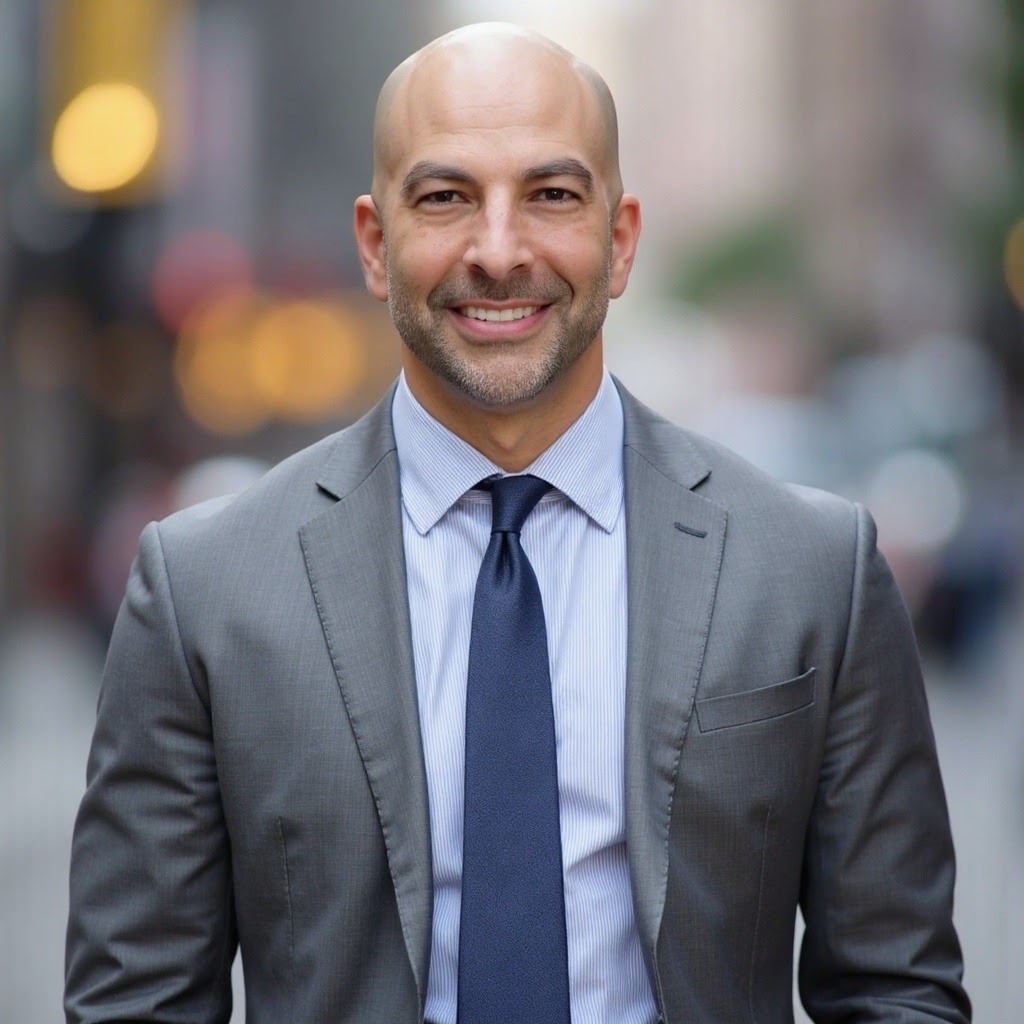
Peter Attia argues that the biggest mistake during COVID was combining the roles of chief science communicator and policy advocate in one person (e.g., Dr. Fauci), eroding public trust and leaving the world less prepared for the next pandemic.
2
He shares his personal protocol for prostate cancer screening: using PSA density and velocity to stratify risk before biopsy, and laments that too many men die from a cancer that should not be a leading cause of death.
3
He recounts his blunt but effective approach to patients who ask about ivermectin curing cancer: call it “effing bullshit” but then offer to discuss, emphasizing that cancer is not one disease and no single drug can cure all types.
4
He sees massive potential for AI to streamline clinical trials—automating safety monitoring and reducing paperwork—and believes the protein-folding Nobel Prize is the most important AI contribution to medicine so far.
Protocols
Concrete recipes — what, when, how much, and why
4 items
PSA Density and Velocity Stratification for Prostate Cancer Screening
WhatUse PSA density (PSA divided by prostate volume) and PSA velocity (rate of change over time) to assess prostate cancer risk before deciding on biopsy.
WhenWhen a man has an elevated PSA or is considering prostate cancer screening.
For whomMen considering prostate cancer screening, under the guidance of a physician familiar with the algorithm.
WhyPSA alone has poor specificity; density and velocity significantly improve the ability to predict clinically significant cancer (Gleason 3+4 or higher).
CaveatsNot a turnkey solution; requires accurate prostate volume measurement and serial PSA values. May lead to further testing (PHI, 4K score, multiparametric MRI). Official guidelines do not recommend routine screening due to complexity.
Attia argues that prostate cancer should not be a leading cause of death, and that with proper risk stratification, many biopsies can be avoided or targeted. He acknowledges that the algorithm is not simple, which is why population-level screening recommendations are cautious, but he personally uses this approach and believes it saves lives. He also notes that colon cancer is similarly preventable with colonoscopy, and that two of the top four cancer killers are largely avoidable.
Mechanism
PSA is produced by prostate tissue. A higher PSA density suggests more PSA per unit volume, which can indicate cancer. PSA velocity tracks changes over time; a rapid rise is concerning for aggressive disease.
Personal experience
He uses this protocol in his own clinical practice and laments that too many men still die from prostate cancer.
PSA by itself pretty bad. PSA density when you know prostate volume and PSA velocity when you have serial measurements starts to become very predictive.
Also said
“So you take a man who does not who has not had a pro prostate biopsy and you stratify his PSA according to PSA density the ability to predict if he has a gleon 3 plus 3 or 3+4 or 4 plus 3 is really quite high”— Quantifies the predictive improvement.
“when you go through the four leading causes of cancer death, two of them don't need to be on the list. Colon cancer and prostate cancer don't need to be on the list. They shouldn't be on the list.”— Emphasizes the preventability of these cancers.
Blunt Rejection + Offer to Discuss for Patient Misinformation
WhatWhen a patient sends a claim about a miracle cure, respond with a blunt dismissal (e.g., 'This is effing bullshit') but immediately follow up with an offer to discuss the science in detail.
WhenWhen patients share unsubstantiated cancer cure claims via text or message.
For whomClinicians with established, trusting relationships with their patients.
WhyPatients often just need a trusted authority to confirm something is nonsense; the offer to discuss maintains trust and openness without requiring a lengthy exchange.
CaveatsThe bluntness may not be appropriate for all patients or all relationships; requires judgment.
Attia describes that his educated, affluent patients frequently send him clips about ivermectin curing cancer. Because he is busy, he responds glibly but always adds an offer to discuss. They usually decline, satisfied that he has dismissed it. He believes this approach works because it cuts through the noise while preserving the relationship, and it avoids the elitist tone that alienated many during COVID.
Personal experience
He uses this exact approach with his own patients and shares their typical response.
I'm responding in a rather glib way, which is usually using phrases like, 'This is effing bullshit.' Um, but I'm always but I usually follow it up a few minutes later with a text that says happy to discuss and usually they say no Peter I just needed to know that this was nonsense.
Separate Science and Advocacy Roles in Public Health Crises
WhatIn a public health crisis, designate separate individuals for communicating the evolving science and for making policy recommendations; never combine them in one person.
WhenDuring any future pandemic or public health emergency.
For whomPublic health institutions, government agencies, and communication teams.
WhyA scientist must be impartial and willing to change their mind; an advocate must drive action and sometimes settle for the best available option. Combining them erodes trust.
CaveatsRequires structural changes in how agencies are organized and how they communicate.
Attia argues that the COVID-19 response suffered because Dr. Fauci and others wore both hats, leading to confusion and distrust when recommendations changed. He believes the public would accept changing science if it were communicated honestly by a separate, impartial voice. He also notes that social media amplifies misinformation, but the solution is not to silence dissent but to fill the vacuum with honest dialogue. He points to the bone marrow transplant for breast cancer story as an example of how science can self-correct transparently.
I believe deep down it was an enormous mistake to be the head of science to be the head of advocacy. I think having having Dr. Fouchy as being both of those hats was a cataclysmic error. No. And it's not about him. No human can do that.
Also said
“A scientist has to be an impartial observer of fact who is happy to change his or her mind in the presence of new information with no attachment to what has been said in the past. An advocate has to be driving policy and action and sometimes they have to settle for the best you can do. Any port in a storm. When you put those two hats on the same people, I worry that you lose all trust.”— Explains the core incompatibility of the two roles.
RCT and Heterogeneity Check for Cancer Cure Claims
WhatWhen evaluating a claim that a single drug cures multiple cancers, check for randomized controlled trial evidence and consider the biological implausibility given cancer heterogeneity.
WhenWhen encountering sensational cancer cure stories, especially on social media.
For whomClinicians and patients evaluating cancer treatment claims.
WhyCancer is not one disease; each type has distinct biology. A single agent cannot plausibly cure all. Look for RCT data; absence of such data is a red flag.
CaveatsSome off-label uses may have merit, but require rigorous study. The burden of proof is on the claimant.
Attia uses the ivermectin example to illustrate. He notes that the argument that pharma suppresses cures is illogical because they would patent a modified version and profit immensely. He emphasizes that the burden of proof is on the claimant to produce trial data. He also reflects on the medical community's mistake of mocking ivermectin as 'horse dewormer' rather than engaging with the evidence, which fueled the anti-establishment narrative.
Mechanism
Different cancers have different driver mutations and pathways; a drug that works on one may not work on another. The example of ivermectin: no RCT evidence for cancer, and the proposed mechanism doesn't align with known cancer biology.
Personal experience
He has personally reviewed the ivermectin COVID RCTs and found no signal except a flawed Brazilian trial.
To believe that Ivormectin cures cancer and to listen to the stories of multiple people with all sorts of different metastatic cancers that are cured, you're almost dis explaining that cancer is a single disease.
Also said
“I've looked at all the RCTs of Ivormectin and COVID. There's no signal except in and my memory could be off on this, but there's a little signal in this Brazilian trial, but the methodology of that trial was horrible. So, I have to believe this is not working.”— Demonstrates his evidence-based evaluation process.
What's new
Personal practice updates, fresh positions, predictions
6 items
science-advocacy-separation
Attia states that combining the roles of chief science communicator and policy advocate during COVID was a cataclysmic error that destroyed trust and must never be repeated.
Why this matters: He directly criticizes the structure of the US pandemic response, arguing that no single person can simultaneously be an impartial scientist and a decisive advocate, and that this structural flaw explains much of the public's lingering distrust.
Background
During COVID-19, figures like Dr. Anthony Fauci served as both the primary scientific voice and a key policy advisor. Recommendations shifted (e.g., on masks, vaccine transmission) and were sometimes perceived as inconsistent or politically influenced.
Attia argues that a scientist must be an impartial observer who changes their mind with new data and has no attachment to past statements. An advocate, by contrast, must drive policy and sometimes settle for the best available action—'any port in a storm.' When one person wears both hats, the public cannot distinguish between evolving science and political expediency, and trust collapses. He is horrified that the narrative has not led to better preparedness, and fears that if a pandemic struck today, the response would be even worse due to eroded trust and the weaponization of health information. He acknowledges that social media amplifies misinformation, but insists the solution is not to silence dissent but to fill the vacuum with honest, evolving dialogue. He points to the bone marrow transplant for breast cancer debacle as an example of how science can self-correct when communicated transparently.
I believe deep down it was an enormous mistake to be the head of science to be the head of advocacy. I think having having Dr. Fouchy as being both of those hats was a cataclysmic error. No. And it's not about him. No human can do that.
Also said
“A scientist has to be an impartial observer of fact who is happy to change his or her mind in the presence of new information with no attachment to what has been said in the past. An advocate has to be driving policy and action and sometimes they have to settle for the best you can do. Any port in a storm. When you put those two hats on the same people, I worry that you lose all trust.”— Explains the core incompatibility of the two roles.
ivermectin-cancer-claims
Attia describes his personal protocol for handling patients who send him ivermectin cancer cure claims, and explains why the idea that a single drug cures all cancers is biologically impossible.
Why this matters: He provides a concrete, real-world example of how he pushes back on medical misinformation while maintaining the patient relationship, and dissects the flawed logic behind pan-cancer cure narratives.
Background
Ivermectin gained notoriety during COVID-19 as a proposed treatment, and some proponents now claim it cures stage 4 cancers. Patients often encounter these claims on social media and forward them to their physicians.
Attia explains that cancer is not one disease; each type (and subtype) has distinct biology, so a single agent cannot plausibly cure all. He notes that the argument that pharma suppresses cures is illogical because a company could patent a modified version and make enormous profits. He also reflects on the medical community's strategic error of dismissing ivermectin as 'horse dewormer' rather than engaging with the evidence. He personally reviewed the randomized controlled trials for ivermectin in COVID and found no signal except a flawed Brazilian study. He believes the elitist handling created a backlash where ivermectin became an 'anti-smartypants drug,' and that honest, data-driven communication would have been more effective.
Personal experience
He shares that his educated, affluent patients send him clips claiming ivermectin cures cancer. He responds with a blunt 'This is effing bullshit' but immediately follows up with an offer to discuss the science. They usually decline, satisfied with the dismissal.
To believe that Ivormectin cures cancer and to listen to the stories of multiple people with all sorts of different metastatic cancers that are cured, you're almost dis explaining that cancer is a single disease.
Also said
“I'm responding in a rather glib way, which is usually using phrases like, 'This is effing bullshit.' Um, but I'm always but I usually follow it up a few minutes later with a text that says happy to discuss and usually they say no Peter I just needed to know that this was nonsense.”— Shows his real-world communication tactic.
“I've looked at all the RCTs of Ivormectin and COVID. There's no signal except in and my memory could be off on this, but there's a little signal in this Brazilian trial, but the methodology of that trial was horrible. So, I have to believe this is not working.”— Demonstrates his evidence-based evaluation process.
prostate-cancer-preventable
Attia argues that prostate cancer should not be a leading cause of death and details how using PSA density and velocity can make screening highly predictive, though it requires physician expertise.
Why this matters: He challenges the official recommendation against routine PSA screening by offering a nuanced, personalized protocol that he believes can prevent many deaths, while acknowledging its complexity.
Background
Prostate cancer is the third leading cause of cancer death in men. PSA screening is controversial because PSA alone has poor specificity, leading to overdiagnosis and overtreatment. Guidelines generally do not recommend routine screening.
Attia explains that PSA by itself is 'pretty bad,' but when you incorporate PSA density (PSA divided by prostate volume) and PSA velocity (rate of change over time), the predictive value for clinically significant cancer (Gleason 3+4 or higher) becomes quite high. He uses these metrics to stratify men before deciding on biopsy, and further refines with tests like PHI or 4K score and multiparametric MRI. He acknowledges this is not a simple turnkey solution, which is why guidelines are cautious, but he laments that too many men are dying unnecessarily. He also notes that colon cancer is similarly preventable with colonoscopy, and that two of the top four cancer killers should not be on the list.
Personal experience
He uses this approach in his own clinical practice and expresses sadness that prostate cancer remains a major cause of death.
PSA by itself pretty bad. PSA density when you know prostate volume and PSA velocity when you have serial measurements starts to become very predictive.
Also said
“when you go through the four leading causes of cancer death, two of them don't need to be on the list. Colon cancer and prostate cancer don't need to be on the list. They shouldn't be on the list.”— Underscores his belief that these deaths are largely preventable with proper screening.
ai-clinical-trials-optimism
Attia is optimistic that AI can dramatically shorten clinical trial timelines and improve safety monitoring, and calls the protein-folding Nobel Prize the most important AI contribution to medicine so far.
Why this matters: He outlines specific, practical applications of AI in drug development—automating paperwork, continuous safety surveillance—and ties it to a landmark scientific achievement.
Background
Clinical trials are lengthy and expensive, often taking a decade and costing billions. Safety monitoring is typically limited to the trial cohort. AI has recently shown promise in protein structure prediction.
Attia envisions AI handling labor-intensive tasks like study reports and toxicology reports, so that any remaining time in a trial is spent on human benefit, not administrative delay. He suggests that AI could enable safety monitoring in every patient receiving a drug, not just the trial population, vastly improving pharmacovigilance. He also sees AI reducing burnout among healthcare workers by decreasing documentation burdens. He draws an analogy to HIV viral load as a biomarker that accelerated drug development, and wishes for similar AI-enabled biomarkers for other cancers. He believes the protein folding work is just the beginning of AI's impact on preclinical drug discovery.
I think using AI more and more on pieces of the clinical trials process so that if something takes time, it's because it's benefiting a human, not because we just couldn't do it fast enough.
Also said
“if you have 500 patients in a trial and you look at safety that's so limited. If you have a much more AI driven, why don't we follow safety in every patient on the exact ongoing ongoing.”— Highlights the safety monitoring opportunity.
“Do you think this is the most important thing that from a promise perspective that AI has has brought to medicine since so far? Yeah, I do. so far.”— Confirms his view on the significance of the protein-folding Nobel.
liquid-biopsy-skepticism
Attia has been negative on liquid biopsies for early cancer detection due to lack of convincing data, and questions whether AI can solve the sensitivity problem.
Why this matters: He expresses skepticism about a widely hyped technology, grounding his view in the current evidence.
Background
Liquid biopsies aim to detect cancer early by finding tumor DNA in blood, but sensitivity has been a major hurdle.
I have been um pretty negative um based on the data. I just have not seen the data that suggests to me that um we're and is this on the sensitivity front? Yes.
culture-definition
Attia defines culture as the atmosphere that brings out the best in you and gives you ownership to tweak it, and shares a story of how he and a colleague enforced that at Genentech.
Why this matters: He offers a concise, actionable definition of workplace culture and illustrates it with a vivid anecdote about protecting patient interests over profit.
Background
Organizational culture is often discussed abstractly; Attia grounds it in specific behaviors and leadership moments.
He believes that culture is not just top-down but something every employee should feel empowered to shape. He recounts a product development meeting at Genentech where someone suggested loosening the diagnostic criteria for Herceptin to increase sales. Both he and CEO Art Levinson spontaneously stood up and said, 'We never do that. We don't do that here.' He also describes how, at the Gates Foundation, he would subtly support presenters when Bill Gates grilled them—nodding, smiling, or gently stalling to give them space—to signal that he wanted them to succeed. These small acts, he argues, are the real fabric of culture.
Personal experience
He shares the Genentech story and his coaching behavior at the Gates Foundation as personal examples of reinforcing culture.
I define culture in a really specific way. um that when you come to work you feel like the atmosphere the the surround sound brings out the best in you and that you have some ownership of tweaking it if it doesn't.
Also said
“as if in unison, Art and I both rose up from our chairs and said, 'We never do that. We don't do that here.' Done.”— Shows culture being enforced in a critical moment.
Recommendations
Products, supplements, and tools mentioned in the episode
7 items
Judah Folkman's book (title not recalled)
Book
Attia read it in medical school and found it a compelling story that influenced his thinking about angiogenesis and cancer.
He mentions it as a beautiful story that he poured over, though he cannot recall the exact title. It likely refers to Folkman's writings on angiogenesis.
Personal experience
He read it in medical school and poured over it.
He wrote a fantastic book that I read in medical school. Uh, poured over the book. I'm blanking on the name of it.
Attia states that colon cancer should not be a leading cause of death because colonoscopy can detect and remove precancerous polyps, making it one of the few effective early detection methods.
He contrasts colon cancer with breast cancer, which lacks a simple polyp-to-cancer progression, making colonoscopy uniquely effective. He lists it alongside Pap smears, HPV vaccine, and spiral CT for lung cancer as proven screening tools.
colon can colonoscopy works uh for cervical cancer a papsmear works y um even better HPV vaccine is my ad um and now you can do a spiral CT for lung cancer I'm not even using one handful of fingers
Attia recommends using PSA density and velocity to guide prostate cancer screening decisions, rather than relying on PSA alone.
As detailed in the protocol, he believes this approach can prevent many prostate cancer deaths, though it requires physician expertise.
vs alternatives
Compared to standard PSA screening, which has poor specificity and leads to overdiagnosis, this method improves risk stratification.
Personal experience
He uses this in his own practice.
PSA by itself pretty bad. PSA density when you know prostate volume and PSA velocity when you have serial measurements starts to become very predictive.
Attia advocates using AI to follow safety in every patient on an ongoing basis, not just the trial cohort, to improve drug safety and accelerate trials.
He sees this as a way to move from limited post-marketing surveillance to continuous, real-world safety monitoring, potentially catching rare adverse events earlier.
if you have 500 patients in a trial and you look at safety that's so limited. If you have a much more AI driven, why don't we follow safety in every patient on the exact ongoing ongoing.
Lines worth pulling out — contrarian, specific, or perfectly phrased
6 items
I believe deep down it was an enormous mistake to be the head of science to be the head of advocacy. I think having having Dr. Fouchy as being both of those hats was a cataclysmic error. No. And it's not about him. No human can do that.
A direct, unflinching critique of the COVID-19 communication structure from a respected physician.
To believe that Ivormectin cures cancer and to listen to the stories of multiple people with all sorts of different metastatic cancers that are cured, you're almost dis explaining that cancer is a single disease.
Succinctly captures the biological implausibility of pan-cancer cure claims.
PSA by itself pretty bad. PSA density when you know prostate volume and PSA velocity when you have serial measurements starts to become very predictive.
A clear, actionable refinement of a controversial screening test.
when you go through the four leading causes of cancer death, two of them don't need to be on the list. Colon cancer and prostate cancer don't need to be on the list. They shouldn't be on the list.
A bold statement about the preventability of common cancers.
I'm responding in a rather glib way, which is usually using phrases like, 'This is effing bullshit.' Um, but I'm always but I usually follow it up a few minutes later with a text that says happy to discuss and usually they say no Peter I just needed to know that this was nonsense.
An unusually candid glimpse into how a top physician handles patient misinformation in real time.
I think using AI more and more on pieces of the clinical trials process so that if something takes time, it's because it's benefiting a human, not because we just couldn't do it fast enough.
A pragmatic vision for AI in medicine that focuses on reducing waste, not replacing human judgment.
Sign in to share feedback
Tell us if this brief hit the mark or missed it — feedback feeds back into the next iteration of the prompt.
Reading is free for everyone. A free account adds the personal layer: save protocols, follow experts, and see how the other experts weigh in on this same topic.
Educational summary of the cited expert source — not medical advice. Open the source recording linked above and consult a qualified physician before acting on any protocol.