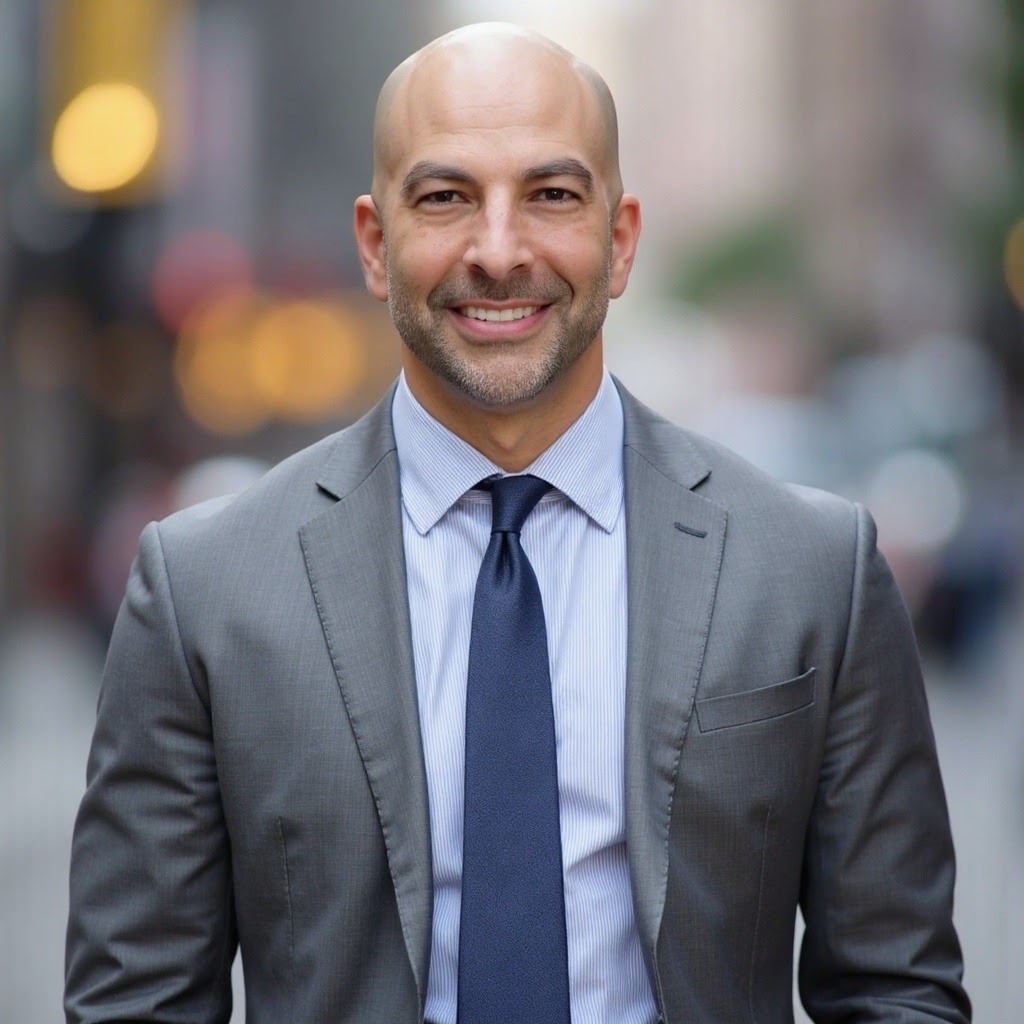
Jocko Willink argues that all failure in combat and business traces back to one root cause: leaders and front-line operators who do not understand the strategic objective, so their tactics become disconnected and self-defeating.
2
Humility is the single most important leadership attribute — not because it is comfortable, but because a leader who cannot hear dissent will inevitably make irreversible mistakes; every arrogant leader Jocko has seen has eventually imploded.
3
Jocko built his preparation mindset from a simple premise: the best thing he could do for his family during deployments was to be maximally prepared — training jujitsu every night after work and rising at 5 AM — because incompetence in combat kills more people than courage saves.
4
For every hard life event — loss of a teammate, a breakup, a sudden career collapse — Jocko advocates having a pre-written protocol: a structured sequence of actions that keeps you moving and prevents the stagnation that compounds grief into identity.
Protocols
Concrete recipes — what, when, how much, and why
7 items
Nightly jujitsu plus 5 AM daily training routine
WhatCome home from work, go directly to jujitsu training. Get up the next morning at 5 AM and go to work. Repeat daily. Training is non-negotiable regardless of fatigue or family logistics.
WhenDaily; Jocko describes this as his standard pattern during his years as a task unit commander.
DoseEvening jujitsu session plus 5 AM wake for work, seven days a week implied.
For whomAnyone in a high-stakes role where the quality of their performance under stress directly affects others: operators, clinicians, founders, parents.
WhyPreparation is an act of care for the people depending on you, not selfishness. The best thing he could do for his family was to be maximally prepared when it mattered.
CaveatsJocko acknowledges his wife saw him very little during these years and that she needed to be a saint to sustain it. His approach required partner alignment and was not costless.
Jocko describes coming home from his task unit at 7 PM, grabbing his bag, going to jujitsu, getting home late, sleeping, getting up at 5 AM and repeating. The discipline was not separate from his leadership; it was the physical instantiation of Extreme Ownership. If he was going to ask his 40 subordinates to make life-and-death decisions in Ramadi, he had no right to be less prepared than any of them. Jujitsu specifically trains the ability to operate effectively when in a subordinate physical position, which Jocko argues develops critical decision-making under pressure.
Personal experience
Jocko: 'when I'd come home from work at 7 o'clock at night I would grab my bag and I'd go train jujitsu and then I'd get up the next morning at 5 o'clock in the morning and I'd go to work and she wouldn't see me all day.'
when I'd come home from work at 7 o'clock at night I would grab my bag and I'd go train jujitsu and then I'd get up the next morning at 5 o'clock in the morning and I'd go to work
Strategy-first protocol: when you don't know what to do, return to objective and strategy
WhatWhen tactically lost, stop trying to solve the tactical problem and first articulate the objective, then the strategy, then derive the tactic.
WhenAny moment of decision paralysis or tactical confusion; when multiple options are available and none feels right.
DoseA few minutes of structured thinking: what is the objective, what is the strategy serving that objective, what tactics flow from that strategy.
For whomLeaders and operators at every level. Jocko teaches this to both junior SEALs and Fortune 500 executives through Echelon Front.
WhyMost tactical errors are symptoms of strategic confusion. If you know the objective clearly, the tactic that serves it usually becomes obvious.
CaveatsThe protocol requires that the objective is honestly stated, not a proxy objective but the real one. False objectives generate false strategies.
Jocko's nutrition example: everyone wants the tactical answer (what should I eat today) but the strategic answer (maintain metabolic health for 40 more years) changes the tactical answer entirely. And crucially: in the long run you are in an airport and they don't have the food Peter told you to eat, so if you have the strategy you can make a good decision even in an edge case the tactics did not anticipate.
Mechanism
Shifting from tactical to strategic frame deactivates hot-cognition and engages the prefrontal system that can evaluate options against a longer-horizon criterion.
the protocol for what to do when you don't know what to do it's come back to the strategy and the objective
Also said
“in the long run guess what you're in an airport... they don't have the food that Peter told you to eat so now what are you gonna do well if you have the strategy if you understand the strategy then you can make a good decision”— Shows the practical payoff: strategy-literacy makes you robust to the infinite variations that tactics cannot anticipate.
Grief and loss protocol: structured sequence to prevent stagnation after trauma
WhatAfter a major loss, follow a structured sequence: do nothing tonight except be present; hold a structured memorial service the next day; say goodbye on day two; resume purposeful activity on day three. Pre-brief yourself that the emotional waves will feel consuming but will eventually space out.
WhenImmediately following loss of a close person; also applicable after major setbacks.
DoseAcute phase 2-3 days structured grief. Medium term weeks to months as the waves gradually space out. Do not collapse the timeline; do prevent stagnation.
For whomMilitary personnel, first responders, anyone who has lost a team member, families grieving. Jocko explicitly addresses this to civilians who wrote into his podcast about losing children.
WhyLetting the mind idle after trauma is a bad protocol. The alternative is not suppression but structured forward movement: action that is directional, even if small, breaks the feedback loop of stagnant grief.
CaveatsAmerica lacks common religious or cultural grief protocols that provide this structure automatically, so individuals must build their own.
Jocko's Ramadi protocol: 'we're not gonna do anything tonight, we're gonna do a service tomorrow, and the day after that we're gonna say goodbye and then we're gonna get on our gear, lock and load, and go back to work because that's what our brothers would want us to do.' The emotional science: the grief waves will feel permanent but are not. When the wave briefly subsides and you realize you were not thinking about the person you lost for a moment, that is not betrayal, that is processing. 'You're starting to move right and that's okay.'
Personal experience
Jocko lost multiple teammates in Ramadi and developed this framework from direct experience with his platoon's grief cycles after combat deaths.
the protocol is here's what we're gonna do we're not gonna do anything tonight we're gonna do a service tomorrow and the day after that we're gonna say goodbye and then guess what we're gonna do we're gonna get on our gear we're a lock and load and weapons and we're gonna go back to work because that's what our brothers would want us to do
Also said
“you're gonna get hit with a tidal wave that you are gonna think is gonna consume you forever that's what it's gonna feel like and what you don't realize especially when you first get hit with a tidal wave is that tidal wave that's going to eventually subside a little bit”— The normalizing frame that prevents people from interpreting initial emotional overwhelm as a permanent condition.
Default aggressive: attack problems rather than endure them
WhatWhen facing any difficult situation, immediately shift to an offensive posture. Ask not how do I survive this but what can I do to attack this problem.
WhenImmediately upon identifying a problem. The longer you wait in defensive mode, the more the situation deteriorates.
For whomAnyone in a performance-limiting mindset about a health, business, or personal challenge. Particularly relevant for patients who receive a bad biomarker reading and default to avoidance rather than intervention.
WhyThe more defensive your mindset, the worse things will turn out. Passivity cedes initiative to the problem; aggression toward the problem begins reversing the trajectory.
CaveatsDefault aggressive applies to problems, not to people. In communication with a partner who did not do something, the aggressive/defensive approach creates worse outcomes than a collaborative forward move.
The principle derives from SEAL training: when ambushed, the instinct to freeze or run is trained out and replaced with ambush drill — move toward the fire, gain initiative, cover and move. Jocko generalizes: the person who treats their pre-diabetes diagnosis as an attack to be mounted against the disease has a better outcome than the person who treats it as a verdict to be endured.
Mechanism
Taking offensive action changes the person's internal attribution from external locus of control (this is happening to me) to internal (I am acting on this), which is associated with better outcomes across health, performance, and recovery contexts.
I'm gonna go after it I'm gonna get aggressive that's gonna be my mode cuz to sit back and allow and wait things to happen to you the more you do that the more defensive you are the more defensive your mindset is the worst things are gonna turn out
Subordinate obligation-to-dissent: build the relationship that makes pushback effective
WhatAs a subordinate, proactively build enough trust and track record with your superior that when you push back on a bad decision, you will be heard. This requires consistent ownership of outcomes, explicit conversations creating the expectation of dissent, and actual dissent when warranted.
WhenOngoing; relationship-building is pre-work done before the bad decision arrives. When a bad plan surfaces, speak up immediately.
For whomAnyone in a subordinate position in any organization: junior employees, residents, soldiers, team members.
WhyThe just-following-orders posture is both morally and practically bankrupt. If you follow a bad order without dissent, you share ownership of the bad outcome.
CaveatsJocko acknowledges there are cases where pushback gets you fired. His answer: that tells you something about that organization. The obligation still applies.
Jocko frames this through Abu Ghraib: those soldiers were in a cultural context where dissent was not the norm and the objective was not communicated. Had either element been present, the abuse would likely not have occurred. He connects this to the Pat Tillman death: Tillman's platoon commander who failed to push back hard enough on a bad tactical plan shares ownership of that outcome regardless of the chain of command.
as a subordinate you have an obligation to speak up when something is wrong not that it's an option it's an obligation
Also said
“I've got to develop a relationship with you where you actually listen to me so that when I actually say to you hey boss this isn't a good idea you listen and that's the goal right”— The relational pre-work that makes the obligation actionable — dissent without relationship is just noise.
Force-on-force training with team-level consequences for individual failure
WhatIn training environments, use adversarial scenarios where failure has immediate social consequences: when you get shot in training, your teammates have to carry you for 2-3 kilometres in the desert at night in full gear. The punishment falls on the team, not just the individual.
WhenDuring pre-deployment training blocks; any time you want to build operational realism into skill-based training.
DoseExtended training cycles. Jocko describes this as the evolution of SEAL training through the late 1990s into the Iraq era.
For whomMilitary and tactical training contexts. Analogous principle for civilian performance: consequential practice where failure costs something real dramatically outperforms inconsequential repetition.
WhyTraining without consequence produces performance that degrades when real stakes are introduced. When failure punishes your teammates, the soldier acts with operational realism even in training.
CaveatsJocko notes the simulation can never fully replicate the IED threat or the physiological impact of actual combat. Training reduces but does not eliminate the first-contact performance gap.
Jocko traces the evolution: early SEALs used blank fire and MILES gear which created no real pressure. The shift to live-fire kill houses and eventually force-on-force laser tag systems with realistic audio created genuine performance pressure. The 2-km carry punishment was designed to internalize the cost of tactical errors as a team cost, not just individual, because in real combat an operator who gets killed creates a tactical deficit for everyone around him.
Mechanism
Social accountability and immediate physical consequence activate the stress inoculation effect: repeated training under elevated arousal narrows the performance gap between training and real-event conditions.
the punishment for getting shot was your buddies had to carry you for two kilometres three kilometres in the desert at night on night vision you and all your gear
Pre-build protocol checklists for predictable life stress events
WhatWrite down in advance the step-by-step protocol you will follow when a predictable hard event occurs: breakup, job loss, death of a parent, serious health diagnosis. When the event arrives, open the protocol and execute it rather than making decisions in acute emotional distress.
WhenBefore the event, when you are calm and can think clearly about what actions would serve your long-term wellbeing.
DoseProtocol drafting: 30-60 minutes per scenario. Protocol execution: days to weeks of structured steps.
For whomEveryone. Jocko notes he is writing a book of such protocols, addressed specifically to young people facing breakups, job losses, and bereavements who have never developed a personal framework.
WhyMost people lack protocols for the hardest moments of their lives, so they make decisions from emotional overwhelm. A pre-written protocol converts a high-stakes emotional decision into the execution of a pre-made plan.
CaveatsThe protocol must be specific enough to generate action, not try to feel better but take these three actions on day one. Vague protocols do not displace emotional paralysis.
Jocko uses the military's CASEVAC procedure as the structural analogy: when a teammate is shot, nobody deliberates, there is a book and a protocol and everyone executes it. He proposes that civilian life needs equivalent pre-built protocols for marriage crises, job loss, grief, medical diagnoses, and even for good things: what is the protocol for you just got married, because that transition has its own predictable failure modes.
if you have a protocol to follow you open up the book you figure out what the protocol is you execute the protocol
Also said
“one of the best things you can do is do something right take some kind of action that moves you forward what you don't want to do is stay stagnant and dwell on what's happening”— The anti-paralysis principle underlying every protocol: action under the protocol is better than optimal inaction.
What's new
Personal practice updates, fresh positions, predictions
7 items
Objective -> strategy -> tactics: the hierarchy that prevents tactical stupidity
~42 min
Jocko describes seeing US soldiers in Iraq making tactically catastrophic decisions not because they were incompetent but because no one had told them the strategic objective. Without knowing why, the front-line operator cannot evaluate whether an action is helpful or harmful to the mission.
Why this matters: The framework is instantly transferable: most bad decisions in business, relationships, and health are tactics fired without a strategy, and strategy declared without an objective. Naming the three-layer problem makes it solvable at each layer.
Background
Jocko codified this framework after leading Task Unit Bruiser in Ramadi (2006) and later running SEAL training on the West Coast, then co-founding Echelon Front as a leadership consultancy.
The canonical example Jocko uses: soldiers on the ground in Iraq who did not know the strategic goal was winning Iraqi civilian trust were making tactical decisions that were strategically catastrophic. Their tactics were wrong relative to an objective no one had communicated. Jocko now uses this story daily when working with companies whose sales reps are doing tactically correct things that undermine the brand's long-term positioning.
you've got to make sure that your troops understand what it is you're trying to accomplish because if they don't understand what they're trying to accomplish its strategically their tactical decisions can be bad based on that fact of what they're missing
Also said
“if you don't understand the strategy and all of a sudden you get separated from Central Command and you have to call an audible you have to pivot tactically you're lost that's why decentralized command works and that's also why centralized command fails”— Explains why objective/strategy clarity is the prerequisite for decentralized command.
Humility as a structural prerequisite for leadership, not a personality trait
~1 h 05 min
Jocko reframes humility from a soft virtue into the operational foundation that determines whether a leader can receive corrective information before it becomes a catastrophic decision. Arrogant leaders filter out the data points that would save them.
Why this matters: Most leadership literature treats humility as optional character enhancement. Jocko's argument is structural — without it, the feedback loop that prevents errors is severed. He gives the Ramadi example of arriving and genuinely learning from Army troops who had been there longer.
Background
Jocko traces his humility framework to a personal early experience: a platoon mutiny he witnessed against an arrogant and inexperienced commander, contrasted with his most experienced and humble platoon commander who inspired extraordinary followership.
The contrast Jocko describes is stark: the arrogant commander generated near-mutinous resistance. The humble commander made every junior operator want to excel. When Jocko arrived in Ramadi, he and his task unit specifically sought out the Army units already there and said 'what should we watch out for.' Their humility allowed them to absorb 14 months of hard-won lessons in days rather than re-learning them through casualties.
humility is the most important attribute or characteristic for a leader to have
Also said
“I always say that humility is the most important attribute or characteristic for a leader... when you're in that position and you don't have humility or you think you know already everything think about this if my task unit showed up in Ramadi and thought we knew everything these guys were learning lessons”— Shows the operational cost of arrogance: missing hard-won lessons from units who had been fighting longer.
Cover and move: the number one law of combat applies directly to business
~1 h 50 min
Jocko calls cover and move the most fundamental truth of combat. The principle transfers: any team at work is either covering (supporting) or moving (executing), never both simultaneously.
Why this matters: The business translation is immediate: siloed departments that fail to support each other are violating cover and move. Teams that argue over credit instead of sequencing who covers and who moves are replicating the tactical error that gets soldiers killed.
Jocko wrote about cover and move in Extreme Ownership as law number one. His consulting work at Echelon Front uses it constantly: when two business units are in conflict, the question is always 'who is covering and who is moving right now?' If neither can answer that, they are both trying to move simultaneously with no cover, which is how combat engagements and business initiatives both fail.
cover and move it's the number one law of combat that I wrote about an extreme ownership and I talk about all the time but it's just the way it is meaning if you're taking fire cover and move well what it really means is you and I have to work together one of us has to put down cover fire and the other one has to move
The obligation to dissent: subordinates are morally required to push back on bad plans
~1 h 55 min
Jocko describes a cultural norm he worked to install in SEAL Teams and now advocates in civilian organizations: when a plan is wrong, the subordinate has an obligation, not an option, to say so. Silence in the face of a bad decision is a form of failure.
Why this matters: The Abu Ghraib frame: those young soldiers did catastrophic things partly because no one in their immediate chain modeled or enforced the expectation that you push back on orders that violate the strategic objective.
Background
Jocko traces the Abu Ghraib failures directly to a chain-of-command culture that did not communicate the strategic objective and did not create space for subordinate dissent.
Jocko's formulation: 'I've got to develop a relationship with you where you actually listen to me so that when I say hey boss this isn't a good idea, you listen.' That is not insubordination; it is what Extreme Ownership looks like from below. The subordinate who takes ownership of the outcome pushes back early and loudly rather than executing a bad plan and blaming the boss afterward.
the obligation to dissent is basically what it's called right which is you actually as a subordinate you have an obligation to speak up when something is wrong not that it's an option it's an obligation
Default aggressive: using forward momentum as the antidote to defensive paralysis
~2 h 10 min
When facing a difficult situation, Jocko's default mode is to get aggressive toward the problem rather than wait defensively for it to resolve. He frames passivity as the highest-risk response.
Why this matters: Attia probes this in the clinical context: patients who receive bad biomarker readings often go into defensive avoidance. Jocko's framework reframes that same moment as the trigger to go on offense against the problem.
The principle derives from SEAL training: when ambushed, the instinct to freeze or run is trained out and replaced with ambush drill — move toward the fire, gain initiative, cover and move. Jocko generalizes this to every domain: the person who treats their pre-diabetes diagnosis as an attack to be mounted against the disease has a better outcome than the person who treats it as a verdict to be endured.
I'm gonna go after it I'm gonna get aggressive that's gonna be my mode cuz to sit back and allow and wait things to happen to you the more you do that the more defensive you are the more defensive your mindset is the worst things are gonna turn out
The waves of grief model: pre-briefing people on what loss will feel like
~2 h 30 min
Drawing on personal experience losing multiple teammates in Ramadi and later working with bereaved families, Jocko developed a framework for grief: explain to people in advance what the emotional pattern will feel like so they do not pathologize their own recovery.
Why this matters: Most people experiencing intense grief for the first time interpret the inability to control their emotions as a sign that something is permanently broken. Jocko's framing normalizes the nonlinear arc.
Jocko's grief protocol has three parts: know what the wave will feel like so you are not blindsided; when the wave briefly subsides, recognize that as progress not disloyalty; take action to prevent stagnation from compounding the pain.
you're gonna get hit with a tidal wave that you are gonna think is gonna consume you forever that's what it's gonna feel like and what you don't realize especially when you first get hit with a tidal wave is that tidal wave that's going to eventually subside a little bit
Also said
“eventually these waves of pain the period of these waves is going to separate more and more and the strength of the waves is going to subside”— The mechanistic description that lets people orient to grief as a process with a direction, not a permanent state.
SEAL BUD/S physical baseline: 500 pull-ups in a session is a normal training workout
~3 h 00 min
Jocko describes his own physical training evolution: arriving at BUD/S thinking five sets of 12 pull-ups was a solid workout, ultimately building to a baseline where 500 pull-ups is a normal session. He characterizes himself as average by SEAL standards.
Why this matters: The calibration point is striking: the SEAL who considers himself physically average does 500 pull-ups in a normal training day. It reframes what working out means in a high-performance context.
Jocko explicitly defuses the mythology around SEAL physical attributes: 'people get a mythical idea that every seal is a great athlete.' He arrived at BUD/S not a great runner and not a great swimmer. The physical benchmark is absolute commitment to training volume over time. His daily routine during task unit years: train jujitsu after work, get up at 5 AM, go to work, repeat.
do hundreds and hundreds of pull-ups when I do pull-ups now hundreds 500 pull-ups right that's a normal workout
Recommendations
Products, supplements, and tools mentioned in the episode
3 items
Being Wrong by Kathryn Schulz
Book
Attia's personal read on how human memory and judgment produce confident wrong beliefs, triggering his practice of adding tiny bits of humility into his certainty statements.
Attia describes reading it on his stationary bike, sweating through it while turning pages. The book's thesis: we are most confidently wrong precisely when the stakes feel highest. He now uses it as a framework for calibrating the strength of his clinical convictions.
there's a great book on this called I think it's called Being Wrong it teaches you something that I really needed to be taught my memory is better than average this book goes into how often we are wrong and wrong in times when we are convinced we are right
Rommel's World War One tactical memoir — the same book Patton was reading in the famous biopic scene. Jocko gave copies to all the guys he was working with and describes it as packed with tactical and leadership lessons.
Jocko covers historical military leaders extensively on his podcast, and Rommel's Attacks is among his highest recommendations. He describes it as very tactical with each section ending in an explicit lessons-learned summary. The tactical lessons translate directly: decentralized initiative, rapid exploitation of gaps, and the costs of centralized rigidity.
I think I bought a copy for all the guys that I was working with his most famous book is Attacks that's the book when George C Scott is playing Patton he's saying I read your book
Krakauer's account of Pat Tillman's death: a searing indictment of a leadership culture that tolerated yes-men and punished dissent, resulting in a preventable friendly-fire death.
Jocko cites the book in arguing that yes-men leaders are structurally dangerous. The leadership dynamic that produced Tillman's mission was one where subordinates who might have pushed back were culturally suppressed. The book documents how the cover-up extended all the way up the chain, a direct violation of the obligation-to-dissent principle.
when I read Krakauer's book Where Men Win Glory it's a powerful book on so many levels but a big part of it again is the complete and utter futility of the mission that cost Pat Tillman his life
Jocko's foundational text on leadership through the lens of Ramadi combat operations — cover and move, decentralized command, and the obligation to own every outcome regardless of rank.
DisclosureJocko is co-author; the book is his primary professional output and is referenced multiple times in the episode.
Jocko references cover and move, decentralized command, and the obligation to own all outcomes as the book's core framework. Attia notes it was a major influence on his own thinking about leadership in his medical practice.
cover and move it's the number one law of combat that I wrote about an extreme ownership and I talk about all the time
The Dichotomy of Leadership by Jocko Willink and Leif Babin
Book Sponsored · disclosed
Addresses the limits of single-trait leadership frameworks: humility taken too far becomes spineless; every leadership virtue has a shadow side.
DisclosureJocko is co-author; referenced as the follow-up addressing the balance of opposing leadership traits.
Jocko describes writing this book after noticing that readers of Extreme Ownership were applying its principles without needed counterbalances: being so humble they could not lead, so disciplined they could not adapt. Every virtue has an opposing virtue and the skill is knowing which one the situation calls for.
that's why I wrote the dichotomy leadership is because there's a dichotomy and can people be too humble yes absolutely they can
Lines worth pulling out — contrarian, specific, or perfectly phrased
7 items
humility is the most important attribute or characteristic for a leader to have because in most situations the reason that the leader ended up in the position is because they have some level of confidence already so the problem with humility tends to be the greater percentage of the time they lack it not because they have too much
Jocko's core leadership thesis: overconfidence is the default failure mode of leaders because confidence is the trait that got them the job. Humility is the correction.
as a subordinate you have an obligation to speak up when something is wrong not that it's an option it's an obligation
The single cleanest statement of Extreme Ownership from below: dissent is not optional for a person who takes ownership of outcomes.
the protocol for what to do when you don't know what to do it's come back to the strategy and the objective
The meta-protocol that makes all other protocols possible: when tactical options are unclear, the objective resolves the ambiguity.
the best thing that I can do for our family is be completely and utterly as prepared as I possibly can so that when things happen I'm ready so I can come home
Reframes relentless training not as selfishness but as an act of care: the leader who is maximally prepared minimizes the risk borne by everyone depending on them.
you're gonna get hit with a tidal wave that you are gonna think is gonna consume you forever that's what it's gonna feel like and what you don't realize especially when you first get hit with a tidal wave is that tidal wave that's going to eventually subside a little bit
The grief framework that normalizes the experience of overwhelming loss without minimizing it: the wave metaphor gives shape to something most people experience as shapeless and permanent.
I'm gonna go after it I'm gonna get aggressive that's gonna be my mode cuz to sit back and allow and wait things to happen to you the more you do that the more defensive you are the more defensive your mindset is the worst things are gonna turn out
The single-line argument against passivity in the face of adversity: applicable to health crises, career setbacks, and relationship challenges.
cover and move it's the number one law of combat what it really means is you and I have to work together one of us has to put down cover fire and the other one has to move
The most transferable military principle in the episode: every team has a cover role and a move role at any moment, and confusing them produces failure in combat and in business alike.
Sign in to share feedback
Tell us if this brief hit the mark or missed it — feedback feeds back into the next iteration of the prompt.
Reading is free for everyone. A free account adds the personal layer: save protocols, follow experts, and see how the other experts weigh in on this same topic.
Educational summary of the cited expert source — not medical advice. Open the source recording linked above and consult a qualified physician before acting on any protocol.