
UNFUCG
DashboardSearchChatBookmarksNotificationsActivityPremiumProfile
?
Home
Search
Chat
Saved
Profile
Episode
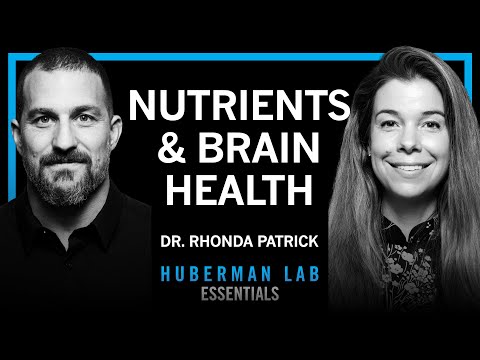
Essentials: Micronutrients for Health & Longevity | Dr. Rhonda Patrick
~44 min
Episode Brief·YouTube

Essentials: Micronutrients for Health & Longevity | Dr. Rhonda Patrick

Andrew Huberman
Watch on YouTube Add to chat My bookmarks← All sources

TL;DR

The four things you'd lose by not watching

4 items

TL;DR

The four things you'd lose by not watching

4 items
1

Dr. Rhonda Patrick emphasizes hormesis, where intermittent stressors like cold, heat, and plant compounds (e.g., sulforaphane) activate stress response pathways that improve resilience and health.

2

She recommends 2-4 grams of marine omega-3 fatty acids daily, stressing the importance of checking the IFOS website for quality and aiming for an 8% omega-3 index for longevity benefits.

3

Vitamin D3 supplementation is crucial, with 70% of the US population being insufficient. She suggests 4,000 IU/day for those with low levels (below 40 ng/mL) and highlights its role in regulating over 5% of the human genome, including serotonin production.

4

Magnesium is vital for ATP production and DNA repair, with 40% of Americans being insufficient. Dark leafy greens are primary sources, and she personally takes 130-135 mg of magnesium malate.

Protocols

Concrete recipes — what, when, how much, and why

4 items

Deliberate Cold Exposure

WhatImmersing oneself in cold water for a short duration.
WhenBefore public speaking or when feeling anxious.
Dose3 minutes at 49°F (Dr. Patrick's personal practice).
For whomIndividuals seeking improved focus, mood enhancement, and metabolic adaptations.
WhyTo enhance focus and mood, and to stimulate physiological adaptations like mitochondrial biogenesis and uncoupled thermogenesis.
CaveatsAvoid becoming 'cold adapted' if the goal is the dopamine rush, as adaptation can blunt this effect. However, adaptation is beneficial for metabolic efficiency.
Mechanism

Cold exposure leads to a slow, sustained release of dopamine, contributing to mood enhancement and focus. Physiologically, it stimulates mitochondrial uncoupling (generating heat instead of ATP) and mitochondrial biogenesis (increasing the number of mitochondria, especially in adipose tissue, leading to 'browning of fat'). This process is regulated by norepinephrine and PGC1 alpha, improving metabolic efficiency and heat production.

Personal experience

Dr. Patrick does 3 minutes at 49°F in her cold tub before podcasts or talks because it makes her feel more focused.

So today I did 3 minutes at 49° F. I have a cold tub. I definitely do cold when I'm going to do a podcast, when I'm going to give a talk or when I'm anxious. I feel good. I feel more focused which is why I usually do it before any type of public speaking.

High-Intensity Interval Training (Tabata)

WhatPerforming short bursts of maximal effort exercise followed by brief rest periods.
WhenThree times a week.
Dose10 minutes of 20 seconds on (maximal effort) and 10 seconds off on a stationary cycle.
For whomIndividuals seeking efficient and intense cardiovascular training.
WhyEfficiently stimulates mitochondrial biogenesis and improves overall fitness.
Personal experience

Dr. Patrick does Tabatas on a stationary cycle three times a week for 10 minutes, pushing herself very hard.

I do a lot of highintensity interval Tabatas on a stationary cycle three times a week and I do a 10-minute just 10 uh because it's efficient and I push my ass. I push myself really hard.

Sauna Use for Health and Longevity

WhatExposure to high heat in a sauna.
WhenImmediately after high-intensity exercise, or 4-7 times a week for maximal benefits.
DoseAt least 19-20 minutes at ~174°F (80°C). Dr. Patrick personally stays for 30 minutes at 189°F.
For whomHealthy individuals, and potentially those who cannot perform traditional exercise (with physician consultation).
WhyMimics moderate intensity aerobic exercise, improves cardiovascular health, reduces dementia/Alzheimer's risk, activates heat shock proteins, and can aid memory.
CaveatsConsult a physician if you have recent heart attack, rare heart disease, low blood pressure, or are pregnant. Never drink alcohol in a sauna. Listen to your body.
Mechanism

Sauna use causes vasodilation, redistributing blood flow to the skin and improving overall blood flow to the brain and muscles. It elevates heart rate and blood pressure during the session, followed by a decrease below baseline, similar to moderate exercise. It robustly activates heat shock proteins, which protect against protein aggregation (relevant for Alzheimer's) and muscle atrophy. The semi-stressful environment can also enhance memory by optimizing adrenaline levels.

Personal experience

Dr. Patrick gets her sauna to 189°F, hops in after her Peloton workout, and stays for 30 minutes, often reading science papers or preparing for talks. She also used it to memorize things.

I get it to about 189° F. I hop right in the sauna after my Pelaton. I literally like down a bunch of water and then I get in and and then I like either um read a science paper, prepare for a presentation or a podcast or I um hash over things in my mind.

Also said
“people that use it four to seven times a week have greater than 60% reduction in dementia risk and Alzheimer's disease risk compared to people that use it only one time a week.”— Highlights the significant dose-dependent reduction in neurodegenerative disease risk.
“What was shown was that men that were in the sauna for only 11 minutes, even if they used it four to seven times a week, that reduction was only like 8%. Instead of 50, it had to be greater than 19 minutes. So like 20 minutes is the sweet spot at about 174° F.”— Specifies the critical duration for achieving significant health benefits.

Hot Bath for Heat Stress Benefits

WhatImmersing oneself in a hot bath.
Dose20 minutes from the shoulders down at around 104°F.
For whomIndividuals who do not have access to a sauna.
WhyActivates heat shock proteins and brain-derived neurotrophic factor (BDNF), mimicking some benefits of sauna.

So there's been some studies looking at for example activation of heat shock proteins also brain drive neurotrophic factor increases with heat stress. Um and so uh the the hot bath at around 104 degrees Fahrenheit which is typically what studies will use for temperature and um it's at 20 minutes from the shoulders down and and that is like a very robust activation in heat shock proteins and in uh brain drive neurotic factor

What's new

Personal practice updates, fresh positions, predictions

6 items

Hormesis and Intermittent Challenges

0:02:40

The concept that mild, intermittent stressors like cold, heat, exercise, and certain plant compounds activate beneficial genetic pathways, improving overall resilience and health.

Why this matters: This provides a unifying framework for understanding the benefits of seemingly disparate health practices.

Background

Humans evolved in environments requiring intermittent physical activity, food scarcity, and exposure to temperature extremes, which naturally induced these challenges.

Dr. Patrick explains that our ancestors faced constant intermittent challenges, such as hunting for food (physical activity), periods of food scarcity (caloric restriction/intermittent fasting), and exposure to varying temperatures (heat/cold). These challenges, while stressful, activate specific genetic pathways in the body, often referred to as stress response pathways. These pathways not only help the body cope with the immediate stressor but also remain active, providing ongoing benefits for normal metabolism, immune function, and aging. This concept, known as hormesis, suggests that 'what doesn't kill you makes you stronger' at a cellular and genetic level, leading to profound antioxidant and anti-inflammatory responses, and even the production of stem cells or autophagy.

We evolved to intermittently challenge ourselves. And before we had Instacart, where you could basically just get your food delivered to you, we were out hunting, gathering, we were moving, and we had to be physically fit.

Cross-talk between Stressors and Genetic Pathways

0:03:50

Different stressors, including heat, cold, and plant compounds like sulforaphane, can activate the same beneficial genetic pathways, such as heat shock proteins and NRF2.

Why this matters: This highlights the interconnectedness of various hormetic interventions and suggests that benefits can be achieved through multiple avenues.

Dr. Patrick elaborates on the concept of 'cross-talk' between different types of intermittent stressors. She uses heat shock proteins as a prime example: while robustly activated by heat, they can also be stimulated by cold exposure and even by consuming plant compounds like sulforaphane found in broccoli sprouts. Similarly, sulforaphane is a powerful activator of the NRF2 pathway, which is crucial for detoxification and antioxidant production. This demonstrates that the body's stress response systems are not narrowly specialized but can be broadly engaged by various challenges, leading to overlapping health benefits.

There is a lot of cross talk between these stressors and the genetic pathways that they activate.

Also said
“For example, one pathway is called heat shock proteins. And as their name would apply, one would go, 'Oh, they're activated by heat.' Well, correct. They are activated very robustly by heat. But you can eat a plant like broccoli sprouts, which is high in something called sulfurophane. And it activates heat proteins among other things.”— Illustrates how a plant compound can activate a pathway typically associated with temperature stress.

Cooking Broccoli and Sulforaphane

0:07:30

Cooking broccoli somewhat lowers sulforaphane levels, but adding 1 gram of ground mustard seed powder to cooked broccoli can increase sulforaphane by four-fold.

Why this matters: Offers a practical tip for maximizing nutrient intake from cooked vegetables.

However, um there was a study a few years back that showed adding 1 g of mustard seed powder ground to your cooked broccoli increases the sulfurophane by four-fold.

Cold Adaptation and Mitochondrial Biogenesis

0:29:00

Becoming 'cold adapted' means the body shifts from inefficient shivering to more efficient heat production through mitochondrial uncoupling and increased mitochondrial density in adipose tissue (browning of fat).

Why this matters: Explains the physiological benefits of consistent cold exposure beyond the initial dopamine rush.

Dr. Patrick clarifies that while the initial discomfort and subsequent dopamine rush from cold exposure are notable, true cold adaptation involves deeper physiological changes. Shivering is an inefficient way for the body to generate heat. With repeated cold exposure, the body adapts by increasing mitochondrial activity and number, particularly in adipose tissue. Mitochondria, the cell's powerhouses, can 'uncouple' their energy production, meaning they generate heat instead of ATP. This process, called uncoupled thermogenesis, is a much more efficient way to stay warm and involves burning glucose and lipids. Furthermore, cold exposure, regulated by norepinephrine, stimulates mitochondrial biogenesis, leading to more mitochondria in fat cells, a process known as 'browning of fat.' This increased mitochondrial density is beneficial for metabolism and is also associated with improved muscle mass and endurance.

I want to be cold adapted because that means I have more mitochondria in my atapost tissue and and perhaps even muscle like that's been shown.

Also said
“Basically you can uncouple that that charge and so that positive charge protons start leaking out of the mitochondria and your mitochondria freak out. So this is called uncoupling it. And they start to it's maximum respiration as we call it. They try to make as much energy. They're like I got to get those that that that proton back that gradient the electrochemical gradient. And so they just go insane and they um in this case it's uncoupled energy. So the energy they're making is actually heat not ATP.”— Explains the mechanism of uncoupled thermogenesis.
“And um another type of adaptation that occurs is you actually produce more mitochondria in your atapost tissue. And um and that actually happens also regulated by norepinephrine or noradrenaline through a protein called PGC1 alpha.”

Sauna Use and Memory/Cognition

0:36:00

Sauna use can enhance learning and memory, aligning with the inverted U-shaped function of adrenaline and memory, where moderate stress optimizes retention.

Why this matters: Connects a physical stressor (heat) to cognitive benefits, offering a unique application for sauna.

Dr. Patrick notes that she personally uses the sauna to memorize things, and Andrew Huberman corroborates this with research by James McGaw. This work demonstrates an inverted U-shaped relationship between adrenaline levels and memory. Too little stress (overly relaxed) or too much stress (panicking) impairs memory, while moderate, peak levels of stress, like those induced by sauna, can significantly enhance the learning and retention of information. This suggests that the semi-stressful environment of a sauna can create an optimal physiological state for cognitive functions like memory consolidation.

I would use the uh sauna to memorize things. I don't know if it has to do with the like the stress response like when you when you have an emotional trigger like you remember things better, right?

Also said
“Basically, if you're too relaxed and not stressed enough, you're not going to remember any information. At peak levels of stress, you actually are a memory machine, at least within the context of whatever it is you're trying to learn.”— Explains the inverted U-shaped function of adrenaline and memory.

Sauna and Muscle Atrophy Prevention

0:44:00

Heat stress, including local heat treatment, has been shown in animal and some human studies to protect against muscle atrophy, potentially by activating heat shock proteins.

Why this matters: Highlights an under-recognized benefit of heat exposure for muscle health, particularly relevant for disuse scenarios.

Heat shock proteins are also protecting against muscle atrophy. So that's also having to do with the protein structure and the muscle tissue as well. This has been studies in animal you know animal data um as well as some recent human data as well.

Also said
“It was local hypothermia or local heat treatment but um essentially it showed that it protected I mean it was like there was a study where um they were looking at muscle disuse and it was it was something like the local heat treatment prevented like almost 40% of the muscle atrophy from disuse.”— Provides a specific example of the protective effect against muscle loss.

Recommendations

Products, supplements, and tools mentioned in the episode

9 items

Sulforaphane (from broccoli sprouts or supplements)

Supplement

A powerful activator of the NRF2 pathway, which regulates genes involved in glutathione production and detoxification of carcinogens.

Sulforaphane, particularly abundant in broccoli sprouts (up to 100 times more than mature broccoli), is highlighted for its ability to activate the NRF2 pathway. This pathway is critical for regulating genes involved in producing glutathione, a major antioxidant in the brain and body, and for detoxifying harmful compounds like heterocyclic amines. Genetic studies (GIWA) show that sulforaphane can negate increased cancer risk in individuals with certain genetic variations that impair detoxification. Human evidence also suggests it activates glutathione in the brain.

Personal experience

Dr. Patrick shifted to sulforaphane supplementation.

But I do think with respect to plants, there's just evidence that sulfurophane is a very powerful activator of the NRF2 pathway. And this is a pathway that regulates a lot of genes and a lot of genes that are related to like glutathione production.

Find Sulforaphane

Moringa powder

Supplement

A 'cousin' to sulforaphane that similarly activates the NRF2 pathway.

Personal experience

Dr. Patrick uses Koolie Moringa powder in her smoothies.

There's another compound and it's actually called moringa. It's like a cousin and it activates the NRF2 pathway similarly to sulfurophane. And so I've been buying this Koolie Moringa powder and I add it to my smoothies.

Find Moringa

Marine Omega-3 Fatty Acids (EPA and DHA)

Supplement

Essential for brain and body health, acting as powerful anti-inflammatory agents and crucial for cell membrane fluidity.

Dr. Patrick considers marine omega-3s (EPA and DHA) to be one of the most powerful anti-inflammatory dietary components, significantly impacting thought, feeling, and aging. She recommends aiming for an omega-3 index of 8% (measured in red blood cells), noting that the standard American diet typically yields 5%, while Japan's is 10-11%. Achieving an 8% index is associated with a 5-year increased life expectancy compared to 4%. The mechanisms include the production of resolvins and specialized pro-resolving mediators (SPMs) that resolve inflammation. EPA specifically helps blunt inflammatory responses that can inhibit serotonin release in the brain. DHA is vital for cell membrane fluidity, particularly in neurons, affecting the structure and function of receptors and transporters. Deficiency can impair serotonin and dopamine receptor function.

vs alternatives

Triglyceride form is preferred over ethyl ester form, though ethyl ester is acceptable if taken with food.

I personally think it is one of the most powerful anti-inflammatory dietary lifestyle things that we can we can get easily that is going to powerfully modulate the way you think, the way you feel and the way you age.

Also said
“What he showed in his data was that people that had a omega-3 index of 4% or lower, so close to what the standard American is, but a little bit lower, they had a 5-year decreased life expectancy compared to people that had an 8% omega-3 index.”— Quantifies the longevity benefit associated with a higher omega-3 index.
“It's known that omega-3 actually specifically EPA is able to help serotonin in inflammation inhibits the release of serotonin. And so EPA is actually able to blunt inflammatory responses along with DHA as well.”— Explains how EPA impacts serotonin release by reducing inflammation.
“DHA itself has been shown it's it's a very important uh fatty acid that makes up cell membranes many cell membranes including in our neurons and as you very well know Andrew the structure and function of receptors of transporters these membranebound proteins on the surface of of our cells including neurons are affected by the membrane fluidity”— Details DHA's role in cell membrane structure and function.
Find Marine

IFOS (International Fish Oil Standards) website

Service

A third-party testing website for fish oil supplements.

The IFOS website provides third-party testing results for numerous fish oil supplements globally. They measure the actual concentration of omega-3 fatty acids, contaminants like mercury, PCBs, and dioxins, and the total oxidation number (tottox). Dr. Patrick recommends looking for a tottox number under 10, ideally under 6, as omega-3s are prone to oxidation. This resource helps consumers choose high-quality, unoxidized supplements.

Now um the international fish oil standards IFSO, they have a website where they do third-party testing of a ton of different fish oil supplements from around the world.

Find IFOS

Measuring Omega-3 Index

Practice

Testing omega-3 levels in red blood cells to assess long-term status.

The omega-3 index measures the level of omega-3s in red blood cells, which have a turnover rate of 120 days. This makes it a reliable long-term marker of omega-3 status. If supplementing, it's important to wait 120 days after starting supplementation before retesting to accurately gauge the increase in levels. This allows for personalized dosing and ensures efficacy.

The omega-3 index is actually in the red blood cells. And red blood cells take 120 days to turn over. So, if you're going to do a baseline test, um, if you want to know before supplementing what your level is, you have to wait 120 days before doing the second test after supplementing to know how much you you went up because the that's how long it takes for your red blood cell to turn over.

Find Measuring

Vitamin D3

Supplement

A steroid hormone crucial for regulating over 5% of the human genome, with 70% of the US population having inadequate levels.

Vitamin D is a steroid hormone that binds to a receptor, forming a complex that enters the cell nucleus and interacts with DNA at 'vitamin D response elements' (VDREs). This interaction turns on or off a vast array of genes, regulating over 5% of the protein-encoding human genome. Its functions include immune system regulation, blood pressure control, bone homeostasis, and crucially, activating tryptophan hydroxylase 2, the enzyme that converts tryptophan to serotonin in the brain. Ideal blood levels are 40-60 ng/mL, while 70% of Americans are below 30 ng/mL. Supplementation is often necessary as dietary sources are limited and sun exposure becomes inefficient with age. Mandelian randomization studies link low vitamin D to higher all-cause, respiratory, and cancer-related mortality, as well as increased risk of multiple sclerosis.

I mean, I think the most obvious would be vitamin D. 70% of the US population has inadequate vitamin D levels. 70 of the wholeing US. So, this is everyone.

Also said
“One of the important things that you'll find interesting that I published on back in 2014 was that the VDRES in tryptophan hydroxilase 2. So for people listening, tryptophan hydroxilase is an enzyme that converts tryptophan into serotonin.”— Explains vitamin D's direct role in serotonin production in the brain.
“So let's say you're deficient, you're 20 nanogs per milliliter and you want to get to 40. You're going to need at least 4,000 IUs.”— Provides a practical dosing guideline based on current levels.
“this was a this was a smaller smaller study than um I would like but it reversed their epigenetic aging by like 3 years because again it's a hormone. It's regulating more than 5% of your protein encoding human genome.”— Highlights a potential anti-aging benefit of correcting vitamin D deficiency.
Find Vitamin

Magnesium

Supplement

An essential mineral, with 40% of the US population being insufficient, critical for ATP production and DNA repair.

Magnesium is an essential mineral that acts as a co-factor for numerous enzymes, including those involved in ATP (cellular energy) production and DNA repair. Insufficient magnesium can lead to insidious, unseen daily DNA damage. Since magnesium is at the center of chlorophyll molecules, dark leafy greens are excellent dietary sources. The high insufficiency rate in the US reflects a diet low in these greens. Magnesium malate is suggested as a well-tolerated supplemental form, as some magnesium forms can cause GI distress at higher doses.

vs alternatives

Magnesium L-threonate is also mentioned as not affecting the gut as much. Malate is preferred for its benefits related to short-chain fatty acids.

Personal experience

Dr. Patrick takes around 130-135 mg of magnesium, preferring malate form.

I do think magnesium is important in there as well. I mean, I think, you know, again, about 40% of the US population doesn't get enough magnesium. It's an essential mineral we're supposed to be getting from our diet.

Also said
“I personally think that magnesium insufficiency causes an insidious type of damage daily that you can't look in the mirror and see like when you're deficient in vitamin C you're like my my gums are falling apart I have scurvy right but like you can't see DNA damage you can't see it but it's happening it's happening right now in my body and it's happening in your body it's happening normal metabolism it's happening you know every day um but we repair that damage we have repair enzymes in our body called DNA repair enzymes they require higher magnesium.”— Emphasizes the silent but significant impact of magnesium insufficiency on DNA integrity.
“I personally like to take around 130 or 135 milligrams. Um that way it's not like um a huge bolus to my gut. You can take like magnesium 3 and8 for example and it doesn't affect the gut as much. I would say malite would be the best.”— Provides personal dosing and preference for magnesium forms.
Find Magnesium

Dark leafy greens (Kale, Spinach, Chard, Romaine lettuce)

Product

Excellent dietary sources of magnesium.

Magnesium is at the center of a chlorophyll molecule. Chlorophyll is what gives plants their green color. So, dark leafy greens are high in magnesium.

Find Dark

Green apples and Tart cherries

Product

High in malic acid, which is beneficial for the gut.

Personal experience

Dr. Patrick always tries to eat green apples and tart cherries.

I think mal malate's awesome and I always try to eat green apples. They're really high in malic acid. and um tart cherries. Tart cherries are really high in it as well.

Find Green

Notable quotes

Lines worth pulling out — contrarian, specific, or perfectly phrased

6 items
These generalizations are kind of they're just not useful. And I think that a lot of people online um in the blogosphere it it they gravitate towards them because it's just easier and it's a lot more sensational.
Critiques the tendency for oversimplified and sensationalized dietary advice online, particularly regarding plants.
nothing is ever what it says on the bottle.
A strong statement emphasizing the unreliability of supplement labels and the need for third-party verification.
I personally think it is one of the most powerful anti-inflammatory dietary lifestyle things that we can we can get easily that is going to powerfully modulate the way you think, the way you feel and the way you age.
Highlights the profound and broad impact of omega-3s on overall health and longevity.
I mean, I think the most obvious would be vitamin D. 70% of the US population has inadequate vitamin D levels. 70 of the wholeing US. So, this is everyone.
Emphasizes the widespread deficiency of vitamin D, making it a critical public health concern.
I personally think that magnesium insufficiency causes an insidious type of damage daily that you can't look in the mirror and see like when you're deficient in vitamin C you're like my my gums are falling apart I have scurvy right but like you can't see DNA damage you can't see it but it's happening it's happening right now in my body and it's happening in your body it's happening normal metabolism it's happening you know every day um but we repair that damage we have repair enzymes in our body called DNA repair enzymes they require higher magnesium.
Illustrates the 'silent' but significant long-term damage caused by magnesium insufficiency, contrasting it with visible deficiencies like scurvy.
So, it very well what you're describing is very well matches with that. And then of course it tapers off as you really increase adrenaline to the point where people are starting to lose autonomic function where they're just they're panicking basically.
Explains the 'inverted U-shaped function' of adrenaline and memory, where too much stress becomes detrimental.

Sign in to share feedback

Tell us if this brief hit the mark or missed it — feedback feeds back into the next iteration of the prompt.

Topics covered

hormesisintermittent challengescold exposureheat exposurestress response pathwaysheat shock proteinssulforaphanenrf2 pathwayglutathionecruciferous vegetablesbroccoli sproutscooking broccolimustard seed powdermoringaomega-3 fatty acidsepadhatriglyceride formethyl ester formifos
Free account

Make this library yours

Reading is free for everyone. A free account adds the personal layer: save protocols, follow experts, and see how the other experts weigh in on this same topic.

Create a free accountSign in

Where the experts disagree — weekly

One email a week: the sharpest new disagreements and protocols from the library. No spam, unsubscribe anytime.

Educational summary of the cited expert source — not medical advice. Open the source recording linked above and consult a qualified physician before acting on any protocol.