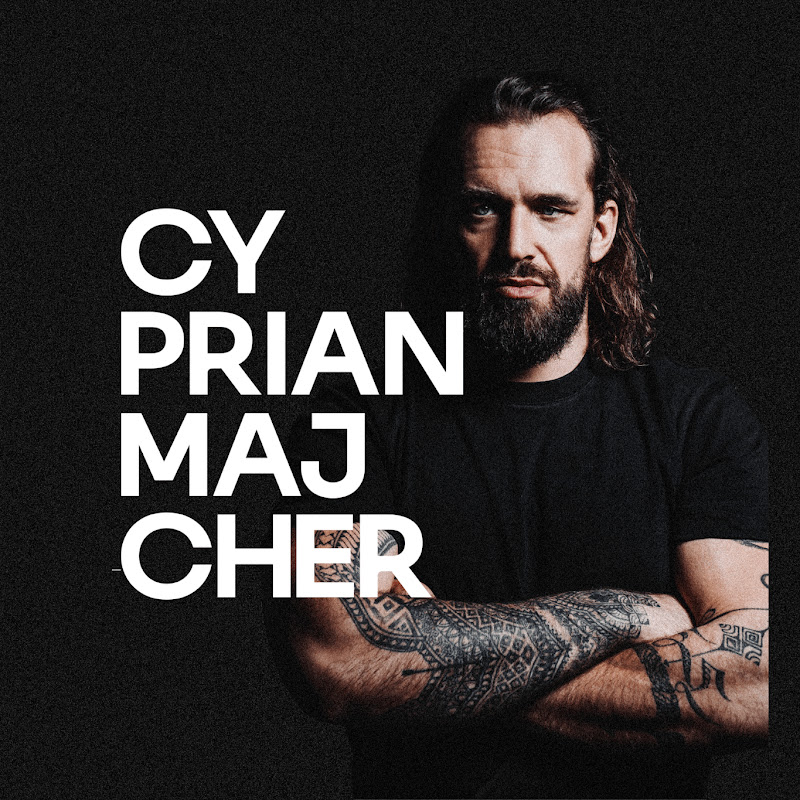
General Polko transformed GROM from a neglected unit with a 17 million budget and no logistics into a 400 million budget, NATO-integrated elite force by recruiting specialists and fighting political battles to prevent its disbandment.
2
He controversially never underwent GROM's selection process, arguing that his combat experience and leadership were more valuable, and that selection can be manipulated by commanders.
3
He emphasizes that modern special forces require intelligence, cyber skills, and cunning over brute physical strength, and that women should serve in combat roles if they meet standards.
4
He reveals that his GROM badge was stripped in a political vendetta orchestrated by a commander later convicted of corruption, and that Polish veterans are often abandoned without support.
Protocols
Concrete recipes — what, when, how much, and why
8 items
Turn around a troubled unit by establishing clear rules and showing genuine care
WhatWhen Polko took command of a company in Yugoslavia with severe disciplinary problems, he immediately set clear expectations for behavior, rewards, and punishments, and demonstrated that he valued the soldiers' lives and dignity.
WhenUpon assuming command of any unit with morale or discipline issues.
DoseOngoing leadership approach.
For whomMilitary commanders, especially those taking over troubled units.
WhySoldiers want to be well-led and will respond to a commander who provides clarity and respect. In combat, they will not tolerate poor leadership because their survival depends on it.
CaveatsRequires consistency and personal example; cannot be a one-time effort.
Polko describes how the previous commander, chosen for his English skills, couldn't control the men. The soldiers were undisciplined, and morale was low. Polko, despite not speaking English at the time, was made company commander after two months. He found that soldiers actually crave good leadership. He established a clear system of punishments and rewards, and treated them with respect. Within a short time, only about 10% of the conscripts left; the rest, including one with a criminal record for refusing military service, became professional soldiers. He witnessed a corporal publicly scolding a lieutenant, saying that without Captain Polko they'd still be in the mess. This showed him that soldiers have a strong sense of self-preservation and will reject incompetent leaders. The key is to provide structure and show that you care about their welfare, not exploit them.
Mechanism
Psychological: clear expectations reduce anxiety and build trust. In high-stress environments, people seek competent authority. When leaders demonstrate competence and fairness, followers reciprocate with loyalty and effort.
Personal experience
Polko recounts that he was a bachelor at the time and threw himself into training the soldiers. He and his colleague prepared two special groups and won the special groups competition. He personally took first place. This hands-on engagement built credibility.
Soldiers like to be well-led, they like clarity regarding the system of punishments and rewards, and they want to be proud of their service.
Also said
“In combat, in difficult, crisis situations, that doesn't work. ... that soldier has a greater sense of awareness and simply wants to survive. ... he will not allow himself to be poorly led.”— Explains why poor leadership fails in combat.
“A corporal from basic service was chewing out a lieutenant. ... 'And what are you good for, sir? You do this, this, and this.' If it weren't for Captain Polko, we'd still be in that mess.”— Anecdote showing soldiers' recognition of good leadership.
Role-specific selection criteria for special forces
WhatInstead of a one-size-fits-all physical selection, tailor entry requirements to the role: different standards for assaulters, staff officers, logisticians, etc. Use a scoring system that rewards exceptional strengths rather than penalizing specialization.
WhenWhen designing or revising selection processes for specialized units.
DoseInstitutional policy.
For whomMilitary leadership, HR in special forces.
WhyPure physical fitness tests favor certain body types and may exclude brilliant specialists. A logistician doesn't need to run a marathon but must understand procurement. The American model adds bonus points for exceeding standards in one area, balancing deficits.
CaveatsMust still ensure a baseline of physical fitness for all, but not the same peak for every role.
Polko explains that when he took over GROM, the unit lacked staff officers and logisticians because everyone had to pass the same grueling selection. He brought in General Tłok-Kosowski, who had combat experience and procurement skills but hadn't done selection. He argues that for support roles, selection is irrelevant; what matters is competence. He also criticizes the Polish physical fitness system, which penalizes specialization: a weightlifter might fail agility tests and get a lower score, even if his strength is exceptional. He designed an American-style system where exceeding standards in one area gives extra points, but it wasn't adopted. He later changed GROM's selection to be role-specific. He also notes that the current commander allows candidates to choose their own gear for the test, reflecting the shift toward cognitive skills.
Mechanism
Organizational: matching selection to job requirements ensures the unit has the full spectrum of capabilities. Physiologically, different roles demand different physical attributes; a one-size test creates a monoculture that may lack necessary diversity.
Personal experience
Polko shares that he himself was not the typical operator physique but excelled in endurance and shooting. He also recounts that his own selection as commander was based on his combat experience, not a physical test.
If we were only guided by the requirement for super physical fitness, we would take sports champions. And here, too, a big problem would arise.
Also said
“In the American system, if you exceptionally exceed some competencies in some area of sport, you get extra points for that, and then those deficits equalize, and the assessment is more general.”— Describes the alternative model.
“For me, the selection itself was that he completed a mission in Bosnia, a mission in Kosovo, carried out tender procedures, built a base in Szczere Pole, and on top of that was quite physically fit.”— Example of role-specific selection for a logistician.
Defend your unit from disbandment by appealing to national sovereignty
WhatWhen the General Staff wanted to disband GROM, Polko went to the Minister of Defense and asked: if you disband GROM, will you hand over counter-terrorism responsibilities to the Americans on Polish soil? This framing saved the unit.
WhenWhen a specialized unit is threatened with dissolution due to political or budgetary reasons.
DoseOne-time strategic intervention.
For whomMilitary commanders facing institutional threats.
WhyPoliticians may not care about military capability, but they care about sovereignty and not appearing weak to foreign powers. By linking the unit's existence to national control over security, you make disbandment politically costly.
CaveatsRequires access to top decision-makers and a clear, defensible argument. May create enemies in the general staff.
Polko recounts that when he took command, there were documents already drafted to reduce GROM to a few dozen soldiers or transfer it to the military police. The chief of general staff, General Piątas, wanted to 'plow under' GROM. Polko, with support from his team, fought back. He used his contacts with Americans, including Jan Nowak-Jeziorański, to argue that the US wanted to cooperate with GROM on counter-terrorism and preventing smuggling of fissile materials. He then posed the question to the minister: if you disband GROM, will you give those competencies to the Americans? This put the minister in a bind. He also threatened resignation. The minister eventually sided with him, saying 'Maybe they should be like independent princes.' This political battle was crucial to saving the unit.
Mechanism
Political leverage: framing the issue as a sovereignty threat forces decision-makers to consider the geopolitical implications, not just budgetary ones. It also mobilizes external allies (US) to apply pressure.
Personal experience
Polko describes the tense meeting where the chief of staff called them 'independent princes' and the minister's response. He also notes that he had to threaten resignation multiple times.
Mr. Minister, I know that we don't have terrorists today, but you want to give up the GROM unit. The Americans say it's worth keeping the GROM unit because there is a terrorist threat, ... By giving up the GROM unit, will you hand over these competencies to the Americans, and will they decide on Polish soil how these missions are to be carried out?
Also said
“That was the key fight, and I think the same goes for my subordinates.”— Emphasizes the importance of this argument.
“I even had to threaten resignation. And there was a meeting with the Minister of National Defense Szmajdziński, where indeed Minister Szmajdziński heard from the chief of the general staff, they behave like independent princes. I looked then, and the minister says: 'And maybe that's how they should be?'”— Shows the turning point.
Decentralized command: trust the operator in the field
WhatIn operations, the commander on the ground has the best situational awareness. Higher headquarters should set intent but allow the field commander to adapt. Polko even participated in a mission as a subordinate to a captain.
WhenDuring planning and execution of special operations.
DoseOngoing command philosophy.
For whomMilitary leaders, especially in special operations.
WhyTerrorists don't need to ask permission; bureaucracy slows down response. To be effective, you must empower those at the tactical edge to make decisions.
CaveatsRequires highly trained, trustworthy subordinates. Risk of misalignment with strategic goals if not properly communicated.
Polko explains that in Iraq and Afghanistan, even after meticulous planning, situations changed dynamically. He gave his field commanders broad initiative. He quotes Admiral McRaven's book: we were losing to terrorists because they didn't have to ask higher headquarters for permission. When you captured a terrorist and found documents about an imminent attack, you had to get approval to act, which put you a step behind. Polko told his men, 'Better to ask forgiveness than permission.' He himself, when participating in a mission to capture an air force commander, was subordinate to a GROM captain who planned the operation. He says a general doesn't command on an aircraft; the captain does. Similarly, in the field, the operator in charge calls the shots.
Mechanism
Organizational agility: decentralized decision-making reduces the OODA loop (observe, orient, decide, act), allowing faster reaction than a hierarchical approval chain. It also leverages local knowledge.
Personal experience
Polko recounts that during the Iraq mission, when asked by General Sanchez if they would continue, he had 5 minutes to decide without consulting Warsaw. He consulted his soldiers and said yes. If he had asked the country, it would have taken 3 days. He also tells of a time in Kosovo when he refused a direct order from General Sanchez because the operation was poorly planned, and proposed an alternative. This shows that autonomy goes both ways: field commanders can and should push back if necessary.
Better to ask for forgiveness than permission.
Also said
“We were losing to terrorists because terrorists didn't have to ask higher headquarters for permission to take further actions.”— Explains the rationale.
“Even when I participated in one of the missions where GROM was detaining a terrorist air force commander, that mission was planned by a captain from GROM. ... if I was already participating in that mission, I was his subordinate. I had to follow his orders.”— Personal example of submitting to a lower-ranking officer's authority in the field.
Let dissenters leave; build with the committed
WhatWhen soldiers threatened to leave unless promoted, or when they contested his command, Polko allowed them to go. He believes you can't force someone to stay; those who remain will be more dedicated.
WhenDuring organizational change or when facing internal resistance.
DoseAs needed.
For whomLeaders facing personnel challenges.
WhyCoercion breeds resentment. Voluntary commitment is stronger. By not giving in to ultimatums, you maintain authority and filter for true believers.
CaveatsRisk of losing valuable people if the underlying issues aren't addressed. Should be combined with efforts to understand and resolve legitimate grievances.
Polko describes a situation where a soldier said, 'If you promote me from captain to major, I'll stay.' He refused to be blackmailed. He also tells of soldiers who criticized his command; he told one, 'Sławek, I don't deserve to command such a wonderful person as you. Either stay and do your job, or let's meet in the tradition room, I'll thank you nicely and give you a reward.' He says no one is forced to work. This approach, he believes, was key to consolidating the unit after the initial exodus when he took over. Many left because of pay cuts and uncertainty, but those who stayed were committed and formed a 'band of brothers.' He also applied this to the mutiny in his earlier company: after they bonded through the mutiny, he channeled their energy into excellent performance.
Mechanism
Psychological: reactance theory—people value freedom; forcing them to stay increases resistance. Allowing exit reduces reactance and leaves a self-selected, motivated group. It also signals confidence and non-desperation.
Personal experience
Polko shares that when he took over GROM, many soldiers left due to uncertainty. He let them go. Later, those who stayed achieved great things. He also recounts the mutiny story where soldiers planned to refuse to shoot; he didn't punish them harshly but used the cohesion to build a super company.
I had a situation where someone said, if you promote me from captain to major, I'll stay. Well, I didn't let myself be blackmailed and terrorized.
Also said
“Because you can't get a worker out of a slave.”— Succinct principle.
“After all, I won't hold someone by force. If someone doesn't want to carry out tasks, and I stand at the head of the team that coordinates here, that is my command.”— Reinforces the philosophy.
Provide real missions to maintain unit cohesion
WhatPolko observed that when GROM had no operational challenges, soldiers turned on each other. He actively sought missions (like Kosovo) to give them purpose and prove their worth.
WhenDuring peacetime or low-tempo periods.
DoseContinuous; seek out deployments or realistic training.
For whomCommanders of special operations units.
WhyElite soldiers need to test themselves. Idle hands lead to internal conflict. Real operations build pride and cohesion.
CaveatsRisk of over-deployment and burnout. Missions must be meaningful, not just busywork.
Polko recounts that when he took command, the unit was demoralized and had internal problems, including a drunken incident where two soldiers shot a colleague. He believed they needed a challenge. He lobbied ministers to send GROM to Kosovo, to show they could cooperate and weren't just 'independent princes.' Later, the Iraq mission solidified their elite status. He says that without challenges, they fought each other; with a common enemy, they united. This principle also applied to his earlier company: after the mutiny, he gave them a tough inspection, and they excelled. He also notes that after the Iraq mission, he conducted after-action reviews where every soldier pointed out mistakes—that was healthy, a sign of a learning organization.
Mechanism
Group dynamics: a shared external goal reduces internal friction and fosters cohesion. The stress of real operations forges strong bonds (band of brothers). It also provides a sense of purpose and validation.
Personal experience
Polko describes how he pushed for the Kosovo mission and later the Iraq mission. He also shares that after the Iraq mission, he collected after-action reviews and saw that soldiers were critical but constructive.
I sought challenges, because when GROM soldiers had no challenges, they fought among themselves.
Also said
“Actually, a few days before I assumed the duties of GROM commander, two drunk GROM soldiers shot their colleague, because such problems were emerging.”— Illustrates the consequences of idle, demoralized troops.
“Those who stayed really managed to consolidate, but they needed a challenge.”— Shows that the remaining soldiers needed a mission to gel.
Commander's presence in the field during crises
WhatDespite a ministerial ban, Polko participated in combat missions and field exercises to show solidarity and take direct control when situations escalated.
WhenDuring high-risk operations or when a subordinate commander is unable to handle a crisis.
DoseSparingly, when necessary.
For whomSenior military leaders.
WhyA commander who only leads from a bunker loses authority. Being present in critical moments builds trust and allows for immediate decision-making.
CaveatsRisk of the commander becoming a casualty or getting sucked into tactical details, neglecting strategic coordination. Must balance with the primary duty at the command post.
Polko acknowledges that the commander's place is at the command post, but argues that there are times when you must be with the soldiers. He gives the example of Kosovo, where a company commander couldn't break a Serb roadblock; Polko had to go personally, negotiate, and ultimately order a forceful breach. He also participated in a GROM mission to capture a terrorist, where he was subordinate to a captain. He says that after the Iraq invasion, he went to the front lines despite the minister's prohibition, because he felt he needed to be there. He also mentions the tradition in GROM of exercises with live ammunition where the commander stands near targets—he participated to maintain continuity, though he wasn't impressed because he had faced real bullets in Yugoslavia. He emphasizes that if a commander has a complex about his subordinates, he shouldn't be a commander. Being present is not about proving bravery but about shared risk and credibility.
Mechanism
Leadership psychology: shared hardship and risk-taking build trust and loyalty (the 'band of brothers' effect). It also provides the commander with unfiltered situational awareness. In crises, the senior leader's authority can break deadlocks.
Personal experience
Polko recounts the roadblock incident in Kosovo: his vehicle hit a barrier but didn't move it; he then withdrew, planned, and succeeded. He also tells of jumping out of a plane after all his soldiers, only to have his parachute malfunction—he had to deploy the reserve. That experience taught him the weight of responsibility for others' lives.
The commander's place is at the command post, because everyone has their place in the formation. ... but it is also the commander's task from time to time, in difficult situations, to be with the soldiers.
Also said
“I had a ban from the Minister of National Defense, and despite that, I participated.”— Shows he defied orders to be with his men.
“Well, the commander's place is also with the soldiers when certain tasks or actions are slipping out of control.”— Clarifies the specific condition for field presence.
American-style fitness scoring that rewards strengths
WhatInstead of a system where a weightlifter gets a lower overall score due to poor agility, use a model that gives bonus points for exceeding standards in any area, balancing deficits.
WhenWhen designing physical fitness tests for military or tactical units.
DoseInstitutional policy.
For whomMilitary fitness policy makers.
WhySpecialization is valuable; a soldier with extraordinary strength can be an asset even if less agile. The current Polish system discourages specialization and favors generalists.
CaveatsMust still ensure a minimum standard across all domains to prevent extreme imbalances that could be dangerous in combat.
Polko explains that he wrote a proposal for an American-style fitness assessment, but it wasn't adopted. He observed that soldiers who focused heavily on gym strength often had problems with agility and speed, and their overall score suffered. In the American system, if you exceed standards in one area, you get extra points that can compensate for lower scores elsewhere, giving a more holistic picture. He also notes that for GROM, he changed selection to be role-specific, so a logistician didn't need the same physical prowess as an assaulter. This aligns with his broader philosophy of valuing diverse skills.
Mechanism
Physiological: different muscle fiber types and training adaptations create trade-offs. A scoring system that rewards peaks encourages soldiers to develop unique capabilities, creating a more versatile team. It also prevents the exclusion of valuable specialists who may not be all-around athletes.
Personal experience
Polko mentions that he himself was a good runner and endurance athlete, not a bodybuilder, and he could outlast many. He also notes that he completed Ranger school, which is physically demanding, but doesn't judge those who didn't.
In the American system, if you exceptionally exceed some competencies in some area of sport, you get extra points for that, and then those deficits equalize, and the assessment is more general.
Also said
“If you put a lot into strength, then you later have a problem with agility, you have a problem with speed, with endurance too, it varies.”— Explains the trade-off.
“Those stupid systems were still in force, which didn't see that someone had extraordinary strength, for example.”— Criticism of the old system.
What's new
Personal practice updates, fresh positions, predictions
7 items
grom-selection-manipulation
General Polko argues that the GROM selection process is not an objective measure; it can be manipulated by the commander, who ultimately decides who passes. He himself never underwent selection as commander, believing his combat experience and leadership were more valuable, and that self-evaluation would be absurd.
Why this matters: Challenges the myth that all GROM operators must pass a grueling selection, revealing that the commander's discretion can override results, and that selection criteria should differ by role.
Background
Traditionally, GROM selection is seen as a brutal, meritocratic filter. Polko's predecessors had used selection to exclude even highly respected soldiers to make a point.
Polko explains that when he took command, the unit had no staff, no logistics, and a budget of 17 million. He needed specialists like General Tłok-Kosowski, who had combat experience and procurement skills but hadn't undergone selection. He argues that for support roles, selection is irrelevant; what matters is competence. He also reveals that his predecessor invited a highly respected soldier to selection only to fail him deliberately, to show that even the best can fail. This, he says, proves selection can be a tool for manipulation. As commander, he was the one who signed off on selection results, so for him to undergo selection would mean evaluating himself—an absurdity. He emphasizes that the real test is the year-long training after selection, where true suitability emerges. He also changed selection criteria to be role-specific, not a one-size-fits-all physical test.
Personal experience
Polko recounts that when offered command, he was the third choice after two others failed. He had already proven himself in combat in Yugoslavia and Kosovo, and had led the first NATO mission. He felt he brought value that no selection could measure. He also shares that he participated in a selection-like marathon with a journalist who claims to have passed GROM selection, but Polko didn't finish because he had to return to Warsaw to fight for GROM's survival. He says, 'I didn't pass the selection for GROM. That is indeed a thing, but I saved GROM.'
I didn't pass the selection for GROM. That is indeed a thing, but I saved GROM.
Also said
“Well, selection was also a field for certain abuses, and I resigned from that, because a situation was created where a man who had enormous authority in the army was invited by my predecessor to selection, but only to fail him.”— Shows deliberate manipulation of selection to humiliate a respected soldier.
“I wasn't interested in how he passed that selection, because even if he passed the selection and got in, it didn't mean he was going to become a GROM soldier. Only later was there a year-long training, and during that training, certain things showed whether he was suitable.”— Emphasizes that selection is just a first step; real evaluation happens during training.
“If we were only guided by the requirement for super physical fitness, we would take sports champions. And here, too, a big problem would arise.”— Argues that pure athleticism doesn't make a good operator.
alcoholism-and-corruption-in-polish-army
Polko describes widespread alcoholism and corruption in the Polish military during the communist era and early post-communist years, where officers drank while soldiers trained, and prizes were stolen.
Why this matters: Provides a candid insider account of the Soviet-style pathology that plagued the army, contrasting with the professional culture he later built in special forces.
Background
The Polish military inherited Soviet traditions, including a culture of heavy drinking and exploitation of conscripts. Polko encountered this firsthand when he joined the special battalion in Dziwnów.
Polko recalls that when he arrived at his first unit, the biggest problem was alcoholism, especially among senior officers. He describes training exercises where soldiers would toil in the forest while the cadre drank, and when inspections came, they'd demand soldiers gather mushrooms or catch eels for them. He also tells of receiving a shoddy, cheap watch as a prize for winning a competition, while the organizers kept the expensive real prizes for themselves. He calls it theft and pathology, noting that this same corruption now plagues the Russian army. He contrasts this with the ethos he built in GROM, where such behavior was unthinkable. He also links this to the broader problem of treating soldiers as cannon fodder, as Putin does, rather than as valued professionals.
Personal experience
Polko shares that as a young officer, he was deeply engaged in training his soldiers and won first place in a competition, only to be given a broken women's watch. Years later, a colleague explained that the organizers bought expensive watches for themselves and gave cheap junk to the winners. He also recounts that when he took over a company in Yugoslavia, he had massive disciplinary problems because the previous commander, chosen for his English skills, couldn't control the men. He turned it around by establishing clear rules and showing he cared, proving that soldiers want to be well-led.
One thing bothered me at that time, well, alcoholism, in short. ... that alcoholism was widespread, especially at those higher levels. ... the cadre simply boozed. And when they wanted something from the soldiers, it was primarily to gather mushrooms, blueberries for them, and when inspections came to us in Dziwnów, to catch eels for them.
Also said
“That was pathology, that was theft, that was something that, fortunately, plagues the Russian army today, but we had such a Soviet army at that time.”— Directly compares the old Polish army to the current Russian army's corruption.
“General Wilecki was presenting me with the award. And of course, when I saw that award, I received a broken women's watch that could be bought for pennies at a flea market.”— Personal anecdote of the petty theft.
leadership-philosophy-rebellious-soldiers
Polko believes that soldiers crave good leadership and will rebel if poorly led. He prefers subordinates who challenge him and show they care, rather than yes-men.
Why this matters: Contradicts the stereotype of military obedience; argues that the best soldiers are those with strong opinions and initiative.
Background
Traditional military culture often demands unquestioning obedience. Polko's experience in combat and special operations taught him that rigid hierarchy fails in dynamic situations.
Polko explains that when he took over the company in Yugoslavia, the soldiers were undisciplined because the previous commander couldn't lead. Once he established order and showed he cared, the soldiers transformed, even a conscript with a criminal record became a professional soldier. He witnessed a corporal dressing down a lieutenant, saying that without Captain Polko they'd still be in the mess. This taught him that in crisis, soldiers have a strong survival instinct and won't tolerate poor leadership. He carried this into GROM, where he encouraged debate and even mutiny. He tells of a time when his company planned a collective refusal to shoot because he had pushed them too hard; one soldier accidentally hit a target and was scolded by the others. That mutiny actually bonded the company, and later they performed excellently on an inspection. He says, 'I would prefer such soldiers who shout, rebel, say: That was crap, that was bad. But I know that they care.' He contrasts this with officers who just nod and say 'great idea' to survive. He also quotes the film Swimming with Sharks: if you haven't rebelled against the system by 20, you have no heart; if you haven't built a system by 30, you have no brain. He applies this to GROM: they have heart, and they need to build systems.
Personal experience
Polko shares that his own officer school evaluation said he irritated superiors with his own opinions. He sees that as a positive trait. He also recounts how his deputy, Tomek Rutkowski, would openly disagree with him in briefings but then outside would mobilize everyone behind the plan. That's the kind of soldier he values.
I really prefer such soldiers. ... who shout, rebel, say: 'That was crap, that was bad.' But I know that they care about something, that they have an emotional approach to it, rather than one who just nods. Yes, great idea, just to survive, just to get by.
Also said
“Soldiers like to be well-led, they like clarity regarding the system of punishments and rewards, and they want to be proud of their service.”— Core belief that soldiers want competent leadership.
“In combat, in difficult, crisis situations, that doesn't work. ... that soldier has a greater sense of awareness and simply wants to survive. ... he will not allow himself to be poorly led.”— Explains why poor leadership fails in combat.
“If you have never rebelled against the system by the age of 20, it means you have no heart. These people in GROM have heart. And if by the age of 30 you haven't built some system and done something, it means you have no brain.”— Uses a movie quote to encapsulate his philosophy.
women-in-grom-combat-roles
Polko was the first GROM commander to send women on combat missions, despite resistance from Americans and some of his own soldiers. He believes women should be treated equally if they meet the standards.
Why this matters: Challenges traditional gender roles in special forces and reveals internal and external pushback.
Background
At the time, US special forces did not send women into combat. GROM had a few women, mainly in support roles, but they wanted to prove themselves in the field.
Polko recounts that when he took command, morale was low due to uncertainty about the unit's future. A female soldier, Nikita, approached him and said she didn't care about pay or other issues; she just wanted to do her job and test herself in combat. He was impressed by her high morale and sent her on a combat mission. This drew complaints from some of his own commanders, who said the Americans didn't like it because they didn't send women into combat. Polko pushed back, arguing that if women meet the physical and mental standards, they should be allowed to serve. He later discovered from interviews that even after he thought barriers were broken, the women still faced constant pressure to prove they weren't worse than men. He extends this to society, noting how female presidential candidates are judged differently. He also discusses with the current GROM commander about selection, where candidates can choose their own gear; some overload on heavy equipment, others take only smart devices, reflecting the shift toward digital skills. He uses the example of the Navy SEAL who killed Bin Laden, who said they could teach Rangers tactics but wouldn't play football with them because they'd get killed, illustrating that elite operators aren't necessarily the biggest or strongest.
Personal experience
Polko shares the story of Nikita coming to him during a low point, and his decision to send her despite opposition. He also mentions that he thought he had done a lot for women, but later realized they still had to fight for equality.
Nikita came up to me and said: 'Well, whatever, pay, other things, I just want to do my job and test myself in combat.' Huge respect, because they wanted to do their job.
Also said
“They didn't want to be treated as a token decoration, but really wanted to do a good job and be judged according to the competencies they possessed.”— Emphasizes that women sought equal treatment based on competence.
“The Americans at that time did not send women into combat operations. And what I also discover years later, reading interviews with our ladies, is that they didn't have it easy at all, that even though it seemed to me that some barrier had been crossed, someone was still telling them they were worse.”— Reveals ongoing discrimination even after formal acceptance.
moral-emptiness-of-war-and-political-betrayal
Polko expresses disillusionment with the Iraq war, seeing it as senseless violence fueled by politicians, and feels betrayed by American and Polish politicians who later called it a mistake.
Why this matters: A rare, candid admission from a former special forces commander about the futility of the conflicts he fought in.
Background
Polko served in Yugoslavia, Kosovo, and Iraq. He witnessed the brutality of ethnic conflict and the aftermath of regime change.
Polko describes the absurdity of watching people who once lived together suddenly spiral into hatred, killing each other, burning homes, raping, all driven by politicians. He says it's both funny and terrifying, and the longer you look, the harder it is to understand. He questions whether the wars were necessary. He points to the decision to disband the Iraqi army, against General Sanchez's advice, which created ISIS. He notes that the US Vice President now says the Iraq war was a mistake, and asks why Europe didn't react—yet Poland supported the US strongly, showing honor and capability. Now that support is questioned. He recalls the French president's quip: 'You missed an opportunity to stay silent.' He also laments that after the Iraq mission, his soldiers received no medals or recognition from the Polish government; they were used for a photo op by Prime Minister Miller. He says politicians lied, and soldiers feel cheated. He contrasts this with the honor code of GROM soldiers, who never looted or stole, even when capturing terrorists with large sums of money.
Personal experience
Polko recounts that after the Iraq mission, he submitted recommendations for medals for his soldiers but refused to include himself, so he received no Polish medal. The Americans, however, gave him the Order of Saint Maurice and the Military Merit medal. He also shares that he had to threaten resignation to save GROM from being disbanded, and that the chief of general staff called them 'independent princes', to which the minister replied, 'Maybe they should be.'
And it's funny and terrifying and hard to understand, honestly. You see people who lived together, functioned, and suddenly some spiral of hatred spun up, mainly by politicians, and they kill each other completely senselessly.
Also said
“Politics is really a swamp, where someone makes money on something, and it's terribly difficult to maintain a moral backbone.”— Expresses deep cynicism about politics.
“When you hear today the Vice President of the United States saying that the mission in Iraq was a mistake and why Europe didn't react, well, it turns out that we strongly supported the Americans then, we went there, we showed that honor is important to us, ... And today the American side questions it.”— Highlights the sense of betrayal.
political-removal-of-grom-badge
Polko's GROM badge was stripped in 2010 by commander Dariusz Z., who was later convicted of corruption. He claims it was a political vendetta to silence him after he criticized purges of experienced soldiers.
Why this matters: Exposes how political manipulation and personal vendettas can override honor in elite units, and how a kangaroo court was used against him.
Background
The GROM badge is a prestigious honor. Revocation is rare, usually for criminal acts. Polko was a vocal critic of the new leadership's purges.
Polko explains that after he left command, the new leadership under Dariusz Z. (later convicted for corruption) fired experienced soldiers like Colonel Pawluk, who had just returned from Afghanistan with a high military order. Polko spoke out in the media, saying something was wrong. In response, Dariusz Z. and former commander Petelicki orchestrated a campaign to strip his badge. They accused him of various things, including that he didn't write his book 'Gromowładny' (he says he spent nights authorizing every word to ensure no classified info). He was never shown the accusations or given a chance to defend himself. He calls it a 'kangaroo court' that Putin would be proud of. He later learned that the real reason was his support for the purged soldiers. He sued Petelicki for defamation, but Petelicki's suicide ended the case. When Dariusz Z. was later caught in a corruption scandal, Polko refused to push for his badge to be revoked, saying he had earned it as an operator and it wasn't his fault a politician dragged him into the mud. He even received a thank-you call from Dariusz Z. for remembering his good service.
Personal experience
Polko recounts the sequence: he wrote a letter asking to confront the accusations face-to-face, but was denied. General Potasiński was about to arrange a meeting two days before the Smolensk crash, but died. He says he decided not to fight further, just move forward.
A kangaroo court is never good. It's accusing someone, passing a sentence, and you don't give the right to a defense. Well, Putin would really be proud, damn it.
Also said
“I described it in my latest book Rozgromić konkurencję. ... it was a decision to shut Roman Polko's mouth, who says things that politicians don't like, so it's best to discredit him.”— States the political motivation clearly.
“Dariusz Z. A man who has a conviction for corruption.”— Underscores the character of the person who stripped his badge.
intelligence-over-brute-force-in-special-forces
Polko argues that modern special forces prioritize intelligence, cunning, and cyber skills over raw physical strength, and that selection criteria are changing accordingly.
Why this matters: Reflects the evolution of special operations in the digital age, moving away from the Rambo stereotype.
Background
Traditional commando image emphasizes physical prowess. Polko notes that even in his time, pure gym strength could hinder agility.
Polko explains that when he designed a physical fitness assessment based on the American model, it wasn't adopted; the Polish system still penalized specialization. He says that if you only valued super fitness, you'd recruit sports champions, but that creates problems with agility and endurance. He later changed GROM's selection to be role-specific: different criteria for staff officers, logisticians, and assaulters. He recounts a conversation with the current GROM commander, who told him that during selection, candidates can choose their own gear; some overload on heavy equipment, others take only smart devices. This reflects the shift toward digitalization and using local assets and cunning. He cites the book by the Navy SEAL who killed Bin Laden: after the operation, Rangers invited them to play football, and the SEAL said they could teach tactics but wouldn't play football because the Rangers would kill them—showing that elite operators aren't necessarily huge. He concludes that in special forces, what counts is cleverness, agility, courage, and many other traits beyond physique.
Personal experience
Polko mentions that he himself was never the biggest, but he maintained good fitness and could outrun many. He also notes that he completed Ranger school, but some later GROM commanders didn't, yet he doesn't hold it against them.
Today we are really moving towards digitalization, hence computerization, and many things, many special operations are carried out using local resources, cunning counts.
Also said
“If you put a lot into strength, then you later have a problem with agility, you have a problem with speed, with endurance too, it varies.”— Explains the trade-off of excessive strength training.
“The Rangers invited them for a joint game, and he looked at them and said: 'Listen, I can, we can teach you tactics, operations, shooting, other things, but we won't play American football with you, because you'll kill us.'”— Anecdote illustrating that elite operators aren't necessarily the most physically imposing.
Recommendations
Products, supplements, and tools mentioned in the episode
1 item
No Easy Day (My Shots That Killed Bin Laden)
Book
Polko references this book by a Navy SEAL to argue that elite operators aren't necessarily the most physically imposing, and that intelligence and tactics matter more.
There is that book by the SEAL. No Easy Day. ... and he says that after that whole operation ... the Rangers invited them for a joint game, and he looked at them and said: 'Listen, I can, we can teach you tactics, operations, shooting, other things, but we won't play American football with you, because you'll kill us.'
Rozgromić konkurencję (and earlier Bezpiecznie już było)
Book Sponsored · disclosed
Polko mentions his latest book where he describes the story of his GROM badge being stripped, and he co-writes books with his wife on crisis management and competition.
DisclosureAuthor is General Roman Polko himself.
He references the book as a source for the full story of the political machinations behind his badge removal. He also mentions earlier book 'Bezpiecznie już było' and that they are working on new editions. He uses his writing to share leadership and security insights.
Personal experience
He says he wrote the book to set the record straight and to provide a case study of how politics can corrupt military institutions.
I described it in my latest book Rozgromić konkurencję. I think page 140, or 144 or something.
Also said
“Together with my wife, we are also writing Rozgromić kryzys, Rozgromić konkurencję, another edition.”— Indicates ongoing writing and sharing of knowledge.
Lines worth pulling out — contrarian, specific, or perfectly phrased
6 items
Better to ask for forgiveness than permission.
Encapsulates his approach to bureaucracy and initiative.
A kangaroo court is never good. It's accusing someone, passing a sentence, and you don't give the right to a defense. Well, Putin would really be proud, damn it.
Strong condemnation of the kangaroo court that stripped his badge.
GROM is not Rambo. GROM is cooperation and humility.
Succinctly defines the unit's ethos against Hollywood stereotypes.
If a commander has a complex towards his subordinates, he shouldn't be a commander.
Blunt leadership principle.
Politics is really a swamp, where someone makes money on something, and it's terribly difficult to maintain a moral backbone.
Cynical but honest view of politics.
I didn't pass the selection for GROM. That is indeed a thing, but I saved GROM.
Defiant response to criticism about his lack of selection.
Sign in to share feedback
Tell us if this brief hit the mark or missed it — feedback feeds back into the next iteration of the prompt.
Reading is free for everyone. A free account adds the personal layer: save protocols, follow experts, and see how the other experts weigh in on this same topic.
Educational summary of the cited expert source — not medical advice. Open the source recording linked above and consult a qualified physician before acting on any protocol.