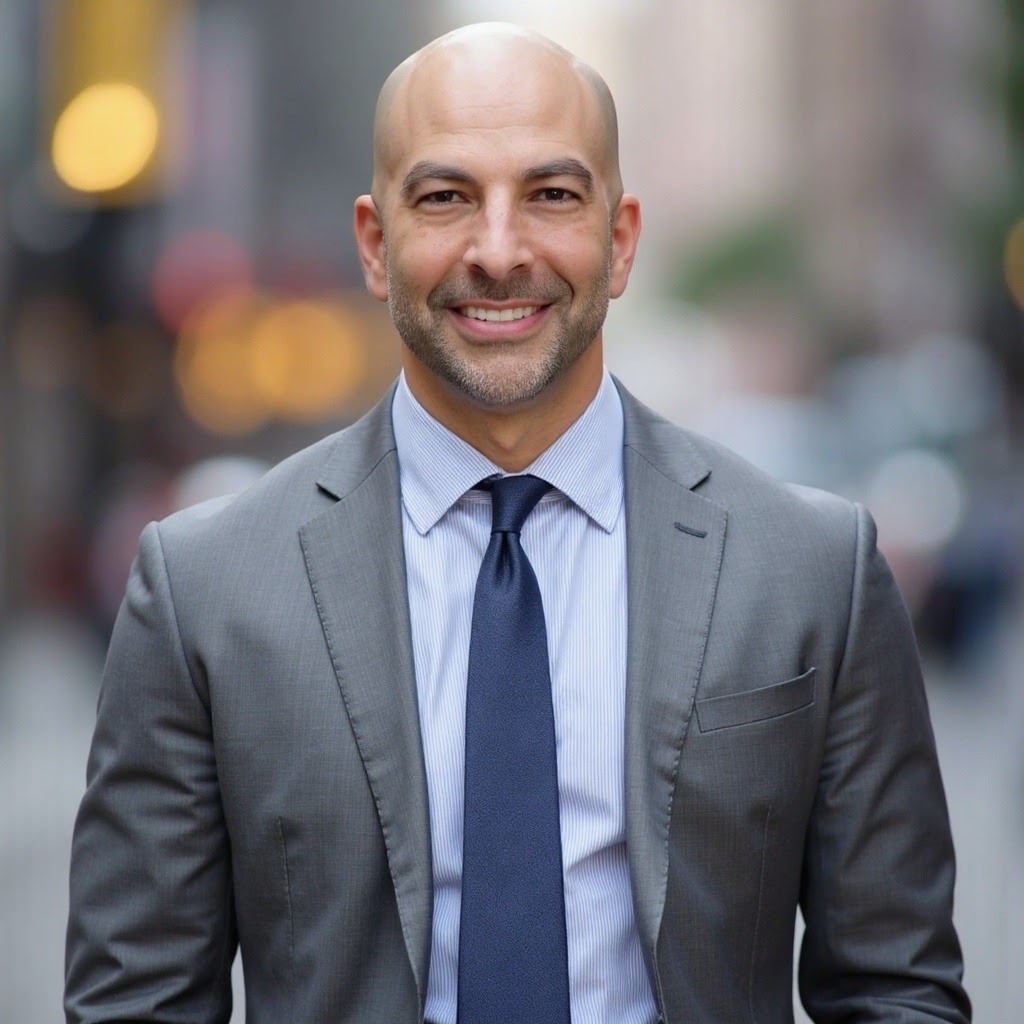
Attia's longevity strategy has a two-part professional obsession: developing precise molecular biomarkers to dose caloric restriction and its mimetics (rapamycin, metformin), and reverse-engineering the training required to remain functional at 100 — the 'centenarian decathlon.'
2
Physician burnout is a misdiagnosis: what doctors suffer is moral injury — the chronic wound of knowing the right thing to do for a patient and being structurally prevented from doing it, often with personal and financial penalty for trying.
3
Damania's Health 3.0 model centers primary care as the engine of prevention: a flat-fee, team-based, relationship-driven clinic with a personal health account, catastrophic back-stop coverage, and competing providers — a synthesis of the best elements of Attia's and Damania's clinical philosophy.
4
Nutrition is not a religion war between paleo and vegan: every restricted diet beats the standard American diet, making the comparison irrelevant. The real research frontier is time-restricted feeding, dose-frequency of caloric restriction, and the CR-mimetics that operate on mTOR and AMPK.
WhatAttia's active longevity protocol combines AMPK activation via metformin, mTOR inhibition via rapamycin (at longevity-appropriate doses and intervals, not transplant dosing), and periodic complete caloric restriction (water-only fasting of variable duration and frequency).
WhenOngoing; the exact dose-frequency for each component is still being refined through self-experimentation and Attia's research agenda.
DoseMetformin: in clinical use with patients. Rapamycin: Attia does not use it with most patients yet due to regulatory ambiguity, but cites the emerging literature on safe longevity dosing intervals. Fasting windows: Attia currently practices a once-a-day feeding window as his personal default.
For whomAdults over 40 interested in healthspan extension. Rapamycin requires medical supervision and off-label use discussion. Metformin is accessible via prescription, increasingly used off-label in non-diabetic longevity practice.
WhyAll three interventions converge on nutrient-sensing pathways — caloric restriction and metformin activate AMPK; fasting and rapamycin suppress mTOR — producing an autophagy-promoting, senescence-slowing molecular state that extends healthy lifespan in every mammal model studied.
CaveatsAttia acknowledges the dose-response problem is currently unsolvable with available measurement tools — he compares it to an engineering problem with four independent variables (calorie count, composition, duration, frequency). He is working on developing finer autophagy and molecular readout tools to resolve this.
Attia: 'I am really really obsessed with the question of what is the appropriate dose of caloric restriction and the frequency and of the molecules that mimic that.' He frames metformin as activating AMPK (nutrient-sensing enzyme mimicking caloric deprivation) and rapamycin as inhibiting mTOR (the amino acid sensor — mimicking protein deprivation). Autophagy, 'self-eating,' is regarded as the most important mechanistic readout of both. The challenge: you need much finer measurement tools than currently exist to actually know what dose is doing what. Attia describes his current fasting as 'pulled out of my ass' and wants to replace it with dose-response data.
Mechanism
AMPK activation suppresses anabolic pathways and promotes catabolic recycling (autophagy). mTOR inhibition similarly shifts the cell from growth mode to maintenance mode. Caloric restriction engages both pathways while also triggering FOXO, SIRT1, and other longevity-associated regulators.
I am really really obsessed with the question of what is the appropriate dose of caloric restriction and the frequency and of the molecules that mimic that so when you start to think about metformin rapamycin especially and complete caloric restriction
Centenarian decathlon reverse-engineering for training program design
WhatDefine 20 specific functional requirements for being a 'kick-ass 100-year-old' (e.g., ability to do a goblet squat to pick up a grandchild, lay on floor and stand up easily, carry luggage, climb stairs without pain), then build a multi-decade training plan backwards from those requirements to current age.
WhenStarting in your 40s; re-evaluate annually as you approach each decade-marker.
For whomAnyone over 35 who has been training for performance metrics that do not map to healthspan. Particularly relevant for endurance athletes transitioning out of competitive sport.
WhyTraining for peak performance today (500-lb deadlift, 25-mile swim) optimizes for the wrong target if your goal is functional independence at 90-100. The centenarian decathlon forces you to ask which capacities actually matter at the end-game and ensure you are building toward them — which often means prioritizing mobility, stability, grip strength, and cardiovascular capacity over peak force production.
Attia gives a vivid image of the target: 'if your grandkid or great grandkid came running towards you could you dip down into a goblet squat position and pick up a little 30-pound terror.' The mental model: consider how you interacted with your kids at 40 — could you reproduce that at 80? He no longer cares about his previous athletic achievements: 'none of those things matter to me anymore.' The training framework inverts from 'what can I do maximally today' to 'what must I preserve to be functional in 50 years.'
I'm only interested in how well I drive versus myself... figure out what all those metrics are and then engineer your way back to what you need to be able to do at 40 50 60 70 80 to hit that target
Time-restricted feeding: once-a-day feeding window as default nutrition protocol
WhatRestrict eating to a single daily window, sharing the main meal with family. Maintain a Mediterranean-style diet quality within that window. Allow weekend flexibility for social and family eating.
WhenDaily as a default; weekends allow deviation for social meals.
For whomAdults who have tried and abandoned stricter protocols (keto, extended fasting) due to social friction or personal dissatisfaction. The once-a-day window preserves the time-restricted feeding benefit while maximizing meal quality and social integration.
WhyAttia's personal evolution: from 3 years of strict ketosis through Mediterranean plus intermittent fasting to once-a-day. The key discovery was finding a protocol that was both metabolically sound (good labs) and personally sustainable (enjoyed the meal, could eat with family).
CaveatsAttia acknowledges the optimal dose of caloric restriction and fasting duration is unknown. This is his personal protocol, not a clinically validated recommendation. People with hypoglycemia, certain medications, or eating disorder history should not attempt without medical supervision.
Attia describes his path: 'going from ketosis into kind of Mediterranean with intermittent fasting to now feeding window of like once a day... I finally found a sweet spot where it's not only good for me in other words I feel better my labs are good but I can do it and I enjoy that meal so much and it allows me to be with my family during the meal we eat together and I cheat on the weekend because I'm with my family.' This is a practical model of the efficacy-vs-effectiveness distinction he raises with patients.
going from ketosis into kind of Mediterranean with intermittent fasting to now feeding window of like once a day that's I finally found a sweet spot where it's not only good for me in other words I feel better my labs are good but I can do it
Physician communication protocol for vaccine-hesitant patients: motivate the elephant first
WhatWhen a patient expresses vaccine hesitancy, resist the instinct to deploy facts and retracted-study data first. Instead, sit down, ask open-ended questions about what specifically bothers them about vaccines, and listen until you understand their underlying moral framing (liberty violation, toxin fear, distrust of institutions) before introducing evidence.
WhenAt any patient encounter where vaccine hesitancy is expressed, before the physician's own emotional trigger fires.
Dose5-10 minutes of genuine listening before introducing evidence.
For whomClinicians and anyone in a trusted-advisor role communicating about vaccines, medications, or lifestyle changes to someone who has been primed by anti-evidence media.
WhyAttia lost a patient by leading with the Wakefield retraction and 'beating them down with facts.' Damania's framing: the patient's elephant (unconscious emotional/moral processing) was triggered. Data addressed to the rider (rational cortex) bounces off a triggered elephant. The fix: first understand what the elephant is protecting, then speak to it.
CaveatsThis applies to genuinely hesitant or fence-sitting patients — not to professional anti-vaxxers aggressively spreading misinformation publicly. Damania: 'my platform has a zero quarter for that... I ridicule them, I shame them.' The communication protocol is for the individual patient relationship.
Damania reframes Attia's lost-patient story: 'what you triggered was that person's elephant, their unconscious was triggered in a way where their entire conception of the world — their ideas of liberty versus justice versus care versus harm — was activated.' The patient came in assuming a physician who individualized care would validate their hesitancy; instead they got a fast fact-correction that felt like dismissal. Damania's current approach: 'sitting down and going yeah so why do vaccines bother you, let's just take Wakefield and his study out of the equation, what is it about them that really bothers you?' He meets the autonomy and distrust concerns before the evidence conversation.
what I've started doing is sitting down and going yeah so why why do vaccines bother you let's just take Wakefield and his study out of the equation what is it about about them that really bothers you
Also said
“we both want what's right for the kid it's very hard though because we get our own emotional... I get so angry man I've gotten triggered apart”— Acknowledges that the physician's own elephant fires too — the communication protocol requires managing both elephants.
Morbidity and mortality conference as institutional learning infrastructure
WhatA closed, legally protected weekly meeting in which all complications and deaths are presented unemotionally, facts only, with systematic post-hoc analysis: was the right intervention ordered, was the protocol followed, what system failure contributed, what can be fixed.
WhenWeekly, as a standing institutional commitment with no exceptions. All clinical staff present.
DoseEarly morning, typically 1 hour; the time commitment is the price of institutional learning.
For whomAny institution managing complex, high-stakes operations: hospitals, surgical practices, intensive care units. Attia suggests the model should be exported to other high-stakes industries.
WhyThe closed-door, no-legal-consequence structure is what enables honest disclosure. In a blame culture, errors are hidden. In an M&M culture, the question shifts from 'who screwed up' to 'what in the system allowed this to happen.' Attia describes learning this as a resident and being puzzled that McKinsey and other elite organizations had no equivalent.
CaveatsThe model only works when legally protected and closed to outsiders. Opening it to legal discovery destroys the culture of candor instantly. The challenge for private companies is the absence of that legal protection.
Attia: 'I've never been afraid of speaking in public with maybe one exception and that was a very difficult conference to present at... it hurts, there's no denying it, it's a rectal exam without any lubrication, but there's benefit.' He describes the beauty of watching the benefit accrue: residents who would hide early in training learning that disclosure and analysis is the only path to improvement. He contrasts this with hospital blame culture: 'nurses often get fired if they make mistakes and the truth is it ought to be a no-blame culture — what was going on in that Pyxis dispensing system that allowed that medicine to be dispensed.'
there will be a says a there'd be a Tuesday at 6am there was no exception to this rule all of the surgeons the residents the fellows the attendings everybody would meet in a room and all of the complications and the deaths would be presented and it was a very unemotional conference
Also said
“M&M works because it's completely closed there is no legal recourse so there's no hiding nobody who's not a part of surgery is allowed in that room”— The structural element that makes candor possible — without legal protection, the culture collapses.
Nudge-based default-good food environment design as patient nutrition intervention
WhatRather than prescribing dietary rules to patients, work with them to restructure their default food environment: buy food in the store's periphery, remove high-sugar items from easy reach, replace the default option (soda in the bottle) with a better default. Make it opt-out to eat well rather than opt-in.
WhenInitial consultation on nutrition, especially with patients from food deserts or with children who are obese.
For whomPatients with low health literacy, families with obese children, anyone who intellectually knows what to eat but cannot maintain the behavior.
WhyAttia cites Thaler's Nudge: the default behavior is determined by the path of least resistance, not by intention. Damania's turntable health clinics proved this: teaching patients to shop the periphery, giving them health coaches who walked through the store with them, and restructuring what was prominent in their kitchen changed outcomes more than prescriptive advice.
Attia describes a thought experiment he seriously priced out but never ran: take two food-desert neighborhoods, give one money without changing the environment, change the other neighborhood's food environment entirely — Cocoa Puffs at $12.99 hidden at the back, eggs and avocados on sale at the front — then cross over. The cost to run this experiment was about 1/20th of developing a new drug but was never funded because 'prevention, proactivity, looking at root causes — that's not something we do in American medicine.' Damania's turntable health proved the principle at the clinic level: teaching kitchen, health coaches who co-shopped with patients, and accountability relationships produced transformation.
the easier you can make something for someone the easier it's going to be to do and just figure out a way to make them opt out of good behaviors rather than opt in to good behaviors
What's new
Personal practice updates, fresh positions, predictions
6 items
Rapamycin's safety profile is vastly underestimated by clinicians
~late episode
Attia argues that rapamycin at longevity doses is safer than ciprofloxacin, a drug prescribed like candy. The transplant-dose reputation poisons clinician perception of a drug that at lower doses and longer intervals actually enhances immune function and improves key physiological metrics.
Why this matters: Rapamycin is the most reproducibly life-extending drug known in mammals, yet clinician fear of its transplant-dose side effects blocks its use in healthy aging protocols.
Background
mTOR inhibitors in transplant medicine are given at doses and frequencies that deliberately suppress immunity. Longevity dosing is categorically different — intermittent low dosing preserves immune upregulation.
Attia: 'rapamycin gets a bit of a bad rap, it's a much safer drug than people realize. I would be less afraid of a patient taking rapamycin than ciprofloxacin... at the right dose and at the right frequency.' He notes he has personally seen two patients suffer tendon injuries from fluoroquinolones in his small practice — a complication now recognized to have a six-month window of susceptibility — whereas rapamycin at longevity dosing shows enhanced immune function in both dog and human studies. The challenge is not safety at these doses; the challenge is that nobody knows the optimal dose-frequency schedule for maximum benefit.
rapamycin gets a bit of a bad rap it's a much safer drug than people realize like I would be less afraid of a patient taking rapamycin than ciprofloxacin
Also said
“rapamycin given at certain doses at certain frequencies actually enhances the immune system and improves many metrics of physiology”— Directly contradicts the transplant-dose narrative — at longevity doses, the immune effect reverses.
Moral injury, not burnout, is what destroys physicians
~mid episode
Talbot, Dean, and others have reframed physician burnout: the real pathology is moral injury — the specific wound that occurs when a clinician knows the right thing, is prevented from doing it by the system, and suffers personal consequences for trying anyway. Damania calls it the central driver of the physician mental health crisis.
Why this matters: The burnout framing pathologizes the individual (resilience deficit, stress management failure). Moral injury frames it correctly as a systems failure — the institution has turned the job into a machine that structurally mandates bad care.
Background
Attia describes his own experience: a surgical intern who clearly needed to go to the OR, a chief resident who refused to come in, and Attia's failure to break chain of command — guilt he carried for 15+ years.
Damania: 'I don't think it's burnout, I think it's moral injury. You were in a position where all the system was arrayed to make it very difficult for you to do the right thing for the patient. You knew it was the right thing, you knew the patient needed to have this done, and you knew that it would cause serious consequences to you to have it done... and you erred on the side of okay well maybe the system is this way for a reason.' Attia's guilt lasted so long he considered asking Hopkins colleagues to dig through medical records to find out what happened to the patient. The patient, years later, recognized Attia on a Dr. Oz rerun from a waiting room.
I don't think it's burnout I think it's moral injury... you were in a position where all the system was arrayed to make it very difficult for you to do the right thing for the patient
Also said
“we have to take care of patients we know full well what needs to be done we know where the screw ups are and where things have gone wrong and where our system has failed and we are powerless not only powerless if we do the right thing we will lose money we will lose time with our family”— Damania's macro scaling of Attia's one patient to the daily reality of attending medicine.
Every diet beats the standard American diet — the comparison is irrelevant
~mid episode
Attia's nutrition framework places all restricted diets (keto, paleo, Mediterranean, vegan, vegetarian) in the same cluster of 'dietary restriction.' Because they're all compared to the SAD, which is a perfectly engineered ratio of refined carbohydrates, sugars, and fats designed to maximize palatability and shelf life, any of them win. The research frontier is not which restricted diet is best — it's the orthogonal dimensions of when and how much to eat.
Why this matters: Reframes the entire diet-war debate as a category error. Vegan vs. keto is like arguing whose pancakes taste better than dog excrement — the baseline is so bad that both are correct.
Attia describes a five-level framework: SAD at one end, water-only caloric restriction at the other, with dietary restriction, time-restricted feeding, and hypocaloric feeding in between. The religious wars among dietary tribes have all been fought in one tiny corner of that state space. He moved from ketosis through Mediterranean plus intermittent fasting to, at time of recording, a once-a-day feeding window — finding a personal sweet spot that is both metabolically sound and socially sustainable (sharing the family meal).
all of your diets are better than sad I mean that's like saying like my pancakes tastes better than that dog [__] over there yeah I bet your pancakes will taste better
Also said
“one thing to figure out how to optimize a person based on how they cycle between those layers but the harder part is figuring out how to make that the default as opposed to something you have to work into”— Efficacy vs. effectiveness: knowing the optimal diet is the easy part; adherence engineering is the hard part.
The centenarian decathlon as a training design tool
~late episode
Attia has moved away from athletic performance goals (25-mile swims, 200-mile bike rides, 500-lb deadlifts) toward what he calls the centenarian decathlon: codify what a kick-ass 100-year-old needs to be able to do, then reverse-engineer the training required at 40, 50, 60, 70, 80 to arrive there.
Why this matters: Reframes fitness goals from peak athletic performance to functional longevity. A 500-lb deadlift today is irrelevant if the goal is to pick up a 30-lb grandchild without injury at 90.
Attia gives a concrete image: 'could you lay down on the floor play blocks or dolls or whatever and stand up easily... if your grandkid or great grandkid came running towards you could you dip down into a goblet squat position and pick up a little 30-pound terror.' This is the target. The training framework becomes: figure out 20 requirements to be a kick-ass hundred-year-old and engineer backwards to 40-year-old prerequisites. He explicitly says he no longer cares about his previous athletic achievements: 'none of those things matter to me anymore.' The training priority has inverted toward functional maintenance over peak capacity.
I don't actually care if I can swim 25 miles today I don't care if I can ride my bike 200 miles I don't care if I can deadlift 500 pounds anymore like none of those things matter to me anymore
Also said
“figure out what all those metrics are and then engineer your way back to what you need to be able to do at 40 50 60 70 80 to hit that target”— The design principle: the centenarian goal defines the entire training plan from midlife onward.
Healthcare's uncoupled cost-decision structure is the root of the crisis
~late episode
Using a Saudi Arabia air conditioning analogy — the government subsidizes energy to near zero, so expats leave AC running all summer — Attia traces the US healthcare crisis to the same structural error: the people driving costs are not bearing costs. Decision-making and spending are decoupled, which guarantees overconsumption regardless of quality or access.
Why this matters: Cuts through the left-right healthcare debate with a systems framing that neither side typically articulates: it is not an insurance or access problem first, it is an incentive-alignment problem first.
Attia: 'the people who are driving the cost are not bearing the cost... it's not that dissimilar from you going to the Lexus dealer and knowing that you only have to pay nine percent of the cost of whatever car you get.' His proposed fix requires coupling decision-making to spending, which is only politically possible if total prices are first made rational — because exposing patients to 9% of a $78 urine cup is still insane. He ultimately concedes that a single-payer back-stop (catastrophic coverage) is likely necessary, combined with a personal health account for primary care and skin-in-the-game deductibles.
fundamentally if you want to fix the cost issue you must be able to couple decision making to spend you can't have those uncoupled and they're currently uncoupled
Meditation requires approximately one hour per session to cross the threshold effect
~mid episode
Damania, who practices one hour daily using The Mind Illuminated protocol, describes a threshold effect: below a certain session length, the mind's noise doesn't actually quiet. At around an hour, there's a state shift where background turbulence settles and insight arises — a state that decays within about 20 minutes of stopping but whose traits persist through the day.
Why this matters: Challenges the 10-20 minute meditation recommendation common in popular wellness culture. Damania argues this is below the therapeutic threshold and produces limited trait change.
Background
Both Attia and Damania discuss Sam Harris's work, The Mind Illuminated (Yates/Immergut), and altered states/traits research. The sub-mind boardroom metaphor — narrating sub-mind, auditory sub-mind, visual sub-mind all projecting onto a conscious screen — frames why quieting that process takes longer than expected.
Damania: 'there's a therapeutic threshold and I think it's around an hour... at about an hour you're in a state where the noise actually quiets and when noise appears you recognize it and you ignore it and you're floating on the breath and the body feels like this pulsing wave of energy.' He adds that people who talk to him after he's been practicing consistently say he's 'so much nicer' and notice 'an edge that's been taken off.' Attia describes feeling 'infinitely less aggressive' and 'infinitely more empathic' even with shorter practice.
there's a therapeutic threshold and I think it's around an hour and it's hard to pitch that to people but once you get into that mold first you have to set that intention when you sit down
Recommendations
Products, supplements, and tools mentioned in the episode
3 items
The Mind Illuminated by Culadasa (John Yates) and Matthew Immergut
Book
Described as 'the goddamn manual for nerds' — a systematic, stage-based meditation guide that frames the practice through cognitive science and sub-mind theory rather than spiritual metaphor.
Damania: 'I've been screwing around trying to meditate for five years and just being like I can't seem to get it... I discovered it randomly on Amazon Reddit and was transformed in my practice.' He describes it through the Greatest American Hero analogy: other meditation resources felt like having the superpowered suit with no manual; The Mind Illuminated is the manual. Attia says he read it on Sam Harris's recommendation. Both find it the closest a rationalist can get to understanding direct meditative experience from the outside.
I got this book and I'm like it's the goddamn manual for nerds and for Taipei's who want to process
The behavioral economics classic on choice architecture: how default options and environmental design shape behavior more than conscious choice. Attia applies it directly to patient nutrition and healthcare reform.
Attia: 'I'm influenced a lot by Thaler's work and nudge, which is the easier you can make something for someone the easier it's going to be to do, and just figure out a way to make them opt out of good behaviors rather than opt in.' He explicitly connects Nudge to Damania's turntable health model and to the Switch framework (Heath brothers, same elephant-and-rider metaphor from Jonathan Haidt). The insight: behavior change at population scale is a default-architecture problem, not a willpower problem.
I'm influenced a lot by dick Taylor's work and nudge which is the easier you can make something for someone the easier it's going to be to do
Lewis's account of what the Departments of Energy, Agriculture, and Commerce actually do, and what is at risk when institutional knowledge is stripped out. Attia recommends it as a corrective to reflexive anti-government sentiment and as evidence that government has specific competencies worth preserving.
Attia: 'whatever your political views are, it is simply an exercise in civics to understand what your government does... Lewis does a great job explaining things that they are competent at and in fact so competent at that we don't realize how many close calls we have.' He read it in a day and a half. In the healthcare reform context, the book informs his view that centralized management of social determinants — adverse childhood experiences, poverty, food deserts — is the only realistic path, because no private entity has the multi-decade horizon required to make prevention financially rational.
I found Michael Lewis's book the fifth risk to be quite interesting... whatever your political views are is simply an exercise in civics to understand what your government does
Z Dogg MD (zdogmd.com) — Zubin Damania's medical education video library
Service Sponsored · disclosed
Medical parody music videos and commentary that have accumulated roughly half a billion combined Facebook and YouTube views, aimed at educating patients and clinicians while satirizing the US healthcare system's dysfunction.
DisclosureGuest's own platform — explicit promotion throughout the episode, including links to specific videos in the show notes.
Key videos recommended: 'Ain't the Way to Die' (end-of-life care conversations, based on Eminem/Rihanna 'Love the Way You Lie' — Attia calls it one of the most touching pieces he has seen on the subject), 'Lose Yourself in Seven Years' (physician burnout), 'Manhood in the Mirror' (testicular self-exam). Damania describes the creative process: identify the emotional message first, find a song that matches the emotional valence, strip and rebuild lyrics in a spreadsheet, record 20-30 takes in studio with Devon Moore, then shoot the video in a real hospital in a single day. He personally performs 'Ain't the Way to Die' live about 50 times a year.
his videos are amazing we're gonna link to a lot of them in particular ain't the way to die lose yourself in seven years or my three favorites but I've seen every one of them multiple times
Lines worth pulling out — contrarian, specific, or perfectly phrased
6 items
I don't think it's burnout I think it's moral injury... you were in a position where all the system was arrayed to make it very difficult for you to do the right thing for the patient
The reframe that changes the entire policy response to physician mental health: not resilience training but system redesign.
fundamentally if you want to fix the cost issue you must be able to couple decision making to spend you can't have those uncoupled and they're currently uncoupled
The single structural diagnosis of the US healthcare cost crisis, stated with engineering precision.
you don't understand how screw up and terrible the hospital is as a place to be safe and taken care of it is a disasterous zone of chaos of infection of errors of poor system design of lack of coordination
Damania's unvarnished statement of what clinicians know and rarely say publicly — the hospital itself is a major source of harm.
I have a complete fascination an obsession with this topic I practice it professionally and I've seen firsthand how access to information is basically all people need to make better decisions
Attia's founding principle for the podcast — information access, not expensive intervention, is the highest-leverage lever in population health.
the biggest decision you can make in your life is who you partner with
Both Attia and Damania credit their wives as the key catalysts for their most important professional pivots — a rare moment of personal candor from both.
it's the increase in health span that comes with it or stated more accurately it's the reduction in the rate of health span decline that's because it's always going to decline
The precise framing of the longevity goal: not immortality, not even reversal — slowing the rate of decline. The honest target.
Sign in to share feedback
Tell us if this brief hit the mark or missed it — feedback feeds back into the next iteration of the prompt.
Reading is free for everyone. A free account adds the personal layer: save protocols, follow experts, and see how the other experts weigh in on this same topic.
Educational summary of the cited expert source — not medical advice. Open the source recording linked above and consult a qualified physician before acting on any protocol.