UNFUCG
DashboardSearchChatBookmarksNotificationsActivityPremiumProfile
?
Home
Search
Chat
Saved
Profile
Episode
Behind the scenes and the biggest blunders of sports commentators - Tomasz Ćwiąkała.
~129 min
Episode Brief·YouTube

Behind the scenes and the biggest blunders of sports commentators - Tomasz Ćwiąkała.

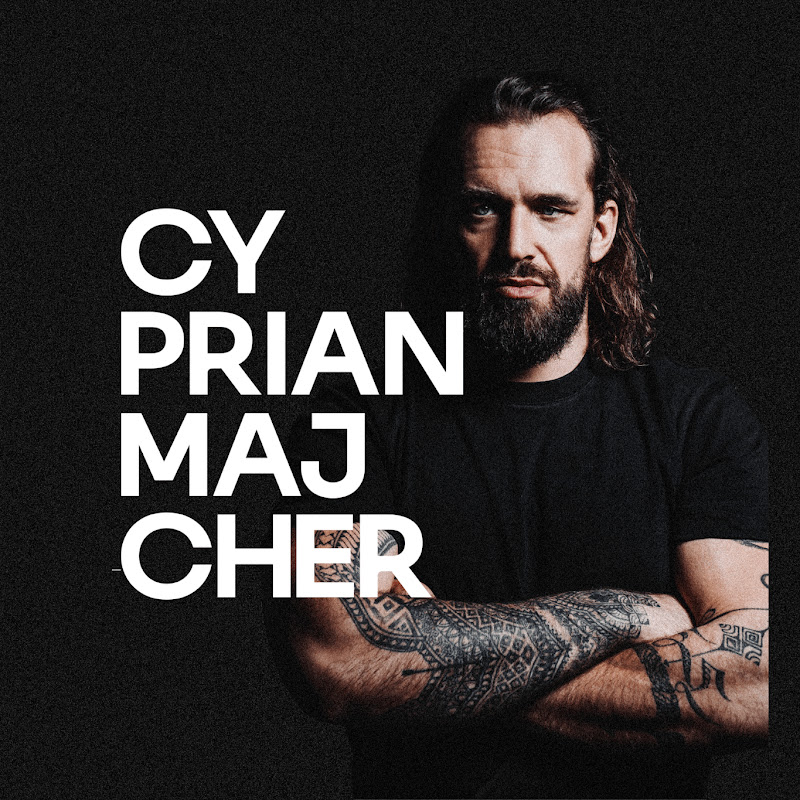
Cyprian Majcher
Watch on YouTube Add to chat My bookmarks← All sources

TL;DR

The four things you'd lose by not watching

4 items

TL;DR

The four things you'd lose by not watching

4 items
1

Tomasz Ćwiąkała built his career through relentless self-promotion, language learning (Portuguese/Spanish), and studying commentary as a craft, which allowed him to dominate the underserved niche of Iberian football in Poland.

2

His YouTube success paradoxically relies on *not* over-preparing for mainstream teams like Real Madrid and Barcelona, while investing deeply in niche topics and interviews—the latter being a 'loss leader' that costs him thousands monthly but builds credibility.

3

He explicitly treated perfectionism and workaholism through therapy after the birth of his son, learning strategic laziness ('odpuszczanie') which paradoxically improved the quality of his broadcasts and content.

4

He predicts football will increasingly adopt stop-clock rules and data-driven 'lab' scouting, prioritizing physical metrics (like acceleration over first meters) over traditional scouting, leading to 'shocking' transfers that the public won't understand.

Protocols

Concrete recipes — what, when, how much, and why

5 items

The 'Small Match' Talent Filter

WhatEvaluate a commentator's skill solely on their performance during a dull, low-stakes match, not a blockbuster event.
WhenDuring the hiring or scouting process for broadcasters.
DoseReview a full 90-minute broadcast of a low-table clash.
For whomSports directors and editors.
WhyHandling ecstasy is easy; maintaining engagement in a vacuum of action reveals true narrative craft and professionalism.
CaveatsRequires ignoring the commentator's 'hype reel' which only shows their peak emotional moments.

This is a specific heuristic proposed by Ćwiąkała. He argues that the 'stress test' for a broadcaster isn't the noise of El Clásico, but the silence of a match with zero shots on target. At El Clásico, the event carries the energy. At Lecce vs. Empoli, the broadcaster must carry the event. He categorizes the personality types: those who 'phone it in' (lecą na farmazonie) assuming no one watches, versus professionals who fully invest in the obscure match. The logic is transitive: if you respect the small audience, you'll definitely respect the big one. He also notes that the 'second commentator' (analyst) role is specifically responsible for filling these dead moments with intelligent context, not hype.

Personal experience

He admires Michał Żyro for preparing obsessively for a Champions League match featuring RB Salzburg—proving that treating minor games with respect predicts major game competence.

if I see that he is prepared to commentate on Lecce and he can do it and he can shout at a goal but also can make me interested during Lecce, then he will also handle Juventus.

Strategic 'Drop the Mic' Pause

WhatImmediately cease mid-sentence commentary when the attack enters the final third or a goal is scored, deferring to crowd noise.
WhenThe exact moment a defensive midfielder plays a through-ball into the box, or the moment a goal is scored.
DoseSilence for 30-60 seconds after a goal; brief pause for attacks.
For whomLive sports commentators (specifically the 'second voice' or analyst).
WhyFans physically cannot process commentary over their own screaming; continuous talking murdered the moment.
CaveatsThe 'first voice' is responsible for cutting off the analyst bluntly if they fail to stop talking.

Ćwiąkała describes the physics of broadcasting emotion. When the ball enters the 'last third' (attacking zone), the second commentator must shut their mouth. If they are mid-story about a player's history, Ćwiąkała uses the phrase 'ale o tym za chwilę' (but more on that in a moment). This isn't just politeness; it's a hard rule of the craft. If the second commentator fails to stop, the lead commentator is professionally entitled to brutally cut them off by screaming 'Wrzutka i gol!'. He notes this is a selection skill: knowing when to speak is more important than what to say. For post-goal celebrations, he lets the stadium announcer and the chants ('SLB Benfica') play out fully for the audience.

Mechanism

Cognitive offloading; the brain cannot process two high-density audio streams (commentary + crowd roar) simultaneously.

Personal experience

He directly implemented this in the Benfica vs. Barcelona match, describing the 'cauldron' atmosphere that *demanded* he shut up.

there is a rule that if the ball appears, let's call it, in that attacking zone, i.e. in that final third of the pitch, the second commentator already shuts... I very often then say 'But more on that in a moment' and simply cut it off.

Also said
“if Real Madrid fans are singing Laa Hej D and so on in honor of Jude Bellingham, let them sing it out; if you don't say anything, nothing bad will happen.”— Reinforces that silence is a valid, high-value audio feed.

The 'Character Test' Loan

WhatTake academy 'wonder kids' out of their cushy elite environments and loan them to harsh, lower-league clubs to test their character.
WhenWhen a young prospect stagnates or needs mental fortitude before breaking into the first team.
DoseA season-long loan to a physically rough first or second division club.
For whomElite youth academy players showing stagnation.
WhyElite academies provide hand-holding (laundry, coaching, cars); lower leagues force players to problem-solve and survive physical battles alone.
CaveatsThe player might fail initially, causing panic among their entourage; however, Ćwiąkała advises *not* intervening—the 'slap in the face' is the point.

Using the parable of Antoni Kozubal (Lech Poznań) loaned to GKS Katowice, Ćwiąkała details the panic that sets in when a 'wonderkid' struggles in a lower league. His entourage wanted to 'pamper' him ('chuchać i dmuchać'). Ćwiąkała advised his friend (the player's youth coach) to leave him alone. Let him experience the worn-out locker rooms, the tough love, and the fighting for his spot. The theory: this 'school of life' builds the character that's impossible to forge in the sterile, safe environment of a top academy where 'Daddy drops you off and picks you up.' He applies the same logic to Moder (Odra Opole) and Puchacz (GKS Katowice), arguing that the struggles in those loans were the direct catalyst for their eventual success in the Polish National Team.

Mechanism

Post-traumatic growth and environmental adaptation; resilience is built by overcoming poor facilities and negative results, not by maximizing comfort.

Personal experience

He describes directly advising the player's youth coach, Grzesiek, to stand down and let the player fail/struggle to build character.

Just let him experience it, let him get smacked a few times in that GKS Katowice, let him live through it a bit... that will be a character test for this guy.

Also said
“Moder was on loan at Odra Opole... those players simply got such a school of life as part of their loan at lower clubs.”— Provides broader evidence of the loan hardship philosophy working for senior national team players.

The 'Hymn' Non-Intrusion Protocol

WhatNever, under any circumstances, speak over a team's national or club anthem.
WhenDuring the broadcast opening, specifically when the anthem audio feed is live.
DoseFull duration of the anthem.
For whomAll commentators.
WhyIt is a 'grave sin' ('grzech straszny'); a sign of absolute broadcasting respect and production value.
CaveatsIf text communication fails, the lead commentator risks making the 'yapping over the anthem' mistake.

Often, the broadcast starts and the commentator might still be coordinating with production or a co-commentator. Ćwiąkała uses a typing system to resolve this before going live. He types in large font on his monitor screen: 'ok, we talk after the anthem.' ('gadamy po hymnie'). This typed note ensures the co-commentator doesn't start reading stats or doing a verbal intro over the music, which he considers a cardinal broadcasting sin.

Personal experience

He specifically mentions typing this instruction on his computer for his broadcasting partner, Adam Marchliński, to ensure no one talks over the anthem.

sometimes it happens that, for example, the broadcast starts, the anthem plays, and I write there a commentary: ok, we talk after the anthem, don't talk over the anthem, because it's a terrible sin to talk over the anthem.

Post-Match Hotel Wind-Down (No Alcohol)

WhatAfter extremely intense broadcasts, instead of socializing or drinking, isolate for one hour in the hotel with a book to reset.
WhenImmediately after completing post-match media duties (approx 1.5 hours after final whistle).
Dose1 hour of solitary reading/silence.
For whomSpeaker (anecdotal self-care).
WhyThe adrenaline dump from broadcasting leaves him overstimulated and socially drained; alcohol extends recovery and ruins the next day.
CaveatsHe explicitly notes this is not a moral judgment against those who party (citing Neymar vs. Lewandowski), just his personal need.

He differentiates between his early career (late nights, wine with colleagues) and now. Post-Benfica-Barcelona, he needed total silence. He contrasts the 'Neymar profile' (needs to party to release tension) with the 'Lewandowski profile' (strict professionalism). He stopped drinking completely not for ideological 'alcohol is evil' reasons, but because it steals energy from the next day. The practical constraint: he must wake up at 7 AM to take his son to kindergarten, and he refuses to let his son see him hungover or low-energy. This protocol is a boundary against the 'work hard, play hard' culture of sports media.

Personal experience

After the Benfica vs. Barcelona match, I went to the hotel, read a book for an hour, and went to sleep because I had a plane in the morning.

after commentating on such very intense spectacles, I need that pressure to leave me; I simply need to rest... instead of sitting until 3:00 and drinking with someone, for example, I really prefer to read that book.

What's new

Personal practice updates, fresh positions, predictions

5 items

Learning strategic laziness improved performance

Early-mid conversation

Ćwiąkała actively reduced his preparation after realizing that over-preparing led to irritation and a cluttered mind. He now relies on a clean, reactive mind during broadcasts.

Why this matters: Contradicts the standard hustler narrative; he explicitly links better audience reception and personal health to doing less, high-quality work.

Background

Early in his career (2015-2020 at Eleven Sports), he would prepare enormous dossiers for El Clásico, comparing it to writing a doctoral thesis before the match. He felt this extreme data-dumping was necessary at the time.

Ćwiąkała describes a pivotal shift from his early career where he would gather an overwhelming amount of information—enough 'to write a doctoral thesis' before El Clásico. He now views that as 'extremely unnecessary.' Over-preparing caused two problems: first, dumping too many facts irritates the audience; second, it cluttered his mind, preventing him from reacting naturally to the flow of the game. The key insight is that when you are working 'live,' a clean, reactive mind is more important than a cluttered repository of facts. This change occurred after therapy and having a child, forcing him to optimize his time. He realized that sometimes doing less prep at home produces a better broadcast because he isn't mentally exhausted or pedantic. This 'strategic laziness' is framed as a professional evolution, not a decline in standards.

Personal experience

He explicitly states: 'I used to have so much information for these matches that I could have written a doctoral thesis... when I look at it from today's perspective... I see it was unnecessary.' He now prepares less and trusts his flow, noting that his employer paradoxically benefits when he works less at home on specific prep.

When I was still working at Eleven in those years 2015-20, when we commentated on individual classics, Real vs. Barcelona, man, I had so much information on those matches that I could have written a doctoral thesis from those matches... from today's perspective... it was extremely unnecessary.

Also said
“I learned to let go and it seems to me that when you learn to let go, the work you do is better.”— Encapsulates the counter-intuitive core of his productivity philosophy.

The 'lab rat' future of football transfers

Late conversation

Football clubs are becoming data laboratories that prioritize physical micro-metrics (e.g., first-step acceleration over a few meters) over visible skill, leading to transfers that will shock traditional fans.

Why this matters: Provides a concrete, behind-the-scenes look at why 'random' signings happen, citing Man City's Uzbek signing and a Polish league example.

Background

Traditional scouting relied on visible performance and reputation. Clubs would avoid buying from relegated teams or obscure leagues due to perceived risk.

Ćwiąkała argues football is moving towards an American sports model dominated by statistics and biometrics. He uses the example of Manchester City signing an Uzbek player from RC Lens (who played in Belarus 1.5 years prior) as a landmark moment. To the public, this looks absurd compared to signing a known defender from Athletic Bilbao. However, clubs have 'laboratories' full of scientists analyzing micro-metrics that fans cannot see—like 'acceleration on the first meters' or sustained intensity. A player might look mediocre on a relegated team (like his example of Raków buying a defender from relegated Podbeskidzie) but possess a unique physical 'base' that statistical models identify as elite. The difference between winning the Champions League or not comes down to these 'hundredths of a second' differences in physical output that data now captures, but television broadcasts don't convey.

because Manchester City simply has everything analyzed and then it turns out that this player is simply able to withstand greater intensity and we, for example, don't see it, and sometimes those are differences of, you know, hundredths of a second, but then those differences influence whether you win the Champions League or not.

Also said
“clubs that already have organized their own laboratories full of scientists will pull out such players, assuming that even if he has some deficiencies, we will eliminate those deficiencies, but he has such a physical base.”— Explicitly confirms the laboratory model and the strategy of buying physical 'platforms' rather than finished products.

The 'small match' test for commentators

Mid conversation

Ćwiąkała proposes a hiring heuristic: judge a commentator's quality not by their El Clásico performance, but by how well they handle a boring 0-0 match between relegation candidates.

Why this matters: A contrarian approach to talent evaluation in broadcasting, analogous to 'how a striker plays against a low block'.

He explains that if he were a sports director evaluating a commentator, he wouldn't ask for tapes of Juventus-Inter or title deciders. He would ask for a tape of a terrible match, like Lecce vs. a 15th-place team. The logic is twofold: 1) Sustaining interest when nothing is happening on the pitch tests a commentator's pure storytelling, context-building, and chemistry with co-commentators; 2) It reveals professionalism. A commentator who 'phones it in' ('leci na farmazonie') because they assume no one is watching a minor game is likely to fail under the pressure of a major broadcast start. If you can make a boring match interesting, you will definitely handle a great match.

Personal experience

He notes he loves listening to commentators cover terrible matches in obscure leagues because he appreciates their ability to spin gold from straw when the action stops.

if I were someone like that and I had... I wonder whether to take a commentator... I would ask to download not those matches he commentated on, for example Juventus Inter Napoli, but rather Lecce... if I see that he is prepared to commentate on Lecce and he can do it... then he will also handle Juventus.

Also said
“if someone phones it in during a weak match because they sit down to commentate on a match with the attitude that no one will watch it anyway, I would have serious doubts whether they later prepare for a big broadcast.”— Exposes the exact behavioral red flag he is screening for.

Poland's structural striker deficit

Late conversation

Poland faces a massive generation gap in offensive players, driven by academies focusing on winning youth games (tactics) rather than individual skill development (drills).

Why this matters: Specific names and hard numbers (e.g., Kamil Grosicki, born 1988, is still the best Polish dribbler) paint a bleak picture.

Ćwiąkała points out a looming disaster: while Poland is producing an excess of world-class goalkeepers (Bułka, Grabara, Skorupski, Miszta, Kikolski) because goalkeeping is an individual discipline, the pipeline of outfield players—especially attackers—is drying up. The peak '94-'95 generation (Milik, Piątek) has no successors in the '99-'01 brackets. He highlights that the best Polish dribbler in the Ekstraklasa is Kamil Grosicki (born 1988). The root cause, he argues, is youth coaches prioritizing match results to advance their own careers. They drill elaborate tactics to win U14 games, but that doesn't develop individual technical ability. He contrasts this with Spanish immigration patterns, suggesting kids 'hammering the ball against the wall from morning to night' in poverty develop better than academy kids who have everything handed to them.

we will have so many goalkeepers that we will be able to create an 11 out of those goalkeepers, and we have a problem with strikers... it's a drama... we still don't realize how gigantic a problem we will have with offensive Polish footballers in the coming years.

Immersive stadium silence is a feature, not dead air

Mid-late conversation

Great commentary requires strategic silence, especially after goals in cathedrals like Benfica or Bernabéu, to let the broadcast breathe.

Why this matters: Challenges the 'fear of dead air' trope; treats crowd noise as a calculated broadcast asset.

He provides a detailed breakdown of post-goal timing. Immediately screaming the scorer's name is pointless because celebrating fans aren't listening. At the Estádio da Luz, after a Benfica goal, there is a stadium announcer calling the scorer's number, the crowd shouting the name back, and then a minute-long chant ('SLB'). Talking over this 'cauldron' is a sin ('grzech'). He recalled advice from veteran Janusz Basałaj: 'If you have doubts whether to speak, don't speak. If you don't say it, you won't make a mistake. If you ruin the moment, you will.' He applies this specifically to Jude Bellingham chants at the Bernabéu, letting the crowd's performance exist without his overlay.

at the Benfica stadium there is an incredible atmosphere... there is such an incredible cauldron that in my opinion, cutting those moments with commentary would be a mistake; you have to scream that there is a goal but then... you have to shut up for a long time, but I think it's worth simply shutting up in such moments.

Also said
“Once Janusz Basałaj gave me advice that in my opinion is absolutely crucial: If you have doubts whether to say something while commentating on a match, don't say it. If you don't say it, you won't make a mistake. And if you ruin some moment, you will make that mistake.”— Distills the entire philosophy into a single actionable rule.

Recommendations

Products, supplements, and tools mentioned in the episode

4 items

Treat High-Viewership Topics as Bread & Butter; Niche as Loss Leader

Practice

YouTube content strategy for sports journalists.

Ćwiąkała openly admits 'going for the views' by covering Barcelona and Real Madrid, calling it idiotic not to capitalize on a hot team. However, he balances this with deep, expensive niche content (e.g., a week preparing a video on Botafogo's South American dominance that got 37k views vs. easy Barcelona videos getting many more). The niche content generates less direct revenue but builds immense credibility and pulls in a different segment of die-hard fans. He describes this as finding the 'golden mean' ('złoty środek'). The revenue from mainstream topics funds the time and investment required for prestige niche content (like long-form interviews).

vs alternatives

Versus purely chasing an algorithm (being a 'slave to views'), which burns out quality; or being an academic purist who ignores trends, which starves the business.

Personal experience

He notes his 'most satisfaction' came from uncovering Damian Zbozień as a great storyteller and the 'Botafogo' deep dive, even though they didn't maximize his paycheck.

if, seeing that Barcelona is heating up to that extent, I didn't record about that Barcelona because that also interests people at that moment... I would be an idiot.

Also said
“I recorded such an episode completely outside the mainstream, i.e. Why Botafogo won everything... that episode did, let's say, 37,000 and I prepared it for a week... if during that time I had recorded episodes strictly about some mainstream topics, well, I would have earned much more money.”— Quantifies the opportunity cost of niche passion projects.
Find Treat

Professional Statistics Platforms

Tool

Improving football content quality.

He notes that when he started his channel, he didn't have access to advanced statistics platforms. As the channel became a business, he specifically invested money subscribing to paid, professional stats platforms. He uses these to provide value to viewers that they can't get for free—essentially, giving the audience 'something I pay for.' This includes deep metrics like 'regains in the final third' (citing Pedri's unexpectedly elite defensive numbers despite his small stature) and 'first-meter acceleration.'

Personal experience

He uses the Pedri/Bellingham comparison to illustrate the value of these platforms, showing that Pedri is league-leading in recoveries, which contradicts the visual of him being a 'small, frail' creative player.

I also try to ensure that, for example, a fan who dedicates time by coming to my channel, i.e. de facto pays me with their time, gets, for example, sometimes something that I pay for, i.e. some in-depth statistics.

Find Professional

The 'Blank Slate' Co-Commentator Approach (Michał Żewłakow method)

Practice

How former athletes should enter broadcasting.

He praised Michał Żewłakow for entering his first broadcast with the statement: 'Today I am not Michał Żewłakow [the football legend], I am your new colleague from work who wants to learn.' This is presented as the ideal mindset, contrasting with older pros who come in as 'alphas and omegas' knowing it all. By stripping away the ego of his 100 national team caps, Żewłakow was receptive to learning the craft of timing, brevity, and chemistry. This allowed Ćwiąkała to coach him live on air (e.g., prompting him to explain how he'd mark a big striker like Gutkowski).

vs alternatives

Versus the failure mode of ex-players who 'have eaten all the know-how' and lecture the audience, creating a stale broadcast.

Personal experience

He shared a 5-hour car ride with Żewłakow where the stories were so good they'd fill three autobiographies, but highlighted that this charisma only broadcasted well because the ex-player checked his ego.

he got into that car and says: Listen, first of all, today I am not Michał Żewłakow, I am your new colleague from work who wants to learn something.

Find The

Reading physical books (unnamed)

Book

Reading for one hour post-match to decompress instead of drinking.

He uses reading a physical book as a tool to force a mental shutdown after adrenaline spikes. This is not a specific recommendation of a title, but the *practice* of reading as a pharmacological intervention to lower arousal.

Personal experience

Directly stated that he read a book for an hour in the hotel after the Benfica-Barcelona match before sleeping.

I went to the hotel, read a book for an hour, and went to sleep.

Find Reading
Disclosed sponsorships2speaker disclosed

S-LAABS Natural Supplements (Adaptogens)

Supplement Sponsored · disclosed

Sponsor mention; natural supplements inspired by intelligence of nature.

DisclosureMentioned as a podcast sponsor. Contains Lion's Mane and other mushroom-based organic adaptogens. Referenced by the host Cyprian Majcher.

The host explicitly plugs S-LAABS as the partner of the podcast at the start. They are described as natural supplements based on organic mushroom ingredients, featuring adaptogens like Lion's Mane. A discount code is available in the episode description.

the partner of this podcast is S Laabs, i.e. natural supplements inspired by the intelligence of nature based on organic mushroom ingredients, in which you can also find such superstars among adaptogens as Lion's Mane.

Find S-LAABS

SFD Supplements & Functional Food

Supplement Sponsored · disclosed

Sponsor mention; sugar-free dietary products.

DisclosureMentioned as a podcast sponsor. Sugar-free functional food and supplements.

The host describes SFD as the partner of the episode, highlighting that it is a Polish brand of sugar-free functional food and supplements.

the partner of the episode is SFD supplements and sugar-free functional food.

Find SFD

Notable quotes

Lines worth pulling out — contrarian, specific, or perfectly phrased

5 items
I would be an idiot if, seeing that Barcelona is heating up to that extent, I didn't record about that Barcelona because that also interests people at that moment.
Extreme candor admitting that 'click-chasing' is a rational business decision, not a sellout.
I learned to let go and it seems to me that when you learn to let go, the work you do is better.
Counter-intuitive productivity take from a known workaholic, directly linking laziness to higher quality.
listen, the most terrifying thing really is that no matter how I prepare for this match, no matter how many hours I dedicate to preparation... then a million people will turn on the highlights and judge only how I screamed at the goal.
Raw insight into the modern TikTok-era devaluation of deep preparation in broadcasting.
if you have doubts whether to say something while commentating on a match, don't say it. If you don't say it, you won't make a mistake. And if you ruin some moment, you will make that mistake.
A golden rule of live commentary explicitly stated, applicable far beyond sports.
great footballers are born in the mud... there will be no footballer from a boy whose dad drives him to training, picks him up, washes his shorts and jersey.
Cites Maradona's ethos to explain the 'feminization' and sterility of modern academy development.

Sign in to share feedback

Tell us if this brief hit the mark or missed it — feedback feeds back into the next iteration of the prompt.

Topics covered

sports-commentaryfootball-tacticspolish-football-academiesyoutube-monetizationwork-life-balanceperfectionism-therapytalent-scouting-analyticsbroadcast-technologyla-ligachampions-leaguepolish-national-teambarcelonareal-madridcommentator-rolescrowd-psychology
Free account

Make this library yours

Reading is free for everyone. A free account adds the personal layer: save protocols, follow experts, and see how the other experts weigh in on this same topic.

Create a free accountSign in

Where the experts disagree — weekly

One email a week: the sharpest new disagreements and protocols from the library. No spam, unsubscribe anytime.

Educational summary of the cited expert source — not medical advice. Open the source recording linked above and consult a qualified physician before acting on any protocol.