UNFUCG
DashboardSearchChatBookmarksNotificationsActivityPremiumProfile
?
Home
Search
Chat
Saved
Profile
Episode
From the boxing ring to Fame MMA? The true face of Krzysztof "Diablo" Włodarczyk
~106 min
Episode Brief·YouTube

From the boxing ring to Fame MMA? The true face of Krzysztof "Diablo" Włodarczyk

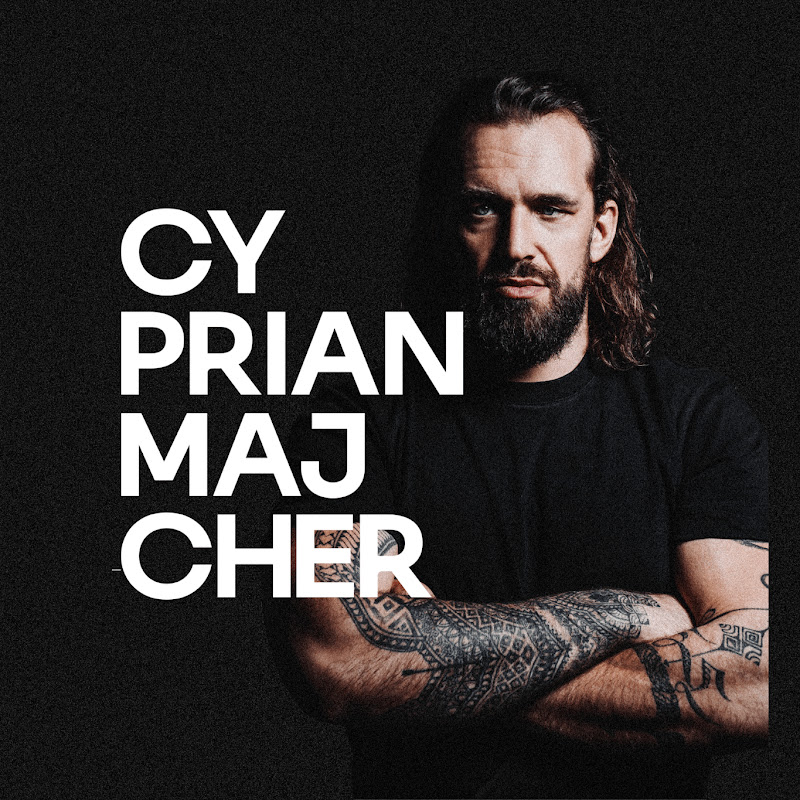
Cyprian Majcher
Watch on YouTube Add to chat My bookmarks← All sources

TL;DR

The four things you'd lose by not watching

3 items

TL;DR

The four things you'd lose by not watching

3 items
1

Krzysztof "Diablo" Włodarczyk, former WBC world champion in junior heavyweight, talks about his personal transformation – from a warrior in the ring and on the street to a devoted father of four who discovered that true strength lies in self-control and life wisdom.

2

He describes in detail the shocking experience of an 11-month prison stay for driving without a license, which led him to deeply reflect on the Polish justice system and re-evaluate his life priorities.

3

He reveals the behind-the-scenes of his departure from Fame MMA and his changing attitude towards freak fights – from contempt to understanding for lost youth, while defending his sporting honor and respect for fans.

Protocols

Concrete recipes — what, when, how much, and why

3 items

Separating from family 1-2 weeks before a fight

WhatLeaving home and staying at a training center or hotel for 1-2 weeks before a competition to separate from family duties and build up sporting anger.
When7-14 days before the fight, throughout the entire final stage of preparation.
Dose1–2 weeks of total absence from home, without contact with children and partner in terms of daily affection.
For whomCombat sports athletes, especially those with young children, who have difficulty switching from caregiver mode to warrior mode.
WhyDirect contact with young children and their affection causes a drop in aggression and concentration; the fighter thinks about walks and kindergarten instead of the opponent. Isolation allows one to build up 'anger' and longing, which translate into determination in the ring.
CaveatsRequires strong family support and understanding from the partner; can be emotionally and logistically costly. Not recommended for everyone – some fighters (like Błachowicz) can get distracted before a fight by contact with family.

Włodarczyk does not cite studies but shares an observation: 'children terribly soften a person'. He describes that since becoming a father, his priorities have changed – from a fighter who wanted a championship to a man who wants to pick up his daughter from kindergarten and go to the theater with her. This role change means he cannot summon aggression when at home. Isolation thus became a necessary ritual. He confirms that after returning to training, when he misses his family, this longing turns into sporting anger that helps him in sparring.

Mechanism

Separation from daily family stimuli and household duties reduces the secretion of prolactin and oxytocin associated with offspring care, and raises cortisol and testosterone levels associated with competition. Solitude before a fight triggers a state of moderate stress that mobilizes the nervous system for combat.

Personal experience

Włodarczyk cites his own routine before the last fight he prepared for: 'two weeks before the competition I am totally away from home ... it works very well on me, it creates a bit of anger, a bit of rage'. His partner Karola supports him in this, understanding that it is temporary. He previously tried training while living at home, but when his daughter hugged him in the morning, he thought: 'in two hours I'll be fighting...', which made mental preparation impossible.

two weeks week two weeks before the competition I am totally away from home and it works very well on me, it creates a bit of anger, a bit of rage

Also said
“children don't give you that ... you come home to cuddle ... to soften up that son of a bitch, pardon the expression, who comes to training and you have to fight someone there”— Vividly shows the contrast between domestic affection and the necessary aggression.

Training with an ankle joint injury – taping and warm-up method

WhatFor an ankle sprain and a torn tibiofibular ligament, rigid taping, a brace, and a long warm-up (including marching, not running) are used before moving on to the target activity.
WhenAfter an ankle joint injury, when returning to training is necessary but pain prevents full weight-bearing.
DoseBefore each session: taping the joint and putting on an orthosis (brace), then 15-20 minutes of slow walking/faster walking until the joint warms up and pain decreases, then moving on to proper exercises. In case of pain during wrestling – immediately tap out.
For whomAthletes with chronic joint injuries who cannot afford a complete break.
WhyThe joint needs time and movement to 'warm up' and for the pain to subside; tape and brace limit mobility, protecting against re-injury. Avoiding strenuous wrestling exercises minimizes the risk of worsening the injury.
CaveatsDoes not replace full rehabilitation; risk of further damage if returning to full sparring too early. Włodarczyk admits that he still has problems today and 'sometimes I can jump and sometimes I can't even take a step'.

Włodarczyk recounts in detail how, after spraining his ankle at coach Mirek Okniński's, he tore the ligament connecting the fibula and tibia. Despite this, he was forced to prepare for an MMA fight. He couldn't stand in shoes, so he warmed up only while standing. For the first days, movement was impossible, later he moved to faster walking with tape and an orthosis, which he still uses today. In wrestling matches, he was forced to tap out at every leg grab. He emphasizes that he preferred to limit training rather than go straight under the knife. He describes that even now, during warm-up, the first minutes are very painful, but then he can run.

Mechanism

During warm-up, blood flow and synovial fluid increase, reducing friction and pain. Taping stabilizes the joint, limiting dangerous inversion movements.

Personal experience

He himself uses this routine daily: 'a moment before training I tie it with tape, put on the brace that I still wear to this day'. He says that when an opponent on the mat grabbed that leg, he immediately gave up to avoid worsening the injury. He admits that for many weeks he couldn't train normally, and the pain returns, but thanks to this method he is able to function.

I tied it with tape and put on a brace that I still wear to this day ... at the beginning it's very hard because I have such pain and this pain has to kind of warm up ... and later, you could say, it still hurts but I can somehow run

Also said
“when I had so-called wrestling on the mat and anyone grabbed that leg or anything happened, well unfortunately I tapped out, because I didn't want an even bigger injury than the one I already had”— Shows how he adapts training to limitations, prioritizing safety.

Avoiding street confrontations despite being a boxer

WhatNot responding to provocations with aggression, turning around and walking away from people who try to start a fight.
For whomEveryone, especially people with fighting skills who are aware of the physical consequences.
WhyA professional boxer's punch can cause serious injury even to a stronger opponent; there is no point in proving strength outside the ring.

Włodarczyk says that he often meets people who want to check 'if he is tough'. They say to him 'Hit me', trying to extort an attack. He, however, avoids confrontation, turns around and walks away. The only time he got out of the car after a road conflict, it involved a calm conversation with a driver who was carrying children. 'let them not test themselves', because 'a good punch from a boxer ... is not a good result for the receiver'. He also recounts his story from the age of 17, when in self-defense he hit an attacker, resulting in him being taken away by ambulance and having his jaw wired shut – since then, he knows how dangerous his punch can be.

Personal experience

He tells about a situation when a car pulled up to him, he got out and instead of a scuffle, he said: 'Man, do you know what you're doing'. The driver was surprised to see the world champion, and the conversation ended with the words 'All the best'. Włodarczyk emphasizes that he has avoided fights for years, the last one was 2 years ago, and even that was not on his initiative.

I avoid, I avoid, I walk away ... even when someone spat something at me or tried to provoke something, I know why people do that too, or I don't know, or it's a scam, for example Hit me Hit me, some people came up to me like Hit me

Also said
“a good punch from a boxer, whether he is a light category or super heavy, it is not a good result for the receiver”— Emphasizes the responsibility he feels because of his skills.

What's new

Personal practice updates, fresh positions, predictions

3 items

Change of approach to freak fights and Fame MMA

Włodarczyk moved away from his earlier sharp criticism of freak fights, recognizing that the youth participating in them are lost and need guidance, not condemnation.

Why this matters: Just a year earlier, he said he despised the pathological dimension of freak fights and that 'clowns should be chased away'. Now he sees suffering, lost people in this environment, which is a significant evolution of his worldview.

Background

In previous interviews, he expressed unequivocal opposition to the pathology of freak fights, calling them a circus. The change came after personal involvement in the Fame MMA gala, where he was supposed to fight Pasza, but the fight was canceled and he was subjected to hate.

Włodarczyk explains that these young people who take part in freak fights are 'deeply lost', cannot find themselves and seek acceptance in pathological forms of competition. He compares it to a circus: 'You go to the circus and also say Listen, this clown is ... some kind of alien ... but it is we who create this show by entering this octagon'. He believes that an athlete differs from a 'freak fight' participant in that the latter 'thinks he is a fighter and he can compete with me or with any other athlete'. In his opinion, they lack a good means and direction. Despite this, he does not change his mind about the lack of self-respect among participants and fans who insult each other.

Personal experience

Włodarczyk talks about the hate he received after the conference, where he didn't show up due to injury: 'what respect do you have for fans... but what respect do they have for themselves, insulting and saying to each other You cunt you dick... it's incredible duplicity'. He also describes how people who insult him online shake his hand and take pictures in person. In his opinion, they don't know his history because they don't remember the times when he was a champion.

this youth that is actually there is so deeply lost ... these people really don't know about these ... they can't find themselves and they try to direct themselves with some pathology

Also said
“You go to the circus and also say Listen, this clown is ... some kind of alien ... but it is we who create this show, you could say, by entering this octagon, yes, an athlete is, you could say, this Freak Fight, well, the one who thinks he is a fighter and he can compete with me or with any other athlete”— Shows the distinction between an athlete and a freak fight participant in Włodarczyk's eyes.
“he wrote that Włodarczyk is a piece of a dick, fuck him, yes, but he comes, takes pictures, shakes hands”— Illustrates the hypocrisy of haters on the internet.

Prison experience as a turning point

The stay in prison for driving without a license was a shock for Włodarczyk, but became a catalyst for re-evaluating life, appreciating family, and discovering that success in the ring does not protect against the injustice of the system.

Why this matters: For the first time, he describes in such detail the emotional impact of imprisonment on an athlete at the top – from the feeling that 'the world is collapsing' to realizing that it was a sign to slow down and focus on loved ones.

Background

Włodarczyk was sentenced to 11 months of absolute imprisonment for repeatedly driving without a license. In Poland, sentences for such an offense are rarely so severe, which caused him a feeling of deep injustice.

He describes that at the moment of hearing the sentence, 'the world was collapsing, as if I had lost some part of myself'. Previously, he only visited prisons to talk about sports, he never imagined he would end up there himself. He compares the period of isolation to entering a closed door into a black room, where you count every spoonful of soup. Only 5 weeks before the end of the sentence, when he started going out to work, 'the head began to decompress'. He considers it a sign from the universe, telling him to slow down: 'there is no need to rush, there are children to raise'. Despite bitterness towards the system, which in his opinion is unjust (he cites, among others, the case of Tomasz Hajto, who fatally hit a woman and did not go to prison), he tries to find a positive lesson in it.

Personal experience

Włodarczyk tells in detail about his helplessness: 'a person who never, I was only on visits in prison ... suddenly I found myself there'. He emphasizes that he asked the court for an electronic bracelet because he wanted to work and pay alimony, but it was not taken into account. He says that prison gave him nothing because he had already resocialized himself. His message to the youth: 'don't try to prove to yourselves how tough and strong you are because because in everyday life prove how tough and strong you are and what you achieve, not in a place like prison'.

as if, I don't know, as if my world was collapsing, as if I had lost some part of myself

Also said
“it's like entering a closed door and suddenly there is a black room, in this room you have to function ... only when I started, five weeks before the end of the sentence, going outside to work, then, I would say, the head began to decompress”— Captures the psychological weight of isolation.
“I don't wish it on anyone and and and I appeal to the youth, don't try to prove to yourselves how tough and strong you are because because in everyday life prove how tough and strong you are”— An appeal to the young resulting from a difficult experience.

Isolation from family before a fight as a necessity

Włodarczyk discovered that to enter the ring with full aggression, he must completely separate himself from home and children 1–2 weeks before the fight, because their affection 'softens' even the toughest fighter.

Why this matters: Combines the personal experience of fatherhood with professional mental preparation, showing the contradiction between the role of a tender dad and a ruthless warrior.

Background

He previously tried to combine family life with training just before a fight, but noticed that he couldn't 'get psyched up' when his daughter woke him up with a kiss in the morning.

Włodarczyk claims that children terribly soften a person, changing priorities: 'you come home to cuddle ... she still gives her little hand, kisses ... to soften up that son of a bitch, pardon the expression, who comes to training and you have to fight someone there'. He describes that being at home before a fight, he thinks 'well, in two hours I'll be fighting', and instead of aggression he feels tenderness. That's why he developed a model similar to Lennox Lewis or Dariusz Michalczewski: he leaves 1–2 weeks before the start to a center, which causes in him 'a bit of anger, a bit of rage' combined with longing, which paradoxically helps him in the fight. He notes that not everyone can function like this – he cites Jan Błachowicz, whose family visit in the USA before a fight negatively affected his performance. 'you can't do it ... you are, you could say, getting emotional ... you have to be either heartless or soulless or I don't know what to have in your head to extract aggression from yourself like that'.

Personal experience

He tells how his partner Karola brings him their little daughter, who gives a kiss, and he thinks about the upcoming sparring. He says that now 'I have arranged such a model that two weeks, a week, two weeks before the competition I am totally away from home' and it works well for him. His fiancée accepts this, understanding that it is a temporary sacrifice for his career.

at home You wake up, the child gives you a kiss, hugs you, and you suddenly think to yourself Well, in two hours I'll be fighting ... you can't do it

Also said
“you have to be either without a heart or without a soul or I don't know what to have in your head to extract aggression from yourself like that”— Emphasizes how strong the contradiction is between tenderness and the necessary aggression.
Disclosed sponsorships1speaker disclosed

Solf Laps – natural supplements inspired by the intelligence of nature

Supplement Sponsored · disclosed

Mentioned by the podcast host as the episode sponsor; based on organic plant ingredients.

DisclosurePodcast partner, promoted with a discount code in the episode description.

the partner of this podcast is Solf Laps, that is, natural supplements inspired by the intelligence of nature, based on organic plant ingredients. And as usual, with the code in the episode description, you will find a discount on all products there

Find Solf

Notable quotes

Lines worth pulling out — contrarian, specific, or perfectly phrased

8 items
if you want to get to know someone, take them for alcohol ... take them for vodka, as they say, to see their true face
Folk wisdom given as a way to discover a person's true nature.
we have Three faces, the first we show to the whole world, the second to family and close ones, and the third we show to no one
Japanese proverb quoted as a metaphor for his public, private, and ring self.
he was a tough son of a bitch
Direct, authentic description of his ring alter ego.
I even remember one gentleman once, when I was a 17-year-old, how I hit him because I was defending myself, of course, well, the ambulance took him away and they asked how many people beat him
Shocking anecdote from his youth, making him aware of the destructive power of his punch.
children terribly soften a person ... you come home to cuddle ... to soften up that son of a bitch, pardon the expression, who comes to training and you have to fight someone there
Vivid summary of the conflict between family life and the ring.
Chess and Golf are also not a sport ... a man with a belly who looks like a woman in her 9th month of pregnancy, well, we cannot call him an athlete
Controversial opinion defining sport by physical effort and physique.
I have absolutely no idea what these people have in their heads ... I don't wish them anything bad, but a person only starts to see clearly when something starts to affect him personally and he says where is, where is the justice here
Emotional reflection on the justice system after a personal experience.
the courage to be happy also includes the courage to be disliked
The host's (Cyprian Majcher) question summarizing the topic of accepting hate; a philosophical conclusion of the conversation.

Sign in to share feedback

Tell us if this brief hit the mark or missed it — feedback feeds back into the next iteration of the prompt.

Topics covered

prawdziwe-oblicze-bokseratrzy-twarze-czlowiekaagresja-w-ringuwalki-uliczne-skutkidziecinstwo-i-rywalizacja-z-bratemratowanie-zyciawiezienie-niesprawiedliwosctransformacja-zyciowafame-mma-freak-fightyszacunek-do-kibicowojcostwo-a-agresjaprzygotowania-mentalne-odizolacjatrening-z-kontuzjaewolucja-boksusport-vs-esportmistrzostwo-swiata-i-sukcessystem-sadownictwa-w-polsce
Free account

Make this library yours

Reading is free for everyone. A free account adds the personal layer: save protocols, follow experts, and see how the other experts weigh in on this same topic.

Create a free accountSign in

Where the experts disagree — weekly

One email a week: the sharpest new disagreements and protocols from the library. No spam, unsubscribe anytime.

Educational summary of the cited expert source — not medical advice. Open the source recording linked above and consult a qualified physician before acting on any protocol.