
UNFUCG
DashboardSearchChatBookmarksNotificationsActivityPremiumProfile
?
Home
Search
Chat
Saved
Profile
Episode
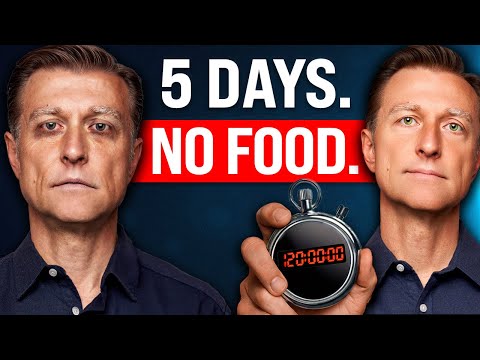
Reset Your Body in 5 Days (With Zero Food)
~19 min
Episode Brief·YouTube

Reset Your Body in 5 Days (With Zero Food)

Eric Berg
Watch on YouTube Add to chat My bookmarks← All sources

TL;DR

The four things you'd lose by not watching

4 items

TL;DR

The four things you'd lose by not watching

4 items
1

A 5-day water fast (consuming only non-caloric fluids and essential electrolytes) triggers profound metabolic shifts each day: glycogen depletion and water loss (Day 1), deep ketosis and autophagy initiation (Day 2), immune system reset, BDNF spike, and enhanced brain function (Day 3), maximal fat burning and longevity gene activation (Day 4), culminating in a controlled refeed that unleashes a massive tissue rebuild (Day 5).

2

Supplementing with sea salt, potassium, magnesium, calcium, trace minerals, and B vitamins prevents fatigue, cramps, and lightheadedness, making the fast tolerable even for first-timers.

3

The speaker claims that after 72 hours, the immune system literally resets by recycling old white blood cells, regrowing the thymus gland, and priming stem cells, offering unparalleled anti-aging and disease-prevention effects.

4

Refeeding must be gradual—starting with a quarter of normal calories from easy-to-digest foods like eggs, sauerkraut, soup, avocado, berries, nuts—and avoiding sugar and carbohydrates to prevent nausea and to maximize the anabolic rebound.

Protocols

Concrete recipes — what, when, how much, and why

7 items

5-day prolonged water fast with electrolyte support

WhatAbstain from all food for 5 days, consuming only water, unsweetened decaf tea, black coffee, or water with a squeeze of lemon. Take sea salt, potassium, magnesium, calcium, trace minerals, and B vitamins to prevent electrolyte imbalance.
WhenConvenient period when you can rest and avoid high stress; ideally after having practiced intermittent fasting.
Dose5 full days (120 hours) without any caloric intake. Supplement daily with electrolytes: sea salt (typical 1-2 tsp), potassium (as chloride/citrate), magnesium (glycinate/citrate), calcium, trace mineral drops, and a B-complex.
For whomIndividuals who are metabolically healthy and have built up tolerance through intermittent fasting; not for pregnant women, underweight, or those with certain medical conditions without supervision.
WhyTo induce glycogen depletion, deep ketosis, autophagy, immune system reset, BDNF increase, growth hormone spike, and gut lining regeneration, followed by a controlled refeed that triggers a massive anabolic rebuild.
CaveatsMust supplement with electrolytes to avoid fatigue, cramps, lightheadedness, and heart palpitations. If stress or cortisol-induced hunger occurs, drink bone broth (see separate protocol). Do not consume apple cider vinegar (too acidic). Do not take collagen supplements. If feeling unwell, stop early and refeed.

Berg frames the 5-day fast as the ultimate health intervention, mimicking ancestral eating patterns and activating survival programs encoded in our genes. He walks through day-by-day changes: Day 1 is water weight loss and insulin drop; Day 2 brings ketosis and the start of autophagy; Day 3 is the inflection point with deep ketosis, massive BDNF, immune reset, and growth hormone; Day 4 maximizes fat burning and autophagy, with hunger completely gone; Day 5 extends benefits and ends with the critical refeed. The fast is not about starvation but about shifting the body from constant feeding to a repair-dominant state. He emphasizes that the body eats its own fat, so hunger vanishes, and that all repair genes—longevity, antioxidant, DNA protection—are switched on. The goal is to reach the 5-day mark to get the 'bigger bang' when refeeding because stem cells and growth factors have been primed, and then high-quality nutrition is used to build new tissues. He notes that this is not for beginners; one must first adopt intermittent fasting regularly (e.g., time-restricted eating) to adapt the body to fat-burning. He also recommends combining with sun exposure, nature walks, heat/cold therapy, and one intense HIIT session to amplify stress responses (hormesis). The fast should be done periodically, not constantly, to reset the body.

Mechanism

Upon cessation of food, insulin drops and glucagon rises, liberating glycogen stores. Glycogen is bound to water (3g water per 1g glycogen), so its depletion causes rapid water weight loss. Low insulin permits hormone-sensitive lipase to release fatty acids, which are converted in the liver to ketones (beta-hydroxybutyrate, acetoacetate). Ketones cross the blood-brain barrier and serve as a high-efficiency fuel, boosting BDNF and synaptic plasticity. Concurrently, mTOR is inhibited and AMPK is activated, triggering autophagy via upregulation of lysosomal biogenesis and mitophagy. At ~72 hours, immune cells are recycled through autophagy, and stem cell niches in bone marrow and thymus are activated. The thymus regenerates due to reduced inflammation and possibly increased growth hormone. Growth hormone spikes during fasting help preserve muscle protein and aid repair. After 5 days, refeeding provides amino acids and glucose, activating mTOR and insulin, which drive stem cell differentiation and tissue anabolism, magnifying the regenerative effect. Gut lining turnover (every 3-5 days) is completed without inflammatory food, reducing leaky gut.

Personal experience

Berg says, 'When I'm on a day three fast and I'm doing these videos, like I have very little editing... until I eat and then it kind of clogs everything up in my thought pattern.' He also mentions drinking a lot of tea and taking specific supplements, implying he personally does these fasts.

Fasting hands down is the most powerful thing you can do for your health. If you ate no food for five days, would you starve to death? Or would you heal your body?

Also said
“When you fast, you're no longer eating food, but you're eating something else. You're fat. This is why your appetite completely goes away.”— explains the paradox of hunger disappearance
“I highly recommend you take sea salt, potassium, magnesium, calcium. These are electrolytes. trace minerals are probably going to be important as well and also some B vitamins”— specific supplementation instructions
“Autophagy... these little tiny recycling factories... allows you to take all the different damaged protein and it breaks it down and then it spits out on the other side new raw material to make new cells”— core mechanism explanation

Electrolyte & B vitamin support during prolonged fast

WhatDaily supplement with sea salt, potassium, magnesium, calcium, trace minerals, and B vitamins to prevent side effects like fatigue, cramps, and lightheadedness.
WhenStarting Day 1 and continuing daily throughout the fast, with water or as tolerated.
DoseGeneral guidelines: 1-2 teaspoons of sea salt, 1,000-2,000 mg potassium (as chloride/citrate), 300-400 mg magnesium, 500-1,000 mg calcium, and a B-complex. Trace mineral drops as per label.
For whomAll fasters, especially those prone to cramping or fatigue.
WhyElectrolytes are lost as insulin drops and water is excreted; deficiencies cause 'fasting flu' symptoms. B vitamins support energy metabolism and are not stored long-term.
CaveatsUse sea salt, not table salt; magnesium may cause loose stools, adjust accordingly; avoid potassium supplements if on certain medications.

Berg explains that many of these nutrients are not stored long-term, and without intake, deficiency symptoms appear. Supplementation ensures a symptom-free fast. He does not provide exact dosages but emphasizes it's mandatory.

Mechanism

Insulin promotes sodium retention; when fasting, low insulin causes natriuresis, flushing sodium and water, leading to dehydration and cramps. Potassium and magnesium are critical for nerve and muscle function; deficiencies cause cramps and palpitations. Calcium and trace minerals support enzymatic reactions. B vitamins act as cofactors in energy production from fat, and depletion can cause fatigue.

I highly recommend you take sea salt, potassium, magnesium, calcium. These are electrolytes. trace minerals are probably going to be important as well and also some B vitamins.

Also said
“If you actually take these nutrients like I tell you, you won't have any problem at all.”— assures efficacy

Bone broth for stress-induced hunger during fast

WhatIf experiencing hunger or stress that raises cortisol and triggers sugar release, drink a cup of bone broth (rich in amino acids, vitamins, minerals) to ease symptoms.
WhenWhenever feeling hungry due to stress/cortisol spike, not on a regular schedule.
DoseOne cup of bone broth, as needed.
For whomThose who get stress-related hunger, especially if new to fasting or under environmental stress.
WhyThe amino acids in bone broth provide a substrate that calms the stress response, reduces cortisol-driven glucose release, and satiates without breaking ketosis significantly.
CaveatsAvoid if you want purely water fasting; contains some amino acids but minimal calories; do not use collagen supplements; choose natural bone broth.

Berg notes that during fasting, cortisol can be activated by stressors, which raises blood sugar and triggers hunger. This is a normal response. He offers bone broth as a 'game-changer' for those struggling periodically, as it gives the body amino acids and minerals to feel great while still being easy on digestion. He does not recommend collagen supplements because they lack the full spectrum of nutrients. This intervention can sustain the fast for those who might otherwise give up.

Mechanism

Bone broth contains glycine and other amino acids that may blunt cortisol release or provide gluconeogenic substrates that stabilize blood sugar without spiking insulin. Its gelatin content supports gut lining repair, aligning with fast goals.

The quick solution is just to drink some bone broth and man that'll be enough to give you the amino acids to feel great. It can be a gamecher for those people that are struggling periodically through this longer fast.

Refeeding after prolonged fast

WhatBreak the fast gradually over 2 days, starting with 1/4 of normal calorie intake from easily digestible, low-carb foods; avoid sugar and large meals to prevent nausea and maximize anabolic rebuild.
WhenEnd of Day 5 (or whenever the fast is broken). Continue gradual refeeding for 2 days before returning to normal meals.
DoseDay 1 of refeed: first meal about 1/4 usual calories, e.g., one egg with sauerkraut; wait a couple hours; then a light soup or avocado; wait; berries, a few nuts. Next day, maybe two small meals; full meals by day 3 post-fast. Prioritize high-quality protein and fat; avoid carbohydrates and sugar.
For whomAnyone completing a 3-5 day fast.
WhyThe digestive system has been dormant; overloading causes nausea. Controlled refeeding triggers stem cell differentiation and tissue anabolism from the primed state, magnifying the rebuild effect.
CaveatsDo not consume sugary or high-carb foods at first, as this can cause insulin spikes and reverse benefits. Bone broth is excellent as a first food. If nausea occurs, slow down.

Berg stresses that the payoff of the 5-day fast is largely realized during the refeed. The body switches from a repair/clean-up mode to a growth mode, fueled by the high-quality nutrients you now provide. He notes that if you binge on junk, you'll undo the gains. He recommends grass-fed beef, pasture-raised eggs, and organic produce to supply the necessary building blocks for the new cells, muscle, and skin. The rebuilder effect is so powerful that he believes it improves the entire body. He explicitly advises against carbohydrates because they would spike insulin and shut down fat burning, possibly causing discomfort. Bone broth is again highlighted as an ideal transition food because it is nutrient-dense yet easy to digest. The process of stretching refeeding over a couple of days respects the gut's gradual reawakening and prevents refeeding syndrome (though he doesn't use that term).

Mechanism

During fasting, mTOR is suppressed and catabolic/autophagic pathways dominate. Upon refeeding, insulin and amino acids activate mTOR and IGF-1, signaling stem cells to differentiate and build new tissues. The primed stem cells (from the fast) now have the substrate to produce fresh immune cells, gut lining, and repair proteins. A slow, low-carb refeed prevents rapid electrolyte shifts and reactive hypoglycemia.

You would want to have maybe 1/4th of the amount of calories you would normally eat. An egg with a little sauerkraut. Wait for a couple hours. ... And don't introduce a full meal for a couple days later.

Also said
“Bone broth is really good to consume because you have something that's really easy to process, these amino acids and there's vitamins and minerals.”— emphasizes bone broth as first food
“What's important is not to consume sugar or carbohydrate at this point.”— key dietary restriction

Hydration and allowed beverages during fast

WhatDrink water, naturally decaffeinated tea, black coffee (no cream/sugar/artificial sweeteners), and water with a little lemon. Avoid apple cider vinegar.
WhenThroughout the fast.
DoseAs desired; no calorie restriction on these beverages.
For whomAll fasters.
WhyThey provide comfort and hydration without breaking the fast, and decaf tea/coffee minimize adrenal stress.
CaveatsLemon water is fine but a small slice only; don't add apple cider vinegar because of increased acidity when stomach acid may be concentrated.

Berg says he drinks a lot of tea. He warns against adding cream, sugar, or artificial sweeteners, which could trigger insulin or break the fast. Apple cider vinegar, though popular in fasting circles, may be too acidic on an empty stomach when acid production can be heightened. This advice is based on his clinical observation.

Mechanism

Tea and coffee are nearly calorie-free and may even promote autophagy via polyphenols, though he doesn't elaborate. Lemon provides vitamin C but negligible sugar.

Personal experience

I drink a lot of tea.

You can do tea. I recommend naturally decaffeinated tea. ... You can even do water with little lemon. There's not a problem with that. I wouldn't add apple cider vinegar because it's more acidic.

Also said
“Just don't put any cream and definitely sugar in there or any type of artificial anything. Just drink it black.”— coffee rule

Heat and cold exposure during fast

WhatIncorporate heat therapy (sauna, hot bath, jacuzzi) and alternate with cold exposure (cold shower or bath).
WhenThroughout the 5-day fast, ideally daily.
DoseNot specified; typical sauna 15-20 min, cold plunge 1-3 min.
For whomThose comfortable with temperature extremes; not for pregnant women, those with cardiovascular issues.
WhyAdds hormetic stress that enhances the benefits of fasting, likely boosting autophagy and resilience.
CaveatsStay hydrated; don't overdo it; listen to body.

Berg lists heat therapy and cold therapy as complementary practices that, like fasting, stress the body in a beneficial way. He likens it to high-intensity interval training—adding different types of stress to enhance the adaptive response. This builds on the concept of hormesis where mild stress triggers protective pathways. He doesn't elaborate on timing or science but implies it's a personal habit during his fasts.

Mechanism

Heat shock proteins activated by sauna may support protein quality control; cold exposure increases norepinephrine and brown fat activity, both of which may synergize with fasting to improve metabolism and resilience.

Personal experience

I try to get good amount of sun and then also long walks in nature, heat therapy, whether it's a sauna, a jacuzzi or a hot bath or I might alternate to a cold bath or a cold shower as well.

I try to get good amount of sun and then also long walks in nature, heat therapy, whether it's a sauna, a jacuzzi or a hot bath or I might alternate to a cold bath or a cold shower as well.

HIIT session during fast

WhatPerform one high-intensity interval training (HIIT) session during the 5-day fast, making it very intense.
WhenAt some point during the 5 days, perhaps when energy is high (Day 2-3).
DoseOne session, short and intense (e.g., sprints or bodyweight exercises to failure).
For whomFit individuals; not for deconditioned or those feeling weak.
WhyAdds a different form of hormetic stress that amplifies the fasting-induced benefits, like increased growth hormone and autophagy.
CaveatsIf you feel lightheaded, stop; ensure electrolyte intake.

Berg suggests that during the fast, he might include one HIIT workout and make it 'really intense' because adding another stressor (like extreme exercise) can potentiate the effects. This is based on the idea that combining stressors creates a greater adaptive response. He does not recommend prolonged or moderate cardio, just a burst. This is his personal tweak.

Mechanism

HIIT acutely spikes adrenaline and growth hormone, which synergizes with the fasting-induced GH surge, further promoting fat loss and muscle preservation. The metabolic demand also deepens ketosis.

Personal experience

I might do one and make it really intense.

High intensity interval training, not a lot. In this fiveday fast, I might do one and make it really intense because now we're adding a couple different amazing stresses to enhance this effect.

What's new

Personal practice updates, fresh positions, predictions

5 items

ketones-primary-fuel

Contrary to the common belief that ketones are merely a backup fuel when glucose runs out, Berg asserts they are the body's primary fuel, superior for brain function and capable of healing damage from refined sugar consumption.

Why this matters: Challenges mainstream nutritional biochemistry that holds glucose as the primary brain fuel and ketones as an alternative during starvation.

Background

Conventional teaching is that the brain relies almost exclusively on glucose under normal conditions and switches to ketones only after glycogen depletion. Berg flips this, stating that ketones are the preferred fuel and that glucose damage can be reversed by ketones.

Berg argues that the modern diet's heavy reliance on refined sugars has caused widespread metabolic damage, and that ketones, far from being a survival mechanism, are actually a cleaner, more efficient fuel that the body prefers. He goes so far as to say that if someone has been 'damaged by eating too much refined sugar, ketones can come in there and actually help heal them.' This reframes ketosis not as a starvation state but as a therapeutic state, where the brain gets smarter and mood elevates. He draws on evolutionary reasoning: our ancestors fasted regularly and likely spent much time in ketosis, suggesting our genes are adapted to it. He emphasizes that on Day 2 and especially Day 3, when ketosis deepens, cognitive performance skyrockets—his own experience is that while fasting he can speak in videos with almost no editing, a sharp contrast to the mental fog he feels after eating.

Personal experience

When I'm on a day three fast and I'm doing these videos, like I have very little editing... until I eat and then it kind of clogs everything up in my thought pattern.

Ketones are the primary fuel. And this is why if someone has been damaged by eating too much refined sugar, ketones can come in there and actually help heal them.

Also said
“At day two is where you start to really get into ketosis... ketosis has many, many benefits. Number one being brain power. Oh my gosh, your focus, concentration, the ability to learn.”— shows cognitive enhancement as central benefit
“Ketones are actually considered like an natural anti-depressant.”— mood benefit

autophagy-lysosomal-recycling

Autophagy is a process where the body's lysosomes break down damaged proteins, worn-out mitochondria, and intracellular pathogens, then recycle the components into new cellular building blocks—providing a deep clean that fights aging, chronic disease, and even cancer.

Why this matters: Provides a vivid, detailed explanation of autophagy beyond the simple 'cellular cleanup' phrase, emphasizing its role in destroying precancerous cells, clearing infections like Epstein-Barr virus, and even removing brain plaques.

Background

While autophagy is a known biological process, Berg expands it to encompass a wide range of disease prevention, claiming that most chronic diseases stem from mitochondrial damage and that autophagy specifically targets and recycles those damaged mitochondria.

Berg describes autophagy as tiny recycling factories (lysosomes) that become hyperactive during fasting, especially on Day 2 onwards. He stresses that the body, when not receiving external food, becomes ruthlessly efficient: it identifies and dismantles old, dysfunctional proteins, organelles, and even microbes hiding inside cells. This includes mitochondria—the energy factories—and he notes that cancer itself originates from damaged mitochondria, so by clearing them, fasting may lower cancer risk. The process also targets intracellular pathogens like Epstein-Barr virus, bacteria, fungus, and mold, potentially restoring immune function. On Day 4, autophagy is 'on fire,' meaning the cleaning accelerates. This provides a mechanistic basis for the anti-aging and rejuvenative claims often attributed to fasting. He underscores that this doesn't just happen mildly; it's a profound, deep autophagy that only extended fasting can trigger. He contrasts this with the constant feeding state where the body never switches on these repair pathways, leading to accumulation of cellular junk over decades.

Your body takes all the junk that it doesn't need, and it recycles it for fuel and new body tissue that it needs.

Also said
“Mitochondria, the little energy factors of your cell. Most chronic disease comes from damage with your mitochondria. One of the types of autophagy is recycling damaged mitochondria. Cancer comes from damaged mitochondria.”— links autophagy to cancer prevention
“Autophagy will also help clean up old intracellular inside the cell pathogens. Epstein bar virus, certain bacterial type stuff, fungus, mold, and that's in your cells. Autophagy is going to clean all that up.”— extends to infections
“On day four, your autophagy is like on fire. Your cells are going after precancerous cells, microbes, damaged tissue, plaquing in your brain.”— intensification

immune-system-reset-72-hours

After 72 hours of fasting, the body recycles old, damaged white blood cells, the thymus gland grows to train new T-cells, and stem cells are primed to regenerate a fresh immune system upon refeeding—essentially a complete immune reset.

Why this matters: Claims a literal reset of the immune system in just 3 days, supported by specific anatomical changes (thymus regrowth) that are contrary to the age-related atrophy typically seen.

Background

Usually, the thymus shrinks with age, and the immune system declines. Berg claims fasting reverses this age-related involution and boosts stem cell potential, providing a radical anti-aging intervention.

Berg asserts that at the 72-hour mark, the body initiates a profound cleanup of the immune system. White blood cells that are old or malfunctioning are broken down through autophagy, and concurrently, the thymus gland—which he locates atop the heart and describes as the 'training camp for T cells'—begins to grow larger. This is remarkable because the thymus naturally atrophies after childhood, accelerating immune senescence. Fasting seems to reactivate it. Stem cells, the body's 'blank slate' cells that can differentiate into any needed cell type, increase their replicative capacity during the fast. However, the actual release and regeneration happen after refeeding; the fast creates the conditions by clearing out the old and priming the stem cells. He likens it to an intense workout: you don't see the gains immediately, but the potential is built. He also connects this immune reboot to the gut lining, which regenerates every 3–5 days and gets a chance to heal without the constant inflammatory load of food, further boosting overall immunity. This is presented as a key reason a 5-day fast is more impactful than shorter fasts—the 72-hour threshold triggers this reset, and extending to 5 days gives a 'bigger bang' when you refeed.

At day three, 72 hours, you're going to literally get a reset of your immune system. These old damaged white blood cells, get recycled to the point where you develop a new immune system.

Also said
“The thymus gland, which is on top of the heart, which is the training camp for your tea cells, starts to grow when you start doing fasting. As you get older, it atrophies and gets smaller.”— provides anatomical detail
“The stem cells for your immune system also start getting stronger... the capacity for your stem cells start to increase, but not quite yet. It's going to really happen when you start refeeding.”— explains timing
“The reason why we're fasting for 5 days is we're going to create a bigger bang at the end of 5 days when you refeed.”— rationale for 5 days

bdnf-spike-cognition

On Day 3 of fasting, brain-derived neurotrophic factor (BDNF) can surge by up to 400%, boosting neurogenesis, learning, memory, and mood, and Berg personally experiences such clarity that he requires almost no editing when recording videos.

Why this matters: Provides a specific quantification (up to 400%) and ties it to immediate, anecdotal cognitive enhancement, making the abstract molecule tangible.

Background

BDNF is known to be elevated by exercise and intermittent fasting, but the claim of a 400% spike on Day 3 of a prolonged fast is a bold, specific figure that is not commonly cited in mainstream literature.

Berg highlights that on Day 3, when deep ketosis is established and autophagy is roaring, the brain experiences a dramatic increase in BDNF, which he calls a 'brain fertilizer' that supports the formation of new neurons and synapses. This explains the heightened focus, learning capacity, and euphoria he describes. He notes that the increase is variable—sometimes 40%, sometimes 400%—depending on individual factors, but the potential is enormous. His personal testimony is compelling: he finds that while fasting, he can record videos with minimal editing because his thoughts flow seamlessly, a stark contrast to post-meal brain fog. He attributes this not just to ketones but to the BDNF-driven synaptic plasticity. This cognitive boost is framed as a natural, drug-free antidepressant, as ketones and BDNF together elevate mood. He also implies that this intermittent 'brain upgrade' is something our ancestors regularly accessed during food scarcity, and modern constant eating never allows this peak mental state.

Personal experience

When I'm on a day three fast and I'm doing these videos, like I have very little editing... Bam, bam, bam, bam. Until I eat and then it kind of clogs everything up in my thought pattern.

BDNF can increase by 400% at day three. Not in every single case. Sometimes it's only increases by 40%.

Also said
“He helps support making new brain cells. It helps increase the capacity for learning and more cognitive power.”— BDNF function
“On day three, you're in deeper ketosis. Now, now your brain is really, really happy... You're going to feel kind of euphoric.”— mood effect

growth-hormone-surge-muscle-preservation

During prolonged fasting, growth hormone spikes significantly, protecting against muscle loss and promoting anti-aging effects, so one does not 'shrivel up' despite not eating for days.

Why this matters: Counters the common fear that fasting leads to muscle wasting, and attributes the surge to an evolutionarily conserved protective mechanism.

Background

Many people avoid extended fasting for fear of losing muscle. Berg reassures that the body ramps up growth hormone specifically to preserve lean tissue and even to facilitate repair, making fasting a muscle-sparing state.

On Day 3, as the body is deep into fat-burning, growth hormone secretion surges. Berg explains that in children, growth hormone drives physical growth, but in adults, it acts as a rejuvenating anti-aging hormone that maintains tissues and promotes healing. He explicitly states, 'This is why you're not going to shrivel up after 5 days.' This surge is triggered by low insulin and the stress of fasting, which the body interprets as a survival challenge, prompting it to preserve protein stores. He ties it to the broader theme of hormesis: the body reacts to the moderate stress of fasting by turning on protective genes, including those that enhance antioxidant defenses and DNA repair. The growth hormone increase also likely contributes to the impressive tissue rebuild that occurs upon refeeding. He mentions no precise numbers but frames it as a massive spike, making the fast not catabolic but actually regenerative.

Growth hormone protects you against muscle loss. This is why you're not going to shrivel up after 5 days.

Also said
“At day three, you're really going to get this massive spike of growth hormone.”— timing
“In an adult, it helps to keep younger.”— anti-aging claim

Recommendations

Products, supplements, and tools mentioned in the episode

5 items

Electrolyte and B vitamin pack (sea salt, potassium, magnesium, calcium, trace minerals, B-complex)

Supplement

Required to prevent side effects during prolonged fasting. Berg insists that taking these daily makes the fast symptom-free.

He explains that many of these nutrients are not stored long-term, and without intake, deficiency symptoms like fatigue, cramps, and lightheadedness appear. He specifically calls out sea salt, potassium, magnesium, calcium, trace minerals, and B vitamins as essential. He gives no brand, but the combination is standard. This recommendation is framed non-negotiable for a successful 5-day fast.

vs alternatives

Vs. doing the fast without any supplementation and suffering 'fasting flu'; many people quit due to these side effects, so this support makes the fast sustainable.

I highly recommend you take sea salt, potassium, magnesium, calcium. These are electrolytes. trace minerals are probably going to be important as well and also some B vitamins simply because a lot of these nutrients are not necessarily stored in the body for a long period of time.

Also said
“If you actually take these nutrients like I tell you, you won't have any problem at all.”— asserts effectiveness
Find Electrolyte

Bone broth as a fast aid

Practice

When stress triggers cortisol and hunger during a fast, drinking bone broth provides amino acids and minerals to quell hunger and continue the fast.

Berg sees bone broth as a safe intervention that doesn't break the fast's benefits while relieving cortisol-induced symptoms. He distinguishes it from collagen supplements, noting that bone broth has a complete profile and is easier to digest. It can be used periodically if struggling, not as a regular meal. It's also recommended as the first food during refeeding. This dual use makes it a versatile tool.

vs alternatives

Compared to drinking plain water, which may not dampen the cortisol response, or eating a small snack which would break ketosis, bone broth offers a middle ground with minimal insulin impact and high nutrient density.

The quick solution is just to drink some bone broth and man that'll be enough to give you the amino acids to feel great.

Also said
“Bone broth is a better thing to do if you run into any challenge.”— official recommendation
Find Bone

Sun exposure, nature walks, heat and cold therapy

Practice

Lifestyle practices that add hormetic stress and support circadian rhythm, enhancing fasting benefits.

Berg lists sun, long walks in nature, sauna/hot bath, and cold shower/bath as things he tries to incorporate during a prolonged fast. He doesn't elaborate on dosing but implies these are common-sense health habits that synergize with the fast by providing additional mild stress and relaxation.

Personal experience

I try to get good amount of sun and then also long walks in nature, heat therapy, whether it's a sauna, a jacuzzi or a hot bath or I might alternate to a cold bath or a cold shower as well.

I try to get good amount of sun and then also long walks in nature, heat therapy, whether it's a sauna, a jacuzzi or a hot bath or I might alternate to a cold bath or a cold shower as well.

Find Sun

High-intensity interval training (HIIT) once during 5-day fast

Practice

One short, intense workout to amplify hormetic effects such as growth hormone release and autophagy.

Berg suggests adding this single intense session as a strategic stressor, not a regular routine. He implies that combining extreme exercise with fasting pushes the body's adaptive response further, but warns against doing too much. This is for those already fit.

vs alternatives

Compared to doing no exercise, or steady-state cardio which might cause muscle loss, HIIT preserves muscle and boosts GH.

Personal experience

I might do one and make it really intense.

High intensity interval training, not a lot. In this fiveday fast, I might do one and make it really intense because now we're adding a couple different amazing stresses to enhance this effect.

Find High-intensity

Post-fast refeeding with organic, nutrient-dense animal foods

Practice

After the fast, consume high-quality protein and fats like grass-fed beef, pasture-raised eggs, wild-caught fish, and organic produce to supply building blocks for the rebuild.

This recommendation is key to maximizing the anabolic period after fasting. Berg stresses that the quality of food determines the quality of new cells, skin, muscles, joints, and brain tissue. He suggests organic, grass-fed, pasture-raised foods exclusively if possible, acknowledging cost but emphasizing the payoff. He also repeats not to reintroduce sugar or refined carbs.

vs alternatives

Compared to eating processed or conventional foods, organic whole foods provide more nutrients and fewer inflammatory triggers, better supporting the regeneration.

What's going to happen when you refeed at this point? You're going to get a massive rebuild. And this is why it's so important to put in quality food, grass-fed, grass-finish, beef for lamb, pasture-raised organic eggs, things like that.

Find Post-fast

Notable quotes

Lines worth pulling out — contrarian, specific, or perfectly phrased

6 items
Fasting hands down is the most powerful thing you can do for your health. If you ate no food for five days, would you starve to death? Or would you heal your body?
Provocative opening that challenges the fear of starvation and frames fasting as healing.
When you're fasting, you're no longer eating food, but you're eating something else. You're fat. This is why your appetite completely goes away.
A memorable paradox that explains the disappearance of hunger during prolonged fasts.
Ketones are the primary fuel. And this is why if someone has been damaged by eating too much refined sugar, ketones can come in there and actually help heal them.
Contrarian stance against mainstream nutritional science, positioning ketones as a therapeutic fuel.
BDNF can increase by 400% at day three.
A bold, specific numeric claim that makes the cognitive benefits tangible.
At day three, 72 hours, you're going to literally get a reset of your immune system. These old damaged white blood cells, get recycled to the point where you develop a new immune system.
Powerful, dramatic promise of complete immune renewal in just three days.
After this 5 days, boy, your skin, your muscles, your joints, your brain is all going to be that much better.
Catch-all, high-impact promise that summarizes the fast's anti-aging and rejuvenation effects.

Sign in to share feedback

Tell us if this brief hit the mark or missed it — feedback feeds back into the next iteration of the prompt.

Topics covered

fastingglycogeninsulinketosisautophagybdnfimmune-resetthymus-glandstem-cellsgrowth-hormonegut-healingelectrolytesrefeedinglongevity-geneshormone-sensitivitymitochondria-healthcortisol-stresshiitheat-cold-therapybone-broth
Free account

Make this library yours

Reading is free for everyone. A free account adds the personal layer: save protocols, follow experts, and see how the other experts weigh in on this same topic.

Create a free accountSign in

Where the experts disagree — weekly

One email a week: the sharpest new disagreements and protocols from the library. No spam, unsubscribe anytime.

Educational summary of the cited expert source — not medical advice. Open the source recording linked above and consult a qualified physician before acting on any protocol.