
UNFUCG
DashboardSearchChatBookmarksNotificationsActivityPremiumProfile
?
Home
Search
Chat
Saved
Profile
Episode
How To Find Direction When Nothing Feels Right - Chris Bumstead (4K)
~166 min
Episode Brief·YouTube

How To Find Direction When Nothing Feels Right - Chris Bumstead (4K)

Chris Williamson
Watch on YouTube Add to chat My bookmarks← All sources

TL;DR

The four things you'd lose by not watching

4 items

TL;DR

The four things you'd lose by not watching

4 items
1

Chris Bumstead retired from competitive bodybuilding after winning his fifth Olympia title, driven by a shift in personal values towards family and health, despite the external pressures and potential for continued success.

2

Post-retirement, Bumstead experienced a period of feeling lost and directionless, realizing he had used 'busy work' to fill the void left by his singular bodybuilding goal. He found renewed purpose and structure by returning to consistent gym training and disciplined eating, not for competition, but for personal well-being.

3

He emphasizes the importance of identifying and living by one's core values, rather than external validation or outcomes, for genuine self-worth and peace. This includes recognizing that true happiness often comes from internal alignment, not just achieving material success.

4

Bumstead highlights the critical role of strong, safe relationships, particularly with his wife and children, as a 'cheat code' for life, providing unconditional acceptance and a foundation for navigating life's challenges and emotional processing.

Protocols

Concrete recipes — what, when, how much, and why

4 items

Re-establishing Structure and Discipline Post-Retirement

WhatReturning to a structured routine of working out on a schedule, eating five meals a day, and weighing food, not for competitive bodybuilding, but for personal well-being and mental clarity.
WhenAfter experiencing a period of feeling lost and exhausted post-retirement, and following an injury that led to a break from training.
DoseFive meals a day, consistent workout schedule.
For whomAnyone feeling lost or lacking direction, particularly those who previously thrived on structured routines.
WhyThis structure, previously associated with the pressure of competition, was rediscovered as a source of confidence, discipline, and mental well-being. It helped clear his mind and provided a foundation from which to figure out his next goals.
CaveatsThis is a personal discovery; the specific routine may vary for others. The key is finding a constant and controllable element in life.

After retiring and experiencing a period of aimlessness and exhaustion, Bumstead realized that the very routines he had associated with the intense pressure of competitive bodybuilding were actually beneficial for his overall well-being. He had initially let go of these disciplines, thinking they were tied only to the outcome of winning. However, when he started feeling unwell and lost, he experimented by reintroducing them. He found that the structure of scheduled workouts and precise nutrition, even without the external pressure of competition, provided a sense of control, confidence, and mental clarity. This allowed him to reconnect with the pure love of the gym that he had felt early in his career, before it became solely about winning.

Personal experience

He describes waking up exhausted and lost, then realizing, "The funniest little thing of what has made me feel better recently was working out again on a schedule and eating five meals a day and weighing out my food and having that little bit of structure." He notes that he's now choosing to do it, rather than feeling he has to.

"The funniest little thing of what has made me feel better recently was working out again on a schedule and eating five meals a day and weighing out my food and having that little bit of structure."

Gut Health Protocol

WhatAddressing gut health issues including SIBO, mold, leaky gut, and heavy metals through a combination of antibiotics, herbal antivirals, and peptides.
For whomIndividuals with diagnosed gut issues, particularly those who have undergone intense physical regimens that may have impacted gut health.
WhyBodybuilding, with its constant eating, can be hard on the gut. Addressing these issues is part of a broader focus on health post-retirement, as he realized he couldn't sacrifice his health indefinitely.
CaveatsThis is a complex protocol involving prescription medication (minocycline) and peptides, requiring medical supervision. The approach involves phases of 'kill, restore, reinoculate, rebuild,' with a pre-kill phase to build gut resilience.
Mechanism

The protocol aims to eliminate harmful bacteria/fungi (kill), then rebuild the gut microbiome and integrity (restore, reinoculate, rebuild). Peptides like LL-37, SS-31, and BPC are used for their regenerative and anti-inflammatory properties.

Personal experience

He mentions having SIBO, mold, leaky gut, and heavy metals. He is using minocycline (200mg/day), herbal antivirals, and peptides (LL-37, SS-31, BPC). He notes the difficulty of the process, especially the sequencing of killing and rebuilding, and that his doctor wanted to build gut resilience before the 'kill' phase.

"I have SIBO, mold, leaky gut, some heavy metals, and all this stuff kind of affecting my gut brothers."

Also said
“I'm using minocycline, but minocycline's at quite a high dose now. It's like 200 mg a day. Uh a lot of herbal antivirals, some peptides. Um using LL-37, SS-31, uh BPC. Uh plus I was using oral BPC for a while.”— Details the specific treatments being used.
“The guy helping me wanted me to build a little bit of like resilience in my gut first and then kill and then rebuild. Just so the kill wasn't so like tough on my body.”— Explains the strategic sequencing of his gut health protocol.

Testosterone Replacement Therapy (TRT) Management

WhatMaintaining a low-dose therapeutic TRT regimen after competitive bodybuilding, rather than attempting to completely cease and rely on natural production.
For whomIndividuals who have previously used performance-enhancing drugs that suppress natural testosterone production.
WhyRapid cessation of high-dose exogenous hormones can lead to severe physical and mental side effects, including depression. A gradual decrease and maintenance of a therapeutic dose is considered safer and more manageable.
CaveatsExogenous hormone use stops natural production, potentially requiring lifelong TRT. This is a reality that individuals should be aware of before starting such regimens.

Bumstead discusses the reality of managing testosterone levels after a career involving performance-enhancing drugs. He acknowledges that once the body's natural production is suppressed by exogenous hormones, it's often simpler and safer to maintain a low-dose therapeutic TRT rather than attempting to fully restore natural function, which can be difficult and lead to significant physical and mental distress. He highlights the risk of depression associated with a sharp drop in testosterone levels and emphasizes the importance of a slow, controlled decrease if one aims to come off completely. This decision is framed as a pragmatic approach to health management given the physiological changes induced by past practices.

Personal experience

He states, "I'm still on TRT because once you run that kind of stuff, you kind of need to, which is the dangers of doing it at a young age." He also notes, "If you drop it too hard after being so high for so long, then it's really bad on your body and your mind. You know, people go through some intense People go through depression from natural low test versus like having insane to just dropping it down."

"I'm still on TRT because once you run that kind of stuff, you kind of need to, which is the dangers of doing it at a young age."

Also said
“If you drop it too hard after being so high for so long, then it's really bad on your body and your mind. You know, people go through some intense People go through depression from natural low test versus like having insane to just dropping it down.”— Explains the rationale for maintaining TRT rather than abruptly stopping.
“I like people to be aware of the fact that I'm putting an exogenous hormone in your body stops your body's natural production of it. It means you may have to take it for the rest of your life. It's reality, you know, so kind of going through if I'm even going to try to go that road or not right now.”— Highlights the long-term implications and considerations of TRT.

Gentle Parenting and Boundary Setting

WhatA child-rearing strategy focused on validating a child's emotions while firmly upholding boundaries, rather than punishing emotions or giving in to tantrums.
For whomParents, particularly those navigating the toddler stage and seeking alternatives to punitive parenting methods.
WhyThis approach aims to foster a child's sense of safety and security, teach them that their emotions are valid even if their behaviors are not, and build a strong, trusting relationship.
CaveatsRequires consistent effort and understanding of a child's developmental stage. It's a continuous learning process.

Bumstead and his wife adopted a gentle parenting philosophy, particularly evident in their approach to tantrums. Instead of punishing their daughter for emotional outbursts, they comfort her and validate her feelings, while simultaneously maintaining firm boundaries. For example, if an item is taken away, it remains taken away despite a tantrum. The core idea is to communicate love and safety regardless of the child's emotional state, teaching them that emotions are acceptable but certain behaviors are not. This method aims to build a secure attachment and open communication, ensuring the child feels heard and understood, which Bumstead believes is crucial for their long-term well-being and relationship with parents.

Personal experience

He describes how he and his wife comfort their daughter during tantrums, saying, "You're not going to get it, but I still love you. My boundaries are here to protect you because I know what's best for you. I'm not going to isolate you because of your emotion. Your emotions are okay. It's okay that you're angry, but also I'm not going to give it back to you. And I love you regardless of how you feel."

"Your emotions are okay. It's okay that you're angry, but also I'm not going to give it back to you. And I love you regardless of how you feel."

Also said
“Our deep philosophy is her wanting to feel safe and secure with her. Her Her feeling that her emotions are valid even if her behaviors are not.”— Summarizes the core principle of their parenting approach.
“I absolutely like working going to take so much pride in wanting my daughter to talk to me and come to me with things. Like I don't want to teach her about sex and I don't want to know about it, but I'd much rather her come and talk to me about things than be afraid to.”— Illustrates the long-term goal of fostering open communication through this parenting style.

What's new

Personal practice updates, fresh positions, predictions

5 items

Post-Retirement Identity Crisis and 'Ego Death'

0:01:30

After retiring from competitive bodybuilding, Chris Bumstead experienced a significant identity crisis, describing it as an 'ego death' where his self-worth, previously tied to being a champion bodybuilder, was challenged.

Why this matters: This is a fresh perspective on the psychological impact of retiring at the peak of a highly demanding, identity-forming career, particularly for someone who was aware of the risks of attaching ego to performance.

Background

Bumstead had spent 10 years chasing a singular goal: being the best bodybuilder in the world. This pursuit consumed his life, dictating his eating, sleeping, and training. Upon retirement, this driving force was gone.

Bumstead recounts the profound shift in his life after stepping away from competitive bodybuilding. He initially filled the void with 'busy work' related to business and fatherhood, but this didn't address the deeper sense of being lost. He realized that the intense pressure of competing had masked underlying emotional and physical stresses, which surfaced once he slowed down. A particularly stark moment was seeing a decrease in his Instagram followers, which made him confront how much he had, despite his conscious efforts, tied his self-worth to external validation and success. This period forced him to re-evaluate his core values and confront the question of 'who are you?' without the identity of a bodybuilder.

Personal experience

He describes feeling 'lost in direction' and filling his time with 'busy work' like business and being a dad, without truly processing the change. He realized he was constantly seeking external progress to prove his worth, a pattern previously channeled into bodybuilding. He also shared a specific anecdote about seeing his Instagram follower count decrease after retirement, which triggered an uncomfortable realization about his attachment to external validation, despite having told himself for a decade he didn't care about such metrics.

"This ego death of like bodybuilding's gone, now who are you?"

The 'Addiction to Progress' and Its Challenges

0:03:00

Bumstead identifies an 'addiction to progress' within himself, a constant need to improve and achieve, which, while driving him to success in bodybuilding, became draining and now manifests as a struggle to simply 'be good enough' without constant external advancement.

Why this matters: This offers a candid insight into the psychological drivers of high achievers and the difficulty of transitioning away from a progress-oriented mindset, even when it becomes detrimental.

Bumstead reflects on a journal entry from before his podcasting career, where he recognized a deep-seated need to make progress daily. He theorizes that this drive stems from a desire to project a better future self, providing a dopamine hit and a sense of self-worth, even if he felt insufficient in the present. This 'addiction' was heavily channeled into bodybuilding, making him an elite athlete. However, once the singular goal of competing was removed, he found himself trying to find other external things to progress in, as if he needed to constantly prove his worth. He struggles with the idea of simply resting and being content, acknowledging that this realization only came after properly retiring.

Personal experience

He shares a personal reflection on his constant need to improve, stating, "I like constantly feel like I need to improve something in myself. Like I constantly need more, I need to progress at something, I need to make my health better, I need to do X more." He admits this drive, while making him an incredible bodybuilder, eventually started to drain him.

"I constantly feel like I need to improve something in myself. Like I constantly need more, I need to progress at something, I need to make my health better, I need to do X more."

Re-evaluating Goals and the Concept of 'Free Choice'

0:08:00

Bumstead discusses the importance of re-evaluating goals to ensure they are a 'free choice' driven by genuine desire, rather than a perceived necessity for self-worth or identity, which can create unhealthy tension.

Why this matters: This challenges the common perception of goal-setting by introducing the nuance of internal motivation versus external pressure, even when the choice appears voluntary.

Bumstead delves into the nature of goal pursuit, suggesting that while having goals provides meaning, excessive tension arises when goals are pursued out of a feeling of 'having to' rather than 'wanting to.' He questions whether his decision to compete in bodybuilding was truly a free choice, or if it became intertwined with his self-worth and identity to the point of feeling obligatory. He realized that when his identity became too attached to competing, the journey, which was once a source of enjoyment, transformed into a pressure. This insight led him to understand that for a goal to be healthy, it must stem from a positive, free choice, not a compulsion to be 'good enough.'

Personal experience

He reflects on his bodybuilding career, stating, "I made the decision to compete in bodybuilding. Like okay, I did, but am I making I'm making the decision to stay technically, but is it a free choice if I feel like I have to do it to be good enough." He realized he had tied his self-worth and identity too closely to competing.

"Is it a free choice if I feel like I have to do it to be good enough?"

The 'Unteachable Lesson' of Money and Fame Not Equaling Happiness

0:49:00

Bumstead and the host discuss the 'unteachable lesson' that money and fame do not inherently bring happiness or fix self-worth issues, a realization often only genuinely understood by those who have achieved significant success.

Why this matters: This explores a common philosophical dilemma, highlighting the difference between intellectual understanding and lived experience, and why this truth is often dismissed as a 'luxury belief' by those still striving for success.

The conversation explores the concept of 'unteachable lessons' – insights that cannot be truly grasped without firsthand experience. The idea that money and fame don't guarantee happiness or solve internal problems is often dismissed as a 'luxury belief' by those who haven't achieved them. However, Bumstead and the host argue that this realization is a common and profound 'religious revelation' for those who reach the pinnacle of success. They suggest that achieving material desires can serve as a 'stepping stone' to proving what truly brings happiness, rather than being the source of happiness itself. This perspective acknowledges the human drive for external validation while also pointing to the ultimate need for internal work.

"Money won't make you happy. Fame won't fix your self-worth problem."

The Importance of Authenticity vs. Acceptance

1:13:00

Bumstead discusses the childhood choice between authenticity and acceptance, where individuals often sacrifice their true selves to be accepted, leading to a lifelong struggle to peel back those layers and rediscover their authentic self.

Why this matters: This provides a psychological framework for understanding why people, especially men, struggle with emotional expression and vulnerability, linking it to early developmental experiences.

Bumstead explores the idea that early in life, individuals are often forced to choose between being authentic and being accepted. As children, the subconscious drive to be accepted by parents for survival leads to suppressing authentic emotions or behaviors that might cause disapproval. This initial sacrifice of authenticity for acceptance then shapes how one navigates the world, creating a 'carved out' way of living. The challenge then becomes a lifelong process of peeling back these layers to reconnect with one's true self, a process made even harder for public figures with established self-images and external expectations.

"When you're young, you either choose to be authentic or accepted. You usually have to pick between one of the two and you will always choose to be accepted."

Disclosed sponsorships4speaker disclosed

Momentous Whey Isolate Protein Powder

Supplement Sponsored · disclosed

Recommended as a high-quality, great-tasting protein supplement for muscle growth, recovery, and increasing protein intake.

DisclosureMomentous is a sponsor of the podcast.

The host highly recommends Momentous Whey Isolate Protein Powder, emphasizing its quality and taste. He notes that it's grass-fed and a convenient way to boost protein intake for muscle mass and recovery. A key differentiator is its taste, which he claims is superior to most other 'clean' proteins. The product is also NSF and Informed Sport certified, making it suitable for Olympic athletes and guaranteeing it's free of banned substances. The host highlights a 30-day money-back guarantee and international shipping as additional benefits.

vs alternatives

Claims it tastes better than most other clean proteins.

Personal experience

The host states, "I've fallen in love with their whey isolate protein powder." He also mentions, "Most clean proteins do not taste good and this is better than anything else."

"I've fallen in love with their whey isolate protein powder. It's grass-fed. It is a super convenient way to get more protein into your diet, lean muscle mass, muscle growth, recovery, all that stuff. But most of all, it just tastes phenomenal."

Also said
“It's also NSF and Informed Sport certified, meaning that even Olympic athletes can use it and it is guaranteed to be free of banned substances.”— Highlights the quality and safety certifications.
Find Momentous

Element (LMNT) Electrolyte Drink Mix

Supplement Sponsored · disclosed

Recommended for replenishing sodium, potassium, and magnesium lost through sweat, especially during exercise, without sugar or junk ingredients.

DisclosureElement is a sponsor of the podcast.

The host enthusiastically recommends Element, particularly its lemonade flavor, as a functional way to replace essential electrolytes. He emphasizes that it contains no sugar or unnecessary additives, focusing solely on sodium, potassium, and magnesium. He has been using it for over three years and feels a noticeable difference when he takes it. The company offers a 'no questions asked' refund policy with no time limit, even allowing customers to keep the product, demonstrating their confidence in its effectiveness. Free shipping is available in the US, and a free sample pack is offered with the first purchase.

Personal experience

The host states, "I've been drinking Element for over 3 years now, and it genuinely feels different when I take it versus when I don't."

"It takes the classic taste of lemonade, makes it functional, giving your body back the sodium, potassium, and magnesium that it loses when you sweat. No sugar, no junk, just the stuff that works."

Also said
“They back it with the best policy you see that that I've ever seen. No questions asked refunds, no time limit. You don't even need to return the box. That's how confident they are that you'll love it.”— Highlights the company's confidence in their product and customer-friendly policy.
Find Element

Function Health Lab Tests

Service Sponsored · disclosed

Recommended for comprehensive blood work and health monitoring, providing actionable insights from over 100 biomarkers.

DisclosureFunction Health is a sponsor of the podcast.

The host strongly recommends Function Health for anyone looking to understand and improve their health. The service provides lab tests twice a year, monitoring over 100 biomarkers, which is significantly more data than a typical annual physical. Expert physicians analyze the data, presenting it in a simple dashboard with actionable recommendations for improving health and lifespan. The tests cover a wide range of health indicators, from heart health and hormone levels to thyroid function and nutrient deficiencies, and even screen for 50 types of cancer at stage one. The service, which would typically cost thousands, is offered at a reduced price for listeners, making comprehensive health insights more accessible.

"They run lab tests twice a year that monitor over 100 biomarkers. They've got a team of expert physicians that take the data, put it in a simple dashboard, and give you actionable insights and recommendations to improve your health and lifespan."

Also said
“They track everything from your heart health to your hormone levels, to your thyroid function, and nutrient deficiencies. They even screen for 50 types of cancer at stage one, which is five times more data than you get from an annual physical.”— Details the breadth and depth of the health monitoring provided.
“And getting your blood work done and drawn and analyzed like this would usually cost thousands, but with Function, it is only $499. And right now, they're giving a thousand Modern Wisdom listeners another hundred dollars off, bringing it down to $399.”— Highlights the value and current discount for listeners.
Find Function

Eight Sleep Pod 5

Tool Sponsored · disclosed

A smart mattress system designed to improve sleep quality through temperature regulation, biometric tracking, and smart features.

DisclosureEight Sleep is a sponsor of the podcast.

The host highly recommends the Eight Sleep Pod 5 for individuals who struggle with sleep due to temperature issues. This new version includes a temperature-regulating duvet that works with the smart mattress to provide full-body climate control. It also features upgraded biometric sensors that continuously monitor health metrics like heart rate, breathing, and HRV, detecting abnormal patterns. The system can pre-cool or pre-warm the bed an hour before bedtime. Clinically proven to increase total sleep by up to an hour nightly, it comes with a 30-day sleep trial and international shipping, allowing users to try it risk-free.

"It now includes a temperature regulating duvet that works with the smart mattress to deliver full body climate control and the new base even comes with a built-in speaker so you can fall asleep to white noise or stay awake listening to me."

Also said
“And it's got upgraded biometric sensors that quietly run health checks every night spotting patterns like abnormal heartbeats, disrupted breathing, or sudden changes in HRV.”— Details the advanced health monitoring capabilities.
“Clinically proven to increase total sleep by up to 1 hour every night.”— Highlights a key benefit and scientific backing.
Find Eight

Notable quotes

Lines worth pulling out — contrarian, specific, or perfectly phrased

8 items
You know, you had 10 years of chasing a single goal of being the best in the world at one thing. That was eat, sleep, train. And now it's gone.
Succinctly captures the profound life change and loss of a singular purpose experienced by the speaker after retirement.
I don't think I would have experienced that if I hadn't actually properly retired and stepped away from it.
Emphasizes that true self-discovery and emotional processing often require a complete break from previous life structures and identities.
It's not a free choice of like this is wanting to do this, it's like I have to do this to be good enough.
Highlights the distinction between genuine desire and perceived obligation in goal pursuit, revealing a deeper psychological tension.
I've told myself for a decade that I don't give a [ __ ] about that. But it's easy to say when it's just constant skyrocket up.
A candid admission of how easy it is to rationalize disinterest in external validation when it's abundant, and the shock of realizing its true impact when it diminishes.
You don't know what you've got until it's gone. You don't know what you valued until it starts to decrease a little bit.
A powerful restatement of a common adage, applied to the context of external validation and success, emphasizing that true values are often revealed through loss.
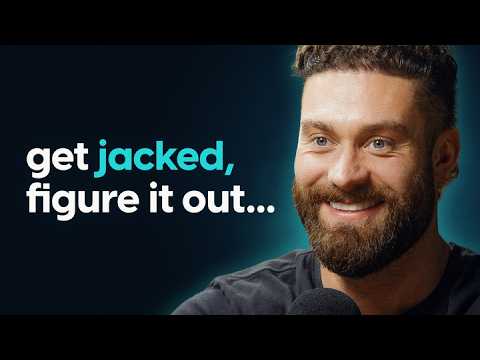
I honestly kind of hope I don't inspire people to get into bodybuilding cuz it's tough. It's [ __ ] up. It's not good for your health, but I do want to inspire people to go lift weights, get in the gym and want to get jacked because it's such like, oh, I'm lost. I don't know what to do. Just go work out.
A surprising and honest distinction between the extreme demands of competitive bodybuilding and the fundamental benefits of general weightlifting for mental and physical well-being.
It's far easier to achieve our material desires than to renounce them.
A profound insight from Naval Ravikant, suggesting that experiencing success is often a more effective path to understanding its limitations than simply trying to intellectually dismiss it.
If for 1 minute you could see yourself the way your child sees you, you would never be the same.
A deeply emotional and insightful quote about the unconditional love and admiration children have for their parents, offering a powerful source of self-worth independent of external achievements.

Sign in to share feedback

Tell us if this brief hit the mark or missed it — feedback feeds back into the next iteration of the prompt.

Topics covered

retirement challengesidentity crisisego deathpost-competition lifeaddiction to progressself-worthgoal re-evaluationfree choiceattachment to outcomevalues shifthypervigilanceemotional processingunconditional lovemodeling successunteachable lessonsmoney and happinessfame and self-worthmuscle memorypost-competition healthgut health
Free account

Make this library yours

Reading is free for everyone. A free account adds the personal layer: save protocols, follow experts, and see how the other experts weigh in on this same topic.

Create a free accountSign in

Where the experts disagree — weekly

One email a week: the sharpest new disagreements and protocols from the library. No spam, unsubscribe anytime.

Educational summary of the cited expert source — not medical advice. Open the source recording linked above and consult a qualified physician before acting on any protocol.