UNFUCG
DashboardSearchChatBookmarksNotificationsActivityPremiumProfile
?
Home
Search
Chat
Saved
Profile
Episode
What does the life of a true warrior look like? Tomasz Drwal
~80 min
Episode Brief·YouTube

What does the life of a true warrior look like? Tomasz Drwal

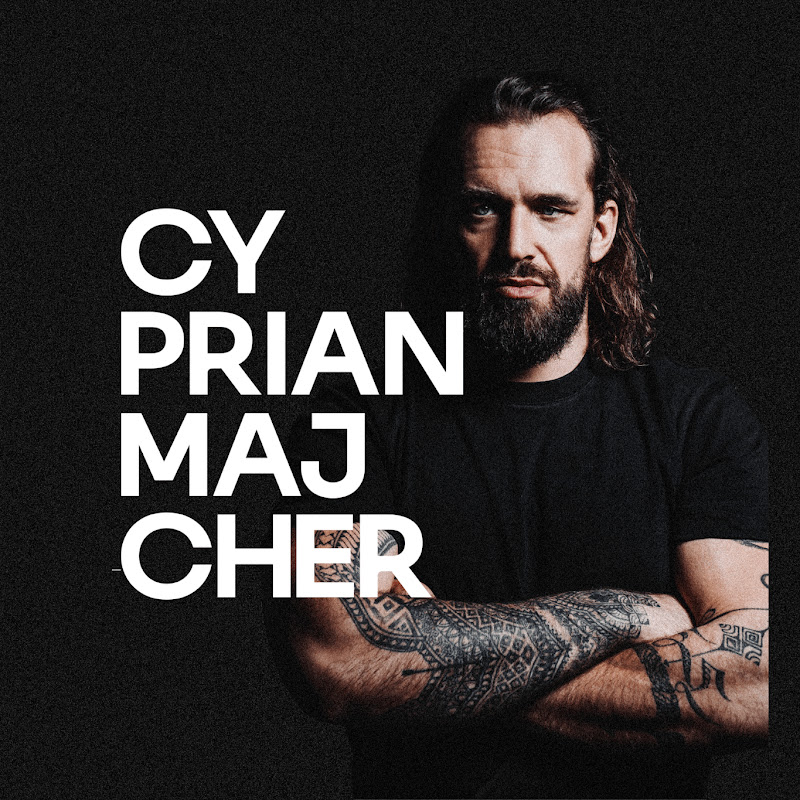
Cyprian Majcher
Watch on YouTube Add to chat My bookmarks← All sources

TL;DR

The four things you'd lose by not watching

4 items

TL;DR

The four things you'd lose by not watching

4 items
1

Tomasz Drwal, the first Polish UFC fighter, now runs a podcast 'Na pieńku z Drwalem' focusing on people of action, and lives a semi-self-sufficient life on a ranch, pursuing permaculture and natural medicine.

2

He reveals the dark side of the craft alcohol industry, explaining how his own bourbon business failed due to regulatory burdens and market fraud, and why most cheap alcohol is chemically adulterated.

3

Drwal argues that MMA in Poland has not truly developed because few people actually train; the sport has shifted from mat time to internet presence, producing more talkers than fighters.

4

He shares his physical toll: metal screws in knees and back from injuries, and his 'diesel' endurance type that allowed him to run a marathon without training but requires long recovery.

Protocols

Concrete recipes — what, when, how much, and why

6 items

Chokehold for non-violent incapacitation

WhatUse a blood choke (strangulation) to subdue an aggressive person without striking, causing them to lose consciousness briefly and then leave peacefully.
WhenWhen working as a bouncer or in self-defense situations where you need to control someone without visible injury.
DoseApply until the person passes out; they typically wake up disoriented and may have lost bladder/bowel control.
For whomExperienced grapplers who know how to apply a choke safely; not for untrained individuals.
WhyAvoids the legal and medical consequences of punching, and the psychological shock often ends the confrontation without further violence.
CaveatsCan be lethal if held too long or done incorrectly; the person may hit their head when falling; legal risk if deemed excessive force. Drwal explicitly says 'I don't recommend it, I don't advise it, because you have to know how to do it'.

Drwal learned this working as a bouncer in clubs. He initially used strikes but suffered hand injuries (teeth cuts leading to severe infections). He switched to chokes after realizing that a gentle choke would make the person lose control of their bowels, wake up wet or soiled, and go home embarrassed rather than retaliating or calling police. He notes that in Poland, bouncers are legally unprotected, and any visible injury could lead to police involvement. The choke leaves no marks and the person often doesn't want to report the humiliation. He emphasizes this is not a recommendation, just a description of what worked in that environment.

Mechanism

A blood choke compresses the carotid arteries, reducing blood flow to the brain, causing rapid unconsciousness. Release restores flow quickly. The loss of sphincter control is a common physiological response to sudden unconsciousness.

Personal experience

I used to hit people, but once I got a tooth embedded in my hand and it swelled up like a balloon from infection. After that I switched to choking. The guy would wake up wet or having shit himself, and he'd just go home quietly.

you gently choked the client so basically I don't know In my practice it was always the case that the sphincters let go and after waking up he was either wet or messed his pants and well you have to go home

Also said
“I don't recommend it I don't advise it because you have to know how to do it too”— Explicit warning against untrained use.
“the most germs are on human teeth so I got an infection and my hand looked like you took a rubber glove and inflated it”— Explains why he abandoned striking for choking.

Podcast guest selection by resonance

WhatOnly invite guests who personally resonate with you; check them beforehand via phone or meeting, and if they don't 'sit right', don't invite them.
WhenWhen curating a podcast focused on people of action (soldiers, firefighters, etc.).
DoseOngoing principle.
For whomPodcast hosts who want depth over breadth and are not chasing celebrity interviews.
WhyEnsures authentic, flowing conversations and avoids wasting time on people whose perspectives don't interest you.
CaveatsMay create an echo chamber; Drwal acknowledges he doesn't invite people completely outside his worldview (e.g., pop singers) because he wouldn't know what to talk about.

Drwal started his podcast to replace drinking sessions with meaningful conversations. He initially wanted a casual format with alcohol but later removed alcohol to avoid promoting it. He focuses on 'people of action' – soldiers, police, firefighters – because he believes they contribute to society and are underrepresented compared to celebrities. He also invites people with controversial or niche knowledge (e.g., amanita muscaria) to collide different worldviews. He uses viewer questions to enrich interviews and admits the podcast has expanded his own knowledge.

Personal experience

I check people out, we talk on the phone, and if I feel the flow, I invite them. I've never had a guest I struggled with because I select carefully. If someone doesn't sit right with me, I just don't invite them.

if someone just doesn't sit right with me Well I don't invite them

Also said
“I don't close myself off well if someone Well various people write and so on I check them out Well but if someone just doesn't sit right with me Well I don't invite them”— Shows he is open to pitches but still applies the resonance filter.

Audiobook consumption at 1.5-2x speed while running

WhatListen to audiobooks at 1.5x or 2x speed during long runs to consume books efficiently.
WhenDuring longer training runs.
DoseA full book can be finished in one long run.
For whomRunners who want to read more.
WhyCombines physical training with intellectual input, maximizing time.
CaveatsNone mentioned.

Drwal mentions this as part of his routine to stay organized and keep learning despite a busy schedule. He reads physical books as well (currently Harari's 'Nexus' and historical fiction), but uses audiobooks during runs to double up.

Personal experience

When I go for a longer run, one book gets finished during the run because I listen at 1.5x or 2x speed.

when I run well I won't go for such a longer run one book gets finished on the run because I listen at double speed or one and a half

Solitude for self-reflection

WhatRegularly spend time alone in a quiet place (his 'hermitage') to think and recharge, away from family and noise.
WhenWhenever possible, especially as a counterbalance to family life.
DoseNot specified; as needed.
For whomMen with families who feel overwhelmed.
WhyAllows for self-reflection and mental reset, which he believes every man needs.
CaveatsNone mentioned.

Drwal values his alone time on his ranch, calling it his 'hermitage'. He contrasts it with the chaos of home with children. He also enjoys occasional bonfires with male friends, but the core need is solitude for introspection.

Personal experience

Generally this is my hermitage not to get away from people a bit there's also a lot of self-reflection then I can't think there are no kids there is none of that

this is my hermitage not to get away from people a bit there's also a lot of self-reflection then

Traditional craft distilling (historical)

WhatProduce small-batch bourbon from 100% corn, aged in barrels, without chemical additives.
WhenWhen he ran his Lumber brand (now ceased).
Dose24 liters of pure distillate from 100 kg of corn; aged in barrels.
For whomHimself and friends; no longer for sale.
WhyTo create a genuine, high-quality product unlike mass-market chemical alcohol.
CaveatsRegulatory burden identical to large producers; economically unviable at scale; ethical concerns about promoting alcohol.

Drwal's process involved sourcing special corn, fermenting, distilling, and aging. He emphasizes the absurdity of regulations that treat a 2000-bottle batch the same as a mass producer. He stopped because the business was crushed by the system and he grew uncomfortable with alcohol promotion.

Personal experience

I made bourbon from corn. I needed 100 kg of corn for 24 liters of pure distillate. My bottle cost 200 PLN. I still have some stock for special occasions.

to make how much I needed corn already 100 kg of corn We had 24 liters of pure distillate like that corn one for this which went into the barrel

Yin-yang balance philosophy

WhatApply the principle of balance (yin-yang) to all life areas: city vs. countryside, system vs. independence, modern vs. traditional.
WhenAs a guiding life philosophy.
DoseContinuous.
For whomAnyone navigating conflicting demands.
WhyAvoids extremes and finds a sustainable middle path.
CaveatsNone mentioned.

Drwal repeatedly references the yin-yang symbol as his core philosophy. He applies it to his living situation (compromise between rural self-sufficiency and city amenities for children), to the tension between system dependence and independence, and to evaluating controversial topics like natural medicine vs. pharmaceuticals. He believes truth is always somewhere in the middle.

Personal experience

I'm a big fan of the yin-yang sign. There has to be balance in life on every level.

Generally I am a big fan of the yin yang sign no because there has to be this balance in life no on every level

What's new

Personal practice updates, fresh positions, predictions

5 items

Pursuit of self-sufficiency and permaculture

Drwal is actively building a self-sufficient homestead with his own well, bees, and plans for energy independence, rejecting consumerist dependence on utilities.

Why this matters: He frames this not as prepper extremism but as a return to traditional village self-reliance, a practical lifestyle choice rather than bunker mentality.

Background

He grew up in a small village, then experienced city life and show business through MMA, and now consciously returns to rural roots.

Drwal describes his vision of a house with no bills, producing his own electricity via solar panels or a micro-hydro setup if terrain allows. He drilled his own well and kept bees, though he admits it's currently a 'toy' because full commitment is hard with children needing city amenities. He criticizes the bureaucratic hurdles: even burying a dead sheep requires expensive disposal, making small-scale farming irrational. He sees this as a path to happiness, not a political statement, but acknowledges the system will likely force dependence through digital money and utility control. He advocates a yin-yang balance between modern life and self-reliance.

Personal experience

I have my own well that I drilled, I had bees, I had sheep and goats but now only a cat because of the time commitment. I dream of a fully self-sufficient house.

Imagine a vision that you have a house with practically no bills well and you are independent no and basically if something happens ... The only thing you produce you can produce is trash.

Also said
“to have in Poland to have such a goat I don't know a hen it seems everything has to be very strongly one it's rationed two heavily bureaucratized”— Highlights the regulatory barriers to small-scale farming.
“I don't think the system will let us disconnect from it so that you know you don't have electricity you don't have gas and so on it will all go in the direction that well to somehow make you dependent”— Shows his belief that the system will enforce dependency.

MMA's evolution from passion to business

Drwal observes that modern MMA fighters prioritize social media presence over training, leading to a decline in fight quality and a sport dominated by talkers.

Why this matters: As a pioneer, he contrasts the early days when fighters trained multiple disciplines separately and fought for passion, with today's calculated brand-building.

Background

He was the first Pole in UFC when the sport had only ~240 contracted fighters globally, and there were no holistic MMA gyms in Poland.

Drwal recounts how he had to piece together training from boxing, judo, and Thai boxing coaches who gave conflicting advice, while Americans already had integrated MMA coaches. He later saw young fighters asking about pay, weight cuts, and media impact before accepting a fight, which he finds antithetical to the warrior spirit. He believes the proportion has inverted: more internet talkers, fewer mat warriors. He also notes that despite KSW's commercial success, the number of people actually training MMA in Poland hasn't grown proportionally, and the sport hasn't entered schools or mainstream physical education.

Personal experience

When I had my club, I'd offer a young guy a fight and he'd ask 'For how much? When? Will I make weight? How will it affect my image?' I'd think, if someone tries to take your wallet outside Lidl, will you ask those questions?

there are more talkers who are more on the internet and fewer and fewer of them are on the mat and this as if affects the quality of these fights

Also said
“this sport also Caused that besides the fact that you have to hustle on the mat no that that you have to be good you also have to hustle well on the internet”— Explains the dual demand that shifted focus away from training.
“when I was on contract there were probably 240 fighters generally in the world”— Quantifies how small the sport was when he started.

Craft alcohol industry fraud and regulatory capture

Drwal exposes that most cheap alcohol is made from chemical granulates and essences, not traditional ingredients, and that small producers are crushed by the same regulations as big players.

Why this matters: He provides insider details: a major retail chain orders 100,000 bottles as a test, which is impossible for a craft distiller to fulfill without industrial shortcuts.

Background

He ran a craft bourbon brand 'Lumber', producing small batches from corn, but the business failed due to regulatory costs and market fraud.

Drwal explains that to make 24 liters of pure corn distillate, he needed 100 kg of corn. A bottle of his bourbon cost 200 PLN because of genuine ingredients and aging. In contrast, a 20 PLN bottle of vodka has 18.50 PLN in excise tax alone, leaving almost nothing for the liquid, which is therefore made from chemical granulates. He describes how some producers buy 'essence of Jameson' from a garden store, mix it with base spirit, and sell it as aged whiskey. He argues that Poland has older distilling traditions than the US or UK, but the system kills small producers while allowing mass-produced chemical alcohol that fuels alcoholism. He stopped the business partly because of the ethical tightrope of promoting alcohol.

Personal experience

I made bourbon from corn, aged in barrels. I needed 100 kg of corn for 24 liters of pure distillate. My bottle cost 200 PLN. Meanwhile, a retail chain ordered 100,000 bottles as a test – I'd need two years just to grow the corn.

if you take such a little bottle I don't know some vodka for 20 PLN then right off the bat 18:50 is taxes ... that's excise no ... What is it made of?

Also said
“You take this base you go there to OBI or to Leroy or somewhere to the garden store There is Jameson essence you take the essence you pour it like juice you add this and you have it”— Reveals the counterfeit method used by some 'craft' producers.
“in my opinion there is not that amount of Hops in this country to produce that amount of beer that stands on all these shelves at such a price”— Extends the fraud argument to beer.

Natural medicine vs. synthetic drugs

Drwal questions why natural substances like psilocybin mushrooms and amanita muscaria are banned while alcohol and synthetic drugs are legal, and calls for scientific research on traditional remedies.

Why this matters: He frames the prohibition as a system protecting its control over consciousness, not public health.

Background

He hosted a mycologist professor and an author on amanita muscaria on his podcast, contrasting scientific and anecdotal perspectives.

Drwal argues that if something grows in the ground and has healing properties, it should be studied, not banned. He points out that alcohol, a proven neurotoxin, is widely available, while microdosing psilocybin for depression is illegal in Poland. He notes that 50 years ago, pharmacists compounded herbal mixtures, but now they are just salespeople. He believes children should be taught about nettle and other basic medicinal plants. He sees the suppression of natural medicine as part of a broader system that wants people dependent on synthetic pharmaceuticals, and he advocates listening to both sides to find the truth in the middle (yin-yang).

Personal experience

I had a professor of mycology and a guy who wrote a book on amanita muscaria on my podcast. I wanted to collide those two worlds. I don't eat those mushrooms, but I'm curious why they're banned.

how is it possible that alcohol is widely available which intoxicates you which destroys your psyche ... and you cannot work say with depression I don't know microdose psilocybin mushrooms

Also said
“if something grows in the ground has some healing properties Then why should people be forbidden from it”— Core rhetorical question driving his stance.
“once in a pharmacy the pharmacist ... would make you some mixture of herbs ... And today in the pharmacy he is a master of pharmacy he is a salesman really”— Historical contrast to show the shift away from natural medicine.

The 'diesel' body type and self-destructive training

Drwal discovered through AWF Katowice testing that he is a 'diesel' – built for endurance but requiring double the recovery, and he often overtrains because he doesn't feel the onset of overtraining.

Why this matters: This explains his ability to run a marathon untrained, but also his pattern of injuries and burnout.

Background

He ran the Bieg Rzeźnika ultra without special preparation and a marathon on a whim, but suffered severe cramps and lost toenails.

The AWF tests showed he has a predisposition for triathlon and endurance sports, operating efficiently at low intensity for long periods. However, his recovery is slow, and he struggles to recognize when he's overtraining. This led to a cycle of pushing too hard, getting injured, and needing extended rest. He relates this to his personality: a kind of self-destructive drive that would have been dangerous in the military, where he might have killed someone over a minor provocation. He now uses long runs to test his body's limits and learn his reactions, but acknowledges the toll.

Personal experience

I did Bieg Rzeźnika without special prep. I ran the Cracovia Marathon just because I decided to, finished in about 4:30, but my toenails fell off and I cramped so badly my legs locked up.

from these tests it came out that by birth I am such a diesel you know I can plow and plow and plow you know at low revs ... only there is one problem you know when I get plowed under Well I have to rest twice as long

Also said
“my problem precisely in training was that I didn't know when I start you know to overtrain”— Highlights the practical downside of his physiology.

Recommendations

Products, supplements, and tools mentioned in the episode

3 items

Nexus (Harari)

Book

Currently reading; mentioned as an example of his reading habits.

Drwal reads both non-fiction (Harari) and historical fiction (Maurice Druon's 'The Accursed Kings'). He uses books to stay curious and informed, complementing his podcast learning.

Personal experience

I bought this newest book by Harari Nexus

right now I bought this newest book by Harari Nexus

Find Nexus

The Accursed Kings (Maurice Druon)

Book

Historical fiction he is reading alongside non-fiction.

Personal experience

I'm also reading a novel a historical novel The Accursed Kings by Maurice Druon

I'm also reading a novel a historical novel The Accursed Kings by Maurice Druon

Find The

Listening to audiobooks at increased speed

Practice

A productivity hack to consume more books while running.

Personal experience

I listen at double speed or one and a half then you have a lot of time

I listen at double speed or one and a half

Find Listening
Disclosed sponsorships1speaker disclosed

SFD Labs supplements (sponsor mention by host, not expert)

Supplement Sponsored · disclosed

Mentioned at the beginning and end as the podcast sponsor.

DisclosureThe host mentions SFD Labs as the podcast partner; Drwal does not personally endorse it.

the partner of this podcast is SFD Labs that is natural supplements inspired by nature's intelligence

Find SFD

Notable quotes

Lines worth pulling out — contrarian, specific, or perfectly phrased

6 items
if someone just doesn't sit right with me Well I don't invite them
Blunt, uncompromising personal rule for podcast guest selection.
there are more talkers who are more on the internet and fewer and fewer of them are on the mat
Succinct critique of modern MMA culture.
I have screws in my knees in my back
Stark, literal summary of his physical sacrifice.
how is it possible that alcohol is widely available which intoxicates you which destroys your psyche ... and you cannot work say with depression I don't know microdose psilocybin mushrooms
Powerful hypocrisy argument on drug policy.
I wouldn't go to such a war ... If they invaded us someone came to my house ... well then Well I have to defend myself
Clear distinction between offensive and defensive war, reflecting his guests' influence.
I don't believe everything I hear I don't believe that the end justifies the means I don't believe in the myth of success
Personal credo that underpins his skeptical, grounded worldview.

Sign in to share feedback

Tell us if this brief hit the mark or missed it — feedback feeds back into the next iteration of the prompt.

Topics covered

self-sufficiencypermaculturemma-careerufcpodcastingnatural-medicinealcohol-industryconsumerismmilitaryself-defensetraining-philosophyinjury-recoverywork-life-balancesocial-media-critiquepolish-craft-alcoholdrug-policyendurance-physiologyguest-selectionsolitudeyin-yang
Free account

Make this library yours

Reading is free for everyone. A free account adds the personal layer: save protocols, follow experts, and see how the other experts weigh in on this same topic.

Create a free accountSign in

Where the experts disagree — weekly

One email a week: the sharpest new disagreements and protocols from the library. No spam, unsubscribe anytime.

Educational summary of the cited expert source — not medical advice. Open the source recording linked above and consult a qualified physician before acting on any protocol.