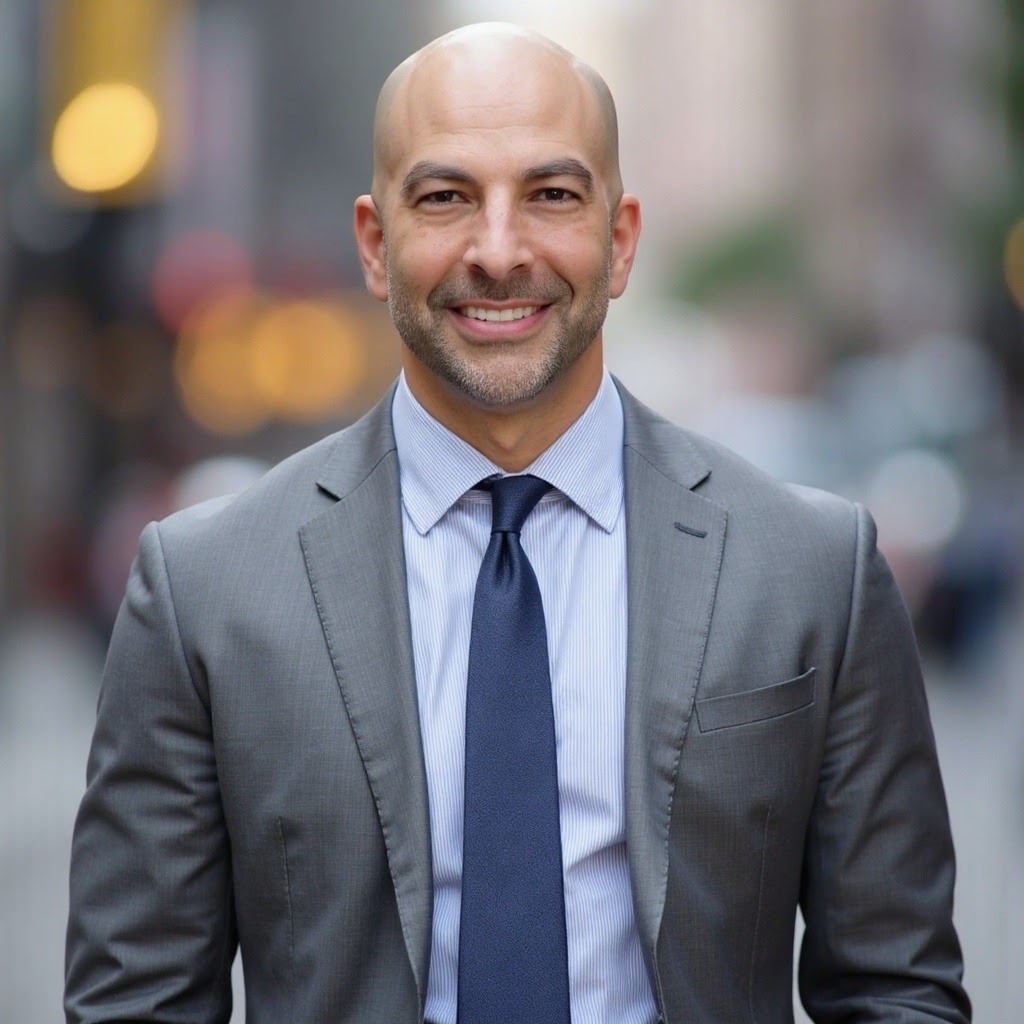
The obesity and diabetes epidemics are still out of control — and Attia and Taubes argue the failure is rooted not in personal weakness but in a scientific paradigm that has never seriously been questioned or stress-tested.
2
The Doritos versus Wagyu thought experiment illustrates the central unresolved debate: is overeating driven by hyper-palatable food engineering, or by a peripheral metabolic response to specific macronutrients — particularly carbohydrates — that dysregulates fat tissue?
3
NIH research funding structurally prevents paradigm shifts: R01 grants go to like-minded study groups building bricks into the existing framework, with no mechanism to red-team dominant hypotheses.
4
Market-driven operators — Virta Health using nutritional ketosis to reverse type 2 diabetes, Diet Doctor — are advancing the carbohydrate hypothesis faster than publicly-funded science because capitalism exploits the gap mainstream research refuses to address.
Protocols
Concrete recipes — what, when, how much, and why
4 items
Apply the COVID-research-urgency model to obesity and diabetes
WhatAllocate resources, funding, and scientific talent to the obesity and diabetes problem at a scale comparable to COVID-19 pandemic research — with the explicit mandate to question whether the dominant paradigm is correct rather than to fill it in.
WhenImmediately, given that obesity and diabetes kill approximately ten times more Americans per year than COVID did.
DoseSustained multi-year program with red team / blue team structure, not one-off grant cycles.
For whomFederal health agencies, NIH, congressional health appropriators, philanthropists funding medical research.
WhyThe COVID research effort demonstrated that when urgency and funding converge, intractable problems yield to rapid progress. Obesity and diabetes are higher-mortality, higher-cost, yet receive a fraction of that urgency. The status quo is driven by inertia, not evidence.
Taubes makes the arithmetic explicit: COVID killed perhaps 1/10 the number of people dying annually from obesity-linked chronic disease, yet attracted orders of magnitude more research funding in compressed time. The mismatch is not explained by scientific difficulty — it is explained by political saliency. A pandemic is visible and acute; the chronic disease epidemic is invisible and slow. His proposed model borrows NASA terminology: treat obesity as the 'long pole' — the rate-limiting constraint — and fund accordingly. The research mandate must include explicit permission to reject the conventional wisdom if the evidence warrants it.
you make that kind of effort you can solve this problem but step one is saying look we failed the conventional wisdom fails
Also said
“think about the kind of effort that went into covert the amount of money that was spent on research to prevent you know this disease from killing what one tenth of the number of people who die from a chronic disease is related to obesity and diabetes every year”— The scale comparison — COVID as the benchmark for what serious research urgency looks like.
Red team / blue team paradigm review for nutrition science
WhatConvene a jury of elite critical thinkers — explicitly excluding career obesity researchers and nutritionists — to formally adjudicate the competing hypotheses for the obesity epidemic: energy balance / food-environment, carbohydrate-insulin model, ultra-processed food, genetic predisposition.
WhenAs a precondition to setting the next decade of research funding priorities.
DoseMulti-year structured adversarial review, not a single consensus panel.
For whomFunding bodies, government health agencies, academic department chairs, philanthropic science funders.
WhyThe current peer-review structure rewards like-mindedness and punishes paradigm challenges. An explicit adversarial process — modeled on legal jury selection — could surface assumptions that normal science never examines.
CaveatsTaubes acknowledges this is impractical given the current institutional landscape — career incentives make scientists unwilling to risk association with heterodox positions. Ideal jury members would be smart generalist scientists with no prior stake in nutrition outcomes.
The jury model Taubes describes requires deliberately excluding domain experts: 'you can't pick obesity researchers because they have biases you certainly can't pick nutritionists because they have biases.' The insight is that expertise and impartiality are in tension here because the field has been politically charged for decades. The closest analogues are truth commissions or structured adversarial panels in law and policy — neither of which academia has a cultural template for. Taubes and Attia note they have discussed this for eight years without movement, which suggests the structural barriers are very high.
populating a jury in a in a trial you pick people unbiased scientists who are good at what they do have demonstrated that they're good at what they do you can't pick obesity researchers because they have biases
Test carbohydrate restriction as the primary intervention for type 2 diabetes — now commercially available via Virta
WhatFor patients with type 2 diabetes or prediabetes, consider a very low-carbohydrate or ketogenic dietary intervention as the first-line therapeutic approach, using the Virta Health protocol or equivalent.
WhenAt diagnosis, or at any point of inadequate glycemic control on standard care.
DoseVirta's published two-year data showed sustained reversal; ongoing maintenance requires continued carbohydrate restriction.
For whomPatients with type 2 diabetes or metabolic syndrome. Requires medical supervision for medication adjustments as blood sugar normalizes.
WhyVirta Health's commercial and clinical results represent the most rigorous real-world test of the carbohydrate-insulin model applied to type 2 diabetes. It is generating clinical evidence that publicly-funded research has not prioritized.
Taubes identifies Virta Health as the most important ongoing test of the carbohydrate hypothesis: a commercially-incentivized operation running a de facto clinical experiment at scale because the market rewards the outcome. The NIH has not funded an equivalent trial. Diet Doctor operates similarly at the consumer education level. Both validate the hypothesis by demonstrating that carbohydrate restriction produces glycemic improvement in a large, diverse, real-world population — the kind of evidence that is difficult to dismiss even without a randomized control.
that's why you have operations like virta health which is doing very well uh you know advocating uh you know using nutritional ketosis to treat type 2 diabetes
Stop deflecting obesity causation to compliance and start funding the underlying biology
WhatIn research design and clinical practice, reject the 'nobody sticks with the diet' deflection as a primary explanation for dietary intervention failure and instead treat poor compliance as a downstream indicator that the intervention may be targeting the wrong mechanism.
WhenWhen evaluating any dietary clinical trial that showed poor compliance alongside poor outcomes.
For whomClinical researchers designing nutrition trials; clinicians counseling patients on weight loss.
WhyIf a diet that successfully targets the underlying metabolic disorder is prescribed, compliance tends to be higher because patients feel better. Low compliance may indicate the wrong diet, not weak patients.
The conventional wisdom response to every failed dietary intervention is to attribute failure to patient non-compliance, then call for precision nutrition to tailor the intervention to the individual. Taubes argues this is circular: we assume the intervention is correct, attribute failure to compliance, and never test whether the intervention itself is wrong. The 'precision nutrition' framing that the NIH is currently funding is the latest version of this deflection — highly individualized versions of the same wrong advice. A better research question: which patients comply best with which dietary macronutrient compositions, and does compliance track the carbohydrate hypothesis?
so maybe everybody's different and so maybe we have to invest huge sums into individual what's the buzzword now for individualized nutritional therapy precision nutrition um yeah that's that's the way the nih is going
What's new
Personal practice updates, fresh positions, predictions
5 items
Conventional wisdom on obesity has demonstrably failed — yet it remains the dominant paradigm
Taubes argues that the persistence of obesity and diabetes epidemics is itself falsifying evidence that the conventional wisdom is wrong — but the scientific infrastructure has no mechanism to absorb that falsification and shift research programs accordingly.
Why this matters: Most public health messaging still treats obesity as a solved problem of calories in / calories out and individual non-compliance. Taubes argues the evidence of epidemic failure should force us to go back to first principles.
Background
Taubes has spent over two decades documenting this paradox — the conventional wisdom says eat less, move more, and yet the epidemics have worsened across every decade of that advice being given.
The argument has a structure: if the conventional wisdom were correct, dietary interventions based on it would have stemmed the epidemics. They have not. Therefore, either the advice is wrong, or the problem is compliance. The NIH is choosing to fund 'precision nutrition' — individualized dietary therapy — which Taubes views as doubling down on the compliance excuse rather than interrogating the underlying model. He wants a formal, well-funded red team/blue team process equivalent to what the federal government did for COVID-19 — in his framing, obesity kills roughly ten times more Americans per year than COVID did, yet received a fraction of the research urgency.
the conventional wisdom fails it's clear it fails because we have obesity and diabetes epidemics that haven't been stemmed in any way we have to question our assumptions
Also said
“covet is going to pass and obesity and diabetes are going to go back to being the long pole as using nasa terminology there they were costing a billion dollars a year in direct medical costs”— Taubes' scale argument — obesity/diabetes is the dominant disease burden, not a secondary issue.
Doritos vs. Wagyu: palatability versus macronutrient composition as drivers of hyperphagia
Attia's personal anecdote — inhaling half a bag of Cool Ranch Doritos while barely touching a wagyu steak — poses the central mechanistic question: does overeating track palatability (engineered crunch, salt, flavor) or macronutrient composition (carbohydrate driving insulin driving fat accumulation)?
Why this matters: The thought experiment is unusually concrete. Wagyu is at least as palatable and far more calorie-dense than Doritos, yet it did not trigger the same overconsumption. This is a real-world data point for the carbohydrate-insulin model of obesity that is hard to dismiss with a 'food tastes too good' explanation.
Background
The standard public health narrative blames the food industry for engineering hyper-palatable foods. Taubes' competing hypothesis is that the specific macronutrient composition — high refined carbohydrate — dysregulates fat tissue independently of palatability.
Attia describes the response time problem: 'when it comes to doritos i mean i just think if you look at the response time it has to be more central than peripheral right i mean it's barely exiting my esophagus while i'm in it.' Taubes counters that the central response is itself anticipatory — the body knows from evolutionary experience what a carbohydrate load means and prepares the peripheral response in advance. The deeper question: Attia was once 205 pounds, swimming three hours a day, eating as healthily as possible — and still gaining weight. That case cannot be explained by doritos. Some component of fat accumulation may be pre-programmed at the level of fat tissue biology, independent of behavior.
when it comes to doritos i mean i just think if you look at the response time it has to be more central than peripheral right i mean it's barely exiting my esophagus while i'm in it
Also said
“think about your experience when you were 205 pounds and swimming working out three hours a day and eating as healthy as any human being could eat and the question is again why then and what's changed between then and now and that wasn't a dorito-induced effect”— Taubes' point that some people accumulate fat through a mechanism unrelated to palatability or poor diet — the Attia personal history as a data point for biological predisposition.
NIH funding structurally cannot question the dominant paradigm
The R01 grant system groups like-minded scientists into study sections that fund incremental research within the existing framework. There is no funded mechanism for a paradigm-challenging red team. Taubes cites his experience at NUSI as evidence that even privately-funded paradigm-challenging efforts face insurmountable institutional resistance.
Why this matters: The failure point is not individual scientists being dishonest — it is a system architecture problem that makes paradigm shifts structurally impossible short of market disruption.
Background
Taubes co-founded NUSI (Nutrition Science Initiative) with the explicit goal of funding rigorous tests of the carbohydrate-insulin hypothesis. It struggled to attract top scientists willing to risk their reputations on heterodox work.
He describes the R01 mechanism: study groups of 'mostly like-minded individuals' distribute $500K grants for five years to researchers doing 'normal science' — Kuhn's term for research that fills in the existing paradigm rather than challenging it. There is no peer-review committee whose charter is to ask 'what if the paradigm is wrong?' The natural scientific ideal of self-correction assumes paradigm challenges emerge organically, but Taubes argues this assumption fails in a world of high career risk, limited funding, and epistemic monocultures. His proposed fix: populate a research jury with 'unbiased scientists who are good at what they do' specifically excluding obesity researchers and nutritionists because their career investments make them congenitally biased.
there is no method by which paradigms are questioned and research programs can shift there's an assumption that it could happen naturally the science is self-correcting but it's the the way we fund research in this country doesn't actually allow that to happen
Also said
“you can't pick obesity researchers because they have biases you certainly can't pick nutritionists because they have biases and they i question whether any of them are ever taught to think critically enough about scientific reas progress”— Taubes' jury model: the people most credentialed to judge obesity science are the least qualified to do so impartially.
Blaming industry is popular; blaming science is career-ending
Taubes describes a stark asymmetry in how the public and media respond to food-industry blame versus scientific-community blame. Criticizing Kraft, Frito-Lay, and Big Food generates acclaim; criticizing the NIH and academia generates hostility and loss of platform.
Why this matters: Explains why the heterodox hypothesis has stalled despite significant evidence — not because the evidence is weak but because the political and social incentives punish the messenger who names the correct culprit.
Background
Michael Moss's books (Salt Sugar Fat, Hooked) are the canonical example of the food-industry-blame genre — praised as exposés, widely covered, no serious scientific backlash.
Taubes draws the contrast explicitly: 'when i was blaming the industry people love what i do as soon as i shift to blaming the scientific community for doing unacceptable science then i have trouble getting the message heard.' This is not a minor rhetorical point — it means the politically viable version of the obesity story (it's the food companies' fault) is orthogonal to the scientifically important version (the dietary guidelines were wrong). Attia agrees the challenge is getting authorities in a position of power to even question the framework, naming Francis Collins as an example of someone who could allocate resources but is insulated from the pressure to do so.
when i was blaming the industry people love what i do as soon as i shift to blaming the scientific community for doing unacceptable science then i have trouble fighting you know with getting the message heard
Also said
“you decide you're going to tilt it windmills for life you got to get used to the fact that the windmills are going to kick in the ass when you ride by”— Taubes' Don Quixote framing — a rare moment of resigned dark humor about the futility of the heterodox advocate's position.
Virta Health and Diet Doctor as capitalism-driven proof-of-concept for the carbohydrate hypothesis
Taubes notes that the market is advancing the carbohydrate-insulin model faster than publicly-funded research: Virta Health is using nutritional ketosis to reverse type 2 diabetes commercially, and Diet Doctor is building a mass consumer platform around low-carbohydrate principles — both operating in the gap that mainstream research ignores.
Why this matters: Market adoption as an epistemological signal — when a hypothesis generates viable businesses treating patients, it is functioning as scientific evidence that the mainstream dismisses at its own expense.
Background
Virta Health, founded by Stephen Phinney and Jeff Volek, published a two-year RCT showing sustained type 2 diabetes reversal on a ketogenic diet. This is direct clinical evidence for the carbohydrate hypothesis that the NIH did not fund.
Taubes frames this as market self-correction filling the gap where scientific self-correction has failed: 'if there's money to be made then capitalism will kick in and people will take advantage of the opportunities that other people might be missing.' The implication is uncomfortable for the scientific establishment — commercial operators are now running de facto clinical experiments on the carbohydrate hypothesis that publicly-funded researchers refuse to run. The data will come from the market, not the NIH. Whether it will be accepted as evidence by mainstream nutrition science is a separate, political question.
that's why you have operations like virta health which is doing very well uh you know advocating uh you know using nutritional ketosis to treat type 2 diabetes and you have other people who have started operations you know like diet doctor
Recommendations
Products, supplements, and tools mentioned in the episode
3 items
Virta Health (nutritional ketosis for type 2 diabetes reversal)
Service
Taubes highlights Virta Health as the most important real-world clinical demonstration of the carbohydrate-insulin model — treating type 2 diabetes with nutritional ketosis and achieving sustained reversal at commercial scale.
Virta Health was co-founded by Drs. Stephen Phinney and Jeff Volek, two of the most rigorous researchers on ketogenic diets. Their published two-year clinical data showed that a majority of patients could reduce or eliminate diabetes medications while achieving HbA1c normalization on a continuous remote-care ketogenic diet program. Taubes frames this as capitalism filling the gap left by publicly-funded science: the market incentivized what the NIH refused to study. The program costs roughly $370/month — competitive with diabetes medication costs.
vs alternatives
Standard of care for type 2 diabetes involves progressive medication escalation — metformin, GLP-1 agonists, insulin — none of which address the underlying carbohydrate-driven hyperinsulinemia. Virta targets the root cause rather than symptom management.
that's why you have operations like virta health which is doing very well uh you know advocating uh you know using nutritional ketosis to treat type 2 diabetes
Diet Doctor (low-carbohydrate patient and clinician education platform)
Service
Mentioned alongside Virta Health as a market-driven operation advancing the low-carbohydrate hypothesis at scale in the consumer education space.
Diet Doctor, founded by Dr. Andreas Eenfeldt in Sweden, became one of the largest nutrition websites in the world by providing free low-carbohydrate and ketogenic education to both patients and clinicians. Its success — funded by a subscription model rather than advertising — is itself evidence of unmet demand that mainstream nutrition guidance was not serving.
you have other people who have started operations you know like diet doctor
Taubes references Michael Moss's books as getting 'a lot of publicity because he's blaming industry' — illustrating the asymmetry between criticizing food companies (socially rewarded) versus criticizing nutrition science (socially punished).
Salt Sugar Fat (2013) is the most widely-read exposé of the food industry's deliberate engineering of hyper-palatable products. Taubes' position is not that Moss is wrong about industry behavior, but that industry behavior is downstream of the wrong dietary guidelines — and that Moss's framing lets the scientific establishment off the hook for having pointed people toward cheap carbohydrates in the first place.
michael moss has done written two terrific books that get a lot of publicity because he's blaming industry he's not blaming the scientists he's not blaming the administrators of the government he's blaming the industry
Lines worth pulling out — contrarian, specific, or perfectly phrased
5 items
the conventional wisdom fails it's clear it fails because we have obesity and diabetes epidemics that haven't been stemmed in any way we have to question our assumptions
The single cleanest statement of Taubes' epistemological argument: the epidemic outcome is itself falsifying evidence, and the appropriate response is not to refine the intervention but to question the framework.
there is no method by which paradigms are questioned and research programs can shift there's an assumption that it could happen naturally the science is self-correcting but it's the the way we fund research in this country doesn't actually allow that to happen
Structural critique of the NIH grant system — not a complaint about bad scientists but about a system architecture that makes paradigm challenges structurally impossible.
when i was blaming the industry people love what i do as soon as i shift to blaming the scientific community for doing unacceptable science then i have trouble fighting you know with getting the message heard
Captures the political economy of heterodox advocacy — the incentive landscape punishes the scientifically important message while rewarding the politically comfortable one.
this is almost as impressive as the apollo 11 program like from an engineering perspective like the way they made this thing the crunch the taste the lingering flavor it's unbelievable
Attia's riff on the engineering achievement of Doritos is both funny and genuinely important — it reframes ultra-processed food not as accidental tastiness but as deliberate, sophisticated sensory engineering aimed at overriding satiety.
you decide you're going to tilt it windmills for life you got to get used to the fact that the windmills are going to kick in the ass when you ride by
Taubes' Don Quixote self-description — rare raw honesty about the psychological cost of long-term heterodox advocacy against institutional inertia.
Sign in to share feedback
Tell us if this brief hit the mark or missed it — feedback feeds back into the next iteration of the prompt.
Reading is free for everyone. A free account adds the personal layer: save protocols, follow experts, and see how the other experts weigh in on this same topic.
Educational summary of the cited expert source — not medical advice. Open the source recording linked above and consult a qualified physician before acting on any protocol.