UNFUCG
DashboardSearchChatBookmarksNotificationsActivityPremiumProfile
?
Home
Search
Chat
Saved
Profile
Episode
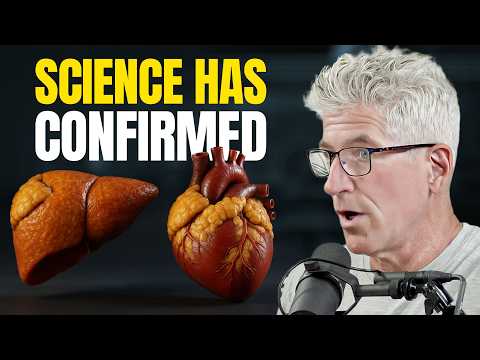
Visceral Fat Doctor Discovers the Only Thing Worse than Insulin Resistance (and visceral belly fat)
~171 min
Episode Brief·YouTube

Visceral Fat Doctor Discovers the Only Thing Worse than Insulin Resistance (and visceral belly fat)

Thomas DeLauer
Watch on YouTube Add to chat My bookmarks← All sources

TL;DR

The four things you'd lose by not watching

4 items

TL;DR

The four things you'd lose by not watching

4 items
1

Dr. Sean Omera argues that epicardial fat (heart fat) is the single worst type of fat, gram for gram, because it directly causes heart attacks and is the number one killer, surpassing cancer.

2

He advocates tracking structural disease (fat deposits) via MRI or CT instead of relying on biodynamic markers like insulin resistance or CRP, which are easily confounded.

3

Key lifestyle protocols to eliminate heart fat: cut processed foods and sugar, adopt a variable feast-fast schedule mimicking Paleolithic hunting patterns, consume large amounts of meat with fermented foods, and do high-intensity, unpredictable exercise.

4

Facial inflammation is a low-cost proxy for visceral and heart fat; removing these fats improves not just heart health but also brain function, mood, and overall vitality.

Protocols

Concrete recipes — what, when, how much, and why

7 items

Feasting and Fasting with Variability

WhatCycle between periods of large, satiating meals (feasting) and variable-length fasts, mimicking ancestral hunting patterns. No fixed schedule; randomness is key.
WhenOngoing lifestyle; fast when not hungry or when life provides a natural break, feast when you can consume large quantities of meat and fat.
DoseFeasting: eat until full, primarily meat and fat, ideally with fermented foods. Fasting: periods can range from daily time-restricted eating to multi-day extensions, but vary the window. Example: 24-48 hours of rest after a big feast before hunting/exercising again.
For whomAnyone seeking to reduce visceral and epicardial fat, especially those who have plateaued on regular intermittent fasting.
WhyOur ancestors experienced irregular food availability; fixed fasting schedules allow the body to predict intake and reduce metabolic adaptation. Variability keeps the body responsive, increases fat loss, and specifically targets heart fat.
CaveatsGradually increase meal volume to avoid digestive discomfort. Those with medical conditions should consult a physician before prolonged fasts. The feast component requires tolerance for high meat intake; fermented foods help avoid 'meat sweats'.

Omera bases this on observations of Paleolithic remains (no structural disease) and modern carnivore physiology. He notes that lions and other predators in a fed state ignore prey, supporting the rest-after-feast cycle. In his clinical work, clients who adopt this irregular feast-fast pattern see the most significant resolution of heart fat. He also ties it to the evolution of the human diet: from paleo (eliminating processed foods) to keto (lower carbs) to carnivore (very low carb, high fat), each step reducing structural fat more effectively.

Mechanism

Feasting triggers gastric steal, diverting blood to the gut for digestion and discouraging activity for up to 48 hours, which mimics the rest phase after a kill. Subsequent fasting forces reliance on stored fat, including epicardial and visceral fat. Variability prevents the brain from establishing a predictive pattern that could dampen metabolic flexibility.

Personal experience

Omera says this is exactly what all his clients hear from him daily. He himself follows this variable pattern and sees it as the core of his health transformation. DeLauer also champions randomness, saying he gets 'frustrated with us trying to gamify everything.'

I generally advocate and I see the best resolution of this fat around the heart and what I call feasting and fasting.

Also said
“I recommend people consider going through fasting periods of time of variable lengths to your point.”— Emphasizes variability over fixed times.
“Adding fermented foods when you eat that meat allows you to eat more food and avoid the meat sweats.”— Practical tip for implementation.

High-Intensity, Unpredictable Exercise

WhatEngage in physical activity that mimics the life-or-death demands of hunting and defense: short, intense bursts of effort (sprinting, fighting) mixed with longer endurance challenges, and avoid routine gym schedules.
WhenDaily or several times a week, but vary the type, duration, and intensity randomly.
DoseNo fixed duration; sometimes short and violent, sometimes prolonged. Let life's demands or spontaneous choices dictate the workout rather than a program.
For whomThose seeking to reduce muscle fat and visceral fat, and improve overall metabolic health.
WhyAncestral humans did not train; they moved to survive. Their bodies adapted to unpredictable physical stressors, which optimized muscle fat reduction and cardiovascular resilience. Routine exercise allows the body to adapt and plateau.
CaveatsRisk of injury with sudden high-intensity work if not progressively built up. Listen to body signals; the healthier you are, the better you can interpret these signals.

Omera argues that Paleolithic people fought and hunted; violence and survival stress were their exercise. Modern gym culture imposes a predictability that the body and brain quickly anticipate, reducing efficacy. He notes that muscle fat (marbling) is proportional to visceral and heart fat, and that an NFL Super Bowl champion dramatically improved leg muscle fat over two years with this approach. The goal is to reintroduce the stochasticity of movement.

Mechanism

Unpredictable demands prevent metabolic adaptation and muscle memory, forcing continuous physiological improvements. The stress of life-or-death exertion was integral to human survival and thus programmed deep metabolic pathways that routine gym work cannot fully activate.

I don't think anybody's out there lifting purposely… but I think life's demands were so physiologically demanding. Hunting was life and death business.

Eliminate Processed Foods and Limit Carbohydrates

WhatRemove all processed foods and significantly reduce carbohydrate intake, following a Paleolithic or ketogenic/carnivore framework.
WhenAt every meal. Make this the foundation of the diet.
DoseNo specific macros; focus on whole foods—meat, vegetables, fruits (if tolerated), and healthy fats. Severely limit sugar and grains.
For whomEveryone, especially those with any amount of visceral or heart fat.
WhyProcessed foods are absent in ancestral diets and are the primary driver of visceral and heart fat accumulation. Cutting them and lowering carbs reduces inflammation and fat deposition.
CaveatsTransition gradually if coming from a high-carb diet. Some individuals may need more carbohydrates for high-intensity output; adjust based on how they feel and fat tracking.

Omera retraces the evolution from the paleo diet (after radiologist/anthropologist studied Paleolithic remains with no disease) to keto (even lower carbs) to carnivore (very low carb, high ketones). Each step shows progressive improvement in eliminating structural disease. He himself started by cutting carbs after learning about insulin resistance.

Mechanism

Processed foods and excessive carbs spike insulin, promote de novo lipogenesis, and drive inflammatory fat storage in visceral depots. Removing them reduces the substrate for fat accumulation and lowers systemic inflammation.

Personal experience

Omera says cutting carbohydrates and going paleo dramatically reversed all his diseases and changed his life. He used to read every study on insulin sensitivity.

Eliminating processed foods and eating in what was believed to be a more paleolithic manner… people got dramatically better.

Also said
“We got it today because of our poor lifestyles.”— Blames modern processed foods.

Include Fermented Foods with Meat Meals

WhatConsume fermented foods (e.g., sauerkraut, kimchi, yogurt) concurrently with meat during feasting to aid digestion and allow larger meat intake.
WhenWith every large meat-based meal, chewed together with the meat.
DoseA serving of fermented food with each feast; amount can be adjusted to tolerate more meat.
For whomThose struggling to eat enough meat to achieve the feasting state, or those experiencing digestive distress from high meat consumption.
WhyFermented foods optimize the microbiome, improve digestion of heavy protein/fat loads, and prevent the discomfort known as 'meat sweats,' enabling greater overall intake needed for effective feasting.
CaveatsStart with small amounts if unaccustomed to fermented foods to avoid bloating. Not all fermented foods are equal; choose traditionally prepared options without added sugars.

Omera explicitly links this to optimizing the microbiome and making the feasting protocol sustainable. He notes that clients who adopt this can eat much larger amounts of meat without feeling ill, which is essential for the feast phase.

Mechanism

Fermented foods provide beneficial bacteria and enzymes that assist in breaking down animal proteins and fats, increasing gastric emptying efficiency and reducing endotoxin load that can cause meat sweats. This supports the ancestral eating pattern where meat was often consumed with wild, naturally fermented plant matter.

Adding in concomitantly, chewing together, masticating fermented foods at the same time will allow you to avoid what some people call the meat sweats.

Get an Abdominal MRI or CT to Assess Heart and Visceral Fat

WhatObtain an MRI or CT scan of the abdomen (which often captures the heart area) to directly visualize and measure epicardial and visceral fat, then track changes over time.
WhenBaseline measurement, and periodically (e.g., every 6-12 months) to monitor progress as you implement lifestyle changes.
DoseOne scan costs $300-$500 on average. Ensure the scan covers from the upper abdomen/lower liver to include the heart. CT shows fat as dark; MRI shows fat as white.
For whomAnyone with a history of metabolic issues, family history of heart disease, or visible signs of inflammation. Also for motivated individuals wanting to track their progress objectively.
WhyStructural fats can be visualized and measured definitively, providing incontrovertible feedback on disease. Radiologists typically do not report on these fats, so you have to look at the images yourself or find a knowledgeable clinician.
CaveatsRadiology reports rarely mention epicardial or visceral fat, so patients must learn to interpret the images or seek specialists like Omera. CT involves radiation; MRI does not but is more expensive. Not covered by insurance for this purpose.

Omera uses these scans to show patients why they had heart attacks and to demonstrate reversal. He emphasizes that even if a cardiologist says you're fine because a stenosis is <60%, the presence of fat means you are still at high risk for a fatal clot. He strongly urges people with existing abdominal scans to pull up the images and look for themselves.

Mechanism

MRI and CT provide high-resolution images where fat density differs from muscle and organs. Epicardial fat appears as a thick white (MRI) or dark (CT) layer around the heart. Measuring its cross-sectional area or volume gives a direct readout of pathogenic fat burden.

Personal experience

He shows his own scan with no fat, and a deceased patient's scan with massive fat. He says he scans clients regularly to guide treatment.

Anyone listening today, if they've ever had a CT scan or an MRI scan of their abdomen, can go back and read themselves… I guarantee the report will not say anything about hard fat or visceral fat.

Also said
“In an abdominal scan, you want to catch the entirety of the abdomen… they have to go up high enough to capture that heart.”— Explains how standard abdominal scans often include heart level.

Use Facial Appearance as a Daily Proxy for Inflammation

WhatMonitor facial puffiness, features, and expressiveness as a qualitative indicator of systemic inflammation and visceral/heart fat burden.
WhenDaily, looking in the mirror or comparing photos over time.
DoseNo specific duration; observe over weeks and months for trends.
For whomAnyone, especially as a low-cost alternative to frequent scans.
WhyVisceral fat drives systemic inflammation that manifests in the face (edema, fat deposition, muscle inflammation). Improvement in facial appearance correlates with reduction in visceral and epicardial fat.
CaveatsFacial changes can be influenced by sleep, hydration, allergies, and other factors, so use it as a trend indicator, not a diagnostic.

Omera presents compelling before/after client photos demonstrating dramatic facial restructuring after 3-6 months of fat loss. He notes that older individuals regain expressiveness and humor as inflammation recedes, challenging the belief that aging inherently causes a flat affect. He calls it a 'poor man's MRI.'

Mechanism

Inflammatory cytokines from visceral fat cause edema and fat accumulation in subcutaneous facial tissues, as well as impairing facial muscle tone. Reducing fat decreases this inflammatory signal, leading to a more defined, less puffy face and more animated expressions.

A poor man's MRI is just looking at the face. You can start looking at these inflammatory changes.

Reduce Stress as a Lifestyle Pillar

WhatActively manage and lower psychological stress, which he identifies as a 'big big killer' contributing to visceral and heart fat.
WhenIntegrate stress-reduction practices daily (meditation, nature time, social connection, etc.).
DoseNo specific protocol given; emphasize consistent effort.
For whomEveryone, particularly those with high-demand lifestyles.
WhyChronic stress elevates cortisol, driving inflammation and fat deposition in visceral stores, including around the heart.
CaveatsStress reduction is often underappreciated and difficult to implement, but is essential alongside diet and exercise.

Omera mentions stress as one of the fundamental things to address, alongside diet and exercise, when helping clients reverse disease. It is part of the ancestral mismatch—modern chronic stress versus acute, life-threatening stressors that resolved quickly.

Mechanism

Cortisol promotes lipogenesis and redistribution of fat to the viscera. It also impairs immune function and increases systemic inflammation, directly contributing to epicardial fat accumulation.

Reducing stress, which is a big big killer.

What's new

Personal practice updates, fresh positions, predictions

5 items

Heart fat as the worst fat, worse than insulin resistance

00:00-05:00

Dr. Omera identifies epicardial fat (visceral fat around the heart) as the most dangerous tissue in the body, claiming it is gram-for-gram more harmful than any other fat and the direct cause of heart attacks.

Why this matters: This shifts the focus from traditional biomarkers (insulin resistance, cholesterol) to a structural disease marker that can be directly imaged and eliminated, providing a clear target.

Background

Before this, insulin resistance was widely regarded as the central metabolic pathology. Even visceral abdominal fat was more commonly discussed. Omera argues that heart fat is upstream and more lethal.

Omera shares his evolution from solely studying visceral abdominal fat for the National Science Foundation to concentrating on epicardial fat in the last six months. He used AI to query all available medical and autopsy records and found no case of a heart attack without elevated epicardial fat, leading him to stake his professional reputation on the claim. He contrasts this with insulin and CRP, which are biodynamic and can be manipulated by positive behaviors (like exercise) or negative ones (like donuts), making them unreliable. The structural nature of fat allows for precise measurement and removal as the definitive health goal.

Personal experience

Omera shows an MRI of his own heart at age 61, completely free of epicardial fat, while a patient who died of a heart attack had a thick layer. He states he specializes in this fat and must have none in his own body to avoid hypocrisy.

I think it's the absolute worst fat, single worst thing gram for gram that you can have in your body.

Also said
“If you don't have heart fat, you won't have a heart attack. It's impossible to have a heart attack without this fat here.”— Reinforces the certainty of the causal link.
“This fat you're looking at right here kills more people than cancer.”— Quantifies the public health impact.

Structural disease over biodynamic biomarkers

05:00-10:00

Omera criticizes the practice of tracking blood markers like insulin, lipids, glucose, and CRP because they fluctuate for many reasons, while accumulations of structural disease (visceral fat, heart fat) are unambiguous and directly causative.

Why this matters: Offers a radically simplified health strategy: track only structural disease and do whatever eliminates it.

Background

Mainstream medicine relies on lab values that often require complex interpretation. Omera argues this creates confusion and false reassurance.

He explains that insulin can rise from both a doughnut (bad) and pull-ups (good), and CRP can be temporarily lowered by cortisol spikes like sprinting or prednisone. This confounding means a normal lab result can mask dangerous epicardial fat. Structural fat, on the other hand, is binary—it is either there or it isn't—and its presence always correlates with disease. He sees this as a clarity humanity has never had before.

Personal experience

Omera used to chase insulin sensitivity after reading every study on it, and it transformed his health. However, he later realized that biomarkers were not the ultimate truth because of their biodynamic nature, prompting his shift to structural disease.

For the first time in the history of humanity, we now have clarity on what we're supposed to be targeting. It is disease.

Also said
“When you eliminate disease, you restore life. Disease is the lack of ease in people's lives.”— Simplifies the overarching philosophy.
“I could raise insulin by having somebody eat a crispy cream doughnut. Bad. Or I could increase insulin by having somebody do pull-ups. Good.”— Illustrates the confounding problem with insulin.

Heart fat appears before fatty liver disease

20:00-22:00

Omera states that epicardial fat accumulation precedes the development of non-alcoholic fatty liver disease, making it the earliest detectable organ-specific fat pathology.

Why this matters: Contradicts the common assumption that liver fat is the first sign of metabolic syndrome; suggests heart fat is the canary in the coal mine.

He notes that when people adopt a healthy lifestyle, the first fat to significantly reduce is heart fat, even before visceral abdominal or liver fat. This positions epicardial fat as both the earliest indicator of decline and the most responsive to intervention. The implication is that waiting for fatty liver or elevated liver enzymes means the disease has already progressed downstream.

The fat around the heart shows up long before fatty liver disease.

Also said
“When people start incorporating these fundamental changes into their life the first fat that we see reduced in the the most significant manner is actually this heart fat.”— Shows heart fat is the most reactive to intervention.

Facial inflammation as a 'poor man's MRI'

25:00-35:00

Omera presents facial puffiness and lack of expression as visible signs of systemic inflammation driven by visceral fat, which can be used to gauge progress without imaging.

Why this matters: Provides a free, accessible biomarker that anyone can self-monitor daily.

Background

While MRIs are the gold standard, they cost $300–$500 and are not widely available. Facial changes offer a practical proxy.

He demonstrates with before-and-after photos of clients (a former Navy Top Gun and an older gentleman) who lost visceral fat and showed dramatic facial restructuring—less puffiness, more defined features, and more animated expressions. He links the flat affect and seriousness of older people to disease-related brain inflammation (basal ganglia, frontal cortex) rather than age itself, arguing that reducing visceral/heart fat restores brain function, humor, and expressiveness.

Personal experience

Omera shares his own photos at ages 20, 40, and 48, showing progressive facial inflammation, followed by a reversal after eliminating visceral fat. He notes his face 'restructures with less inflammation.'

A poor man's MRI is just looking at the face. You can start looking at these inflammatory changes.

Also said
“Older people, it's not because they got more serious, they got more diseased.”— Challenges the inevitability of age-related decline.
“This guy jokes around… his humor is inappropriate for his body habitus… but the truth is people in their 80s lose their sense of humor.”— Anecdote linking visceral fat reduction to restored personality.

AI search for heart attacks without heart fat yields none

15:00-17:00

Omera queried AI to search all available medical records, studies, and autopsy reports for a single case of a heart attack without elevated epicardial fat, and the answer was consistently no.

Why this matters: Adds a massive data-driven confidence to the causal claim, leveraging modern technology to exhaustively test the hypothesis.

He repeated the query multiple times, specifying the history of the world among 8 billion people and all public records. The inability of AI to find any counterexample convinced him that the link is absolute. He cites heart surgeon Dr. Philia, who spent years cutting through heart fat without recognizing its significance, as a now-converted advocate.

Can you find a single human being that had a heart attack and did not have elevated fat around their heart first? And the answer is always no.

Recommendations

Products, supplements, and tools mentioned in the episode

2 items

MRI or CT Scan for Abdominal/Epicardial Fat Assessment

Tool

An MRI or CT of the abdomen (which often captures the heart) can be used to directly measure epicardial and visceral fat. MRI costs $300-500 on average; CT is faster but uses radiation. Radiologists typically do not report on these fats, so individuals must learn to read the images or find a practitioner who does.

Omera highly recommends this as the only definitive way to know your structural disease status. Even if a previous scan was done for another reason, patients can request the images and examine the heart area themselves. He warns that cardiologists may dismiss non-obstructive plaque, but the presence of fat still poses a deadly risk.

vs alternatives

Compared to blood biomarkers like CRP or insulin, imaging gives an unambiguous, direct view of pathogenic tissue. Compared to facial observation, it is quantitative and absolute.

You can literally significantly improve the quality of your life the most… by going back and looking at what what kind of fat you have around your heart.

Find MRI

Paleo / Keto / Carnivore Diet Progression

Practice

Omera traces the historical development of these diets as increasingly effective ways to eliminate processed foods and reduce carbohydrates. He suggests that moving from paleo (meat, vegetables, fruit, no processed foods) toward keto and eventually carnivore (very low carbohydrate, high fat, high ketones) may provide additional benefits for eliminating visceral and heart fat.

He describes how the concept originated from a radiologist/anthropologist who scanned Paleolithic mummies and found no structural disease. The subsequent keto and carnivore diets represent further carbohydrate restriction that has shown progressive improvements in structural fat reduction. This is not a strict prescription but a framework for self-experimentation.

vs alternatives

Compared to standard American diet, these approaches systematically remove processed foods and sugars that drive fat deposition.

Personal experience

Omera started by cutting carbs and going paleo, which dramatically improved his health. He observed even greater changes in clients who adopted lower-carb approaches.

Paleolithic men didn't have this and we got it today because of our poor lifestyles.

Find Paleo
Disclosed sponsorships2speaker disclosed

Growing Better Older Online Program

Service Sponsored · disclosed

An online platform offering virtual access to Omera's methods for reducing visceral and heart fat, designed for larger numbers of people at a more affordable price point than his personal clinical practice.

DisclosureOwned by Dr. Omera as an alternative to one-on-one work.

He mentions this as a way to reach more people than he can individually. It includes guidance on key biomarkers and the lifestyle changes needed to eliminate them.

Instead of working one-on-one, I figured out a way how to do this online virtually with large numbers of people.

Find Growing

Thrive Market

Product Sponsored · disclosed

Thrive Market is an online grocery store that curates high-quality ingredients, avoiding garbage additives. Omera (or host) endorses it as a convenient way to get clean foods without needing to read every label, emulating the food quality found in Europe.

DisclosureSponsor of the video; link provided for 30% off first order and a free $60 gift.

The host, Thomas DeLauer, mentions that Thrive Market allows sorting by diet type and that he appreciated its quality while spending time in Europe, where food standards are higher. The link in the description offers a discount and a gift with purchase.

Thrive Market focuses on the ingredient quality… They do not have garbage ingredients coming into the food that they have on their digital shelves.

Find Thrive

Notable quotes

Lines worth pulling out — contrarian, specific, or perfectly phrased

6 items
I think it's the absolute worst fat, single worst thing gram for gram that you can have in your body.
Makes a striking, uncompromising claim that sets the episode's urgency.
If you don't have heart fat, you won't have a heart attack. It's impossible to have a heart attack without this fat here.
Stakes his professional credibility on a simple, testable hypothesis that rewrites heart disease prevention.
This fat you're looking at right here kills more people than cancer.
Quantifies the deadly impact in a way that directly challenges common public health narratives.
For the first time in the history of humanity, we now have clarity on what we're supposed to be targeting. It is disease.
Reframes health as the absence of structural disease rather than lab value management.
You come in the world with a heart that's beautiful. Do you want to know what health is? Look at babies and kids. And then I tell kids, hey, you want to see a disease man, look at your parents.
Poignant, accessible illustration of health as the default state, corrupted by lifestyle.
Older people, it's not because they got more serious, they got more diseased.
Contrarian take on aging that blames reversible pathology rather than time.

Sign in to share feedback

Tell us if this brief hit the mark or missed it — feedback feeds back into the next iteration of the prompt.

Topics covered

epicardial-fatvisceral-fatinsulin-resistancestructural-diseaseheart-attacksmri-scanfacial-inflammationpaleo-dietketo-dietcarnivore-dietfasting-feastingfermented-foodsexercise-variabilitybiomarkers-confoundingmuscle-fataging-diseaseai-medical-searchstress-reductionthrive-market
Free account

Make this library yours

Reading is free for everyone. A free account adds the personal layer: save protocols, follow experts, and see how the other experts weigh in on this same topic.

Create a free accountSign in

Where the experts disagree — weekly

One email a week: the sharpest new disagreements and protocols from the library. No spam, unsubscribe anytime.

Educational summary of the cited expert source — not medical advice. Open the source recording linked above and consult a qualified physician before acting on any protocol.