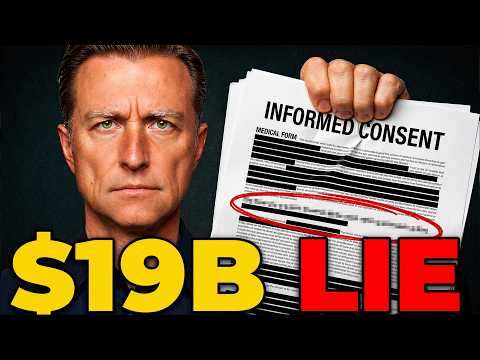

Demand raw trial data before signing informed consent
The speaker argues that the informed consent form is dishonest because it relies on a sanitized subset of evidence. By filing FOIA requests, Irving Kirsch demonstrated that 31% of antidepressant trials were never published and 15% were spun to look positive. If patients demanded to see all the data — including the unpublished trials and the raw numbers from the published ones — they would realize that the drug's added benefit over placebo is a mere 1.8 points on a 0–51 scale, less than the effect of a good night's sleep. This protocol thus becomes a gatekeeping step: refuse to sign until you have the full evidence. The speaker does not provide a practical method for obtaining this data but uses the demand as a rhetorical device to expose the consent process as a sham.
The speaker personally spent 8–9 hours deciphering the consent form and realized it was indecipherable by design. He implies that the average patient, who spends 30 seconds, is set up to consent without understanding.
If we had all the raw data and all the trials that were done, we would be much more informed and then a patient can make the correct decision whether they want to get on a drug that they can never get off of.