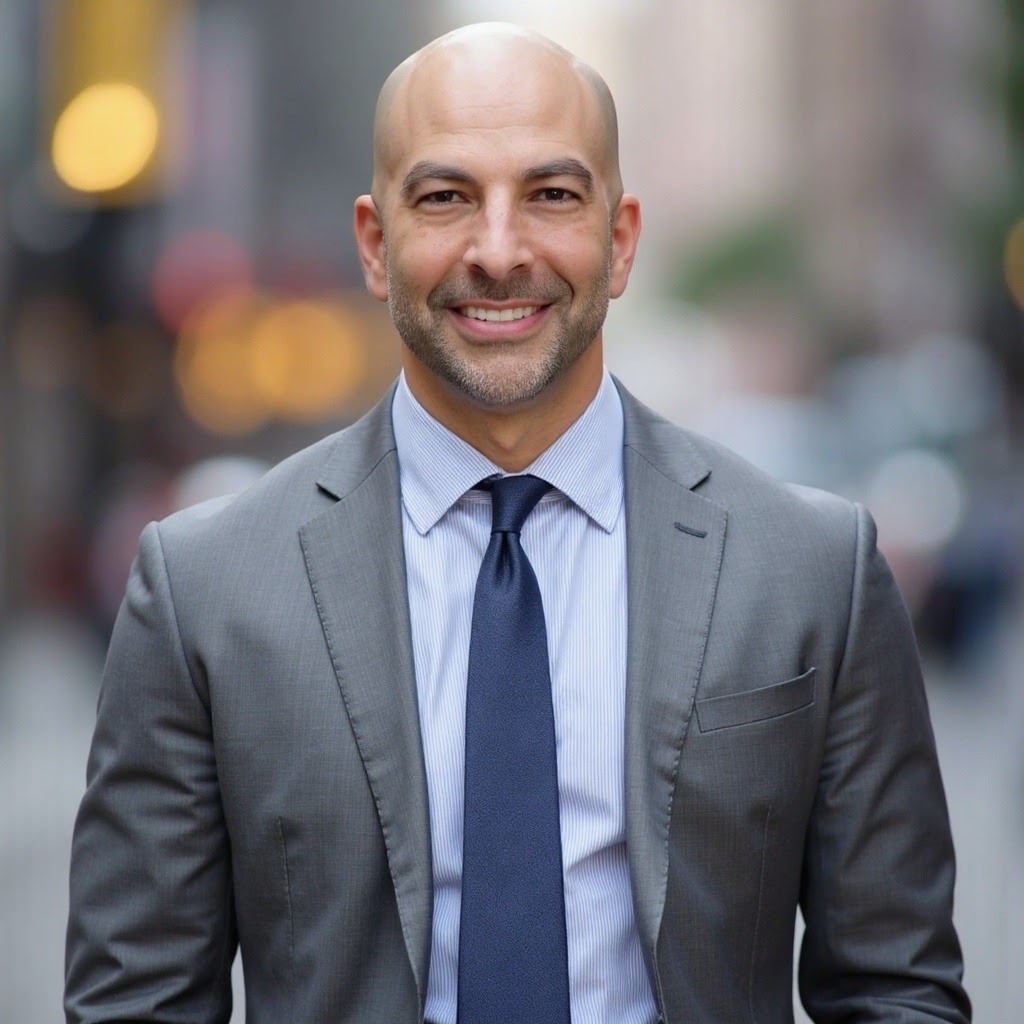
Lloyd Klickstein uses bimagrumab as a case study for the full drug-development arc: from a list of ~7,000 unmet indications, target discovery, IND-enabling studies, Phase 1 healthy volunteers, and eventually a 507-patient Phase 2 that produced 22–23% weight loss and 45.7% fat loss when combined with semaglutide.
2
The same drug that reliably added 4–8% muscle mass in older adults failed to meaningfully improve strength or function, illustrating a core translational problem: bigger muscle does not automatically mean stronger or more functional muscle.
3
A falls-prevention drug program was abandoned because researchers could not measure falls: a pendant accelerometer detected only about 17% of real falls in nursing-home residents, despite 60 high-risk subjects and 117 captured events.
4
Lloyd's current project is cancer prevention by gently activating the ribotoxic stress response, based on the observation that sorafenib causes skin cancers by inhibiting a protective pathway.
Protocols
Concrete recipes — what, when, how much, and why
5 items
Start with an unmet clinical indication, not a target
WhatBefore choosing a molecule or mechanism, make an explicit list of unmet clinical indications and pick the medical need you want to solve; let that drive the drug format.
WhenAt the very start of a discovery program.
For whomDrug-discovery teams and translational medicine leaders.
WhyThe largest value to society comes from quantum-step treatments for indications that may not even have regulatory codes; incremental me-too drugs are easier but don't address missing therapies.
CaveatsNew indications are a heavier lift: no ICD codes, no established regulatory pathway, and everyone from physicians to payers must be educated.
Lloyd describes how he and his team built a list of about 7,000 clinical indications, grouped them into what Novartis was already doing, rare developmental disorders, and seven or eight unmet buckets such as healthy aging, ENT, renal disease, and fibrotic diseases. This unit eventually grew dozens of projects and became a monster. He personally prefers large indications because he has limited time and wants to help as many people as possible, even though smaller orphan indications can have faster regulatory paths.
Personal experience
He was part of creating the New Indication Discovery Unit at Novartis with Mark Fishman, using the 7,000-indication list to choose where the company wasn't working.
I personally start with the patients and the clinical indications. And essentially, you're looking for what's not there.
Also said
“We made a list of about 7,000 clinical indications that were unmet.”— Shows the concrete scale of the screen.
Minimize or eliminate risks early and fail fast
WhatIdentify every major risk in a program and try to reduce each one before moving into expensive development; kill programs early if a critical risk can't be managed.
WhenContinuously, especially at each checkpoint before Phase 3.
For whomDrug developers, biotech CEOs, and discovery teams.
WhyTwenty risks with 90% success odds multiply to near zero, so avoid piling up known unknowns.
CaveatsThe worst outcome is succeeding in Phase 3 and failing commercially, so both scientific and commercial risks must be de-risked.
Lloyd says every successful program has almost been killed several times. He learned that toxicity must be monitorable and reversible; serious irreversible organ toxicity is usually the end. He warns that even late-stage success can be a commercial failure if nobody needs or pays for the drug, so the risk filter is not just FDA approval but real-world value creation.
So you have to minimize risks at every step other than the ones that you sort of identify and accept.
Also said
“The worst outcome is succeeding in phase three and failing commercially.”— Expands the definition of failure beyond regulatory rejection.
Dose as high as feasible in Phase 1 without exceeding animal exposures
WhatIn first-in-human studies, escalate to the highest practical dose that stays within the exposure margins already tested in animal toxicology.
WhenDesigning Phase 1 dose-escalation cohorts.
DoseFor bimagrumab, single-dose Phase 1 went to about 50–100 mg/kg; later therapeutic dosing was 10 mg/kg monthly. This is not a recommendation for other drugs.
For whomClinical pharmacologists and Phase 1 teams.
WhyFind safety and tolerability problems early; for antibodies, off-target adverse effects are uncommon, so high-dose exploration is usually feasible.
CaveatsMust also stay below tested exposure to impurities and contaminants in the manufactured antibody; volume and mass limits apply. For oncology drugs, toxicity may exceed this margin because medical need is so high.
Lloyd explains he likes to dose as high as possible to understand human tolerability while never exceeding exposures tested in animals. In bimagrumab's case, they went up as high as they could and the answer was nothing, meaning no serious adverse event attributable to overdose. The animals had been dosed weekly and exposures were intentionally higher than expected human exposures to create a safety margin. In oncology, toxic and therapeutic exposures can overlap and patients accept the risk because medical need is great.
Personal experience
We went up as high as we could because we wanted to know what would happen if people were overdosed later. And the answer was nothing.
I personally like to dose as high as we can in the first in human study to understand if there is going to be any safety or tolerability issues in people while at the same time never exceeding the exposures we've tested in animals.
Also said
“We went up as high as we could because we wanted to know what would happen if people were overdosed later. And the answer was nothing.”— Specific outcome of the bimagrumab Phase 1 high-dose strategy.
Notify WADA as soon as an abuse-potential drug shows a phenotype
WhatFor any drug that could be abused in sport, such as anabolic agents, work with the World Anti-Doping Agency to develop a screening assay early.
WhenAs soon as the drug candidate works in animal models.
For whomDrug developers of muscle, performance, or metabolic agents.
WhyPrevent black-market athletic use before the drug is widely known; WADA can then detect it in athlete samples.
Lloyd says the first thing companies do for drugs with abuse potential is work with WADA. For bimagrumab, as soon as the mouse antibody worked, they started that process, and WADA has had an assay for more than ten years. Asked whether WADA has ever caught anyone using it, he does not know.
Personal experience
We started that process as soon as we had the mouse antibody.
The first thing that any company does when they're working on a drug that has the potential for abuse is we work with Wada, the World Anti-Doping Agency, to make sure that they can screen for these things.
Also said
“They've had an assay for more than 10 years.”— Documents WADA's preparedness.
Use high-risk recurrence cohorts to test cancer prevention in Phase 2
WhatFor a prevention drug, select people with a high imminent event rate—e.g., adults 50+ with at least five prior skin cancers—so prevention can be measured in a modest Phase 2.
WhenWhen designing a cancer-prevention trial.
DoseProposed Phase 2: 100–120 patients, low dose vs high dose vs placebo.
For whomDevelopers of preventive therapeutics.
WhyPeople with at least five prior skin cancers have about a 50% chance of another within a year, making new cancer events countable in a small cohort.
CaveatsThe first measurable prevention endpoint may be limited to skin cancer; broader epithelial cancer prevention is plausible but much harder to test before approval.
Lloyd's cancer-prevention company is based on sorafenib-associated skin cancers. He explains that a Phase 2 can actually measure prevention in high-risk people because the baseline event rate is so high. For systemic cancer prevention, incidence is too rare to test in healthy people, but adjuvant prevention in high-risk patients with no evidence of disease is a possible path. The Broad Institute panel showed melanoma was the most sensitive tumor type in cell lines, so he is confident the mechanism may also treat melanoma.
Personal experience
My new company is cancer prevention; I came up with a way to turn the ribotoxic stress response on in a gentle and controlled fashion.
If we recruit a cohort of 100 or 120 of those, we would be able to test a low dose highdose placebo and actually measure cancer prevention in a phase 2 study.
Also said
“Those people have a 50% chance of having another skin cancer within a year.”— Provides the event-rate rationale.
What's new
Personal practice updates, fresh positions, predictions
7 items
Drug development is indication-first, not molecule-first
Early, after background
Lloyd starts with patients and clinical indications, not a target or a molecule; he looks for what is not there: therapies that don't exist but are needed.
Why this matters: It inverts the public image of drug discovery as random molecule-screening and explains why quantum-step therapies are rare and hard.
Background
Before Novartis's New Indication Discovery Unit, most large pharma pipelines were dominated by incremental improvements to existing drug classes; the unit generated a list of about 7,000 recognized clinical indications and bucketed them.
Lloyd separates drug discovery into incremental improvements (less frequent dosing, oral over injectable, or a better version of a known drug) and quantum-step new therapies for indications that may not even have ICD-10 codes. The industry is biased toward incremental because risk and uncertainty are low; the heavier lift requires creating awareness, a regulatory path, and eventually payer acceptance. He chose large indications for personal reasons: limited time, wants to help as many people as possible. For sarcopenia, he argues frail elderly people were a much bigger medical need than classic orphan diseases, even though orphan indications offer faster regulatory pathways.
Personal experience
As a rheumatologist, he saw frail elderly patients; he notes that if a patient had to go to a nursing home, the three-year mortality rate approached 90%. He says he mostly does large indications because of limited time to help people.
I personally start with the patients and the clinical indications. And essentially, you're looking for what's not there.
Also said
“There are a lot of serious diseases in medicine that are worse than cancer in terms of clinical outcomes”— Calls out frailty as under-treated despite mortality worse than many cancers.
“The worst outcome is succeeding in phase three and failing commercially.”— Shows commercial viability, not just approval, is the ultimate filter.
Falls are a hard clinical endpoint: the accelerometer study failed
During falls measurement segment
A team developing drugs to prevent falls in older adults built and tested a pendant accelerometer, but it detected only about 17% of real falls in nursing-home residents, forcing the program to stop.
Why this matters: Shows drug development depends on being able to measure outcomes; even with 60 high-risk subjects and 117 floor finds, the best device failed.
Background
Falls are under-ascertained clinically: only injurious falls reach physicians, patients hide falls out of fear of being moved from home, and researchers needed an objective fall count.
Lloyd designed a two-part study: first, validate the accelerometer against videotaped falls of ice skaters in Boston, then deploy it in nursing-home residents where a person found on the floor was the positive control. Funders cut the ice-skater validation, so he worked with geriatrician Lou Lipsitz and ran the nursing-home study. The device detected only 17% of real falls and had a very high false-actuation rate, so it couldn't measure falls or be used as an endpoint. They also explored Dina Katabi's RF/Wi-Fi sensing but could not use it, and ended the falls-prevention drug program.
Personal experience
He described the failed study, including 60 subjects followed for six months, 117 events, the device's 17% sensitivity, and the subsequent inability to use the MIT/Wi-Fi approach.
We had to stop our whole program for making drugs to prevent falls because we couldn't measure them.
Also said
“falls are falls are like the Supreme Court and pornography. You know, you say you know it when you see it.”— Explains the validation concept for identifying real falls.
Bimagrumab grows human muscle but not meaningful strength
During bimagrumab Phase 2 discussion
The ActRIIA/B antibody bimagrumab causes 4–8% muscle-mass gain in older adults, not the 20–30% seen in rodents, and functional gains were small—e.g., about 9 meters on six-minute walk distance.
Why this matters: A clean, on-target mechanism that is spectacular in animal models produced a disappointing Phase 2 profile in sarcopenia; this is a general lesson about translational risk.
Background
Myostatin knockout animals were famous in the 1990s; Novartis and MorphoSys developed bimagrumab to block myostatin and activins at the receptor level after data showed myostatin alone wasn't the whole story in humans.
In rodents, bimagrumab-like antibodies were more impressive than myostatin knockouts: huge muscle, stronger, faster. In humans, the mass gain was 4–8% max, with trends to better responses in males and younger adults, but strength and performance did not improve in a major way. A meta-analysis of Novartis sarcopenia studies showed a 9-meter increase in six-minute walk distance, which Lloyd doubts will prevent falls. He notes this same pattern—larger muscle without training-induced strength—occurred with IGF-1 agonists, androgen agonists, and SARMs. The biology appears substrate-dependent: more protein intake produced more muscle in a nutrition substudy.
Personal experience
As the clinical-side lead after the project moved to David Glass's group, he was involved in deciding what to measure and later helped spin the asset out of Novartis into Versanis.
So the drug reliably and predictably increases muscle size but not performance assessments in a in a major way.
Also said
“Humans get about 4 to 8% increase in muscle mass.”— Quantifies the key species difference.
“you can make muscles larger. They don't get stronger in the absence of resistance training.”— Frames bimagrumab in the same pattern as SARMs and androgens.
BELIEVE: bimagrumab plus semaglutide produces bariatric-surgery-level fat loss
During BELIEVE results discussion
In the 507-patient, 72-week BELIEVE trial, the high-dose combination of bimagrumab and semaglutide produced 22–23% body-weight loss and 45.7% fat loss—similar or superior to bariatric surgery—while preserving lean mass.
Why this matters: The data reframed bimagrumab from a failed sarcopenia drug into a potentially major obesity combination therapy, now owned by Eli Lilly.
Background
Versanis was founded in February 2021 after Novartis out-licensed bimagrumab; initial fundraising was hard because obesity was considered a drug-development wasteland until semaglutide data landed later in 2021.
Versanis repositioned to study bimagrumab on top of GLP-1 therapy, ran a full factorial 9-arm study to see dose responses and combination effects. Semaglutide was open-label because the commercial auto-injector couldn't be placebo-controlled; bimagrumab was IV. Primary endpoint was body weight, chosen for regulatory and investor reasons, though Lloyd wanted waist circumference. DEXA was done in every patient. Results: high-dose combination lost 22–23% body weight and 45.7% of starting body fat by 72 weeks. Grip strength improved only slightly. Lloyd calls this the first medical therapy with fat loss equivalent to or better than bariatric surgery.
Personal experience
After Novartis spun out bimagrumab in 2021, he was founding CEO of Versanis, raised $70M of a hoped-for $100M, later repositioned the company, ran BELIEVE, and then Eli Lilly acquired the program.
But the fat loss was 45.7% of starting body fat. Now that's what you get with beriatric surgery.
Also said
“In the highdose combination group, the body weight lost at 72 weeks was 22 23% of starting body weight.”— Primary weight-loss magnitude in the best arm.
“Every body cares about what the approval endpoint's going to be. We wanted that to be the primary endpoint.”— Explains why body weight, not waist circumference, drove the design.
Bimagrumab raises LDL about 20%, likely on-target in liver
During BELIEVE safety discussion
BELIEVE showed an unexpected ~20% LDL increase, not an off-target effect: activin receptors are expressed in the liver, and the mechanism hasn't been fully explained.
Why this matters: Illustrates that even a highly specific antibody can have on-target effects in tissues beyond the intended one, forcing a risk/benefit decision.
Background
In the Phase 2 diabetes study, bimagrumab improved A1C by about 7–8% and reduced fat mass; investors and regulators were already cautious about metabolic effects.
Lloyd says the LDL rise is a direct effect of the drug in the liver, not an off-target chemical effect. It was about 20%, and it matters because LDL predicts adverse cardiovascular endpoints. But he argues it is monitorable and treatable, which is why he would have continued into Phase 3 if Versanis had remained independent. Chris Lu, who later founded a company making ActRIIA/B antibodies, likely knows the exact biology but hasn't published it yet.
Personal experience
He was still involved with the program when BELIEVE read out and frames the LDL effect as a known and manageable risk rather than a development killer.
It's a direct effect of the drug in the liver.
Also said
“It's about 20%.”— Size of the LDL increase.
“you can monitor it and you can treat it.”— Why he regards the LDL signal as acceptable.
MTOR inhibition is probably geroprotective in humans, but effect will be modest
Later, MTOR discussion
Lloyd thinks mTORC1 inhibition probably extends healthspan in humans because the biology is highly conserved, but the effect size will be modest, and the field needs a genuinely selective mTORC1 inhibitor.
Why this matters: Cautious expert take on rapamycin/rapalogs for longevity, plus a direct challenge to intermittent-fasting extrapolation in older people.
Background
Rapamycin extends lifespan in model organisms from yeast to mice, and likely dogs; direct human lifespan trials are impractical.
mTORC1 integrates nutritional input and switches between growth and autophagy. In young rodents, fasting downregulates mTORC1; in old rodents it did not. That makes Lloyd question whether intermittent fasting will cause the same metabolic switch in older people. He notes that rapalogs are mTORC1-selective initially but downregulate mTORC2 with sustained exposure. Restore Bio tried combining a catalytic and allosteric inhibitor; other companies are trying to make a real mTORC1-selective inhibitor. He emphasizes the biology is hard to measure in healthy humans because you can't easily get liver tissue, unlike cancer trials where the pathway is highly upregulated.
Personal experience
Referenced his work at Restore Bio combining a catalytic and allosteric inhibitor to manage mTORC1 selectivity.
I think it probably will. It's highly conserved biology across evolution.
Also said
“The selectivity is the is the big challenge.”— Why rapalogs aren't clean mTORC1 inhibitors.
“It makes me call into question the whole concept of intermittent fasting in older people because I don't know if it'll do the same thing.”— Age-dependent response to fasting challenges a popular biohacking practice.
Cancer prevention by gently activating the ribotoxic stress response
Final segment
Lloyd's new company is built on the idea that sorafenib causes skin cancers because it inhibits a cancer-protective pathway; turning that pathway on more intensely may prevent multiple cancers.
Why this matters: A completely different drug-development strategy: prevention rather than treatment, and activation rather than inhibition of a stress pathway.
Background
Sorafenib, a multikinase inhibitor used in renal and hepatocellular carcinoma, causes skin cancers in about 10% of older patients. The mechanism is inhibition of a sensor kinase that triggers ribotoxic stress and cell death.
If inhibiting the pathway causes cancer, the pathway is normally protective; Lloyd's innovation is to turn it on gently and controllably. Skin cancer is nearly as common as all other cancers combined, so that is the first target. A Phase 2 could enroll 100–120 adults age 50 and older with at least five prior skin cancers, who have a 50% chance of another within a year. In a Broad Institute screen of 1,000 cancer cell lines, melanoma was by far the most sensitive tumor, which Lloyd didn't expect: mutational burden correlates but doesn't fully explain it. He still emphasizes avoiding carcinogens, treating obesity, and using sunscreen—those are not alternatives.
Personal experience
He is leading this as his new company and described the Broad Institute collaboration and the tool-compound screen.
If a drug causes cancer, it must be most likely inhibiting a cancer protective pathway.
Also said
“Since skin cancer is almost as common as all other cancers put together, we got to start there.”— Why prevention can be studied in a practical high-risk population.
“I don't know why melanomas are so sensitive, but they're enormously sensitive.”— Highlights the empirical discovery that goes beyond the original skin-cancer hypothesis.
Recommendations
Products, supplements, and tools mentioned in the episode
5 items
Avoid gray-market research-purpose-only peptides; buy only GMP-manufactured drugs
Practice
Gray-market peptides like BPC-157 are sold with no purity or sterility guarantees; GMP manufacturing is the core assurance that what's on the label is what's in the bottle.
Lloyd compares buying unregulated peptides to buying street opioids—you have no idea if there's fentanyl or baking soda in the vial. Even if the peptide is pure, the clinical data for compounds like BPC-157 are almost nonexistent: not encoded in the human genome, no known receptor, and no reproducible evidence. GMP is a major reason approved drugs cost more.
vs alternatives
Versus gray-market research suppliers, approved pharmaceutical products have inspected manufacturing, documented purity, and known clinical data; with gray-market peptides you are paying for uncertainty.
I think it's a big mistake to buy these peptides from from you know from fly by night manufacturers.
Also said
“The data to support what they do are almost non-existent.”— Even a pure gray-market peptide lacks evidence.
Eat adequate protein if you are using a muscle-anabolic or GLP-1-based weight-loss therapy
Practice
A bimagrumab nutrition substudy compared half, one-times, and up to 1.2 g/kg/day protein while treating with bimagrumab; more protein produced more muscle, and bimagrumab prevented the muscle loss seen on the half-RDA diet.
Lloyd notes this is probably not surprising, but it illustrates that drug effect can be substrate-limited. He thinks if the study had gone to 1.6 or 2 g/kg, the hypertrophy might have been larger, though it hasn't been tested. This is the kind of co-developing nutritional component that big pharma tends to miss.
vs alternatives
Versus relying on the drug alone, adding protein is a modifiable input that appeared to increase the muscle response; half-RDA caused muscle loss even with bimagrumab present.
Personal experience
He originally wanted to co-develop a nutritional supplement with bimagrumab while Novartis had a nutrition unit, but Novartis sold the unit to Nestlé and the plan died.
The more protein you ate the more muscle you built.
Also said
“Twice the RDA is only 1.2 grams per kilogram.”— Contextualizes the modest protein dose tested.
Prefer fully human antibodies over humanized antibodies for therapeutic development
Practice
For bimagrumab, the team wanted a fully human antibody to minimize immunogenicity. Humanized antibodies are mouse antibodies engineered to look more human; fully human antibodies start from human genetic material.
Lloyd says immunogenicity remains one of the biggest unknowns until you give the antibody to people. In silico MHC-binding screens can help, but they don't fully predict. He points out the first therapeutic antibodies were mouse antibodies and are still used today; antivenoms are still horse serum, which causes severe serum sickness on repeat use.
vs alternatives
Fully human antibodies are theoretically less likely to be seen as foreign than humanized mouse antibodies, although complementarity-determining regions can still create new sequences; in vitro selection doesn't fully mimic in vivo immune selection.
The best way to do it is to use fully human antibbody. Not humanized, fully human, straight up human.
Also said
“You still don't know until you do it.”— Explains the residual immunogenicity risk despite pre-screening.
Use waist circumference, not just body weight/BMI, as an obesity therapy endpoint
Practice
Lloyd wanted waist circumference, not body weight, as the primary endpoint in BELIEVE and wrote a white paper arguing waist circumference tracks clinical outcomes better than BMI.
Regulators and investors care about the registration endpoint, so body weight remained primary in BELIEVE. But DEXA and waist circumference were measured in every patient. Lloyd argues excessive focus on weight can miss the more important body-composition question: whether weight loss is fat loss or muscle loss.
vs alternatives
Waist circumference is more closely linked to important clinical outcomes than BMI or body weight; BMI changes are essentially weight changes because height does not change short-term.
Personal experience
I personally wanted waist circumference and I wrote a long white paper about this.
Waist circumference is more closely linked to important clinical outcomes than is BMI or body.
Also said
“We included DEXA in every single patient.”— Shows the body-composition data were collected despite the weight endpoint.
Run studies in countries that solve recruitment, investigator, regulatory, and cost constraints
Practice
The three biggest challenges of any clinical study are recruitment, recruitment, and recruitment; regulatory environment, experienced investigators, and cost determine country choice.
Lloyd says every country is a little different. He often likes the US and Taiwan; Australia and New Zealand are increasingly popular because of a notification rather than approval process and favorable exchange rates. Japan and China may require ethnic-sensitivity studies before large local trials; Hawaii is a convenient place to run Japanese ethnic-sensitivity studies. The FDA still requires an IND for US studies, even if foreign data exist, though you can go directly to registration studies.
vs alternatives
Australia and New Zealand offer speed and cost advantages; China has a favorable environment for investigator-initiated studies with less supporting data; Japan requires defined Japanese-origin participants.
Personal experience
I personally love doing studies in the US and Taiwan. I like to do ethnic-sensitivity studies in Hawaii.
The three biggest challenges of any clinical study are recruitment, recruitment, and recruitment.
Also said
“If you want to then do a study in the US, you have to apply for an IND just as you would if you were doing it any other time.”— Shows there is no automatic reciprocity with the FDA.
Reading is free for everyone. A free account adds the personal layer: save protocols, follow experts, and see how the other experts weigh in on this same topic.
Educational summary of the cited expert source — not medical advice. Open the source recording linked above and consult a qualified physician before acting on any protocol.