UNFUCG
DashboardSearchChatBookmarksNotificationsActivityPremiumProfile
?
Home
Search
Chat
Saved
Profile
Episode
Counterintelligence legend - the man who stood up to the Polish MAFIA - Jarosław Pieczonka "Miami"
~103 min
Episode Brief·YouTube

Counterintelligence legend - the man who stood up to the Polish MAFIA - Jarosław Pieczonka "Miami"

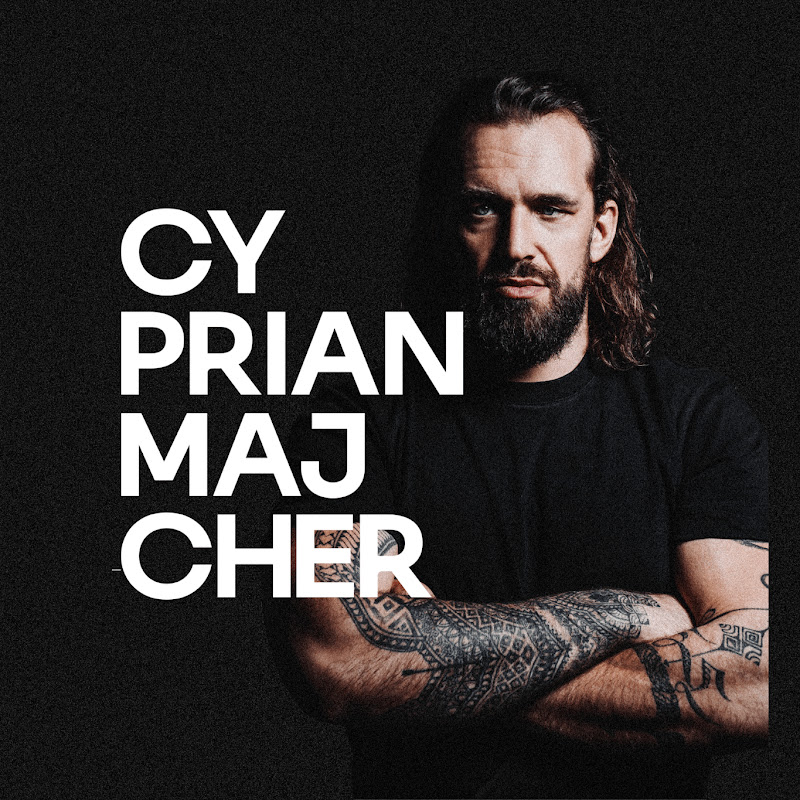
Cyprian Majcher
Watch on YouTube Add to chat My bookmarks← All sources

TL;DR

The four things you'd lose by not watching

4 items

TL;DR

The four things you'd lose by not watching

4 items
1

Jarosław Pieczonka 'Miami' was recruited by the military counterintelligence WSW during his basic military service, where he was given the pseudonym 'Czarny'; after serving in the 16th Airborne Battalion he was to be sent to the Foreign Legion as a Polish agent, but ultimately he was assigned to the IV Directorate of WSW in Gdynia.

2

In the 1990s as a policeman he used unconventional, forceful methods to fight gangsters (including the 'Wróbel' group and Nikos), arguing that 'you only talk to them from a position of strength'; he became famous for operations at the 'Max' club and 'Liliput' restaurant, where he used a weapon and conducted a psychological 'show of force'.

3

In 1998 he led the official operational investigation of Nikos, which was interrupted by his murder; he was also a key figure in the capture of the hitman 'Siergiej' and in the brutal interrogation of a little girl's murderer, who under psychophysical pressure pointed out a piece of evidence.

4

Pieczonka twice escaped death – a real M-4 military mine and an improvised liquid explosive device were planted under his house; he linked both assassination attempts to his work against the mafia.

Protocols

Concrete recipes — what, when, how much, and why

2 items

Recruitment of a secret collaborator (TW) by the services

WhatIdentification and recruitment of a soldier with exceptional mental resilience, photographic memory, and self-discipline for intelligence work
WhenDuring basic military service, before the age of 20
DoseA probationary period including basic intelligence training and test tasks in the home unit; then incorporation into professional military service as a cover
For whomYoung men with proven stress resistance, ability to keep a cool head, and innate discipline
WhySelection of individuals capable of long-term undercover work in military and civilian structures
CaveatsRecruitment is based on the principle of voluntariness – 'a slave makes no worker'. Counterintelligence officers first observe the candidate covertly, checking his history and reactions to adversity (e.g., 'fala')

Pieczonka describes the full recruitment process: (1) covert observation phase – the case officer analyzes the soldier's behavior under pressure, his contacts, past; (2) first recruitment interview – the officer demonstrates full knowledge of the candidate (in his case: 'he knew I was being pursued, that I was in deep trouble'); (3) loyalty test – the candidate is asked to admit difficulties, and against expectations he declares satisfaction with the service; (4) assignment of a pseudonym ('Czarny') and basic intelligence tasks. After completing basic service, contact is not broken – Pieczonka was ordered to join professional service and continue the tasks.

Personal experience

Pieczonka was recruited in unit 3596 PRR, in the Reconnaissance Company, Special Platoon – a diversionary unit. He sums up his first conversation with the officer: 'I assessed that he knew everything about me'.

I was resistant to various kinds of stress, resilient to hardships. The officer immediately knew I was being pursued, that I was in deep trouble – and asked: 'but you really have it hard in this service', and I said no, that I was fine.

Treading on his heels – surveillance and operational investigation of Nikos

WhatA months-long intelligence operation consisting of transforming a surveillance file into a full operational investigation, including gathering information from agents, conducting operational games, and preparing evidence to imprison the mafia leader
WhenFrom 1998, until the murder of Skotarczak on April 24, 1998
DoseA continuous, months-long operation prematurely ended by the target's death
For whomLeaders of organized crime groups against whom classic methods are ineffective
WhyA directive from Warsaw ordering a shift from passive observation to active collection of evidence of crimes – the goal was to press charges and convict Nikos
CaveatsThe operation did not manage to conclude procedurally – the target was shot dead during its course. Skotarczak's circle rejoiced at his death and blocked cooperation with the police

Pieczonka inherited the 'surveillance file' on Nikos from other policemen. After several months of analyzing the gathered information, his boss received a directive from Warsaw to transform it into an 'operational investigation' – i.e., an active phase aimed at collecting evidence and making an arrest. The work was interrupted by the execution in 'Las Vegas' (a brothel) on the night of April 24, 1998. Pieczonka ironically notes that the underworld rejoiced at this death and blocked any help – 'they didn't want to pass on any information to us'. Only after some time did they begin to recruit agents capable of talking.

Personal experience

Pieczonka was in the operational-investigative group for Nikos's murder. He arrived at the scene 'within minutes' after the shooting, participated in the examination of the body – 'they were inserting these plastic pins to determine the bullet holes' – and helped put the body into a bag.

A directive came from Warsaw: transform the surveillance into an operational investigation – strictly work that was to consist of gathering information from agents, conducting operational games, to simply lock him up. But we didn't make it, because on April 24, '98, a sentence was carried out on him in a brothel in Las Vegas.

What's new

Personal practice updates, fresh positions, predictions

3 items

The interrupted Foreign Legion agent project

00:26:00 – 00:28:00

In 1988, the military counterintelligence was preparing Pieczonka to go to the Foreign Legion, where he was to become a Polish agent in its structures – the project was halted by a decision of the head of WSW just before implementation.

Why this matters: Reveals the existence of a bold project to penetrate Western military formations by Polish military counterintelligence at the end of the PRL, before it was abandoned for political reasons.

Background

It was a 'new project' of the WSW aimed at placing an agent capable of long-term action in the structures of a Western mercenary army.

Personal experience

Pieczonka agreed to this mission. He underwent individual training conducted by counterintelligence officers, preparing to infiltrate the Legion. At the end of 1988, the head of the Military Internal Service changed the decision – instead of France, he was assigned to the IV Directorate of WSW in Gdynia for Navy affairs. As he himself ironically comments: 'counterintelligence operates several, a dozen or so years ahead'.

I was supposed to enlist there, if I had entered, I was to be a Polish agent in the structures of the Foreign Legion – it was a new project at the time, the Polish services were implementing such a project.

Qualification of 'fala' as preparatory training

00:17:00 – 00:22:00

Pieczonka claims that 'fala' in the army is necessary and trains toughness, while distinguishing it from the pathological 'sadistic fala' he himself experienced – beating, pouring water, throwing out of bed.

Why this matters: A controversial assessment from the perspective of a counterintelligence officer: forced hierarchization in the army as a positive, hardening mechanism, despite personal traumas.

Background

Pieczonka served in the diversionary unit 3596 in Lębork at the turn of the 1980s. There he experienced the 'sadistic' variety of fala from drunk soldiers of the older year.

He distinguishes two phenomena: (1) 'ordinary fala' – hierarchy, customs, group pressure that everyone goes through and that builds mental resilience; (2) 'sadistic fala' – drunk soldiers dragging younger ones out of beds, pouring cold water, beating. Pieczonka, despite personal harm, bears no grudge: 'they prepared me for a tough, uncompromising professional life, which they had no idea about'. He met his former tormentors after 30 years – one of them went to a psychologist before the meeting and cried, not knowing what to expect. Pieczonka received them without revenge, even though as a policeman he could have retaliated.

Personal experience

Describes the moment of meeting an old soldier years later: 'before coming to this meeting I went to a psychologist – he cried as he spoke to me, I didn't know what to say to you'. Pieczonka replied: 'why would I have done that?' His former tormentors remembered him as 'always smiling'.

I believe that 'fala' in the army is necessary and it was good – but sadistic 'fala' is reprehensible. You're sleeping, drunk soldiers from the older year grab you, throw you out of bed, pour cold water on you outside in your pajamas.

Also said
“You are not able to oppose 10 or 50 old soldiers and say that you won't do it. Everyone had to go through it.”— Explains the systemic nature of the phenomenon and the impossibility of individual resistance.

Agent affiliation of Edyta Skotarczak

01:10:00 – 01:12:00

Pieczonka reveals that Nikos's widow, Edyta Skotarczak, consciously allowed him into her circle knowing he was a policeman – however, she was not formally a qualified police source, and the relationship was based on a mutual intelligence game.

Why this matters: Corrects the media image of a 'friendly' relationship, showing that it was a conscious operational game on both sides.

Background

After Skotarczak's murder, Pieczonka was assigned to the operational-investigative group and often stayed in the widow's company. The milieu knew about his role as a policeman, yet he was allowed in.

Pieczonka categorically states: 'Edyta Skotarczak was not treated as a qualified source – this is very important. She knew who I was, the milieu knew, and they consciously allowed me into their circle.' He describes this relationship as an advanced intelligence game: 'I deceived, you deceived – the question is who deceived better'. The information obtained from her was not groundbreaking, but it provided a valuable picture of the entire milieu and the relations within it.

Personal experience

Pieczonka admits that the criminal milieu did not want to cooperate with the police at all in the matter of Nikos's murder – in fact, they rejoiced at his death. Only after some time, using various methods, did it begin to 'open up'.

Edyta Skotarczak was not treated as a qualified source – this is very important. She knew who I was, the milieu knew, and they consciously allowed me into their circle. I deceived, you deceived – the question is who deceived better.

Recommendations

Products, supplements, and tools mentioned in the episode

1 item

Learning the 'underworld' through physical presence in its environment

Practice

Pieczonka would recommend (and himself practiced) regularly visiting clubs, gyms, and restaurants frequented by the underworld – not for confrontation, but to learn its dynamics, hierarchy, and customs

In the 1990s, policemen avoided places 'reserved for the underworld'. Pieczonka consciously broke this – he went there in civilian clothes, got to know people, learned the codes of behavior. He argues: 'I learned this underworld, I wasn't afraid to learn it'. The consequence was excellent orientation in the milieu (e.g., immediate recognition of the previously unknown 'Siergiej' at the Fantom club), but also personal costs – sacrificing all free time, no family, being single. 'I devoted myself to this service – I have no family, no children, I am alone. That's how I decided in life'.

vs alternatives

The alternative was solely working 'from behind a desk' and relying on agents' reports – which gave an incomplete picture and made quick field interventions impossible.

Personal experience

Pieczonka treated this as the foundation of his craft. Thanks to this, among other things, he recognized the wanted hitman 'Siergiej' at the Fantom club, whom he previously knew only from a blurry fax – analysis of context ('who is Tomek S. sitting with?') and the group's behavior replaced his photographic memory, which failed in this case.

I had very good reconnaissance, because I learned this underworld – I wasn't afraid to learn it. I went around those places, to the gym. It cost me a lot of time, but I devoted myself to this service – I have no family, no children, I am alone.

Find Learning

Notable quotes

Lines worth pulling out — contrarian, specific, or perfectly phrased

4 items
With you, it has to be the way you treat people – like bandits. I've been saying it for a long time: this is how you will be treated.
A blunt declaration by Pieczonka directed at the Wróbel group – the quintessence of his philosophy of 'answering brutality with brutality' at a time when extortion victims were afraid to testify.
The underworld, the services, and the police – these are two worlds that do not exist without each other. They will always be, they always must coexist. You cannot eliminate one or the other. This underworld must be controlled.
A cool, realistic assessment of the nature of crime from a former counterintelligence officer – rejects the utopia of 'eliminating' the mafia in favor of a concept of control and balance, in which the special services also have their role.
How to treat a guy who extorts protection money from a restaurant owner? The guy doesn't want to pay, because it will stay with him for the rest of his life. And they enforced it in such a way that they trashed his joint – what's more, they even urinated on him.
A detailed illustration of the level of bestiality of 1990s gangs, which justified – in Pieczonka's opinion – the police's use of extra-procedural methods.
A huge mistake that I got carried away by those former policemen, that you have to buy expensive suits, expensive cars. I didn't think how it might affect other policemen. It was a total mistake.
A sincere self-reflection of a former policeman on his own 'entanglement in luxury' as an operational cover, which turned against him – shows human weakness and the mechanism of envy in the service.

Sign in to share feedback

Tell us if this brief hit the mark or missed it — feedback feeds back into the next iteration of the prompt.

Topics covered

kontrwywiad-wojskowy-wstajny-wspolpracownikfala-w-wojsku-lata-80szkolenie-pamieci-fotograficznejniekonwencjonalne-metody-policyjneprzesluchania-siłoweharacze-lata-90grupa-wroblamorderstwo-nikosiapershinglegia-cudzoziemska-agentsluzby-specjalne-a-policjaagent-w-policji-po-1990polswiatek-trojmiastozamachy-bombowe-na-policjanta
Free account

Make this library yours

Reading is free for everyone. A free account adds the personal layer: save protocols, follow experts, and see how the other experts weigh in on this same topic.

Create a free accountSign in

Where the experts disagree — weekly

One email a week: the sharpest new disagreements and protocols from the library. No spam, unsubscribe anytime.

Educational summary of the cited expert source — not medical advice. Open the source recording linked above and consult a qualified physician before acting on any protocol.