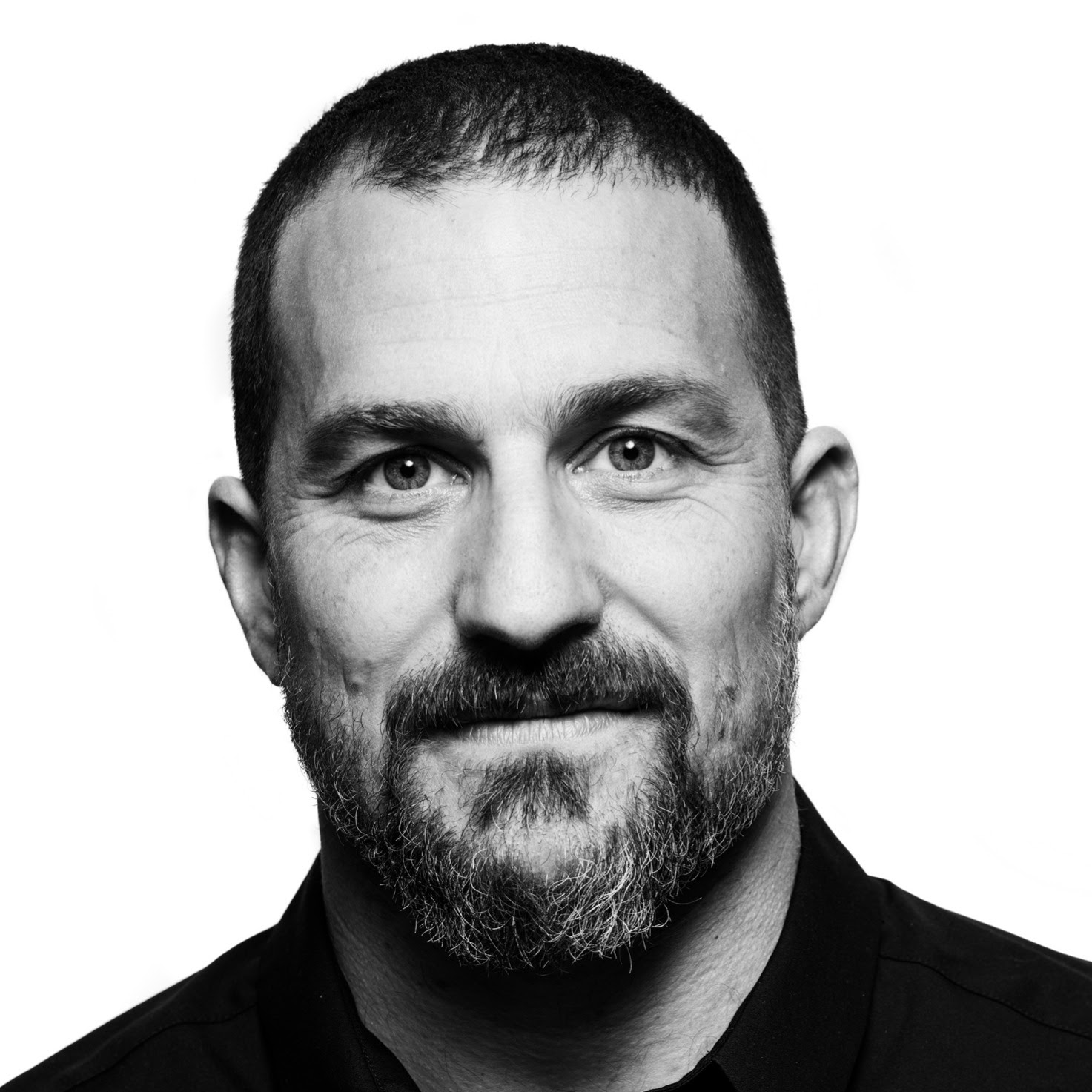
Michael Easter's '2% Rule': Choose the slightly harder option daily (stairs, carry groceries) to stack long-term health and mental resilience.
2
Perform an annual 'misogi' — a challenge with a 50/50 chance of failure — to discover that your perceived edge is further than you think.
3
Replace frictionless phone scrolling with deliberate boredom; let your mind wander without stimulation to unlock creativity.
4
Start weighted walking (rucking) with 10–30 lbs (men) or 5–20 lbs (women) for a low-injury outdoor cardio+strength workout that mimics evolutionary human movement.
Protocols
Concrete recipes — what, when, how much, and why
7 items
Daily Hard Thing Commitment
WhatEach week, write down one genuinely uncomfortable thing you will do (e.g., morning cold plunge, difficult conversation, carrying your groceries) and do it.
WhenDaily or weekly, preferably morning to 'invest' dopamine early.
DoseOne uncomfortable task per day or per week.
For whomAnyone seeking more meaning and reduced complacency.
WhyTrains the brain to associate effort with reward, raises baseline dopamine, builds mental resilience.
CaveatsStart small; avoid injury. Discomfort, not pain.
Huberman credits Easter's book for transforming his daily habits, emphasizing that small discomforts compound. Easter notes the 2% rule: only 2% of people take stairs over escalators, but those small choices create massive long-term benefits. Huberman describes doing a kettlebell carry that he hates but knows it will pay off. The practice parallels the concept of 'investing dopamine'—forcing oneself through an unpleasant but beneficial action.
Mechanism
Dopamine investment: Effort raises dopamine release in the short term but leads to higher baseline and greater sensitivity to rewards. Also engages noradrenaline for alertness.
Personal experience
Huberman: 'I make it a point each week to write down one thing that I'm going to do that is truly uncomfortable... It's transformed my mental health.'
I make it a point each week to write down one thing that I'm going to do that is truly uncomfortable.
Also said
“The Comfort Crisis made me realize that every activity available to us... can and should be viewed through the lens of whether it spends our dopamine reserves or invests them.”— Huberman's personal takeaway.
Yearly Misogi (50/50 Challenge)
WhatOnce a year, pick a physical or intellectual task so demanding that you have a genuine 50% chance of failing. Attempt it, ideally without advertising it.
WhenOnce a year, any season.
DoseSingle event (hours to days), no specific duration.
For whomAnyone feeling stuck, needing a transformative experience.
WhyReveals self-imposed ceilings and expands sense of capability, leading to lasting confidence.
CaveatsMust not risk death; choose something appropriate to fitness level; failure is acceptable and still teaches.
Easter describes Marcus Elliot's misogi: a 50/50 challenge that forces confrontation with doubt. The critical moment is pushing past the edge. The lesson: if you undersold yourself here, where else are you doing it? This becomes a mental anchor. Easter adds that even non-extreme misogis (like trying sushi) can unlock personal growth.
Mechanism
By exceeding perceived limits, it rewires self-belief and raises dopamine baseline through accomplishment, creating a reference point for future challenges.
Personal experience
Easter has done multiple misogis including hunting and long hikes; Huberman does yearly big adventures with danger and credits the concept.
You should have a 50-50 shot at completing whatever your masogi task is... You get into this moment and you think you've hit your edge... 'I've sold myself short here. Where else in my life might I be selling myself short?'
Also said
“Even if you fail, that's fine. You're still going to learn something along the path.”— Easter removes performance pressure.
“Once you decide, oh, I'm going to do this thing because, oh, this guy did it in an hour. Well, I'm going to do it in 59 minutes. That also put a ceiling on you.”— Warns against social comparison.
Weighted Walking (Rucking)
WhatLoad a backpack with weight (10–50 lbs depending on fitness) and walk outdoors for at least 20–30 minutes.
When2–3 times per week, or replace one walk/run session.
DoseStart: women 5–20 lbs, men 10–30 lbs. Gradually increase, but avoid exceeding 50 lbs or 1/3 body weight. Walk at least 20 minutes.
For whomAll fitness levels; low-impact alternative for non-runners, gym-goers wanting outdoor cross-training, older adults maintaining bone density.
WhyCombines cardio (walking) with strength (loaded spine/muscles), burns more calories per mile than walking/running, preferentially burns fat, and re-engages evolutionary carrying patterns.
CaveatsStart lighter than you think; avoid heavy loads if unable to maintain posture or have back issues. Not a replacement for dedicated resistance training but a supplement.
Easter discovered the evolutionary importance of human carrying ability during an Arctic hunt and researched it: no other mammal can carry loads long distances. He reframes rucking as 'weighted walking' for accessibility. A small Alaska study on backcountry hunters carrying heavy packs showed significant fat loss with minor muscle gain. He suggests using a backpack with a firm structure, starting very light, and gradually progressing. The injury rate is low if weight is reasonable. Huberman notes rucking forces attention to stabilizers and makes unweighted running feel lighter.
Mechanism
Load-bearing stimulates osteoblast activity (bone density), engages posterior chain and core stabilizers, increases energy expenditure due to added mass, and can improve insulin sensitivity. Carrying weight over distance mimics ancestral hunting/gathering patterns.
Personal experience
Easter's go-to is 35–40 lbs. Huberman does a 72-lb kettlebell suitcase carry daily (a variant of loaded carry) and curses Easter for it.
Humans are the only mammal that can pick up a weight and carry it a long distance.
Also said
“If you're within a reasonable amount of weight and not too heavy, the injury rate is exceedingly low.”— Safety reassurance.
“The benefit of it is that you're getting cardio stimulus because you're covering ground... but you're also getting strength work because you've loaded your skeletal system.”— Dual benefit explanation.
Morning Kettlebell Suitcase Carry (Easter Curse)
WhatImmediately upon waking, pick up a heavy kettlebell (e.g., 72 lbs) and walk back and forth with it in one hand, then switch, for a very short distance.
WhenFirst thing in the morning, before coffee.
DoseOne trip each arm, heavy weight (e.g., 72 lbs).
For whomHuberman's personal protocol; suitable for those with baseline strength and no injury, or scale down weight.
WhyForces grip strength, full-body tension, and mental toughness at the hardest moment of the day; sets a tone of doing the hard thing first.
CaveatsHeavier weights require existing grip and core strength. Warm-up may be needed for others.
Huberman describes waking up and immediately doing the carry before any caffeine; he says it hurts and he curses Easter the whole time, but he knows it will allow him to keep doing it for life and promote longevity. It's an extreme application of the daily discomfort principle.
Mechanism
Maximally recruits stabilizers, builds grip (linked to longevity), spikes cortisol in the morning beneficial for alertness, and triggers dopamine from accomplishing an aversive task.
Personal experience
Huberman: 'I have a 72lb kettlebell set in my living room. When I wake up in the morning, I pick it up and I suitcase carry it back and forth once with one arm... I'm cursing you [Easter] because it hurts. It doesn't feel good to do first thing in the morning.'
I have a 72lb kettlebell set in my living room. And when I wake up in the morning, I pick it up and I suitcase carry it back and forth once with one arm and I suitcase carry it back and forth with the other arm and the entire time I'm cursing you because it hurts.
Also said
“I told myself if I do this every single day, then I'll be able to continue to do it the rest of my life. It'll probably make me live longer.”— Huberman's rationale for daily practice.
Phone-Free Boredom Breaks
WhatSet aside periods (10–60 minutes) with no phone, music, or screens, allowing your mind to wander without stimulation.
WhenDaily, whenever boredom arises; during walks, waiting in line, or dedicated time.
DoseAt least 10 minutes, building to longer sessions.
For whomAnyone struggling with constant distraction, seeking more creativity.
WhyBoredom is an evolutionary signal to seek new activities; without screens, the brain generates creative ideas and solves problems.
CaveatsInitially uncomfortable; may trigger anxiety. Do not replace with other passive media (TV).
Easter discusses boredom as an 'evolutionary discomfort' that in the past prompted exploring new food sources; now it's quashed by the phone. He advises shifting focus from 'less phone' to 'more boredom' because simply cutting phone time but replacing it with Netflix doesn't yield benefits. He credits boredom for his best writing ideas. Huberman connects this to liminal states and attractor states, where the brain gradually deep-dives into a single focused thought train. Both agree that capturing ideas immediately (voice notes or notebook) is crucial.
Mechanism
Boredom triggers default mode network activation, allowing memory consolidation, future planning, and creative recombination of ideas. Removing external stimulation forces the brain to self-generate activity.
Personal experience
Easter gets his best ideas when walking without his phone. He uses voice notes during long hikes to capture thoughts. Huberman carries a notebook.
I think that sort of sitting with boredom and leveraging it to see where else it might take you beyond a screen can be really valuable.
Also said
“Rather than focusing on less phone, I like to think more boredom.”— Easter's shift in framing.
“I've found that a long walk where I don't take my cell phone. It's like I need that.”— Personal practice.
Deliberate Morning Light Exposure
WhatGet outside within 30 minutes of waking to expose eyes to natural light (even on cloudy days) for at least 10 minutes.
WhenEvery morning, right after waking.
Dose10 minutes minimum, ideally 30+ minutes.
For whomEveryone.
WhySets circadian rhythm, boosts cortisol and dopamine, improves mood and sleep.
CaveatsDo not wear sunglasses; avoid looking directly at the sun. Can be combined with light activity.
Huberman repeatedly emphasizes this core protocol; in this episode, he references it as part of his own daily routine and as a complement to the outdoor adventure mindset. He connects it to the broader theme of bringing outdoor elements indoors.
Mechanism
Melanopsin retinal ganglion cells detect blue-yellow contrast, signaling the suprachiasmatic nucleus to align the master clock, triggering cortisol awakening response and daytime neurotransmitter release.
Personal experience
Huberman says he has this protocol down solidly along with making the bed.
I've tried to persuade... people to get outside in the morning get sunlight in their eyes for all sorts of reasons.
Volunteer or Attend Meetings to Reset Problem Threshold
WhatOnce a week, volunteer or attend a recovery/support group meeting (even if not in recovery) to hear real-life struggles, putting your own problems in perspective.
WhenWeekly or monthly.
Dose1 hour per week.
For whomAnyone feeling overly stressed by trivial issues.
WhyCounters prevalence-induced concept change by exposing you to genuine hardships, making your daily complaints feel smaller.
CaveatsNo specific caveats mentioned.
Easter suggests that even an hour of helping people with harder lives or listening to stories at recovery meetings can recalibrate what we consider a problem. He notes that after such meetings, he walks out feeling grateful and less bothered by daily annoyances.
Mechanism
Directly resets the problem threshold by providing objective reality checks, reducing neuroticism.
Personal experience
Easter: 'I've talked to people who go to recovery meetings, including myself. You go into a meeting and you hear these stories... like that'll reset what you consider a problem pretty damn fast.'
You go into a meeting and you hear these stories from people who are at the most rock bottom moment of their life like that'll reset what you consider a problem pretty damn fast.
Also said
“I was complaining that my tax guy was asking for a lot of papers and this guy just told me a story that just blew my mind.”— Illustrates the contrast.
What's new
Personal practice updates, fresh positions, predictions
6 items
prevalence-induced concept change
As people encounter fewer objective problems, they lower their threshold for what counts as a problem, so they perceive the same number of issues despite increased comfort.
Why this matters: Explains why modern comfort leads to neuroticism and first-world problems.
Background
Psychologist David Lavari's experiments showed that when people see fewer threatening faces or unethical proposals, they start labeling borderline cases as problematic, keeping complaint counts constant.
Easter describes the study with 800 faces and research proposals, then applies it to daily life: we live in unprecedented comfort, yet we don't feel satisfied because we automatically search for problems and broaden our definition of discomfort. This creates a 'neurotic treadmill' where even minor inconveniences feel like major injustices unless we periodically recalibrate by experiencing genuine hardship. He suggests volunteering, attending recovery meetings, or doing challenging outdoor trips to reset the goalpost.
Personal experience
Easter experienced this after 33 days in the Arctic: coming back, a cramped airplane felt like pure luxury, and he felt unshakeable for a month.
As people experienced fewer and fewer problems, we don't actually become more satisfied. We simply sort of lower our threshold for what we consider a problem.
Also said
“I like to think about that as the science of first world problems.”— Easter's succinct framing of the concept.
“So when I got back from the Arctic, I'm like a zen punk, man. I'm just like, nothing's rattling me.”— Personal testimony of the recalibration effect.
dopamine spending vs investing
Huberman reframes dopamine dynamics: actions can either 'spend' dopamine (low-effort, low-reward) depleting baseline, or 'invest' it (effortful actions) yielding long-term returns and higher baseline.
Why this matters: Huberman explicitly credits Easter's work for this personal insight, a novel lens on motivation and addiction.
Background
Standard dopamine discussion focuses on peaks and troughs; this spending-vs-investing metaphor makes the distinction actionable.
Huberman explains that 'dopamine is a currency' and suggests that all day we can either spend it (leaking dopamine through low-effort, high-speed digital consumption) or invest it (doing hard things that require upfront dopamine expenditure but yield a net gain in wellbeing and motivation). Reflection and states of boredom or meditation are also forms of investing because they consolidate gains. This concept maps onto Easter's theme: modern life defaults to spending, and we must deliberately choose to invest by seeking discomfort. Huberman notes that social media scrolling provides low-level dopamine expenditure, not large hits, which drops baseline dopamine without noticeable peaks.
Personal experience
Huberman says this framework changed his daily life; he now thinks 'how can I introduce more pain to bring about more meaning' and structures his day to invest dopamine early.
We can either spend our dopamine, right? Or we can invest our dopamine... Scrolling is spending... it's the kind of spending we don't even notice that we're doing.
Also said
“There's something about the contrast between prior experience and current experience where we could say level of discomfort... the more uncomfortable something is in our prior experience, the better the next phase of life is going to feel.”— Huberman elaborates on the contrast principle that underpins investing.
frictionless foraging as danger
Any activity that removes all friction (infinite scroll, one-click betting, fast food) hacks the dopamine system to lower baseline without conscious awareness, leading to compulsive behavior.
Why this matters: Easter provides a detailed history of slot machine design to illustrate how speed and loss-disguised-as-win mechanisms were engineered, then ported to social media, dating apps, and online shopping.
Background
Casual gambling was slow and social; digitization allowed loss disguised as win, multiple bets per pull, and faster speeds. This model spread to tech.
Easter recounts the story of Cy Red, who put slot machines on screens in the 1980s, enabling programmable odds, multiple betting lines, and fast spin buttons. The critical innovation: 'losses disguised as wins' — the machine celebrates a net loss, keeping the gambler engaged. This raised average plays from 400 to 900 per hour. He draws parallels to infinite scroll on social media, dating app swiping, and online shopping spinning wheels. Huberman adds that low-friction foraging drops dopamine baseline without us realizing it. Easter's uncle refused a smartphone but can't even board a plane without one, illustrating forced technology exposure.
Personal experience
Huberman admits he enjoys gambling but feels the dangerous lift and thus limits it. Easter gambles only monthly with small amounts.
That is what casino companies call a loss disguised as a win. The thing is is when that happens to people doesn't necessarily register as a loss.
rucking as evolutionary movement
Humans uniquely evolved to carry weight over distance; rucking (weighted walking) provides low-injury cardio+strength, preferentially burns fat, and reconnects us to outdoor movement.
Why this matters: Easter researched the evolutionary basis, noting no other mammal can carry heavy loads long distances, and translates it into an accessible practice.
Background
Persistence hunting explains our running ability; carrying the kill back explains our carrying capacity. Modern life eliminated carrying babies, tools, game.
Easter describes realizing during an Arctic caribou hunt that after the kill, they had to haul 100+ lbs miles back, prompting research. He argues rucking fills a gap: gym-goers avoid running, runners avoid weights, and walking feels too easy. Adding load combines cardio and strength. A small Alaska study found backcountry hunters lost almost exclusively fat, with slight muscle gain. He recommends starting with light weight (women 5–20 lbs, men 10–30 lbs) and never exceeding 50 lbs or one-third body weight. He prefers 'walking with weight' to make it approachable. Huberman notes it forces attention to stabilizing muscles and makes subsequent runs feel lighter.
Personal experience
Easter's go-to weight is 35–40 lbs; Huberman does a daily 72-lb kettlebell suitcase carry and curses Easter each morning.
Humans are the only mammal that can pick up a weight and carry it a long distance.
Also said
“I generally my sort of go-to weight is probably 35 to 40 pounds. And I find that that's a weight where it's uncomfortable. It's challenging, but it's also not so soul crushing that I'm like, I got to end this walk.”— Easter's personal sweet spot.
“I've started to even shift my language from using the term rucking to simply saying walking with weight or weighted walking.”— Easter's effort to make it less intimidating.
three-day camping circadian reset
Just two nights of camping without artificial light can reset melatonin and cortisol rhythms, realigning sleep-wake cycles, as shown by Kenneth Wright's research.
Why this matters: Provides scientific backing for a short, accessible intervention to fix circadian disruption.
Background
Modern indoor life with constant artificial light disrupts natural light-dark cues. Wright's studies show camping rapidly shifts the circadian clock.
Huberman cites University of Colorado Boulder's Kenneth Wright, who took students camping, had them sync to sunset/sunrise without alarms, and found that two nights restored melatonin onset and cortisol awakening peaks. This demonstrates that even a weekend wilderness trip can recalibrate the body's fundamental hormonal rhythms, offering a practical alternative to rigid morning protocols for those who can't escape devices daily.
Personal experience
Easter notes he sleeps much better and longer in the wilderness, and a 40-day hike reset his sleep entirely.
What he found was that just two nights... of camping in the Colorado mountains allowed them to reset their circadian rhythms for melatonin... and for cortisol.
Also said
“After three days in the wild, you like just totally reset. You're a better human.”— Easter's report on the three-day effect from David Straer's research.
misogi as modern rite of passage
Once a year, tackle a challenge where you have a genuine 50/50 shot at failure; the point is to discover that your edge is further than you thought, revealing self-imposed limitations.
Why this matters: Combines ancient rite-of-passage concepts with a structured, repeatable practice for personal growth.
Background
Traditional societies used rites of passage to transition individuals to higher capability. Marcus Elliot, MD, invented 'misogi' as a personal practice, requiring a 50% failure probability and no fatal outcome.
Easter describes misogi as an annual event where you choose something so hard you're unsure you can finish. In the moment of doubt, you push past your perceived edge, realize you've undersold yourself, and then question where else in life you're setting limits. Even if you fail, you learn. Huberman adds that keeping it private amplifies the internal benefit, not external validation. Easter gives the example of a woman whose misogi was trying sushi, leading her to confront other unfounded fears.
Personal experience
Easter has done multiple misogis, including extreme hikes; Huberman does yearly big adventures with actual danger and credits the concept.
You get into this moment and in this moment you think you've hit your edge... But if you can kind of just keep going... you get this other moment... 'I've sold myself short here. Where else in my life might I be selling myself short?'
Also said
“Masogi is sort of almost a modern right of passage in order to teach people what they're capable of... You should have a 50-50 shot at completing whatever your masogi task is.”— Easter's definition.
“My masogi was trying sushi... It taught me what other fears do I have about things that are probably totally fine.”— Easter shares a listener's minimal viable misogi.
Recommendations
Products, supplements, and tools mentioned in the episode
3 items
The Comfort Crisis
Book
Michael Easter's book about modern comfort and its damage, and how to reclaim mental/physical robustness.
Huberman credits this book with changing his daily life, inspiring his 2% rule and daily discomfort practices. It explores evolutionary mismatch, boredom, carrying, misogi, and survival stories.
Personal experience
Huberman: 'The Comfort Crisis changed my daily life.' He started doing hard things regularly after reading it.
The comfort crisis made me realize that every activity available to us... can and should be viewed through the lens of whether it spends our dopamine reserves or invests them.
Michael Easter's newsletter named after the stat that only 2% take the stairs; features essays on discomfort, mindset, and adventure.
Easter explains the name: 2% take stairs when escalator present, so it's a metaphor to become part of the health-promoting minority. He offers selected articles free to Huberman listeners. He also runs 'Don't Die' in-person survival events for subscribers.
Personal experience
Huberman endorses the newsletter and says it changed his behavior.
My Substack is called the 2% newsletter. And I'll tell you why it's called 2%... only 2% of people take the stairs when there's an escalator available.
Vitamin, mineral, probiotic drink with prebiotics and adaptogens.
DisclosureSponsor of the podcast.
Huberman has taken since 2012, latest formula includes clinically studied probiotics, supports gut microbiome, immune system, bowel regularity. Offers free omega-3 and D3/K2 with subscription.
vs alternatives
If only one supplement, Huberman would choose AG1.
Personal experience
Huberman: 'I find it improves all aspects of my health, my energy, my focus, and I simply feel much better when I take it.'
Whenever I'm asked if I could take just one supplement, what that supplement would be, I always say AG1.
Wild-harvested venison from Maui, high protein-to-calorie ratio (21g protein, 107 cal per serving).
DisclosureSponsor of the podcast.
Huberman eats a Maui Nui burger almost daily, also consumes sticks and bone broth. It's ethically sourced, managing invasive species.
vs alternatives
Provides 1g protein per pound of body weight with fewer calories.
Personal experience
Huberman: 'I probably eat a Maui Nui venison burger pretty much every day... I eat at least one of those [sticks] a day to meet my protein requirements.'
Maui Nui venison is the most nutrient-dense and delicious red meat available.
Loose leaf and ready-to-drink yerba mate, zero sugar, new flavors (raspberry, mango, etc.).
DisclosureSponsor.
Huberman drinks yerba mate as primary caffeine source due to steady energy with no crash, plus blood sugar regulation and antioxidants. New cold brew flavors.
vs alternatives
Compared to coffee's punch, yerba mate provides a smoother rise and fall.
Personal experience
Huberman: 'If I had to pick one that's my absolute favorite, it would probably be the mango or the raspberry. But frankly, I cannot pick just one. And I end up having basically one of each every single day.'
Yerba Mate provides, in my opinion, the most even and steady rise in energy and focus with no crash.
Lines worth pulling out — contrarian, specific, or perfectly phrased
5 items
As people experienced fewer and fewer problems, we don't actually become more satisfied. We simply sort of lower our threshold for what we consider a problem.
Captures the essence of prevalence-induced concept change, a central psychological insight of the episode.
The edge tends to expand. And as the edge expands, you end up a better person.
Powerful metaphor for continuous growth through discomfort.
I've sold myself short here. Where else in my life might I be selling myself short?
The core question misogi forces you to confront.
I'm a person where if I had a good reason, what bigger thing is holding that firecracker till the last end going to give me, then I'm perfectly willing to accept that risk.
Illustrates Easter's philosophy of purposeful risk-taking vs. thrill-seeking.
There's a hell of a lot of young guys... hitting their early mid late 20s... like my life is not heading in a particular direction. And you say well what are you spending your time on? Like well I get some exercise but then a lot of YouTube a lot of video games a lot of spending out.
Directly ties the dopamine spending concept to a real-world demographic issue.
Sign in to share feedback
Tell us if this brief hit the mark or missed it — feedback feeds back into the next iteration of the prompt.
Reading is free for everyone. A free account adds the personal layer: save protocols, follow experts, and see how the other experts weigh in on this same topic.
Educational summary of the cited expert source — not medical advice. Open the source recording linked above and consult a qualified physician before acting on any protocol.