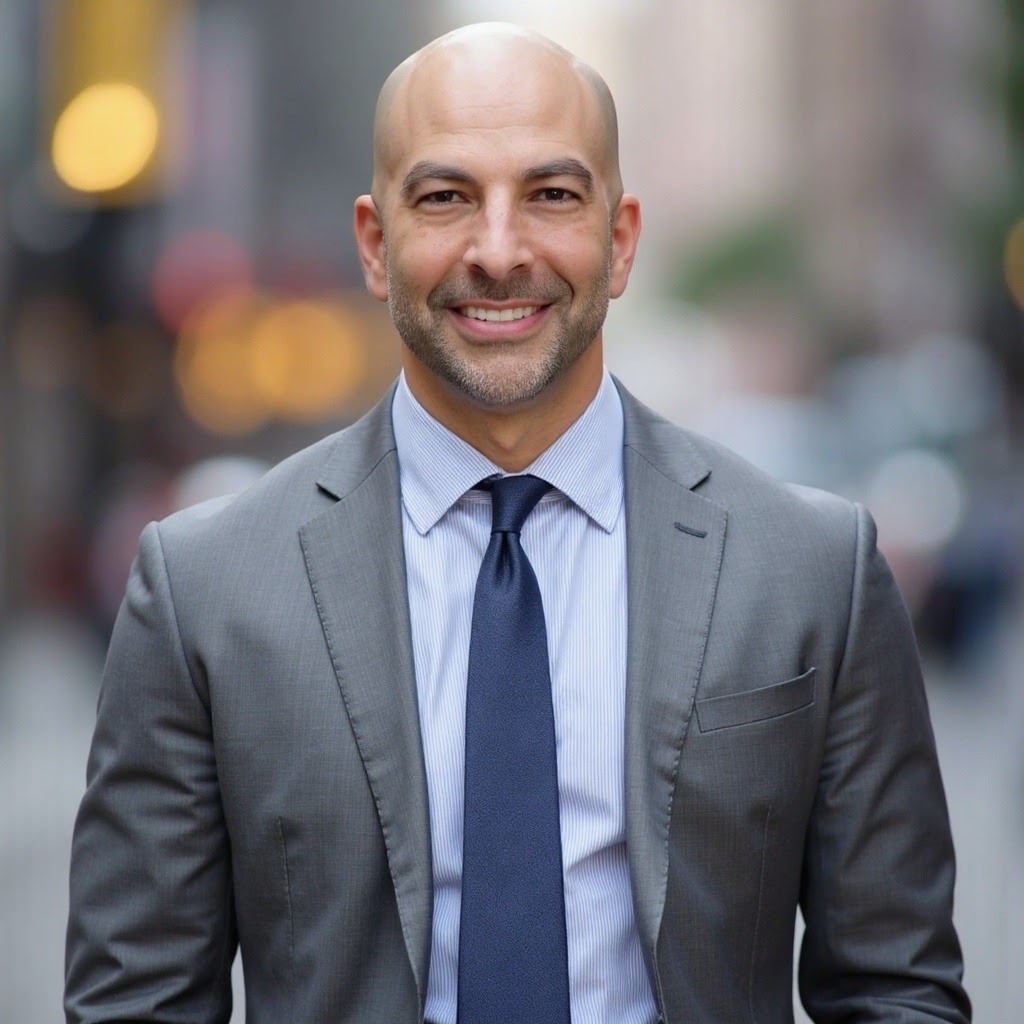
Scott Harrison spent 10 years as a New York nightclub promoter — cocaine, gambling, model girlfriends, bottle service — before a physical numbness crisis, a trip to Uruguay, and a theology book triggered a full moral reset at age 28.
2
Volunteering as a photojournalist on a hospital ship in West Africa was the complete environmental break that made quitting every addiction simultaneously stick: smoking, cocaine, gambling, pornography — all gone on the day he walked up the gangway.
3
Dirty water is the root cause of most disease in the developing world; 50% of Liberia lacked clean drinking water post-civil-war, with only two surgeons for a country of millions and one doctor per 50,000 citizens — a ratio 167× worse than the United States.
4
charity:water's 100% model — two legally separate, separately audited bank accounts where 100% of public donations reach the field and overhead is funded entirely by a separate donor class — directly attacked the core reason Americans (42% in surveys) distrust nonprofits.
Protocols
Concrete recipes — what, when, how much, and why
6 items
Complete environmental replacement for multi-addiction cessation
WhatTo quit multiple entrenched behavioral addictions simultaneously, replace the entire social environment in one step rather than attempting willpower-based abstinence within the same context. Find a physical location, community, and daily routine that makes the old behaviors structurally inaccessible and the new behaviors the default norm.
WhenWhen willpower-based or harm-reduction approaches have failed repeatedly; when the person cannot reliably separate themselves from the triggering environment on a case-by-case basis.
DoseThe environmental shift must be complete and immediate — partial separation has already failed. Harrison's was 5 days sailing to Africa with no way back.
For whomAnyone with entrenched multi-addiction patterns who has failed willpower-only approaches. Attia specifically applies this to heroin addiction: new life, new friends, new place to live.
WhyNeural pathways for the old habits remain intact as long as the environmental cues that trigger them are present. New norm modeling, combined with complete removal of access to the old behaviors, allows the brain to build new defaults rather than fight existing ones.
CaveatsRequires a compelling alternative environment to move into — the ship worked because it provided immediate purpose, community, and status. An isolating or punishing environment would not produce the same result.
Harrison describes the relief as 'almost instant' — not because nicotine cleared faster on a ship but because every moment was filled with a different, more intrinsically rewarding activity. He documented surgeries, befriended patients, wrote stories to 15,000 people, and saw immediate emotional feedback. Nicotine patch and gum helped with the chemical component, but the environment did the heavy lifting. Attia notes from Hopkins ER: 'You can't just go back to where you came from.'
Mechanism
Environmental cue removal prevents the cue-routine-reward loop from firing, while new environment provides competing positive loops. Peer-norm modeling reinforces new identity faster than solo willpower attempts.
Personal experience
Harrison: 'From that moment this is now 14 years ago I've never had another cigarette I've never touched coke or ecstasy any of that stuff I've never gambled again I haven't looked into pornographic image in 15 years — I walked so far away from my former life.'
I think the environment had a lot to do with it. I went from an environment where all that was the norm to an environment of like Christian doctors you know who were helping people get well.
The 'opposite life' audit as a personal-transformation diagnostic
WhatWhen feeling trapped in a life that no longer has meaning, explicitly map what 'the complete opposite of my current life' would look like in concrete behavioral terms. Identify the specific inversion of your dominant activities and ask whether pursuing that inversion produces more meaning than staying.
WhenAt a sustained low point where the markers of success feel hollow — collecting a model girlfriend, BMW, Rolex, while still experiencing emptiness.
DoseHarrison spent approximately two solitary weeks in rural New England and later in a French village before clarity emerged. Solitude from normal social network is required — the insight did not emerge while managing the clubs.
For whomHigh-achieving individuals experiencing persistent emptiness despite external success; anyone in a professionally successful but personally hollow phase.
WhyThe hedonic treadmill means continued accumulation of status markers produces diminishing returns. The opposite audit forces a qualitative reckoning that quantitative success metrics obscure.
Harrison's audit was stark: every dimension flipped. Instead of making people drunk, sober service. Instead of accumulating possessions, giving them away. Instead of consuming, creating. Instead of taking, giving. The specificity of the audit mattered — 'the opposite of my life would be to walk away from all of these vices and go serve others instead of yourself.' That specific formulation was actionable in a way that vague discomfort was not.
What's the clean break look like what could I do and it almost like hit me the opposite of your life would be to walk away from all of these vices and go serve others instead of yourself.
Charitable giving: fund overhead separately from programs
WhatWhen giving philanthropically, direct donations specifically toward organizational overhead (salaries, operations, technology) rather than programmatic outputs (wells, surgeries, meals). Find organizations where the operating funding is separately raised so that program donations go entirely to field impact.
WhenAny time you are structuring personal or institutional charitable giving. Particularly when you want to maximize per-dollar impact of program donations.
For whomDonors who already understand that overhead is not a dirty term. Attia and his wife switched to overhead-only donations several years prior.
WhyThe most underfunded layer of effective nonprofits is talent and operations. Programmatic dollars are easy to raise; overhead dollars are not. Directing your dollars to overhead fills the real gap.
Attia: 'It's much easier to raise money on the programmatic side — I'd much rather pay Scott's salary.' The classic mistake is checking the overhead percentage on Charity Navigator and choosing the organization with the lowest overhead — this selects against the organizations investing in their own operational capacity and talent. Harrison and Attia both reference Dan Pallotta's TED talk as the intellectual foundation for this view.
It's much easier to raise money on the programmatic side it's much easier to say give me a thousand bucks to go and build a well but my interest is well who's paying Scott's salary cuz I'd much rather pay Scott's salary.
Treating chronic illness skepticism: the idiopathic-means-doctor-otic principle
WhatWhen a patient presents with a dramatic, sudden decline from a healthy baseline that does not fit a standard diagnostic bucket, resist the psychosomatic dismissal and actively investigate environmental toxin exposure — chemical, biological, or structural.
WhenAny patient presenting with multi-system hypersensitivity, sudden immune dysregulation, or new-onset chemical sensitivity — especially if the onset correlates with a move, renovation, pesticide application, or workplace change.
For whomClinicians encountering patients with unexplained multi-system illness.
WhyCarbon monoxide, pesticide exposure, and volatile organic compounds can produce persistent immune dysregulation even after the acute exposure ends. Dismissing these cases as psychosomatic delays diagnosis by months or years and causes substantial harm.
CaveatsDiagnosis of multiple chemical sensitivity (environmental illness) requires exclusion of other causes and specialist referral.
Attia: 'People like your mom often fall through the cracks in medicine because they're viewed as crazy... my med school professor said idiopathic means probably eighty-otic — referring to the doctor, not the patient.' The Harrison case: both parents and child became ill after moving to a new house in winter with all windows closed — a classic CO exposure pattern. The mother's carboxyhemoglobin was 20-25x the upper toxic limit, yet the diagnosis took months because no one looked for it proactively. Key clinical clue: all family members affected, not just the patient.
We use this term in medicine idiopathic — idiopathic means we don't know what the cause is... he says you know what it really means is probably eighty-otic — referring to the doctor not the patient.
Visual storytelling as the fundraising and behavior-change engine
WhatDocument human transformation visually (before/after photography, video) and pair with specific individual narratives. Present both together — image without narrative lacks context; narrative without image lacks emotional charge. Set explicit asks at the end of the story.
WhenFor any nonprofit, advocacy, or persuasion campaign where you need to move people from passive awareness to active giving or behavior change.
DoseHarrison produced ~50,000 words and hundreds of photos over 12 months, emailing his 15,000-person list approximately weekly. Minimum viable version: one story, one image, one ask.
For whomNonprofit communicators, fundraisers, health advocates, anyone trying to shift behavior at scale through digital channels.
WhyCarl Jung: 'Transformation can only take place in the presence of images.' The image disrupts the audience's comfort; the story gives them a role to play. Together they produce action.
Harrison's instinct was validated by the response: a Chanel executive wrote 'I'm sitting here at Chanel headquarters and tears are streaming down my face.' The mechanism was disruption — the before/after format (four-pound tumor → normal child face) produced an undeniable proof of human possibility. Harrison raised $100,000 for Mercy Ships from his old club contacts using this mechanism at a Chelsea gallery show. He also notes the email open rates from his club list were effectively 100% — meaning the emotional charge of the content overcame the novelty penalty.
Mechanism
Visual disruption activates emotional processing; individual narrative activates empathy and attribution; explicit ask channels the activated emotion into a specific behavior.
Transformation can only take place in the presence of images and I think there was something so arresting or disrupting about these photos you know perhaps the extremity of a huge tumor and then the tumors gone.
Clean water as the highest-leverage public-health intervention in low-income countries
WhatPrioritize clean water access above hospital-based medical interventions when allocating public-health resources in regions with limited infrastructure. A functioning water point serving a village prevents the diseases that would otherwise require surgical or clinical treatment downstream.
WhenWhen designing public-health interventions in contexts with less than 50% clean water access. Also when advising donors on where to direct global-health dollars for maximum disease burden reduction.
For whomGlobal health funders, governments, NGO program designers, and clinicians practicing in or advising on low-income country contexts.
WhyDirty water causes the majority of preventable disease in the developing world. The doctor-to-population ratios in post-conflict states (1:50,000 in Liberia vs. 1:300 in the US) make hospital-based care structurally inadequate regardless of funding.
Dr. Gary Parker's formulation to Harrison: 'If you really cared about impacting the health of millions you would make sure everybody had clean water... go make sure everybody in this country has clean water, maybe we wouldn't even need to pull into port here.' The insight is systems-level: a hospital ship in Liberia was treating downstream consequences of upstream water insecurity. Harrison observed that many of the facial diseases being treated surgically — noma, parasitic tumors — had direct waterborne or sanitation-related etiologies.
If you really cared about impacting the health of millions or the time of billion people you would make sure everybody had clean water and that would be a great issue you know you want to play doctor to the world.
What's new
Personal practice updates, fresh positions, predictions
7 items
Radical environmental substitution as the mechanism of addiction cessation
~3 h 10 min
Harrison did not taper or treat individual addictions; he replaced the entire environment in one step. Walking onto the hospital ship in Tenerife and sailing away ended 10 years of smoking (up to 60 cigarettes/day), cocaine, ecstasy, ketamine, gambling, and pornography simultaneously.
Why this matters: Runs counter to the conventional harm-reduction / one-habit-at-a-time approach. Attia's clinical commentary confirms the principle: kicking heroin requires a new life, new friends, new place to live — not willpower applied to the old context.
Background
Harrison had previously tried to quit smoking multiple times using Nicorette and patches while still working in the same club environment, always relapsing. The failure mode was environment, not chemistry.
Attia draws the direct parallel from his Hopkins ER experience with IV heroin users: 'You can't just go back to where you came from.' The ship worked because the new norm — Christian doctors, early mornings, surgeries, saving lives — was so viscerally different and rewarding that it occupied all the cognitive and emotional space the old vices had held. Harrison says the relief came 'almost instantly' because he was 'so busy in a different direction.' The environment did the work that willpower had failed to do.
I think the environment had a lot to do with it. I went from an environment where all that was the norm to an environment of like Christian doctors you know who were helping people get well the best surgeons and nurses in the world that had given up their vacation time to use their skills in the service of others.
Also said
“Look to kick a heroin habit you need a new life you need a new group of friends you need a new place to live.”— Attia's clinical generalization of the same principle — environment replacement, not willpower, is the lever.
The 100% model: two audited bank accounts as a trust-building mechanism
~4 h 20 min
charity:water pioneered splitting donor dollars and operating overhead into two legally separate, separately audited accounts — publicly promising that 100% of public donations (including credit card fees, which the organization absorbs) reach field water projects. Operating costs are raised from a distinct 'builder' donor class.
Why this matters: At the time, 42% of Americans polled by USA Today said they did not trust charities. The structural guarantee — not just a pledge — eliminated the most common donor objection and drove $2M in first-year revenue from a couch in Soho.
Background
Inspired by Paul Tudor Jones's Robin Hood Foundation model of having a separate funder cover all overhead. Harrison took it further by also absorbing credit card processing fees and auditing the accounts separately.
Attia validates the elegance: 'What I think is elegant about the way you've done it is you've literally separated the financial stream you get audited separately — that is so brilliant.' The practical detail matters: if a donor gives $100 via American Express (3% fee), charity:water credits $97 to the field account and pulls $3 from the overhead account, so the donor's intended $100 lands. Harrison describes this as 'black and white' clarity — consistent with his self-reported discomfort with moral gray areas across every domain of his life.
What if I open up two bank accounts and I promised the public that all of the money they would ever give to charity water goes directly to fund water projects that directly help people get clean water and in bank account number two somehow I'm gonna figure how to raise all the overhead separately.
Also said
“We actually pay back that three dollars and we send your hundred dollars your intended hundred dollars to the field.”— The credit-card-fee detail shows the model is mechanically rigorous, not just aspirationally true.
Waterborne disease as the dominant cause of morbidity in post-conflict West Africa
~3 h 45 min
Harrison's mentor on the Mercy Ships hospital vessel, Dr. Gary Parker, told him that 'so much of the disease that we're seeing is caused by unsafe water and lack of sanitation and hygiene.' In Liberia post-civil war, 50% of the population lacked access to clean drinking water and was drinking from open swamps with algae, insects, and visible parasites.
Why this matters: Reframes charity:water as a public-health intervention, not a humanitarian gesture — clean water eliminates the upstream cause of the conditions the hospital ship was treating downstream.
Background
Liberia had just ended a 14-year civil war under Charles Taylor. The country had one working CT scanner for four neighboring nations and a doctor-to-patient ratio of 1:50,000.
Dr. Parker's calculus was explicit: 'If you really cared about impacting the health of millions or the time of billion people you would make sure everybody had clean water... maybe we wouldn't even need to pull into port here.' Harrison observed children drinking from swamps where 'you could actually see fish and worms' and photographed them to show medical staff who confirmed the causal link to the diseases being treated on the ship.
I learned that fifty percent of the people living in Liberia didn't have clean water to drink so half the country was drinking contaminated filthy water.
Harrison's mother was exposed to a faulty heat exchanger with carboxyhemoglobin levels 20-25x the upper toxic limit. The result was permanent destruction of her immune system — multiple chemical sensitivity to perfume, car fumes, book ink, electromagnetic radiation — requiring her to live in an isolated safe room, eat a six-day rotation of ~20 foods, and wear charcoal masks for life.
Why this matters: An extreme documented case of how a single acute toxic exposure can permanently rewire immune tolerance, presented in clinical detail by Attia. Also illustrates how medicine dismisses unexplained illness as psychosomatic.
Background
Gas company technicians had inspected the house twice and found nothing. A plumber friend eventually discovered the faulty exchanger. The family took a $1,250-$1,500 settlement.
Attia: 'People like your mom often fall through the cracks in medicine because they're viewed as crazy... we have a bad habit in medicine of dismissing patients when we don't know what's wrong and they don't fit into an obvious bucket.' The carboxyhemoglobin level was 20-25x the upper toxic limit. The long-term management protocol — baking books in the oven to outgas ink smell, washing clothes 10x in baking soda, aluminum foil on the door, hospital scrubs as the home uniform — represents an extreme environmental containment protocol that lasted decades.
My mom's immune system died so it was irreparably destroyed... from this moment effectively anything chemical begins to make her sick very sick — perfume soap car fumes the ink from books would make her sick.
Hope-based nonprofit branding as a structural alternative to shame/guilt marketing
~4 h 40 min
Harrison deliberately modeled charity:water's brand on Nike's aspirational marketing rather than the Sally Struthers guilt model. Core insight: 'giving back' implies debt and obligation, not generosity, and shame-based giving produces transactional one-time donors rather than movement members.
Why this matters: Nick Kristof's New York Times quote: 'toothpaste is being peddled with far more sophistication than all the world's life-saving causes' — frames this as a systematic market failure nonprofits perpetuate at scale.
Harrison contrasts the two models: shame-based Nike would say 'you're fat and you're lazy, once you go for a run'; actual Nike tells inspirational stories of overcoming adversity. charity:water's equivalent: 'we believe you have a mind-blowing capacity for compassion... you can end the suffering because you choose to.' The language choice matters too: 'giving back' implies the donor took something — Harrison calls this 'giving out of debt or obligation, all unhealthy things.'
I saw marketing that I didn't want any part of I saw shame and guilt and almost toxic marketing... I wanted ours to be like we believe you have a mind-blowing capacity for compassion for empathy.
Locally-led execution as the sustainability model for water projects
~4 h 55 min
Harrison excluded Western volunteers from field implementation, partnering with local NGOs who conduct drilling, construction, and community training. Donor field trips are observer/advocate visits, not hands-on labor.
Why this matters: Counters the voluntourism model common in global health, and builds sustainability into the design — local organizations remain after the foreign nonprofit moves on.
Our job would be to find the local organizations who could go and build these water projects our job would be to scale them maybe buy them more drilling rigs or trucks or help them hire the hydrologist they need but they would be the ones getting the credit.
GPS-based proof-of-impact as the second pillar of donor trust
~4 h 30 min
charity:water used $50 Garmin GPS devices to geo-locate every funded water project on Google Maps/Earth from day one, giving donors a satellite image of their specific well.
Why this matters: First-mover use of consumer GPS + early Google Maps in the nonprofit sector, directly addressing the second most common donor skepticism after overhead.
We would be able to fund a water project that helped people get clean water turn on a GPS device take a picture of the GPS take a picture of the project and then upload it and say this is proof but you'd be able to see a satellite image of your well.
Recommendations
Products, supplements, and tools mentioned in the episode
2 items
The White Man's Burden by William Easterly
Book
Harrison cites this as essential reading on what works and what does not work in international aid — the 'good and bad aid' framework. Clean water uniquely avoids the aid-failure critique.
Easterly's central argument: top-down planner aid that parachutes in solutions fails; bottom-up searcher approaches that respond to local conditions succeed. Harrison's locally-led model directly implements this framework — charity:water funds local organizations rather than deploying Western volunteers.
There's an interesting book on the subject of poverty an approach called Whiteman's burg — guy named bill easterly at NYU — that kind of talks about approaches to aid you know in good and bad aid.
Practicing the Presence of God by Brother Lawrence
Book
A short text by a 17th-century monk on surrendering oneself to service and living virtuously in the mundane. Harrison describes it as foundational to his transition.
When I got on the ship I was reading this tiny little book written by a monk called practicing the presence of God which was just this kind of idea of surrendering yourself to others and trying to live a pure and virtuous life.
Covers his full transformation from nightclub promoter to charity:water founder. All proceeds go to the organization.
DisclosureGuest's own memoir. Harrison donated the entire advance to charity:water. New York Times bestseller in its first week.
Attia read the book before recording and notes it covers considerably more detail than the podcast — specifically the stories of the 100% model coming under trial, near-insolvency moments, and individual water-project stories. Harrison describes it as both memoir and invitation: 'hopefully inspire a lot of people maybe to start their own causes maybe to give them the courage and the inspiration that no matter what they have done in their past they're probably not as bad as me.'
I just found out yesterday it's a New York Times best seller in the first week so that's fantastic... my wife was planning on that money to go towards our kids college funds but this is not the right thing to keep.
Clean drinking water nonprofit operating the 100% model. Has raised $330M+ from 1M+ donors; GPS-verified water projects across Africa, Asia, Latin America.
DisclosureHarrison is founder and CEO. Attia is a personal supporter.
For donors interested in global health impact: the structural guarantee is verifiable, not just aspirational. The proof layer — GPS coordinates and satellite imagery for every funded project — makes impact traceable. Harrison describes birthday fundraising (donors ask friends to donate instead of giving gifts) as one of the most successful donor-acquisition channels.
We're gonna bring clean drinking water to everybody on the planet okay we're gonna figure out how to do this as we go along but we are getting clean drinking water to everybody in need.
Lines worth pulling out — contrarian, specific, or perfectly phrased
7 items
I thought I was for a while because I was collecting the markers of happiness. I got the top model girlfriend, I got the BMW, I got the Rolex, and there was always an emptiness in that.
The hedonic treadmill described from the inside by someone who achieved all the external success markers by his late 20s and still experienced persistent emptiness.
From that moment this is now 14 years ago I've never had another cigarette I've never touched coke or ecstasy any of that stuff I've never gambled again I haven't looked into pornographic image in 15 years — I walked so far away from my former life.
The completeness of the behavioral transformation is unusual — most addiction literature treats these as separate interventions. Harrison quit all of them simultaneously through a single environmental shift.
Transformation can only take place in the presence of images.
Carl Jung quote cited by Harrison as the explanation for why photo journalism on Mercy Ships moved donors when text alone did not. Has direct implications for health behavior change communication.
I saw marketing that I didn't want any part of — I saw shame and guilt and almost toxic marketing... toothpaste is being peddled with far more sophistication than all the world's life-saving causes.
Nick Kristof framing cited by Harrison. Points to a systematic market failure in nonprofit communications that leaves billions in potential donations uncollected annually.
We use this term in medicine idiopathic — idiopathic means we don't know what the cause is... he says you know what it really means is probably eighty-otic — referring to the doctor not the patient.
Attia's sharp critique of medicine's habit of converting physician ignorance into a patient diagnosis. Directly relevant to the Harrison mother case where the correct toxic exposure diagnosis took months.
What if I open up two bank accounts and I promised the public that all of the money they would ever give to charity water goes directly to fund water projects... and in bank account number two somehow I'm gonna figure how to raise all the overhead separately.
The structural innovation that turned a nonprofit idea into a $330M+ organization. The elegance is in the specificity — two accounts, separately audited, not a pledge but a verifiable mechanism.
I learned that fifty percent of the people living in Liberia didn't have clean water to drink so half the country was drinking contaminated filthy water and I started taking pictures of it — children drinking from swamps with algae and bugs.
The founding observation of charity:water, stated in Harrison's own words — half a country drinking water that would visibly alarm any Western observer, with the photographic impulse that would later build the movement.
Sign in to share feedback
Tell us if this brief hit the mark or missed it — feedback feeds back into the next iteration of the prompt.
Reading is free for everyone. A free account adds the personal layer: save protocols, follow experts, and see how the other experts weigh in on this same topic.
Educational summary of the cited expert source — not medical advice. Open the source recording linked above and consult a qualified physician before acting on any protocol.