UNFUCG
DashboardSearchChatBookmarksNotificationsActivityPremiumProfile
?
Home
Search
Chat
Saved
Profile
Episode
The World's Most Dangerous Countries - What Are They Really Like? Warrior's Journeys
~97 min
Episode Brief·YouTube

The World's Most Dangerous Countries - What Are They Really Like? Warrior's Journeys

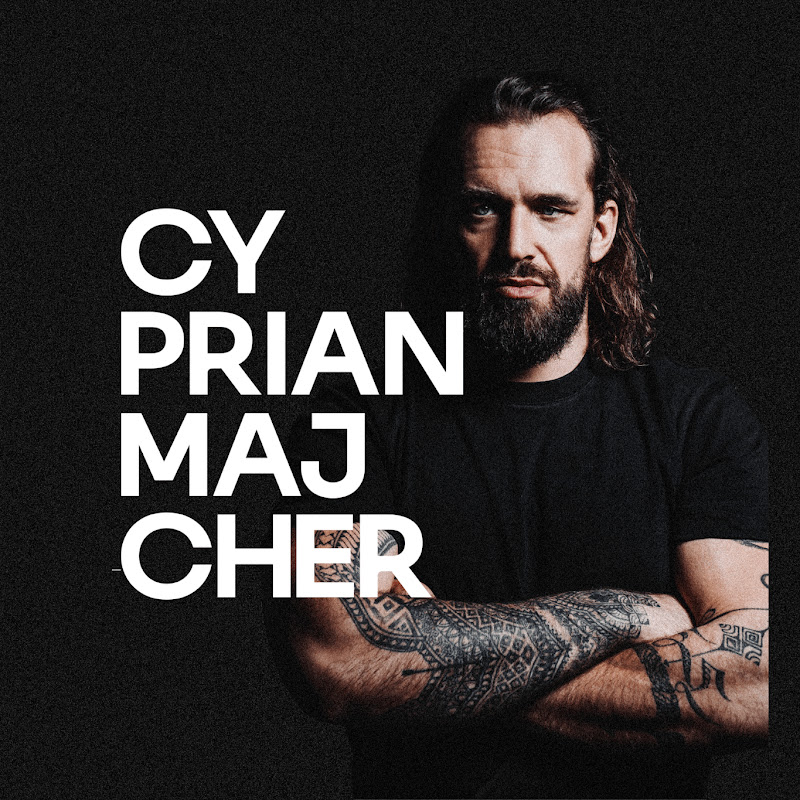
Cyprian Majcher
Watch on YouTube Add to chat My bookmarks← All sources

TL;DR

The four things you'd lose by not watching

4 items

TL;DR

The four things you'd lose by not watching

4 items
1

Cyprian Majcher has visited 157 countries, planning to visit all 193 UN states by the age of 40; the most dangerous stop was Afghanistan, where the Taliban nearly arrested him.

2

His channel 'Warrior's Journeys' was created from combining his passion for combat sports and travel – he records everything with a phone, proving that expensive equipment isn't needed to succeed on YouTube.

3

During his travels to Syria, Somalia, Yemen, and the slums of Mumbai, he encountered extreme poverty, war, and cruelty, which completely changed his perspective and taught him gratitude for life in Poland.

4

In high-risk countries, he moves with armed protection, and the expeditions themselves – like a 10-day trip to Somaliland and Djibouti for 30 thousand dollars – are financed from channel monetization, allowing him to pursue the most exotic goals.

Protocols

Concrete recipes — what, when, how much, and why

7 items

microdosing-psilocybin

WhatTaking about 0.1 g of dried psilocybin mushrooms (e.g., Golden Mushrooms) in the morning as a nootropic agent.
WhenIn the morning, also before training; may use for a month.
Doseabout 0.1 g; monthly courses.
For whomAdults, especially creators and people needing intellectual stimulation – he uses it himself.
WhyIncreases productivity, creativity, and desire to act, improves brain function, and opens up to new ideas.
CaveatsIllegal in many countries; check local laws. The author does not recommend it to uninformed people.

Majcher describes microdosing as a tool that helps him be more productive and see new possibilities. He emphasizes that many people mistakenly consider it something bad, but in his opinion, it positively develops the brain. Even during boxing training, he felt improved concentration and energy. He plans to return to regular microdosing after returning to Thailand. At the same time, he points out that similar effects can be achieved with larger doses of mushrooms, which also expand consciousness.

Mechanism

The active substance – psilocybin – acts as an agonist at 5-HT2A serotonin receptors, leading to increased neuroplasticity, better information flow in the prefrontal cortex, and reduction of the default mode network, which can unleash creativity. Majcher doesn't go into biological details but observes an increased desire to act and better productivity, which he attributes to the substance's action.

Personal experience

"I, for example, have done microdosing a few times and I think it's very good ... I was very productive ... I could even go to training and I saw even during training that I was better"

"I took 0.1, washed it down, and I could even go to training"

Also said
“"now when I return to Thailand, I will definitely do it for sure, but even with mushrooms you can get a similar effect"”— Emphasizes the intention to continue and the universality of the substance.

home-mushroom-ceremony

WhatTaking 3–4 g of psilocybin mushrooms (Golden Mushrooms) in an apartment, with music, incense, covered windows, and a soft bed, in solitude.
WhenIn the evening, when he is alone at home, maximum 2–3 times a year.
Dose3–4 g (about C mushrooms) at once; the session lasts several hours.
For whomAdults with psychedelic experience, seeking introspection.
WhyDeeper work with emotions, working through burdensome issues, making life decisions.
CaveatsRequires a safe environment (a sober person or good security), not for people in a bad mental state.

Majcher describes his ritual in detail: after cleansing the space, he lights incense, covers all windows, prepares a blanket and pillows on the floor, puts on loose clothes, loads the port (probably meaning a playlist), and sets off on an inner journey. He claims that during such sessions, he releases issues that weigh on him and makes decisions he wouldn't make in a normal state. He emphasizes that it's not done for the 'phase' or visual sensations, but for self-work. He does it sporadically, 2–3 times a year, because he believes you can't overdo it.

Personal experience

"I often do it alone at home when I have such space that no one is home ... I cover all the curtains in the house, I play some music, I light incense ... I have so many things that open up to me, that weigh on me in life, I can, you know, let go of things that don't serve me"

"I often do it alone at home when I have such space ... I have such a journey that so many things open up to me"

chewing-coca-leaves-for-altitude-sickness

WhatChewing coca leaves or taking coca candies to alleviate symptoms of altitude sickness (headache, nausea).
WhenAt altitudes above 3000 m, at the first symptoms.
DoseA few leaves or a few candies as needed.
For whomClimbers, high-altitude tourists.
WhyCoca naturally fights the symptoms of soroche (altitude sickness).
CaveatsIllegal in most countries outside South America; possession in the West carries consequences.

Majcher recounts how, during his stay in Peru at an altitude of 3000–5000 m above sea level, he was struck by acute altitude sickness: headache, malaise. He reached for coca leaf candies and quickly felt relief. He emphasizes that coca leaves are a natural remedy, not a drug – people in the West confuse them with cocaine. He also used powdered leaves, which he got from a friend as 'speech medicine,' increasing fluency of expression. This shows that coca has two faces – an altitude remedy and a nootropic.

Mechanism

Coca leaves contain alkaloids, including cocaine in minimal amounts, and other stimulating compounds that improve oxygenation and act as painkillers. Traditionally, chewing slowly releases substances into the bloodstream, giving a mild effect without intoxication.

Personal experience

"in Peru, well, you know, there in the capital you are at over 3000, my head really started hurting at night, I woke up in the morning with such altitude sickness, well, of course, candies with coca leaves and it helped"

"candies with coca leaves and it helped"

khat-chewing-in-yemen

WhatChewing fresh khat (qat) leaves, holding them in the cheek for many hours.
WhenFrom morning to evening in Yemen (and other countries of the Arabian Peninsula), a local custom.
DoseLarge amounts of leaves, chewed all day.
For whomMainly men in Yemen, a social stimulant.
WhyStimulation similar to mild cocaine, a local equivalent of coffee or stimulants.
CaveatsIllegal in Western countries, can cause insomnia (although it had the opposite effect on him).

Majcher tried khat in Yemen as an element of understanding the culture. He describes that the substance works through the salivary glands, giving a mild stimulating effect – comparable to one line of cocaine. However, what amused him most was that the locals couldn't sleep all night after khat, while he fell asleep normally after half an hour, which surprised his companions. Despite this, khat is a daily stimulant here, like coffee in Europe, and is not treated as a drug.

Personal experience

"they chew khat, these are leaves that also, first of all, they slightly... here you have to hold it all and through the salivary glands, such a substance enters that suddenly opens you up, like after one line"

"they chew khat ... on khat and they chew it all the time from morning to evening"

do-not-give-money-to-begging-children

WhatIn countries like India, you do not give money to begging children because they work for the mafia, and families will not send them to school.
WhenAlways, when you see a child on the street asking for donations.
For whomEvery traveler in poverty-stricken regions.
WhyGiving only perpetuates the practice and deprives the child of a chance for education.
CaveatsYou can instead support organized foundations building community centers and schools.

Majcher explains that in India, many children are forced to beg by gangs or their own parents, who see it as easy money. If you give them money, you sustain this system – the child will never go to school. Instead, he himself engages in fundraisers to build community centers or orphanages, which really changes the children's fate. He emphasizes the need for emotional callousness so as not to succumb to compassion in individual cases.

Personal experience

"when you see a dirty child in India who comes to you and shows you to give him money for food, you cannot give him this money. Why? Because this child works for the mafia, he begs for those ... parents. I notice that he brings money home from begging and they will not send him to school"

"you cannot give him this money. Why? Because this child works for the mafia"

Also said
“"when you see, for example, a homeless person lying somewhere and so on, well, you simply have to be totally callous"”— A broader philosophy of coping in extreme poverty.

daily-vlogging-and-discipline-on-youtube

WhatPublishing daily vlogs, constantly improving quality even with poor results, maintaining discipline despite declines.
WhenEvery day, regardless of mood and statistics.
For whomInternet creators, especially beginners.
WhyThe YouTube algorithm rewards regularity, and viewers become addicted to daily content delivery; discipline is the key to success.
CaveatsRequires a huge amount of work, can lead to burnout; Majcher mentions that he exhausted his fiancée with the pace.

Majcher describes in detail that at the beginning of his channel, no one in Poland was doing daily travel vlogs. It was his idea: a new film every day, even when financial resources were barely enough. When views dropped, he didn't give up, but analyzed what to improve – whether editing, thumbnails, or narration. Today he employs an editor (Grześ), but still oversees quality himself. He warns that many creators quit after a worse period, and he worked even harder precisely then. According to him, success doesn't come from one hit, but from consistency.

Personal experience

"on my channel, many times I was here, I was about to fall here and it was very bad, soon I was here, I fell here again, if a person who is here suddenly starts to give up and claim that it's impossible, well, no, and I, despite this, kept doing, doing, doing all the time"

"when there is a downfall, you cannot give up, because if you give up, you don't give yourself a chance"

Also said
“"no traveler was doing daily vlogs on YouTube in Polish, it worked out brilliantly. I simply got people addicted to my channel"”— A key business decision that gave him an advantage.

building-gratitude-through-travel

WhatDeliberately confronting extreme poverty and war to cultivate deep gratitude for one's own life.
WhenAs a constant life attitude, not a one-time exercise.
For whomEveryone, especially people living in wealthy countries.
WhyHelps maintain humility and appreciate everyday comforts that billions of people lack.

Majcher's entire narrative leads to the conclusion that gratitude is his greatest gain. He says that everyday things like roads, schools, or safety are a privilege, not a given. His observations: Poles' complaints about trivialities result from a lack of perspective. When he feels bad, he reminds himself of the boy from Syria or people from the slums of Mumbai and immediately changes his thinking. It's a kind of mental protocol he implemented after returning from difficult journeys.

Personal experience

"I appreciate it very much, I didn't use to appreciate it, now I appreciate everything very much because of how much poverty I saw ... I even appreciate that when there were worse times, I didn't have this money, I still had it better than, I don't know, 80 or 90 percent of people in the world"

"gratitude is very important in life"

Also said
“"Poland is truly one of the safest countries in Europe and people should appreciate it, but sitting here without going abroad, many people don't see it"”— Shows how lack of travel distorts perception.

What's new

Personal practice updates, fresh positions, predictions

6 items

microdosing-mushrooms-for-brain-development

Majcher uses microdosing of psilocybin mushrooms as a tool to increase productivity, creativity, and open the mind to new ideas.

Why this matters: He combines a controversial practice with a specific effect: better training and better travel ideas, and also plans to resume regular microdosing after returning to Thailand.

Majcher emphasizes that microdosing (about 0.1 g) gives him a clear boost of energy and desire to act, including for training. He stresses that many people criticize this method, but he himself feels positive changes in brain function and overall productivity. He used it periodically and intends to continue after returning to Thailand, seeing it as a legal (in appropriate places) way for personal development.

Personal experience

"I, for example, have done microdosing a few times and I think it's very good, and I know that many people who don't know about it will say it's bad, but it greatly developed the brain, very positively, I was very productive after doing microdosing and overall I saw that I wanted to do more. I even, you know, took 0.1 before training, washed it down, and I could even go to training and I saw even during training that I was better."

"it greatly developed the brain, very positively, I was very productive after doing microdosing and overall I saw that I wanted to do more"

Also said
“"now when I return to Thailand, I will definitely do it for sure, but even with mushrooms you can get a similar effect"”— Confirms the intention to continue microdosing.

thailand-as-the-best-country-to-live

Out of 157 visited countries, he considers Thailand the best place to live permanently, due to the low cost of living, positive energy, food, and lack of bureaucracy.

Why this matters: This is a strong declaration from a traveler who has seen ¾ of the world, yet settled there 7 years ago and does not intend to move.

Background

He previously lived in Poland, but after 14 years from his first visit to Thailand, he returned there and settled permanently.

Majcher recounts that he first went to Thailand 14 years ago and immediately fell in love with the climate – literally and metaphorically. He praises the smiling people, the possibility of cheap yet comfortable living ("you don't have to be rich to live well"), and freedom from excessive regulations and bureaucracy, which contrasts with Poland. He also appreciates that in Thailand, he doesn't worry about politics or the country's internal problems – he simply lives his own life. He is buying a house there and plans to raise his future children there.

Personal experience

"I moved to Thailand 7 years ago, I do not intend to move to any other, I have seen almost the entire 3/4 of the world, I can say, and there is no better country in the world to live than Thailand for me"

"there is no better country in the world to live than Thailand for me"

Also said
“"you can live cheaply there, well, you can live well without spending a lot of money"”— Specifies the economic aspect of the choice.
“"there, you are not interested in politics, you are not interested in internal problems, you are not interested in this, that, only you live your life, you simply live the life that you create for yourself there"”— Describes a sense of freedom and peace.

afghanistan-the-worst-country-for-the-psyche

Afghanistan under Taliban rule is a place where he almost ended up in prison, which caused him the greatest fear in his life and made him never want to return there.

Why this matters: As an experienced traveler visiting war zones and regimes, only Afghanistan broke his mental resilience and imposed a constant internal fear.

Background

The Taliban took power after the Americans withdrew and introduced strict Sharia law, under which every foreigner with a different appearance, e.g., with tattoos, falls.

Majcher recounts how in Afghanistan he was surrounded by 15 Taliban with Kalashnikovs, who thought he had a camera (in reality a microphone) and that he was a spy. They took his passport, shouted, and his local guide turned pale with fear, saying: "we are going to prison 100%." After a longer exchange, the commander returned the passport and told them to get lost. Despite this, for the next 5 days he felt constant fear – the Taliban are everywhere, checking cars, and his tattoos were considered haram. He sums up: "I will never go to Afghanistan again."

Personal experience

"The Taliban wanted to arrest me and put me in prison ... they surrounded me, 15 of them with rifles, eyes painted black, beards, their outfits, each with a Kalashnikov, and they are yelling at me ... I was so shit-scared simply that it's hard for me to talk about it now"

"Afghanistan is a country I will never return to as long as the Taliban rule"

Also said
“"I will not get out of an Afghan prison, and they were yelling like that, you know, they took my passport, everything, and so on, I knew I was in really big trouble"”— Conveys the scale of the direct threat.
“"there, for the next 5 days, I felt constant internal fear that I was in trouble, that things were not good"”— Shows the long-term psychological effect.

traveling-during-the-pandemic-as-an-advantage

During the COVID-19 pandemic, when most travelers gave up, he continued traveling, which gave him a huge advantage on YouTube and a surge in popularity.

Why this matters: He describes a specific breakthrough moment: in one month, his channel jumped from 7 thousand subscribers to 70 thousand, and viral India gave him a million views and recognition.

Background

Before the pandemic, his channel was just starting to gain an audience; the first trip around Asia ended just before the lockdowns.

Majcher recalls that after a successful trip around Asia, he returned to Thailand in February when the pandemic started. Instead of returning to Poland, he decided to stay in Phuket because he preferred to stay home in a warm country. After 4 months of helping the local community (distributing meals, as Thailand "collapsed totally"), he set off on a journey around Europe, the Balkans, South America, and the USA. He emphasizes that everywhere he heard that "it's impossible," while he flew freely – Mexico was open and people were partying without masks. He contrasts this with Poland, where a curfew and panic were introduced. In his opinion, this discipline against all odds built his position as a leader in the Polish travel industry on YouTube.

Personal experience

"I noticed that it was possible to travel despite the fact that all the time on TV, on the internet, everyone was saying it's impossible, well, I went to Europe, I traveled almost all of Europe"

"it was such a breakthrough on my channel that then, the channel which had 7, well, it had 30,000 subscribers, in one month it jumped to 70"

Also said
“"Mexico was open all the time, you know, all of Europe closed, you know, everything closed, zero parties, I land in Mexico in Cancún, and it's like nothing ever happened. A different world, all parties open, people without masks partying normally"”— Illustrates the absurdity of differences between countries, which he exploited.
“"in Poland here, it was simply, you know, like some totalitarian system was introduced, some regime, curfew, you can't go out on the street, distances, people in panic"”— Shows how much the reality in Poland differed from his experiences abroad.

recording-with-a-phone-debunking-the-equipment-myth

From the beginning of his YouTube career, he records and edits everything with a phone to prove that expensive equipment is not needed for success.

Why this matters: He himself achieved the status of a top travel creator in Poland using only an iPhone 11, which debunks the common myth about the necessity of investing in 4K cameras.

Background

When he started, many creators thought that without professional equipment, you couldn't make good content.

Majcher deliberately decided to show young people that the phone they already have in their pocket is enough. For the first two years, the entire process – from recording, through editing, to publishing – was done exclusively on an iPhone 11. He emphasizes that it gave him great freedom and authenticity, and viewers appreciated the direct style. Even now, when he can afford more expensive equipment, he still records with a phone because he wants to stay true to the original philosophy. It is also an element of his brand – "a dude from Poland with a phone" contrasting with TV crews.

Personal experience

"I record everything from start to finish with a phone because I said that I want to show young boys or young girls who are starting on YouTube that you don't need equipment for a few thousand or a dozen or so thousand to start doing it, the phone we have is enough"

"I achieved success completely, some myth that you must be equipped with Ultra 4K cameras and like the latest technology here, that's it"

Also said
“"for the first two years, I recorded with a phone, iPhone 11 I think, I recorded, edited films on this phone, and uploaded from the phone, everything was only on the phone"”— Specifies the phone model and scope of work.

change-of-perspective-thanks-to-poverty-and-war

Travels to extremely poor and war-torn countries taught him gratitude for what he has and changed his approach to life – now he appreciates safety and infrastructure in Poland much more.

Why this matters: He speaks of it as the most important lesson that permeated his entire life and influenced his humility and gratitude.

Majcher cites several shocking experiences: in Syria, a boy living in a bombed building with his mother earning 12 dollars a month, to whom he gave all his money; in Ethiopia, 12-year-old girls circumcised and sold for cows; in South Sudan, people not knowing the cardinal directions beyond the river's flow; in Mumbai, children working for the begging mafia. He emphasizes that he never complains about his worse times, because even then he had it better than 80–90% of humanity. This perspective completely displaced his previous approach – now he is happy that there are roads, schools, and safety in Poland, while others focus on complaining about trivialities.

Personal experience

"I appreciate it very much, I didn't use to appreciate it, now I appreciate everything very much because of how much poverty I saw, war I saw, people who simply live in houses made of poop and so on"

"gratitude is very important in life ... I had it better than, I don't know, 80 or 90 percent of people in the world"

Also said
“"in Syria ... a little boy comes out of one building, such a bombed one ... he says that his mother works as a teacher, that she earns 12 dollars a month ... and I have 5 dollars left for life for eight people for a month"”— A specific story that triggered the change.

Recommendations

Products, supplements, and tools mentioned in the episode

4 items

iPhone 11 (later models) for recording and editing films

Tool

Majcher emphasizes that he used only an iPhone to create vlogs and edit for the first 2 years, which allowed him to succeed without professional equipment.

In his opinion, beginner creators do not need 4K cameras, microphones, or computers – a smartphone is enough. He himself edited hundreds of films on an iPhone 11, and the effect was good enough that viewers didn't see the difference. This is a recommendation not only for equipment but also philosophical – the availability of tools does not inhibit creativity.

vs alternatives

Compared to Sony, Canon cameras, or DSLRs, the iPhone offers sufficient quality at zero additional cost; it eliminates the barrier to entry on YouTube.

Personal experience

"for the first two years, I recorded with a phone, iPhone 11 I think, I recorded, edited films on this phone, and uploaded from the phone, everything was only on the phone, and I achieved success"

"the phone we have is enough"

Also said
“"I achieved success completely, some myth that you must be equipped with Ultra 4K cameras and like the latest technology here, that's it"”— Confirms that success does not depend on equipment.
Find iPhone

Daily vlogs on YouTube (business model)

Practice

Majcher shares his own strategy that led him to success: daily publishing of vlogs, which gets viewers addicted and increases reach.

This is a recommendation for creators who want to grow quickly – regularity gives an algorithmic bonus. At the same time, he warns that it requires a huge amount of work and discipline; his fiancée couldn't keep up with the pace. Despite this, he believes that without daily vlogs, he wouldn't have achieved the status of a top travel creator in Poland.

vs alternatives

Differs from traditional travelers who publish once a week – here, daily contact creates a stronger bond with the audience.

Personal experience

"I simply got people addicted to my channel, as people started watching more and more, the money improved"

"I will do daily vlogs, no traveler was doing daily vlogs on YouTube in Polish, it worked out brilliantly"

Find Daily

Travel agency organizing trips to North Korea (cooperation in plans)

Service

In the context of a planned trip to North Korea, he stated that only two agencies have permission for this and he maintains contact with them.

"I am constantly in contact with one agency that organized trips there, because only two agencies organize there"

Find Travel

Charity fundraisers for orphanages/schools in slums

Practice

In response to powerlessness in the face of poverty, Majcher organizes fundraisers for specific goals, e.g., a community center for children from slums.

He says that this is the only form of help that really changes children's lives – instead of giving money ad hoc, he builds places of education. This is his way of keeping a clear conscience when unable to help individuals. He encourages listeners to similar actions, emphasizing that small amounts have a big impact in these countries.

vs alternatives

Unlike individual street donations, this model breaks the vicious circle of begging and gives tools to escape poverty.

Personal experience

"I was in two places and helped, I did fundraisers to build an orphanage ... we collected quite nice sums"

"this is the only help you can do, that you simply, you know, contribute to building such a community center for such children so they can go and learn"

Find Charity
Disclosed sponsorships1speaker disclosed

SFD supplements and functional food (podcast partner)

Supplement Sponsored · disclosed

During the episode, the SFD brand was mentioned twice as the podcast sponsor, with a link in the description.

DisclosureThe partner of this podcast is SFD – natural supplements inspired by nature's intelligence. The episode description contains a link and a discount code.

"the partner of this podcast is SFD supplements and functional food without sugar, all products can be found at www.psfcu.com"

Find SFD

Notable quotes

Lines worth pulling out — contrarian, specific, or perfectly phrased

6 items
"You pat a donkey on the back, you don't pat a lion on the back."
A maxim quoted by Marcin Różalski, which Majcher uses as a punchline about success and jealousy – you must not let yourself be patted, because it's a sign of weakness.
"Ping-pong Show has nothing pleasant ... the strangest things I saw was when a bird flew out of a woman's middle."
A shockingly vivid anecdote about a Thai show, which perfectly captures the surrealism of a tourist route through Bangkok.
"In Europe, they make you drink from paper straws, damn it, and there you have it so that the whole system is ... hypocrisy."
Strong criticism of Western ecological hypocrisy compared to the realities of Asia, where plastic mountains of trash don't bother anyone.
"People like to watch when someone has it worse than them ... that is also terrible."
Reflection on human nature – watching poverty drives views, which he himself notices on his channel and which worries him.
"The Taliban wanted to arrest me and put me in prison ... they surrounded me, 15 of them with rifles, eyes painted black, beards, their outfits, each with a Kalashnikov, and they are yelling at me ... I was so shit-scared simply."
The most literal and emotional statement about fear, showing the real danger of traveling in regimes.
"Afghanistan is a country I will never return to as long as the Taliban rule."
A definitive stance from the most experienced Polish traveler – a red flag for others.

Sign in to share feedback

Tell us if this brief hit the mark or missed it — feedback feeds back into the next iteration of the prompt.

Topics covered

podroze-niebezpieczneafganistan-talibowiesyria-wojnasomalia-jemenslumsy-mumbajutajlandia-zycieyoutube-biznespandemia-podrozemikrodozowanie-grzybowayahuasca-ceremonieetyczne-podrozepomoc-charytatywnawdziecznosckulturowe-szokipolska-bezpieczenstwoekologia-hipokryzjasporty-walkibudowanie-kanalu
Free account

Make this library yours

Reading is free for everyone. A free account adds the personal layer: save protocols, follow experts, and see how the other experts weigh in on this same topic.

Create a free accountSign in

Where the experts disagree — weekly

One email a week: the sharpest new disagreements and protocols from the library. No spam, unsubscribe anytime.

Educational summary of the cited expert source — not medical advice. Open the source recording linked above and consult a qualified physician before acting on any protocol.