
UNFUCG
DashboardSearchChatBookmarksNotificationsActivityPremiumProfile
?
Home
Search
Chat
Saved
Profile
Episode
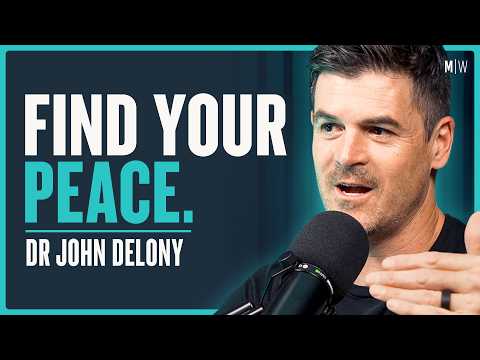
The Blueprint for Better Relationships & a Peaceful Life - Dr John Delony
~147 min
Episode Brief·YouTube

The Blueprint for Better Relationships & a Peaceful Life - Dr John Delony

Chris Williamson
Watch on YouTube Add to chat My bookmarks← All sources

TL;DR

The four things you'd lose by not watching

4 items

TL;DR

The four things you'd lose by not watching

4 items
1

True intimacy and peace in relationships require radical transparency, including sharing phone/email access and joint bank accounts, as secrecy fuels pathology.

2

Safety in a relationship means being able to express oneself fully without fear of weaponization, fostering curiosity over immediate judgment.

3

Many men struggle with a sense of worthlessness, often stemming from early life messages, leading to opting out or seeking validation in unhealthy ways; women can help by practicing admiration and acknowledging their efforts.

4

Infidelity extends beyond sexual acts to any activity (work, hobbies, money) used to hide from or avoid the co-created life with a partner.

Protocols

Concrete recipes — what, when, how much, and why

9 items

Radical Transparency in Relationships (Digital Access)

WhatShare all digital access (phone codes, email, social media passwords) with your spouse.
WhenIn a committed, ride-or-die relationship, once trust is established.
For whomMarried couples or those in deeply committed, long-term relationships.
WhySecrecy fuels pathology and erodes trust. Transparency acts as a 'guard rail' for behavior and fosters true intimacy.
CaveatsThis is distinct from privacy; some things can be private without being secret. It's not for the very beginning of a relationship.

The speaker strongly advocates for complete digital transparency between spouses, arguing that withholding access to phones, emails, and social media is 'madness' if partners are committed enough to build a life together. He distinguishes between privacy (e.g., having personal thoughts or activities) and secrecy (actively hiding information from a partner). Secrecy, he believes, is 'gasoline for pathology' in a relationship, leading to distrust and potential issues. He suggests that knowing your partner has access can serve as a 'guard rail' for behavior, preventing small, ambiguous interactions from escalating into larger problems. This level of openness is crucial for building deep trust and safety.

If you are married, your spouse should have all of the codes to your phones, email accounts, and social media accounts, and you should have theirs. Period.

Also said
“One interesting thing is the openness to give your partner your devices and email accounts and messages and social media and all that sort of stuff actually acts a little bit like a a guard rail for your behavior as well.”— Highlights the preventative aspect of transparency.
“I don't know. I think they're conflated and I think that's madness. I think it's madness.”— Emphasizes the speaker's strong conviction about the conflation of privacy and secrecy.

Joint Bank Accounts for Married Couples

WhatMarried couples should share a joint checking account.
WhenOnce married or in a deeply committed partnership.
For whomMarried couples.
WhyNot sharing finances, despite sharing DNA, indicates a lack of trust and safety. Data suggests a significant difference in divorce rates for couples with joint accounts.
CaveatsThere will be selection effects in the data, but the principle of shared resources for a shared life remains.

The speaker argues that if two people are married and share DNA, it's illogical and detrimental to their relationship not to share a bank account. He points out that studies show a significant difference in divorce rates between couples who do and do not share savings accounts, suggesting a correlation with underlying trust and commitment. He views separate finances as another form of 'mine' mentality that undermines the 'all in' approach to marriage, indicating a lack of safety and trust that needs to be addressed directly.

Dude, if you're married, share a checking account. Like they just Have you seen the difference in divorce rate between couples that do and don't share a savings account? It's madness.

Also said
“If I don't we will share DNA but we won't bank account or our social media you make 65 grand and I make 75 grand we won't share that and we have to say like well that's mine again it goes all the way back to trust and safety and if I feel like I have to say no no no that's mine well we need to put that on the table and have that conversation”— Connects financial sharing to the broader themes of trust and safety.

Practicing Admiration for Men

WhatActively look for and vocalize one thing daily that you admire or appreciate about your male partner.
WhenDaily, especially when a man is struggling with feelings of worthlessness.
For whomWomen in relationships with men, particularly those who feel their partners are struggling with worth.
WhyMen often struggle with a sense of worth and belonging. Consistent, small acts of admiration send the message 'I like you' and reinforce their value, counteracting negative internal narratives.

Drawing on Brené Brown's idea that 'what you go looking for in the world, you're sure to find,' the speaker advises women to actively seek out and acknowledge one positive thing their male partner does each day. This could be anything from working hard, coming to bed earlier, or even just a gentle touch. The goal is to send a consistent message of 'I like you' and 'I appreciate you,' which helps to counteract the deep-seated feelings of worthlessness many men carry. It's about recognizing effort and presence, even if the execution isn't perfect (e.g., 'That's not how I would have emptied the dishwasher, but he's a good man'). This practice builds safety and reinforces a man's sense of being a net positive in the relationship.

Find one thing on a day-to-day basis. Dude, I made an app for that. Just a day-to-day practice. Find one thing that you can see like, 'Hey, I really see how hard you're working last night. Thank you for that.'

Also said
“Or thinking, 'That's not how I would have emptied the dishwasher, but he's a good man.' You know what I mean? Or I I can see. Thank you for that.”— Provides a practical, relatable example of practicing admiration despite minor imperfections.

Forgiving Yourself First After Infidelity

WhatBefore attempting to forgive a partner for infidelity, focus on forgiving yourself.
WhenImmediately after discovering infidelity.
For whomIndividuals who have experienced infidelity in their relationship.
WhyMany who experience infidelity feel they either ignored their gut feelings or were completely blindsided, leading to a loss of self-trust. Re-establishing trust in oneself is a prerequisite for re-establishing trust with a partner.

The speaker emphasizes that a critical first step for anyone dealing with infidelity is to forgive themselves. He notes that victims often grapple with feelings of self-blame, either for ignoring red flags ('I didn't listen in my gut') or for being completely unaware ('I didn't even see it coming'). This internal conflict leads to a loss of self-trust, which is a massive hurdle. Before one can even consider forgiving a partner or rebuilding trust in the relationship, they must first re-establish trust in their own judgment and intuition. This self-forgiveness is not about admitting fault for the infidelity, but about healing the internal wound of self-betrayal or perceived blindness.

The place I always have people start is you got to forgive yourself. because almost every time either they'd created a world where they were so blindsided that there was a part of them way down that knew I don't know everything going on in this house or it's the opposite. I didn't listen in my gut and I knew they were spending too much time with so and so.

Also said
“The sidewalk you walk on no longer exists. There's only two people in this relationship and you have to forgive both of them and you have to give forgive yourself first.”— Highlights the dual nature of forgiveness required and the priority of self-forgiveness.
“Forgiveness is about reestablishing trust. I got to learn to trust myself again.”— Defines forgiveness in this context as a process of rebuilding trust, starting internally.

Parenting Advice: Don't Try to Make a Happy Kid Happier

WhatWhen your child is content, don't over-intervene or over-schedule to try and enhance their happiness; simply join them in their current state.
WhenWhen observing a child who is happily engaged in an activity.
For whomParents, especially new parents.
WhyOver-scheduling and over-stimulating children often leads to exhaustion and financial strain for parents, and can detract from genuine, simple joys that children remember.
Personal experience

The speaker attributes this advice to Jack Black, who told a story about his son happily playing in the mud with a stick. Black realized that trying to create a 'happier' experience (e.g., expensive outings) often resulted in exhausted, over-stimulated children and stressed parents, when the simple, free activity was already perfect.

Don't try to make a happy kid happier.

Also said
“You end up sec six hours later sugared up, exhausted, fried, you spent $300 on a thing and then you went to this. It's like, man, I should have just gotten a hose out and sat in the mud and got another stick.”— Illustrates the negative consequences of trying to 'make a happy kid happier.'

Embracing 'Different Kind of Awesome' in Parenthood

WhatRecognize that the 'awesome' of a relationship changes with parenthood; don't try to force the old dynamic into the new reality.
WhenWhen transitioning into parenthood or navigating different stages of child-rearing.
For whomCouples becoming parents or those struggling with the shift in their relationship after having children.
WhyTrying to maintain the 'old freedom' or 'old excitement' of a pre-kid relationship after having children leads to frustration and kills the new, unique joys of family life. Each stage of life has its own valid 'measurements' of awesome.
Personal experience

The speaker recalls a grad school colleague with four kids who described parenthood as 'just a different kind of awesome.' He realized his own marriage had to 'die' and be rebuilt around the reality of having children. He also shares the joy of watching his daughter at a lemonade stand, recognizing it as a new form of 'awesome' compared to his pre-kid life.

It's just a different kind of awesome. He's like you can't just, you know, swipe off the kitchen table and just get after it like at 4 in the afternoon like you used to be able to cuz you got kids running around. It's a different kind of awesome.

Also said
“That marriage is over. It's over. Awesome. Build a new one.”— Emphasizes the need to let go of the old relationship dynamic and actively build a new one.
“You just got to use the right measurement for the right season.”— Metaphorically explains the need to adapt expectations and appreciate different forms of happiness at different life stages.

Outsourcing Emotional Decisions

WhatConsult trusted, objective individuals (professionals or long-term friends) when making emotional decisions, especially if you know you are prone to emotional bias.
WhenWhen facing significant decisions that trigger strong emotions or when you recognize your own unreliability in the 'thick of it.'
For whomAnyone who recognizes a tendency to make overly emotional or biased decisions, particularly in relationships.
WhyIndividuals often make up 'remarkable stories' to justify emotional decisions or attribute negative intentions to others (fundamental attribution error). Outsourcing provides an external, less biased perspective.
Personal experience

The speaker admits he gets 'over emotional about things' and makes 'very emotional decisions.' He has learned to outsource these decisions to a few trusted people in his life, both professionally and personally, because he is 'not a reliable person in the thick of it.' He acknowledges his own 'fundamental attribution error' and the 'extraordinary' stories he can create.

I've just come to learn with this is equals one here. I I get over emotional about things and I make very emotional decisions. And so I've got a few people in my life, both professionally and long-term buddies, long-term men in my life, that I will sit down with and say, 'Here's what I'm experiencing, and here's what I'm seeing. Here's what I'm about to do.'

Also said
“I make up really remarkable stories about why somebody else is my fundamental attribution error is brutal, dude. The stories I make up are extraordinary.”— Explains the cognitive bias that makes self-judgment unreliable in emotional situations.

Being Present for Grief

WhatWhen someone is grieving, offer presence and practical support rather than trying to provide answers or asking 'let me know if you need anything.'
WhenWhen a friend or loved one is experiencing loss or deep pain.
For whomAnyone supporting a grieving individual.
WhyGrief demands a witness; it's a communal experience that cannot be 'solved' with words. Offering presence and concrete help (e.g., bringing food) is more valuable than platitudes or burdening the grieving person with coordinating help.
CaveatsAvoid common unhelpful phrases like 'God needed another angel' or 'everything happens for a reason.'
Personal experience

The speaker recounts his experience after his wife's miscarriage, discovering a 'secret club' of people who had similar experiences. He learned that presence, like a friend bringing Taco Bell and just sitting with him, was more impactful than words. He also mentions learning from West Texas guys who would 'almost come to blows' over who would pay the check, illustrating a culture of practical, unspoken support.

There's a biology to presence and it is not found in an answer. It is found in a guy coming to sitting by you and bringing half a casserole or a bag of Taco Bell and a couple of drinks and like I'll be here.

Also said
“The worst the worst text uh let me know if you need anything. Well, my kid died. I need a whole Right. Which I'm going to put the burden on you to let me know how I can take care of you.”— Highlights how 'let me know if you need anything' places an unfair burden on the grieving person.
“I'm coming over and I'll sit here. We may throw all those tacos away. I'll be right here.”— Emphasizes the value of simple, unconditional presence.

Writing a Letter to Your Future Self

WhatWrite a letter to yourself 10 years in the future, reflecting on your current goals and asking 'for what?'
WhenWhen feeling driven by external metrics of success or struggling with work-life balance.
For whomIndividuals who are 'hard charging,' 'type A,' or 'insecure overachievers' who struggle with rest and boredom.
WhyThis exercise helps to decouple identity from busyness and productivity, forcing a re-evaluation of priorities and the true purpose behind current efforts. It can reveal if current striving aligns with long-term peace.
Personal experience

The speaker found this exercise important after achieving a specific salary goal by age 35, only to feel more insecure. Writing to his 45-year-old self helped him ask 'for what?' and realize that constant striving wasn't leading to peace. He acknowledges that resting and being bored will feel painful initially, but it's a necessary step to re-evaluate priorities.

An important exercise for me was writing a letter to myself 10 years from now and it was that for what? So, you're here and you got this thing and that was an important exhale.

Also said
“When you start decoupling yourself from how busy you are as a as a an identity, you just have to know it's going to be painful. Being bored is going to feel like feel painful and that's okay.”— Acknowledges the difficulty and discomfort of shifting away from a busy identity.

What's new

Personal practice updates, fresh positions, predictions

7 items

Privacy vs. Secrecy in Relationships

0:00

The conflation of privacy and secrecy is a major issue in relationships, with the speaker advocating for complete transparency, especially with digital access.

Why this matters: This is a strong, contrarian stance against the common desire for digital privacy within committed relationships.

Background

The speaker initially posted on social media that spouses should have access to each other's phone, email, and social media accounts, which was met with significant backlash.

The speaker argues that if two people are committed enough to create a human together, withholding access to digital accounts (phones, emails, social media) is 'madness.' He differentiates between privacy (e.g., going for a run alone) and secrecy (hiding information from a partner). Secrecy, he contends, acts as 'gasoline for pathology' in a relationship, fueling distrust and potential issues. He believes that full transparency, while potentially uncomfortable, acts as a 'guard rail' for behavior, preventing small indiscretions from escalating.

Personal experience

The speaker recounts the negative response to his social media post advocating for this transparency. He also shares that his wife knows he doesn't open her text threads from college roommates, not because they are secret, but because there's trust, and some things are private without being hidden.

If you will create a human with somebody but you won't give them the code to your phone, I can't think of anything more insane. That's insane.

Also said
“the the idea that um privacy and secrecy are the same thing. They've been conflated and I think it's madness.”— Highlights the core issue of misunderstanding these two concepts.
“One interesting thing is the openness to give your partner your devices and email accounts and messages and social media and all that sort of stuff actually acts a little bit like a a guard rail for your behavior as well.”— Explains a practical benefit of radical transparency.

The 'All In' Relationship Philosophy

5:00

True commitment in a relationship means being 'all in,' risking vulnerability and potential hurt for the benefits of being fully seen and known, rather than hedging or holding back.

Why this matters: This concept challenges the common tendency to protect oneself in relationships, advocating for complete emotional investment.

The speaker posits that many people desire the benefits of a deeply connected, 'fully anchored' partnership—being fully seen, known, and celebrated—but are unwilling to put 'both feet in the boat' by being completely vulnerable. This hedging, often a result of past traumas or fear of getting hurt, prevents the relationship from reaching its full potential. He compares it to wanting to get in shape but not wanting to diet; you can't have one without the other. Being 'all in' means risking significant hurt, but it's the only way to achieve profound intimacy and avoid the internal conflict of holding back a part of oneself.

I want to have the benefits of a fully anchored partner, but I don't want to put all of myself on the table. I don't want to put both feet in that boat. And you can't have one without the other.

Also said
“If you are not allin, there's always this thing in the back that said, well, you know, I wasn't rejected because that wasn't me. That was just 60% me, 90% me, but 10% was on my career, 10% was on my friends or 10% was on that that uh orbiting.”— Illustrates the self-deception that occurs when one is not fully committed.
“It goes, by the way, you're nuts if you meet somebody and you're like, 'Hi, my name's John. Here's all my stuff.' That makes you psychotic, right? But once you cross those lines and say, 'Hey, this is for real. We're going to make a run at this.' Or, 'We're all in.'”— Clarifies that 'all in' is a stage-appropriate commitment, not immediate oversharing.

Solving for Peace

17:00

Prioritizing peace in life, whether financially, relationally, or professionally, often means making choices that might seem unconventional or 'suboptimal' by societal standards, but lead to greater tranquility.

Why this matters: This concept challenges the relentless pursuit of 'optimization' and external validation, advocating for internal calm.

The speaker introduces 'solving for peace' as a guiding principle, contrasting it with the cultural narrative of constant amplification and financial maximization. He gives the example of paying off his mortgage early, despite being criticized for not investing the money for higher returns. For him, the peace of knowing his house couldn't be taken away was more valuable than potential financial gains. This principle extends to relationships and professional life, questioning the 'for what?' behind constant striving and complexity. He suggests that many people are 'melting' under pressure, and asks what they are striving for if not peace.

Personal experience

The speaker paid off his mortgage early, receiving online abuse for not optimizing his finances. He calls this a 'sleep tax,' valuing the peace of mind over potential investment returns. He also references a conversation with Jordan Peterson about the difficulty of answering 'for what?' when constantly striving.

I put my head on my pillow knowing nobody can take my house away. And we don't have a psychology for that in this culture. It's all about amplification and it's all on paper money versus they can't take your house, dude.

Also said
“It's solving for peace relationally, solving for peace financially, solving for for peace professionally, right?”— Broadens the application of the 'solving for peace' concept beyond just finances.
“I always want to ask like, for what, man? Like, what do you for what?”— Highlights the central question driving the 'solving for peace' philosophy.

Complexity vs. Hard Work

20:00

Life's challenges are often rooted in complexity rather than just hard work; humans are built for hard work, but complexity creates fragility and overwhelm.

Why this matters: This reframing of life's difficulties offers a different lens through which to understand stress and burnout.

Background

The speaker references Adam Lane Smith's insight that 'your issue in life is not that it's too busy but that it's too complex.'

The distinction between complexity and hard work is crucial. Humans are capable of immense hard work, especially when it's linear and purposeful. However, modern life often introduces excessive complexity, creating systems that are finely tuned and lack 'wiggle room.' When one element fails in a complex system, the entire structure can collapse dramatically, as illustrated by the Suez Canal incident or a personal anecdote of a ruptured Achilles tendon disrupting a tightly scheduled move. This lack of 'margin' – financial, relational, or temporal – makes people anxious and allergic to boredom, constantly seeking to optimize every moment, which ultimately leads to fragility.

Personal experience

The host shares a detailed story about rupturing his Achilles tendon during a period of extreme personal and professional scheduling. The injury, combined with a pre-arranged house move and furniture assembly, created a 'cathedral-sized deck of cards' where one disruption threatened to collapse everything. He notes that he had to drive home from the hospital with his left foot, putting others at risk, because there was no margin in his life.

Your system is built for hard work uh not for complexity. Uh, and his argument is that you can deal with any workload as long as it's sufficiently simple and linear enough.

Also said
“I always think if one thing if one spanner gets thrown in the works there is no wiggle room in the system and in some ways that allows you to maximize your time and that's really it's thrilling to me.”— Explains the allure and danger of highly optimized, complex systems.
“I believe there is a direct link between the rise in anxiousness and margin and a lack of margin.”— Connects complexity and lack of margin to increased anxiety.

The Male Dilemma: Worth and Belonging

25:00

Many men struggle with a core question of 'Why don't people like me?' or 'Am I a burden?', stemming from early life messages that diminish their sense of worth.

Why this matters: This offers a compassionate and insightful perspective on a prevalent issue among men, moving beyond superficial explanations.

The speaker identifies the central struggle for many men as a question of worth and belonging, often manifesting as 'What did I do and why don't people like me?' or 'Why doesn't my wife like me?' This feeling is often ingrained from childhood messages like 'quit wiggling,' 'don't be so loud,' or 'don't be so aggressive,' which lead men to internalize the idea that they are a burden. This can result in men opting out of engagement, feeling unworthy of self-care (gym, therapy, education), or becoming 'domesticated' and feeling like a 'failure factory' at home. The speaker argues that if masculinity is seen as an illness, it should be treated with compassion.

Personal experience

The speaker shares an anecdote about his wife's frustration with his approach to household chores (e.g., not doing dishes until they run out). He realizes that his perception of 'work' differs, and he can feel like a burden or 'in the way' at home, which then generalizes to other areas of his life.

If I had to summarize the the male dilemma, it's like what did what did what did I do and why don't people like me?

Also said
“I don't know many men who don't want to be a net positive. I just don't know them. They just get the message at a very early age. Hey, quit wiggling in class. There's something wrong with your brain.”— Explains the origin of the feeling of worthlessness in men.
“I'm not worth going to the gym. I'm not worth going to see a therapist. I'm not worth going back to school to get more education to get a new job.”— Illustrates the practical consequences of this internalized lack of worth.

The Low Bar for Men in Relationships

33:00

The bar for men to be considered a good partner is currently very low, presenting a significant opportunity for men to excel by simply meeting basic relational needs.

Why this matters: This offers a pragmatic and encouraging perspective for men navigating modern relationships, contrasting with common narratives of male inadequacy.

Despite widespread complaints about men, the speaker argues that the actual bar for being a good partner is remarkably low. He observes that women rarely call into his show complaining about a man's income or height, but rather about a lack of commitment, romance, or fidelity. This suggests that men who simply show up, commit, and are present can stand out significantly. He tells his son that 'you can have it all' because the basic relational needs are often unmet, creating a 'blue ocean' for men willing to put in minimal effort in areas like emotional presence and fidelity.

The bar is set so [__] low, dude. It is. It's but but you know what? I think that's an important thing. The dating apps have screwed up every like no question about all that. It's a it's a train wreck. But personally, I've never had somebody call and say there's just too many short men out there.

Also said
“Look at how low the bar is, dude. I tell my son that how low the bar is.”— Emphasizes the speaker's belief in the low bar for men.
“Most of the time it's I'm with somebody. Why won't they can they just stop cheating? Can they just plug back in? How do I let them know that they're worth something?”— Highlights the common, fundamental issues women complain about, which are often basic relational needs.

Infidelity Beyond Sex

39:00

Infidelity is broadly defined as any act of hiding from the co-created life with a partner, channeling passion and vitality elsewhere to avoid shared responsibilities or intimacy.

Why this matters: This expands the traditional definition of infidelity, offering a more nuanced understanding of betrayal in relationships.

The speaker argues that the common understanding of infidelity, limited to sexual intercourse, is too narrow. He defines it as 'a place where you go to hide from the life that you've co-created with somebody.' This can include cheating with money, a golf course, work, or excessive video games/pornography. The key is whether one's passion, time, and energy are being channeled away from the relationship to avoid it, rather than enriching it. Hobbies are healthy if they enrich the individual and, by extension, the relationship, but become infidelity if used as an escape or a secret. Financial infidelity, such as hiding money or controlling a partner through finances, is also extremely common and devastating.

Personal experience

The speaker shares an anecdote about almost skipping a battle of the bands due to work, but his wife encouraged him to go, saying, 'I get a better version of you when you're playing music with your friends.' This illustrates the difference between healthy hobbies and activities used for hiding.

I think you can cheat on somebody with money. I think you can cheat on somebody with a golf course. I think you can cheat on with somebody with work. It be who's your mistress? All right. Um where are you putting your passion and your time and your efforts and your energy?

Also said
“If I hide from my family or from my romantic partner on a golf course or on a fishing boat, that's infidelity. I am I am taking my vitality and I'm channeling it elsewhere to avoid this.”— Provides concrete examples of non-sexual infidelity.
“I think infidelity is easily distilled down into intercourse with somebody else. And I think that's too narrow of a view.”— Directly challenges the conventional, narrow definition of infidelity.
Disclosed sponsorships4speaker disclosed

Eight Sleep Pod 5

Product Sponsored · disclosed

A smart mattress cover and duvet system that actively cools and heats each side of the bed, with biometric sensors and a built-in speaker.

DisclosureThe host has a partnership with Eight Sleep.

The Eight Sleep Pod 5 is presented as a comprehensive sleep solution. It offers dual-zone temperature control, allowing each side of the bed to be independently heated or cooled. The newest model includes a temperature-regulating duvet for full-body climate control. Beyond temperature, it features a built-in speaker for ambient sounds and upgraded biometric sensors that monitor nightly health checks, including disrupted breathing, abnormal heartbeats, and HRV changes. The product is clinically proven to increase quality sleep by up to an hour per night and comes with a 30-day sleep trial.

Personal experience

The host states he has been using Eight Sleep for years and 'genuinely can't imagine life without it.'

I've been using eight sleep for years and I genuinely can't imagine life without it. Having a mattress that actively cools and heats each side of the bed is a total game changer.

Find Eight

LMNT (Lemonade Salt flavor)

Supplement Sponsored · disclosed

An electrolyte drink mix, specifically highlighting the new lemonade salt flavor.

DisclosureThe host has a partnership with LMNT.

LMNT is an electrolyte supplement designed to replace sodium, potassium, and magnesium lost through sweat, without added sugar or junk. The new lemonade salt flavor is described as tart, salty, and refreshing, particularly suitable for hot weather or intense physical activity. The host emphasizes its function in supporting hydration beyond just water, especially in hot climates like Texas. It comes with an unlimited duration, no-questions-asked refund policy.

Personal experience

The host states he drinks LMNT every single day for years and finds the lemonade flavor 'unbelievably good' in the Texas heat.

Element just dropped their brand new lemonade salt flavor. And it's everything that you want on a hot day. Tart, salty, and stupidly refreshing.

Find LMNT

Function Health

Service Sponsored · disclosed

A service for comprehensive blood work analysis and health recommendations.

DisclosureThe host has a partnership with Function Health.

Function Health provides lab tests twice a year, monitoring over 100 biomarkers, including heart health, hormone levels, thyroid function, and nutrient deficiencies. They also screen for 50 types of cancer at stage one, offering five times more data than a typical annual physical. Expert physicians analyze the data, presenting it in a simple dashboard with actionable insights and recommendations. The service is positioned as a way to proactively improve health and lifespan, typically costing thousands but offered at a reduced rate through the partnership.

Personal experience

The host states he uses Function Health for his own blood panel.

Getting your blood work done is the best place to start. Which is why I partnered with Function because they run lab tests twice a year that monitor over 100 biomarkers.

Find Function

Momentous Sleep Packs

Supplement Sponsored · disclosed

A sleep supplement designed to improve sleep quality without being a 'knock you out' type of product.

DisclosureThe host has a partnership with Momentous.

Momentous Sleep Packs contain evidence-based ingredients at optimal doses to help users fall asleep faster, stay asleep through the night, and wake up feeling refreshed. The host emphasizes that they are not overloaded with melatonin, distinguishing them from typical sleep aids. He trusts Momentous for its high-quality supplements, ensuring that 'what you read on the label, it's what's in the product and absolutely nothing else.' They offer a 30-day money-back guarantee and international shipping.

Personal experience

The host takes Momentous Sleep Packs 'every single night' and trusts the brand with his sleep.

Momentous Sleep Packs, how did I miss both of those, are here to help. They're not your typical knock you out supplement overloaded with melatonin. Just the most evidence-based ingredients at perfect doses to help you fall asleep more quickly, stay asleep throughout the night, and wake up feeling more rested and revitalized in the morning.

Find Momentous

Notable quotes

Lines worth pulling out — contrarian, specific, or perfectly phrased

6 items
If you are hiding things from your spouse, let today be your independence day from secret, shame, and fear. You are worth finally taking a full deep breath.
A powerful call to action for transparency and emotional liberation in relationships.
It's way easier to avoid temptation than it is to resist it.
A concise and practical piece of wisdom applicable to self-control in various contexts, not just relationships.
Unspoken expectations are premeditated resentment.
A profound and often-cited quote that succinctly explains the root of many relational conflicts.
Being pessimistic is stupid because if it comes true, you experience it twice.
A humorous yet insightful take on the futility of excessive pessimism, attributed to Amos Tversky.
Don't sacrifice the thing you want for the thing that's supposed to get it.
A universal principle highlighting the common trap of confusing means and ends, leading to self-sabotage.
The reason that people commit to careers over relationships is that a career can't leave them, and another person can.
A stark and insightful observation about the underlying fear and control dynamics in modern life choices.

Sign in to share feedback

Tell us if this brief hit the mark or missed it — feedback feeds back into the next iteration of the prompt.

Topics covered

privacy vs secrecyrelationship transparencydigital access in marriageguard rails for behaviorall in relationshipsvulnerabilityhedging in relationshipslove islandrelationship safetytrust in relationshipsweaponizing informationunspoken expectationspremeditated resentmentcompatibilityowning choicesblame vs ownershipsolving for peacefinancial peacecomplexity vs hard worklack of margin
Free account

Make this library yours

Reading is free for everyone. A free account adds the personal layer: save protocols, follow experts, and see how the other experts weigh in on this same topic.

Create a free accountSign in

Where the experts disagree — weekly

One email a week: the sharpest new disagreements and protocols from the library. No spam, unsubscribe anytime.

Educational summary of the cited expert source — not medical advice. Open the source recording linked above and consult a qualified physician before acting on any protocol.