UNFUCG
DashboardSearchChatBookmarksNotificationsActivityPremiumProfile
?
Home
Search
Chat
Saved
Profile
Episode
Swim 170 km across the Baltic Sea! Is it possible? Bartek Kubkowski
~121 min
Episode Brief·YouTube

Swim 170 km across the Baltic Sea! Is it possible? Bartek Kubkowski

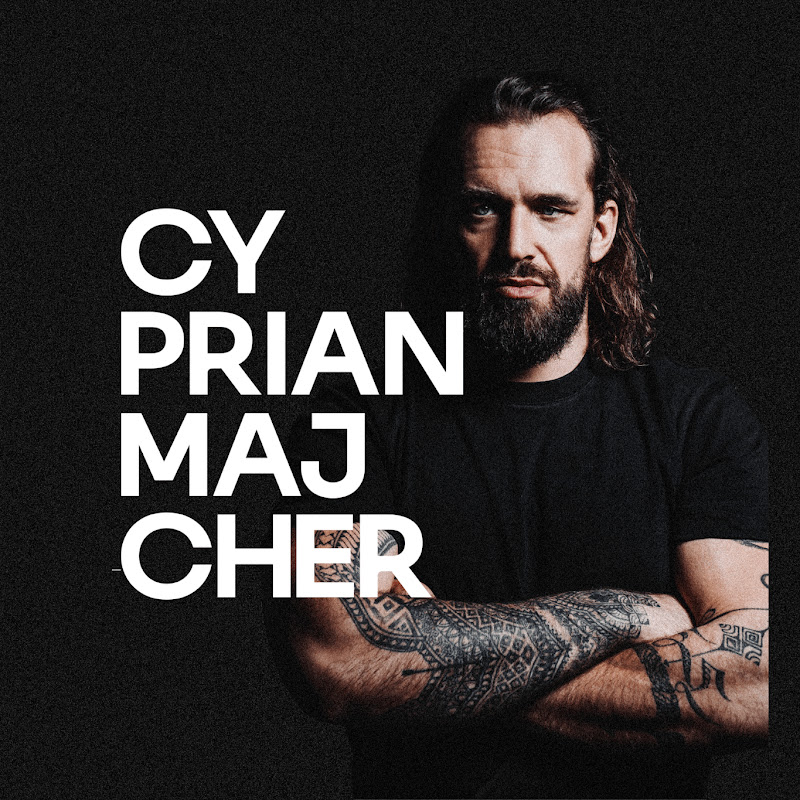
Cyprian Majcher
Watch on YouTube Add to chat My bookmarks← All sources

TL;DR

The four things you'd lose by not watching

4 items

TL;DR

The four things you'd lose by not watching

4 items
1

Bartek Kubkowski is attempting to be the first person to swim 170 km across the Baltic Sea. After two failed attempts (2022, 2023), he is preparing for a third trial in 2024 with a radically shifted mindset, prioritizing calm and presence over brute force.

2

A major theme is the rejection of the 'Never Satisfied' / David Goggins-style relentless self-destruction; Bartek advocates for mental peace, self-awareness, and enjoying the process to avoid burning out both physically and mentally.

3

He describes the extreme physical and psychological states during ultra-endurance, including swimming 14 hours with a torn latissimus dorsi, developing hallucinations after 28+ hours, and consciously entering a state of hypothermia for two hours to train the mind.

4

The Polish youth swimming system is criticized for a lack of support—no dietitians, poor nutrition, and a mentality that burns out young athletes—which ultimately led Bartek to 'hate' the sport for years before discovering ultra-endurance.

Protocols

Concrete recipes — what, when, how much, and why

5 items

Extreme 10-hour single session swims

WhatCompleting a single, unbroken marathon swim of approximately 10 hours in the water as a key training stimulus.
WhenPeak training block (May, June, July) before an August/September attempt.
Dose10 hours continuous swimming (one session). Typical daily sessions range from 8 km up to 50 km.
For whomThe speaker (ultra-distance swimmer).
WhyTo simulate the endurance and mental focus required for the 170 km crossing and test nutrition/hydration protocols under fatigue.
CaveatsExtremely boring and mentally taxing; must be managed with specific meditative techniques to avoid 'thought absence' panic. Requires precise nutrition (e.g., avoiding bad BCAA flavors or fizzy drinks that cause gastric issues).

Bartek explains that swimming 10 hours in a pool seeing only a black line is the 'most boring sport.' Unlike running or cycling, there is no changing landscape. The biggest danger after four hours is a void of thoughts. To combat this, Bartek developed 'Past, Present, Future Meditation.' He cycles through pleasant memories (Past), focuses strictly on stroke/breath mechanics (Present), and visualizes future life events in a self-induced trance (Future). He also 'returns to the hero of a book' to replay plots.

Mechanism

The primary physiological adaptation is not just muscular or cardiovascular, but neural—training the brain to handle monotony and fight the panic that comes from the 'lack of thoughts.' The body must also adapt to converting liquid calories and gels without stomach shutdown.

Personal experience

During the 2024 training cycle, he posted a 10-hour swim that was 53 minutes faster than his 2023 time, indicating significant physical and mental improvement. He does not use music headphones as they distract him from his meditative focus.

The worst thing that can happen in such a huge effort for the head is the absence of thoughts, it's the moment when you no longer know what to think about.

Also said
“This is my meditation: past, present, and future.”— Provides the specific framework he uses to survive hours of monotony.

Non-alcoholic beer as ergogenic aid

WhatDrinking flat, alcohol-free beer during ultra-long swims instead of hypotonic sports drinks.
WhenDuring long training sessions and the race attempt itself, specifically requested in the latter half.
DoseAs desired during the swim; must be flat (not carbonated) to prevent gastric issues.
For whomThe speaker.
WhyBetter hydration and taste acceptance than standard isotonic drinks, which can become unpalatable over 30+ hours.
CaveatsMust be flat to avoid bloating; temperature should be ambient, not ice-cold.

Bartek discovered this during training. He found that the flavor profile and composition of non-alcoholic beer made it easier to absorb and tolerate than specific sports nutrition gels or powders, which caused him heartburn. He specifically recalled a craving for 'heavily carbonated beer' during the actual event, though the crew has to flatten it first.

Personal experience

He specifically requested and received a 'flat, max-fizz beer' from his crew during the crossing. He confirms he trains regularly with it as a staple.

I generally trained on these non-alcoholic drinks because they actually hydrate better than water, have a nice aftertaste, and absorbed better for me during longer training sessions.

Hypnotic anchoring and mental triggers

WhatPre-programming specific verbal cues/passwords with a hypnotherapist to instantly induce a trance state during a race to stabilize mood and prevent panic.
WhenRegularly during preparation and activated on-demand by the crew during the swim, particularly at low points ('I'm done, I'm getting out').
DoseInstant trigger. Applied when the athlete verbally crashes or loses focus.
For whomThe speaker (extreme endurance athletes dealing with panic/suffering).
WhyTo prevent drastic emotional drops and maintain focus without wasting energy on internal arguments with the urge to quit.
CaveatsRequires deep prior work with a highly competent practitioner. It only works if the athlete trusts the hypnotherapist completely.

Bartek described his mental coach Rafał Mazur as his 'second brain.' When Bartek screams that he wants to get out, Rafał delivers a few keywords. This isn't just motivation; it reframes the screaming as 'the ego releasing negativity' rather than a true desire to quit. It separates the destructive voice from the self. This replaced previous sports psychologists who Bartek felt were simply roleplaying or using pseudo-scientific language that didn't connect with him.

Mechanism

Operates via associative conditioning: a word or phrase activates a specific neural pathway established during hypnosis, retrieving the calm/safe state and the 'why' behind the suffering, bypassing the conscious negative spiral.

Personal experience

Bartek confirms he previously quit working with sports psychologists because their approaches felt fake. With Rafał, he has never disagreed with a suggestion in two years.

It's enough that he says some password to me and I am able to sort of enter this trance process and return to what we did earlier.

Also said
“Rafał says a few passwords to me, says why we are doing this, and knows that it's not me but simply the desire to throw all the negativity out of myself.”— Explains the psychological reframing that the hypnotic trigger enables.

Full-body physiotherapy and rehab focus

WhatRegular deep tissue physio sessions focusing on rehab/prehab led by Andrzej Tryniszewski, incorporating lots of rubber band exercises and home-based routines.
WhenAfter every heavy training session; daily supplementary exercises replace running on some days.
DoseConsistent maintenance, with specific post-session interventions.
For whomSpeaker.
WhyTo avoid a recurrence of the torn latissimus dorsi suffered in 2022 and ensure the body is 'fresh' and bulletproof on the start line.

The 2022 attempt ended functionally in the 19th hour due to a near-total muscle tear in the lat, resulting in a massive bruise across his entire chest. Bartek swam for 14 hours with the tear where 'every second was pain.' The new protocol is designed to handle the 50km training sessions without creating the cumulative load that leads to such catastrophic breakdowns.

Personal experience

After the 2022 attempt, the physio saw a bruise spreading across his entire torso from the torn back muscle. For 2024, he specifies that sessions with Andrzej are non-negotiable to ensure he does not suffer that fate again.

After every heavier training session I come to him and he fixes me.

Also said
“I had such a bruise spread across my entire chest... the latissimus dorsi was simply torn.”— The specific injury that necessitates this strict protocol.

Rigid boat-crew energy management

WhatStrict rule that the crew on the support boat must never appear tired, yawn, or show negative emotion. They must remain constantly smiling and energized.
WhenThroughout the entire 30-40 hour crossing attempt.
DoseContinuous crew rotation if needed to maintain the facade.
For whomSpeaker's support crew.
WhyTo prevent the hyper-sensitized, sleep-deprived brain of the swimmer from misinterpreting a yawn as a catastrophe or losing his own will to continue.
CaveatsPlaces extreme psychological burden on the crew, who must hide all human signs of fatigue. The swimmer admits that noticing someone sleeping made him irrationally angry.

Bartek treats the boat as a stage. If he sees someone pacing worriedly or, worse, sleeping, he constructs paranoid scenarios in his head (e.g., 'Why is Wojtek pacing? Maybe the passage is blocked.'). This negativity loop can kill the attempt.

Mechanism

Psychological projection under extreme fatigue. When the brain is starved of sensory input besides pain, it scans for threats. Seeing a crew mate yawn triggers a 'want to sleep' cascade in the swimmer.

Personal experience

He recalls wanting to physically harm a crew member who yawned during the 2023 attempt. He also threatened not to take him on the 2024 boat.

I beg you, I cannot see someone sleeping on the boat... you have to be constantly charged with energy.

What's new

Personal practice updates, fresh positions, predictions

4 items

From 'hustle culture' to radical calm

Bartek explicitly frames his pre-2023 attempts as driven by unhealthy 'Never Satisfied' stress. His new approach is built on presence, gratitude, and accepting that 'what is meant to happen will happen,' aiming to enjoy the final training block rather than endure it.

Why this matters: This is a direct counter-narrative to the dominant 'rise and grind' / David Goggins influence in endurance sports. He argues that the relentless approach led to psychological exhaustion before he even started the 2023 attempt.

Background

In his first two attempts, especially the second, Bartek was so consumed by logistics, sponsor pressure, and fear of failure that he was mentally exhausted on the starting line. He describes having zero savings left, constant stress about weather windows, and no peace.

He connects his shift to a broader cultural problem where people live in the past or future, entirely missing the present. He realized he was constantly projecting negative scenarios and chasing a future that didn't exist. By slowing down—walking his dog without his phone, meditating on the water, and practicing gratitude—he believes he has broken this cycle. He admits his girlfriend would say he is still a work in progress, but the difference is stark enough to make the grueling training enjoyable. He specifically points out that waking up at 4 AM to suffer is not a badge of honor if you can sleep until 8 AM and perform better.

Personal experience

Bartek shares that in the lead-up to the 2023 attempt, he and his partner Justyna lived in a state of constant stress where 'there was no life.' Now, he turns on airplane mode during dog walks and looks at trees instead of emails, actively fighting the urge to be 'High Performance' 24/7.

We either live in the past or the future. At a certain point I realized that I am constantly living in something that doesn't really exist.

Also said
“When I started focusing on this I saw how I generally live in something that doesn't exist at all.”— Highlights the moment of realization that his entire life was an illusion of future projections.
“Nothing that is going to happen is going to happen.”— Summarizes his new stoic-like philosophy for the 2024 attempt.

Intentional hypothermia as a training tool

Bartek spent two hours in an ice bath as a total beginner after training with Wim Hof method expert Walerian Romanowski (Bieleckiego). He reached a state of hypothermia but reframed it as excitement rather than panic, which redefined his relationship with cold water.

Why this matters: While cold exposure is popular, lasting two hours and intentionally entering clinical hypothermia purely as a mental argument to trust the body is an extreme and unusual application.

Before meeting Romanowski, Bartek couldn't even submerge himself in 5-6 degree Celsius water without violent shaking and fear. After a mental training session with his mental coach Rafał Mazur and Romanowski, he not only entered the water but stayed for two hours. Romanowski educated him on the physiological processes of hypothermia so that when the symptoms appeared, Bartek recognized them as safety mechanisms rather than death sentences. This 'knowledge removes fear' approach allowed him to stay calm, teaching him that inner peace is the only way to survive the cold.

Personal experience

Bartek describes feeling genuine excitement when he realized he was in a hypothermic state, thinking 'Wow, I am in hypothermia!' because he previously associated it only with death. He contrasts this with friends who told him swimming in cold water required years of gradual winter swimming in boots and gloves, a timeline he rejected by simulating a survival scenario: 'If I fell off the boat in winter, I couldn't wait a year; I'd have to swim.'

After an hour of sitting there I entered a state of hypothermia... And once I thought that when there's hypothermia people die, right, and I sat for another hour in this state.

Also said
“Winter is generally such an element that taught me a lot about this calmness. There's nothing to fight here.”— Connects the physical cold training to his new psychological operating system for the Baltic swim.

Phelps' biography inspired a craving for a father-figure coach

Reading Michael Phelps' biography as a child, the most striking detail was not the training volume, but that the coach invited Phelps for vegetable soup to plan the next three months. This exposed the lack of emotional investment and mentorship he received later in his career.

Why this matters: Identifies a specific, non-physical detail from a sports icon's lore as the root of a long-standing career wound. It explains his lifelong search for a coach who treats the athlete as a whole person, not a machine.

Bartek contrasts this with his own experience in the SMS sports school system in Wrocław, where trainers did their job mechanically and went home, never inviting him for coffee or private conversation. He felt alone as a teenager. He later found this mentorship in Piotr Gieczewski back in Giżycko, who not only trained him but raised him—reading swimming books during practice and always arriving first. This shaped his belief that the coach-athlete relationship is foundational to success, a standard he never found again until recently.

The coach invited him for vegetable soup and they planned the next three months... I always wanted the Coach to be for me... treated him practically like a father.

Also said
“A coach never invited me for any coffee, for lunch. Never talked to me privately, never devoted his time to me.”— Shows the personal pain behind the admiration for Phelps' situation.

Cold water paternity leave?

Bartek reveals that a major future project (post-Baltic) is already planned—a global swimming record involving multiple bodies of water, longer than the Baltic crossing.

Why this matters: It confirms he is not a one-hit-wonder driven solely by the Baltic; he is building a career in ultra-distance swimming and already has a 2-year plan mapped out.

This will be a global project, there will be a lot of swimming, cool bodies of water to do... this is one of the next world records.

Recommendations

Products, supplements, and tools mentioned in the episode

2 items

Michael Phelps Biography ('No Limits' / 'No Limits: The Will to Succeed')

Book

Bartek read all of Phelps' books (maybe 2) as a child; specifically 'No Limits' shaped his desire for a close coach-athlete bond.

The specific scene about the vegetable soup and 3-month planning was a vision for how sport should be done, which contrasted sharply with his reality in the Polish youth system.

Personal experience

He internalized this scene from age 10-15 as the gold standard of coaching.

I remember this sentence to this day: 'the coach invited him for vegetable soup and they planned the next three months.'

Find Michael

Non-Alcoholic Beer (Generic)

Product

Drunk flat during long-distance training and racing for hydration and taste. No brand specified, though a plastic bottle of Żywiec Zdrój was used as a vessel.

Works better for him than isotonic gels or drinks, which caused heartburn and flavor fatigue.

vs alternatives

Hydrates better than water and tastes better than standard isotonic drinks over 30+ hours.

Personal experience

Bartek developed a specific craving for it mid-swim. He trains on it regularly.

They actually hydrate better than water, have a nice aftertaste, and absorbed better for me during longer training sessions.

Find Non-Alcoholic
Disclosed sponsorships2speaker disclosed

Nutrition Pro Catering

Service Sponsored · disclosed

Currently partnering with this company to receive his clean meals, removing the cognitive load of macro counting.

DisclosureBartek explicitly says 'this is also a collaboration with a catering company, so with Nutrition Pro, so I have everything served under my nose.'

I have everything served under my nose, I have all the macros counted, the ingredients, and I also have a bit of slack in my head about it.

Find Nutrition

Hypnosis / Trance State Verbal Cues

Tool Sponsored · disclosed

Keyword-triggered hypnotic states used to manage suffering during the Baltic crossing.

DisclosureDeveloped with mental coach/friend Rafał Mazur ('Zen Jaskiniowca' / Zen of the Caveman).

Unlike typical sports psychology, this works instantly. Bartek and Rafał have built specific triggers that bypass conscious suffering to recall the deep 'why' of the project.

vs alternatives

Previous sports psychologists felt fake or unhelpful. This specific hypnotic anchoring is presented as a superior alternative for genuine extreme-state management.

Personal experience

Bartek says after two years, not a single suggestion from Rafał has been wrong. He calls it his 'second brain'.

Rafał is kind of my second brain... It's enough that he says some password to me and I am able to enter this trance process.

Find Hypnosis

Notable quotes

Lines worth pulling out — contrarian, specific, or perfectly phrased

4 items
Swimmers pee in the pool... I remember when I was little I actually heard that from an instructor... I always looked to see if anything really got colored.
Candid, humorous color on the less glamorous side of competitive swimming culture that listeners might not know.
I hope it won't be that people will harm themselves, because they'll think 'Kubkowski swam for 40 hours, so I'll run a marathon with a sprained ankle.' That's dangerous.
A necessary warning from an extreme athlete recognizing that his feats might encourage dangerous emulation, showing self-awareness about the 'Goggins effect'.
I had tears in my eyes. Right? I remember what I said to him. I say 'this is my place.' And Robert says 'Well fuck, of course it's your place.'
Captures the raw emotional moment of 'Athlete Rebirth' after years of hating the water; a tearful return to a lifelong calling.
Once I thought that when there's hypothermia people die. Right? And I sat for another hour in this state.
A visceral, paradoxical statement showing the mental mastery required to reframe a lethal biological state as a meditative playground.

Sign in to share feedback

Tell us if this brief hit the mark or missed it — feedback feeds back into the next iteration of the prompt.

Topics covered

ultra-endurance-swimmingbaltic-sea-crossingmental-health-and-sportpolish-sport-system-failureshypnosis-for-athletescold-water-immersionsocial-media-authenticityanti-hustle-culturedavid-goggins-critiquehallucinations-and-fatiguenutrition-and-supplementationcoaching-relationshipsmichael-phelps-influenceprzemysl-i-terazniejszoscbcaa-taste-aversion
Free account

Make this library yours

Reading is free for everyone. A free account adds the personal layer: save protocols, follow experts, and see how the other experts weigh in on this same topic.

Create a free accountSign in

Where the experts disagree — weekly

One email a week: the sharpest new disagreements and protocols from the library. No spam, unsubscribe anytime.

Educational summary of the cited expert source — not medical advice. Open the source recording linked above and consult a qualified physician before acting on any protocol.