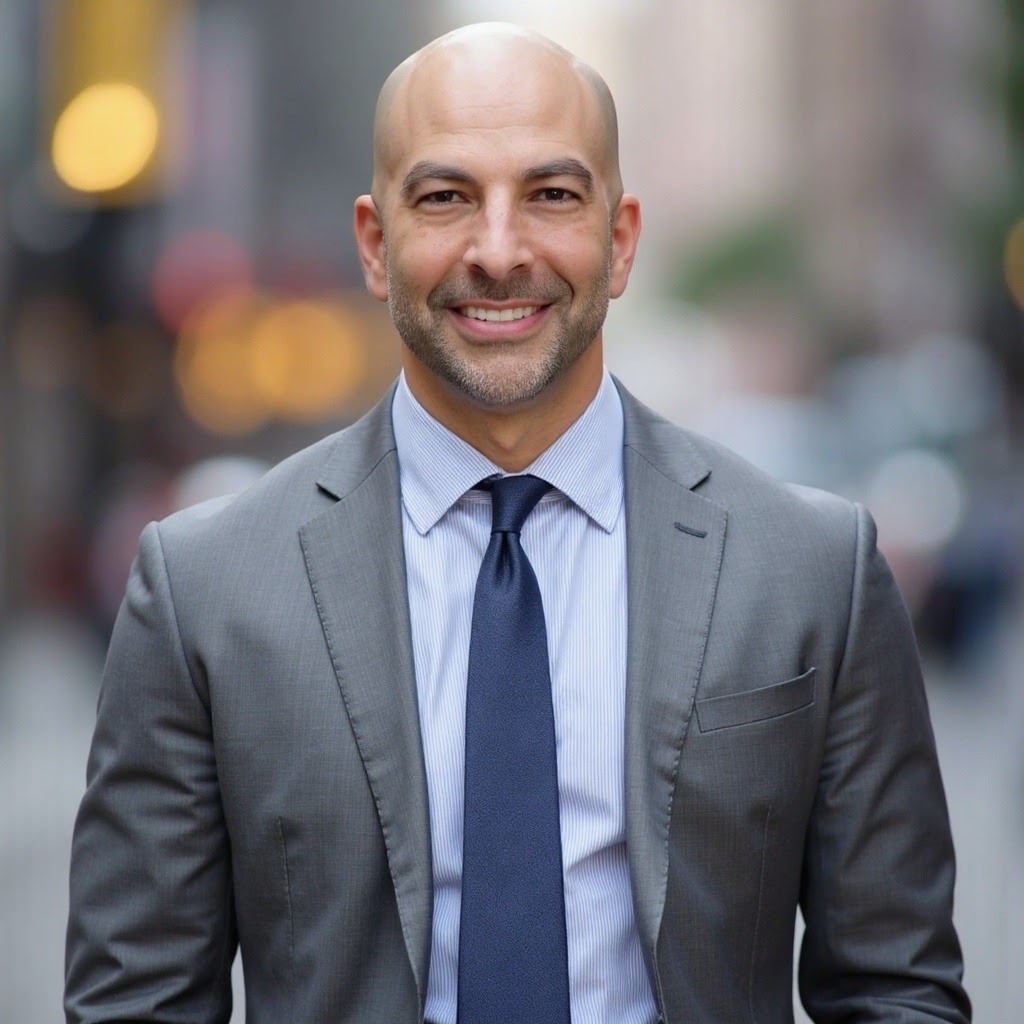
Gary Taubes argues that obesity is not an energy-balance disorder caused by overeating but a hormonal regulatory disorder driven by insulin signaling — and that this alternative paradigm has been systematically ignored since the 1930s when Lewis Newberg's seven-patient experiment became dogma.
2
The low-fat dietary guidelines launched in 1984 caused Americans to replace fat with carbohydrates, coinciding precisely with the onset of the obesity and type-2 diabetes epidemics — an experiment that, on Taubes's reading, refuted two foundational hypotheses of nutrition science simultaneously.
3
Taubes traces every error he has documented — from cold fusion to the carb-insulin debate — to the same root failure: researchers publicly committing to a result before doing the rigorous background analysis, then spending careers collecting confirming evidence instead of trying to prove themselves wrong.
4
By 2021 the carbohydrate-restricted / ketogenic diet has gone from 'will cause heart disease' to being formally recommended by the American Diabetes Association for type-2 diabetes — a tectonic shift Taubes credits to the accumulation of clinical trial evidence even while the mechanistic debate remains unresolved.
Protocols
Concrete recipes — what, when, how much, and why
7 items
Low-carbohydrate dietary trial for weight and metabolic risk factor reduction
WhatRestrict dietary carbohydrates — the Atkins/ketogenic approach — to reduce insulin levels and allow fat-tissue mobilization. Protein and fat replace carbohydrate calories; no calorie counting required.
WhenAs a first-line dietary intervention for overweight, obesity, or elevated fasting glucose / triglycerides / blood pressure.
DoseThe five clinical trials Taubes cites ran 3–12 months. Virta Health's ongoing work uses nutritional ketosis indefinitely for type-2 diabetes remission.
For whomAnyone with overweight, obesity, metabolic syndrome, or type-2 diabetes, now formally endorsed by the American Diabetes Association for the diabetic population.
WhyOn the carbohydrate-insulin model: carbohydrates raise insulin; elevated insulin signals adipose tissue to uptake and store fat while inhibiting lipolysis; reducing carbohydrates lowers insulin and unlocks fat mobilization. In the five early clinical trials, the low-carb arm lost more weight AND improved heart disease risk factors despite eating ad libitum.
CaveatsThe mechanistic debate (why it works) is unresolved. Long-term adherence data are limited. Patients on insulin or sulfonylureas need medical supervision to avoid hypoglycemia. The 'will cause heart disease' concern has not been substantiated in trials.
Taubes describes trying Atkins himself during reporting the New York Times Magazine piece: lost 25 pounds in six weeks. He notes that the first five clinical trials comparing Atkins to low-fat calorie-restricted diets — including Eric Westman's first trial at Duke and a VA hospital group — all showed the Atkins arm losing more weight with better cardiovascular risk factor profiles. This was a double refutation: it contradicted the caloric-excess model of obesity (subjects could eat ad libitum and still lose more weight) and it contradicted the dietary-fat/heart-disease hypothesis (higher fat intake did not worsen risk factors).
Mechanism
Dietary carbohydrates → elevated postprandial insulin → adipose tissue uptake and storage of fatty acids → inhibition of lipolysis and muscle fatty-acid oxidation via malonyl-CoA pathway → net energy trapped in fat tissue. Reducing carbohydrates reverses this cascade: lower insulin → reduced fat storage signaling → restored lipolysis → fat mobilized as fuel.
then all five trials the atkins diet not only did people lose more weight but their heart disease risk factors improved
Also said
“i tried advocate as an experiment and lost 25 pounds in six weeks”— Taubes's personal N-of-1 experience during the NYT Magazine research — he went in expecting to possibly kill himself and instead lost 25 pounds.
Virta Health nutritional ketosis protocol for type-2 diabetes reversal
WhatA continuous-care model delivering nutritional ketosis (typically fewer than 30g net carbs per day) via remote physician supervision and real-time health coaching, with the goal of reducing HbA1c and eliminating or reducing diabetes medications.
WhenFor patients with diagnosed type-2 diabetes seeking non-pharmacological management or drug reduction.
DoseOngoing; Virta's published data follow patients through 1 and 2 years with sustained HbA1c reduction and medication elimination in a substantial fraction.
For whomType-2 diabetics, particularly those on multiple glucose-lowering drugs who want to reduce medication burden.
WhyTaubes cites Virta as the commercial proof-of-concept for the carbohydrate-insulin model applied to diabetes: reducing dietary carbohydrates lowers insulin demand, which in turn reduces fasting glucose and HbA1c. This is now the same pathway the ADA guidelines have acknowledged.
Taubes references Virta Health as an example of capitalism filling the gap left by the medical establishment's slow adoption of carbohydrate restriction: 'you have operations like virta health which is doing very well advocating using nutritional ketosis to treat type 2 diabetes.' Virta's model is the commercial translation of the research Taubes had been advocating for through NuSI — and its survival and growth constitutes real-world evidence that the intervention works at scale.
you have operations like virta health which is doing very well uh you know advocating uh you know using nutritional ketosis to treat type 2 diabetes
Feynman's 'bending over backwards' honesty protocol for scientists and clinicians
WhatWhen reporting research results, the limitations section of a paper should be longer than the results section — a systematic, exhaustive accounting of every way the researcher could have been wrong, every unmeasured confound, every equipment flaw, every alternative explanation.
WhenAt the point of writing up and publishing any scientific finding, but most critically before any public announcement of a claimed discovery.
For whomResearchers, clinicians, science journalists, and anyone interpreting observational health data — including practitioners advising patients based on epidemiological guidelines.
WhyFeynman's first principle: you must not fool yourself, and you are the easiest person to fool. The moment a researcher goes public with a result, the psychological dynamic shifts from 'trying to prove I'm wrong' to 'collecting evidence that I'm right.' The limitations-first discipline is the only structural safeguard against this.
Taubes describes the correct pre-publication protocol from physics: you do not announce a discovery until you have gone to 20 seminars and asked every physicist you can find to explain how you screwed up. Only when nobody can tell you do you publish, still with a question mark in the title. The contrast with nutrition: the Nurses Health Study published associations between diet and heart disease / cancer as if they were causal, based on questionnaire data from a non-random sample, without measuring household income, without randomization, with no attempt to enumerate the 'Altarelli cocktail' of alternative explanations.
Mechanism
Pre-publication skeptical rigor prevents the 'pathological science' flip from hypothesis-testing mode to hypothesis-defending mode — the single most common pathway from honest error to entrenched wrong paradigm.
fundamentally in good science is this sort of bending over backwards to be honest about what you know and what you don't know
Also said
“the first principle of science is that you must not fool yourself and you're the easiest person to fool”— Taubes's invocation of Feynman's first principle as the root of all the failures he has documented across physics, cold fusion, and nutrition.
Control-for-your-background experimental discipline (the Georgia Tech lesson)
WhatBefore claiming a positive result, design an explicit control that tests all the alternative explanations for what you observed — not just the main competing hypothesis but the equipment artifacts, the measurement-sensitivity artifacts, and the sampling biases.
WhenBefore publishing or announcing any experimental finding that depends on detecting a small signal in a noisy system.
DoseMust be done as part of the experiment itself, not post-hoc. In the cold-fusion case, the Georgia Tech chemists had to retract within 12 hours of their press conference because they had held humidity-sensitive neutron detectors over bubbling cells without a water-only control.
For whomExperimentalists in any field where effects are small relative to the background, including nutrition, clinical medicine, epidemiology, and social science.
WhySignal-to-noise problems are universal. In particle physics, the background is the standard model. In nutrition epidemiology, the background includes socioeconomic status, healthy-user bias, recall bias, survivor bias, and dozens of other confounds — most of which chronic-disease epidemiology has never systematically characterized.
Taubes's most vivid illustration: Georgia Tech chemists held neutron detectors over cold fusion cells, detectors went off, they held a press conference. A physics colleague pointed out at the press conference that the detectors were humidity-sensitive and the cells were bubbling. They ran the water-only control within 12 hours of the press conference and immediately retracted. The failure was not fraud — they genuinely had not thought to run the control. The parallel in nutrition: every food-frequency questionnaire study faces the healthy-user bias, but the Nurses Health Study and most large observational studies did not adequately measure it.
the point is many people don't so uh let's say who did you measure you know you you had to get the health records of people right so to know how much cancers they had so how'd you get their health records well we called the people up and we talked to them and asked them you know if they wanted to be involved in the study and can we get their health records well the people we called we got to consider we're calling them during the day so maybe the people answered the phone are the people who aren't working right so maybe there's a socioeconomic style maybe there's a bias
Pre-publication seminar circuit — present as 'evidence for X?' not 'discovery of X'
WhatBefore publishing a claimed discovery, present it at institution seminars across the country titled 'Evidence for the Observation of X?' (with a question mark) — explicitly asking colleagues to explain how you screwed up. Publish only after many seminars where no one has successfully explained your error.
WhenIn any field where the claimed effect is at the limit of measurement sensitivity and the background is imperfectly understood.
For whomResearchers in any field making claims from difficult-to-replicate experiments or observational data where confounders are numerous.
WhyThe question mark in the title signals to colleagues that you are in hypothesis-testing mode, not defense mode — which elicits different responses. Presenting defensively causes critics to self-censor; presenting as a puzzle surfaces the fatal flaws.
Taubes credits this protocol to the physics community's culture — and contrasts it with what Rubia at CERN did (went public at a Washington conference before doing the background analysis) and what Pons and Fleischmann did (issued a press release because they feared a competing group would steal their discovery). The competitive pressure to publish first is the single most common trigger for the pathological science flip from rigor to advocacy.
you go around you start in your department at whatever university you're at and you give the presentation to your colleagues and basically you're asking them to explain to you how you screwed up if you're pardon the language because surely you did
Measure fasting insulin as a metabolic diagnostic alongside glucose and lipids
WhatFasting insulin and postprandial insulin response should be measured alongside standard lipid panels and glucose — not as a standalone diabetes marker but as a window into adipose tissue fuel-partitioning dynamics and the severity of insulin-driven fat storage.
WhenIn any patient with overweight, obesity, central adiposity, elevated triglycerides, low HDL, or family history of type-2 diabetes.
For whomClinicians treating metabolic syndrome, overweight/obesity, and pre-diabetes.
WhyOn Taubes's mechanistic reading, hyperinsulinemia is the proximate cause of fat accumulation — preceding and causing obesity, not merely resulting from it. The VMH-lesion animals become hyperinsulinemic as the first observable effect of the lesion, before the fat accumulates. If insulin is the driver, measuring it should precede any other metabolic intervention.
Taubes notes that insulin measurement was impossible before the Yalow-Berson radioimmunoassay of 1960 — which is precisely why the 1940s and 1950s fat-metabolism literature could not directly test the insulin hypothesis. Now that measurement is routine and cheap, fasting insulin arguably should be standard of care alongside fasting glucose. The carbohydrate-insulin model predicts that patients who are obese with high fasting insulin will respond better to carbohydrate restriction than to calorie restriction — testable in individual clinical practice.
so lesion the brain and the animal hyper secretes insulin in response to even thinking about food now if you think about it an animal that's hyper secreting insulin isn't going to be able to so the insulin is signaling its fat tissue to take up fat
Red team / blue team paradigm-challenging research design for intractable public health questions
WhatRather than continuing to fund incremental 'normal science' grants that build within the existing paradigm, convene independent teams of excellent researchers without nutrition-science biases — drawn from physics, engineering, physiology — to rigorously evaluate the foundational hypotheses of obesity research from first principles, modeled on 'populating a jury.'
WhenTaubes argues this is urgently needed given the failure of 40 years of conventional-wisdom obesity interventions.
For whomNIH, government health agencies, private research funders; Taubes proposed this approach through NuSI and argues it should now be done with full federal resources.
WhyThe current NIH R01 grant system funds researchers within the dominant paradigm and has no mechanism for paradigm-level questioning. The system rewards confirming evidence and marginalizes anomalies — Kuhn's 'normal science' continues indefinitely even when the paradigm is wrong.
Taubes draws an analogy to COVID vaccine research mobilization: 'think about the kind of effort that went into COVID — the amount of money that was spent on research to prevent this disease from killing what one tenth of the number of people who die from chronic diseases related to obesity and diabetes every year.' The obesity and diabetes epidemics are not stemmed; the conventional wisdom's failure is the only signal strong enough to force a paradigm examination. 'Step one is saying we failed.'
if we're gonna get practical here peter we're not going to make any progress whatsoever the um yeah i you know in my my dreams it's like uh populating a jury in a trial you pick people unbiased scientists who are good at what they do have demonstrated that they're good at what they do you can't pick obesity researchers because they have biases
What's new
Personal practice updates, fresh positions, predictions
8 items
The carbohydrate-insulin model of obesity — ignored since 1930s
~2h 15min
Taubes argues that a fully developed hormonal/regulatory model of obesity — tracing fat accumulation to insulin-driven fuel partitioning rather than caloric excess — existed in the scientific literature from the 1930s onward, but was displaced after Lewis Newberg's 1930–31 seven-patient experiment became the accepted refutation of the hormonal hypothesis.
Why this matters: If the hormonal-regulatory paradigm was suppressed by a single poorly designed experiment rather than strong evidence, 70 years of dietary guidance and research funding may have been built on a methodological error, not a scientific consensus.
Background
Julius Bauer at the University of Vienna argued in the 1920s that obesity was a hormonal dysregulation. Ransom and Hetherington's 1942 VMH lesion data supported this view but Ransom died of a heart attack, Hetherington joined the Air Force, and the only voice left — John Brobeck — held the 'eating too much' interpretation. Taubes: the alternative paradigm was effectively orphaned.
The mechanism Taubes proposes: a VMH lesion triggers hyperinsulinemia; elevated insulin signals fat tissue to take up and store fatty acids, simultaneously inhibiting lipolysis and fatty-acid oxidation in muscle (via the malonyl-CoA pathway), creating a peripheral starvation state that explains both the gasping hunger and the fat gain in the same model. Brobeck never considered this because he entered the field having already accepted Newberg's 'eating too much' framework and interpreted the pair-feeding anomalies (three of twelve animals got fat despite being pair-fed) as experimental error rather than evidence against his hypothesis.
that work done by people in this field of physiological psychology all implicated that insulin as the hormone determining fuel availability the primary hormone
Also said
“the conventional wisdom is all fat people get fat because they eat too much and there are textbooks that have a statement to that effect in virtually those identical words”— Shows that what was a contested empirical claim became unquestioned dogma inscribed in textbooks — the transition from hypothesis to 'fact' without adequate experimental testing.
“deposition and mobilization of fat go on independent of the nutritional state of the organism”— Direct quote Taubes attributes to a seminal paper — showing that fat metabolism science in the 1960s already knew fat tissue was dynamically regulated independent of caloric intake, yet obesity researchers ignored this.
The 1984 low-fat dietary guidelines coincided with — and may have caused — the obesity epidemic
~2h 30min
Taubes identifies two simultaneous dietary changes beginning ~1978–1984: the embrace of low-fat/high-carbohydrate eating as 'heart-healthy,' and the introduction of high-fructose corn syrup 55 into the beverage supply. Either or both could explain the obesity epidemic that appears in the data over the same window.
Why this matters: When five early clinical trials (Westman at Duke, VA hospital group, and others) compared the Atkins high-fat diet to the low-fat AHA-style diet, the Atkins arm lost more weight AND had better heart disease risk factors — simultaneously refuting the caloric-excess hypothesis of obesity AND the dietary-fat hypothesis of heart disease.
Background
An NIH administrator told Taubes during his dietary fat research: 'Lo and behold now we have an obesity epidemic — and apparently people stopped eating fat and eating more carbohydrates and that got them fatter.' This was the seed for the New York Times Magazine article that led to Good Calories Bad Calories.
Taubes is explicit that when he wrote the NYT Magazine article (circa 2001) he still had a line saying 'overweight is caused by taking in more calories' — which he now considers 'wrong and meaningless.' His position evolved through writing Good Calories Bad Calories: the first third deconstructs the dietary-fat hypothesis, the second develops the carbohydrate-centric hypothesis from British nutritionists and insulin-resistance researchers, and the third examines obesity as a hormonal fat-storage disorder. The diabetes and heart disease data were already pointing the same direction by the time those five clinical trials were published.
when we told people to go on low-fat diets in 1984 we assume we really didn't have the evidence to support the heart disease connection and the message of my story is they never got that evidence but we thought if nothing else we'd be telling people to avoid the densest calories in the diet and he said lo and behold now we have an obesity epidemic
Pathological science — the science of things that aren't so
~45min
Taubes applies Nobel laureate Irving Langmuir's framework of 'pathological science' — effects at the very limit of equipment sensitivity, researchers publicly committing before doing proper background analysis, then collecting confirming rather than disconfirming evidence — to cold fusion, the Rubia UA1 experiment at CERN, and the carbohydrate-insulin debate in nutrition.
Why this matters: Langmuir's taxonomy of error is a universal diagnostic for any field where the signal-to-noise problem is severe and researchers skip the equivalent of 'what are all the ways my detector could have fooled me.' Taubes argues nutrition science has never done this background analysis.
Background
Taubes encountered pathological science first at CERN (Rubia's 'discovery beyond the standard model' that evaporated), then documented it systematically in cold fusion (Bad Science, 1993), then recognized the same pattern in the dietary fat and obesity fields.
The canonical Langmuir failure mode, per Taubes: researcher sees signal → goes public before doing background analysis → switches from 'trying to prove myself wrong' to 'collecting evidence that I'm right' → surrounding themselves with people who confirm the belief, dismissing skeptics. Rubia's group did this at CERN; Pons and Fleischmann did this with cold fusion; the Georgia Tech chemists who announced cold fusion neutron detection at a press conference and retracted within 12 hours were humidity-sensitive detectors over bubbling cells — the classic failure to identify your control. The nutrition parallel: the Nurses Health Study never measured household income, a first-order confound in virtually all its diet-disease associations.
one of the messages in my book of the messages is once you decide you know what the truth is you tend to stop listening to the people who disagree with you and then you surround yourself with the people
Also said
“the sort of bending over backwards to be honest about what you know and what you don't know”— Taubes quoting Feynman's 1974 Caltech commencement talk on what good science requires — and arguing nutrition science has systematically failed this standard.
Epidemiology uses a 2-sigma confidence threshold where physics requires 5-sigma — and the difference matters enormously
~1h 45min
Physics requires a five-sigma result before claiming a discovery because physicists know they must leave large room for unknown unknowns. Chronic-disease epidemiology claims causality at a 95% confidence level (roughly two sigma), with no comparable accounting for all the alternative explanations a physicist would systematically enumerate.
Why this matters: This statistical asymmetry is not cosmetic — it means the expected false-positive rate in epidemiology is vastly higher than in physics, and the conventions around 'correcting for confounders' often address only the confounders the researcher thought to measure.
Background
Taubes developed this critique writing the Science article 'The Political Science of Salt' (1998) and 'The Soft Science of Dietary Fat' (2001), after his physicist friends told him to look at public health epidemiology because 'it's terrible.'
The power-line cancer example: people living near power lines may have lower socioeconomic status (power lines are unsightly, noise-making; those who can afford to move, do). That's a first-order confound for cancer rates. The Nurses Health Study — the most famous cohort study in America — never measured household income. When physicists say 'five sigma,' they're saying 'we've thought of every first, second, and third-order alternative explanation and left a huge buffer for the ones we haven't thought of yet.' Epidemiologists claiming causality from a relative risk of 1.3 at p=0.05 are making a claim physicists would not publish until they'd ruled out vastly more of the background.
in epidemiology people might look for one explanation say i believe socioeconomic status probably explains a good deal of these phenomena and people just don't measure it or they don't measure it right but even if it can only explain a quarter of the phenomena or a tenth i can guarantee you that there are probably nine other things that could cover the difference
The VMH-lesion ob/ob mouse evidence supports the hormonal model — but gets interpreted through the overeating lens
~3h 10min
When researchers lesion the ventromedial hypothalamus of rats, the animals become massively obese AND hyperphagic. Brobeck interpreted this as 'brain lesion → overeating → obesity.' Ransom and Hetherington's counter-interpretation: 'brain lesion → hyperinsulinemia → fat tissue locks up fuel → peripheral starvation → eating more AND exercising less as responses, not causes.' The ob/ob mouse confirms the hormonal model (these animals get fat even when pair-fed to lean animals' intake), but Friedman's leptin discovery was interpreted as a satiety hormone, cementing the overeating paradigm.
Why this matters: The same data supports diametrically opposed hypotheses depending on which paradigm you bring to it — and the paradigm that happened to be dominant in 1940 won, not because of better evidence.
The dbdb mouse is the same genetic mutation on a different background strain: both are hyperinsulinemic from weaning onward, but the dbdb background strain cannot sustain the hyperinsulinemia — its pancreas fails and produces frank diabetes. The obob background strain keeps pumping insulin and stays obese without becoming overtly diabetic. Taubes: this is direct evidence that hyperinsulinemia (not hyperphagia) is the primary lesion, and the strain difference just determines whether the animal develops obesity alone or obesity plus type 2 diabetes.
so the insulin is signaling its fat tissue to take up fat and to store it for food it's in store it for fuel it's inhibiting the process of lipolysis it's also inhibiting the oxidation of fatty acids and muscle tissue through the malonyl-coa pathway so think about what happens now to these rats
The NuSI energy balance experiments — same data, opposite interpretations
~3h 45min
NuSI (Nutrition Science Initiative, co-founded by Taubes and Peter Attia) funded two parallel research groups: one starting from the energy-balance paradigm, one from the carbohydrate-insulin model. The energy-balance group used metabolic chambers (indirect calorimetry); the carbohydrate-insulin group used a longer outpatient study with doubly-labeled water (DLW). They got divergent results — and each group interpreted the divergence as supporting their prior hypothesis.
Why this matters: A methodological critique emerged: DLW is not validated in people undergoing carbohydrate restriction, which would systematically bias the carbohydrate-insulin arm's energy-expenditure estimates — meaning the tools themselves may have prevented resolution of the debate.
Kevin Hall, the NIH researcher brought in as a 'physicist's perspective outsider' to run the energy-balance arm, initially appeared to share Taubes's skepticism of conventional wisdom. Taubes argues that once Hall started interpreting the energy-balance consortium data as supportive of his own computational model and as refuting the carbohydrate-insulin model, confirmation bias locked in — the same trajectory he had documented in Rubia and in Pons and Fleischmann.
the researchers who believe the conventional wisdom interpreted their results as supporting the conventional wisdom and refuting the carbohydrate insulin model and the researchers who supported believe the carbohydrate insulin model interpreted their results as supporting that model
Ketogenic / low-carb diets: from 'will cause heart disease' to ADA-recommended in two decades
~3h 55min
When Taubes began this work circa 2000, the conventional wisdom was that high-fat low-carbohydrate diets like Atkins would cause heart disease and ultimately make people fatter. By 2021 the American Diabetes Association formally recommends low-carbohydrate diets for type-2 diabetes, clinicaltrials.gov lists over 200 trials of ketogenic diets across cancer/Alzheimer's/TBI, and even the Science paper attacking the carbohydrate-insulin model concedes that low-carb diets are beneficial for weight control.
Why this matters: Taubes frames this as the practical victory even if the mechanistic argument is unresolved: the intervention is no longer considered dangerous and is now accessible, physician-supported, and widely studied.
today for instance the american diabetes association recommends these diets for type 2 diabetes which means one-tenth of the public and you know the public they're everywhere they're viral the world is saturated with books on keto and even this article in science we've been discussing acknowledge that they can be beneficial for weight control and nobody's talking anymore about them causing heart disease
GLP-1 agonists as a fascinating wildcard in the obesity debate
~3h 58min
Taubes briefly flags GLP-1 receptor agonists as 'fascinating' — drugs that induce dramatic weight loss — as a new variable that does not resolve the carbohydrate-insulin vs. energy-balance mechanistic question but represents a potential clinical breakthrough operating through a different pathway.
Why this matters: If GLP-1 agonists work primarily through appetite suppression, that supports the energy-balance model. If they work through insulin suppression or metabolic reprogramming, that supports the hormonal model. The mechanism matters for whether they represent a permanent fix or a pharmacological crutch.
these glp-1 agonists are fascinating as um so there's a public health problem there's a scientific issue
Recommendations
Products, supplements, and tools mentioned in the episode
1 item
Virta Health (nutritional ketosis telemedicine for type-2 diabetes)
Service
Taubes cites Virta as the best example of capitalism filling the gap left by conventional medicine's failure to use carbohydrate restriction for metabolic disease — a company succeeding commercially precisely because it is applying an intervention that the mainstream guidelines were slow to adopt.
Virta's model: continuous remote care by physicians, real-time health coaching, nutritional ketosis as the primary intervention, with the goal of reducing HbA1c and eliminating medications. Their published research shows significant fractions of type-2 diabetics achieving drug-free remission at 1-year and 2-year follow-ups. Taubes frames this as proof-of-concept that the carbohydrate-insulin-model-derived intervention works at scale, even if the mechanistic argument is unresolved.
you have operations like virta health which is doing very well uh you know advocating uh you know using nutritional ketosis to treat type 2 diabetes
The 2007 book that systematically deconstructs the dietary-fat hypothesis, the caloric-excess model of obesity, and the history of how both became dogma — while building the case for the carbohydrate-insulin model. Taubes spent five years and incurred a large debt writing it.
DisclosureTaubes is the author and primary guest. Attia has a long personal and professional relationship with Taubes and co-founded NuSI with him.
Taubes describes the structure: first third deconstructs the dietary-fat/heart-disease story from its origins; second third develops the carbohydrate-centric hypothesis tracing from British nutritionists through insulin-resistance researchers to the intermediary-metabolism science of the 1940s–60s; third third examines obesity as a hormonal fat-storage disorder. Attia regards it as foundational to his own thinking about metabolic disease and the inadequacy of 'eat less, move more' guidance.
i didn't know anything about that when i started this research but by the time and so the first third of good calories bad calories is the deconstruction of the fat hypothesis the second third is the replacement with a carbohydrate-centric hypothesis
Taubes's 1993 book about the cold fusion debacle — written as a case study in how pathological science works: how researchers fool themselves, how the sociology of science enables premature public claims, and how the failure mode from particle physics maps onto every other area of science.
DisclosureTaubes is the author. Attia describes reading it and finding it foundational.
Taubes describes this as a book he intended every graduate student entering science to read, so they could see all the ways they were going to fool themselves. He interviewed approximately 300 people for it, spending three years and incurring $40,000 in debt to his father. The Pons-Fleischmann story turned on a competition pressure: a Brigham Young physicist had seen their proposal and started working on it, which made them rush to a press release to protect their priority — converting a hypothesis into a public commitment before the background analysis was done.
i became obsessed with how this had happened that's what fascinates me so um you know when i'm writing about nutrition and chronic disease obesity diabetes the question is how do you come to the conclusions how do people establish conventional wisdom uh dogma the ruling theory in any science and on what evidence
Taubes's 1987 account of Carlo Rubia's UA1 experiment at CERN — the first major case study in Taubes's ongoing career investigating pathological science. Rubia was a Nobel laureate who, after a legitimate discovery, went public with premature claims about physics beyond the standard model that evaporated under scrutiny.
DisclosureTaubes is the author. His first book, written at age 29–31.
Taubes lived at the CERN hostel for 9–10 months embedded with the physicists. He describes watching young French physicists reduced to tears by Rubia's bullying in group meetings. When the book was published, Rubia called Taubes an obscenity in the New York Post and tried to get the UA1 collaboration to join a lawsuit against him. The collaboration refused — because most of them had privately critiqued the draft and found it accurate.
he asked hit an executive committee at the experiment made up of you know a dozen or so physicists from all these collaborating institutions and he asked that he wanted to sue me and he asked them to join in the suit and they refused
Lines worth pulling out — contrarian, specific, or perfectly phrased
6 items
the first principle of science is that you must not fool yourself and you're the easiest person to fool
Taubes's invocation of Richard Feynman's first principle — the single sentence he traces every documented failure of science back to, from Rubia's CERN experiments through cold fusion through the dietary fat hypothesis.
once you decide you know what the truth is you tend to stop listening to the people who disagree with you and then you surround yourself with the people
The mechanism by which pathological science perpetuates itself — not fraud, but motivated attention. The researcher who has gone public selectively hears confirming voices and tunes out skeptics, then mistakes the resulting echo chamber for scientific consensus.
i still wake up at three in the morning thinking why didn't i say that 13 years ago
Taubes on his own continuing evolution of thinking since Good Calories Bad Calories — a rare admission that the person who spent five years writing the definitive critique of nutrition science still finds new angles he missed.
bad scientists never get the right answer you know it's just it's too hard to get the right answer for you to go in being sloppy and slipshod and lazy and ambitious and get it right nature isn't that kind
The core thesis of Taubes's career as a science journalist — and the reason he uses 'bad science' not as a moral judgment but as a technical characterization: insufficient rigor plus premature commitment equals wrong answer, reliably.
it would be nice if i was right about all this but even if i'm dead wrong the ability to use this dietary intervention to improve your health has now become widespread mostly accepted
Taubes separating his personal investment in the mechanistic argument from the public-health outcome — acknowledging the possibility he is wrong on mechanism while the intervention that follows from his hypothesis has already been validated clinically.
you know overweight of course is caused by taking in more calories and you expand which today i think is a meaningless statement and both wrong and meaningless
Taubes retroactively labeling a sentence he wrote in the New York Times Magazine article that launched his career in nutrition — calling the conventional wisdom he initially parroted not just incorrect but conceptually empty.
Sign in to share feedback
Tell us if this brief hit the mark or missed it — feedback feeds back into the next iteration of the prompt.
Reading is free for everyone. A free account adds the personal layer: save protocols, follow experts, and see how the other experts weigh in on this same topic.
Educational summary of the cited expert source — not medical advice. Open the source recording linked above and consult a qualified physician before acting on any protocol.