UNFUCG
DashboardSearchChatBookmarksNotificationsActivityPremiumProfile
?
Home
Search
Chat
Saved
Profile
Episode
The most brutal fighter in Polish MMA? Adrian Bartosiński uncensored
~105 min
Episode Brief·YouTube

The most brutal fighter in Polish MMA? Adrian Bartosiński uncensored

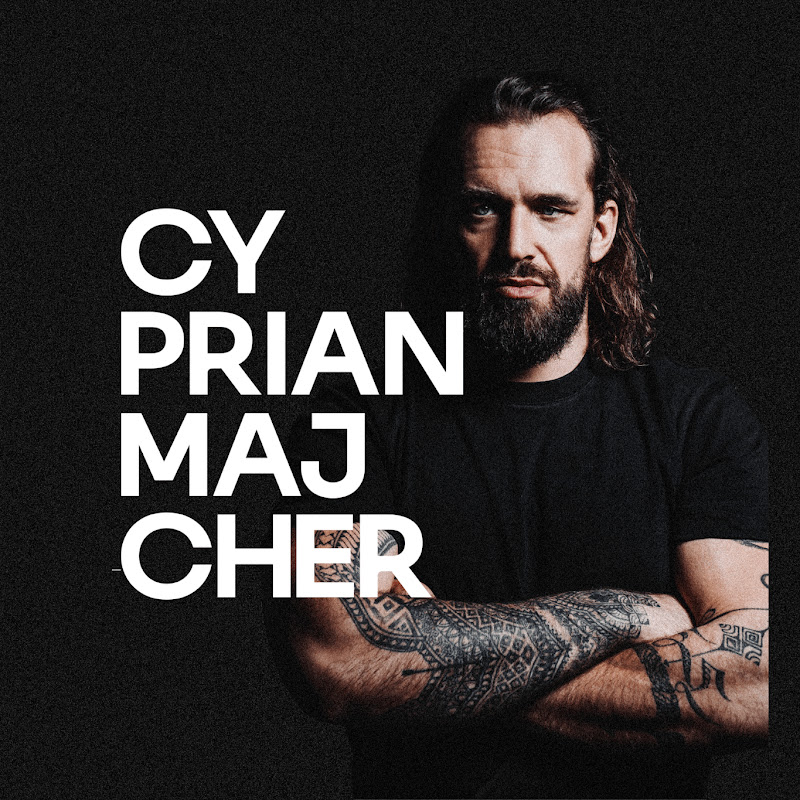
Cyprian Majcher
Watch on YouTube Add to chat My bookmarks← All sources

TL;DR

The four things you'd lose by not watching

4 items

TL;DR

The four things you'd lose by not watching

4 items
1

Adrian Bartosiński (15-0, KSW welterweight champion) frames his upcoming KSW 100 fight against MMA legend Mamed Khalidov as a legacy and popularity play, acknowledging Khalidov’s icon status makes this a respectful yet career-defining moment, not purely a sporting one.

2

He reveals a deeply contrarian motivational framework: he deliberately devalues opponents to raise his own stakes ('if I lose, I lost to a bum'), avoids 'glorifying' rivals, and thrives on being doubted, explicitly wanting fights where 'everyone writes me off.'

3

Bartosiński details a major career decision to move up to middleweight (185 lbs), not just for the Khalidov fight but as a personal experiment to measure how much his brutal weight cuts to 170 lbs were costing his performance, recovery, and overall physical health.

4

He shares specific, idiosyncratic mental routines he developed unconsciously and later reinforced with a sports psychologist—including pre-fight celibacy, a secret testosterone-boosting ritual, and obsessive pre-fight outfit and cage-entry choreography—to eliminate 'randomness' and maintain a sense of control.

Protocols

Concrete recipes — what, when, how much, and why

5 items

Pre-fight celibacy (10-day rule)

WhatAbstain from sexual activity for 10 days before a fight.
WhenThe 10 days immediately preceding a fight.
Dose10 days of abstinence.
For whomThe speaker (anecdotal); he explicitly says 'that's what I do.'
WhyHe believes (anecdotally) it boosts testosterone and sharpens senses, though he does not cite studies.
CaveatsHe pairs it with another 'secret' testosterone-boosting ritual he won't fully disclose but describes as 'I boost testosterone before a fight... I boost it and I'll tell you it works for me for several fights now.' The exact method is deliberately obscured, so the standalone celibacy effect can't be isolated.

Bartosiński describes this as a self-imposed ritual he devised at some point in his career and has rigidly maintained. He frames it as an intuitive practice to optimize his hormonal state and aggression before competition. The scientific literature on short-term abstinence and testosterone is mixed, with some studies showing transient increases after about 7 days and others showing no significant effect, but Bartosiński treats it as a empirically validated fact within his own experience. He is candid that he combines it with another undisclosed practice, suggesting he sees these as synergistic 'amping up' of his natural androgenic state. The specificity of 10 days suggests he has experimented with timing.

Mechanism

He invokes the folk-science belief that ejaculation reduces androgen load or that abstinence builds 'aggression' and sensory sharpness. He also mentions a separate, unnamed practice to 'boost testosterone' pre-fight, but explicitly denies injection, implying it may be a form of edging, cold exposure, specific training, or supplement timing.

Personal experience

He has practiced this for multiple consecutive fights and believes it measurably contributes to his fight-night state, though he acknowledges it's unverified by any formal lab testing ('unless there are no studies').

I hold 10 days... celibacy to the end but I boost it and I'll tell you that it works for me for several fights now.

Also said
“You hold testosterone nicely, not in the sense that you're more, you have sharpened senses.”— His subjective experience of sensory sharpness as an outcome.
“Well, to start something and not finish it, that's my ritual generally.”— Cryptic hint at the undisclosed complementary practice.

Pre-fight outfit and entry choreography to eliminate decision fatigue

WhatPre-plan and lay out exact fight-day outfits (complete sets including underwear and socks) days in advance, and choreograph every physical detail of entering the cage (which hand grabs the cage, which leg steps in first, syncing to music beat).
WhenOutfits prepared Wednesday for a Saturday fight; entry choreographed in detail ahead of time and repeated consistently.
DoseOutfits selected and packed days before; entry routine rehearsed mentally and executed identically each fight.
For whomThe speaker (anecdotal), though generalizable to anyone who experiences decision fatigue or pre-performance anxiety.
WhyEliminates minor daily decisions ('what to wear') that irritate him and consume mental energy, and replaces pre-fight anxiety with a calming, automated sequence of familiar physical actions.
CaveatsHighly ritualized behavior can become a superstition; if disrupted, it might cause distress. He has developed this to a point where he was surprised to learn from a psychologist that it's a standard performance psychology tool.

Bartosiński describes a deep frustration with mundane morning decisions—especially choosing clothes from a cluttered wardrobe. He's begun buying complete matching sets (sweatsuit + shirt) so he doesn't have to coordinate. For fight week, this is amplified: he pre-plans exactly what he'll wear on the trip to the arena, walking to the cage, etc. The cage entry sequence is broken into granular motor steps: which hand grabs the fence, which leg steps first, timing his entrance to the beat drop of his walkout music. He focuses intensely on these micro-details during the walkout to occupy his mind and prevent it from spinning about the opponent or the stakes. Only when the bell rings does he switch into fight mode. A sports psychologist later validated this as a classic 'pre-performance routine' he'd built intuitively.

Mechanism

Reduces cognitive load and pre-frontal cortex activity by outsourcing start-of-performance sequences to basal ganglia (habit circuitry). This conserves mental energy for the fight itself and prevents anxiety spirals by occupying working memory with simple, controllable sensorimotor tasks.

Personal experience

He describes this as something he discovered accidentally and then amplified after psychological consultation. The specific example of entering on the right leg, timing the music, and the calming effect is all from his direct fight walkout experience.

I always try to make the entrance the same, for example, I enter there by the rungs with this hand, then I step in low from this leg, I try to, you know, hit some moment of the music to enter that cage always similarly and I focus on that.

Also said
“I'm already entering, the music hasn't even started yet, and I'm already thinking, fuck, to step with the right leg, with the right leg, not... And I'm already thinking about how I'll enter the cage and I'm not thinking about who's standing there along the way.”— Demonstrates the active cognitive occupation during high-anxiety moments.
“I went to a sports psychologist and I told him about this and he says, you see, you didn't even know but these are exactly those routines of yours, and then we talked about it and, you know, then I added some more.”— Shows the transition from intuitive to validated, intentional practice.
“I hate randomness... I try to make sure, damn it, there's no randomness anywhere in any aspect.”— The underlying philosophy driving all his rituals.

Anchoring breakfast (same meal for 4+ years)

WhatEat the exact same breakfast (granola) every day for consistency and to avoid decision-making.
WhenDaily, but especially critical during training camps and fight week.
DoseOne consistent type of granola, every morning, for at least 4 years.
For whomThe speaker (anecdotal).
WhyRemoves one more decision from his day, ensures nutritional consistency, and provides a grounding sensory anchor.
CaveatsNutritional monotony can lead to micronutrient gaps if the one meal isn't well-formulated, but he's maintained it for years without reported issues.

This is the nutritional counterpart to his clothing ritual. Just as he reduces wardrobe decisions to eliminate irritation, he eats the same breakfast to eliminate food choice and ensure his body gets a predictable, familiar fuel source he trusts. The breakfast becomes a ritual anchor; its familiarity signals to his brain that the day's structure is in place. He mentions this nonchalantly as a fact of his life for 4 years, not a struggle. It's part of his broader war on randomness and his need to control all controllable variables.

Personal experience

He's eaten the same granola for 4 years because he likes the taste and it 'always works.'

I always eat the same granola because, as I say, I always eat it because I like it, for four years now.

Compete against the strongest possible opponents ('the strongest motherfuckers')

WhatActively seek fights against the most formidable opponents in or above your weight class, specifically those who generate public doubt about your ability to win.
WhenAs a career strategy; applies to fight selection and negotiation.
DoseOngoing career philosophy.
For whomThe speaker, and potentially other athletes seeking maximal challenge and motivation.
WhyFighters who are universally expected to beat him ('everyone writes me off') generate a unique motivational intensity and sporting aggression that easy wins or favored matchups do not. He also finds being the favorite boring.
CaveatsHigh-risk strategy; losses against elite opponents can stall career momentum. Requires genuine belief in one's ability to close the gap. Not recommended for fighters without a strong foundational skill set and psychological resilience to public doubt.

Bartosiński explicitly contrasts this with 'calculation' (calculator fight-picking) and names Roberto Soldić as a dream fight precisely because everyone said he couldn't win. He says he'd take a Soldić fight on 5 days' notice—no need for a long camp—because the challenge itself is the motivator. This philosophy also explains his willingness to fight Khalidov up a weight class: the name and the doubt it generates are the fuel. He frames it as a genuine preference, not just public posturing; he is 'insatiable' and gets more excitement from being the underdog than the champion defending against lesser-ranked contenders.

Personal experience

He vividly describes how a potential Soldić fight 'brings out sporting aggression' in him, and he had actually verbally agreed to a fight with Soldić before Soldić's UFC move scuttled it. The Khalidov fight is his current realization of this principle.

I would 100 times rather fight Soldić... that guy awakens such sporting aggression in me that I say, fuck, he's strong, everyone says I won't beat him, and I want to beat him… those are the fights that interest me.

Also said
“I'm not interested in a fight where, you know, I'd take someone weaker, or being the favorite bores me. I want to get someone where they'll say: I won't win.”— Reframes ambition not as status-seeking but as a hunger for the doubt.
“If they called that there's a fight with Soldić, I'm taking it. Besides, I already had a fight agreed with Soldić, it just didn't happen.”— Demonstrates this isn't hypothetical—he already tried to make the fight.

Heavy strength training focus (powerlifting-style) as base for MMA

WhatTrain heavy compound lifts (deadlifts, squats) plus accessory work for years as a foundational strength protocol, using a program written by a local powerlifting coach.
WhenDuring his development years; he 'hammered' this for 2-3 years consistently.
DoseFor at least 2-3 years, including a period where he naively trained deadlifts and squats in the same session, every session.
For whomThe speaker (historical); applicable to young fighters building a strength foundation.
WhyBuilds structural strength, power base, and muscular resilience; the powerlifting coach validated his technique and wrote a plan after watching him lift.
CaveatsHis initial programming was self-designed and technically flawed (treating deadlifts as 'back day' and squatting on the same day); had to be corrected. Overtraining risk if not periodized properly during concurrent MMA training.

Bartosiński's physical transformation from a 67 kg amateur fighter to a 92+ kg professional wasn't just puberty. He actively 'ground those weights' with a bodybuilding/powerlifting hybrid approach before understanding proper programming. A local powerlifter/coach assessed his form, determined he wasn't likely to injure himself, and provided a structured plan that Bartosiński followed obsessively for years. He believes this strength base is a major differentiator in his wrestling and clinch control—the reason he can 'hold a guy from the top' and control opponents on the mat. He contrasts his heavy strength focus with fighters who neglect this domain.

Mechanism

Heavy compound lifts build maximal force production capacity, increased bone density, and neuromuscular efficiency—all transferring to grappling strength, takedown power, and the ability to control an opponent's posture. The progressive overload principle applied over years creates a strength reserve beyond what's possible through sport-specific drilling alone.

Personal experience

He describes doing deadlifts and squats every strength session as a misguided but passionate beginner, then getting corrected, and the resulting strength gains fueling his wrestling and clinch dominance.

I always did a lot of strength, well, I didn't really have a clue about doing strength, so I always ground those weights, and then I had a time when, you know, some powerlifter in Rawa wrote me a whole weight program.

Also said
“I was pounding away, I was grinding those weights all the time, deadlifts and squats, and I focused on that.”— Emphasizes the obsessive, high-frequency approach.
“In one training session, deadlifts and squats, because I thought deadlifts were for back... that was a period for, I don't know, maybe a year, maybe two, maybe longer, I was hammering non-stop.”— Reveals the initial programming error and the duration.

What's new

Personal practice updates, fresh positions, predictions

5 items

Contrarian motivational framing — devaluing opponents to raise personal stakes

Bartosiński intentionally refuses to praise his opponents before a fight, describing them as 'shitty' to himself, because it creates a psychological high-stakes scenario: losing would mean losing to someone he publicly disrespected, which is unacceptable.

Why this matters: This directly contradicts the common fighter trope of 'he's a tough opponent, I'm training hard' and represents a deliberate, self-aware psychological strategy many elite athletes would not openly admit to.

Background

Most fighters, when interviewed, default to respectful, sometimes exaggerated praise of their opponent to hedge against a loss. This is often genuine but also functions as a protective self-narrative.

Bartosiński articulates a precise anti-hedging mechanism. He observes that many fighters 'glorify' their opponents, and he interprets this as a subconscious 'underlay' for a potential loss. By labeling the opponent as weak, he strips away any consolation prize; the only acceptable outcome is victory. He explicitly says: 'I raise the bar and say: for me, he's shit, and I have to beat him, because if I lose, it will turn out I lost to a weak fighter.' However, he acknowledges a boundary with Khalidov—a legend who built Polish MMA—where outright disrespect would be culturally and personally inappropriate. This reveals the strategy is situational and not pure, unfiltered arrogance. He shows restraint where the emotional cost of disrespecting a foundational figure would exceed the motivational benefit.

Personal experience

He explicitly links this to his own competitive psychology, stating he doesn't 'know how to appreciate his opponents' and doesn't like hearing others do it. He feels it creates a mental safety net he wants to destroy.

And you know, I raise the bar and say: for me, he's shitty, and I have to beat him, because if I lose, it will turn out that I lost to a weak fighter.

Also said
“Well, I can't appreciate my rivals. Well, if I lose, I said he was good. And you know, I raise the bar and say: for me, he's shitty.”— Clarifies the before/after logic: praising only happens after a loss, which he refuses to pre-emptively do.
“I also don't like glorifying my rivals because, for example, most fighters stand there and say, yes, yes, well no, he's a very strong fighter, you have to be careful... and I don't like hearing something like that because I say, well, you know, fuck, you're glorifying your rival now, how awesome he is, because for me that's already an underlay.”— Explains his view that praising an opponent is a psychological safety net ('underlay') he rejects.
“I noticed that with Mamed, I let some air out of that balloon a bit, because it's not appropriate for me to talk like that about Mamed... I can't say that about Mamed, you know. Well, I can think my own thoughts, but I can't say it out loud.”— Shows the boundary of the strategy: he respects Khalidov enough that the public devaluation tactic would backfire socially and morally.

Personal experiment: moving up from welterweight (170 lbs) to middleweight (185 lbs) to test weight cut cost

Bartosiński is using his catchweight/superfight against Khalidov as a structured self-experiment to quantify how much his severe weight cuts to 170 lbs impair his training quality, recovery, and fight-night performance.

Why this matters: Athletes rarely frame a career milestone fight as a deliberate physiological experiment with explicit before/after variables and personal benchmarking.

Bartosiński walks around at roughly 92-93 kg (205 lbs) and cuts to 170 lbs for his welterweight fights—a significant cut for a 6'1" frame. For this camp at 185 lbs, he's experiencing what he describes as a stark contrast: he can maintain significantly higher calorie intake (around 3800 kcal), feels he can train harder and recover better, and subjectively feels 'healthier.' He frames the fight as data collection: 'I want to see how much these cuts take away from me.' He's explicitly tracking his performance markers at the higher weight versus his historical 170 lbs fight-week state. If the difference is dramatic, it will influence his future weight class decisions. He acknowledges being a 'big welterweight' but a 'medium middleweight,' noting his teammate is 99 kg and fights at 185.

Personal experience

He reports already seeing major differences in camp—higher calorie maintenance, improved training capacity, and a subjective sense of being 'healthier' and less like a 'coal cart' at this leaner 91-92 kg compared to past off-seasons at similar weight but higher body fat.

I want to see, I mean, I already see the difference in the preparations themselves, where I don't have to cut so many calories and, you know, I'm able to keep it higher, around 3800, and I see how much harder I'm able to train and how I feel after hard training sessions, and I'm curious myself even about that performance at the end.

Also said
“I'm generally a big welterweight at 77, I'll be a medium middleweight... my club teammate is the champion of the 84 category, so I also, I also know more or less what that physique looks like... he weighs 99 kg daily.”— Provides context on his size relative to divisions and his data source for comparison.
“If I see a big difference, I'll also have an answer, won't I, how much it takes from me, how much making weight takes from me.”— Explicitly frames the fight as a way to answer the question of weight cut cost.

Rejection of politically correct social media persona in favor of unfiltered expression

Bartosiński consciously avoids the 'polished, polite' social media approach of his peers (like teammate Robert Ruchała), instead responding to provocations and posting content exactly as he feels in the moment.

Why this matters: Represents a deliberate counter-position to the curated, PR-safe athlete persona dominant in modern sports media.

Bartosiński describes his social media approach as a contrast to his teammate Robert Ruchała, whom he affectionately calls a 'polite student.' Where Ruchała is creative, strategic, and politically correct, Bartosiński prides himself on having a 'fuck-it attitude' toward political correctness. He doesn't deliberate over how content might be perceived; if something angers him, he responds immediately. He acknowledges this polarizes people but believes it creates a more authentic, differentiated personal brand. He notes that Ruchała has taught him technical social media skills, but their fundamental personalities drive different content. He sees this unfiltered nature as risky but ultimately a source of distinctive appeal in a landscape of polished athletes, even while recognizing that critics and 'haters' use his losses to attack this persona.

Personal experience

He recounts that his spontaneous, reactionary style is simply who he is: 'I don't think about it, if someone pisses me off, I answer them. I don't think: maybe we'll do this, maybe not because it won't suit someone.'

I'm like that, I don't think about it, if something or someone pisses me off, I answer them, you know, or I record something as I feel it, and I don't think about it, like, maybe we'll do it this way, oh no, let's not do it because it won't suit someone.

Also said
“Robert is, you know, a polite student, and he generally has awesome ideas... but he's not, you know, a rebel.”— Frames his contrast with a specific, named peer to show this is a deliberate stylistic choice.

The illusion of Instagram follower count vs. real-world popularity and media impact

Bartosiński observes that his actual public recognition and media 'buzz' far exceed what his Instagram follower count would suggest, arguing follower numbers are becoming an outdated popularity metric.

Why this matters: A meta-comment on sports marketing: an athlete at his level questioning the validity of the primary metric (follower count) used to value fighters.

He notes that when he goes out, people recognize him at a rate disproportionate to his Instagram following. His posts immediately get picked up by MMA portals and Twitter, generating news cycles. He sees platforms fragmenting—YouTube, TikTok rising—and believes Instagram's dominance as a proxy for popularity is fading. This matters because fighter pay and negotiation leverage often tie to perceived marketability. He suggests the noise around his name in traditional and new media channels is a truer signal of his drawing power than a single platform metric. This observation likely informs his negotiating posture with KSW.

Personal experience

He experiences this discrepancy personally: random street recognition + instant media reposts of even his trivial tweets vs. Instagram numbers he considers artificially low for his actual reach.

The number of followers on Instagram is not adequate to that kind of popularity in real life. I noticed that.

Also said
“I already see the time of this Instagram, I see it slowly too, because it's already slowly this YouTube, this TikTok, and this Instagram is not so reliable at all.”— Provides his reasoning for why the metric is becoming obsolete.
“When I go on Twitter or Facebook, I see how often, for example, you know, I write something, anything stupid on Twitter, and I look, the portals are already posting it.”— Illustrates the alternative media echo he generates outside Instagram.

Broader exposure on open TV (Polsat) created fans who never tracked MMA afterward

Bartosiński shares a personal story illustrating a lost generation of casual fans: a man recognized him from a single Polsat reality show appearance but had no idea Bartosiński had fought 5 times in KSW or won the belt—demonstrating both the reach of open television and the conversion failure afterward.

Why this matters: Quantifies in a concrete anecdote the audience fragmentation KSW experienced moving from open TV (Polsat) to streaming platforms, and the limits of one-off TV exposure for athlete brand building.

The anecdote: a year after his Polsat show 'Only One,' a man approaches him on the street, recognizes him from the show, but asks if he's going to fight in KSW—completely unaware Bartosiński was already KSW champion with 5 fights for the promotion. Bartosiński uses this to argue that Polsat's open broadcast reached massive, undifferentiated audiences (the proverbial 'Grażynka and Janusz') who saw MMA for the first time but never became fans. The platform paywall now filters audiences to intentional, knowledgeable fans, which is a different growth challenge. The casual 'channel-surfer' discovery window is gone.

Personal experience

He was the subject of this anecdote directly; it's his own experience of being 'famous' from a TV show but not known for his actual athletic achievements.

Some guy walks across the square and says, 'I recognize you, you were on that show Only One'... he doesn't know that I've had five KSW fights and that I have the belt, so look, he watched me only on one show on open Polsat but never watched KSW again.

Also said
“Look at what kind of viewer this reached... now if someone wants to watch their fight, for example mine, well, they already have to have a clue about MMA. He won't turn on the TV and, oh, I'll watch Bartosiński.”— Frames the shift from passive discovery to intentional fandom as a key structural change.

Recommendations

Products, supplements, and tools mentioned in the episode

7 items

American Top Team (ATT) — training camp destination

Service

Bartosiński visited ATT for a 3-week training camp and describes it as the best MMA gym in the world in terms of facility, talent density, and design.

ATT is described as a purpose-built facility, not a retrofitted space—everything is designed for MMA training. The gym has multiple mat areas, a dedicated small octagon room, and hosts 90+ fighters per session from across the globe (Russia, Brazil, Europe, USA). This creates a unique situation where two fighters from the 'same gym' might fight each other in major promotions because the gym is more of a professional hub than a hometown team. Bartosiński notes the initial intimidation factor—being an unknown among ranked UFC fighters—but describes a meritocratic proving process: after a few good rounds with top guys (including a former Rebel FC champion), he earned respect and was consistently paired with the strongest training partners. The lesson is that quality control matters: ATT screens incoming fighters via a CV and fight footage review system. You can't just walk in and train.

vs alternatives

Contrasts with his home club Oktagon where he's a local product and would never fight a teammate; at ATT, the global talent pool means teammates routinely fight each other in major promotions.

Personal experience

His first day, sleep-deprived, he felt 'like a kid at a theme park' and worried no one would partner with him. He eventually worked with top-level guys and became a sought-after training partner himself.

This is a club, this is a building that was built as a club... everything there was built and is, you know, designed... the whole building created for an MMA club, the best in the world.

Also said
“Two fighters from the same club fight each other and do their preparations in the same fucking club, incredible.”— Illustrates the unique dynamics of a global hub gym.
“You have to send a CV, they watch your fights, they watch your, you know, skills, to review whether they need you or not.”— Shows the quality filter mechanism ATT uses.
Find American

Gaming headset (over-ear) — preferred for podcast interviews due to cauliflower ear

Tool

Bartosiński uses over-ear gaming headsets for interviews and daily use because in-ear buds either don't fit or fall out due to his severely deformed cauliflower ears.

Personal experience

He's had multiple drainings of his ears (20ml syringes, 2-3 at a time) but permanent deformation remains, making in-ear audio devices impossible. He prefers the gaming headset at his gaming station.

I use these kinds of headphones in general, but they're more comfortable for me because when I have those in-ear ones, I don't use gaming ones... you can't even fit over-ear ones into your ears at all.

Find Gaming

Training with high-level wrestlers as grappling partners

Practice

Bartosiński notices a qualitative difference in training feel between MMA fighters who have mediocre wrestling and pure wrestlers—the latter feel 'soft' and fluid, making technique execution smoother and training more productive.

He describes a sensory phenomenon: when grappling with skilled wrestlers, they feel 'soft' because they move with proper technique and don't resist incorrectly; against poorly trained wrestlers, they feel 'hard' and fall badly, making drilling difficult and riskier. This is a nuanced coaching observation: partner quality isn't just about intensity but about correct mechanical response. Bad partners make you worse because you're fighting their stiffness instead of developing your technique.

Personal experience

He experiences this directly in his own training sessions and uses it as a heuristic to gauge his partners' wrestling level.

I do wrestling training and I have to do it with, you know, a guy who, okay, is a good MMA fighter but doesn't get wrestling at that level, it's hard for me to do it with him... I feel that he's so stiff... and you know, when I do it, for example, with wrestler Kami or with someone who has good wrestling, well, you feel that he's so soft.

Find Training

Become a Fighter by Borys Mańkowski

Book

Bartosiński cites a quote from this book—that in MMA you must be able to suffer and take punches—and says he plans to read it.

Did he write a book, the book Become a Fighter, I haven't read it, but someone told me about it somewhere and I think that I will definitely read it.

Find Become

Relentless grinding despite physical exhaustion (early career protocol)

Practice

During his early career working 3-shift factory jobs, Bartosiński maintained a protocol of never skipping training despite waking up every day wanting to quit. He describes the daily psychological battle of overruling his own mind.

His routine: 10 PM to 6 AM night shift at a warehouse, then 8 PM training, then back to the night shift. He'd wake up at 4:30 AM for day shifts after going to bed at midnight, needing painkillers to manage shoulder pain just to throw packages for 8 hours. Every single morning he told himself he'd skip training that evening. Every evening he went anyway. He explicitly frames this as a mental protocol—not a physical one—that built the resilience he now draws on. He references this period as 'the worst' but also as formative proof that he could override physical and mental exhaustion. The key insight: the thought of quitting was always present; the action of going anyway was the training.

Personal experience

He lived this period at age 19-20, working three shifts and training, and describes management confronting him about low productivity because he was exhausted from training.

I was so worn out that sometimes I got up and I say, fuck it, 4:30, I say, at 6:00 to work, and man, I fell asleep at midnight because I couldn't sleep after training, battered after sparring, I get up in the morning, my arm hurts, I say, I have to take some painkiller.

Also said
“I always woke up with that thought that, fuck it, I'll quit already, I have no strength, and still I came back from that work and I say, no, okay, I'm going.”— Shows the daily override mechanism.
“My priority is not making the line, I'm tired after training, I don't have the strength to do it.”— Direct quote to his manager showing where his true priority lay.
Find Relentless

Sports psychologist (unnamed)

Service

Bartosiński consulted a sports psychologist who validated his intuitive routines and helped him add new ones, formalizing what he'd done subconsciously.

Personal experience

He describes presenting his existing routines to the psychologist and being told these were precisely the kind of pre-performance routines used by elite athletes. He subsequently added more layers.

I went to a sports psychologist and I told him about this and he says, you see, you didn't even know but these are exactly those routines of yours, and then we talked about it and, you know, then I added some more.

Find Sports

Talent-amplifier mindset: consistency over talent

Practice

Bartosiński's core belief: lack of talent can be compensated by doing everything better and more consistently ('grinding'). He despises wasted potential and believes most athletes don't reach their ceiling because they cut corners.

He extends this belief beyond himself to observing teammates and competitors. He gets viscerally angry watching fighters be unprofessional—poor diet, sloppy supplementation, bad sleep hygiene. He frames this as a broader life philosophy, not just fighting: people who were exceptional students in school often plateau because their ambition peaks early and they stop the obsessive grinding. He contrasts his own early academic indifference with his later monomaniacal focus on MMA. For him, the 'monsters' of the sport aren't just talented; they're the ones who eradicate randomness from every aspect of preparation.

Personal experience

He describes being internally triggered watching training partners be unprofessional, to the point where he has to suppress his anger.

I hate it, like, that people are so sloppy, you know, that, well, damn it, you know, even in sports I see it... in my opinion, it's not that you, fuck, suddenly have less talent, OK, you might have a bit less talent, but I still think that if you fucking grinded, did more, and did everything better, you'd definitely be further than you are.

Also said
“I observe fighters and colleagues on the mat and others, the unprofessionalism of fighters strikes me, it normally pisses me off.”— Shows this isn't just self-talk but an active evaluation of his environment.
Find Talent-amplifier
Disclosed sponsorships2speaker disclosed

Solf Labs (natural supplements inspired by nature's intelligence)

Supplement Sponsored · disclosed

Mentioned as the podcast's partner at the start of the episode.

DisclosurePodcast sponsor; discount code in episode description.

The partner of this podcast is Solf Labs, that is, natural supplements inspired by the intelligence of nature based on organic plant ingredients.

Find Solf

SFD (healthy food and supplements)

Supplement Sponsored · disclosed

Mentioned as a podcast partner; described as 'healthy food without sugar and supplements essential for training.'

DisclosurePodcast sponsor; link in description.

The partner of this episode is SFD, that is, healthy food without sugar and supplements essential for training, and more information at the website www.sklep.sfd.pl.

Find SFD

Notable quotes

Lines worth pulling out — contrarian, specific, or perfectly phrased

4 items
People started booing, he showed his hands, that nothing was happening. I started to loosen up and then he fucking blasted me with a takedown.
A rare, honest self-critique of losing composure due to crowd reaction, costing him a takedown and nearly a round.
I can't satisfy myself, it's always not enough for me. I say: I could have done even better. I don't think about what I did well, I only think about what I could have done better.
Encapsulates his chronic dissatisfaction and perfectionism that drives his success but may make it hard to enjoy achievements.
I come back from that job and, fuck, I'm so happy for that training... I woke up in the morning and I say: I'm not going to work. Today I come back and fuck it, I'm not going. And I came back from work and, fuck, I went to that training.
Raw, looped articulation of the daily mental override that built his career while working a factory job.
For me, it's such a pride. I walk around like a trophy. For guys, it's cool — I see someone with a cauliflower ear and I think: alright, he trains something.
Unapologetic pride in cauliflower ear as a status symbol and identity marker in combat sports, contrasting with typical medical framing.

Sign in to share feedback

Tell us if this brief hit the mark or missed it — feedback feeds back into the next iteration of the prompt.

Topics covered

fighter-psychologymotivational-framingself-criticismcauliflower-earweight-cuttingksw-businesssocial-media-authenticityamerican-top-teamufc-ambitionsfight-routinescrowd-influencelegacy-fightsmamed-khalidovstrength-trainingtalent-vs-hard-workpolsat-era-mmasports-psychologyphysical-transformationpain-managementrespect-and-disrespect
Free account

Make this library yours

Reading is free for everyone. A free account adds the personal layer: save protocols, follow experts, and see how the other experts weigh in on this same topic.

Create a free accountSign in

Where the experts disagree — weekly

One email a week: the sharpest new disagreements and protocols from the library. No spam, unsubscribe anytime.

Educational summary of the cited expert source — not medical advice. Open the source recording linked above and consult a qualified physician before acting on any protocol.