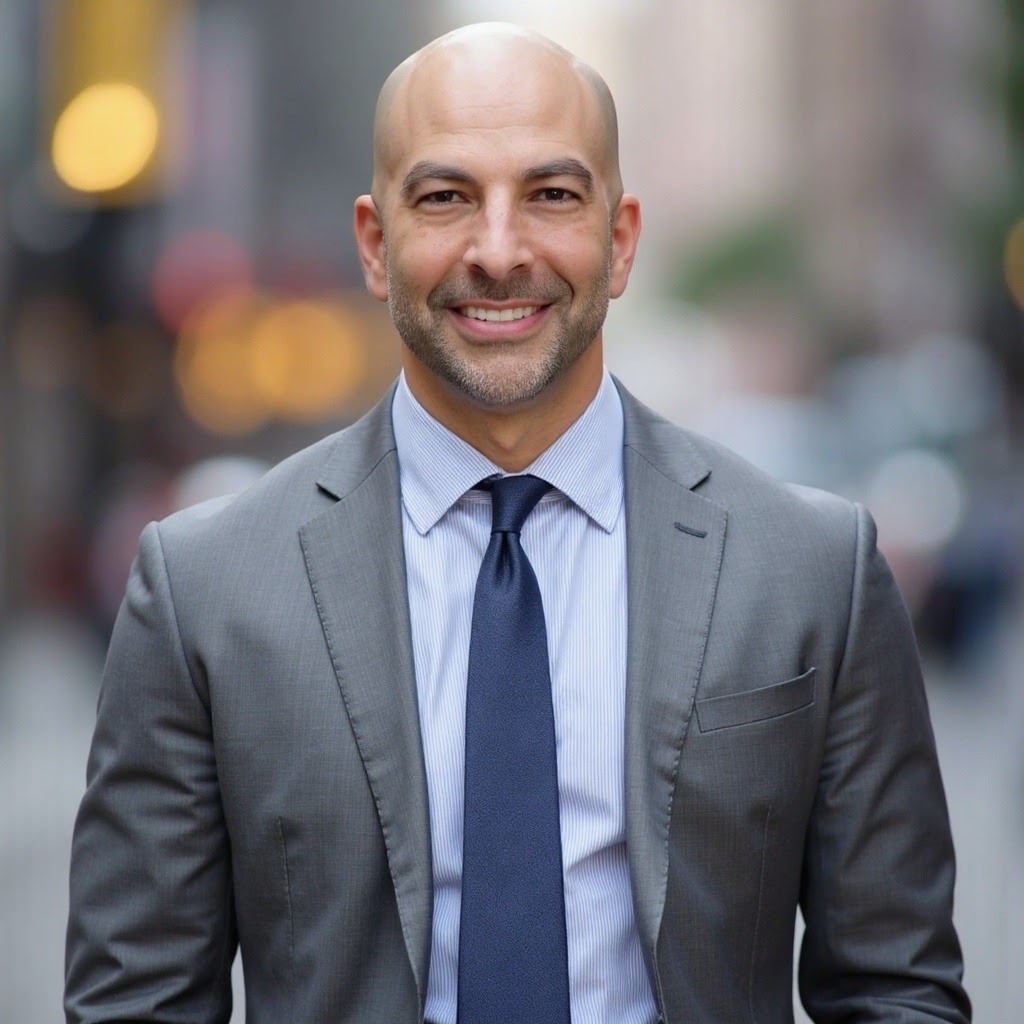
Rick Rubin went from 318 lbs and morbidly obese — after 20+ years as a vegan he could barely walk to his car — to losing 135 lbs in 14 months through a rigorously supervised high-protein, low-carb protocol and Phil Maffetone's zone-2 walking approach.
2
The weight transformation only became possible once a second intervention — a calorie-capped, high-protein shake protocol under Dr. David Heber at UCLA — was layered on top of Maffetone's training, because hyperinsulinemia and glycogen overload were blocking fat loss despite two years of disciplined effort.
3
A near-fatal discovery: a congenital bicuspid aortic valve had calcified to critical aortic stenosis with an aortic root dilated to 6.6–6.7 cm (normal ≤3.9 cm), requiring emergency open-heart surgery at Stanford under Joseph Wu — caught only because Attia pushed for a cardiac MRI.
4
Rick Rubin's creative philosophy maps surprisingly well onto longevity principles: process over outcome, non-attachment to results, and a point-of-failure mindset — all of which translate into sustainable behavior-change frameworks Attia applies clinically.
Protocols
Concrete recipes — what, when, how much, and why
8 items
Phil Maffetone Zone-2 Heart-Rate Walking — the first step for severely deconditioned individuals
WhatBegin all aerobic exercise strictly within a heart-rate ceiling determined by Maffetone's formula (approximately 180 minus age). Start with treadmill walking at whatever speed keeps you below the ceiling. Build from minutes to eventually hours — 1 hour/day becomes the benchmark. Stairs added when the flat treadmill is mastered.
WhenDaily (or near-daily), preferably same time each day. Rubin's first sessions were 10 minutes; he built up to 1 hour of walking/jogging at target HR.
DoseTarget: 1 hour/day at zone-2 HR. Rubin's initial zone was ~156 bpm. Progression: snail-pace walk → faster walk → jogging, all while HR stays at or below ceiling.
For whomMorbidly obese or severely deconditioned individuals. Also anyone whose HR spikes into the 130s–150s during casual activity.
WhyAt severe deconditioning, even walking to the bathroom spikes HR above zone 2. The protocol builds aerobic base and fat-oxidation capacity before any higher-intensity work, and trains down the hyperinsulinemic/glucose-dependent metabolic state that blocks fat loss.
CaveatsTakes many months to see significant weight loss — Rubin lost only 5 lbs in 2 years on this alone. Without caloric restriction, glycogen depletion may be too slow for body weight to shift, but metabolic health measurably improves.
Maffetone came to live with Rubin for roughly two years, overseeing daily training progression from the treadmill to stair-climbing (3-flight loop in Rubin's home) and eventually jogging. The heart rate monitor was worn at all times during exercise. The target zone was later refined as Rubin's fitness improved. Attia characterizes Phil's approach as combining exercise with circadian rhythm correction (shifting from an all-night / sleep-all-day schedule to normal waking hours), dietary carbohydrate restriction, and the introduction of fish and eggs as the first animal proteins.
Mechanism
Zone-2 training preferentially oxidizes fat for fuel, gradually upregulating mitochondrial density and fat-oxidation enzymes. Maintaining strict HR ceiling prevents gluconeogenic stress responses and keeps the session in the metabolic zone that rehabilitates insulin sensitivity over time.
he convinced me to add fish and eggs which were two things that I never ate even when I was a meat-eater I never ate fish and I never ate eggs never liked them and he said those would be the best things for you to start on and don't think of them as food think of it as medicine
Also said
“I would do walk on the treadmill and at first it was snailed space walk and then it was able to get faster and faster and faster and still be in that target zone”— Illustrates the progressive overload principle applied to a sub-maximal aerobic baseline.
UCLA High-Protein Shake Protocol — 6–7 shakes/day + light protein-forward dinner for aggressive fat loss
WhatSix to seven protein shakes per day (egg protein powder + water, ~120 calories each), consumed every two hours starting first thing in the morning. One light dinner: fish + cooked vegetables, then vegetable or chicken broth one hour later, then a small salad with minimal oil and lemon one hour after that. One piece of fruit (optional; slows progress). No carbohydrates otherwise.
WhenAll day, with shakes every 2 hours from waking. Light dinner spread over ~2–3 hours in the evening.
DoseTotal caloric budget: ~1,400 kcal/day (2,300 kcal/day TDEE as measured by indirect calorimetry). Target protein intake: ~200 g/day or ~1 g per pound of target body weight. Continue until target weight reached.
For whomIndividuals who have failed prior weight-loss attempts despite compliance, particularly those with suspected hyperinsulinemia and glycogen overload. Requires physician supervision due to the degree of caloric restriction.
WhyCombining a caloric deficit deep enough to drain glycogen with high protein protects lean mass while fat is preferentially lost. Attia's model: fat loss is blocked when liver and muscle glycogen are full; aggressive calorie + carb restriction depletes glycogen, unlocking fat oxidation. High protein also preserves muscle during the large deficit.
CaveatsHigh liquid-protein diets have caused complications (including cardiac arrhythmias and renal stress) in patients with undiagnosed metabolic vulnerabilities. Protocol was medically supervised with formal metabolic testing (indirect calorimetry, body composition) at UCLA. Not for self-prescription.
Dr. David Heber at UCLA used indirect calorimetry to measure Rubin's exact TDEE (2,300 kcal/day) before prescribing the 1,400-calorie-per-day protocol. The initial dizzy spell lasted three days; after that Rubin felt fine. The protein target was set to his goal weight of ~187 lbs (roughly 200 g/day). Attia notes this approach received backlash when some patients on high liquid-protein diets experienced complications, but argues those failures were due to unsupervised use in people with contraindications, not the approach itself.
Mechanism
Deep caloric deficit + minimal carbohydrate intake depletes hepatic and muscle glycogen within days, forcing the body to upregulate fat oxidation. High protein (≥1 g/lb target BW) provides a strong anabolic signal that preserves lean mass during the deficit. The small, frequent feeding cadence maintains satiety and prevents the glucogenic stress response of prolonged fasting.
you you burn twenty three hundred calories a day I'm gonna put you on a 1400 calorie a day diet and you'll lose and he said you'll lose this many pounds over this period of time just like psy is like no like hundred percent this out of this war and I didn't believe it at all
Also said
“in 14 months I lost 135 pounds”— The outcome: 135 lbs lost in 14 months on a medically supervised protocol, starting from a baseline where 2 years of Maffetone's program had produced only 5 lbs of loss.
Laird Hamilton Underwater Resistance Training — cold-water breath-hold dumbbell work
WhatIn a 14-foot deep pool, perform strength movements (curls, shoulder presses) underwater while holding breath, using dumbbells light enough to swim to the surface for air between sets. First progression: walk 50-lb dumbbells from shallow to deep end and back. Second progression: 10-lb dumbbell breath-hold sets (one breath per rep) with jumps and eventually inverted movements.
WhenTuesday, Thursday, Saturday (alternating with Monday/Wednesday/Friday weight training).
DoseAs many reps as possible until forced to surface for air, then repeat. Sessions at Laird's house. Multiple sets per movement until fried.
For whomIndividuals who are water-comfortable and already have a reasonable fitness base. Requires supervision and swimming competence at minimum.
WhyCold water (ideally 66–72°F) eliminates lactic acid buildup compared to land training. Hydrostatic pressure at depth supports joints and provides structural assistance, allowing loads that feel heavier on land. Breath-holding adds a cardiovascular/hypoxic training stimulus. The variety and novelty maintained motivation.
CaveatsRisk of shallow-water blackout from hyperventilation-assisted breath holding. Must train with a partner present. Not suitable for those who are not strong swimmers or have cardiac contraindications.
The protocol evolved organically at Laird's training compound in Malibu with a rotating group of professional athletes (football, basketball, hockey players plus local fitness enthusiasts). Rubin transitioned from a man who could not do one push-up to doing 100 consecutive push-ups over the course of the 5–6 year transformation. The progression from Laird's initial program to the full underwater protocol took approximately 2 years.
Mechanism
Cold water suppresses peripheral inflammatory response and blunts lactic acid accumulation, allowing higher training volumes per session. Hydrostatic pressure increases venous return and may reduce perceived exertion. Breath-hold intervals activate the diving reflex (bradycardia, peripheral vasoconstriction), providing an additional cardiac adaptation stimulus.
there's no lactic acid buildup at all your whole body's under tremendous pressure because you're deep underwater so how deep was this pool it's like 14 feet
Cardiac MRI over echocardiogram for congenital valve disease screening
WhatFor any patient with a known or suspected congenital cardiac abnormality (bicuspid aortic valve, aortic root dilation, prior abnormal echo), obtain a cardiac MRI rather than relying on echocardiogram alone. The MRI reveals aortic root dimensions and soft-tissue architecture not adequately captured by echo.
WhenAt initial discovery of any bicuspid aortic valve or abnormal echo findings; then at interval monitoring as clinically directed.
For whomAnyone with a known bicuspid aortic valve. Any patient with unexplained exertional symptoms, a murmur, or family history of aortic disease.
WhyRubin had been told years earlier he might have aortic stenosis; echo was obtained and did not trigger alarm. The cardiac MRI revealed an aortic root at 6.6–6.7 cm — nearly double the safe threshold — that had been missed or underestimated on prior imaging.
CaveatsRequires specialist-level interpretation (radiologist or cardiologist with expertise in aortic anatomy). Contrast may be needed and requires normal renal function.
Attia's comment to Rubin after the scan: 'all that stuff I was saying about deadlifting, scratch that — you are not lifting a heavy weight until we get this resolved.' This is clinically instructive: heavy compound lifts (Valsalva maneuver + acute blood pressure spike) in a patient with critical aortic stenosis and a 6.6 cm aortic root are a potentially fatal combination. The case also illustrates Attia's clinical posture: pushing for the higher-resolution test even when the patient seems healthy and asymptomatic.
really cardiac MRI is really the way we want to do this and I'm sure there's a great place to do it in LA but I know I know the best place to get it in New York
Minimizing perioperative opioid exposure via epidural-first pain management
WhatFor major cardiac (or other major) surgery, advocate in advance for an epidural-first pain management protocol: a well-placed epidural as the foundation, supplemented by liberal scheduled NSAIDs and acetaminophen. Reserve opioids only for breakthrough pain, or eliminate them entirely if tolerated.
WhenDiscussed and planned pre-operatively with the anesthesiologist, before surgery.
DoseAs determined by anesthesiologist. The key is proactive scheduling of NSAIDs + Tylenol so pain stays controlled without triggering the opioid cascade.
For whomPatients undergoing major surgeries — particularly those with concerns about addiction, those who are already pain-sensitive, or those who want to avoid opioid side effects.
WhyPost-operative pain that keeps patients immobile and prevents deep breathing drives real complications (atelectasis, pulmonary infection, DVT). Opioids manage that pain but add respiratory depression and sedation as costs. A good epidural achieves equivalent or better pain control while preserving mobility and respiratory drive.
CaveatsNot all surgical sites are amenable to epidural placement. Requires an experienced anesthesiologist. NSAIDs have renal and GI concerns in the post-op setting — this approach works best with a physician proactively managing the entire pain stack.
Rubin, a needle-phobic patient who had specifically requested no opiates before his open-heart surgery, achieved opioid-free recovery from one of the largest cardiac operations performed. Attia describes the standard surgical objection ('patients in pain don't move or breathe deeply, causing complications') as addressable with proper epidural technique rather than opioids. The post-op atrial fibrillation Rubin developed (~10% rate after cardiac surgery) was unrelated to the pain management approach.
you can get away with minimal opiate use if if not any in your case you know you've had as big as big as big operation as people get and to be able to get away with it it's huge
Process-over-outcome mindset as a protocol for creative and personal health work
WhatDefine success as showing up and executing the process (the 30 minutes of meditation, the workout, the dietary protocol, the creative session), not achieving the downstream outcome. Judge each session on whether you did the thing — not on weight, performance, or commercial results.
WhenApplied to every recurring health behavior: meditation, exercise, dietary compliance, habit installation.
For whomAnyone struggling to maintain long-term behavior change. Especially applicable to people with perfectionist tendencies who quit when results are slower than expected.
WhyOutcome-focus creates binary pass/fail pressure that derails consistency. Process-focus makes every completed session a success regardless of the metric, enabling the long-term consistency that generates the outcome.
Rubin describes this as the core of his production philosophy: 'if you're meditating with the objective of I'm gonna sit here for the next thirty minutes and that's all I'm gonna do, at the end of that thirty minutes you've succeeded. There was no more to it than that.' Attia explicitly mirrors this to how he coaches exercise compliance — defining success as showing up, not hitting a performance benchmark. Rubin stuck to a medically austere dietary protocol for 14 months and socially managed it easily ('you would just order appropriately when you would go') because the process was the goal.
if you're meditating with the objective of I'm gonna sit here for the next thirty minutes and that's all I'm gonna do yeah at the end of that thirty minutes you've succeeded yeah there was no more to it than that
Guided meditation during depression — when self-directed practice is impossible
WhatDuring severe depression, use instructor-guided audio or in-person meditation because self-directed attention cannot be maintained. Accept this as a legitimate and effective form of the practice rather than a lesser substitute.
WhenAny period of significant depression, high anxiety, or cognitive impairment where sustaining independent attention for even 5 minutes feels impossible.
DoseRubin practiced guided meditation as his only available form of the practice during the depth of his depressive episode. Frequency not specified beyond daily engagement.
For whomAnyone experiencing clinical depression or acute anxiety. Also useful for meditation beginners generally.
WhyDuring depression, the default mode network is hyperactive and self-referential rumination is dominant. Instructor-guided meditation provides an external attentional anchor that the depressed brain cannot generate internally.
CaveatsGuided meditation is not a replacement for clinical treatment of depression. Rubin also pursued multiple therapeutic modalities (psychotherapy, acupuncture, herbal remedies, dietary changes) and ultimately required pharmacological intervention (Remeron) to break the acute cycle.
Rubin describes his depression as a two-year period where he tried 'everything I possibly could to feel better — psychiatrists, psychologists, acupuncture, herbal remedies, massage, diet changes to better support brain chemicals — everything short of taking drugs.' Guided meditation was the one form of contemplative practice accessible to him at the nadir. The depression was eventually broken by Remeron (mirtazapine), which he took for a defined period and then tapered off.
I was doing at that point I was only doing guided meditations because I wasn't able to do a self directed meditation but if I was being instructed I could do that
Ice bath as involuntary forced-mindfulness tool
WhatUse cold immersion (ice bath, cold plunge) deliberately as a mindfulness practice as well as a physiological recovery tool. The survival focus of cold immersion achieves the single-pointed attention state that structured meditation trains for — especially useful for those who struggle with formal sitting practice.
WhenAs a standalone practice or as a bridge while building a formal meditation habit.
DoseNot specified beyond the descriptor 'ice bath.' Standard clinical/athletic protocols range from 3–15 minutes at 10–15°C.
For whomAnyone who struggles with formal seated meditation but finds it easier to be present under physical challenge. Athletes already using cold immersion for recovery can get double benefit.
WhyCold immersion forces the mind to focus on the present-moment sensation of survival, eliminating rumination and mind-wandering — the same neural outcome that deliberate meditation training aims for.
Attia makes this observation while noting that Rubin was 'experimenting with meditation' at the time of the interview — an indicator that he was just beginning a formal practice. Attia draws the connection: 'it's a one-pointed activity where the other problems of the world don't come with you into the ice.' Rubin confirms: 'it's a forced meditation, you don't have to do anything but survive, but because of that you are very present and in the moment.' The sauna variant produces a similar effect via heat-stress, which Attia had used earlier in his interview with Tim Ferriss.
it's a forced meditation you don't have to do anything but survive but because of that you are very present and in the moment I look forward to giving that a try deliberately
What's new
Personal practice updates, fresh positions, predictions
8 items
Twenty-plus years of veganism drove weight gain, not loss
~1 h 35 min
Rubin was vegan for over two decades, believing it was the healthiest possible diet, yet kept gaining weight. By the time he reached his heaviest at 318 lbs, he was still vegan — a profound mismatch between his belief system and his metabolic reality.
Why this matters: Directly challenges the popular assumption that plant-based diets are categorically better for weight management. His case illustrates how an individually wrong dietary approach can override discipline for decades.
Background
Rubin came from a family with generational obesity (his mother was obese, his grandmother was hard on his mother about it). He tried Weight Watchers as a child and 'many different things over the years' before settling into veganism in his 20s.
Attia's post-hoc hypothesis: Rubin was likely glycogen-overloaded and hyperinsulinemic. Maffetone's zone-2 training probably fixed fuel partitioning and resolved much of the hyperinsulinemia — explaining why Rubin felt dramatically better on Phil's program even though he only lost five pounds in two years. The real metabolic block was glycogen saturation in liver and muscle, which requires active calorie restriction and carbohydrate reduction to deplete. Only once the UCLA protocol imposed a caloric deficit deep enough to drain glycogen did significant fat loss begin.
at the time that I became my heaviest I was vegan and I was vegan for 20-something years thinking I was eating the healthiest diet I possibly could and I just kept gaining weight
Also said
“I gave up carbohydrates so so what do you think I mean that's pretty amazing by the way that you could stick to something for two years losing five pounds”— Even after cutting carbs while vegan — still only 5 lbs lost in 2 years. Shows the glycogen/hyperinsulinemia bottleneck Attia theorizes was blocking fat loss.
Phil Maffetone moved in — and fixed Rubin's circadian rhythm first, not his weight
~1 h 44 min
Phil Maffetone eventually came to live with Rubin in LA for approximately two years, coaching not just exercise and diet but also circadian rhythm normalization: Rubin was working all night and sleeping all day, and Maffetone shifted him to normal hours. Vitality changed markedly even before significant weight loss.
Why this matters: Illustrates that Maffetone's protocol is not just zone-2 exercise — it's a whole-system intervention including sleep timing. The circadian reset may have been as important as the dietary changes for metabolic health.
Background
Rubin had been a night-owl producer by nature and profession. The studio world normalizes inverted schedules. Maffetone treated the inverted rhythm as a health problem, not a lifestyle preference.
This is consistent with modern chronobiology: circadian misalignment independently drives insulin resistance, cortisol dysregulation, and leptin insensitivity — all of which would further impair fat loss. Maffetone's insistence on normalizing sleep timing before significant weight loss occurred suggests his clinical model incorporated what we now understand as circadian medicine.
he also changed my circadian rhythm I used to work all night and sleep all day he got me to change to normal hours he changed a lot of stuff and my vitality change yeah I definitely got healthier felt better I was just still big
The glycogen-overload hypothesis: why some patients do everything right and don't lose weight
~1 h 53 min
Attia articulates a clinical hypothesis for patients who are fully compliant with a healthy protocol but lose almost no weight: they are glycogen-overloaded and hyperinsulinemic. Fat loss physically cannot begin until glycogen in liver and muscle is depleted, which requires both caloric restriction and carbohydrate restriction.
Why this matters: This is Attia at his most clinically specific — offering a mechanistic explanation for a frustrating clinical pattern that many practitioners see but cannot explain to patients.
Background
Attia has seen four or five patients he believes were in this situation, describing the pattern as more than 1% but not common. He says he was not even convinced of this mechanism two years before this episode recorded.
Attia's framework: 'I'm actually convinced now I don't think I was convinced of this even two years ago or a year ago — I don't think one can lose weight when the liver and the muscles are full of glycogen, that has to be depleted. The two quickest things you can do are to exercise and to restrict calories, and within the calories, carbohydrates are probably the most important to restrict.' This has significant implications for clinicians managing resistant-weight-loss patients.
I'm actually convinced now I don't think I was convinced of this even two years ago or a year ago I don't think one can lose weight when the liver and the muscles are full of glycogen that has to be depleted
Also said
“my hunch is you were glycogen overloaded hyperinsulinemic glucose dependent I definitely was because I would get frantic if I didn't mean like really crazed”— Rubin confirms the subjective correlate of the hyperinsulinemic state — glucose dependence/cravings so intense they felt like panic.
Bicuspid aortic valve + critical aortic stenosis found incidentally — aortic root at 6.6 cm
~2 h 25 min
Rubin's cardiac MRI (obtained during a New York stopover at Attia's insistence) revealed a congenital bicuspid aortic valve that had calcified to critical aortic stenosis, with a massively dilated aortic root at 6.6–6.7 cm versus a normal upper limit of ~3.9 cm. The left ventricular walls were twice normal thickness. He was at risk of sudden death from either outflow obstruction or aortic dissection.
Why this matters: A dramatic illustration of why Attia advocates for proactive cardiac imaging in asymptomatic patients — Rubin was actively deadlifting heavy weights and squatting when the scan was done. He had no symptoms that would have triggered a standard workup.
Background
Rubin had been told in the past he might have aortic stenosis; the comment was not followed up seriously. Attia had been discussing a deadlift protocol with Rubin's radiologist (Bob Peters) when Peters called 10 times in a row — a signal that something was very wrong.
Attia explains the anatomy: the aortic valve normally has three leaflets (tricuspid); Rubin was born with two (bicuspid). Bicuspid valves are more prone to calcification, which narrows the opening (stenosis). Below a critical threshold of cross-sectional area, sudden death risk rises sharply. Separately, whatever genetic factors caused the valve defect also caused abnormal collagen in the ascending aorta, leaving it prone to dilation and dissection — which at 6.6 cm carried a risk of fatal tear. The surgery required circulatory arrest, and the operating team's speed in executing it was critical to brain safety.
if you would have just gone on doing your deadlifts without knowing this is going on there's a very good chance that you would not live long
Also said
“the size of your aortic root was very dilated... if the normal aortic diameter there is about three and a half centimeters... you were like six point six or six point seven centimeters”— The quantitative severity — nearly double the safe maximum — explains why Attia treated this as a near-emergency.
Methylene blue as a neuroprotective agent during cardiac circulatory arrest — a missed opportunity
~2 h 38 min
Rubin proposed methylene blue to his anesthesiologist before the open-heart surgery, reasoning that it could protect the brain during the necessary period of circulatory arrest. The anesthesiologist declined. Two months later, Attia discovered a body of literature on methylene blue's neuroprotective effects from Francisco Gonzalez-Lima's lab and publicly acknowledged he had been wrong to dismiss the idea.
Why this matters: Attia says he hopes cardiac anesthesiologists and surgeons are reading the methylene blue literature — framing it as an area where clinical practice may be behind the research.
Background
Rubin arrived at the idea through Dr. Jack (a neurosurgeon) who suggested it. Attia had been dismissive at the time.
During cardiac surgery requiring deep hypothermic circulatory arrest, the brain is deprived of its normal blood supply. Standard protocols rely on hypothermia and brief interruption windows. The neuroprotective literature on methylene blue — working via mitochondrial electron transport chain Complex IV stimulation — suggests it could reduce ischemia-reperfusion injury during these windows. Attia's regret is not academic: he publicly updates his view mid-episode, modeling the scientist-not-defendant mindset he often advocates.
I started going through all the studies and I'm like oh man I was I was really a jerk to be so dismissive of this to Rick I didn't realize how much research was here and how much data existed on the neuro protective benefits of methylene blue
Post-op opioid avoidance: epidural + NSAIDs + Tylenol as the better pain management stack
~2 h 44 min
Rubin successfully avoided opiates entirely after major open-heart surgery. Attia describes the effective approach: a good epidural provides the foundation, layered with NSAIDs and Tylenol, enabling patients to move and breathe deeply — the behaviors that actually prevent post-surgical complications.
Why this matters: Attia describes post-operative pain management as 'a very poorly handled area' in medicine and frames opioid-free surgical recovery as achievable with the right protocol — significant for patients with anxiety about post-op pain or addiction risk.
The standard argument for opiates is that under-treated pain leads to immobility, reduced deep breathing, and thus higher infection and pulmonary complication rates. Attia's position: a well-placed epidural plus NSAIDs and acetaminophen achieves equal or better pain control without the sedation and respiratory depression of opioids, enabling the movement and breathing that actually reduce complications. Rubin, a needle-phobic non-drug-taker who had specifically requested no opiates, achieved this outcome after one of the most invasive cardiac operations possible.
you can get away with minimal opiate use if if not any in your case you know you've had as big as big as big operation as people get and to be able to get away with it it's huge
Laird Hamilton's underwater pool training as a novel body-composition and athletic development tool
~2 h 05 min
After losing ~90 lbs, Rubin began training with Laird Hamilton, eventually progressing to an unconventional underwater resistance training method: carrying heavy dumbbells (50 lbs) from the shallow to the deep end of a 14-foot pool, then doing curls and shoulder presses underwater while holding breath. The cold water (~60-65°F ideal) eliminated lactic acid buildup while full-body hydrostatic pressure created a unique training stimulus.
Why this matters: Laird Hamilton is widely credited with innovating training methodology for extreme athletes; this specific protocol is rarely documented outside of their circle. The cold-water, breath-hold, resistance combination has unique physiological properties not replicated in standard resistance training.
The protocol evolved iteratively: it began as merely walking heavy weights along the pool bottom, then Laird dreamed up a lighter-weight version (10 lb dumbbells) where one breath per rep allowed jump training, backflips, and eventually 50+ distinct exercises. The logic: weights light enough to allow ascent for air, heavy enough to sink you back down. Immersion in cold water (ideally 66-72°F for marathon swimming; Rubin's pool was 'cold but not freezing') suppresses lactic acid accumulation, while hydrostatic pressure at 14 ft provides structural support allowing heavier loads relative to on-land performance.
so then we started with 10 pound dumbbells doing jumps like and it would be one breath per move because it was so did started taking on this yoga like practice and then one day is like let's try doing backflips
Ice bath as forced meditation — the best meditations may be the involuntary ones
~2 h 55 min
At the very end of the conversation, Attia observes to Rubin (who is 'experimenting with meditation') that his best meditations have probably already occurred — in the ice bath, which forces single-pointed attention on survival and eliminates the mental chatter that makes deliberate meditation difficult.
Why this matters: A practical reframe for people who struggle with formal meditation: physiological stressors (cold plunge, sauna) can induce the same state of present-moment focus that meditators train for years to access.
Attia draws the comparison from his own sauna experience: 'the conversations that happen in the sauna are really good — it helps to turn off a part of your brain that's more guarded, you're preoccupied with survival.' Rubin, who was only beginning formal meditation at the time of the interview, confirms the insight — the ice bath is 'a forced meditation, you don't have to do anything but survive, but because of that you are very present and in the moment.'
you're experimenting with meditation now I know the best meditations you've had in your life I guarantee you were in the ice bath whether you knew it or not because it's a one pointed activity where the other problems of the world don't come with you into the ice
Recommendations
Products, supplements, and tools mentioned in the episode
5 items
Cardiac MRI for bicuspid aortic valve / aortic stenosis assessment
Tool
Attia explicitly recommends cardiac MRI over echocardiogram alone for anyone with known or suspected bicuspid aortic valve or aortic root dilation. The MRI caught Rubin's 6.6 cm aortic root that had been missed or underestimated on prior imaging.
Rubin had been told years before this episode that he 'might have' aortic stenosis. Echo was performed; he was cleared. The cardiac MRI Attia arranged in New York revealed a near-fatal anatomy. Attia's lesson: echo is limited in resolution for the aortic root dimensions that matter most for dissection risk. For any patient with a bicuspid valve, cardiac MRI at a high-volume center is the definitive baseline test.
really cardiac MRI is really the way we want to do this and I'm sure there's a great place to do it in LA but I know I know the best place to get it in New York
Dr. Joseph Wu (Stanford) for aortic/complex cardiac surgery
Service
Attia advocated for choosing the highest-volume aortic surgeon currently operating — not the most famous names from 5–10 years ago — because in aortic surgery, speed and consistent technique determine outcomes. Dr. Wu performed Rubin's bicuspid aortic valve replacement + aortic root repair in roughly half the expected time.
Attia's selection criteria articulated explicitly in the episode: 'you want the guy who's the man today' and 'with aortic surgery it's really about the reps — you want someone who's doing that operation constantly.' Wu operates 3 times per week on these cases; the average cardiac surgeon does 5 per year. Cross-clamp time, cannulation time, and cerebral perfusion management quality all scale with repetition. Attia was 'blown away at how quickly he was able to do this at every step of the way.'
with aortic surgery it's really about the reps like you want someone who's doing that operation constantly and he's doing that operation three times a week the average cardiac surgeon might be doing that operation five times a year
Slow Burn: Burn Fat Faster by Slowing Down by Stu Mittleman
Book
Rubin credits reading Stu Mittleman's book about running a thousand miles in 11 days as his first 'aha moment' — the evidence that someone who couldn't walk to the corner could transform through a fundamentally different approach to exercise. The book led him to contact Phil Maffetone.
Mittleman was a world-record ultramarathon runner who trained under Maffetone's heart-rate methodology. The book describes how aerobic base-building — what Maffetone calls MAF (Maximum Aerobic Function) training — allowed ultramarathon performance without the injury and burnout of high-intensity training. For Rubin at 318 lbs, the relevance was that someone had solved the problem of sustainable long-duration effort: not through willpower and suffering, but through staying in a sustainable metabolic zone.
I read there was a book by a guy named Stu Mittleman who ran a thousand miles in 11 days and I'm thinking I don't know how someone can run a thousand miles in 11 days when I can't walk to the corner without feeling like I'm gonna pass out how is this
Sauna conversation / deliberate unguarded dialogue as a communication tool
Practice
Attia has used sauna as a deliberate interview setting (notably with Tim Ferriss) because the physiological preoccupation of heat stress suppresses the guarded social-prefrontal state, enabling more honest and intimate conversation. The same mechanism explains why ice bath produces the same meditative presence.
The sauna podcast became uncomfortable for Tim Ferriss when the microphone became burning hot from the heat, but Attia notes the conversations that resulted were qualitatively different. The mechanism he proposes: when the brain is metabolically occupied with thermoregulation, the executive-function resources devoted to social impression management are reduced. The result is less filtered, more spontaneous self-disclosure. For non-podcast applications, this explains the value of exercising together, shared physical challenge, or sweat lodges as social bonding modalities.
the conversations that happen in the sauna are really good so it helps to turn off a part of your brain that's maybe more guarded you're preoccupied in the sauna with survival
When self-directed attention is unavailable due to depression, guided meditation (instructor-led audio or in-person instruction) keeps a meditative practice active and provides structured attentional anchoring that the depressed mind cannot self-generate.
Rubin pursued 'probably two therapeutic treatments a day of different kinds' during his two-year depression. Guided meditation was one of the few practices he could actually execute. The lesson for clinicians: patients in depression are often told to meditate but then fail because self-directed attention is precisely what the illness compromises. Prescribing guided meditation specifically — apps (Calm, Headspace, Insight Timer), YouTube-guided sessions, or in-person instruction — removes the self-direction requirement and makes the practice accessible.
I was doing at that point I was only doing guided meditations because I wasn't able to do a self directed meditation but if I was being instructed I could do that
Lines worth pulling out — contrarian, specific, or perfectly phrased
8 items
at the time that I became my heaviest I was vegan and I was vegan for 20-something years thinking I was eating the healthiest diet I possibly could and I just kept gaining weight
The single sharpest counterpoint to the blanket claim that veganism guarantees better weight outcomes — from a person who lived it seriously for two decades.
I'm actually convinced now I don't think I was convinced of this even two years ago or a year ago I don't think one can lose weight when the liver and the muscles are full of glycogen that has to be depleted
Attia updating his own clinical model in real time — a rare moment of explicit intellectual evolution on the mechanism underlying resistant weight loss.
if you would have just gone on doing your deadlifts without knowing this is going on there's a very good chance that you would not live long
The stakes of the aortic stenosis discovery — and the most direct argument for proactive cardiac imaging in asymptomatic high-risk individuals.
as humans we can really handle much more than we think
Rubin's deepest reflection from the open-heart surgery — the surgery revealed resilience that athletic transformation had not, because athletic transformation is trainable but surgery is not.
if you're meditating with the objective of I'm gonna sit here for the next thirty minutes and that's all I'm gonna do yeah at the end of that thirty minutes you've succeeded yeah there was no more to it than that
Process-over-outcome as the foundation of sustainable practice — applicable to meditation, exercise, diet, and creative work equally.
don't think of them as food think of it as medicine and you need this medicine
Phil Maffetone's reframe for getting a food-averse patient to comply with nutritional prescriptions — a clinically elegant behavior-change tool.
everything was like doing two exercises at the same time while you're balancing but it was very focus intensive which suited my same thing I do with music
Rubin discovers that physical training and creative work share the same cognitive engagement profile — focus-intensive, novel, iterative. The connection reframes exercise from 'grunt work' to 'studio work for the body.'
the conversations that happen in the sauna are really good so it helps to turn off a part of your brain that's maybe more guarded you're preoccupied in the sauna with survival
Attia identifies the mechanism behind why physical stress produces both better athletic and interpersonal states — the guarded prefrontal state that maintains social defense is resource-limited and shuts down under metabolic demand.
Sign in to share feedback
Tell us if this brief hit the mark or missed it — feedback feeds back into the next iteration of the prompt.
Reading is free for everyone. A free account adds the personal layer: save protocols, follow experts, and see how the other experts weigh in on this same topic.
Educational summary of the cited expert source — not medical advice. Open the source recording linked above and consult a qualified physician before acting on any protocol.