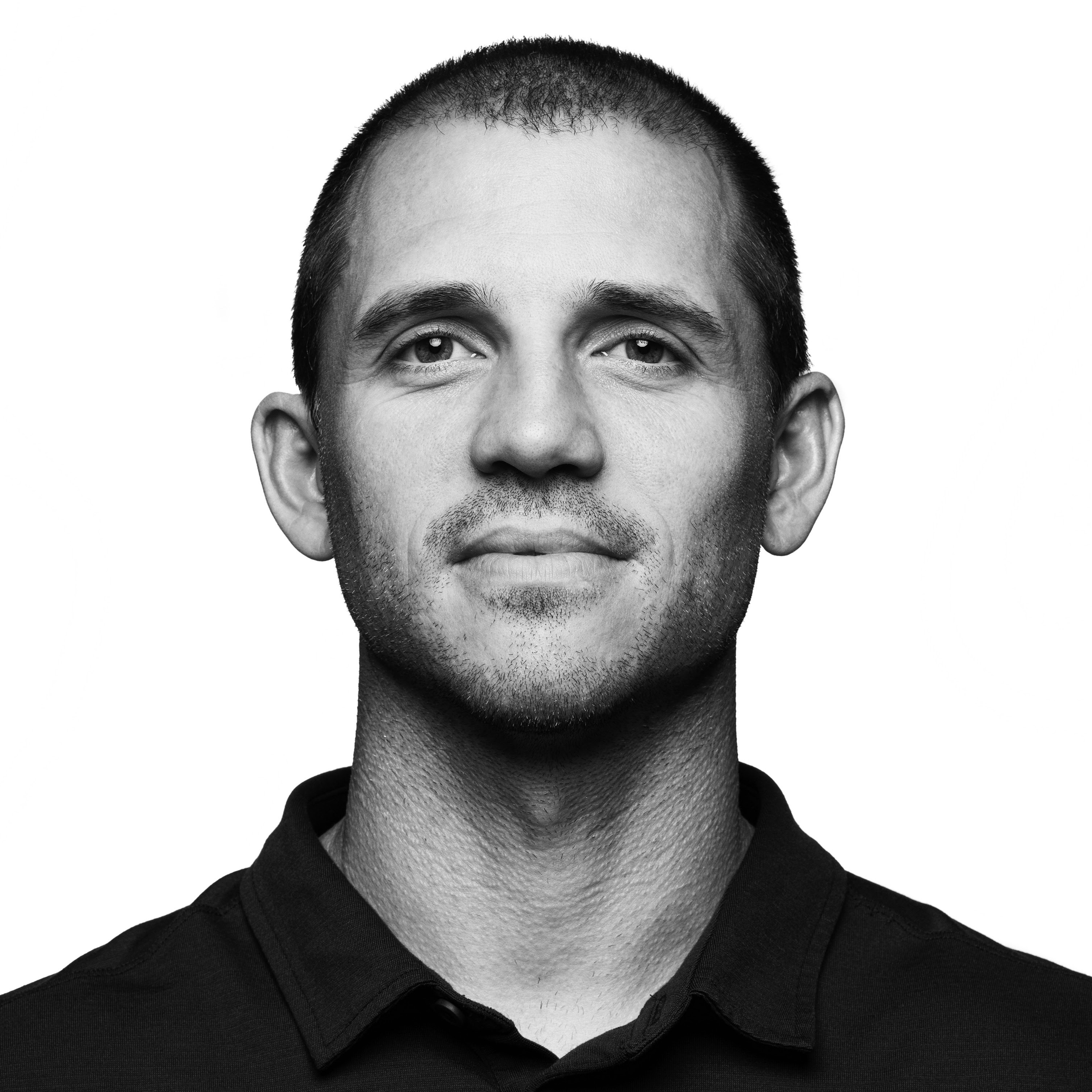
Ken Rideout went from a 3:30 marathon to 2:28 (world champion over 50) by running 10 miles a day with no heart rate monitor, just perceived effort, and later added a coach to shave the final minutes.
2
He traded a decade-long opioid addiction for the suffering of endurance racing, finding that the ‘other side of hard’ is the only thing that fills the void and provides peace.
3
For first-time marathoners, he recommends fueling early and often (gels every 30 min), water at every aid station, and saving caffeinated gels for mile 20 to power through the last 10K.
4
His morning routine: chug 16 oz water with Element electrolytes immediately upon waking, delay coffee 30–60 minutes, then run 10 miles before eating.
Protocols
Concrete recipes — what, when, how much, and why
5 items
Daily 10-mile run
WhatRun 10 miles every day, no days off, as maintenance volume.
WhenMorning, typically after a slow wake-up routine (coffee, etc.), around 8:30–10:00 AM.
Dose10 miles (~70 miles per week).
For whomKen Rideout (anecdotal); he suggests that others can adopt a similar daily discipline, but not necessarily 10 miles—start with a walk.
WhyBuilds aerobic base, provides mental health benefits, and is the foundation for his endurance performance. He believes consistency is more important than intensity.
CaveatsHe acknowledges that coaches would likely advise rest days or shorter runs, but he does it for mental health as much as physical. This is not a prescription for everyone; he’s in ‘survival mode.’
Ken’s 10-mile habit is non-negotiable and has been his baseline for years. He doesn’t particularly enjoy running; it’s a task he must complete. He says that even when he’s not training for a race, he maintains this volume. He believes that the volume alone, without any structured workouts, got him to a 2:33 marathon, which is a testament to the power of consistent aerobic work. He runs by perceived effort: when he feels good, he runs hard; when he needs recovery, he runs slower. He never runs less than 10 miles. He plans to continue this indefinitely, as it’s his anchor.
Mechanism
High daily volume builds aerobic capacity, mitochondrial density, and running economy. The consistency also reinforces discipline and mental toughness. He doesn’t rely on heart rate or pace, but his body has adapted to the load.
Personal experience
He describes his morning routine: wake, hydrate, coffee, then run. He says, ‘I’m not trying to be like, “Yay, I can’t wait to go for a run.” I’m like, “Oh, I got to go run.”’ He has never felt like he’s done too much, and he credits the daily run with keeping him off drugs.
If you see me alive, I got my run in.
Also said
“I don't like running now. I don't. So I'm like I'm not like, 'Yay, I can't wait to go for a run.' I'm like, 'Oh, I got to go go run.'”— Shows it’s discipline, not enjoyment.
Morning hydration with Element
WhatDrink 16 oz of water with Element electrolytes immediately upon waking.
WhenFirst thing in the morning, before coffee.
Dose16 oz water with one packet of Element.
For whomKen Rideout (anecdotal).
WhyRehydrate after sleep; he needs to replenish fluids and electrolytes, especially since he runs shortly after. He says it’s not enjoyable, but necessary.
CaveatsHe has no partnership with Element; he just uses it. He chugs it down, not for taste.
Ken mentions that he tries to follow the ‘Huberman protocol’ of delaying caffeine after waking, but his first act is to drink the Element water. He doesn’t eat until after his run. This hydration strategy is part of his disciplined morning routine. He also uses Element during his run, sometimes, but he doesn’t detail that here.
Mechanism
Electrolytes (sodium, potassium, magnesium) aid in fluid absorption and prevent dehydration, especially important for a morning run after a night of fasting.
Personal experience
He says he chugs it down: ‘It’s not enjoyable. It’s not fun. I’m like, this is just necessity.’
The first thing I drink as soon as I wake up is I have um and I don't have a partnership with Element, but I drink Elements in like 16 oz of water and I just chug it down.
Also said
“I try to do the Huberman protocol and not drink it immediately. Actually, the first thing I drink as soon as I wake up is I have ... Element.”— Shows he combines the two protocols.
Delay caffeine after waking
WhatWait 30–60 minutes after waking before drinking coffee, following the Huberman protocol of delaying caffeine to allow adenosine to clear.
WhenMorning, after hydrating with electrolyte water.
DoseDelay ~30–60 minutes.
For whomKen Rideout (anecdotal); he credits Andrew Huberman’s advice.
WhyTo avoid the afternoon crash and to let the body’s natural wake-up processes occur before blocking adenosine.
CaveatsHe doesn’t state exact timing, just that he doesn’t drink it immediately; he tries to follow the protocol.
Ken mentions this in passing as part of his morning routine. He says he tries to do the Huberman protocol, but his actual practice is to drink Element first, then have coffee later. He doesn’t elaborate on the science, but the implied benefit is better energy regulation.
Mechanism
Delaying caffeine allows adenosine to bind to receptors and promote natural wakefulness, reducing the need for caffeine to counteract the adenosine buildup later.
Personal experience
He says he ‘tries to do the Huberman protocol and not drink it immediately.’
I try to do the Huberman protocol and not drink it immediately.
Yasso 800s assessment
WhatRun 10 × 800 meters with 2-minute recovery; the time in minutes and seconds for each 800 should predict marathon time (e.g., 2:30 per 800 = 2:30 marathon).
WhenDuring marathon training, as a key workout to gauge readiness.
Dose10 × 800 m with 2-min rest.
For whomMarathon runners looking for a benchmark.
WhyIt’s a well-known predictive workout; if you can hit the target pace, you’re ready to race.
CaveatsHe notes it’s very hard, and he doesn’t always enjoy it, but it’s his true test of fitness.
Ken describes the magic of 800s: they are hell, but when you’re hitting them on pace, it’s a sign of high fitness. He uses them as a confidence builder. He doesn’t go into the physiological details, but he trusts the workout as a predictor. He suggests that if you can do 10 of them at 2:30, you’re in shape for a 2:30 marathon. He doesn’t mention doing it on a track, but it’s implied.
Mechanism
The workout stresses VO2max and lactate threshold, and the ability to sustain fast 800s with short rest indicates high aerobic capacity and running economy.
Personal experience
He says, ‘When I can do 10 of those with 2-minute recovery, I’m ready to throw down.’
When I can do 10 of those with 2-minute recovery, I'm ready to throw down.
Also said
“I think the the actual workout's called the Yasso 800s. Um you can Google it. It's It's very like famous assessment tool.”— He references the name and its predictive value.
Marathon fueling strategy
WhatDuring a marathon, take water at every aid station, alternate water and Gatorade, consume a gel every 30 minutes, and start caffeinated gels at mile 18–20.
WhenThroughout the race, from the start.
DoseGels every 30 min (~every 4 miles); caffeine gels at mile 20.
For whomFirst-time marathoners and anyone racing a marathon.
WhyFuel early and often to avoid bonking; caffeine provides a late-race boost.
CaveatsHe recommends cutting caffeine in the week leading up to the race to increase sensitivity.
Ken emphasizes that the halfway point of a marathon is actually 20 miles, not 13.1, because the last 10K is so difficult. He advises taking water at every station, even if not thirsty, and using Gatorade for electrolytes. He likes Morton’s gels (no affiliation) and suggests starting caffeinated gels at 20 miles to provide a noticeable lift. He also mentions that he takes some caffeine in the morning to promote bowel movements and maintain routine. He warns against waiting until you feel hungry or thirsty; by then it’s too late.
Mechanism
Carbohydrate gels replenish glycogen; caffeine blocks adenosine receptors to reduce perceived effort and increase alertness. Early fueling prevents glycogen depletion and hypoglycemia.
Personal experience
He shares that the races where he executed the plan perfectly, he was able to race the last 10K instead of surviving it, and he felt great afterward.
I would take water at every single aid station. ... I would make sure I'm getting calories at least every 30 minutes. ... around 20, 18 to 20 miles, I start introducing caffeinated gels.
Also said
“The halfway merit point in the marathon, no matter what anyone thinks whatever. Throw away every preconceived notion you have. Halfway point is 20 miles. When you get to 20, you're halfway there cuz that last 10K is difficult.”— Shifts the mental framing of the race.
What's new
Personal practice updates, fresh positions, predictions
6 items
Suffering as a replacement for addiction
Ken Rideout frames his transformation from drug addict to elite endurance athlete as a direct trade: the euphoric relief of opioids was replaced by the post-race relief and earned suffering of hard physical effort.
Why this matters: This is a raw, first-person account of using extreme physical suffering to fill the void left by addiction, offering a counterintuitive path to sobriety that isn’t about ‘balance’ but about leaning into discomfort.
Background
Ken had tried the ‘mediocre road’ and found it empty. He spent 10 years addicted to opioids, attempting to quit many times, until he started running as a form of penance and eventually found that the suffering of training and racing gave him the same psychological relief he had sought from drugs.
Ken explicitly states that ‘happy, healthy people don’t do drugs’—they have outlets that create that feeling naturally. He discovered that the suffering of endurance sports produced a profound sense of relief and euphoria when it ended, similar to the high he chased. He calls getting sober his proudest accomplishment, far harder than any race, and says that the period of withdrawal was ‘hell on earth.’ The shift wasn’t from escaping pain to avoiding it, but from numbing pain to actively seeking physical suffering as a way to confront and transcend it. He acknowledges this isn’t a prescription for everyone—he’s in ‘survival mode’ and deeply flawed—but for him it was the only road that didn’t lead back to drugs.
Personal experience
Ken recounts being suicidal during his addiction, unable to quit because he was too weak to face withdrawal. When he finally started running as a way to ‘kill myself’ because he hated his life, he improved, and the suffering of training became his salvation. He now says, ‘I found peace in suffering’ and that the only things fulfilling to him have come with struggle.
The only things that have been fulfilling to me as a as a person, as a man, has had come with suffering and struggling.
Also said
“When I started living a life of discipline and goal setting and enjoying the suffering, I was able to find moments of peace and more importantly, I didn't turn to drugs to find that peace. I found peace in suffering.”— Directly links discipline and suffering to the peace he previously sought in drugs.
“Getting sober is by far my proudest accomplishment, cuz it it was so hard. It would have been so much easier to just keep doing what I was doing, but that two, three, four week period of like getting off the getting those drugs out of my system and getting back to a baseline of like, you know, acceptable mood where I wasn't manic, depressed, and suicidal was hell on earth.”— Shows the magnitude of the struggle and why suffering became necessary.
Dirty vs. clean fuel
Ken distinguishes between ‘dirty fuel’ (creating enemies, imagining everyone is against you, racing out of fear and anger) and ‘clean fuel’ (racing for family, representing yourself with honor, getting the most out of yourself). He acknowledges using dirty fuel for most of his career but now strives for cleaner motivation.
Why this matters: It’s a rare candid admission from a high-level competitor about the psychological tactics he uses and how they can be unhealthy but effective, and how he’s trying to evolve.
Background
Ken’s default mindset was to manufacture enemies and doubters, even when none existed, to push himself harder. This stemmed from his childhood insecurities and the need to prove he wasn’t a loser after his addiction. Over time, he’s recognized that this creates bad energy and can spill over into how he treats loved ones.
He explains that dirty fuel is about creating a whole universe of people trying to get him, because if he wasn’t a winner he was a loser. This was completely irrational but effective. As he’s gotten older, he’s tried to shift to clean energy: racing for his family, representing them with honor, and getting the most out of himself. He notes that the brain doesn’t distinguish between what someone else says and what you say to yourself, and often the internal talk is harsher than anything he’d say to a friend. He realized he was talking to his wife the way he talks to himself, which was a wake-up call. He is not fully cured of dirty fuel; it’s a work in progress.
Personal experience
He describes yelling at his wife about a flat tire, then realizing he was venting at himself externally. He also talks about coaching his kids and seeing the dirty fuel mindset in his own competitive drive, and how he tries to impart a healthier approach to them.
I'm creating enemies. I'm telling myself everyone's trying to kill me and I'm going to kill them and I'm not a victim and I'm going to show you. I'm trying to show all my naysayers and doubters, even though I don't think I have any.
Also said
“As I've gotten older now, I've started to find more clean energy that's racing out of like, 'Let's get the most out of ourselves. Let's represent our selves and more importantly now, my children and my family. Like represent them with honor and integrity.'”— Shows the shift he’s trying to make.
“A lot of times your brain doesn't understand the difference between what someone's saying versus what you're saying to yourself. And a lot of times we talk to ourselves in ways that we would never talk to our friends or or our even competitors.”— Explains the psychological mechanism behind dirty fuel.
The 49/51 rule
Ken visualizes the internal battle as 49% of his mind wanting to quit and 51% wanting to keep going; he only needs that 1% edge to override the stop signals.
Why this matters: It’s a simple, memorable mental model that reframes the decision to persist as a small margin rather than a total conviction.
Background
In a marathon, Ken describes a thousand voices telling him to stop, but one desperate voice telling him to keep going. He frames it as ‘which crew do you listen to?’ and that the difference between finishing and quitting is just 1%.
He explains that during a race, his body is sending every signal to stop—hyperventilating, dehydrated, sore, calf hurting—but he has learned to amplify that one voice that says ‘be a champion, fight through this.’ The 49/51 concept is a tool to remind himself that he doesn’t need to be 100% committed; he just needs a slight majority. This is a mental trick he’s used to push through the darkest moments, and it’s a lesson he wants others to apply to any difficult endeavor. He contrasts this with the times he quit, like his first Ironman in Kona, and how that emptiness changed him forever.
Personal experience
He draws on his own experience of DNF’ing Ironman Kona and the humiliation he felt, which he vowed never to repeat. That memory fuels his 51%.
It's like 49% of you wants to quit. I don't need it to be 99%. Like I just need 1% more says go. Keep going than the 1% that says stop going.
Also said
“You just have to make the decision that you want to do. You want to win or lose in life?”— Reinforces that it’s a choice, not a feeling.
No data, all perceived effort
Ken Rideout trains and races without heart rate, power, or pace data, relying entirely on perceived effort and intuition, a stark contrast to the tech-heavy approach of many endurance athletes.
Why this matters: In an era of ubiquitous wearables, a world-class athlete eschewing all metrics is a provocative counterpoint, emphasizing that the mind and body’s internal signals can be more reliable than data when racing to win.
Background
Ken explains that he never used a heart rate monitor, power meter, or even a GPS watch other than to log distance. He doesn’t know his heart rate zones or lactate threshold. He runs by feel, and his training is based on volume and perceived effort.
He argues that when you’re racing to win, data can be a distraction because you have to react to competitors, not just hold a pace. He cites former Ironman world champion Norman Stadler who taped over his power meter because the race dictated the effort, not the numbers. Ken believes that in a race, you have to make split-second decisions based on who makes a move and whether you can cover it, and that’s not something a number can tell you. He admits that this approach might not be optimal for everyone, but for him, it’s the only way. He also notes that in ultra races like Mongolia, the terrain is so variable that pace is meaningless.
Personal experience
He tells the story of Mongolia where he was running with a backpack and realized that 8:30 pace felt like 7:00 pace without the pack. He never checked a watch; he just went by how he felt. He also recounted the Malibu half marathon where he surged based on sensing the other guy was hurting, not on a split.
Everything with me is never heart rate, it's all perceived effort.
Also said
“I had a power meter sponsor, but I put tape over it because at the end of the day I'm trying to win the race. It doesn't matter what this says.”— He quotes Norman Stadler to reinforce the point.
“When you're trying to be competitive, I think there's only so much you can do with data.”— Further justification of his approach.
The 10-mile daily minimum
Ken’s maintenance volume is 10 miles a day, 70 miles per week, with no days off; he believes this consistency is the foundation of his endurance and mental health.
Why this matters: A simple, extreme rule that he credits for his transformation from a 3:30 to 2:28 marathoner, and which he treats as non-negotiable, like brushing teeth.
Background
After getting sober, he started running daily and found that 10 miles was the sweet spot that allowed him to feel good, recover, and still have energy for life. He rarely deviates, and if he does, it’s a longer run, not shorter.
He acknowledges that many coaches would say he should take rest days or do shorter recovery runs, but for him, the daily run is as much about mental health as physical. He doesn’t particularly enjoy running; it’s a chore he just gets done. He says ‘if you see me alive, I got my run in.’ He believes that this volume, done mostly at a comfortable pace, built his aerobic base to the point where he could run a 2:33 marathon without any structured workouts beyond a weekly long run. He only added a coach when he plateaued at 2:33 and needed to get to 2:28. The 10-mile habit is a testament to the power of consistency over intensity.
Personal experience
He describes his daily routine: wake up, coffee, slow start, then run from 8:30 to 10:00, then work. He says he’s never felt like he’s done too much, and even after tough races, he only needed a couple of weeks to feel normal. He runs 10 miles even when he’s not training for a race.
If you see me alive, I got my run in.
Also said
“I don't like running now. I don't. So I'm like I'm not like, 'Yay, I can't wait to go for a run.' I'm like, 'Oh, I got to go go run.' Just like I got to go to school or I got to go to work.”— Shows that it’s discipline, not passion.
You can get 90% of the way on your own, then hire a coach
Ken’s journey from 3:30 to 2:33 marathon was self-coached with just volume and a weekly long run; he only hired coach Mario Fraioli when he hit a plateau and needed the final 4–5 minutes.
Why this matters: It’s a practical, achievable roadmap for recreational runners: the first massive gains come from simply running more, not from specialized coaching or complex plans.
Background
Ken started running marathons again in his late 30s/early 40s, going from 1:30 half to 1:17, then marathon times dropped from 2:58 to 2:45 to 2:40 to 2:33 over several years. He did this by running 10 miles a day and a weekly long run of 18–22 miles as a progression run. He didn’t follow a schedule; he just ran.
When he got stuck at 2:33–2:35, he brought in Mario Fraioli, who introduced structured workouts, track sessions, and periodization. That took him to 2:28 and multiple sub-2:30s after age 50. Ken’s point is that runners often overcomplicate things early on; the key is to build volume. He says, ‘You don’t need a coach. You need to run.’ He’s not against coaching, but he believes that the elite level requires the extra help, while the recreational runner can get the bulk of improvement by simply being consistent.
Personal experience
He describes his pre-coach training as ‘10 miles a day and once a week for 12 weeks, I’d run 18 to 22 miles as a workout’—a progression run. He’d run faster each mile, but not obsessively. He says he never commented on internet debates about needing track workouts, but wanted to say, ‘No, you don’t.’
I got to 2:33 and then I couldn't break through. ... Brought in Mario, went right to 2:28 and then ran under 2:30 like four or five times after I turned 50.
Also said
“You don't need a coach. You need to run.”— Succinctly captures his philosophy.
“I got to 2:33 and then I couldn't break through. ... Brought in Mario, went right to 2:28.”— Already the quote, but reinforces the plateau.
Recommendations
Products, supplements, and tools mentioned in the episode
5 items
Element electrolyte mix
Supplement
He drinks it first thing in the morning with 16 oz of water to rehydrate after sleep.
Ken uses Element as part of his morning routine, chugging it down despite not enjoying the taste. He also uses it during heavy training in the heat, as Andy Galpin mentions in the sponsor segment. Element provides a blend of 1,000 mg sodium, 200 mg potassium, and 60 mg magnesium with no sugar, which Ken values for hydration.
Personal experience
He says, ‘I don't have a partnership with Element, but I drink Elements in like 16 oz of water and I just chug it down. It's not enjoyable. It's not fun. I'm like, this is just necessity.’
I don't have a partnership with Element, but I drink Elements in like 16 oz of water and I just chug it down.
He uses Morton’s gels during marathons for fueling, one every 30 minutes.
Ken recommends Morton’s gels because they are designed for distance runners. He uses them strategically, starting with regular gels and then switching to caffeinated ones at mile 20. He doesn’t mention specific flavors, but he believes they are effective and well-tolerated.
Personal experience
He includes them in his fueling strategy for all his races.
I like Morton's gels. No sponsorship with them or partnership.
Ken Rideout’s forthcoming memoir (title not explicitly stated, but context is ‘The Other Side of Hard’ or similar)
Book
The book details his journey from addiction to endurance athlete, and he hopes it will inspire others.
Ken mentions the book multiple times, including a story about the last five pages making his wife cry. Andy Galpin says he read the entire book in one sitting. The book is a memoir that covers his childhood, addiction, getting sober, and his running career. It’s not a training manual, but a story of resilience and the power of suffering.
I sent that last chapter when I was writing the book to my wife, true story, and I'm sitting in my office, she's sitting in the kitchen, and I thought I heard her like sniffling and sobbing, and I come out, I'm like, 'Yo, what's up? Did you like it?' And she's like, 'Oh my god, I know how the story ends and I was still captivated.'
Also said
“The title of the book is everything you want on the other side of hard.”— Clarifies the book’s title and theme.
He spent a week there as part of his recovery journey, and it was one of the most important weeks of his life.
Onsite is a residential trauma healing program. Ken attended with NFL receiver Eric Decker, and he describes hating every second of it but recognizing it as critical. He says it’s a place where people can address deep-rooted trauma. He doesn’t provide details on the program, but it’s part of his story of getting sober.
Personal experience
He says, ‘The time that I spent in Onsite, which is a trauma healing center that people can read about in the book, was one of the most important weeks of my life. I hated every second of it.’
The time that I spent in Onsite, which is a trauma healing center that people can read about in the book, was one of the most important weeks of my life. I hated every second of it.
He says jiu-jitsu is the best sport for all kids because it teaches technique, calm under pressure, and it’s not reliant on physical strength.
Ken contrasts jiu-jitsu with wrestling, which he finds brutally hard and discouraging for kids who aren’t naturally tough. Jiu-jitsu allows even the ‘nerdy’ kid to excel through intelligence and technique. He sees his son Cameron thrive in it, learning to be calm when being dominated by smaller opponents. He believes it imparts life lessons about losing, learning, and staying composed.
vs alternatives
He contrasts jiu-jitsu with wrestling, which he says is the ‘worst sport’ for kids because it’s so physically demanding and punishing.
Personal experience
He talks about his son Cameron who does jiu-jitsu and how he gets bested by little girls with superior technique, yet he loves it. Ken says it’s the one sport he’d recommend to any parent.
Of all the sports that my kids do, jiu-jitsu is the best for all kids. Cuz you can be the worst athlete, the the nerdy kid who just wants to be studious and you can apply that that intelligence to that sport and be really good.
Also said
“The worst sport is wrestling. Wrestling, if you're not comfortable like being uncomfortable, wrestling is a hard sport. It's hard to watch. It's hard for the kids to do it.”— Highlights the contrast.
Lines worth pulling out — contrarian, specific, or perfectly phrased
5 items
The only things that have been fulfilling to me as a as a person, as a man, has had come with suffering and struggling.
Encapsulates his entire philosophy and the core of his transformation.
I had tried the mediocre road in life. And it didn't pay very well, meaning it wasn't very fulfilling.
A direct, memorable line about why he chose the hard path.
The road to heaven can feel like hell and the road to hell always feels like heaven in the beginning.
A poetic warning about the seduction of easy paths.
If you're out there smoking cigarettes, eating junk food, not exercising, and putting yourself in a compromised health position, and then you develop some ailment, now your children are like having to worry about you. Just like for a parent, you're never going to be happier than your saddest child. Your children most likely are never going to be happy if they know that their parents are dealing with health issues that were totally avoidable.
A powerful, guilt-based motivation for taking care of oneself, framed as responsibility to family.
Muscle is the organ of longevity. If you don't have some, you're probably not going to live quite as long.
A simple, memorable statement about the importance of muscle for healthspan.
Sign in to share feedback
Tell us if this brief hit the mark or missed it — feedback feeds back into the next iteration of the prompt.
Reading is free for everyone. A free account adds the personal layer: save protocols, follow experts, and see how the other experts weigh in on this same topic.
Educational summary of the cited expert source — not medical advice. Open the source recording linked above and consult a qualified physician before acting on any protocol.