UNFUCG
DashboardSearchChatBookmarksNotificationsActivityPremiumProfile
?
Home
Search
Chat
Saved
Profile
Episode
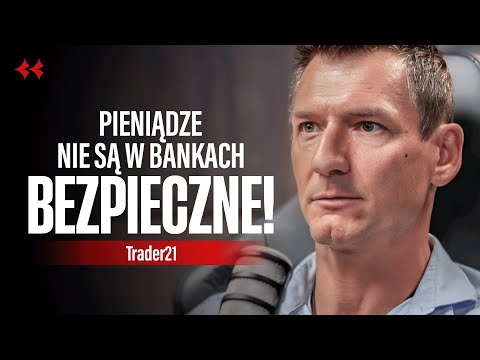
The End of Freedom: How the System Wants to Deprive You of Money? Trader21
~72 min
Episode Brief·YouTube

The End of Freedom: How the System Wants to Deprive You of Money? Trader21

Cyprian Majcher
Watch on YouTube Add to chat My bookmarks← All sources

TL;DR

The four things you'd lose by not watching

4 items

TL;DR

The four things you'd lose by not watching

4 items
1

Trader21 (Cezary Głuch) argues that the financial system is rigged against retail investors, with products like CFDs and futures designed to transfer wealth from the 80% who lose to the few who manipulate markets.

2

He warns that the elimination of cash and the push for CBDCs are tools for state control, citing Canada's trucker protest as a case where bank accounts were frozen to suppress dissent.

3

Głuch details his personal health optimization protocol, which includes cold plunges, red light therapy, ozone therapy, and the Bemer mat, emphasizing self-experimentation over conventional medicine.

4

He advocates for questioning all authority, from historical narratives to medical dogma, and shares his journey from building a marketing agency to achieving financial independence by age 29.

Protocols

Concrete recipes — what, when, how much, and why

6 items

Cold Water Immersion (Ice Baths)

WhatDaily immersion in ice-cold water for 2-5 minutes.
WhenFirst thing in the morning.
Dose2 to 5 minutes.
For whomSpeaker (anecdotal).
WhyTo improve health and shift the dopamine baseline, making one more sensitive to positive stimuli.
CaveatsThe first minute is extremely painful, described as feeling like legs are in a vise.

Głuch uses this protocol as a two-pronged tool. Physically, he believes it has health benefits. Mentally, it's a form of dopamine detox. By subjecting himself to an intensely negative stimulus, his brain's baseline for 'normal' is lowered. This means that small, everyday positive events—a good conversation, a piece of good news—trigger a much larger dopamine response than they would otherwise. He contrasts this with the hedonic treadmill of drugs or material success, where you need more and more to feel the same level of happiness.

Mechanism

The practice works by leveraging the brain's dopamine system. Just as the brain down-regulates dopamine receptors in response to constant high-dopamine hits (drugs, social media), it up-regulates or resensitizes them in response to a lack of dopamine or the presence of pain. The intense discomfort of the cold plunge acts as a 'negative' stimulus, which paradoxically resets the pleasure-pain balance, making subsequent positive experiences feel more rewarding.

Personal experience

Głuch does this every morning. He describes the first minute as a battle against the body's urge to escape, but he persists for the mental and physical benefits.

The first thing I do is go to the freezer filled with ice-cold water. I jump into it sometimes for two, sometimes three, sometimes 5 minutes.

Also said
“For the first minute, the body tells you: 'Run away, you feel immense pain, as if someone put your legs in a vise and is tightening it'.”— Highlights the intensity of the practice.

Red and Infrared Light Therapy

WhatUsing lamps emitting red and near-infrared light to stimulate cellular energy production.
WhenNot specified, implied as a regular practice.
DoseNot specified.
For whomSpeaker (anecdotal).
WhyTo increase ATP production in mitochondria, leading to faster recovery, more energy, and anti-aging effects.
CaveatsMost lamps emit only one wavelength, but Głuch found one that emits four.

Głuch explains that this therapy mimics the light spectrum of the sun just after sunrise and just before sunset. He read extensively on the subject before starting. He tested it on himself and observed faster regeneration after intense exercise, more energy, a more youthful face, and even a reduction in gray hair. He emphasizes the importance of the placebo effect, stating he actively tries to boost his belief in a therapy to enhance its effectiveness, as he believes the placebo effect accounts for 30% of physiological changes.

Mechanism

Red and near-infrared light photons are absorbed by cytochrome c oxidase in the mitochondria, which increases the efficiency of the electron transport chain, leading to greater ATP (energy) production. This is the same mechanism by which sunlight powers cellular energy.

Personal experience

Głuch reports that after using the lamps, he recovered much faster from intense physical exertion, felt more energetic, and noticed cosmetic improvements like a younger-looking face and the disappearance of some gray hairs.

I first read a lot about the wavelengths... I started testing on myself how it works. And indeed, I recovered much faster after some mega intense exertion.

Also said
“Overall, I noticed I have more energy, I feel better, my face looks a bit younger, my gray hair started to disappear.”— Details the specific anti-aging effects he experienced.

Wim Hof Breathing Method

WhatA breathing technique combining periods of intense hyperventilation with breath-holds.
WhenNot specified.
DoseNot specified.
For whomSpeaker (anecdotal).
WhyTo oxygenate the body and improve pH balance, which is essential for efficient oxygen transport to cells.

Głuch uses this as one of several methods to ensure his body is well-oxygenated. He explains that proper oxygenation requires not just oxygen, but also carbon dioxide, which is necessary for the Bohr effect—the release of oxygen from hemoglobin to tissues. He combines this with other practices like high-dose vitamin C IVs and ozone therapy to maintain an alkaline pH, which he believes is crucial for health.

Mechanism

The technique involves cycles of deep, rapid breathing (hyperventilation) which saturates the blood with oxygen and lowers CO2 levels. The subsequent breath-hold causes CO2 to build up again, and the body adapts to tolerate higher CO2 levels, which facilitates better oxygen delivery to cells.

For example, I use Wim Hof techniques, which combine periods of very intense breathing with not breathing at all.

Also said
“The point is to oxygenate the body well, you need to have both a lot of oxygen and a lot of carbon dioxide.”— Explains the counter-intuitive need for CO2 in oxygenation.

High-Dose Vitamin C IVs and Ozone Therapy

WhatIntravenous administration of high-dose vitamin C (25-50g) or ozone therapy to oxygenate blood and balance pH.
WhenWhen the opportunity arises ('when I have the chance').
Dose25 to 50 grams of Vitamin C.
For whomSpeaker (anecdotal).
WhyTo achieve deep tissue oxygenation and an alkaline state that cannot be achieved through oral supplementation or diet alone.

Głuch views these therapies as shortcuts to achieving a state of high oxygenation and alkalinity. He contrasts this with the standard Polish diet ('a bread roll with everything, pork chop butter'), which he says is highly acidifying. An acidic body, he argues, cannot be properly oxygenated. He uses these IV therapies to bypass the digestive system for superior absorption and effect.

Mechanism

High-dose vitamin C acts as a pro-oxidant in cancer cells but an antioxidant in healthy cells. Ozone therapy involves mixing blood with ozone gas, which is thought to stimulate the immune system and improve oxygen metabolism. Both are used to shift the body's pH towards a more alkaline state, which Głuch believes is essential for health.

Personal experience

Głuch states he does this when he can, implying it's a periodic part of his health regimen.

When I have the chance, I take intravenous vitamins, because their absorption is completely different... You can also achieve the same pH level through vitamin C infusions, just not 2 or 3 g, but 25 to 50.

Bemer Mat Therapy

WhatUsing a Bemer mat device to improve microcirculation in capillaries.
WhenRegularly, for 30-40 minutes.
Dose30-40 minutes on a low intensity setting (level 1 or 2 out of 10).
For whomSpeaker (anecdotal).
WhyTo dramatically improve blood flow to the capillaries, where 94% of blood is located.
CaveatsGłuch is highly sensitive to EMFs and had a negative reaction when starting on a high intensity setting. He had to find the lowest setting that worked for him. He also notes that while his wife and son can use level 2, he can only tolerate level 1.

A friend who works with FC Barcelona's football team and racehorses recommended the Bemer mat. Głuch was initially skeptical but tried it. He started on a high intensity, which made him feel terrible. He then experimented and found that the lowest setting worked best for him. He describes the effect on circulation as turning a dripping tap into a fire hose. He emphasizes that this is a 'new technology' without hard scientific studies, but he trusts his own experience and the anecdotal evidence from elite sports.

Mechanism

The Bemer mat uses a pulsed electromagnetic field (PEMF) to stimulate vasomotion, the rhythmic contraction and relaxation of blood vessels, which improves blood flow in the microvasculature (capillaries).

Personal experience

Głuch uses the Bemer mat on the lowest setting for 30-40 minutes. He initially tried a higher setting and felt terrible, highlighting the need to personalize the protocol.

I use minimal levels. Level one or level 2 out of 10 is the level that is good for me.

Also said
“It's like normally something is dripping for you, but after the Bemer therapy, the circulation looks like you turned on a fire hydrant.”— Vividly describes the perceived effect on blood flow.

EMF Avoidance and Grounding

WhatAvoiding WiFi, cell phone radiation, and other EMF sources, and practicing grounding (earthing).
WhenDaily, at home.
DoseConstant avoidance; grounding is the first thing he does after waking up.
For whomSpeaker (anecdotal), specifically for those who are EMF-sensitive.
WhyGłuch is highly sensitive to EMFs and feels unwell when exposed to them. Grounding is used to discharge positive ions.
CaveatsHe acknowledges that only a small percentage of people are this sensitive to EMFs.

Głuch states he feels bad in Warsaw and has removed WiFi from his home, using it only in emergencies. He lives far from cell towers. He connects this to his overall philosophy of listening to his body, even when the scientific consensus on EMF sensitivity is not settled. He grounds himself immediately after his morning cold plunge.

Mechanism

Grounding is based on the theory that direct contact with the Earth's surface allows for the transfer of free electrons into the body, which can neutralize reactive oxygen species (free radicals) and reduce inflammation.

Personal experience

Głuch feels an immediate negative impact from holding a cell phone to his ear and feels much better in his low-EMF home environment.

I, in turn, am a person very sensitive to any kind of radiation... For example, I feel bad in Warsaw. I no longer have WiFi at home at this moment.

Also said
“I also ground myself right away. That's the first thing I do on the way out of the freezer.”— Shows grounding is a core part of his morning routine.

What's new

Personal practice updates, fresh positions, predictions

4 items

Financial System as a Wealth Extraction Machine

00:00:00

The system is designed to transfer wealth from uninformed retail investors to large institutions. Over 80% of retail clients lose money on CFDs and futures, and brokers manipulate markets using knowledge of stop-loss levels.

Why this matters: Głuch provides a concrete, step-by-step explanation of how large banks coordinate to trigger stop-losses during low-liquidity periods, effectively 'cleaning out' retail accounts.

Background

Mainstream financial advice often promotes products like CFDs and futures as accessible investment tools, while Głuch argues they are predatory.

Głuch explains that the financial industry actively works to keep the average person ignorant of how the system truly functions. He cites Henry Ford's alleged quote that if people understood the banking system, there would be a revolution. The core mechanism he describes involves large players (like Goldman Sachs or Morgan Stanley) viewing the market's stop-loss levels. During low-liquidity periods, such as when the US market closes, these institutions can use relatively small amounts of capital to push the price of an asset down to a level where many stop-losses are clustered. This triggers a cascade of automatic sell orders, crashing the price further and wiping out leveraged retail positions. He uses the example of gold: if you have $100,000 and use 5x leverage, a 20% drop wipes you out. This is not a bug but a feature of a system designed to transfer wealth upwards.

Personal experience

Głuch states he has avoided Forex entirely since 2009 because the probability is stacked against the individual.

If you have an 80% chance of being on the losing side, why even get involved in it?

Also said
“So to clean out your entire account, it's enough to record a 20% drop, and very often the leverages are higher.”— Quantifies the risk of leverage.
“And this is an example where you know the system functions badly, programmed to rob people.”— Summarizes his core thesis on the financial system.

The War on Cash and CBDC Control

00:00:00

The elimination of physical cash and the introduction of Central Bank Digital Currencies (CBDCs) are tools for totalitarian control, enabling governments to freeze assets, enforce medical mandates, and suppress dissent.

Why this matters: Głuch connects the abstract concept of CBDCs to the concrete example of the Canadian trucker protests, where supporters had their bank accounts frozen.

Background

While many view digital payments as convenient, Głuch sees the push for a cashless society as a coordinated effort by banks and payment processors to increase profits and by governments to increase surveillance.

Głuch argues that eliminating cash makes citizens completely dependent on banks and payment processors like Visa and Mastercard, who can then raise fees without competition. More critically, he points to the Canadian trucker protests, where the government froze the bank accounts of protestors and their supporters, cutting off their ability to pay for basic necessities. He extends this to CBDCs, suggesting a government could programmatically block a citizen's account for not taking a specific vaccine or booster. He also notes that Poland's high cash transaction limit (15,000 PLN) is an outlier in the EU, and he suspects the push for the Euro is a backdoor way to enforce digital currency and eliminate the zloty. He cites the recent blackout in Spain as a practical example of the danger: when payment systems went down, only cash worked.

Personal experience

Głuch recounts being in Mallorca during a blackout where he could only pay for takeout with cash, as all digital payment systems were down for hours.

The moment you don't have cash and your account is blocked because Trudeau decided so, well, you won't pay your electricity bill. They can cut off your water.

Also said
“And Canada showed what a gigantic tool in the hands of politicians and oppressive power the elimination of cash can be.”— Provides a real-world example of financial censorship.
“In Europe, the European Central Bank has very advanced work and wants to introduce CBDC on a trial basis in October.”— Gives a specific timeline for the perceived threat.

Immigration Policy as a Deliberate Weakening of Nations

00:00:00

European immigration policy is selectively importing low-IQ, hard-to-assimilate populations from Sub-Saharan Africa and Afghanistan, while excluding high-IQ, hard-working populations from East Asia, leading to societal degradation.

Why this matters: Głuch references 'hard research' from a Nobel laureate on IQ differences and a large-scale Danish study on the net fiscal contribution of immigrants by origin.

Background

The mainstream narrative frames immigration as a universal good, but Głuch argues the selection of immigrants is a deliberate policy to burden the welfare state and create a dependent underclass.

Głuch argues that the type of immigration Europe is experiencing is not accidental. He claims that people from Sub-Saharan Africa and Afghanistan have, on average, a lower IQ and are harder to integrate, citing a Nobel laureate's research. He contrasts this with the absence of mass immigration from Japan, Korea, or China—nations he claims could 'pull up' the host country's average. He cites a Danish study showing that while European immigrants become net contributors to the state, non-European immigrants from certain regions never reach a net positive contribution, remaining a permanent drain on the welfare system. He observes that while his wealthy area of Mallorca is protected by business interests, cities like Barcelona are becoming unsafe, with rental car agencies now warning tourists about common scams and dangers.

Personal experience

Głuch shares an anecdote from Barcelona where a rental car employee warned him not to stop if someone signals a flat tire, as it's a common setup for robbery.

People with very, very low IQ are being brought into Europe. Look, we are not bringing in Japanese, Koreans, Chinese.

Also said
“These are hard studies by a man who once received a Nobel Prize.”— Attempts to ground the controversial claim in scientific authority.

Happiness as a Practice, Not a Destination

00:00:00

True happiness comes from appreciating what you have now, not from achieving future goals. Głuch uses deliberate discomfort, like ice baths, to reset his dopamine baseline and find joy in small things.

Why this matters: Głuch, a self-made millionaire, argues that the relentless pursuit of 'more' is a trap, and that he had to 'buy time' to unlearn this paradigm.

Background

Societal programming equates success with constant growth and career advancement, leading to a 'hamster wheel' mentality.

Głuch describes a pivotal moment in 2006 when he was rushing to a notary and saw a man peacefully reading a book on a park bench. This made him realize his 'hamster wheel' lifestyle was not making him happy. After selling his company at 28, he 'bought time' to travel and educate himself. He argues that the system programs people to always want more—a bigger company, a bigger yacht—which is a recipe for perpetual dissatisfaction. He practices daily cold plunges (2-5 minutes in ice water) not just for health, but to intentionally experience a negative stimulus. This, he explains, resets the dopamine baseline, making ordinary positive events feel more rewarding. He contrasts this with drug addiction, where the brain adapts to high dopamine hits, making normal life feel miserable.

Personal experience

Głuch shares his daily routine of entering a freezer filled with ice water for 2-5 minutes. The first minute is excruciating, but it makes him appreciate small positive interactions much more throughout the day.

Otherwise, it seems to me that to be truly happy, you need money. Maybe it doesn't bring happiness, but it makes your life easier. You need to be healthy and you need to have really great people around you.

Also said
“When you take drugs, you feel good. When you take them a second, third time, you already feel less good... And with negative stimuli, like entering ice-cold water, that shift goes the other way.”— Explains the dopamine mechanism behind his cold plunge practice.

Recommendations

Products, supplements, and tools mentioned in the episode

5 items

Questioning All Authority

Practice

Głuch argues that history, biology, and medicine are full of dogmas that are later proven false. He cites the story of Ignaz Semmelweis, who was ostracized and killed for suggesting doctors should wash their hands before delivering babies.

Głuch extends this skepticism to the financial world, where he was told to invest in bonds for safety, which he now sees as a guaranteed loss to inflation. He believes the ability to form one's own opinion based on diverse sources is a key element of emotional intelligence. He notes that the first casualty of war is truth, and history is written by the victors, making it inherently unreliable.

vs alternatives

Contrasts with the common practice of blindly trusting media, government, and educational institutions.

Personal experience

Głuch's first moment of questioning came from watching 'Braveheart' and realizing that historical narratives are controlled by the powerful. He later applied this skepticism to his own field, ignoring mainstream financial advice to build his wealth.

If you cannot think independently, you are not intelligent. Period.

Also said
“There was a man in 1870... who had the courage to say that the main cause of newborn deaths was that doctors did not wash their hands after autopsies... the man was destroyed, locked up in a mental institution, and killed with various therapies.”— Provides a powerful historical example of the danger of medical dogma.
Find Questioning

Using Cash and Defending Its Existence

Practice

Głuch argues that paying with cash is a political act that defends freedom. He warns that a cashless society enables total state and corporate control.

He urges listeners to pay with cash as often as possible, sign petitions defending cash, and attend protests. He explains that politicians test public reaction, and if there is no resistance, they will push further. He notes that in Poland, the only party currently against cash elimination is Konfederacja, but if politicians see public support for cash, other parties will adopt the position.

vs alternatives

Contrasts the freedom of cash with the vulnerability of digital-only systems, where accounts can be frozen by a political decision, as seen in Canada.

Personal experience

He recounts being in Mallorca during a blackout where digital payments were down for hours, and he could only pay for his takeout with cash.

We should pay with cash as often as possible. If there are protests in defense of cash, and there are, we should attend them.

Also said
“The moment there is no alternative, well, there are two payment processors who will drastically raise their fees, which will ultimately be passed on to the customer.”— Explains the hidden cost of a cashless society for consumers.
Find Using

Direct Charitable Giving Over Institutional Donations

Practice

Głuch argues that large charitable organizations often spend up to 80% of donations on operational costs, making direct giving to individuals in need far more effective.

He contrasts this with his own practice of finding specific families or individuals in need and giving them money directly. He gives the example of helping a father pay for his son's spinal surgery by matching the funds the father raised. He also mentions donating to 'Pajacyk' and providing direct aid to flood victims in southern Poland, bypassing what he calls the 'well' of the Polish tax system.

vs alternatives

Contrasts direct giving with paying taxes, which he sees as funding a corrupt system, and with large charities that have high administrative costs.

Personal experience

Głuch shares a story of a father who asked for help for his son's spinal surgery. Głuch promised to match whatever the father raised, and two weeks later, the father had raised half, and Głuch provided the other half.

I believe this is how we should help, not by throwing money into the well that is the Polish tax system.

Also said
“The largest organizations, the most well-known ones, can allocate up to 80% of their revenue to so-called operational costs.”— Quantifies the inefficiency of large charities.
Find Direct

Bemer Mat

Tool

A PEMF (Pulsed Electromagnetic Field) therapy device from Switzerland/Lichtenstein used to improve microcirculation.

Głuch was recommended this device by a friend who works with FC Barcelona's football team and racehorses. He uses it on a low setting for 30-40 minutes. He notes that there are no hard scientific studies on it, but he trusts the anecdotal evidence from elite sports and his own positive experience.

Personal experience

He initially used a setting that was too high and felt terrible, but found that the lowest setting works perfectly for him, dramatically improving his circulation.

It's like normally something is dripping for you, but after the Bemer therapy, the circulation looks like you turned on a fire hydrant.

Find Bemer

Estate Planning with a Family Foundation

Practice

Głuch recommends the Polish 'fundacja rodzinna' (family foundation) as a tool for multi-generational wealth accumulation and tax optimization.

He argues that passing a business to the second generation often fails, and by the third generation, nothing is left. A family foundation allows for more regulated transfers and keeps capital in Poland. He contrasts this with his own use of an Estonian company for asset accumulation, which he set up in 2005 for predictability and safety.

vs alternatives

Contrasts the Polish family foundation with the common practice of simply bequeathing company shares, which he sees as a recipe for failure.

Personal experience

Głuch has used an Estonian company for 20 years for asset accumulation and previously used Swiss and Singaporean companies for international operations.

In Poland, for example, solutions have now been created that allow you not to pay taxes. It is the family foundation, and I am very glad this model was created, because it is a great tool for generational capital accumulation.

Find Estate
Disclosed sponsorships1speaker disclosed

Book on Cash by Rafał Ganowski

Book Sponsored · disclosed

Głuch recommends a book written by his employee, Rafał Ganowski, which details the importance of cash and provides many examples of its necessity.

DisclosureRafał Ganowski is an employee of Głuch.

Głuch mentions this book in the context of the war on cash, stating it provides numerous examples of why cash is essential for a free society. He admits he forgot the exact title but vouches for its content.

One of our employees, Rafał Ganowski, wrote a book about cash... he provided many such examples.

Find Book

Notable quotes

Lines worth pulling out — contrarian, specific, or perfectly phrased

6 items
If you have an 80% chance of being on the losing side, why even get involved in it?
A blunt, memorable summary of his view on leveraged trading (CFDs, futures) as a rigged game.
History is written by the winners. That's why, I don't know, you learn history about World War II in Poland and you have, for example, one theory. People who learn about the same events in Germany or Russia will hear something completely different.
A concrete example of his core philosophy of questioning all official narratives.
A cured patient is a lost customer.
A pithy, cynical summary of his view that conventional medicine is designed to create perpetual patients, not cures.
The moment you don't have cash and your account is blocked because Trudeau decided so, well, you won't pay your electricity bill. They can cut off your water.
A stark, personal warning about the dangers of a cashless society, using the Canadian trucker protest as a real-world example.
When you take drugs, you feel good. When you take them a second, third time, you already feel less good... And with negative stimuli, like entering ice-cold water, that shift goes the other way.
A clear, accessible explanation of the dopamine mechanism behind his cold plunge practice.
People with very, very low IQ are being brought into Europe. Look, we are not bringing in Japanese, Koreans, Chinese.
A highly controversial and blunt statement on immigration policy, central to his worldview.

Sign in to share feedback

Tell us if this brief hit the mark or missed it — feedback feeds back into the next iteration of the prompt.

Topics covered

financial-freedommarket-manipulationcbdccashless-societyimmigration-policyhealth-optimizationcold-plungered-light-therapyemf-sensitivitytax-optimizationcritical-thinkinghappiness
Free account

Make this library yours

Reading is free for everyone. A free account adds the personal layer: save protocols, follow experts, and see how the other experts weigh in on this same topic.

Create a free accountSign in

Where the experts disagree — weekly

One email a week: the sharpest new disagreements and protocols from the library. No spam, unsubscribe anytime.

Educational summary of the cited expert source — not medical advice. Open the source recording linked above and consult a qualified physician before acting on any protocol.