UNFUCG
DashboardSearchChatBookmarksNotificationsActivityPremiumProfile
?
Home
Search
Chat
Saved
Profile
Episode
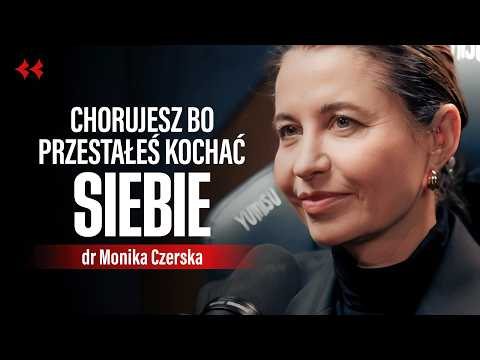
Are you poisoning yourself with your own thoughts – how does a sick soul destroy the body? Dr Monika Czerska
~105 min
Episode Brief·YouTube

Are you poisoning yourself with your own thoughts – how does a sick soul destroy the body? Dr Monika Czerska

Cyprian Majcher
Watch on YouTube Add to chat My bookmarks← All sources

TL;DR

The four things you'd lose by not watching

4 items

TL;DR

The four things you'd lose by not watching

4 items
1

Dr. Monika Czerska – neurologist, specialist in balneology and Chinese medicine – claims that integrating the four spheres (body, mind, emotions, spirit) makes every disease curable, which she supports with her own story of overcoming premature menopause thanks to Chinese medicine.

2

She reveals that she is currently struggling with a serious, potentially fatal disease, yet she maintains an active practice and social media presence to show that even the worst diagnosis does not take away the ability to heal oneself.

3

She provides a specific, free protocol: pressing the Pericardium 6 point (three fingers from the wrist crease, between the tendons) for 1–3 minutes in a pulsating manner, which works as an anti-anxiety and anti-nausea measure and – as sailor Mateusz Kusznierewicz says – is the only point he knows.

4

Her original method, 'four-chamber therapy,' combines academic diagnostics with Chinese medicine pulse diagnosis, acupressure, energy work, aromatherapy, and conversations about ancestral traumas to discover the root cause of the disease.

Protocols

Concrete recipes — what, when, how much, and why

4 items

Pressing the Pericardium 6 (PC6) point for panic attacks, anxiety, nausea

WhatThree fingers from the wrist crease, in the middle between the tendons – press pulsatingly for 1–3 minutes on both hands (women can start with the right).
WhenWhen you feel rising anxiety, a panic attack, nausea (e.g., motion sickness), before public speaking.
Dose1–3 minutes of pulsating pressure on each hand.
For whomAnyone experiencing anxiety, stress, nausea; also people with motion sickness.
WhyIn Chinese medicine, the Pericardium 6 point regulates energy flow, calms the heart and mind, and has anti-nausea and anti-anxiety effects; this point is commonly used even by sailors.
CaveatsNone; it can be used on an ad hoc and prophylactic basis.

This point is one of the most well-known in acupressure. Dr. Czerska demonstrates it on her own wrist and emphasizes that the Chinese often tap it or buy a special acupressure band at the pharmacy that constantly presses it. She explains that women (yin) should act more on the right hand, but for balance it is worth pressing both. She says that this point is the 'broken hearts point' – brilliant in states of emotional breakdown. She mentions how Mateusz Kusznierewicz, a sailor, told her: it's the only point I know, and it works for seasickness.

Mechanism

According to Chinese medicine, the pericardium channel regulates the circulation of energy in the chest and calms the Shen (heart spirit). Pressure unblocks stagnation and restores balance between the sympathetic and parasympathetic nervous systems (although Dr. Czerska does not elaborate on this in terms of neurophysiology).

Three fingers from the wrist crease, that is, from this line of the wrist crease … in the middle between the tendons is the Pericardium six point. A brilliant anti-anxiety point, also an anti-nausea point, of course.

Also said
“Mateusz Kusznierewicz says: 'Listen, I am a sailor, so of course I have seasickness, of course I press this point and it is the only point I know. It's good that they exist.'”— Practical confirmation of effectiveness from a person from a completely different field.
“At the pharmacy you will get a band that perfectly presses this point. If someone has motion sickness, this point also works for that.”— Indicates a ready-made, non-invasive tool for use during travel.

Breathing into a bag for hyperventilation / tetany attack

WhatIf you have a panic attack with hyperventilation and hand cramps, put a bag to your mouth (e.g., a plastic bag, a food bag) or join your hands to form a 'dome' and breathe into them with exhaled air.
WhenAt the moment of acute hyperventilation, numbness, muscle cramps (a common symptom of tetany).
DoseBlow as long as it takes for the symptoms to start subsiding.
For whomPeople with a tendency to panic attacks, especially if accompanied by cramps and numbness.
WhyIncreasing the concentration of CO2 in the inhaled air interrupts the effect of respiratory alkalosis caused by hyperventilation, which alleviates cramps and dizziness. Additionally, aromatherapy (emotions/mind oil) can enhance the calming effect.

Dr. Czerska points out that not every panic attack is purely psychological – it may have a metabolic basis (tetany from magnesium/potassium/calcium deficiency). Therefore, before starting purely psychological therapy, it is worth ruling out somatic causes. Nevertheless, in the acute moment, the most important thing is to break the vicious circle of hyperventilation. Breathing into a bag is a simple, accessible method. She adds that if you have an essential oil with you (e.g., the emotions oil you got from her), it can immediately stimulate you to life and restore feeling in the body.

Mechanism

Hyperventilation lowers the level of carbon dioxide in the blood, leading to vasoconstriction, alkalosis, and increased neuromuscular excitability. Breathing exhaled air increases CO2 and restores acid-base balance.

If you have any bag with you, yes, a plastic bag, a food bag, anything, or your own hands, then start blowing, yes, blowing and breathing this, and you will make yourself here, right, a little beak, such a dome.

Also said
“I can immediately say neurologically, well okay, but you might be having a tetany attack. So it may be that you simply have such disturbances in the supply of magnesium, potassium, calcium that you simply start hyperventilating.”— Shows that medical differentiation is necessary and it is not always 'pure' panic.

Daily time with yourself – 5 minutes of silence and introspection

WhatFind 5–15 minutes every day during which you leave your phone outside the door, close your eyes, and simply be with yourself, without any external stimuli. You can add progressive muscle relaxation, aromatherapy, lying in the bathtub, or putting in earplugs.
WhenDaily, preferably at a fixed time – put it in your calendar like the French plan sex.
DoseStart with 5 minutes, gradually extend to 15-30 minutes.
For whomEveryone, especially busy and overstimulated people who 'have no time for themselves.'
WhyOnly in silence do you hear the whisper of the soul and reach your true needs. In the rush, the mind and emotions take control, the body suffers, and the spirit remains unheard.
CaveatsAt first, anxiety, trembling, flashbacks may appear – this is natural because the body releases tension. Do not get discouraged.

Dr. Czerska describes that when she finally sits or lies down in silence and disconnects from everything, she feels how blood flows through her, how her organs work – this is a moment of interoception, i.e., listening to the inside of the body. Often then come emotions, sudden memories from childhood (grandma, grandpa, tastes), which turn out to be key to understanding oneself. She notes that in such moments she thinks to herself: 'Damn, what have I been doing until now? Where have I been? What was I chasing after?' and realizes that all her life she was running after someone, giving away her energy, without asking what she herself needs. This daily ritual has become for her a 'Wi-Fi' from which she draws strength, even when being on an energy deficit.

Mechanism

Silence and lack of stimulation lower the activity of the brain's default mode network (DMN) associated with rumination and worries, while simultaneously activating interoception. This enables access to subconscious emotional content and integration at the mind-body level.

Personal experience

Dr. Czerska says: 'I often do this, right? Because I'm rushing, rushing, rushing, but I have such a room that I know that when I enter it, it is only for me. So sometimes I even put in earplugs and I hear how it flows through me, I hear it here.' She also talks about how after such sessions she feels immense joy and gratitude for life.

Let's put in our schedule … time for me with myself. I pour water, I lie in the bathtub, I turn off the light, I disconnect from all external stimulators. I close my eyes and I am there for myself, what do I feel, how does my body speak to me.

Also said
“Damn, what have I been doing until now? Where have I been? What was I chasing after? Everyone around was more important and I focused on everyone, gave away my energy, but I didn't have that time to ask, damn, what do I need, what do I want.”— This is the key revelation that comes during such doing nothing – realizing one's own loss of contact with oneself.
“Very often after such a session alone with yourself, you get emotional and think to yourself: … I don't have to do anything anymore. I don't have to do anything anymore.”— The effect of releasing pressure and returning to childlike lightness.

A walk in nature without a phone and with the intention of exchanging energy

WhatLeave your phone at home, go to the forest or park. Without a goal, without documenting. Hug a tree, listen to the rustle, feel the scent of resin. You can sit under a tree and just be.
WhenRegularly, preferably once a week for a whole day or at least an hour.
DoseUnlimited time; what matters is the intention of 'being,' not training.
For whomEveryone, primarily city dwellers, people who are burned out and cut off from their own intuition.
WhyContact with nature without the mediation of technology opens the soul, quiets the mind, restores a sense of connection with the Earth and sky (grounding). Nature reminds us of simplicity and authenticity.

Dr. Czerska emphasizes that nature works on us at the subconscious level – grandma's scent, the sound of a tree can unlock deep memories and give a sense of security. She describes how a tree can become a friend: when you touch it regularly with the intention of exchanging energy, you begin to feel that it is warm and waiting for you. This is not mysticism, but the neurology of perception – the brain creates emotional associations. She mentions that her grandfather taught her to recognize trees by the color of the glow in the sky, and her grandmother walked with a divining rod – such experiences shape sensitivity to the immaterial dimension of the world.

Mechanism

Being in a natural environment lowers cortisol, activates the parasympathetic system, and improves heart rate variability. Additionally, contact with negative ions and phytoncides has documented health-promoting effects.

Personal experience

Her childhood in the countryside, among seniors, animals, herbs, and rituals, made nature a natural source of strength for her. She says: 'even when I am on a deficit, I go to my Wi-Fi, where I recharge.'

I leave my phone at home, I go with my dog to the forest and I look for those aspects of the forest that I might not have paid attention to before. How do the trees rustle? Maybe they will say something to you? Maybe you will hug it?

Also said
“And later, hugging it from time to time, returning to this forest, it will turn out that this tree is your friend, that you give your energy and it draws this energy from you and you feel that this tree is always warm. You even have the feeling that it is waiting for you.”— Describes a deep, palpable bond with nature that has a real impact on the psyche.

What's new

Personal practice updates, fresh positions, predictions

3 items

A doctor rejecting the spiritual sphere will not cure

Dr. Czerska directly states that a doctor ignoring the non-physical aspect of the patient is not able to truly cure them.

Why this matters: This is a very bold thesis for an active academic doctor working in the NFZ system, undermining the paradigm of purely somatic treatment.

Background

The dominant model of academic medicine treats the body like a machine, focusing on symptoms and pharmacotherapy, while ignoring emotions, traumas, and spirituality. Patients with unexplained ailments often hear that 'it's psychosomatic,' which is perceived as being dismissed.

Dr. Czerska argues that even if tests show no abnormalities, the patient suffers genuinely – and behind this suffering are often 'blocked emotions' and traumas that are not their own, but ancestral. In Chinese medicine, the pulse reveals the truth that the patient does not speak, or hides from themselves. Therefore, before administering any medications or therapies, she first examines the quality of the pulse and asks whether the patient feels loved, whether they have support, whether they want to take responsibility for their life. Only on this foundation can one begin to reverse the disease. A doctor who omits this stops at the surface and does not reach the root cause, thus not curing, but merely managing symptoms.

Personal experience

When she went through premature menopause at the age of 29, a professor from the academic clinic told her: 'There is no ovary in the ovary, no woman in the woman,' listing complications and taking away hope. Meanwhile, a Chinese medicine doctor saw only 'qi stagnation' and assured that everything could be resolved – which happened.

Is a doctor who ignores this non-physical aspect of the patient able to truly cure them? … No.

Also said
“The body will always tell us the truth. The body never lies and holds various emotions, often from our lineage.”— Explains why a physical symptom is just the tip of the emotional-ancestral iceberg.
“Every third patient who comes to my office has no abnormalities in any tests, yet feels unwell and suffers. And these are often psychosomatic disorders.”— Confirms the scale of the problem against which a purely somatic approach is helpless.

Every disease is curable with the integration of body, mind, emotions, and spirit

Dr. Czerska claims that the full integration of the four spheres of humanity removes the barrier of incurability, which she confirms with her own experience and cases from her practice.

Why this matters: This is a radical statement and contrary to the official medical narrative, which considers many chronic and oncological diseases incurable.

Background

In academic medicine, the term 'incurable disease' is often used, and patients are deprived of hope, which in itself can deepen the disease. Chinese medicine has for centuries perceived disease as disharmony, not a sentence.

Dr. Czerska emphasizes that it is not about rejecting conventional treatment, but about simultaneous work with the mind and soul. She believes that the body has a tremendous capacity for self-repair if a person stops dwelling in the low frequencies of fear and regret. She tells how she herself, with a serious disease (the nature of which she does not disclose), does not give in to panic, but records affirmations daily, works with breath, and treats the disease like a friend whom one can thank and part with. This attitude does not guarantee a cure in the statistical sense, but – as she emphasizes – cases of spontaneous remission even of glioblastomas are known when a person entered a high level of spiritual and emotional integration.

Personal experience

Her story of premature menopause reversed thanks to Chinese medicine and her open struggle with her current disease show that she authentically believes in this principle and acts according to it, despite the risk.

So you mean to say that integrating all these spheres, body, mind, emotions, spirit into one coherent picture makes every disease curable, according to you. >> Mhm.

Also said
“I have a very serious disease. I don't know what my life will look like by the end of the year. … Then I will break the system, showing that the worst diagnosis is still just a diagnosis and some code.”— Reveals that she says this from the position of a person directly affected by a potentially fatal disease, not from behind a desk.
“I was not born to be half of myself. I was born to live healthily, happily, to have a purpose, a mission, and not to treat disease as a disease, but as a friend for a certain stage of my life.”— Conveys the philosophy behind the thesis of curability – disease is not an enemy, but a signal for integration.

Spirituality as the most neglected child of the West

Contrary to the common opinion that the biggest problem is lack of exercise or poor diet, Dr. Czerska points to the spirit/spiritual sphere as the most neglected, because it is what gives direction and a sense of meaning.

Why this matters: A doctor saying in a podcast that spirituality (and not, for example, physical activity) is the most urgent need of modern man breaks the stereotype of the rational medic and undermines the hierarchy of wellness priorities.

Background

Western culture promotes the cult of the mind and constant achievement, while the soul – intuition, inner wisdom – speaks in a whisper and is drowned out by the noise of everyday life. People have access to gyms, meditation apps, and organic food, yet they still feel emptiness.

Dr. Czerska explains that the soul needs silence and stopping to make itself known – not in the language of sentences, but through gesture, smell, memory. When a person watches a sunset and feels moved, that is precisely contact with the soul. The problem is that the modern lifestyle leaves no room for doing nothing, and without this, one cannot hear one's own mission. The soul gives direction, and the mind only later fills in the details. That is why practices such as walking without a phone, hugging a tree, or simply being in nature without a goal are so important – then the soul begins to speak.

Personal experience

She recounts her childhood in the countryside, where rituals, the presence of death in the home, herbs, and mystical contact with nature were normal. Thanks to this, from childhood she felt that there is something more than physicality, which shaped her later approach to medicine.

The soul always tells the truth and always tells us things that serve us. … it needs silence, stopping so that we can feel that it is so close to us and that we have such a treasure within ourselves.

Also said
“We have access to the most modern gyms, hundreds of meditation apps, we have access to the healthiest organic food … and despite this, we still feel this emptiness in life and we get sick even more.”— Shows the paradox: the more tools, the greater the emptiness, indicating that the spiritual dimension is missing.
“The soul does not speak in language. It speaks through gesture, taste, smell, whisper.”— Explains why it cannot be reached through the intellect – silence and mindfulness are needed.

Recommendations

Products, supplements, and tools mentioned in the episode

2 items

Essential oil 'Emotions' and 'Mind'

Product

Dr. Czerska recommends them as support for panic attacks, stress, and for energy work. She mentions that she gave them to the podcast host, and he confirms their effectiveness.

The oils are used in her office for aromatherapy. During a panic attack, just one drop to inhale is enough to immediately stimulate the body. One must be careful with the amount, because too much can make you feel dazed. The oils do not replace treatment, but are a natural tool for quickly regulating the emotional state, especially when used together with breathing into a bag.

vs alternatives

Provides an alternative to pharmacological ad hoc sedatives.

Personal experience

She gave Cyprian a set and says it worked for him too.

If you have aromatherapy, I often say, take the emotions oil or the mind oil and it … will immediately stimulate you to life.

Also said
“Just one drop is enough, because sometimes, you know, if too much, you also feel kind of dazed.”— Dosage – more does not mean better.
Find Essential

Acupressure wristband (Pericardium 6 point)

Product

Available in pharmacies, it is a convenient alternative to manually pressing the point. Used for motion sickness and anxiety.

Dr. Czerska says that if someone finds it difficult to remember to press, the band works constantly. It is a simple, cheap tool for self-regulation of the nervous system, consistent with the principles of Chinese medicine.

vs alternatives

An alternative to antiemetics and anxiolytics without side effects.

At the pharmacy you will get a band that perfectly presses this point. If someone has motion sickness, this point also works for that.

Find Acupressure
Disclosed sponsorships1speaker disclosed

Four-chamber therapy (Dr. Czerska's original method)

Practice Sponsored · disclosed

Integrates academic diagnostics (tests, imaging) with Chinese medicine pulse assessment, chakra work, acupressure, electroacupuncture, craniosacral therapy, analysis of ancestral emotions, and meditations. The whole process takes place during longer visits, where the patient is guided holistically.

DisclosureThis is her original method, which she uses in her clinic and workshops.

The method was born from the observation that a standard 15-minute NFZ visit makes it impossible to reach the root cause. Dr. Czerska first performs a complete set of neurological and laboratory tests to rule out or confirm an organic basis. Then, if the tests show no abnormalities or treatment does not work, she proceeds to work with the pulse and emotional history. She often discovers 'blocked emotions' – e.g., unexpressed grief from a loss 40 years ago, which manifests as fibromyalgia. As part of the therapy, the patient receives a set of points for self-acupressure at home, changes their diet, learns to meditate and listen to sounds (e.g., mantras). She describes the results using the example of a patient with long-standing fibromyalgia, who after a few visits began to wean off strong antiepileptic drugs and returned to social life.

vs alternatives

Compared to standard chronic pain treatment (drugs, blockades), the method reaches the cause, not just masks the symptoms.

Personal experience

She herself went through a similar process when academic medicine gave her no hope, and Chinese medicine restored her health.

I always start with the body, because the body will always tell us the truth. … we look for this root cause, and this root cause very often is precisely blocked emotions and often not one's own, but one's family's.

Find Four-chamber

Notable quotes

Lines worth pulling out — contrarian, specific, or perfectly phrased

6 items
Is a doctor who ignores this non-physical aspect of the patient able to truly cure them? … No.
A clear and uncompromising stance of an active doctor who questions the foundations of purely somatic medicine.
I was not born to be half of myself. I was born to live healthily, happily, to have a purpose, a mission, to enjoy every day, and not to treat disease as a disease, but as a friend for a certain stage of my life.
A philosophy of life that radically changes the approach to one's own serious disease – from a fight to an alliance.
This is only part of the truth that someone wants me to believe. … The worst diagnosis is still just a diagnosis and some code.
Shows the power of suggestion that doctors exert on patients, and the courage to reject the sentence without denying medical facts.
Damn, what have I been doing until now? Where have I been? What was I chasing after? Everyone around was more important and I focused on everyone, gave away my energy, but I didn't have that time to ask, damn, what do I need, what do I want.
An honest and blunt insight into oneself, which is common to many burned-out people; captures the essence of losing contact with one's own soul.
Up to 90 years of age, we are young and we diagnose ourselves, we treat persistently even up to 90.
An optimistic message from Chinese medicine, contrasting with Western geriatrics of resignation.
This person dies at night and was ready for discharge. And I tell you, it is terrifying how the body begins to hide, how the body begins to close down, how the body feels that it is no longer needed by anyone.
A powerful example from the hospital ward of how emotions (feeling like a burden) directly turn off the will to live and lead to death.

Sign in to share feedback

Tell us if this brief hit the mark or missed it — feedback feeds back into the next iteration of the prompt.

Topics covered

holistyczna-medycynaduchowosc-i-duszamedycyna-chinskaakupresura-i-akupunkturapsychosomatykatrauma-i-emocje-rodowemenopauza-przypadek-osobistyfibromialgia-case-studyterapia-czterech-komnatrola-lekarza-w-systemiesamotnosc-seniorowsmierc-z-braku-miloscimedycyna-akademicka-vs-holistycznauziemnienie-i-naturacisza-i-introspekcjaafirmacje-i-wdziecznoscolejki-eterycznechoroba-jako-przyjaciel
Free account

Make this library yours

Reading is free for everyone. A free account adds the personal layer: save protocols, follow experts, and see how the other experts weigh in on this same topic.

Create a free accountSign in

Where the experts disagree — weekly

One email a week: the sharpest new disagreements and protocols from the library. No spam, unsubscribe anytime.

Educational summary of the cited expert source — not medical advice. Open the source recording linked above and consult a qualified physician before acting on any protocol.