UNFUCG
DashboardSearchChatBookmarksNotificationsActivityPremiumProfile
?
Home
Search
Chat
Saved
Profile
Episode
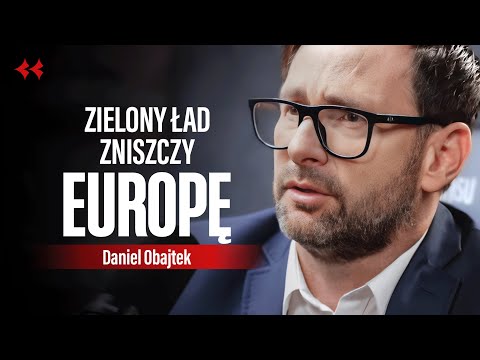
The creator of Orlen's success or a scapegoat of the Polish media? Daniel Obajtek
~85 min
Episode Brief·YouTube

The creator of Orlen's success or a scapegoat of the Polish media? Daniel Obajtek

Cyprian Majcher
Watch on YouTube Add to chat My bookmarks← All sources

TL;DR

The four things you'd lose by not watching

4 items

TL;DR

The four things you'd lose by not watching

4 items
1

Daniel Obajtek argues that the Polish media deliberately destroyed his image and blocked Orlen's development because 'someone paid for it', and today the current management board 'boasts' about his achievements, such as the merger with Lotos, the contract with the Saudis, or investments in SMR.

2

He claims that the CEO of a large State Treasury company must be 'crazy' to take risks, because 'out of 10 business decisions, you will lose on two and that is no reason to be threatened with a prosecutor' – without this, companies merely administer instead of developing.

3

He emphasizes that EU sanctions on Russian oil are a 'fiction', because Germany and France continue to import raw materials from Russia, flooding the Polish market with cheaper products, while Poland is blocked by the 'mainstream media managed by German services'.

4

He mentions that sport is 'the best form of reaching the customer', but he himself never appeared at sporting events so as not to politicize athletes, even though Orlen financed 'practically all sport' in Poland.

Protocols

Concrete recipes — what, when, how much, and why

7 items

Decision-making based on risk ('madness')

WhatMaking up to 40 business decisions daily with the acceptance that 2 out of 10 will be loss-making, without fear of the prosecutor's office.
WhenIn managing a large international company, especially in a crisis (COVID, war).
For whomCEOs of State Treasury companies and large managers in a political environment.
WhyExcessive caution leads to administering companies instead of their development and transformation.
CaveatsThe risk of being held criminally liable and media lynching despite good company results.

Obajtek argues that 'big business can be managed by crazy people'. If a CEO thinks only about fear of audits and the prosecutor, 'you won't make any decision'. He describes how during the pandemic he decided not to freeze investments and refinery production, despite uncertainty. Similarly in the price crisis – Orlen under his leadership conducted hedging of gas and CO2 certificates, on which it earned billions, but individual transactions could bring losses. In his opinion, Poland lacks understanding that this is standard business practice, not acting to the company's detriment.

Personal experience

He says: 'Out of 10 business decisions, you will lose on two and that is no reason to be threatened with a prosecutor.'

So making decisions in times of very high threat and a massive workload, generally the good of the concern and state security must often be taken into account.

Also said
“This is the problem, that today a man like Mateusz Morawiecki and a few people should be distinguished.”— He extends the concept to crisis management at the government level.

Zero-one management

WhatDirect, non-political communication of expectations and consequences to contractors, without 'political correctness'.
WhenIn relations with sports association boards, contractors, and employees when results do not meet expectations.
For whomManagers in corporate structures and negotiators.
WhyIt ensures efficiency and quick correction of actions, because 'business must be managed toughly, not on some blabbering'.
CaveatsMay be perceived as arrogance or lack of diplomacy.

Obajtek describes his approach to talks with contractors: 'I will come, enter, slam the door, say what I think about someone and say that if you don't change within two weeks and correct your actions, I will simply fall flat on my face and that's the end of the conversation.' In the context of sponsoring sport, he said that associations had to meet conditions regarding allocating funds for youth and training, because 'either you adapt, or up a tree'. He admits that this is not a style of 'political correctness', but believes that in business only such an attitude brings results.

Personal experience

He says: 'I am zero-one. (...) I have no intention of practicing political correctness in business, that's why I'm not fit for politics.'

I will come, enter, slam the door, say what I think about someone and say that if you don't change within two weeks and correct your actions, I will simply fall flat on my face and that's the end of the conversation.

Also said
“Either you adapt, or up a tree. That's how it should be in business. In business, I think that business must be managed toughly.”— He emphasizes uncompromisingness in management.

Protecting athletes from politicization through CEO isolation

WhatThe deliberate non-attendance of the CEO-sponsor at any sporting events, so as not to transfer political divisions onto athletes.
WhenThroughout the entire term, especially during a period of strong political polarization.
For whomCEOs of state-owned companies sponsoring sport in a highly polarized environment.
WhySport should unite, and the presence of a politically stigmatized CEO stigmatizes athletes and threatens their contracts.
CaveatsThe opportunity for business networking at sporting events is lost.

Obajtek reveals that he never attended any sports event, even though Orlen under his rule spent hundreds of millions on sport and was the main sponsor of many associations. The exception was one meeting with a disabled person, which he organized discreetly. He said that 'sport is timeless and it must not be politicized under any circumstances', and his presence at ski jumping or speedway would make the participants be considered 'PiS supporters'. For the same reason, he never appeared at Formula 1, even though Orlen was a sponsor and that's where 'business is done'.

Personal experience

He says: 'I have never been to Formula 1 in my life. (...) I have never been anywhere at sporting events in Poland.'

I knew that sport is timeless and it must not be politicized under any circumstances.

Also said
“They had a problem. I asked them not to talk about me. There is no athlete in Poland, and we financed hundreds of them, thousands of young ones.”— Shows the scale of financing with total media absence.

Listening to reason instead of heart in business decisions

WhatMaking personnel and business decisions based on a cool analysis of the value a person brings to the company, not personal sympathy or compassion.
WhenWhen building a team and negotiating.
For whomManagers building task teams.
WhyIn business, what matters is 'how much he brings to the business', even if someone has 'minor sins', because temperament cannot be separated from effectiveness.
CaveatsMay lead to tolerating unethical behavior in the name of results.

Obajtek explains that in childhood his observation skills sharpened and he feels when someone is deceiving him. But 'when I listened to my heart, I was wrong' – meaning when he made a decision out of pity, it ended in a mistake. He said: 'Sometimes such a brutal negotiator, with whom you wouldn't want to go to a desert island at all, is the best for business.' So he tolerated some employee flaws, because 'sometimes they lied to me in minor things, but you have to look at how much he brings to the business'.

Personal experience

He says: 'Whenever I didn't listen to reason, but listened to my heart, I was wrong. And when I listened to reason, not heart, I was not wrong.'

In business, you have to look at who brings how much to the business. Sometimes you don't need to look at his minor sins that he has.

Also said
“Is business about choosing little angels? Sometimes you choose people for business who have temperament.”— He argues that there are no perfect people.

Treating audits and charges as business risk, not criminal

WhatAvoiding decision paralysis by treating potential audits and prosecutor's cases as an inherent element of big business, not proof of guilt.
WhenWith every controversial project.
For whomCEOs of State Treasury companies.
WhyIn the current political climate, every decision can be audited, and since 'there will be 10 experts who will state that everything was done terribly', fear of this blocks development.
CaveatsRequires mental resilience and funds for lawyers, because 'insurances are not eager to pay out'.

Obajtek describes that audits commissioned by the next ruling team are ordered from 'friends of the rabbit' and written to a political thesis. The prosecutor's office, due to lack of funds, relies on these audits instead of commissioning its own analyses. In his opinion, the company 'if it is harmed, should pursue civil lawsuits', and not use criminal institutions to destroy predecessors. Despite this, he himself took the risk, because 'you think about the company, about the nation, and they think about how to bury you'.

Personal experience

He says: 'I have to spend hundreds of thousands on lawyers, because I made decisions. (...) Of which some were actually insured, but insurances are not eager to pay out.'

The moment someone looked not through the prism of the bad Obajtek, but through the prism of results, compared those results (...) there is really no reason to criticize me.

Also said
“These audits will of course find 10 experts who will state that everything was done wonderfully and 10 experts who will state that everything was done terribly.”— Shows the absurdities of audits written to a thesis.

Prioritizing 'practitioners' over 'theorists' in key departments

WhatHiring in core business only people who 'ran at least a beer kiosk', meaning they have practical experience in running a business, even micro-enterprises.
WhenWhen recruiting for key decision-making positions.
For whomTrade, investment, risk management departments.
WhyPractitioners make bold decisions because they know the risk, while theorists are too cautious and not fit for 'tough business'.
CaveatsTheorists can be useful in administration and non-business areas.

Obajtek emphasizes that in 'core business, theorists had no place with me'. People with practical experience 'were not afraid' to take risks, e.g., gas hedging or CO2 certificates, which brought Orlen billions in profits. In his opinion, 'this requires the courage of brave people', and theorists are only inclined to administer.

Personal experience

He says: 'First of all, I looked at whether in his life he ran at least a beer kiosk.'

In core business, theorists had no place with me, because I believe that this requires the courage of brave people.

Also said
“Are such risks taken in this company, but this could be done by people who were not afraid, who wanted to.”— Connects practice with readiness for risk.

Hedging commodity prices as a constant risk management strategy

WhatSecuring gas prices and CO2 certificates (hedging) in order to generate profits on market fluctuations, despite the risk of losses on individual transactions.
WhenIn periods of high commodity price volatility.
For whomRisk management departments of large fuel concerns.
WhyThe sum of profits from transactions exceeds losses, and passivity towards price fluctuations exposes the company to greater risk.
CaveatsIndividual transactions can bring a loss, which political opponents will call a 'scandal'.

Obajtek explains that hedging is standard practice in international concerns, but in Poland it became the subject of attacks: 'This gas could have gone down. We could have lost minimally, but we took the risk.' They earned billions in total (CO2: '2 billion or so'), which shows that the approach was effective. The current management board, in his opinion, 'is afraid of everything' and does not take such actions, causing the company to lose income.

Personal experience

He says: 'We earned 2 billion or so on this, we took this risk.'

Hedging gas prices, that is securing gas prices. This gas could have gone down. We could have lost minimally, but we took the risk.

Also said
“You know, out of 10 business decisions, you will lose on two. And that is no reason to be threatened with a prosecutor.”— Contextualizes hedging as normal practice.

What's new

Personal practice updates, fresh positions, predictions

4 items

Political attack on the Orlen CEO as a 'scapegoat'

Obajtek claims that he is the only CEO who has legal problems, because he was the only one who made bold business decisions, and not just administered the company.

Why this matters: Undermines the media narrative, pointing out that all other CEOs 'have peace, they don't make any decisions'.

Background

In the Polish media environment, criticism of Obajtek dominates as a symbol of the politicization of State Treasury companies.

Obajtek counters that it was the media and political attacks that created him. He says: 'Daniel Obajtek was not created by Daniel Obajtek, but Daniel Obajtek was created by these opposition media.' He emphasizes that Polish society has a tendency to solidarity with people attacked by the media. In his opinion, the actions of the prosecutor's office and investigative committees are absurd, because they concern business decisions that normally should be resolved before a civil court, not a criminal one. He points to hypocrisy – the current management board boasts about investments for which he himself was supposed to be prosecuted.

Personal experience

He said that some CEOs in private conversations admitted he was right, but 'the editorial line is different'.

Who among all these CEOs actually has problems. Only Daniel Obajtek has these problems.

Also said
“If you looked only and exclusively at your own interest and peace, which is what most CEOs of state treasury companies do, that is simply have peace, don't make any decisions.”— Shows the accusation that other CEOs avoid responsibility.
“These people are most attacked in Poland by whom? By people who have done nothing for this country.”— Generalizes the thesis about attacks on active people.

Alleged ineffectiveness of EU sanctions against Russia

Obajtek states that sanctions on Russian oil are fiction, because Germany and France still import raw materials, and flood the Polish market with petroleum products.

Why this matters: Position contrary to the official policy of the EU and the Polish government, suggesting deliberate actions by services of other states to the detriment of Poland.

Background

Poland and the EU introduced a series of sanctions on Russian energy raw materials after the invasion of Ukraine in 2022.

Obajtek describes in detail the mechanism of 'blending' Russian oil in other countries (e.g., Turkey, India) and importing petroleum products to Europe. He claims that Russia 'created an excellent network for selling its oil and gas', and Germany and France are doing well trading with Russia. In his opinion, Polish services block such actions, while 'French and German services do not block'. He calls it 'hypocrisy' and claims that 'Poles are losing very heavily on this'.

All of Europe feeds on this and all these EU celebrities, that Europe adopts subsequent sanction packages. Do you know that this is fiction?

Also said
“German refineries process Russian oil, which is a few dollars cheaper. They flood the Polish market with product.”— Specifies the accusation of unfair competition.
“Russia has greatly developed oil and gas processing. That's why it floods the entire European market with fertilizers.”— Extends the argument to economic consequences.

Low salary of the Orlen CEO and deterring talent from the public sector

Obajtek believes that his annual remuneration of 1.2 million net is drastically lower than the earnings of heads of comparable concerns (e.g., MOL, OMV) and directors of smaller companies, which discourages taking risks.

Why this matters: A rare example of a former CEO publicly revealing frustration due to low earnings in the context of legal risk.

Background

The Orlen CEO's salary is limited by the salary cap act, and Obajtek previously declared that he donates his entire salary to charity.

Obajtek calculates in detail: 2.5 million gross annually, of which 54% taxes, so 1.2 million remains. He compares this to a director in an international concern 'half smaller', who earned more. He emphasizes that 'the greater the responsibility, the greater the earnings', and in Poland there is 'Bolshevism', meaning giving everyone equally. In his opinion, low earnings combined with legal risk mean that no one wants to make decisions. 'That is no reason to be threatened with a prosecutor, because then you won't make any decision.'

Personal experience

He says: 'I have to spend hundreds of thousands on lawyers, because I made decisions.'

A director in a half-smaller international concern earned more than as the CEO of Orlen.

Also said
“I believe that the greater the responsibility, the greater the earnings. (...) We will not build capital, economy, responsibility, nothing.”— Expresses a management philosophy.

Refusal to participate in sporting events as a strategy to protect athletes from politicization

Obajtek reveals that he deliberately did not appear at any sports events financed by Orlen, so as not to stigmatize athletes as 'PiS supporters'.

Why this matters: An unexpected confession indicating awareness of the mechanisms of political ostracism in Poland.

Background

Orlen during his term was the largest sports sponsor in Poland, which met with criticism as spending funds for political purposes.

Obajtek says: 'I had honor and did not want to politicize athletes.' He also asked athletes who wanted to publicly support him not to do so, because 'sport is timeless, they will politicize you immediately, they will terminate your contracts.' He points out that his secretaries were summoned by the prosecutor's office to explain their participation in Formula 1, while that's exactly where business is done. As a result, he never appeared even at the Monaco Grand Prix.

Personal experience

He says: 'I have never been to Formula 1 in my life. (...) I have never been anywhere at sporting events in Poland. (...) Whoever was at Formula 1 now, comes and explains himself to the prosecutor.'

I asked them not to talk about me. (...) I knew that sport is timeless and it must not be politicized under any circumstances.

Also said
“The moment this wave of hate was on me as such a chief PiS supporter, showing up anywhere, whether at ski jumping or anywhere, it would immediately be that they are PiS supporters.”— Illustrates the mechanism of stigmatization.

Recommendations

Products, supplements, and tools mentioned in the episode

3 items

Continuation of long-term infrastructure projects regardless of changes in power

Practice

Obajtek praises the continuation of the Czech P3 project after the previous CEO Jacek Krawiec, despite 'very unfavorable macro'.

Obajtek argues that investment projects, e.g., petrochemical or SMR, have a horizon of 5-10 years and should not be frozen due to a political change of power, because 'the economy is one'. As an example, he says he continued Jacek Krawiec's P3, even though he does not support him politically, because it was economically justified. He believes that 'the Orlen management board must be partially political', but investment decisions should not be canceled just because 'PiS came up with it'. Currently, the planned increase in polystyrene standards favors mineral wool producers at the expense of 100 Polish companies, which according to him is an example of destroying the economy through politics.

vs alternatives

In contrast to the current management board, which 'suspends' projects, losing hundreds of millions of zlotys on preparations.

Preparing a given project costs hundreds of millions. The next team comes, puts the project in the drawer, ploughs it, it ceases to exist.

Also said
“In Germany, when the government changes, does the approach to the economy change? Well, no.”— Gives an example of mature democracies.
Find Continuation

Investments in sport as a business lever and brand building tool

Practice

Obajtek defends Orlen's strategy of sponsoring both popular and niche sports, and global exposure (F1).

Obajtek describes that investments in sport are 'the best form of reaching the customer' and 'a huge business lever'. Thanks to Formula 1, Orlen could brand stations in Germany and the Czech Republic, increasing the number of stations from 2800 to 3500, mostly under the Orlen logo. In his opinion, withdrawing from F1 is 'madness', as is cutting funds to the Polish Olympic Committee. He emphasizes that sponsoring also had a social dimension (youth, excluded sports), not just media. Financing was dependent on results: 'He had effects, we raised his amount. He didn't have effects, we gave him time, but later there were renegotiations.'

vs alternatives

Criticizes the current management board for withdrawing from F1, considering it politically motivated ('because Obajtek came up with it').

The best form of building brand recognition and increasing customer resources is sport. There really is no other form of actually building business.

Find Investments

Maintaining a short decision-making path between the CEO and the Prime Minister

Practice

Obajtek believes that the Orlen CEO must have direct contact with the Prime Minister to efficiently make business decisions entangled in international politics.

Obajtek claims that managing a concern spread all over the world requires a 'political substrate', because 'first you have to create a certain political substrate so that you can put the economic foot in'. He praises Jacek Krawiec for having a 'short path between him and Prime Minister Tusk', which allowed him to make decisions. He criticizes the current CEO (Fonfara/Fanfara), who according to him does not have such access and 'sits as if in a surrounded fortress', not making any decisions. He considers this normal in State Treasury companies, where regulations and international contacts are key.

vs alternatives

The current CEO has no influence and is a 'figurehead', while he himself contacted Prime Minister Morawiecki directly.

If someone is the CEO of Orlen, they must have a phone to the Prime Minister and there must be some cooperation, because these are regulations, these are international contacts.

Also said
“This Mr. Fonfara or Fanfara, sorry, it's hard for me to even remember his name, because he really hasn't done anything to deserve it in the case of Orlen.”— Contrasts with his own management model.
Find Maintaining

Sign in to share feedback

Tell us if this brief hit the mark or missed it — feedback feeds back into the next iteration of the prompt.

Topics covered

zarzadzanie-spolkami-skarbu-panstwatransformacja-energetycznamedia-i-politykaprawo-i-prokuraturasankcje-energetyczne-rosjasport-i-sponsoringkultura-biznesu-miedzynarodowegozielony-lad-i-konkurencyjnosc-uemigracjazespol-tourettakadra-menedzerskabezpieczenstwo-energetyczne-polskifuzje-i-przejecia-orlencovid-zarzadzanie-kryzysowedonald-trump-i-polityka-usamentalnosc-polakow-i-komunizm
Free account

Make this library yours

Reading is free for everyone. A free account adds the personal layer: save protocols, follow experts, and see how the other experts weigh in on this same topic.

Create a free accountSign in

Where the experts disagree — weekly

One email a week: the sharpest new disagreements and protocols from the library. No spam, unsubscribe anytime.

Educational summary of the cited expert source — not medical advice. Open the source recording linked above and consult a qualified physician before acting on any protocol.