
UNFUCG
DashboardSearchChatBookmarksNotificationsActivityPremiumProfile
?
Home
Search
Chat
Saved
Profile
Episode
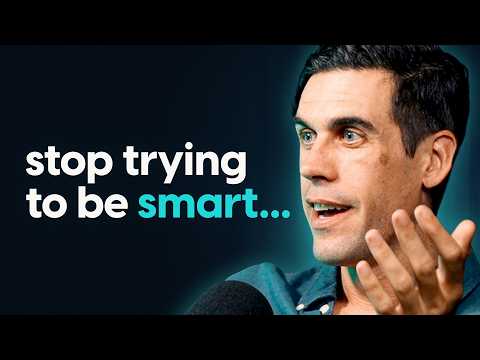
Why Most Smart People Become Stupid - Ryan Holiday
~137 min
Episode Brief·YouTube

Why Most Smart People Become Stupid - Ryan Holiday

Chris Williamson
Watch on YouTube Add to chat My bookmarks← All sources

TL;DR

The four things you'd lose by not watching

4 items

TL;DR

The four things you'd lose by not watching

4 items
1

Wisdom is not innate but accumulated through a continuous loop of learning, applying, and repeating, often by drawing on the experiences of others rather than solely one's own.

2

Smart people often become 'stupid' due to ego, bad information diets, complacency, and a lack of empathy, which prevents them from understanding diverse perspectives and avoiding historical blunders.

3

The ability to regulate emotions (equanimity) is crucial for wisdom, allowing individuals to navigate challenges and make effective decisions without being swayed by impulsive reactions.

4

Journaling and revisiting past experiences or texts can help individuals understand their personal growth and maintain a connection with their past selves, preventing feelings of being lost.

Protocols

Concrete recipes — what, when, how much, and why

5 items

Learning from Others' Experiences

WhatActively seek out and learn from the experiences and wisdom of others, rather than insisting on learning every lesson firsthand.
WhenContinuously throughout life, especially when facing new challenges or decisions.
For whomAnyone seeking wisdom and efficiency in learning.
WhyIt's fundamentally 'stupid' to try and learn all lessons yourself when others have already navigated similar situations and documented their insights. Humility is key to being open to this learning.

The speaker emphasizes that while personal experience is vital, it's inefficient and often unnecessary to learn every lesson through one's own mistakes. He quotes Otto von Bismarck, "any fool can learn by experience, I prefer to learn from the experiences of others," to highlight the value of leveraging collective human wisdom. This involves engaging with classic texts, myths, and historical accounts that contain the 'sum total of human wisdom,' providing a framework to interpret one's own experiences. The ego often prevents this, making individuals believe they know better or can 'wing it,' but true humility allows for continuous learning from those who have come before.

why why would you want to figure something out when someone has been in your exact position before and not just uh learned from it but like written about it and then other people have written about them

Also said
“the sum total of human wisdom”— Refers to the collective knowledge contained in classic texts and stories.

Journaling for Self-Awareness

WhatMaintain a regular journaling practice to record thoughts, experiences, and observations, allowing for reflection on personal growth and past selves.
WhenDaily, or regularly over long periods.
DoseThe speaker uses a 5-line-per-day journal, repeating every 5 years.
For whomAnyone seeking self-awareness, personal growth, and a deeper understanding of their own life's trajectory.
WhyJournaling helps prevent 'dark nights of the soul' by providing a continuous record of one's journey, allowing individuals to understand how they've changed and what has happened in their lives. It helps maintain 'nodding terms with who I used to be.'

The speaker highlights journaling as a powerful practice for self-awareness, particularly when one feels 'lost' or disconnected from their past self. He references Joan Didion's essay on journaling, where she describes its purpose as 'to keep on nodding terms with who I used to be.' The speaker personally uses a unique 5-line-per-day journal that repeats every five years, allowing him to see what he was thinking and doing on the same date years prior. This practice reveals how perspectives and priorities change over time, offering insights into personal growth and the ephemerality of past concerns. It acts as a preventative measure against existential crises by providing a continuous, incremental record of one's life.

Mechanism

The act of journaling captures both the external events and the internal state of the individual at that moment, like a camera with two lenses. This dual perspective allows for a richer understanding of personal evolution and the context of past thoughts and feelings.

Personal experience

The speaker uses a specific 5-line journal that repeats every five years, noting that by the third, fourth, and fifth years, it becomes "very powerful because you're like, oh, you know, in September of 2022, this is what I was thinking about. And that feels very urgent and important or that feels like silly and weird."

The purpose of journaling is to keep on nodding terms with who I used to be.

Also said
“what journaling allows us to do is not just write down and record something, but it's almost like um it's like taking a picture on your phone and both cameras are working. Like it's taking the picture of what you're looking at and it's taking the picture of you as you're looking at it.”— Provides a vivid metaphor for the dual function of journaling in capturing both external events and internal states.

Emotional Regulation (Stoicism)

WhatPractice regulating emotions by acknowledging feelings (anger, frustration, anxiety) without impulsively acting on them, consciously deciding how to respond.
WhenContinuously, especially during challenging or emotionally charged situations.
For whomAnyone seeking greater control over their reactions and improved performance under pressure.
WhyStoicism is not about eradicating emotions but regulating them. This practice builds resilience and adaptability, allowing one to function effectively even in less-than-ideal environments.

The speaker clarifies that Stoicism is often misunderstood as the eradication of emotions, but it is, in fact, the regulation of emotions. It involves acknowledging feelings like anger, frustration, or anxiety, but consciously choosing not to act impulsively based on them. This practice of deciding 'who's in charge'—the emotion or the rational self—is crucial for developing resilience and adaptability. He uses the metaphor of physical exercise as a training ground, where one pushes through fatigue or discomfort by deciding to act despite the feeling. This intentional development of emotional regulation in everyday, often insignificant, situations prepares individuals to maintain composure and make wise decisions during significant life challenges.

Mechanism

Emotional regulation is a skill cultivated over time, akin to physical training. By consciously separating the feeling from the action, individuals can choose their response rather than being driven by impulse. This intentional practice in minor situations strengthens the capacity to regulate emotions during significant challenges.

Personal experience

The speaker notes that he has "gotten better at over time" at regulating his emotions and deciding what to think about, especially regarding open loops or waiting for medical test results.

Stoicism is the eradication of emotions. It is the regulation of de of emotions. It's not having none. It's I'm feeling anger. I am feeling frustration. I am feeling envy. I am feeling worry. I'm feeling anxiety. And I don't have to impulsively act on that information.

Also said
“how do you practice deciding who's in charge that's I think really important and and it it's it's something I think I've gotten better at over time and you you you you work on throughout your life.”— Emphasizes the active, ongoing nature of developing emotional regulation.
“I am going to be here for this school performance. I'm gonna uh I'm gonna sit here for this, you know, however long this plane is delayed. I'm gonna I they told me I'm not gonna get an answer back on this medical test for two weeks. I'm not going to waste two weeks feeling shitty.”— Illustrates practical application of emotional regulation in everyday situations.

Avoiding 'Multiplying by Zero'

WhatIdentify and actively avoid major, catastrophic mistakes or 'zeros' that can negate all other positive efforts and lead to ruin.
WhenContinuously, by being aware of potential high-impact negative events.
For whomAnyone seeking to build a stable and successful life, particularly those in high-stakes environments.
WhyJust as any number multiplied by zero becomes zero, a single catastrophic mistake can undo all accumulated progress and success. Focusing on avoiding these 'zeros' is more critical than solely optimizing for minor gains.

The speaker introduces the mathematical concept of 'never multiplying by zero' as a metaphor for life. This means identifying and avoiding single, catastrophic mistakes that can negate all other positive efforts, regardless of how much success or progress has been accumulated. Examples include not wearing a seatbelt, having unprotected sex as a teenager, or using too much leverage in trading. He contrasts this with the business world's focus on doubling down on strengths for power law gains, arguing that in life, addressing shortcomings and avoiding these 'zeros' is paramount. He also applies this to relationships, suggesting that the ability to repair ruptures is a better predictor of long-term success than the frequency of positive experiences, as negative events can quickly erode relational equity.

Mechanism

This concept, borrowed from mathematics, highlights that certain actions or omissions have an outsized, destructive impact. It shifts focus from maximizing positive outcomes to minimizing catastrophic failures, recognizing that life's 'shortcomings are what's going to kill you.'

take as big of a number as you want uh 2,343,000 times it by 5* by 52 times by 17 million times by 0ero you get zero right so you never multiply by zero

Also said
“the shortcomings are what's going to kill you.”— Emphasizes that weaknesses and vulnerabilities are often more critical than strengths in determining overall life outcomes.
“the bad times and the way you deal with bad times are a much better predictor of long-term marriage success than how much you enjoy the good ones.”— Applies the 'multiply by zero' concept to relationships, highlighting the importance of rupture repair.

Addressing Childhood Issues

WhatEngage in 'inner child work' to identify and resolve unresolved childhood traumas, coping mechanisms, or arrested development that may be influencing adult behavior.
WhenWhen recognizing patterns of impulsive, irrational, or self-sabotaging behavior in adulthood.
For whomIndividuals who find themselves making irrational decisions despite their intelligence and success.
WhyUnaddressed childhood issues can lead smart, successful adults to make 'stupid' or irresponsible decisions, as an immature part of themselves takes control in high-stakes situations.

The speaker identifies unaddressed childhood issues as a key reason why smart people act 'stupidly.' He explains that early life experiences, especially challenging ones, can lead to the development of coping mechanisms or 'adapted child' personas that, while necessary for survival at the time, become detrimental in adulthood. These unresolved parts can manifest as impulsive, irrational, or irresponsible decisions, even in highly intelligent and successful individuals. He suggests that 'inner child work' is crucial for identifying these arrested developments and integrating them, allowing the adult self to make decisions based on current reality rather than past trauma. This process helps prevent self-sabotage and the 'midlife crisis' phenomenon, where individuals might unconsciously try to revisit or resolve past issues.

Mechanism

Childhood experiences can create 'adapted child' personas with coping mechanisms that were necessary for survival at the time but become maladaptive in adulthood. Recognizing and integrating these parts of oneself allows for more mature and rational decision-making, preventing past traumas from dictating present actions.

you don't deal with your childhood issues, right? So you you are very smart, you are very successful, you are very powerful, but there is a part of you that's uh an 11year-old. There's a part of you that's an angry teenager and that person is is not who you trust with these high stakes.

Also said
“Those are coping mechanisms that made sense when you were 13 and your parents were splitting apart or you know you were unattractive nerd who was bullied or you know you you you lost a bunch of people that you you you make these you were abused. You went through these things. So you made certain assumptions or adaptations to to survive that.”— Explains the origin and initial purpose of these childhood coping mechanisms.

What's new

Personal practice updates, fresh positions, predictions

6 items

Artificial Challenges for Growth

0:00:30

The speaker intentionally seeks out difficult ways to perform familiar tasks, like giving a speech without notes, to force reinvention and personal growth.

Why this matters: This highlights a deliberate strategy for self-improvement by introducing constraints to familiar activities, drawing a parallel to Stoic practices.

The speaker recounted an experience where he had to deliver a speech without notes, a departure from his usual method of using presentations. This was a self-imposed challenge, inspired by the Stoic idea of practicing with one's non-dominant hand, to push himself out of his comfort zone. He found that forcing himself to do something the 'hard way' led to reinvention and unexpected benefits, even when faced with real-world technical difficulties later on.

Personal experience

The speaker described having to give a talk in Kentucky where his slides were unavailable, forcing him to improvise for 45 minutes. He found that this unexpected challenge, while initially stressful, ultimately led to a better and more authentic delivery, demonstrating the value of artificial challenges in building resilience.

I had to sort of reinvent it from scratch. It was challenging but good. It's it's actually funny in Mark's relitations. He talks about practicing holding the res with your non-dominant hand.

Also said
“you think you need it to go a certain way. you think you want it to go a certain way and then when you were forced to do it the way that you didn't want to do it, not only do you find something out about yourself, but but you you actually find that the thing you were preparing not to for it not to happen actually isn't that bad and it might be better in some ways.”— Emphasizes the unexpected positive outcomes of facing unplanned difficulties.

Book Banning at the Naval Academy

0:04:50

The speaker was disinvited from speaking at the Naval Academy after refusing to remove a section of his talk criticizing the removal of books from the academy's library.

Why this matters: This is a direct, recent personal experience illustrating a controversial stance on censorship and intellectual freedom within a prestigious institution.

Background

The Naval Academy had removed several hundred titles from its library, reportedly as part of an order addressing DEI and 'wokeness.' The speaker, who had been lecturing annually on cardinal virtues, felt compelled to address this issue in his talk on wisdom.

The speaker was scheduled to give a lecture on wisdom at the Naval Academy, part of a four-year series on cardinal virtues. He included a section criticizing the academy's decision to remove books from its library, arguing that an elite university should not ban books, regardless of their content, and that engaging with diverse ideas is crucial for future leaders. He referenced Admiral James Stockdale, a famous Naval Academy graduate who studied Marxist texts, which later proved invaluable during his imprisonment in North Vietnam. The speaker believed that removing books and suppressing criticism of that decision undermined the very principles of courage and ethical leadership he was there to teach. When asked to remove this section, he refused, leading to the revocation of his invitation.

Personal experience

The speaker explicitly stated, "I can't give them a lecture about courage. I can't give them a lecture about discipline. I can't give them a lecture about ethics and doing the right thing. And then when someone says, 'Hey, if you want to keep talking here, we'd like you not to speak about the things that we're trying to sweep under the rug.' And so I said, you know, I can't do that. And so, of course, the invitation was revoked and then so was the subsequent invitation."

But you can't remove books from an elite university because you don't like what's in the books. That's a very different thing.

Also said
“The crown jewel of the American military uh and the western militaries for centuries has been the ability of their leaders to think to uh challenge orders and to question, right?”— Highlights the speaker's belief that critical thinking and questioning authority are essential qualities for military leaders, directly contrasting with the book ban.
“What is the point of power influence success a platform if you don't use it?”— Explains his motivation for taking a stand, emphasizing the responsibility that comes with influence.

The Paradox of Wisdom

0:13:50

Wisdom is elusive; the more one learns, the more one realizes the vastness of what remains unknown, leading to humility rather than certainty.

Why this matters: This offers a nuanced definition of wisdom, contrasting it with mere knowledge and highlighting its inherent humbling quality.

The speaker describes wisdom as the most elusive of virtues, difficult to define because it encompasses a blend of experience, knowledge, intelligence, creativity, insight, and perspective. He emphasizes that true wisdom is characterized by humility: the moment one believes they possess it, they likely don't. Drawing on physicist John Wheeler's quote, "as the island of knowledge grows, so does the shoreline of ignorance," he explains that increased learning reveals more about what one doesn't know, fostering a continuous hunger for more knowledge rather than a sense of completion. This perspective suggests that wisdom is an ongoing journey of learning and self-awareness, inherently humbling the individual.

the more you learn, not just are you humbled, uh, in that most, you know, really smart people are actually quite humble. Um, but but the more you learn, the more you learn about all the things that you still want to learn about.

Also said
“It's the hardest to define. I think courage is something we know it when we see it. You know, discipline pretty straightforward.”— Contrasts wisdom's elusiveness with the more tangible nature of other virtues.
“the second you think you have it, uh you find that there is more left for you to learn.”— Reinforces the idea that wisdom is a continuous, humbling process.

Unteachable Lessons and the Cost of Learning

0:18:00

Some life lessons, though clichéd, are 'unteachable' through mere words; they must be experienced, but one can choose to learn from 'whispers' or wait for life to 'scream' them.

Why this matters: This concept distinguishes between intellectual understanding and experiential wisdom, offering a framework for how individuals engage with difficult truths.

The speaker discusses 'unteachable lessons'—truths like 'money won't make you happy' or 'fame is empty'—that are widely known but often only truly understood through personal experience. He suggests that while these lessons are clichéd precisely because they are universally rediscovered, individuals have a choice in how they learn them. One can heed the 'whispers' of life, learning from early signs or the experiences of others, or one can wait until life 'pins you down and screams it in your face,' often after catastrophic personal failures. This highlights the importance of self-awareness and humility in recognizing patterns and learning lessons more quickly, rather than repeating mistakes.

Do you want to hear it when when life is whispering this to you or do you want life to have to pin you down and scream it in your face?

Also said
“The Romans talked about, you know, the the fool is not someone who who stubs their toe on a rock. It's the person who stubs their toe on the same rock more than once.”— Illustrates the idea of learning from mistakes and avoiding repetition.
“some of them though you don't learn you you hear but you don't understand until you have the experience experience that matches that lesson.”— Emphasizes the necessity of experience to truly internalize certain lessons.

The Danger of 'First Principles' Thinking

0:29:00

An overreliance on 'first principles' thinking, without understanding historical context or the reasons behind existing systems, can lead to arrogance and catastrophic outcomes.

Why this matters: This challenges a popular modern intellectual trend, arguing for the value of tradition and humility in problem-solving.

Background

The speaker notes a contemporary 'fetishization' of thinking from first principles, often seen as a superior approach to problem-solving.

The speaker critiques the modern emphasis on 'first principles' thinking, arguing that while it has its place, it often leads to an arrogant dismissal of hard-won precedent and existing solutions. He suggests that many traditions and systems, though seemingly inefficient or suboptimal, are solutions to complex, multifaceted problems whose original context has been forgotten. Disregarding these without understanding their underlying logic can lead to catastrophic outcomes, especially in high-stakes domains like geopolitics, where the downside of being wrong is immense, unlike in venture capital. True wisdom, he argues, involves the humility to understand *why* things are the way they are, even if one ultimately seeks to change them.

And this idea, there's kind of been this fetishization these days of like thinking from first principles, right? And it this is important going to arrive at it myself.

Also said
“You don't understand because you don't have 20 years or 50 years or a thousand years of experience in this thing that actually this is a subpar solution or inelegant solution to a very complicated or or multifaceted thing.”— Explains that historical context often reveals the hidden wisdom in seemingly imperfect solutions.
“You don't get to be wrong that much before there's a catastrophic outcome.”— Highlights the high stakes in many real-world domains where 'move fast and break things' is not applicable.

The Role of Empathy in Wisdom

0:48:00

Empathy, the ability to understand others' worldviews and motivations, is crucial for wisdom, preventing blunders and enabling effective action, even when disagreeing.

Why this matters: This elevates empathy beyond a mere 'good person' trait to a fundamental component of intellectual and strategic wisdom.

Background

The speaker discusses common pitfalls that make smart people 'stupid,' including ego and bad information diets.

The speaker argues that a lack of empathy is a significant factor that makes smart people act 'stupidly.' He defines empathy as the ability to strategically understand another person's worldview, motivations, and the underlying conditions that shape their beliefs, even if one fundamentally disagrees with them. He cites Socrates' idea that 'no one is wrong on purpose' and uses the example of Temple Grandin understanding cattle behavior to illustrate how stepping into another's perspective can reveal crucial insights. This empathetic understanding is not about condoning wrong ideas but about gaining the necessary insight to effectively address or change a situation. Historical blunders, he suggests, often stem from an inability to conceive of 'the other' as rational or significant actors.

The ability to strategically understand what is going on over there. What do they think? thought going back to Socrates. Socrates said, you know, no one is wrong on purpose, right?

Also said
“You have to be able to go here's what they think and here's why they think it. That's not going to change what I know to be true or that's not going to change the fact that that's still fundamentally incorrect. But I have the ability to understand why it is that way.”— Clarifies that empathy is about understanding, not necessarily agreement, and is a prerequisite for effective action.
“when you look at most of the the enormous blunders of history, you know, Iraq, Vietnam, fundamentally, it's this sense of like, well, here's what we think should happen. Here's how we think it's going to go.”— Connects a lack of empathy to major historical failures.

Recommendations

Products, supplements, and tools mentioned in the episode

4 items

Lives

Book

Plutarch's biographies are highlighted as examples of how stories, even if not perfectly historically accurate, illustrate moral lessons and human experiences.

The speaker references Plutarch, whom he calls 'the greatest biographer of all time,' to illustrate the power of stories in conveying wisdom. Plutarch's 'Lives' are not mere biographies but collections of anecdotes and utterances designed to reveal moral lessons, fatal flaws, or brilliant genius. The speaker suggests that reading these historical figures, often flawed and tragic, provides 'case studies' that help individuals recognize patterns in their own lives and avoid repeating past mistakes. The historical accuracy is less important than the illustrative power of the narrative in teaching enduring human truths.

The greatest biographer of all time is Plutarch. And Plutarch says, you know, there's a difference between biography and lives. And he says, I write lives. And lives are illustrated by a certain anecdote, a little story, a a an utterance of a few words that help you unlock the lesson or the the fatal flaw or the the the brilliant genius of this person.

Also said
“when you read about these historical figures who are often flawed and tragic figures, the idea is you take back from them little lessons that then yeah, when you're winning a gold medal or you just sold a company or you know you're you're about to gamble it all on this thing that you believe is you know the key to unlocking your happiness or your legacy or whatever. you go, "Oh, maybe I should ask myself, am I about to do what they did?"”— Explains the practical application of reading Plutarch's 'Lives' for personal decision-making.
Find Lives

Unbroken

Book

Mentioned as a powerful story of endurance, though the speaker suggests James Stockdale's story is even more profound.

I was reading Unbroken about Zampirini and uh I'd never read that.

Find Unbroken

Endurance

Book

Cited as a favorite story of 'solo or group people against the odds' by Alfred Lansing.

My favorite stories are kind of solo or group people against the odds. Endurance by Alfred Lansing

Find Endurance

Dr. Becky Kennedy

Product

Mentioned as a parenting guru who advocates for 'repair' over 'perfection' in parenting, a concept applicable to relationships in general.

The speaker references Dr. Becky Kennedy, a parenting expert, who advises parents not to strive for perfection but to focus on 'repair' after inevitable mistakes and emotional dysregulation. This concept is extended to all relationships, suggesting that the ability to quickly get back into connection after a rupture is a more valuable goal than avoiding conflict altogether. It aligns with the idea of resilience and adaptability in navigating imperfect situations.

She's like the parenting guru of our time. One of the the [ __ ] greatest. She's like, don't try to be a perfect parent. try to get better at repair because you're going to screw up. You're going to get disregulated. You're going to get it's about how quickly you can come back and fix it.

Find Dr.

Notable quotes

Lines worth pulling out — contrarian, specific, or perfectly phrased

6 items
you think you need it to go a certain way. you think you want it to go a certain way and then when you were forced to do it the way that you didn't want to do it, not only do you find something out about yourself, but but you you actually find that the thing you were preparing not to for it not to happen actually isn't that bad and it might be better in some ways.
Highlights the unexpected benefits and self-discovery that come from facing unplanned challenges and adapting to difficult circumstances.
What is the point of power influence success a platform if you don't use it?
A powerful rhetorical question challenging individuals with influence to use their platform for ethical action, exemplified by the speaker's stand against book banning.
the more you learn, the more you learn about all the things that you still want to learn about.
Encapsulates the humbling and continuous nature of true wisdom, where increased knowledge reveals the vastness of what remains unknown.
Do you want to hear it when when life is whispering this to you or do you want life to have to pin you down and scream it in your face?
A vivid metaphor for the choice individuals have in learning life's 'unteachable lessons'—either by heeding subtle signs or waiting for catastrophic consequences.
The crown jewel of the American military uh and the western militaries for centuries has been the ability of their leaders to think to uh challenge orders and to question, right?
A strong statement on the importance of independent thought and critical questioning, particularly for leaders in high-stakes environments, contrasting with blind obedience.
you never multiply by zero
A concise and impactful metaphor from mathematics, emphasizing the critical importance of avoiding catastrophic mistakes that can negate all other efforts and successes.

Sign in to share feedback

Tell us if this brief hit the mark or missed it — feedback feeds back into the next iteration of the prompt.

Topics covered

artificial challengespublic speaking without notesstoicismtechnical difficultiesnaval academy book banningintellectual freedomjames stockdalemarxist thoughtcouragedisciplinejusticewisdomparadox of wisdomunteachable lessonslearning from experiencehistorical storiesplutarchcincinnatusgeorge washingtonuseful not true
Free account

Make this library yours

Reading is free for everyone. A free account adds the personal layer: save protocols, follow experts, and see how the other experts weigh in on this same topic.

Create a free accountSign in

Where the experts disagree — weekly

One email a week: the sharpest new disagreements and protocols from the library. No spam, unsubscribe anytime.

Educational summary of the cited expert source — not medical advice. Open the source recording linked above and consult a qualified physician before acting on any protocol.