
UNFUCG
DashboardSearchChatBookmarksNotificationsActivityPremiumProfile
?
Home
Search
Chat
Saved
Profile
Episode
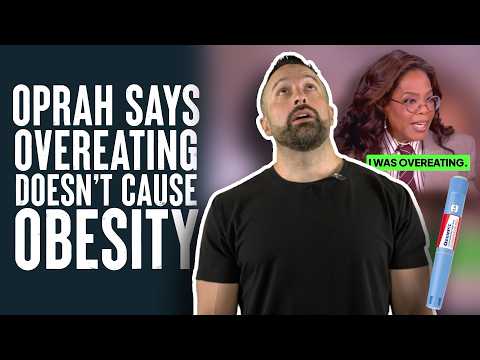
Oprah Says Overeating Doesn't Cause Obesity | What the Fitness | Biolayne
~6 min
Episode Brief·YouTube

Oprah Says Overeating Doesn't Cause Obesity | What the Fitness | Biolayne

Layne Norton
Watch on YouTube Add to chat My bookmarks← All sources

TL;DR

The four things you'd lose by not watching

4 items

TL;DR

The four things you'd lose by not watching

4 items
1

Layne Norton argues that overeating does cause obesity at a fundamental level, but genetics predispose appetite and reward response—it's not simply a lack of willpower.

2

He uses the analogy: 'genetics loads the gun, behavior and environment pulls the trigger'—meaning obesity is not an inevitable fate.

3

GLP-1 agonists quiet 'food noise' and are the most effective weight loss treatments, yet users must resistance train and consume enough protein to preserve lean mass.

4

Norton personally moved away from blaming obese individuals for laziness to recognizing obesity as complex, multi-factorial, and recommends expert coaching to navigate weight loss.

Protocols

Concrete recipes — what, when, how much, and why

2 items

Resistance Training During Weight Loss (with or without GLP-1s)

WhatPerform regular resistance training (e.g., weight lifting) at least 2–3 times per week while losing weight.
WhenThroughout any weight loss phase, whether using GLP-1 agonists or not.
DoseHe does not specify a set number of days or specific routine, only that consistent resistance training is essential.
For whomAnyone losing weight, and especially those on GLP-1 agonists who may be at risk of inadequate protein intake, to preserve muscle.
WhyPrevents excessive lean body mass loss during calorie deficit. Without it, dieters—including those on GLP-1s—lose significant muscle.
CaveatsNone mentioned beyond the necessity of actually doing it; otherwise, lean mass loss is likely.

Norton addresses a common critique that GLP-1 agonists cause unhealthy muscle loss by highlighting that the true variable is resistance training, not the drug. He points out that people who diet without GLP-1s and without lifting also lose lean mass. The implication is that the anabolic stimulus from resistance exercise signals the body to retain muscle tissue even in an energy deficit, making it a non-negotiable component of any weight loss plan. He does not go into molecular details, but the takeaway is clear: the supposed muscle-wasting effect of GLP-1s is a red herring; the real culprit is insufficient resistance training across all dieters.

You should be resistance training whether or not you're on a GLP-1 or not.

Also said
“Some people do not resistance train when they're on GLP-1s and they lose a lot of lean mass. But guess what? People who diet without GLP-1s, who don't resistance train, also lose a lot of lean mass.”— Directly debunks the idea that GLP-1s uniquely cause muscle loss; frames resistance training as the key variable.

Adequate Protein Intake During Weight Loss

WhatConsume sufficient dietary protein to support lean mass retention during calorie restriction.
WhenDaily throughout the weight loss period.
DoseNot quantified in this transcript; general guidelines (e.g., 1.6–2.2 g/kg) are implied but not stated.
For whomAll dieters, particularly those on GLP-1 agonists who may undereat and risk protein insufficiency.
WhyPrevents excessive loss of lean body mass; protein is a critical nutrient for muscle maintenance in a deficit.
CaveatsInadequate protein, like no resistance training, will lead to more lean mass loss.

Some people do not consume enough protein. Some people do not resistance train when they're on GLP-1s and they lose a lot of lean mass.

What's new

Personal practice updates, fresh positions, predictions

2 items

personal-shift-from-obesity-blame-to-compassionate-stance

Norton admits he once thought obesity was due to laziness or personal fault, but he now understands it as a complex, multi-factorial disease with genetic and environmental drivers.

Why this matters: Marks a public evolution from a common fitness-industry blame mindset to a more compassionate, evidence-based view.

Background

Many fitness influencers and possibly Norton's former public persona pushed the idea that obesity is simply a result of poor choices, leading to stigma. He explicitly distances himself from that now.

Norton explains that while at a basic level obesity is caused by energy toxicity (overeating), the factors driving overconsumption—appetite regulation, reward signals, food environment—are heavily influenced by genetics. He fully acknowledges genetic predispositions and that people with obesity-prone genes have bigger appetites and get more reward from food. He then clarifies that this doesn't condemn someone to obesity; behavior and environment determine whether the genetic predisposition manifests. He underscores that he no longer thinks it's a matter of laziness. This shift is significant because it counters the oversimplified moralizing about obesity and aligns with evidence that the brain's drive to eat is not simply a character flaw.

Personal experience

He explicitly states his old view: 'I used to be somebody who fell in the camp of if you're obese, it's cuz you're lazy. Or if you're obese, it's your fault.' He says he no longer thinks that way after considering the complexity of appetite-regulating genes and the obesogenic environment.

I think that obesity is complicated, multi-factorial, but on a basic level, it is a disease of energy toxicity.

Also said
“What's interesting is guess what these genes tend to deal with, appetite and appetite regulation.”— Highlights that obesity-linked genes impact drive to eat, not laziness.
“Is it a much greater risk of them becoming obese? Absolutely. It's much harder for them to regulate appetite and they get a bigger reward from food.”— Adds the nuance that genetic predisposition makes weight management harder, not impossible.

strong-defense-of-glp1-agonists

Norton counters the fitness industry's demonization of GLP-1 agonists, calling them a huge benefit and the most effective weight loss treatment, while cautioning about lean mass loss if not combined with resistance training and adequate protein.

Why this matters: A strong contrarian stance against vocal fitness influencers who frame GLP-1s as harmful shortcuts, emphasizing evidence-based benefits.

Background

GLP-1 receptor agonists like semaglutide/Wegovy have become controversial, with some arguing they cause muscle wasting and aren't a 'real' solution. Norton pushes back aggressively.

He details that the consistent feedback from GLP-1 users is that it quiets food noise, allowing them to stop obsessing about food. He explains that in an obesogenic environment with cheap hyperpalatable foods, our biological protective mechanisms have been overridden, leading to high obesity rates. GLP-1s essentially normalize the food environment for those predisposed by enhancing satiety signals and reducing cravings. He acknowledges downsides like some people not consuming enough protein or not resistance training, which leads to excessive lean mass loss, but points out that people who diet without resistance training lose lean mass regardless. He insists resistance training and protein are necessary with or without GLP-1s. The overall message: GLP-1s are not a 'cheat' but a legitimate medical tool that addresses the root biology of appetite dysregulation.

Personal experience

He expresses strong frustration: 'I'm really sick of people in the fitness industry making it out that GLP-1s are this horrible thing. By any metric, they are huge benefit.'

GLP-1s are the most effective weight loss treatments we have on the market.

Also said
“It is a consistent piece of feedback from people on GLP-1s is that it quiets the food noise in their brain.”— Direct description of the subjectively felt benefit that critics often ignore.
“They basically normalize the food environment for people who are predisposed to obesity.”— Frames GLP-1s as compensating for a broken food environment, not a moral failing.
Disclosed sponsorships1speaker disclosed

Team Biolayne Coaching

Service Sponsored · disclosed

After explaining the complexity of weight loss and how genetics load the gun but behavior pulls the trigger, Norton suggests that great coaching can help navigate the process, with or without GLP-1s, and pitches his own team.

DisclosureLayne Norton is the founder of Biolayne and his team provides the coaching service he mentions.

Norton positions coaching as a way to address the behavioral side of the obesity equation. He acknowledges that even with the right tools (like GLP-1s), many people struggle with the practical implementation of resistance training, nutrition, and sustained habits. His offering is framed as the bridge between knowledge and execution, appropriate for those using medication or following other dietary strategies. The call-to-action (comment 'coaching' for a free discovery call) indicates a direct funnel to his service, but the recommendation is grounded in the idea that professional guidance can improve outcomes for anyone facing the multifaceted challenge of weight management.

Personal experience

He cites his team of expert coaches at Team Biolayne as the resource, suggesting he has seen results in clients, but no specific personal coaching story is shared.

If you need help navigating weight loss, whether using a GLP-1 or not using a GLP-1, that's where great coaching can come in.

Also said
“And my team of expert coaches at Team Biolayne can really help. If you guys are interested, comment coaching and I'll DM you information on how you can set up a free discovery call.”— Provides the exact call-to-action and confirms the affiliation.
Find Team

Notable quotes

Lines worth pulling out — contrarian, specific, or perfectly phrased

4 items
Genetics load the gun for obesity. Behavior and environment is what pulls the trigger.
Memorable analogy from his PhD adviser that encapsulates the gene–behavior interaction and guards against fatalism.
Overeating does cause obesity. … What is more nuanced is what is causing the overconsumption of calories.
Succinctly separates the basic energy-balance fact from the deeper drivers, making a complex point accessible.
I used to be somebody who fell in the camp of if you're obese, it's cuz you're lazy. Or if you're obese, it's your fault. I no longer think that way.
A personal, honest admission that signals a shift from stigma to nuance, rare in fitness commentary.
I'm really sick of people in the fitness industry making it out that GLP-1s are this horrible thing. By any metric, they are huge benefit.
Forceful pushback against the anti-pharma sentiment, exposing the speaker's frustration with industry dogma.

Sign in to share feedback

Tell us if this brief hit the mark or missed it — feedback feeds back into the next iteration of the prompt.

Topics covered

obesity-causegenetics-and-obesityfood-noiseglp1-agonistsresistance-trainingprotein-intakebehavior-changecoachingfitness-industry-criticismoprah-winfreyweight-loss-stigmaappetite-regulationobesogenic-environment
Free account

Make this library yours

Reading is free for everyone. A free account adds the personal layer: save protocols, follow experts, and see how the other experts weigh in on this same topic.

Create a free accountSign in

Where the experts disagree — weekly

One email a week: the sharpest new disagreements and protocols from the library. No spam, unsubscribe anytime.

Educational summary of the cited expert source — not medical advice. Open the source recording linked above and consult a qualified physician before acting on any protocol.