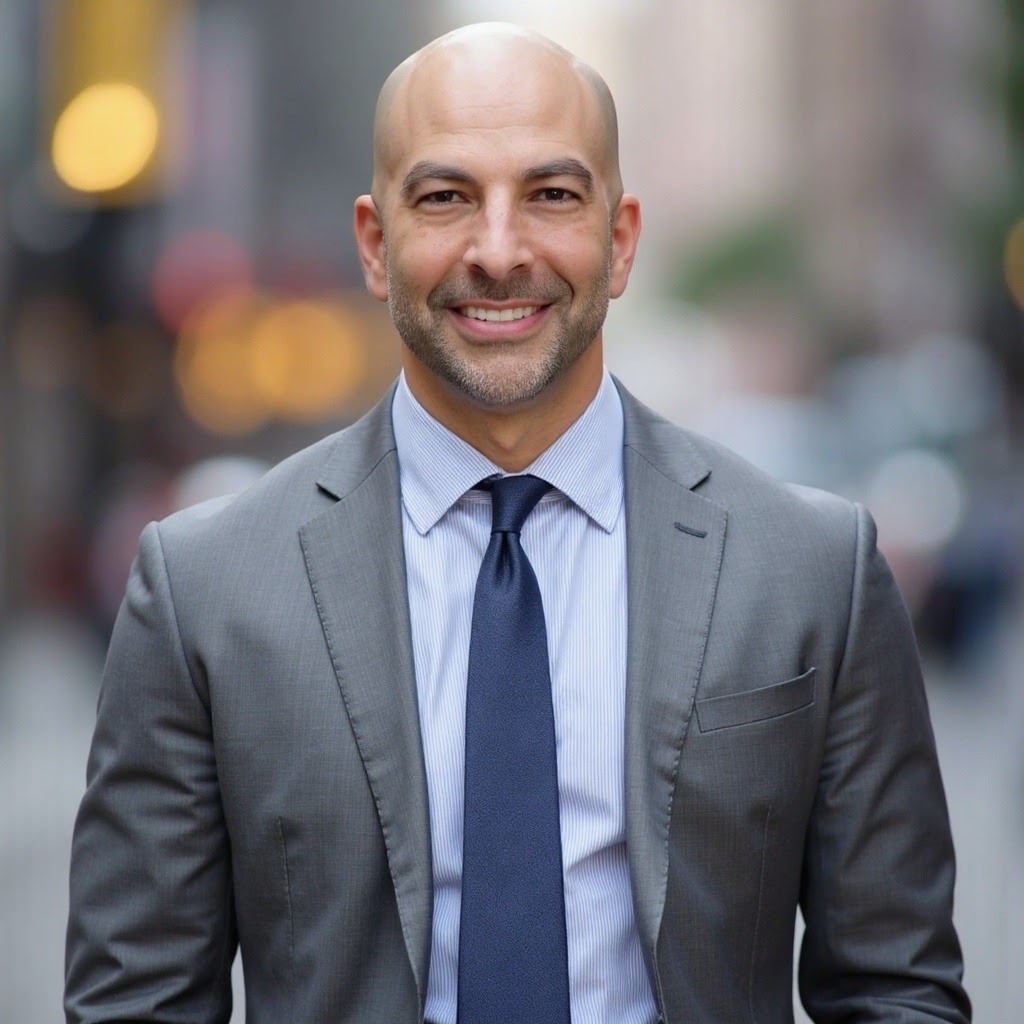
Tom Catena, trained in family medicine and with no formal surgical residency, has performed over 2,000 C-sections and thousands of major operations in South Sudan's Nuba Mountains — learning surgery on the job across seven and a half years in rural Kenya before moving to a war zone hospital with 435 beds and zero CT scanners.
2
Catena's primary coping mechanism for 11+ years in a conflict zone is daily Catholic mass combined with drawing strength from the resilience of the Nuba people themselves: 'if they can put up with this environment and keep functioning, let me just try to keep taking care of them as best I can.'
3
The hospital operates on roughly $750K–$1M per year to serve ~750,000 people, conducting ~130,000 outpatient visits, ~2,000 operations, and vaccinating tens of thousands of children — a stark illustration of how resource scarcity forces radical triage decisions no Western physician ever faces.
4
Catena is virtually the only physician for a population the size of a mid-sized American city, operating without x-ray until 2017, without reliable lab equipment, and under periodic aerial bombardment — and his framework for decision-making under these constraints is a direct application of 'primum non nocere' in its most literal form.
Protocols
Concrete recipes — what, when, how much, and why
7 items
Daily mass as psychological anchor for clinicians in extreme-stress environments
WhatAttend a religious or contemplative practice every single day — not occasionally. Catena attends Catholic mass daily in Nuba and identifies this as the single most important factor in maintaining psychological stability across 11+ years.
WhenEvery day, ideally at a fixed time before clinical work begins. The daily rhythm, not weekly attendance, is the operative element.
DoseDaily, no exceptions. Catena describes it as non-negotiable infrastructure, not a supplement.
For whomAny clinician, aid worker, or caregiver operating in high-mortality, high-isolation settings who is at risk of psychological burnout. The practice itself need not be Catholic — Catena's framework generalizes to any daily contemplative anchor that provides perspective outside immediate suffering.
WhyThe daily practice provides 'perspective' — a frame outside the immediate crisis that prevents the clinical emergency from consuming the entire psychological field. It also provides a stable community anchor in an environment where the physician is otherwise completely isolated professionally.
Catena pairs the daily mass with a second source: drawing explicit strength from witnessing the resilience of the patients themselves. 'I see the strength and resilience of the Nuba people. Well, okay — if they can put up with this environment and keep functioning and keep going ahead, let me just try to keep taking care of them as best I can.' The combination — daily vertical anchor (faith) plus horizontal anchor (community) — appears to be the structural framework that makes 11 years in a war zone psychologically sustainable.
I do draw on my faith all the time. I go to church every day and that I think helps put things in a better perspective. And besides that I think you see the strength and resilience of the Nuba people — well okay if they can put up with this environment and keep function and keep going ahead let me just try to keep taking care of them as best I can.
Primum non nocere as triage rule for austere-setting surgery
WhatBefore operating in a resource-limited setting, ask explicitly: 'will I make this patient worse by doing this?' If yes, or if confidence is insufficient, do not operate. The decision to not operate is a medical decision, not a failure.
WhenEvery case where there is genuine uncertainty about outcome, especially without CT scan, backup intensive care, or specialist availability.
For whomAny physician practicing in low-resource or austere environments — expedition medicine, remote rural medicine, humanitarian deployments, military field surgery.
WhyIn a setting without imaging, ICU, or specialist backup, the consequences of a complication cascade in ways they would not in a high-resource environment. The asymmetry of harm is much greater. 'Primum non nocere' therefore has a higher bar for action than in Western medicine.
CaveatsCatena's version is emphatically not 'do nothing if in doubt.' He describes usually concluding that the operation is better than no operation. The rule is a deliberate forcing function to ask the question, not a default to inaction.
Catena describes the Nuba trade-off explicitly: more laparotomies rather than fewer, because 'you don't have a CT scanner, you don't know exactly what's going on, to get a tissue diagnosis might take you six months — so let's do a laparotomy and see what that thing is. That's your CT scan.' The rule cuts both ways: it pushes against over-caution as much as against recklessness. But the verbal step — asking the question out loud before cutting — is the protocol.
I try to do when I approach a case is you know the primum non nocere first do no harm. So if you think you'll make the patient worse by doing this — okay I'm not an expert at doing this case and sometimes I say I'm not gonna do it. I won't do it if I think I really cannot improve this patient's health.
Hepatitis B universal vaccination of newborns as pragmatic population-level cancer prevention
WhatGive the hepatitis B vaccine immediately after birth to every newborn delivered at the hospital. Do not wait for maternal hepatitis B screening results — assume all babies should receive it since the pentavalent series (DPT + HepB + Hib) is part of the standard vaccination schedule anyway.
WhenImmediately post-delivery, before discharge. For mothers delivering at home (the majority in Nuba), the target is integrating HepB into community vaccination outreach.
For whomAny population with hepatitis B prevalence above ~5%. In high-income settings this is standard; in low-resource settings where tracking maternal HepB status is logistically impossible, the 'give it anyway' approach is the appropriate implementation.
WhyIn a population with ~20% hepatitis B prevalence, hepatocellular carcinoma is the most common adult cancer. A single dose at birth, followed by the pentavalent series, breaks the mother-to-child transmission chain that perpetuates high prevalence. The incremental cost and complexity relative to the vaccines already being given is minimal.
Catena describes screening all pregnant women who deliver at the hospital and finding ~20% Hep B positive. 'We encourage the mother when the baby's born we give them the hepatitis B vaccine immediately after birth and we hope with that that will stop prevent the hepatitis B from being transmitted to this baby and prevent all the complications.' For home births — the majority — the immediate-birth dose is unavailable, which is why he explicitly identifies integration into community outreach as the next step. Liver cancer is the number-one adult cancer in this population, predominantly HepB-driven.
The reason we started screening the pregnant women is just to get an idea about the basic rate and it's about close to 20% hepatitis B positive. When the baby's born we give them a hepatitis B vaccine immediately after birth and we hope with that that will stop the hepatitis B from being transmitted to this baby and prevent all the complications.
Ketamine-based intubation protocol for austere anesthesia (read-before-you-cut)
WhatFor general anesthesia when a trained anesthesiologist is unavailable: (1) give ketamine to induce unconsciousness, (2) give succinylcholine to paralyze and allow intubation, (3) intubate, (4) maintain with pancuronium. Read the protocol from a reference book before the procedure if needed.
WhenEmergency surgery requiring general anesthesia when only spinal anesthesia-trained staff are available.
DoseStandard weight-based dosing from the anesthesia protocol book. The exact doses were Catena's from a 'basic anesthesia book' on hand.
For whomPhysicians in austere or remote settings who may need to perform emergency anesthesia without specialist backup. Military field surgeons, expedition physicians, humanitarian medical workers.
WhySpinal anesthesia is viable for lower-extremity procedures but not for thoracic, abdominal, or head/neck emergencies. Having a written protocol available and having read it once is substantially better than attempting to recall from memory under stress.
CaveatsSuccinylcholine has contraindications (hyperkalemia, pseudocholinesterase deficiency, burn/crush injury) that matter even in resource-limited settings. Having a backup person in the room who has also read the protocol is important.
Catena's first intubation was performed in this exact context: two bomb-blast victims needed amputations, his trained staff could only do spinals. He had intubated a goat once during military ATLS training. He read the protocol that morning. 'I burn through the protocols: first give some ketamine, you knock them out, give succinylcholine to paralyze, intubate, then give pancuronium.' The procedure worked. This became one of his standard protocols going forward.
Mechanism
Ketamine provides dissociative anesthesia and analgesia while preserving airway reflexes better than propofol, making it safer for induction in hypotensive patients. Succinylcholine's rapid onset and short duration (8–12 minutes) provides the intubation window. Pancuronium provides sustained paralysis for the procedure.
I burn you through the protocols okay first give some ketamine you knock them out with that they go to sleep give it about your pain you give succinylcholine to paralyze intubate and you give pancuronium. I intubated like okay okay let's do it.
Incremental skill acquisition by starting cases with a senior in the room
WhatWhen learning a new surgical or procedural skill in a resource-limited setting, always have the most experienced available person in the room (or in the adjacent room). Start the case independently up to the point of uncertainty, then call for help. Never attempt a completely novel high-risk procedure fully solo.
WhenDuring the early 'apprenticeship' phase of skill acquisition — typically the first 20–50 cases of any new procedure.
For whomAny physician self-training in surgery or procedural medicine in a low-resource setting. Aid organization medical directors designing clinical training programs.
WhyThe margin of error in resource-limited settings is smaller (no ICU safety net, no imaging to catch complications early). Having a backstop available halves the consequence of an unexpected complication without reducing the learning experience.
Catena describes Dr. Rocha's specific technique: 'he would say go ahead and start the case. If there are problems call me. So I start, open up, look around a bit, say okay I'm stuck — I call him, he'd come in, look around, say do this, do that, and things would go ahead.' This model — start independently, call when stuck — is functionally identical to modern surgical simulation training, except the 'simulator' is a real patient. Catena explicitly argues this is why seven and a half years in Kenya was required: 'at some point you have a few skills, you can add the next case, the next one... it took seven and a half years.'
I was like doing another residency. We had a whole day in the operating room and we do tons of cases. There was a Kenyan surgeon there Dr. Rocha who was like a magician — he'd say go ahead, start the case. If there are problems call me.
Also said
“I think what I wanted to make sure of when I was in Kenya those whole seven and a half years was that I always had either somebody assisting me in the case or somebody in the room or in the next room over. By the time I was finished I felt pretty confident.”— The explicit safety principle: never fully solo until confidence is established across hundreds of cases.
Community strength as a portable resilience anchor — 'they're not giving up, so I won't either'
WhatWhen facing personal depletion or despair in a high-mortality care environment, consciously direct attention to the resilience of the people you are serving. Use their capacity to endure as an external reference point for your own resolve — not as a guilt mechanism, but as genuine evidence that humans can endure more than one believes possible.
WhenDuring or after emotionally devastating patient outcomes — pediatric deaths, preventable deaths from logistical failures, accumulation of traumatic cases.
For whomAny clinician experiencing compassion fatigue, secondary traumatic stress, or burnout in high-mortality settings — trauma surgeons, ICU teams, palliative care physicians, humanitarian workers.
WhyIn isolated high-stress environments, the physician's internal psychological resources are the primary limiting factor on continued effective practice. External reference points that reframe suffering as survivable — rather than catastrophic — directly extend the runway of sustainable performance.
Catena pairs this with the daily mass protocol as his two-source resilience architecture. He is explicit that neither alone is sufficient: faith provides vertical perspective (meaning beyond the immediate), community resilience provides horizontal evidence (humans survive this). Together they constitute a self-renewing system. He also notes that the support runs in both directions: 'I definitely get a lot of strength from the people there and their attitudes' — suggesting the therapeutic relationship itself is a source of renewal, not only depletion.
I think you see the strength and resilience of the Nuba people. You say well okay if they can put up with this environment and keep function and keep going ahead let me just try to keep taking care of them as best I can. So I definitely get a lot of strength from the people there.
Palliative care without palliative infrastructure — talk, explain, send home with family
WhatFor terminal or inoperable patients in a resource-limited setting: communicate directly with the family (not the patient, per local cultural norms), explain that the hospital cannot do more, offer pain management within available means, and discharge the patient to home and family care.
WhenAny time a patient is not an operative candidate and cannot be transferred to higher-level care.
For whomPhysicians and nurses in low-resource humanitarian settings, rural medicine, or any setting where palliative care infrastructure (hospice, specialists, opioids) is unavailable.
WhyIn cultures where patients accept mortality as an expected part of life rather than a medical failure, direct communication with family, validation of the situation, and acknowledgment of available support is often sufficient. The demand for aggressive intervention is low; the demand for human touch, explanation, and dignity is high.
CaveatsThis approach reflects the specific cultural context of the Nuba population. Catena explicitly acknowledges it would be received very differently in the United States. Transplanting the protocol requires careful attention to local expectations and cultural frameworks.
Catena describes the Nuba patient's relationship to bad news: 'their expectations are extremely low — and I mean that in a positive way. They don't really expect miracles. They want to be treated as a human. They want that human touch. They want to talk to us.' He contrasts this with the US: 'we're kind of anesthetized that everything has to be perfect and we're not supposed to die.' He also notes that most people in the community have 'some level of faith, whether Christian or Muslim, and they can accept this in a theological sense. So it's not so difficult.' The practical protocol: talk to relatives first, explain limits, offer oral pain relief, discharge to family.
We try to just talk to the family, talk to the patients, say look we can't do much for you, and we'll take care of the pain and other things we can do. One good thing there is the people's expectations are extremely low — and I must say that's not negative, I'm saying it in a positive way. They don't expect miracles. They want to be treated as a human.
What's new
Personal practice updates, fresh positions, predictions
7 items
Self-taught surgery via apprenticeship — 7.5 years, ~2,000 C-sections, ~1,000 other major cases
~60 min
Catena trained as a family medicine physician and learned surgery through a second informal residency in rural Kenya, guided by missionary surgeon Mike Johnson and Kenyan surgeon Dr. Rocha. By the time he moved to Sudan he had performed ~2,000 C-sections and over 1,000 major cases, reaching the '10,000-hour' threshold across a breadth no specialty surgeon in the US would cover.
Why this matters: Demonstrates that surgical competence can be acquired outside formal specialty training given sufficient supervised volume — but also illustrates the non-negotiable role of a mentor in the room, especially early. Catena explicitly credits having 'somebody assisting me in the case or somebody in the room or in the next room over' for all seven and a half years in Kenya.
Background
Catena arrived in Kenya intending to do tropical medicine and discovered roughly half of the disease burden was surgically related: wound care, miscarriages, laparotomies, amputations.
His learning model was near-identical to a surgical residency: he would start cases and call the mentor when stuck. 'Before you know it you're doing thyroids and laparotomies and resecting bowel and stitching liver and taking kidneys and doing amputations.' He describes 'the trade-off' in Africa as breadth without depth — no laparoscopic equipment, no robotic surgery — but after around 2,000 C-sections and over 1,000 major cases he felt confident 'I can do whatever we're doing in Nairobi, I can do that safely in Sudan.' The first time he intubated a patient was when two bomb victims needed general anesthesia and none of his trained staff could do it; he read the protocol from a basic anesthesia textbook the same morning.
I trained in Family Practice and when I went to Kenya we're doing a lot of tropical medicine a lot of obstetric care a lot of c-sections but I realized a lot of the disease burden in Africa was surgically related... I felt after doing around 2000 c-sections and over a thousand other major cases I felt okay I think I can do whatever we're doing in Nairobi.
Also said
“I would throws in there we had a whole day in the operating room and we do tons of cases and there was an American missionary doctor there Mike Johnson so I'm like we just sit there and teach me stuff — I would do the case he would assist me and just kind of walk me through it.”— The specific apprenticeship model that made self-taught surgical competence possible — never operating alone until confidence was established.
First intubation learned from a textbook protocol the day of the procedure
~55 min
When two bomb-blast victims needed general anesthesia and Catena's trained staff could only perform spinal blocks, he read a basic anesthesia textbook protocol the morning of the procedure, then intubated a patient for the first time: ketamine to induce, succinylcholine to paralyze, intubate, switch to pancuronium for maintenance.
Why this matters: A visceral illustration of 'on-the-job training' under resource scarcity — the protocol-from-book approach worked, and Catena describes it as the moment he understood what his low-resource practice would require.
He describes being 'terrified' before the intubation. 'I burn through the protocols: first give some ketamine, you knock them out, give succinylcholine to paralyze, intubate, then give pancuronium.' He had intubated a goat once during military ATLS training but never a human. In retrospect he describes the experience as the crystallization of the improvisation ethic: read the protocol, do the case, call for help if stuck.
I burn you through the protocols okay first give some ketamine you knock them out with that they go to sleep give it about your pain you give succinylcholine to paralyze intubate and you give pancuronium.
When a pediatric patient needed a partial nephrectomy and Catena had never performed one, he found a YouTube video of Polish surgeons doing the procedure with a low-tech approach. Despite extremely slow satellite internet, they watched the video and replicated the buttress technique to staunch bleeding on the lower pole. The child survived.
Why this matters: YouTube as 'the Khan Academy of surgery' in a conflict zone — a specific, verifiable example of open-access medical education saving a life.
Catena explicitly says: 'somehow we were able to see this video and it was this group of Polish surgeons doing a partial nephrectomy with a fairly low-tech approach. We watched that. Okay I think I can do it. We kind of followed their system, managed to put these sort of buttresses on the lower pole that the child needed to staunch the bleeding, and it worked. The child is very well.' He credits YouTube for being 'the Khan Academy of surgery' in this environment.
It was this group of Polish surgeons that were doing a partial nephrectomy with a fairly low tech approach so we watched that and I think I can do it. We kind of followed their system managed to put these sort of buttresses on the lower poll that the child needed to staunch the bleeding and it worked.
Suicide rate near-zero in Nuba despite war and poverty — a sharp contrast with the US
~150 min
Catena describes knowing of only one suicide case in over a decade in Nuba — a staff member's husband who appeared to have a psychiatric illness before shooting himself. Suicide is a top-10 cause of death across virtually every US age demographic above 10, yet Nuba, living under bombardment and in extreme poverty, shows almost none.
Why this matters: Attia uses this to open a discussion about the relationship between material security, social community, sense of purpose, and mental health. The data point challenges the assumption that suffering and deprivation cause depression — suggesting that meaning and community are more protective than material comfort.
Background
Attia notes that suicide is among the top-10 causes of death in the US for every age group above 10, and that 'slow suicide' (alcohol, drugs) would move it even higher.
Catena attributes the community's resilience to a combination of deep communal bonds, faith (both Christian and Muslim), and an acceptance of mortality shaped by lifelong hardship. 'When you're kind of at the edge of survival all the time, when you get this kind of bad news it's not so shocking. It's like, well yeah, that's what happens. People die.' He explicitly contrasts this with the US: 'In the US we're kind of anesthetized that everything has to be perfect and we're not supposed to die.'
We have one guy who's the husband of one of our staff and yeah he shot himself. That really shocked everybody. It's the only case I know of. It's extremely rare.
Also said
“Suicide is among the top 10 causes of death in every age demographic except for 0 to 10. And that doesn't include what we call fast suicide right when you kill yourself immediately — but then you have all the slow suicide so the alcohol related, people basically killing themselves with alcohol and drugs.”— Attia's framing that makes the Nuba contrast so striking — in the richest country on earth, self-harm is a top-5 killer when slow methods are included.
Minimalism and material detachment as psychological practice — felt, not preached
~165 min
Catena describes wearing clothes he bought when he arrived in the US for the first time in three years (his 1985 suit from a GE job interview is his formal wear), and articulates the genuine felt experience: 'I really do believe that the more detached you become from things the easier life is. It just simplifies your life.' He draws on Viktor Frankl's Man's Search for Meaning and the Christian parable of the rich young man.
Why this matters: Not a lifestyle-optimization take on minimalism but a first-person account from someone who has actually lived without possessions in a conflict zone and reports experiencing genuine wellbeing. Attia presents it as a challenge to himself and his audience.
Catena invokes Viktor Frankl's logotherapy: 'we all really do need a sense of meaning in our lives that's extremely important for our psychiatric makeup.' He explicitly says he does NOT think being wealthy is bad, but that material possessions make it harder to find meaning and easier to avoid examining one's values. 'I do feel better with less.' He cites the rich young man parable from the Gospels: 'the man went away very sad because he had many possessions.' His theological reading: the point is not to literally sell everything, but not to be 'wed to these things the way that I think we are.'
I really do believe that the more detached you become not like in this Buddhist kind of Nirvana sense but the more detached you are from things the easier life is. It just simplifies your life.
Also said
“We all really do need a sense of meaning in our lives that's extremely important for our psychiatric makeup whatever that is. It's different for each person whether it's kids, pets, your job — but trying to get something in your life that's meaningful. And if you're looking for it in material possessions I don't think you'll find it there.”— Catena citing Frankl's logotherapy as the underlying framework — meaning, not comfort, as the psychological anchor.
Aurora Prize and the gap between large-donor funding and grassroots operators
~135 min
The Aurora Prize (funded by Armenian genocide survivors, $1M to recipient's chosen charities) brought Catena out of the Nuba Mountains for the first time in years. He describes using the platform to articulate a structural problem: large donor organizations require administrative infrastructure that small grassroots operators cannot afford, creating a funding gap that leaves the most efficient operators unfunded.
Why this matters: A concrete systems-level critique from someone operating inside the gap — with specific logistics obstacles (rebel airspace, border bribes, Khartoum bureaucracy) that explain why even well-intentioned donations often fail to reach the point of need.
Catena describes the ideal solution as a simplified logistics chain: 'if it can be made fairly simple — I got the drug, I'll send it to Catholic Medical Mission Board, and then they'll send it down to Juba, then we'll figure out a way to get it up' — but notes that even this is blocked by the fact that no non-bombing aircraft has been allowed in rebel airspace since November 2011.
I thought maybe using Aurora as a vehicle it was time to come out to kind of see what was out there — to try to expand the model that we have, to find a way to bridge the gap between big donors and small organizations on the ground that are doing a lot of the grassroots work and doing it very efficiently.
Atherosclerosis, type-2 diabetes, and obesity effectively absent in the Nuba population
~145 min
In ten and a half years of surgery and medicine, Catena has never seen a single case he believes was a myocardial infarction, has seen obesity at near-zero prevalence, and encounters type-2 diabetes rarely and only in older adults. Fatty liver has also not appeared in his surgical experience.
Why this matters: One of the purest natural experiments available on lifestyle diseases: a population under severe stress, calorie scarcity, no processed food, high physical activity, and extreme psychological hardship — with an almost complete absence of the chronic diseases that dominate Western mortality.
Catena adds context on what does kill people in Nuba: infectious diseases (malaria, hepatitis B causing liver cancer, HIV rate 'much less than' expected), obstetric emergencies, surgical trauma from war, and Burkitt's lymphoma in children (EBV-related, treatable with cyclophosphamide and curable). Heart failure from old age exists; atherosclerotic cardiovascular disease does not appear in any form he has witnessed.
I've never seen anybody if I could say I think this person had an MI. Just not a single one in ten and a half years. Obesity about 0.0001 percent almost non-existent.
Recommendations
Products, supplements, and tools mentioned in the episode
2 items
Man's Search for Meaning by Viktor Frankl
Book
Catena cites this as 'one of my favorite books' and references Frankl's concept of logotherapy — the idea that meaning, not pleasure or power, is the primary human motivational drive — as the framework underlying his own experience that material detachment correlates with wellbeing.
Catena invokes Frankl in the context of Attia asking how someone who has lived through a decade of war, deprivation, and loss could appear genuinely happy. Catena's answer is that Frankl got the psychology right: what makes humans resilient is not comfort but meaning. His hospital, his faith, his community, his patients are all sources of meaning that are unavailable to someone whose life is organized around accumulation.
You know this book Man's Search for Meaning, this Viktor Frankl — that was something that was one of my favorite books and this idea of logotherapy. But we all really do need a sense of meaning in our lives.
At the Heart of Nuba (documentary by Maciek Nabrdalik)
Book
Attia strongly recommends this documentary in his pre-episode introduction — 'I can't recommend enough that you watched the documentary At the Heart of Nuba which is based on the work that Tom does there.' This is a visual introduction to the environment and work described throughout the episode.
Attia describes the documentary as the essential prerequisite for understanding the episode's context, and notes that Christoph Koettl (New York Times journalist) also featured Catena in a viral piece that introduced him to a wider audience. The documentary includes footage of the bombing runs, the hospital under fire, and the foxholes dug on the hospital grounds.
I can't recommend enough that you watched the documentary At the Heart of Nuba which is based on the work that Tom does there. I think you'll come away from this episode understanding why I could feel so nervous meeting Tom for the first time.
Catholic Medical Mission Board (CMMB) — humanitarian medical logistics partner
Service Sponsored · disclosed
CMMB is the organizational infrastructure that makes Catena's work in Nuba possible: it handles supply logistics from Nairobi (the nearest procurement hub), manages the hospital's administrative interface with international donors, and maintains the legal umbrella that allows operation in rebel-held territory.
DisclosureCatena's sponsoring organization — disclosed throughout the episode.
Catena describes the logistical chain: drugs purchased in Nairobi, trucked through Uganda, across the South Sudan border (requiring bribes and documentation), then transported into rebel-held Nuba territory. The CMMB provides the organizational spine for all of this. He specifically names CMMB as the channel through which anyone wanting to provide specific drugs (like Gleevec for CML patients) should route donations.
They said okay we have a place in South Sudan and they would sponsor me to go so I teamed up with Catholic Medical Mission Board and that's been my sponsoring agency for all these years.
Lines worth pulling out — contrarian, specific, or perfectly phrased
6 items
I do draw on my faith all the time. I go to church every day and that I think helps put things in a better perspective. And besides that I think you see the strength and resilience of the Nuba people — well okay if they can put up with this environment and keep functioning and keep going ahead let me just try to keep taking care of them as best I can.
The complete two-source resilience architecture — faith as vertical anchor, community as horizontal anchor — that enables 11+ years in a war zone without apparent burnout.
I really do believe that the more detached you become — not like in this Buddhist kind of Nirvana sense — but the more detached you are from things the easier life is. It just simplifies your life.
Spoken by someone who literally owns one suit (bought in 1985) and reports feeling better as a result — not a theoretical claim but direct personal testimony.
Preach always, sometimes use words.
Catena's governing missionary philosophy, attributed to St. Francis of Assisi — the principle that lived example is more powerful than argument, embodied in a man who has cared for Muslims, animists, and Christians alike without proselytizing.
In the US we're kind of anesthetized that everything has to be perfect and we're not supposed to die. We're supposed to — you know — I have this kind of outlook on life. It's a very different way of doing things.
Catena's gentle diagnosis of Western medicine's relationship with death — spoken from the vantage point of someone who rounds on 300 patients a day and loses many of them without the infrastructure of denial the West constructs.
We all really do need a sense of meaning in our lives — that's extremely important for our psychiatric makeup whatever that is. It's different for each person. But trying to get something in your life that's meaningful. And if you're looking for it in material possessions I don't think you'll find it there.
Viktor Frankl's logotherapy applied from first-person experience — Catena cites Man's Search for Meaning as a favorite book, and the observation lands with unusual force coming from a man who has lived it.
I must admit I came away from this interview actually feeling more sorry for us. And Tom so eloquently without judgment explains some of the differences between people with all the privilege in the world like most of us listening to this and the people that he serves.
Attia's own framing in the episode introduction — the inversion of pity that defines the conversation and makes it unusual among longevity/medicine episodes.
Sign in to share feedback
Tell us if this brief hit the mark or missed it — feedback feeds back into the next iteration of the prompt.
Reading is free for everyone. A free account adds the personal layer: save protocols, follow experts, and see how the other experts weigh in on this same topic.
Educational summary of the cited expert source — not medical advice. Open the source recording linked above and consult a qualified physician before acting on any protocol.