
UNFUCG
DashboardSearchChatBookmarksNotificationsActivityPremiumProfile
?
Home
Search
Chat
Saved
Profile
Episode
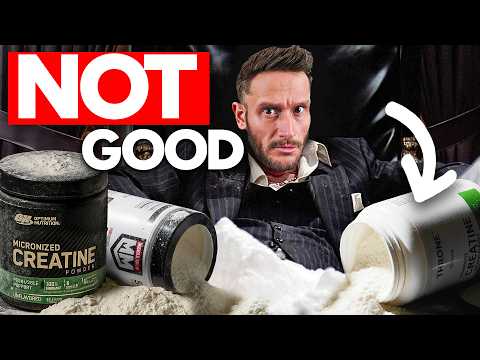
15g Creatine MEGADOSE Nearly Hospitalizes Pro Golfer (here’s what happened)
~47 min
Episode Brief·YouTube

15g Creatine MEGADOSE Nearly Hospitalizes Pro Golfer (here’s what happened)

Thomas DeLauer
Watch on YouTube Add to chat My bookmarks← All sources

TL;DR

The four things you'd lose by not watching

4 items

TL;DR

The four things you'd lose by not watching

4 items
1

Golfer Ben Griffin became shaky and missed putts after consuming a hardened 15g rock of creatine without water, but recovered after drinking water and eating calories.

2

Possible mechanisms: rapid water reallocation into the gut caused transient dehydration; freeing of methyl groups from suppressed endogenous creatine synthesis may have boosted norepinephrine/adrenaline, causing jitters; and increased GLUT4 activity may have acutely lowered blood glucose, especially on an empty stomach.

3

High-dose creatine is safe: a 2024 RCT showed 20-25g single doses had no side effects and improved cognition under sleep deprivation; a 2025 meta-analysis of 685 studies found 12-15g daily safe.

4

Thomas DeLauer personally takes 15g normally and recommends using large doses strategically for sleep deprivation or pre-workout, micro-dosing 2.5-5g during cognitive tasks, or combining 10g creatine with methylene blue and exogenous ketones for a biohacking boost.

Protocols

Concrete recipes — what, when, how much, and why

5 items

high-dose-creatine-for-sleep-deprivation

WhatTake 15–25 grams of creatine in a single dose after a poor night's sleep to combat cognitive decline and feel more alert.
WhenOn days when sleep-deprived (e.g., after ≤4 hours of sleep).
Dose15–25 grams as a single serving.
For whomAnyone who needs to function cognitively after insufficient sleep and can tolerate high-dose creatine without GI distress.
WhyA 2024 RCT showed 20–25g reversed cognitive deficits from sleep deprivation without side effects; it works fast by supporting brain energetics.
CaveatsGI tolerance is the limit; doses over 10g can cause digestive issues in some people. Start lower to assess tolerance.

DeLauer describes this as 'hands down the best use' of high-dose creatine. The 2024 double-blind, placebo-controlled study found that even among heavy doses, cognitive performance improved during sleep deprivation without adverse effects. He emphasizes that the effect is rapid, making you feel like you got significantly more sleep throughout the day. This protocol leverages creatine's role in brain energy metabolism (ATP regeneration) and neurotransmitter balance to offset the cognitive fog of sleep loss.

Mechanism

Creatine acts as a rapid energy buffer in the brain, maintaining ATP levels under metabolic stress like sleep deprivation. It may also mitigate neuroinflammatory and oxidative processes that accumulate with poor sleep, preserving cognitive function.

that 15, 20, 25 gram dose of creatine when you got four hours of sleep, you will feel like you got a lot more sleep for a number of hours throughout the day. That is hands down the best use.

Also said
“2024 study double blind placebo randomized controlled published in scientific reports flat out you can take a high dose of creatine. ... they found that this had no side effects and actually combed the cognitive decline associated with sleep deprivation.”— Cites the specific evidence justifying this protocol.

pre-workout-creatine-with-electrolytes

WhatConsume creatine about 1 hour before exercise along with electrolytes to amplify hydration and cellular electrolyte uptake.
WhenAbout 60 minutes pre-workout, taken with an electrolyte drink or supplement.
DoseNot specified; a typical pre-workout dose of 5–10g is implied.
For whomAthletes and exercisers looking to improve hydration and muscular performance.
WhyCreatine draws water into muscle cells, improving the isotonic environment so that electrolytes are more effectively taken into cells, enhancing hydration and performance.
CaveatsEnsure adequate total water intake; those sensitive to GI effects may need to adjust dose.

DeLauer explains that creatine's hydrating effect creates a more favorable osmotic gradient, allowing minerals like sodium, potassium, and magnesium to enter cells more efficiently. Taking it an hour before training gives enough time for absorption. He recommends combining with electrolytes specifically to ‘amplify how your electrolytes work,’ suggesting this can improve endurance and reduce cramping risk beyond what electrolytes alone would do.

Mechanism

Creatine acts as an osmolyte, increasing intracellular water content. This facilitates the activity of ion transporters like Na+/K+-ATPase, enhancing the electrochemical gradient and uptake of electrolytes, which supports muscle contraction and hydration status.

if you take it along with your electrolytes, it will amplify how your electrolytes work because it will draw more water into the actual cell and allow that isotonic state to actually occur where the minerals and what you're taking in with your electrolytes get to the right place better.

Also said
“take it about an hour before a workout, it has enough time to get into your system and actually aid in the hydration and aid in electrolyte uptake.”— Provides the specific timing.

microdosing-creatine-during-cognitive-tasks

WhatSip on a total of 2.5–5 grams of creatine spread throughout the day, especially during periods of high cognitive load.
WhenThroughout the day, during work, study, or mentally demanding tasks.
Dose2.5–5 grams total, split into small sips over the day.
For whomOffice workers, students, or anyone in a cognitively demanding environment who wants steady mental performance.
WhyMaintains stable creatine levels for continuous brain energy support without causing GI issues or rapid fluid shifts.
CaveatsConsistency is key; a single acute high dose for cognitive load is an alternative but this method avoids GI side effects.

DeLauer notes that people often forget how much energy the brain uses, and creatine can serve as a cognitive sustainer. Micro-dosing avoids the large osmotic pull that can cause GI distress, making it suitable for desk work. He contrasts this with acute high doses, which he reserves for sleep deprivation or pre-workout, indicating that chronic mental performance may benefit more from stable, lower intakes.

Mechanism

Creatine supports cerebral ATP production, which may be rate-limiting during prolonged mental effort. Maintaining constant serum levels ensures ongoing availability for brain mitochondria.

Micro doing 2 and 1 half to 5 g during cognitive tasks. So just sipping on it throughout the course of the day when you're under cognitive load, we forget how much our brain uses.

creatine-after-meal-for-glucose-control

WhatTake creatine shortly after a meal to help blunt the postprandial blood glucose spike by boosting GLUT4-mediated glucose uptake.
WhenPost-meal, ideally with a meal containing carbohydrates.
DoseNot specified; a standard dose of 3–5 grams is implied.
For whomIndividuals looking to improve glucose control and insulin sensitivity, particularly those with pre-diabetic tendencies.
WhyCreatine enhances GLUT4 translocation, pulling more glucose out of the bloodstream and into cells, which may reduce insulin demand and prevent insulin resistance over time.
CaveatsIf not fat-adapted, an acute drop in glucose could cause shakiness; pairing with a meal mitigates this. May further lower glucose if combined with other glucose-lowering agents.

DeLauer frames this as a positive application of the mechanism that may have caused Ben Griffin's symptoms on an empty stomach. He says, 'I see this as a good thing in potentially preventing insulin resistance,' leveraging the same GLUT4 upregulation that can cause hypoglycemia when fasted. By taking creatine with food, the glucose-lowering effect is paired with an incoming glucose supply, leading to better glycemic control without adverse symptoms.

Mechanism

Creatine upregulates and translocates GLUT4 transporters to the cell surface, increasing insulin-stimulated and possibly insulin-independent glucose uptake. This shunts more blood glucose into muscle and other tissues, lowering circulating glucose levels.

perhaps in the short term, creatine might actually lower your blood glucose. So maybe you have it after a meal and it can actually help lower your glucose by allowing more glute 4 to suck up the glucose. I see this as a good thing in potentially preventing insulin resistance.

Also said
“This is good for people that are insulin resistant. It actually helps you out with this. We've seen this in a study published in the journal physiology. It allows more glucose to come in.”— Cites a study supporting the GLUT4 mechanism.

split-daily-dosing-for-muscle

WhatDivide your total daily creatine dose into smaller servings throughout the day for consistent muscle saturation rather than one large bolus.
WhenDaily, split into 2–3 doses (e.g., morning, afternoon, evening).
DoseTotal daily 5–10g, split evenly.
For whomThose focused on long-term muscle building, strength, and general fitness.
WhyMaintains stable blood and muscle creatine levels, maximizes absorption, and avoids GI distress associated with single large doses.
CaveatsFor acute cognitive or performance demands, single higher doses may be more effective; this protocol is for steady-state benefits.

DeLauer contrasts acute high doses (great for sleep deprivation or pre-workout) with the steadiness required for muscle-building. He emphasizes that splitting doses 'seems to be the best course of action' for consistency, absorption, and avoiding the water reallocation issues. There are benefits to large doses, but for everyday fitness, micro-dosing ensures full absorption and reduces the potential for temporary dehydration or GI upset.

Mechanism

Creatine uptake into muscle is saturable and mediated by sodium-dependent transporters. Smaller, frequent doses keep plasma levels in the optimal range for gradual transporter activity without overwhelming the gut or kidneys.

The big high doses are great for acute tasks and functions, but if you just want the consistency, taking it throughout the day and keeping those levels stable and the absorption stable seems to be the best course of action.

Also said
“There are benefits to taking large doses but we do need to look at taking these short-term intervals now and then. I think it could help us out a lot.”— Reinforces the value of micro-dosing alongside occasional high doses.

What's new

Personal practice updates, fresh positions, predictions

5 items

methyl-group-adrenaline-theory

High-dose creatine may free up methyl groups normally used for endogenous creatine synthesis, redirecting them to build norepinephrine and adrenaline, causing shakiness and jitters.

Why this matters: Provides a biochemical explanation for Ben Griffin's symptoms beyond simple dehydration, shifting the narrative from 'overdose' to a temporary neurotransmitter shift.

Background

Traditionally, creatine is seen as a inert molecule with few acute neurological effects. This theory challenges that by linking high doses to catecholamine spikes.

Thomas DeLauer explains that when a large dose of creatine is ingested, the body's own production shuts down temporarily. The enzymes and methyl groups that would have made creatine are then free to participate in other pathways, particularly methylation needed for neurotransmitter synthesis. In Ben Griffin's case, this could have elevated adrenaline and norepinephrine, leading to trembling and performance anxiety. DeLauer references Dr. Darren Candow, a leading creatine researcher, and a rodent study in the British Journal of Nutrition showing methyl groups are indeed freed up. He stresses this is not a dangerous overdose but an acute neurochemical reaction that could be harnessed if understood.

Personal experience

Thomas DeLauer notes that 15g is not an alarmingly large dose for him: 'It's something that I would normally take.'

High doses of creatine can free up what are called methyl groups. ... So in this particular case, they very well could have gone over and started building norepinephrine and adrenaline, making Ben Griffin feel shaky, making him feel rocky and weird.

Also said
“This would explain the shakiness that Ben had and we've seen it in the British Journal of Nutrition in rodent model studies that it does actually free up these methyl groups.”— Cites specific research backing the methyl group liberation hypothesis.
“So does this mean you should stay away from high doses of creatine? No. But it could be one of the reasons why you feel a little bit amped up or a little bit jittery after a higher dose.”— Frames the effect as mildly stimulating, not harmful.

creatine-blood-glucose-drop

Creatine boosts GLUT4 translocation, potentially dropping blood glucose acutely, which can cause shakiness in individuals not fat-adapted — a plausible contributor to Ben Griffin's shaky episode.

Why this matters: Turns a common fear (creatine harming insulin sensitivity) on its head by showing it temporarily lowers glucose, which for non-fat-adapted athletes can feel like hypoglycemia.

Background

Most discussions about creatine and glucose focus on its role in improving insulin sensitivity over time. DeLauer highlights an acute mechanism where glucose is shunted into cells faster, leaving transient low blood sugar.

DeLauer explains that creatine upregulates GLUT4 transporters, which pull glucose from the blood into muscle cells. This is beneficial for insulin resistance but can cause a rapid drop in circulating glucose, especially on an empty stomach. Ben Griffin had a longer-than-usual warm-up and likely was fasted, so the combination of high-dose creatine, increased GLUT4 activity, and physical exertion could have crashed his blood sugar. Once his caddy gave him water and calories, symptoms resolved — consistent with hypoglycemia. DeLauer speculates golfers may not be metabolically flexible like endurance athletes, so they feel such drops more acutely. He suggests leveraging this effect by taking creatine after meals to blunt glucose spikes.

Creatine increases what's called glute 4. Glute 4 is what sort of vacuums up the blood glucose. ... What could have happened is he took this high dose of creatine. It allowed the blood glucose that was circulating to absorb into the cell better. ... maybe, just maybe, his blood glucose was just unstable for a little bit.

Also said
“He was on a relatively empty stomach, possibly a full empty stomach. ... it could have been a temporary wonkiness of blood sugar for someone that isn't fat adapted.”— Links the mechanism directly to Ben Griffin's circumstances and metabolic state.
“So when his blood glucose dropped, he felt off and shaky. And all his symptoms point to this, the shakiness, the wonkiness, and then once hydration and calories were there, he felt normal again.”— Argues that symptom recovery after calories supports the hypoglycemia theory.

high-dose-creatine-safety-confirmed

Recent 2024–2025 studies show that single doses of 20–25g creatine are safe with no side effects and can improve sleep-deprivation cognition, and a meta-analysis of 12,000 participants found 12–15g daily safe.

Why this matters: Directly refutes clickbait ‘overdose’ fears with rigorous data, establishing high doses as a viable acute cognitive intervention.

Background

Previously, high-dose creatine was mostly studied for loading phases (20g/day split). New research extends safety to single boluses and novel applications like sleep deprivation recovery.

DeLauer cites a 2024 double-blind, placebo-controlled RCT in Scientific Reports where participants took 20–25g in a single serving with no side effects and experienced reversal of cognitive decline from sleep deprivation. He also references a 2025 meta-analysis in the ISSN journal reviewing 685 studies and over 12,000 participants, concluding that average intakes of 12–15g daily were safe without mentionable side effects. Dr. Darren Candow is noted as discussing doses up to 20, 30, or even 40 grams in one serving, with the bottom line being gut tolerance. This body of evidence grows the case for strategic high-dose creatine use beyond athletics.

2024 study double blind placebo randomized controlled published in scientific reports flat out you can take a high dose of creatine. In this case they were looking at 20 to 25 grams plus in a single serving and they found that this had no side effects and actually combed the cognitive decline associated with sleep deprivation.

Also said
“A brand new 2025 study published in the journal ISSN looked at 685 studies with over 12,000 participants overall. And they found that on average, these people taking 12 to 15 grams of creatine daily, sometimes in one serving, had no mentionable side effects.”— Adds the massive meta-analytic safety data.
“Bottom line is if your gut can handle it, it can truly help you.”— Pragmatic limit: GI tolerance, not toxicity.

creatine-hair-loss-myth-debunked

A 2025 ISSN study definitively shows creatine does not affect DHT or hair loss, debunking a persistent myth based on an older, small study.

Why this matters: Settles a long-standing controversy often cited by those avoiding creatine, using the freshest, most comprehensive evidence.

Background

A single 2009 study in rugby players observed a small DHT increase with creatine, fueling widespread fear of hair loss; subsequent evidence hadn’t been as widely disseminated.

Brand new 2025 study published in ISSN. Nope. no issue. It does not affect dehydrotestosterone, DHT, and does not affect hair loss, contrary to that one study that people like to really point out.

Also said
“That doesn't make a lot of sense in the first place. No. No. Creatine does not affect hair loss.”— Adds emphasis to the certainty of the claim.

protocol-mega-stack-biohacking

Combining 10g creatine, 4mg methylene blue, and exogenous ketones creates a potent cognitive/energy biohacking stack.

Why this matters: Introduces a synergistic protocol that goes beyond standard supplementation, targeting mitochondrial and neurotransmitter pathways simultaneously.

Background

Methylene blue and exogenous ketones are each used in biohacking circles, but combining them with high-dose creatine is presented as a state-of-the-art cognitive performance enhancer.

DeLauer suggests this stack for a 'total biohacking mode' cognitive and energy boost, acknowledging it's advanced but 'worth it.' He advises using a high-quality methylene blue free of heavy metals and notes that exogenous ketones can be either esters or ketone salts, referencing those discussed by Dr. Dom D'Agostino (likely 'Dr. Domagino'). No further mechanistic details are given, but the suggestion positions creatine as a versatile nootropic component when paired with complementary mitochondrial enhancers.

combine 10 g of creatine with maybe 4 milligs of good quality methylene blue that doesn't have a bunch of heavy metals, a good quality one, and try it with exogenous ketones, usually like either an esther or a ketone salt, some of the ones like Dr. Domagino talks about. That's total biohacking mode, but it's worth it.

Recommendations

Products, supplements, and tools mentioned in the episode

2 items

Methylene Blue (high-quality, low-heavy-metal)

Supplement

Suggested as part of a 'biohacking' stack with 10g creatine and exogenous ketones; a cognitive and mitochondrial enhancer.

DeLauer specifically advises using a 'good quality methylene blue that doesn't have a bunch of heavy metals,' implying that purity sourcing matters. He does not name a brand, but the recommendation is for the supplement as a category with a quality caveat. Dose is 4 mg. No alternative nootropics are compared, but it's positioned as synergistic with high-dose creatine for total energy and cognitive enhancement.

combine 10 g of creatine with maybe 4 milligs of good quality methylene blue that doesn't have a bunch of heavy metals, a good quality one

Find Methylene

Exogenous Ketones (ester or ketone salt, e.g., those discussed by Dr. Dom D'Agostino)

Supplement

Part of the biohacking mega-stack, providing immediate ketone bodies for energy and cognition.

DeLauer recommends using exogenous ketones, specifically 'esther or a ketone salt' forms, referencing Dr. Dom D'Agostino's work. He does not endorse a particular brand but implies that quality matters. Combined with creatine and methylene blue, this stack is framed as a top-tier cognitive and energy enhancement for 'total biohacking mode.'

try it with exogenous ketones, usually like either an esther or a ketone salt, some of the ones like Dr. Domagino talks about.

Find Exogenous
Disclosed sponsorships1speaker disclosed

Thrive Market

Service Sponsored · disclosed

Online grocery and supplement delivery service offering discounted organic, non-GMO, and health-conscious products, including creatine and other supplements.

DisclosureSponsored content; DeLauer provides a 30% off first order discount link and free gift.

DeLauer mentions Thrive Market as a source for creatine while discussing the Ben Griffin story, noting that viewers looking for good creatine sources could use his discount. The service is presented as convenient for health-focused grocery shopping with delivery. No direct comparison to other retailers is made, but the affiliation is clear.

Thrive Market has a lot of them and that's relevant to today's video. I put a link down below that is for a 30% off discount link your entire first grocery order with Thrive Market.

Also said
“So you get 30% off your entire first grocery order. So whether that's supplements, whether it's food, whether it's all the different things that they have, you get 30% off plus a free gift.”— Specifies the offer details.
Find Thrive

Notable quotes

Lines worth pulling out — contrarian, specific, or perfectly phrased

5 items
15 g serving of creatine is not an alarmingly huge serving of creatine. That's not unusual. It's something that I would normally take.
Reframes the golfer's scare by normalizing high doses, coming from the expert's personal practice.
It could have been a temporary wonkiness of blood sugar for someone that isn't fat adapted.
A concise, memorable phrase explaining the shaky episode in metabolic terms.
Bottom line is if your gut can handle it, it can truly help you.
Pithy takeaway on the real limiting factor for high-dose creatine.
Brand new 2025 study published in ISSN. Nope. no issue. It does not affect dehydrotestosterone, DHT, and does not affect hair loss.
Emphatic, definitive debunking of a persistent myth with a conversational tone.
that 15, 20, 25 gram dose of creatine when you got four hours of sleep, you will feel like you got a lot more sleep for a number of hours throughout the day.
Bold experiential claim that sells the protocol's efficacy dramatically.

Sign in to share feedback

Tell us if this brief hit the mark or missed it — feedback feeds back into the next iteration of the prompt.

Topics covered

ben-griffin-creatine-episodecreatine-megadose-safetymethyl-group-neurotransmitter-mechanismcreatine-and-glut4-blood-glucosetransient-dehydration-from-creatinegi-distress-from-creatinewater-retention-issueskidney-health-mythhair-loss-myth-debunkedhigh-dose-creatine-studiessleep-deprivation-cognitive-rescuepre-workout-hydration-protocolmicrodosing-cognitive-taskspost-meal-glucose-controlsplit-daily-dosing-musclemega-stack-biohackingthrive-market-sponsorship
Free account

Make this library yours

Reading is free for everyone. A free account adds the personal layer: save protocols, follow experts, and see how the other experts weigh in on this same topic.

Create a free accountSign in

Where the experts disagree — weekly

One email a week: the sharpest new disagreements and protocols from the library. No spam, unsubscribe anytime.

Educational summary of the cited expert source — not medical advice. Open the source recording linked above and consult a qualified physician before acting on any protocol.