
UNFUCG
DashboardSearchChatBookmarksNotificationsActivityPremiumProfile
?
Home
Search
Chat
Saved
Profile
Episode
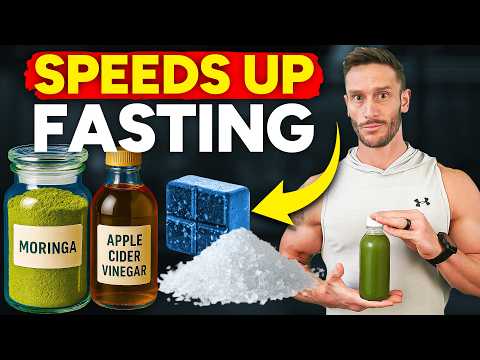
Make 16-Hour Fasting Work Like a 3-Day Fast (5 Powerful Fasting Accelerators)
~42 min
Episode Brief·YouTube

Make 16-Hour Fasting Work Like a 3-Day Fast (5 Powerful Fasting Accelerators)

Thomas DeLauer
Watch on YouTube Add to chat My bookmarks← All sources

TL;DR

The four things you'd lose by not watching

4 items

TL;DR

The four things you'd lose by not watching

4 items
1

Take 2 tablespoons of glycerol the night before or right before a fast to hyper-hydrate muscle cells, boosting fat oxidation and focus while reducing constant thirst during low-insulin periods.

2

After breaking your fast, consume a couple hundred milligrams of moringa to extend NRF2 detox and longevity signaling by blocking Keap1, keeping protective genes active longer.

3

Use 1-4 mg of methylene blue on fasting days, especially under extra stress, to donate electrons to mitochondria and accelerate the shift to burning stored fat.

4

TMG (trimethylglycine) is one of the few antioxidants safe during a fast; it acts as a methyl donor to support fat oxidation, muscle preservation, and homocysteine reduction.

Protocols

Concrete recipes — what, when, how much, and why

5 items

Glycerol pre-fast hydration

WhatConsume about 2 tablespoons of glycerol the night before or just before beginning a fast to increase intracellular water, improve fat oxidation, and maintain focus.
WhenBefore starting the fast, ideally the prior evening or right before the fasting period.
Dosea couple tablespoons (approx. 30 ml)
For whomAnyone fasting who wants better hydration, focus, and potentially more fat oxidation; especially helpful for those who struggle with relentless thirst during fasts.
WhyGlycerol is hydrophilic, drawing water into muscle cells. Proper cellular hydration boosts fat oxidation. In a fasted, low-insulin state, this pre-loaded water reduces excessive thirst and dehydration.
CaveatsDo not take during the fast—glycerol is a sugar alcohol with calories that would break the fast. The benefit comes from pre-loading before insulin drops.

DeLauer introduces glycerol as a 2025 addition that goes beyond electrolytes. He acknowledges that electrolytes during a fast still curb appetite and are valid, but glycerol offers a proactive strategy: pre-saturating muscle cells with water so you start the fast optimally hydrated. This reduces the need to guzzle water constantly and, more importantly, he asserts that cellular hydration directly increases fat utilization. He cites athletic and ultra-endurance use of glycerol, now being repurposed for fasting. The main practical win is you feel better and sharper, with accelerated fat loss as a bonus.

Mechanism

Glycerol increases the osmotic pressure inside cells, pulling water into the muscle. Well-hydrated cells support lipolysis and fatty acid oxidation. Fasting lowers insulin, causing the kidneys to excrete more water; pre-hydrating with glycerol mitigates this by building a larger fluid reservoir within cells.

just a couple tablespoons, can draw tremendous amounts of water into the muscle and keep you hydrated throughout your fast, which may increase fat loss, but most of all, it's going to increase just your focus.

Also said
“It draws water into the actual muscle and into the cell. So cellular hydration at its absolute best.”— Highlights the depth of hydration effect beyond blood volume.
“when the cells are properly hydrated that you actually utilize and oxidize more fat.”— Directly states the fat loss mechanism.

Moringa post-fast NRF2 extension

WhatTake a couple hundred milligrams of moringa leaf powder or extract after breaking the fast to prolong the detoxification and antioxidant gene expression triggered during the fast.
WhenAfter breaking the fast, following a meal (e.g., lean protein).
Dosea couple hundred milligrams (approx. 200-400 mg)
For whomIndividuals seeking enhanced detox, autophagy, and longevity outcomes from fasting.
WhyFasting upregulates NRF2 for detox. Moringa further activates NRF2 and blocks Keap1, the protein that inactivates it, thereby extending the longevity and cellular clean-up benefits beyond the fasting window.
CaveatsDo not take during the fast; the body is already activating NRF2, and adding a strong hormetic stressor could be too much. This protocol is for post-fast extension.

DeLauer positions moringa as a way to ‘extend your fast’s benefits’ beyond the eating resumption. He explains that the body’s own endogenous antioxidant systems kick in during fasting, and adding moringa during the fast might create an excessive hormetic hit. By waiting until after you eat, you catch the descending NRF2 signal and re-amplify it. He claims personal experience confirms this yields a noticeable extension. The scientific highlight is the Keap1 blockade—without that bottleneck, more NRF2 reaches the nucleus to activate over 200 protective genes. The result is a sustained state of enhanced detoxification, anti-inflammatory, and antioxidant defense.

Mechanism

Fasting stimulates NRF2, which enters the nucleus to promote genes for phase 2 detoxification (superoxide dismutase, glutathione). Moringa compounds further induce NRF2 and also inhibit Keap1, a protein that normally binds and degrades NRF2. With Keap1 down, NRF2 stays free to continuously drive protective gene expression, effectively keeping the body’s antioxidant machinery in high gear after the fast ends.

Personal experience

where the real strong benefit and least at least what I've experienced is actually extending your fast with moringa.

Moringa has a really potent effect on NRF2 and that controls the expression of over 200 different protective genes. So you're essentially extending the benefit from a detox and from a longevity perspective of your fast.

Also said
“it actually stops something called KAP1 from binding to it. Keap one, keep one binds to NRF2 and renders it basically disarms it. So if you turn off or turn down keep one, you get more NRF2 actually getting into the cell and into the nucleus and ultimately binding to DNA sequences.”— Provides the detailed molecular target (Keap1) behind the extension.
“you do your fast, you break your fast however you like to break it, usually lean protein, have a couple hundred milligrams of moringa post fast, and then get the extended benefits.”— Gives the exact sequence of actions for implementation.

Low-dose methylene blue during fast

WhatTake 1-4 mg of pharmaceutical-grade methylene blue on fasting days, a couple times per week, to act as a mitochondrial electron donor and enhance fat oxidation.
WhenDuring the fast, especially on days with additional stress (travel, high workload). Not daily; use infrequently.
Dose1-4 milligrams per instance
For whomFasters who are under extra environmental or psychological stress and want to accelerate fat adaptation; also those who fly or face high EMF/low oxygen environments.
WhyMethylene blue donates electrons to the mitochondrial electron transport chain, improving the efficiency of energy production from stored fat. This kickstarts the metabolic adaptation that fasting naturally seeks.
CaveatsUse only low pharmaceutical doses (1-4 mg); high doses (50-60 mg) are dangerous and reserved for medical emergencies. It is a synthetic compound; those averse to synthetics may prefer to avoid. Do not use daily.

DeLauer stresses that this is not about taking methylene blue as a daily nootropic, but as a situational tool. He shares that he uses it when fasting or traveling, because those states impose extra oxidative and metabolic stress. He cites Dr. Scott Sher’s expert position that high doses are absurd and only used clinically for conditions like sepsis. The low-dose approach aligns with fasting—giving the mitochondria a little electron boost when they are already trying to ramp up fat burning. He also acknowledges the synthetic nature and says he understands people's hesitation, but argues the benefit profile is strong when used infrequently. The core message: use 1-4 mg on the hardest days, let the body do its thing the rest of the time.

Mechanism

Methylene blue acts as an artificial electron donor and carrier, taking over the role of natural electron carriers in the mitochondrial respiratory chain. By providing additional electrons, it helps mitochondria process fatty acids more effectively, essentially bypassing some energetic bottlenecks. This reduces the metabolic strain of switching to fat for fuel, enabling faster ketone production and fat loss. It does not act as a direct antioxidant that quenches hormesis but rather optimizes energy metabolism.

Personal experience

I will use it a couple times per week, particularly on days when I'm fasting or I'm going to be a little bit more stressed. I take methylene blue when I fly.

I recommend low dose infrequently just to let the body kind of do its thing.

Also said
“it helps the overall mitochondria process fuel better, which means that you might kickstart the metabolic function you're trying to kickstart with fasting a little bit faster because you're giving yourself an additional electron donor and carrier.”— Explains the core metabolic acceleration mechanism.
“I don't recommend you take a lot. I recommend you take 1 to four milligrams. We have people out there taking 50 60. I had Dr. Scott Sher on my channel... he even says like that is absurd.”— Provides authority and safety warning against high doses.

TMG (trimethylglycine) during fast

WhatSupplement with TMG (betaine) during your fast to support methylation, fatty acid oxidation, muscle preservation, and homocysteine reduction.
WhenDuring the fasting window; can also be used intra-workout.
DoseStandard supplemental dose (1-3 grams, though not explicitly stated by speaker)
For whomFasters aiming to preserve muscle mass, improve fat loss, support methylation (especially those with high homocysteine), or enhance workout recovery.
WhyTMG acts as a methyl donor, facilitating cellular remodeling, detoxification, and fat oxidation. Unlike direct antioxidants, it does not blunt the hormetic stress of fasting, making it compatible and beneficial.
CaveatsTMG is not a direct antioxidant, but those with methylation-sensitive conditions should consult a practitioner. Exact dose not given; follow standard supplement guidelines.

DeLauer says TMG is one of his all-time favorite supplements because of its broad benefits. He emphasizes that very few antioxidants get his green light during a fast, but TMG is an exception because it works upstream through methylation. He lists evidence for insulin sensitivity, fatty acid oxidation, and muscle preservation. He believes the anti-inflammatory and detox support (phase 2) align perfectly with fasting goals without interfering with the pro-survival oxidative signals. He even suggests it can be taken intra-workout while fasted, making it versatile.

Mechanism

TMG provides methyl groups, participating in the methionine-homocysteine cycle to lower homocysteine and support creatine synthesis. This methylation assists in phase 2 detoxification and gene expression. Its anti-inflammatory and antioxidant effects stem from enhancing the body’s own defense systems rather than direct radical quenching. During a fast, this supports metabolic efficiency—fat oxidation is improved, and muscle tissue is preserved likely through reduced inflammation and optimized energy utilization.

Personal experience

TMG is one of my favorite supplements all around.

very few antioxidants I would recommend during a fast, but TMG is one of them because it's not a direct antioxidant.

Also said
“There's evidence on it helping insulin resistance. There's evidence on helping fatty acid oxidation. There's really unique studies showing that it actually preserves muscle mass from its antioxidant capability.”— Specific citations supporting the fat loss and muscle preservation claims.
“I think from a performance side of things, from a muscle preservation side of things, and a fat loss side of things, not to mention phase 2 detoxification and homocysteine reduction, it's really, really potent.”— Summarizes the multi-pronged benefits of TMG during fasting.

Taurine for fasted workout recovery

WhatTake 2-3 grams of taurine before or during a fasted workout to increase time to exhaustion and provide localized muscle repair.
WhenWhen exercising in a fasted state, particularly if pushing intensity or volume.
Dose2-3 grams
For whomIndividuals who train fasted and need to maintain performance and reduce soreness without breaking the fast.
WhyStudies show taurine extends time to exhaustion by 10-13%. Its localized antioxidant action targets damaged muscle fibers, aiding recovery when no post-workout nutrition is available.
CaveatsNot for daily use unless you are pushing the body hard. Taurine is an antioxidant, but its localized effect is believed to not interfere with systemic hormesis. Track individual response.

DeLauer notes that the evidence for taurine on cramps is weak, but its endurance benefits are robust. He positions it as a solution to the unique problem of fasted training: you’re already energy-depleted and breaking down muscle without amino acids to repair. Taurine steps in to reduce the beat-down, making it possible to train hard while fasted. He cites the 10-13% time-to-exhaustion increase from rowing studies, and underscores that its localization means it helps only where needed, preserving the general beneficial stress of fasting. He recommends it situationally, when you’re really pushing the envelope.

Mechanism

Taurine is an amino acid that modulates calcium handling in muscle, reducing fatigue. During exercise-induced muscle damage, taurine accumulates at injury sites and exerts local antioxidant effects, neutralizing reactive oxygen species and aiding muscle repair. This targeted action limits oxidative damage without suppressing the body-wide redox signaling that fasting promotes. The result is improved endurance and faster recovery in the absence of caloric intake.

We've seen people use torine in like rowing trials in the studies and actually extend their time to exhaustion by like 10 or 13%.

Also said
“when you're fasting, you're already pushing your body 70% anyway because you're already tapped out because you don't have energy load.”— Frames the energy deficit that taurine helps overcome.
“the nice thing about torine is although it's an antioxidant, it is an antioxidant that seems to have a localized effect... concentrated amounts of torine go to where the damaged muscle fibers are, showing that it really helps in a localized sense.”— Explains the localized mechanism that avoids systemic hormesis blunting.

What's new

Personal practice updates, fresh positions, predictions

5 items

glycerol-pre-fast-hydration-strategy

Using glycerol before a fast to super-hydrate cells and enhance fat oxidation is a 2025 hydration innovation, distinct from relying solely on intra-fast electrolytes.

Why this matters: Shifts the hydration paradigm from reactive electrolyte sipping to proactive cellular pre-loading with a compound that would break the fast if taken during it.

Background

Conventional fasting advice centers on sodium, potassium, and magnesium during the fast to manage dehydration and cramps. Glycerol was known in endurance sports but not applied this way to fasting.

DeLauer frames glycerol as a new angle for 2025, arguing that cellular hydration directly impacts fat oxidation—when cells are properly hydrated, you oxidize more fat. Because fasting lowers insulin, you excrete more water and must drink excessively; pre-loading with glycerol pulls water into muscle cells ahead of time, reducing the need to chug water constantly. He stresses that glycerol would break a fast if consumed during it, so timing is everything: right before beginning the fast or the previous night. The benefit is twofold: you feel better (focus) and you potentially burn more fat.

when the cells are properly hydrated that you actually utilize and oxidize more fat.

Also said
“Glycerol prior to a fast or even the night before fasting, just a couple tablespoons, can draw tremendous amounts of water into the muscle and keep you hydrated throughout your fast.”— Gives the exact dose and timing with the benefit of sustained hydration.

moringa-post-fast-nrf2-extension

Moringa taken after breaking a fast prolongs the NRF2 detox and longevity response, instead of being used during the fast where it could overstress the body.

Why this matters: Reverses the common assumption that more antioxidants during a fast is always better; suggests post-fast timing to extend hormetic benefits without interfering with endogenous upregulation.

Background

Fasting naturally activates NRF2 to ramp up internal antioxidants like glutathione. Many people take antioxidant supplements during fasts, risking blunting this beneficial stress.

DeLauer explains that fasting turns on the body’s own antioxidant systems via NRF2. Moringa is a potent NRF2 activator and hormetic stressor; taking it during the fast could push the system too far. Instead, he advises taking it after breaking the fast, when the body would normally start downregulating those pathways. This extends the detox and longevity window. He details his personal experience of getting stronger benefits from this post-fast timing and describes the molecular mechanism of moringa inhibiting Keap1, the protein that disarms NRF2, resulting in more NRF2 entering the nucleus to activate over 200 protective genes.

Personal experience

where the real strong benefit and least at least what I've experienced is actually extending your fast with moringa.

Moringa has a really potent effect on NRF2 and that controls the expression of over 200 different protective genes. So you're essentially extending the benefit from a detox and from a longevity perspective of your fast.

Also said
“it actually stops something called KAP1 from binding to it. Keap one, keep one binds to NRF2 and renders it basically disarms it. So if you turn off or turn down keep one, you get more NRF2 actually getting into the cell and into the nucleus and ultimately binding to DNA sequences.”— Provides the specific molecular target (Keap1) that explains the extension mechanism.

low-dose-methylene-blue-during-fast

A low, infrequent dose of 1-4 mg methylene blue on fasting days acts as an electron donor to mitochondria, accelerating fat oxidation without the risks of high-dose trends.

Why this matters: Pushes back against the popular 50-60 mg dosing and reframes methylene blue as a targeted mitochondrial helper for fasting-induced stress, not a daily nootropic.

Background

Methylene blue has gained popularity for cognitive enhancement, often at doses 50-60 mg. DeLauer cites Dr. Scott Sher to call that absurd, noting high doses are for medical emergencies like sepsis.

He says he uses it a couple times per week, especially on days he fasts or is under extra load, and always when flying. Fasting is a stressor, and methylene blue helps mitochondria process fuel—including stored fat—more efficiently by donating electrons. This “kickstarts” the metabolic shift fasting aims for. He emphasizes it’s not an antioxidant that squelches hormetic stress but rather a metabolic facilitator. The key is dose: 1-4 mg, not high, and not daily. He addresses the synthetic nature honestly, saying he understands the concern but finds value in strategic use.

Personal experience

I will use it a couple times per week, particularly on days when I'm fasting or I'm going to be a little bit more stressed. I take methylene blue when I fly.

I recommend low dose infrequently just to let the body kind of do its thing.

Also said
“it helps the overall mitochondria process fuel better, which means that you might kickstart the metabolic function you're trying to kickstart with fasting a little bit faster because you're giving yourself an additional electron donor and carrier.”— Explains the core mechanism of why it accelerates fat burning.

tmg-safe-antioxidant-for-fasting

TMG is one of the few antioxidants DeLauer recommends during a fast because its benefits come from methyl donation and anti-inflammatory action, not direct radical scavenging.

Why this matters: Challenges the common rule to avoid all antioxidants while fasting by identifying TMG as an exception due to its unique mechanism.

Background

Many experts warn that taking antioxidants during fasting cancels the hormetic oxidative stress that drives benefits. DeLauer argues TMG operates differently.

He describes TMG as a versatile compound serving as a methyl donor for cellular remodeling and detoxification, with evidence for improving insulin resistance, fatty acid oxidation, and muscle preservation. Unlike standard antioxidants, it doesn't directly quench free radicals; it reduces inflammation and homocysteine, supporting metabolic efficiency. He believes this makes it safe to use intra-fast without blunting hormesis. He personally considers it a favorite supplement, and points to its role in phase 2 detox and methylation as synergistic with fasting goals.

Personal experience

TMG is one of my favorite supplements all around.

very few antioxidants I would recommend during a fast, but TMG is one of them because it's not a direct antioxidant.

Also said
“There's evidence on it helping insulin resistance. There's evidence on helping fatty acid oxidation.”— Cites the specific metabolic pathways TMG benefits.

taurine-fasted-workout-recovery

2-3 grams of taurine during a fasted workout extends time to exhaustion and delivers localized antioxidant repair to stressed muscles without disrupting whole-body hormesis.

Why this matters: Repurposes taurine from a cramp remedy to a strategic performance and recovery tool specifically for the fasted state, where energy and repair resources are scarce.

Background

Taurine’s evidence for cramps is weak, but endurance studies show impressive time-to-exhaustion improvements. Fasted exercise amplifies catabolic stress; taurine may offset this locally.

DeLauer notes that when you’re fasting, you’re already pushing your body hard because you lack an external energy load. Taurine at 2-3 grams can increase time to exhaustion by 10-13% based on rowing trials. Its unique property is concentrating at sites of muscle damage, providing localized antioxidant protection that aids repair without systemic interference. He recommends it situationally—when you’re really pushing boundaries while fasted—not daily. This addresses the recovery deficit that fasted training creates, giving a “leg up” when no post-workout nutrition is available.

We've seen people use torine in like rowing trials in the studies and actually extend their time to exhaustion by like 10 or 13%.

Also said
“when you're fasting, you're already pushing your body 70% anyway because you're already tapped out because you don't have energy load.”— Sets the context for why fasted athletes need extra support.
“the nice thing about torine is although it's an antioxidant, it is an antioxidant that seems to have a localized effect... concentrated amounts of torine go to where the damaged muscle fibers are, showing that it really helps in a localized sense.”— Describes the targeted mechanism that avoids systemic hormesis blunting.
Disclosed sponsorships1speaker disclosed

Thrive Market

Service Sponsored · disclosed

Online grocery delivery focused on ethically and sustainably sourced, clean ingredients, comparable to European food standards, accessible in the US.

DisclosureSponsored; the video description link offers 30% off entire grocery order plus a free gift. DeLauer states he gets a majority of his groceries from Thrive Market.

He promotes Thrive Market as his primary source for groceries, highlighting that their ingredients are sourced right—ethically and sustainably—and are clean, aligning with the quality standards he expects from Europe. The 30% discount and free gift are incentives for his audience. He trusts them because of the ingredient sourcing, making it a convenient way to maintain a clean diet.

Personal experience

they are where I get a majority of my groceries these days.

I trust them because the ingredients are sourced right. They're sourced ethically. They're sourced sustainably and they're clean just like how I would want food in Europe, for example.

Also said
“30% off your entire grocery order. If you've seen my channel before, you've seen me talk about Thrive Market.”— Reinforces the ongoing sponsorship and discount offer.
“You get a free gift along with your 30% off when you use that link down below as well.”— Adds the extra incentive for using the affiliate link.
Find Thrive

Notable quotes

Lines worth pulling out — contrarian, specific, or perfectly phrased

6 items
Glycerol prior to a fast or even the night before fasting, just a couple tablespoons, can draw tremendous amounts of water into the muscle and keep you hydrated throughout your fast.
Concrete, actionable dose and vivid description of a novel hydration strategy.
Moringa has a really potent effect on NRF2 and that controls the expression of over 200 different protective genes. So you're essentially extending the benefit from a detox and from a longevity perspective of your fast.
Succinctly captures the purpose of post-fast moringa and the scale of genetic activation.
I recommend low dose infrequently just to let the body kind of do its thing.
A contrarian, minimalist stance against the high-dose trend of methylene blue, emphasizing hormesis.
very few antioxidants I would recommend during a fast, but TMG is one of them because it's not a direct antioxidant.
Clearly articulates the exception to the antioxidant-during-fast rule based on mechanism.
We've seen people use torine in like rowing trials in the studies and actually extend their time to exhaustion by like 10 or 13%.
Provides a striking data point that makes the taurine recommendation evidence-based and compelling.
when you're fasting, you're already pushing your body 70% anyway because you're already tapped out because you don't have energy load.
Colorful illustration of the fasted state's inherent stress, rationalizing why supplements like taurine and methylene blue are warranted.

Sign in to share feedback

Tell us if this brief hit the mark or missed it — feedback feeds back into the next iteration of the prompt.

Topics covered

fasting-acceleratorsglycerolcellular-hydrationmoringanr2-pathwaykeap1methylene-bluemitochondrial-energylow-dose-methylene-bluetmgmethylationhomocysteine-reductiontaurineexercise-performancefasted-trainingthrive-marketaffiliate-disclosureelectrolytes
Free account

Make this library yours

Reading is free for everyone. A free account adds the personal layer: save protocols, follow experts, and see how the other experts weigh in on this same topic.

Create a free accountSign in

Where the experts disagree — weekly

One email a week: the sharpest new disagreements and protocols from the library. No spam, unsubscribe anytime.

Educational summary of the cited expert source — not medical advice. Open the source recording linked above and consult a qualified physician before acting on any protocol.