UNFUCG
DashboardSearchChatBookmarksNotificationsActivityPremiumProfile
?
Home
Search
Chat
Saved
Profile
Episode
A Shaolin monastery monk reveals the secret of true warriors – Łukasz Duszak
~94 min
Episode Brief·YouTube

A Shaolin monastery monk reveals the secret of true warriors – Łukasz Duszak

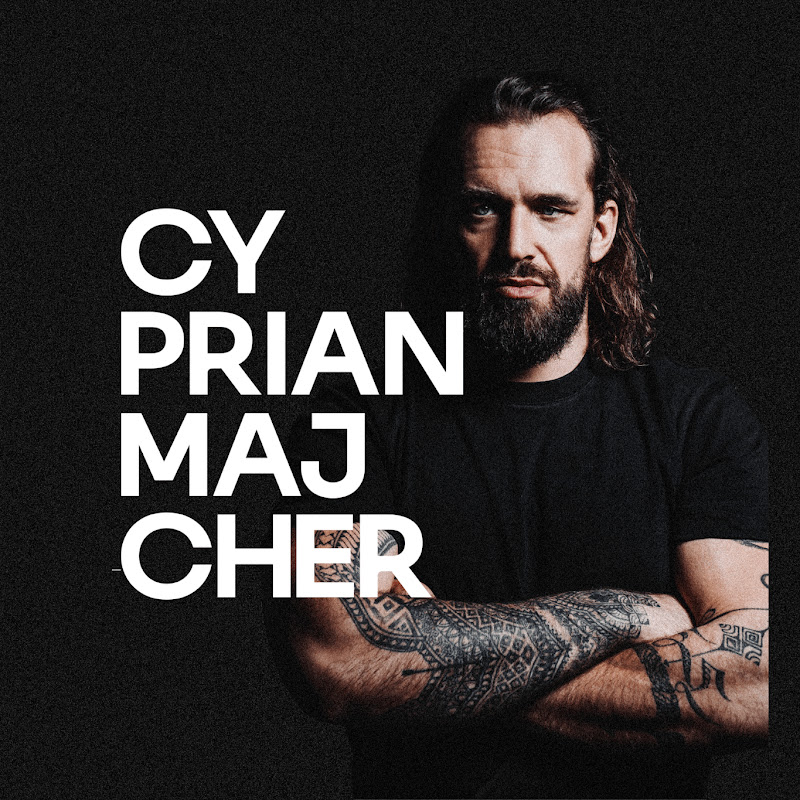
Cyprian Majcher
Watch on YouTube Add to chat My bookmarks← All sources

TL;DR

The four things you'd lose by not watching

4 items

TL;DR

The four things you'd lose by not watching

4 items
1

Shaolin monk Łukasz Duszak explains that true warrior discipline is about overcoming your own weaknesses, not chasing external validation like belts or trophies.

2

Daily monastic life includes pre-dawn waking, hours of kung fu training, vegan meals, and no dinner after noon for monks; the real work is maintaining inner calm in ordinary life, not just in a monastery.

3

Core of prevention in Chinese medicine is diet, exercise, and sleep — if you need acupuncture or herbs, you already failed at the basics.

4

He survived a near-fatal injury where his thigh was cut 2 mm from the femoral artery during a pole training accident, and returned to practice.

Protocols

Concrete recipes — what, when, how much, and why

6 items

Shaolin Iron Shirt (Twardy Chong) conditioning

WhatGradual body hardening to absorb strikes, ultimately enabling breaking bricks and boards.
WhenIntegrated into regular training, not specified but presumably multiple times per week.
DoseProgressive over years; not a single session dose.
For whomDedicated kung fu practitioners.
WhyTo make the body resilient to blows and overcome fear of pain, enabling higher-level martial skills.
CaveatsHigh injury risk; must be built up very slowly.

This is the 'external' hardening training. He describes it as separate from the once-a-week Power Training. The objective is to condition the body so that you can receive hits without injury, ultimately being able to break hard objects. It's not just about physical toughness; it's also about mental fortitude — learning to control the pain response. The process is gradual and dangerous if rushed.

Mechanism

By repeatedly exposing the body to controlled impact, bones densify, connective tissues strengthen, and the nervous system desensitizes to pain, while the mind learns to stay calm under stress.

You slowly train your body to absorb strikes, control pain, and gradually begin breaking various objects.

Weekly Power Training

WhatA 3+-hour high-intensity interval-style session involving non-stop exercises: sit-ups, push-ups, barrel work, running up and down stairs on hands.
WhenOnce a week, typically a full day or at least 3 hours.
DoseOne session of 3+ hours; intervals of maximum tension followed by short rest, repeated for the entire duration.
For whomAdvanced martial artists inside the monastery.
WhyBuilds extreme endurance, full-body strength, and mental toughness by pushing through physical limits.
CaveatsExtremely demanding; likely only for those already conditioned; risk of overtraining.

This is the most intense part of the physical curriculum. The format is described as a prolonged HIIT workout where you go from one exercise to the next without stopping for hours. He mentions running up stairs on hands, then descending on hands, then going up again on hands, and jumping off. It's designed to break through mental barriers as much as physical ones. He credits this type of training with making his body strong enough to survive a near-fatal thigh cut.

Mechanism

The constant switching between explosive effort and short recovery trains the cardiovascular and musculoskeletal systems to sustain high output, while the mental challenge of enduring such a grueling session strengthens willpower and pain tolerance.

Personal experience

He implies that without this conditioning, his body might not have withstood the severe thigh injury.

Imagine a mega intense interval training... non-stop: abs, push-ups, barrels, that sort of thing.

Also said
“Walking on hands, going down the stairs on hands, then going up the stairs on hands, and jumping off the stairs.”— Specific example of the hand-walking stairs exercise.

Qigong breathing exercise for daily energy

WhatSit comfortably, shoulders low, hips relaxed, breathe deeply and fully, exhaling completely to empty the lungs, then inhale slowly.
WhenAnytime during the day when you need to recharge or find calm.
DoseA few minutes; just a few cycles of deep inhale and long exhale.
For whomAnyone, even complete beginners.
WhyTo circulate internal energy (qi), clear blockages, and restore calm without needing complex forms.
CaveatsNone; it's the simplest starting point.

Duszak emphasizes that qigong is fundamentally breath work. Many people overcomplicate it, but the foundational practice is simply sitting and breathing with awareness. He contrasts this with those who think that qigong alone will grant longevity — in Shaolin, it must be paired with physical exercise, diet, and sleep. He uses the metaphor of energy needing to be expelled and renewed, not just accumulated. For the average listener, he says to start by sitting in a chair and consciously breathing deeply, allowing the body to relax. This is a direct counterpoint to the high-octane Power Training.

Mechanism

Deep diaphragmatic breathing stimulates the parasympathetic nervous system, and in Chinese medicine terms, opens the meridians so that qi flows freely rather than stagnating and 'spoiling' like old food.

If you have a moment to sit comfortably, shoulders low, hips relaxed, and just breathe – that's the easiest exercise you can do.

Also said
“Fully empty the lungs of all air, then breathe in again; that's enough to begin.”— Specifies the breathing technique: full exhale first.
“This energy inside goes bad if unused — it spoils like cucumbers in the fridge.”— Colorful analogy explaining why qi must circulate, not just be stored.

Balancing internal and external training by age

WhatAs you age, shift the ratio from mostly external (physical) to more internal (qigong) work; 60% internal and 40% external after 40, versus more external when young.
WhenThroughout life; adjust as you grow older.
DoseFor a 40-year-old: about 60% qigong, 40% hard external training. For a 20-year-old: the inverse.
For whomAll martial artists and anyone following Chinese health principles.
WhyYoung bodies naturally generate more yang energy and can handle external strain; older bodies need to cultivate and conserve energy with softer practices.
CaveatsNot a fixed prescription; individual constitution matters.

This protocol addresses the common Western mistake of training the same way at 40 as at 20. Duszak explains that traditional Shaolin wisdom recognizes that younger practitioners need more external work, while older ones should tilt toward qigong, tai chi-like practices. The theory is that internal energy naturally circulates better in youth, so hard training isn't as draining. Later in life, the body needs more repair, and the gentle internal exercises are more efficient for maintaining vitality and longevity. He ties this to the general Chinese medicine principle of prevention.

Mechanism

From Chinese medicine, yang energy is abundant in youth, so hard training capitalizes on that. With age, yin/yang balance shifts; excessive hard training depletes qi, so internal work becomes necessary to replenish and sustain health.

The older you get, the less training you need because it flows naturally within you. If I'm, say, closer to 40, my training should be 30–40% chong and the remaining 70–60% external.

Also said
“If I were 20, I'd train even more external practices, because that energy would naturally flow within me anyway.”— Contrasts the young-versus-old training philosophy.

Monastic daily schedule

WhatWake 5–5:30, optional Buddhist ceremony, vegan breakfast, 3–3.5h kung fu training, lunch (last meal for monks), rest, another 3–3.5h training, evening ceremony, free time/self-training, lights out at 10pm.
WhenEvery weekday in the monastery.
DoseFull-day schedule; total ~6–7 hours of training daily.
For whomResident students and monks.
WhyStructured discipline optimizes physical and mental development, and aligns with circadian and monastic rhythms.
CaveatsExtremely demanding; not suitable for casual visitors without prior conditioning.

Duszak describes the typical day for a foreign student: morning ceremony at 5:30, then breakfast in silence (vegan, sometimes eggs/milk), then the first long training block, followed by lunch and a break for laundry or rest, then another training block. Monks eat no evening meal; warriors can eat later but informally. After the evening ceremony at 5pm, the day is yours for meditation or personal practice. Weekends have no training but meals and ceremonies remain the same. He notes that he personally goes to sleep at 8pm to manage the physical demands. The whole routine is designed to minimize distractions and maximize the kung fu practice.

Mechanism

The schedule follows the Chinese medicine principle of rising with yang energy, eating when digestion is strongest (morning/midday), and stopping food early to allow the body to rest and purify overnight. The repeated training blocks stimulate adaptation, while the evening ceremony and early bedtime ensure regeneration.

Personal experience

He says he goes to bed at 8pm to be able to wake at 4-5am, and that during intense training, sometimes you need a bit more sleep.

Wake up 5–5:30… after breakfast, a moment of PR and training, and that training lasts about 3–3.5 hours… after lunch, another two-hour break… then after this training, another 3–3.5 hours.

Also said
“Buddhist monks eat no dinner; they don't eat after 12:00 noon.”— Highlights the intermittent fasting element of monastic life.
“Lights out at 10 pm, but I go to bed at 8 pm.”— Personal sleep habit showing the intensity.

Child selection for warrior monks

WhatChildren as young as 4–5 are sent to Kung Fu boarding schools by poor families; only the very best are later selected to become warrior monks.
WhenFrom early childhood through teenage years.
DoseFull-time, year-round residential training.
For whomChildren from impoverished rural families in China.
WhyExtreme early start builds elite physical conditioning and skill, necessary for monastery performance team.
CaveatsEmotional deprivation from lack of parental contact at a critical age; seen as controversial from a Western child-development perspective.

This is one of the more shocking revelations. Duszak explains that it's cheaper for parents to send a child to a Kung Fu school than to feed them at home. Tens of thousands of kids are enrolled annually. They are cared for by masters and older students, but the lack of direct parental bonding is acknowledged as negative, especially later when some of these kids leave for Europe. Only a tiny fraction of these students make it to the warrior monk corps, which is now a performance-oriented group rather than actual combat defenders. He contrasts this with his own later start at 18-19, noting that masters told him age wasn't a barrier, but the traditional path begins very early.

Mechanism

Early and intense training leverages the plasticity of a child's body and mind, similar to how elite gymnasts or dancers are developed. The monastic selection process ensures only the most dedicated and talented continue.

A four- or five-year-old child is sent to a Kung Fu school and stays there without parents for, say, a year; usually longer.

Also said
“It's cheaper for parents to send a child to a Kung Fu school in China and pay for his yearly stay than to keep him at home.”— Economic motivation behind the practice.
“Only the best students from these schools have a chance to join the warrior monk corps.”— Shows the competitive filtering.

What's new

Personal practice updates, fresh positions, predictions

3 items

Waking at 5AM aligns with life energy

The Shaolin practice of waking at 5–5:30 AM is rooted in Chinese medicine: rising with the world's yang energy maximizes vitality.

Why this matters: Contrasts with typical Western sleep habits and provides a specific, culturally grounded reason for early rising.

Background

Many Western productivity tips advocate early waking, but the rationale given here is framed in terms of traditional Chinese energy theory — waking when life awakens, to synchronize with natural yang energy.

He explains that according to traditional Chinese medicine, the world's yang energy rises at dawn, and by waking with it, one taps into that growing vitality. This is not just about discipline but about energetic alignment. In the monastery, the morning might begin with a Buddhist ceremony (optional for foreign students), followed by training. The idea is to be in harmony with nature's rhythm rather than fighting it, which leads to better health and energy levels throughout the day. He also notes that not all warrior monks eagerly attend ceremonies — sometimes they have to be pushed, adding a human, relatable detail.

Personal experience

He says he personally tries to attend the morning ceremony as often as his muscle pain allows.

When the world wakes up, you wake up too, and that energy just rises.

Also said
“Wake-up 5–5:30; you can attend ceremonies, but you don't have to.”— Confirms the optional nature of the morning rite and the specific wake-up time.

Monastic celibacy managed through environment and purpose

He admits celibacy was initially hard, but the monastic environment and a strong 'why' provided the discipline — no secret technique existed.

Why this matters: Candid personal account that demystifies the spiritual mastery often associated with celibacy, revealing it as a struggle of willpower rather than esoteric energy control.

Background

The host asks how he controlled sexual energy during a year of celibacy, referencing chakra transformation. Duszak's response is remarkably honest: no master teaches a formula; you must find the discipline yourself.

He says that nobody gives you a ready technique; it's about self-discipline and discovering your own way. The monastery environment helps — it's structured, you are surrounded by others with the same goal, and there are no parties or social temptations. When urges arose, he would go train immediately, refocusing the energy into physical practice. However, he also notes that it's easier in China than in Warsaw, because in regular life there are far more distractions and less communal support. This frames celibacy not as a mystical feat but as a practical discipline reinforced by setting.

Personal experience

He struggled initially, especially since training was co-ed with women from abroad. He trained every time temptation hit, using the momentum of his mission to stay centered.

Nobody teaches you this – you have to be disciplined for yourself, and discover your true self enough to learn it on your own.

Also said
“I'd just go train – you don't go out, you go train and focus on training.”— Shows the concrete action — going to training — rather than a meditation technique.
“In that environment, even if there are temptations, it's still easier because you're immersed in it.”— Reinforces the environmental factor.

Meditation is doing anything with full presence, not just sitting

Meditation extends beyond seated practice to include washing dishes or training as long as you give it 100% of your attention.

Why this matters: Expands the definition of meditation away from esoteric stillness and into everyday mindful action, aligning Zen with practicality.

Background

Western culture often equates meditation with silent sitting. Duszak clarifies that in Shaolin, you can meditate while sweeping the temple or doing kung fu forms. The key is being entirely with the task, not letting the mind wander.

He says that when you clean the temple, you clean your heart — a poetic yet functional statement. The practice is about immersion in the present moment. He contrasts this with the Western habit of escaping through gaming or Netflix, which only postpones problems. Real meditation is facing your life directly, not fleeing. He also notes that many people want to go to a monastery to find peace, but true mastery is finding that peace in the chaos of daily life. The monastery just removes external distractions; the real work begins when you return to the city.

Personal experience

He uses the example of doing dishes: just you and the dish, nothing else. He says he trains kung fu as meditation.

When you clean the temple, you clean your heart.

Also said
“Meditation isn't limited to sitting; for example, we meditate while training kung fu, you can meditate while washing dishes.”— Directly states that training and chores are meditation.
“True mastery is striving to do it right here, in the midst of everyday life.”— Emphasizes the challenge of meditative presence outside the monastery.

Recommendations

Products, supplements, and tools mentioned in the episode

7 items

Simple diaphragmatic breathing

Practice

Recommended as the easiest entry point into qigong for anyone during a busy day.

He suggests that the most basic qigong anyone can do is to sit in a chair, relax the shoulders and hips, and breathe deeply with full exhalations. This simple practice starts the process of energy circulation and stress relief. He emphasizes that people forget to even breathe properly, so just taking a few minutes for conscious breathing is already a major step. It requires no special posture, clothing, or training.

vs alternatives

Unlike more complex qigong sets or seated meditation requiring absolute stillness, this can be done in any chair, even at work.

If you just have a moment to sit comfortably, shoulders low, hips relaxed, and just breathe – that's the easiest exercise.

Also said
“Fully empty the lungs of all air, then breathe in again; that's enough to begin.”— Step-by-step instruction for the breathing pattern.
Find Simple

Mindfulness in daily chores

Practice

Meditation is not just sitting; you can meditate while washing dishes, sweeping, or training if you put your full self into the action.

He suggests that people don't need to escape to a monastery to find peace — they can turn everyday activities into meditation. By focusing 100% on the present task, the mind stops generating endless thoughts and finds calm. This is a practical response to the modern problem of constant distraction. He uses the example of washing dishes: just you and the dish. This approach makes meditation accessible without extra time commitment.

vs alternatives

Compared to formal seated meditation, this integrates practice into life rather than carving out separate time, making it less likely to be skipped.

Personal experience

He says 'when you clean the temple, you clean your heart' and that training kung fu is his meditation.

When you clean the temple, you clean your heart.

Also said
“Meditation is not limited to sitting; you can meditate while washing dishes.”— Directly includes dishwashing as meditation.
Find Mindfulness

Diet, exercise, sleep as prevention

Practice

Chinese medicine's core prevention: proper diet, exercise, and sleep. If you need acupuncture or herbs, you already failed at the basics.

This is a foundational principle he repeatedly stresses. He says every Chinese person knows this. The idea is that if you maintain these three pillars, you won't get sick in the first place. Any intervention beyond that layer means something is off. This frames health as personal responsibility rather than relying on external fixes. He also notes that individual constitution matters, so it's wise to consult a TCM practitioner to know what foods suit you.

vs alternatives

Contrasts with the Western approach of treating symptoms reactively with medication, emphasizing prevention as the true medicine.

Prevention in Chinese medicine is proper diet and exercise; anything you need later – acupuncture, herbal treatment, or whatever else – is already an intervention.

Also said
“That means you messed up something in your diet, your regeneration – i.e., in sleep and exercise.”— Clarifies that needing advanced treatments indicates a failure in the basics.
Find Diet,

Building inner discipline through routine

Practice

Waking up for 6am training in the monastery translates into discipline for everyday life — you just show up, regardless of how you feel.

He explains that the daily monastic schedule forces you to get up and train no matter what, and that this habit carries over into civilian life. Whether it's taking kids to school or going to work, the same 'just do it' mindset applies. He argues that if you can't make yourself train, you won't achieve mastery; the same applies to any life commitment. The key is not motivation but discipline — doing it even when you don't want to.

vs alternatives

Unlike motivation-based approaches that wane, this is about wiring a habit of showing up.

Personal experience

He maintains a disciplined daily routine in Warsaw, modeling his life on the monastery structure despite the increased demands of running a school and living in a city.

You must get up at 6 am and go train, and you later apply that to daily life.

Also said
“It's about building inner discipline and just showing up.”— Reduces the complex idea to just 'showing up'.
Find Building

Finding peace in daily life, not escape

Practice

Many people think they need to go to a monastery to find peace, but the real art is staying calm amidst everyday chaos.

He says that being calm in a quiet monastery is easy because there are no distractions. The true test is doing it in the noisy, stressful environment of normal life. This aligns with his definition of meditation as facing your life rather than escaping it. He cautions against the fantasy that a retreat will fix everything; the problems return when you leave. Instead, cultivate the ability to observe your problems without losing your peace, right where you are.

vs alternatives

Opposes retreat tourism and spiritual bypassing by emphasizing that depth is found in ordinary life.

Personal experience

He learned this after going to China and realizing he didn't have to go to China to find what he was looking for — it was inside him all along. Now he practices in Warsaw.

True mastery is striving to do it right here, in the midst of everyday life.

Also said
“I had to go away to learn that I didn't need to go away.”— Powerful admission that the journey was necessary to realize its ultimate irony.
“Happiness lies in what we have, in what we do. If something needs to change, it will come to us.”— Encapsulates the philosophy of contentment with the present.
Find Finding

Shaolin vegan/vegetarian diet

Supplement

Monks follow a mostly vegan diet, with occasional eggs or milk; warriors may eat meat outside the monastery. The core principle is non-harming.

The reason for avoiding meat is mainly the Buddhist precept of not killing. There is also a belief that meat contains a trapped soul. The warrior exception originated from an imperial decree granting them permission to eat meat in exchange for military service, and a legend about a monk who prayed for strength and was given meat by a Buddha. However, monks proper do not consume it. The diet is simple, communal, and eaten in silence. Duszak notes that meals are treated as a practice, not just nutrition.

vs alternatives

The warrior exception shows pragmatic flexibility within a spiritual framework, unlike strict veganism in some other traditions.

It's generally about the principle of non-killing, non-harming; so to eat meat, you must first kill.

Also said
“In exchange for the warrior monks' help in a battle, the assembly agreed they could eat meat.”— Historical reason for warrior meat eating.
Find Shaolin

Non-attachment to thoughts during decision-making

Practice

Give yourself time before making decisions; don't react impulsively. Observing with calm prevents rash actions.

He shares that he used to be very impulsive, making decisions under emotional influence. Through practice, he learned to pause and let the initial impulse settle. This space allows for clarity and prevents regrets. He ties this to the meditative state of observing without immediate reaction, a skill directly transferable to everyday conflicts and big life choices.

Personal experience

He says he used to be extremely nervous and hot-headed, but now cannot remember the last time he got really angry. He sometimes play-acts anger for fun, but the real emotion doesn't grip him.

I give myself time to make decisions, and I approach everything calmly.

Also said
“I can't remember the last time I got truly angry.”— Quantifies his emotional transformation.
Find Non-attachment

Notable quotes

Lines worth pulling out — contrarian, specific, or perfectly phrased

6 items
You train for yourself, to overcome your own weaknesses, to become stronger for yourself.
Core definition of the warrior's path — internal, not external validation.
When you clean the temple, you clean your heart.
Poetic and profound metaphor linking physical action to spiritual purification.
Happiness lies in what we have, in what we do. If something needs to change, it will come to us.
Succinct anti-chasing philosophy; contentment with wisdom about change.
True mastery is striving to do it right here, in the midst of everyday life.
Flips the monastic ideal; real mastery is in the ordinary world.
I had to go away to learn that I didn't need to go away.
Self-aware paradox of his own spiritual journey.
Ego is not your friend; as we say, ego amigo.
Memorable, almost humorous phrasing of the anti-ego teaching, mixing English/Polish.

Sign in to share feedback

Tell us if this brief hit the mark or missed it — feedback feeds back into the next iteration of the prompt.

Topics covered

shaolin-monasterykung-fu-trainingiron-shirtpower-trainingqigong-chongmeditation-mindfulnesscelibacychinese-medicinevegan-dietdaily-routinewarrior-mindsetego-disciplinechild-warrior-monksinternal-vs-external-practicedark-side-fake-masters
Free account

Make this library yours

Reading is free for everyone. A free account adds the personal layer: save protocols, follow experts, and see how the other experts weigh in on this same topic.

Create a free accountSign in

Where the experts disagree — weekly

One email a week: the sharpest new disagreements and protocols from the library. No spam, unsubscribe anytime.

Educational summary of the cited expert source — not medical advice. Open the source recording linked above and consult a qualified physician before acting on any protocol.