UNFUCG
DashboardSearchChatBookmarksNotificationsActivityPremiumProfile
?
Home
Search
Chat
Saved
Profile
Episode
Can an introvert make thousands of people laugh? Piotr Latała
~114 min
Episode Brief·YouTube

Can an introvert make thousands of people laugh? Piotr Latała

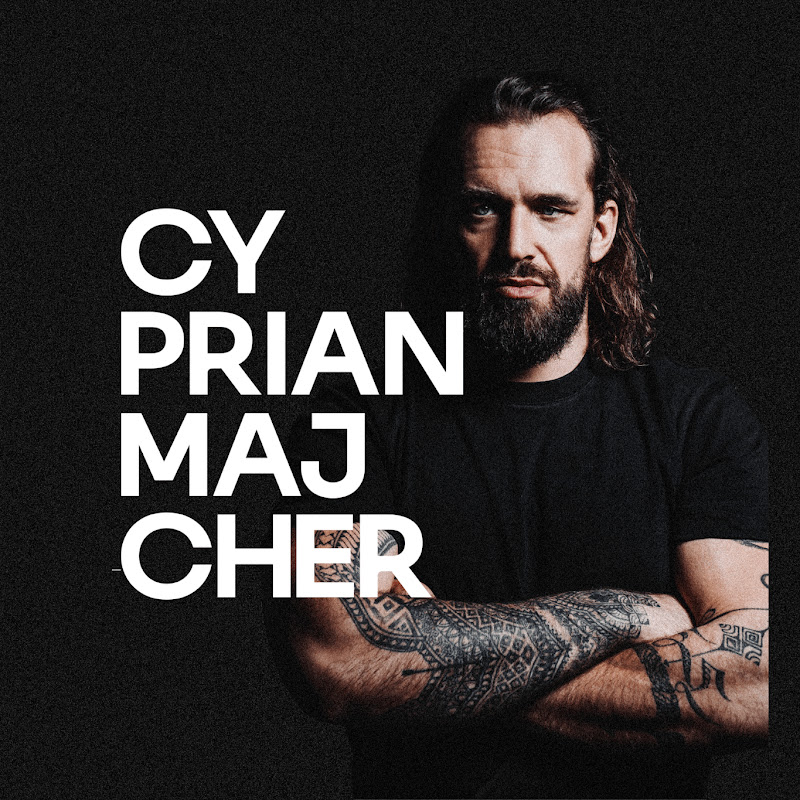
Cyprian Majcher
Watch on YouTube Add to chat My bookmarks← All sources

TL;DR

The four things you'd lose by not watching

4 items

TL;DR

The four things you'd lose by not watching

4 items
1

Piotr Latała, a master of online satire and observation, talks about how introversion and anxiety disorders paradoxically fuel his creativity, allowing him to play dozens of exaggerated characters from Polish reality.

2

He creates his unique format (short videos) as a way to reach millions of people without having to go out to them – it's an ideal solution for an introvert who doesn't find himself in stand-up interaction with an audience.

3

He describes how the biggest breakthrough in his battle with anxiety neurosis was the appearance of a partner in his life, who gave him acceptance and external support, which proved more effective than years of therapy.

4

He talks about his creative process, based almost 100% on improvisation and 'inspiration,' where from single keywords in his phone he creates live, several-minute sketches, which he later edits himself on his phone.

Protocols

Concrete recipes — what, when, how much, and why

1 item

Limiting correspondence with fans

WhatDeliberately not replying to messages from people sharing their mental health problems.
WhenAfter achieving great popularity and noticing that a single reply can lead to a toxic, one-sided relationship.
DoseA complete lack of response; messages go to the 'other' folder and remain unread.
For whomOnline creators, public figures, influencers.
WhyTo protect his own mental health and not create false hope in a person needing professional help, which the speaker cannot provide.
CaveatsIt may be perceived as a lack of empathy, but Latała argues that a lack of response is the 'lesser evil' compared to entering an endless exchange he cannot sustain.

Latała talks about the dark side of popularity. He receives thousands of intimate messages from people, often on the verge of a nervous breakdown. Initially, he tried to reply, but quickly realized that a single message was perceived as opening the door to a long-term therapeutic relationship. The next day he would get 'essays' and 'screeds,' and he is unable to help hundreds of people daily. He understood that such fragmented, superficial help could be worse than none. He now completely cuts himself off from it, claiming it requires enormous responsibility he cannot take on, having his own family and problems.

Personal experience

He says: 'I haven't replied to anyone at all for a very long time now. [...] If we went on Messenger now, I could probably show you thousands upon thousands of messages.'

You'll turn out to be a worse bastard if you reply than if you don't, because you reply once, you give feedback, but then the next day that person will send you a whole essay, a whole screed, and you won't be able to participate in their daily dilemmas.

Also said
“Once, twice, such a person requires a specialist. You won't be able to then, you know...”— Shows an awareness of the limits of his competence.

What's new

Personal practice updates, fresh positions, predictions

2 items

The reel format as an expression of introversion

początek rozmowy

Latała consciously chose to create short videos as a way to perform for an audience without the need for physical interaction with gathered people, which is a challenge for him as an introvert.

Why this matters: Challenges the common image of the extroverted comedian who draws energy from the crowd. Latała proves that the greatest reach can be achieved by creating in solitude.

Background

Before creating his own format, he tried stand-up, where he noticed that after 10 minutes of a good performance, he felt exhausted and irritated by the constant pressure of 'entertaining' the audience like a 'monkey in a zoo.'

Latała spent years trying to fit into the role of an extroverted 'party leader' in social situations, which he described as an unpleasant duty. Now he has completely given it up: when asked how he copes in larger groups, he answers bluntly: 'I don't spend time in larger groups.' Creating his own video format was therefore not only an artistic choice but also a survival strategy – a way to maintain full control over his energy and avoid social exhaustion. This shows that modern tools (social media) can enable people with an introverted nature to achieve mass influence previously reserved for extroverts performing live.

Personal experience

Describes how, during his studies, he felt an internal compulsion to be the 'party leader' who must adapt to the group, which emotionally burned him out. He has now completely cut himself off from this pattern.

That's why there are reels, that's why I invented them. It's a curiosity, so you can still be alone at home, because notice, you entertain millions while sitting alone at home. There's no one here.

Also said
“You ask how I cope with just being in a larger group, well, I don't spend time in larger groups.”— An uncompromising illustration of the complete rejection of social pressure to be an extrovert.
“I somewhat encountered a kind of feeling of irritation, that you know, you're constantly like a monkey in a zoo and you have to entertain...”— Describes the negative emotions associated with the stand-up form, which pushed him to create his own medium.

Illness identity as an obstacle to recovery

druga połowa wywiadu

Latała openly admits that he is paradoxically afraid of full recovery from neurosis, because his disorders and childhood suffering are deeply integrated with his identity and memories.

Why this matters: This is a rare, deep introspection on the psychological resistance to losing the illness that defines a person.

He speaks of a kind of 'Stockholm syndrome' towards his own illness. His difficult childhood, alcoholic father, and years spent in anxiety shaped the person he is now. Full recovery would mean a symbolic cutting off from the past, from 'old Piotrek.' He fears he would become someone completely new, as if after a lobotomy. This perspective is so uncomfortable for him that he questions whether he wants to be 'completely healthy.' This is an in-depth analysis of the mechanism in which a person becomes attached to their suffering as the foundation of their life narrative.

Personal experience

Describes his own fears: 'Sometimes I think, do I like this scenario of being completely healthy.' He likens it to the fear of losing oneself, even though he now already feels an 'abyss' of progress.

Sometimes I think, do I like this scenario of being completely healthy. You know, it's some kind of deep Stockholm syndrome, where illness equals my memories equals childhood.

Also said
“And all the time I'm stuck in the fact that what I once lost, I will never regain. [...] complete recovery will equal becoming a new me. [...] God, it's like you've undergone a lobotomy, damn, that won't be the old Piotrek anymore.”— Deepens the metaphor of identity loss and explains why change is psychologically terrifying.
Disclosed sponsorships4speaker disclosed

Soulflaps (natural mushroom supplements)

Supplement Sponsored · disclosed

Dietary supplements inspired by 'nature's intelligence,' containing organic mushroom ingredients, including adaptogens such as Lion's Mane. Promoted by the podcast.

DisclosureEpisode partner, discount code in the description.

This podcast's partner is Soulflaps, natural supplements inspired by nature's intelligence based on organic mushroom ingredients, where you can also find such superstar adaptogens as Lion's Mane.

Find Soulflaps

SFD (Supplements and functional food)

Product Sponsored · disclosed

SFD company products advertised as sugar-free supplements and functional food.

DisclosureEpisode partner.

The episode's partner is SFD. Sugar-free supplements and functional food.

Find SFD

Slavito (dietary supplements for the family)

Product Sponsored · disclosed

Another episode sponsor, link to the store in the video description.

DisclosurePolish brand of dietary supplements for the whole family, episode partner.

The episode's partner is the Polish brand of dietary supplements for the whole family, Slavito. Link to the store in the video description.

Find Slavito

Rose Microphone

Product Sponsored · disclosed

Audio equipment brand responsible for the recording quality.

DisclosureBrand ensuring sound quality in the podcast.

The sound quality in the podcast is ensured by the Rose brand.

Find Rose

Notable quotes

Lines worth pulling out — contrarian, specific, or perfectly phrased

4 items
To perhaps be good in these reels, you have to be a grump and a grouch in real life.
A concise thesis linking introversion with comedic talent, standing in opposition to the stereotype of the joker.
Psychologists pretend they have a time machine, but they don't. And sometimes the cure itself, as I call it from various states, is simply learning to live with it.
A critical, iconoclastic summary of the limitations of therapy and psychology, which may resonate with many disappointed patients.
I never heard any text from anyone. [...] It was never that I overheard something somewhere [...] I record, and say: 'Oh damn, it's just' and I don't know why it comes to my mind then.
Reveals that his realistic dialogues are not overheard but are a complete creation of the mind, highlighting his acting talent.
I was really born in '93. I am 31 years old. It seems to me I was in the places where everyone else was. Only not everyone paid as much attention to the things that were there as I did.
Accurately summarizes the phenomenon of his channel – it's not about unique experiences, but about extraordinary memory and attention to the 'gray' Polish everyday life.

Sign in to share feedback

Tell us if this brief hit the mark or missed it — feedback feeds back into the next iteration of the prompt.

Topics covered

introwertyzmkomediasatysfakcjastand-upnerwicaterapiapsychologiadzieciństwoalkoholizmrelacjepopularnośćsocial-mediaproces-twórczyimprowizacjaaktorstworoastpoprawność-politycznaobserwacja
Free account

Make this library yours

Reading is free for everyone. A free account adds the personal layer: save protocols, follow experts, and see how the other experts weigh in on this same topic.

Create a free accountSign in

Where the experts disagree — weekly

One email a week: the sharpest new disagreements and protocols from the library. No spam, unsubscribe anytime.

Educational summary of the cited expert source — not medical advice. Open the source recording linked above and consult a qualified physician before acting on any protocol.