
UNFUCG
DashboardSearchChatBookmarksNotificationsActivityPremiumProfile
?
Home
Search
Chat
Saved
Profile
Episode
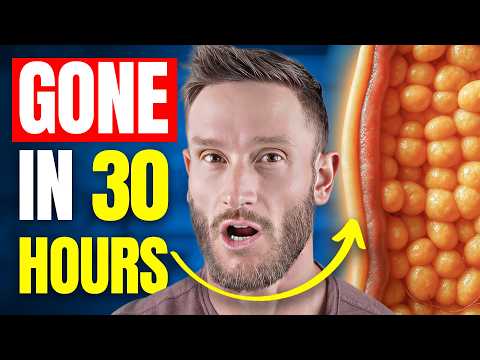
They Were Wrong About Fasting... What 30 Hours Without Food Does
~72 min
Episode Brief·YouTube

They Were Wrong About Fasting... What 30 Hours Without Food Does

Thomas DeLauer
Watch on YouTube Add to chat My bookmarks← All sources

TL;DR

The four things you'd lose by not watching

4 items

TL;DR

The four things you'd lose by not watching

4 items
1

Skipping meals does not slow metabolism or cause muscle loss; a 30-hour fast triggers a cascade of benefits including fat burning, autophagy, gut repair, and improved brain function.

2

The 16-24 hour window is the peak fat-burning sweet spot because the body’s inefficient conversion of fat to ketones floods the system, and gluconeogenesis primarily uses glycerol from fat, not muscle.

3

Ketosis around 24-30 hours shifts brain chemistry from excitatory glutamate to calming GABA and surges BDNF, dramatically increasing mental clarity and neuroplasticity.

4

Lifting weights during a fast signals metabolic relevance to preserve muscle, while the perceived shrinkage is merely intracellular water loss from glycogen depletion—not atrophy.

Protocols

Concrete recipes — what, when, how much, and why

4 items

High-Intensity Exercise Early in Fast

WhatEngage in high-intensity cardio or weight training immediately after your last meal, within the first 12 hours of fasting.
WhenRight after you finish eating, while insulin is still elevated and dietary glucose is available.
DoseNo specific duration given; any sufficient intense bout to deplete glycogen.
For whomAnyone starting a fast who wants to accelerate the substrate switch and minimize early fatigue.
WhyBurns through meal-derived fuel quickly, speeding up the transition to fat burning and reducing the duration of the hungry, difficult phase.
CaveatsExpect to feel hungry; this is normal. May not be suitable if feeling light-headed right away, but DeLauer frames it as safe for most.

In Phase 1 (0-12 hours) the digestive system is still processing the last meal, keeping insulin high and suppressing fat oxidation. DeLauer likens this to needing to 'drain the sink' before cleaning it. By deliberately burning through the available glucose with intense exercise, you trigger the body's energy sensor AMPK earlier, signaling that stored fuels must be mobilized. This drastically shortens the time spent in the uncomfortable substrate-switching limbo and sets up the entire fast for easier adherence and more rapid fat adaptation.

Mechanism

Exercise increases cellular energy demand and AMPK activity, which directly signals a low-energy state. This combines with the natural decline in insulin from ceasing food intake to accelerate the transition from glucose-dominant metabolism to fat and ketone utilization. The result is an earlier onset of gluconeogenesis from glycerol and lipolysis.

if you want to go lift some weights or run some sprints, now would be the time to get you burning through that faster.

Also said
“the goal here is to burn through your fuel as fast as you can so your body starts sending signals to utilize your stored fuel better.”— Clarifies the strategic intent—not just calorie burn, but metabolic signaling.

Light Cardio (Zone 1-2) at 12-16 Hours

WhatPerform very gentle walking or low-zone cardio once you are 12-16 hours into the fast.
WhenDuring the 12-16 hour window, around 14 hours, when hunger is subsiding.
DoseLight walking or zone 1–2 effort; no strict time limit, but likely a casual walk.
For whomThose feeling tired or foggy in Phase 2 who want to accelerate fat adaptation.
WhyEncourages fat oxidation and eases the transition into fat-burning without over-stressing the body.
CaveatsHigh-intensity work here is less effective than light activity; save sprints for Phase 1.

By 12-16 hours, insulin is low and AMPK is fully activated, signaling the body to shift to stored fuels. DeLauer points out that hunger actually drops around the 14-hour mark as the brain receives more energy—an evolutionary advantage. Light movement like walking takes advantage of this steady state by promoting fatty acid oxidation without creating a big lactate demand that might require glucose. It feels sustainable and helps bridge into the more intensive repair and autophagy phase ahead.

Mechanism

Zone 1-2 activity relies almost exclusively on fat oxidation, teaching mitochondria to oxidize fatty acids more efficiently. The low intensity avoids spiking cortisol or glycogen demand, keeping the system in a fat-predominant mode. This reinforces the AMPK-driven shift and helps the body adjust to using ketones later.

light cardio is your friend, zone one, low zone two. Why? Because it encourages fat oxidation and it helps accelerate this process.

Also said
“If you try to do high intensity work right now, it would still work, but it wouldn't be as effective as say just going for a gentle walk.”— Provides clear guidance against more strenuous exercise in this window.

Urolithin A for Mitophagy Support

WhatTake a urolithin A supplement (specifically Timeline Longevity’s Mitopure) to enhance mitophagy, the selective clearance of damaged mitochondria.
WhenDaily, but especially recommended alongside fasting or longevity-focused regimens; no specific fasted timing given.
DoseStandard dose as per product instructions; he does not specify.
For whomIndividuals looking to maximize mitochondrial health, longevity, and fasting benefits.
WhyUrolithin A boosts mitophagy, amplifying the mitochondrial cleanup that fasting already initiates, leading to compounding metabolic improvements.
CaveatsDeLauer prefers doing things without supplements if possible, but sees this as a research-backed exception; consult individual tolerance.

DeLauer explains that while fasting triggers mitophagy, urolithin A has emerged in research as a potent stimulator of this pathway. Extracted from pomegranates in a concentrated and patented form by Timeline Longevity, it works on the same cellular cleanup system. He draws the analogy of compound interest: eliminating poorly functioning mitochondria leaves room for healthy ones with better DNA to replicate, creating a cascading benefit. He provides a discount link in the description, signaling an affiliate relationship, while still maintaining that fasting and exercise are foundational.

Mechanism

Urolithin A activates the PINK1/Parkin mitophagy pathway and mitochondrial unfolded protein response, clearing dysfunctional mitochondria. When combined with the AMPK-driven autophagy from fasting, it creates a dual signal—nutrient deprivation plus a direct mitochondrial quality-control compound—leading to more robust cellular rejuvenation and enhanced metabolic efficiency over time.

Mitophagy is something that responds really well with something called urolithin A.

Also said
“they are literally creating a compound that creates more mitophagy.”— Reinforces the specific action of the supplement.

Metabolic Micro Fast for Maintenance

WhatA shorter fasting protocol done 2-3 times per week, lasting only a few hours, to maintain metabolic gains between longer fasts.
WhenBetween extended fasts as maintenance.
DoseOnly described as 'just a few hours'—details are in a separate video.
For whomThose who have completed longer fasts and want a sustainable, low-burden upkeep protocol.
WhySustains metabolic flexibility and fat adaptation achieved in longer fasts without requiring full-day fasts.
CaveatsRefer to the separate video for specifics; not elaborated here.

I have another video that talks about a type of fasting that you can do two to three times per week that only takes a few hours. It's called a metabolic micro fast

What's new

Personal practice updates, fresh positions, predictions

1 item

high-intensity-exercise-early-in-fast

First phase, 'emptying the sink' segment

Performing high-intensity cardio or weightlifting immediately after the last meal in the first 12 hours accelerates glycogen depletion and triggers faster substrate switching into fat burning.

Why this matters: Contradicts the common intuition to rest during the initial hunger phase; instead, pushing intensity can quicken the transition and reduce later discomfort.

Background

Most people assume the early fast is for taking it easy, but they remain in a glucose-burning mode longer with insulin elevated and hunger persistent.

DeLauer describes the first phase as 'emptying the sink.' With insulin still elevated from the last meal, fat loss is hindered. By immediately engaging in high-intensity exercise, you burn through dietary carbohydrates quickly, causing the body to sense fuel scarcity sooner. This triggers AMPK and shifts into stored-fuel usage, effectively compressing the most difficult part of the fast and making the subsequent phases more comfortable. He frames this as the 'gateway to fat loss,' where many people quit but strategic activity can break through the initial barrier.

So, if you want to go lift some weights or run some sprints, now would be the time to get you burning through that faster.

Also said
“the goal here is to burn through your fuel as fast as you can so your body starts sending signals to utilize your stored fuel better.”— Reinforces the strategic intention behind exercising in the fed-to-fasting transition.

Notable quotes

Lines worth pulling out — contrarian, specific, or perfectly phrased

6 items
They were wrong about skipping meals slowing down metabolism and fat loss. They were wrong about skipping meals impacting insulin resistance negatively. They were wrong about skipping meals shrinking muscle tissue.
Sets the entire contrarian thesis of the video, directly refuting widespread fasting fears in a triple repetition.
No, it turns part of the fat cell, the triglyceride, the glycerol into an actual sugar molecule. So, that's why all of a sudden your blood sugar levels are stable.
Provides a clear, concrete mechanism for stable blood sugar during fasting that contradicts the myth of dangerous hypoglycemia.
At my home, we call that feed the stallion, starve the pony. Let's get the strong ones stronger, let's let the weak ones, let's feed them to the stallions.
A vivid, memorable metaphor for autophagy's selective consolidation, making a complex process intuitively graspable.
Mitophagy is where we get rid of the cruddy mitochondria and we implant better mitochondria and that is like compound interest.
Compares mitochondrial renewal to financial compounding, offering a powerful analogy for long-term health investment.
Slow is smooth, smooth is fast. A calm brain is a fast brain. An anxious brain is definitely not a productive brain.
Captures the cognitive shift during ketosis into a highly productive, GABA-driven mental state.
Remember that for every 1 g of carbohydrate in your muscle, you hold about 3.7 g of water. So when you lose that glycogen, your muscles look like they're shrinking, but you're just dropping water.
Uses a precise physiological ratio to debunk the alarming visual loss of muscle size during fasting.

Sign in to share feedback

Tell us if this brief hit the mark or missed it — feedback feeds back into the next iteration of the prompt.

Topics covered

fasting-mythsfasting-phasesfat-burningautophagymitophagyinsulin-sensitivitygluconeogenesisketosisbrain-healthgut-repairelectrolytesexercise-fastingurolithin-amuscle-sparingwater-weightmetabolic-dysfunction
Free account

Make this library yours

Reading is free for everyone. A free account adds the personal layer: save protocols, follow experts, and see how the other experts weigh in on this same topic.

Create a free accountSign in

Where the experts disagree — weekly

One email a week: the sharpest new disagreements and protocols from the library. No spam, unsubscribe anytime.

Educational summary of the cited expert source — not medical advice. Open the source recording linked above and consult a qualified physician before acting on any protocol.