RFK Jr., newly appointed HHS Secretary, revealed that by the mid‑1990s tobacco giants RJ Reynolds and Philip Morris had become the two largest food companies, repurposing their addiction‑science teams to engineer ‘foodlike substances’ with softeners that bypass chewing‑based satiety and artificial flavors that provide no nutrients, keeping people hungry and overfed.
2
He laid out concrete HHS reforms: redirect 20% of the $46 B NIH budget to replication studies, stop publishing in Lancet/NEJM/JAMA and launch in‑house journals, purge conflicts of interest that have turned FDA/CDC into ‘industry puppets’, and end the agency’s war on alternative medicine including stem cells, peptides and vitamins.
3
Using the opioid crisis as a case study, he described how 7 of the last 8 FDA commissioners went directly to industry and how a single captured FDA official removed addiction warnings from OxyContin, a decision he links to over a million deaths and a current annual overdose toll exceeding 100,000.
4
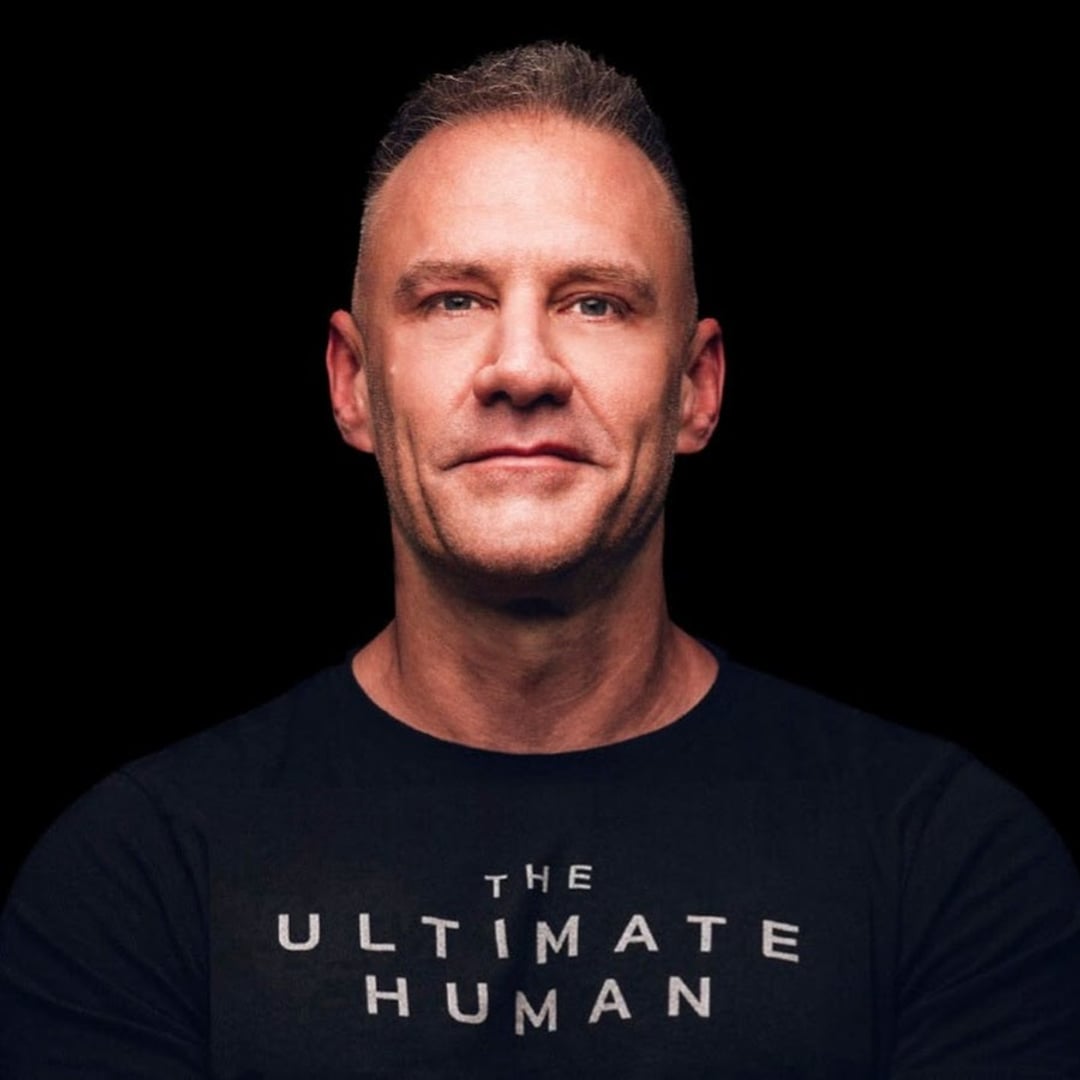
Host Gary Brecka promoted several products during the episode: Masa tortilla chips made with grass‑fed tallow, the iON weighted vest (code ULTIMATE), Rorow liposomal NAD+ (code ULTIMATE15), and a free 3‑day Ultimate Detox Challenge.
Protocols
Concrete recipes — what, when, how much, and why
3 items
Chew Whole Foods Thoroughly to Activate the Brain’s Satiety Counter
WhatAt every meal, choose foods that require extensive chewing (e.g., raw vegetables, whole grains, fibrous proteins) and consciously chew each bite until it is completely broken down before swallowing. Avoid ultra‑processed foods that have been engineered to be extremely soft.
WhenEvery main meal and snack.
DoseNo fixed number of chews; continue chewing until the food is liquid or paste‑like. The key is to maximize chewing cycles relative to a typical processed food meal.
For whomAnyone struggling with overeating, obesity, or constant hunger, and all individuals seeking better satiety regulation.
WhyThe brain keeps track of the number of times you chew to estimate how full your stomach should be. Food manufacturers deliberately add softeners so you chew less, tricking the brain into thinking you haven’t eaten enough, which leads to overconsumption.
CaveatsNone mentioned; the approach aligns with traditional dietary patterns.
Kennedy drew on his knowledge from tobacco litigation to describe the deliberate engineering of food softeners. He said that after tobacco companies bought food giants, their scientists discovered that the brain counts chewing cycles and they set out to defeat that mechanism. Most people don’t realize that the texture of modern processed food is not an accident; it’s designed to eliminate chewing and thereby dismantle a subconscious satiety regulator. The implication is that even if you eat a calorically dense meal of soft foods, your brain may still think you’re hungry because the chewing count didn’t reach the expected threshold. Simply reintroducing foods that require serious chewing—like whole apples instead of applesauce, or nuts instead of nut butters—can help restore this primal feedback loop.
Mechanism
RFK Jr. explained that there is a neural mechanism—some part of the brain—that counts chewing cycles as a proxy for food volume. If you eat a soft, processed food (like a Twinkie that can be ‘inhaled’ with almost no chewing), the low chew count sends a signal that you haven't eaten much, so satiety is delayed or never achieved. This is separate from the chemical satiety signals like GLP‑1; it is a mechanical feed‑forward signal. By increasing chewing time, you give your brain the mechanical input it needs to register fullness, helping you stop eating earlier and consume fewer calories naturally.
They started putting food softeners into the food… to make it so that you had to chew less. You know if you eat a Twinkie you don't even have to chew it. You can inhale it.
Also said
“Your brain actually gauges the fullness of your belly by by counting the number of times you chewed. So there's a there's some part of your brain that is saying okay if he chewed a certain amount he must be full.”— Clarifies the biological rationale directly from the speaker.
Replace Artificially Flavored, Nutrient‑Anemic Foods with Real Whole Foods
WhatEliminate foods that use synthetic flavorings to mimic the taste of real ingredients without containing the corresponding nutrients (e.g., ‘strawberry‑flavored’ products with no strawberries). Replace them with actual nutrient‑dense whole foods.
WhenAll grocery shopping and meal planning, with special attention to processed snacks, beverages, and packaged meals.
DoseNo specific dose; the aim is to shift the majority of one’s diet away from artificially flavored products.
For whomEveryone, particularly those with unexplained cravings, obesity, or metabolic syndrome.
WhyWhen you eat something with an artificial strawberry flavor, your brain and body anticipate the nutrients of a real strawberry. Because none arrive, the gut does not release GLP‑1 and you never feel satiated, leading to a cycle of calorie overconsumption and simultaneous cellular starvation.
CaveatsGradual transition may be easier for those habituated to intense artificial flavors; the speaker did not address taste adaptation.
Kennedy connected this directly to the tobacco‑industry playbook. After acquiring food companies, tobacco scientists set out to hijack the brain’s reward and satiety pathways, just as they had with nicotine. They developed chemical compounds that taste enticing but provide zero nutrition, meaning the consumer keeps eating while the body keeps starving. He emphasized that the food being sold is no longer food but a ‘foodlike substance’—nutrient‑anemic and deliberately designed to never produce satiation. This explains the seeming contradiction of soaring obesity rates alongside widespread nutrient deficiencies. He positioned the solution not as willpower but as a return to foods that actually contain the nutrients the brain expects, thereby restoring the natural stop‑eating signals.
Mechanism
The ingestion of real food triggers the release of glucagon‑like peptide‑1 (GLP‑1) and other satiety hormones. These signals require the presence of actual nutrients—not just flavor molecules—to be activated. Artificial flavors create a sensory‑cognitive mismatch: the taste buds register ‘strawberry’ but the gut receives zero corresponding micronutrients or phytonutrients, so the hormonal cascade that normally says ‘I’m full’ is absent. Over time, this contributes to the paradoxical state of being overweight yet malnourished, a uniquely modern phenomenon that Kennedy noted is virtually unique to the United States.
There's a strawberry flavor but there's no nutrition in it, there's no strawberry and your body thinks oh I'm eating a strawberry. … But you're eating it and you're not getting any of the nutrient and you're not releasing any GLP1. You're not getting any satiation.
Also said
“The food that we're eating is not food anymore. It's a foodlike substance that was manufactured or created in laboratories. It is not nutrient‑dense. It's nutrient anemic.”— Foundational statement that frames the entire protocol.
Maintain Adequate Vitamin D Status for Immune Resilience
WhatObtain sufficient sun exposure or supplement with vitamin D3 to keep blood levels in an optimal range, especially to reduce risk of severe outcomes from respiratory infections like COVID‑19.
WhenDaily sun exposure when possible, or year‑round supplementation if sun is limited.
DoseNo specific dosage given; references to population‑level correlation.
For whomGeneral population, especially those in northern latitudes or with limited outdoor time.
WhyRFK Jr. noted a direct inverse correlation between vitamin D saturation and COVID‑19 mortality, and pointed out that populations with high sun exposure had dramatically lower death rates.
CaveatsThe speaker did not provide dosing guidance or discuss toxicity risks.
There was a direct inverse correlation between vitamin D saturation and co mortality.
Also said
“Those are younger populations which were less affected by CO deaths. they're out in the sun more and they've got a lot of other you know advantages in that situation.”— Connects sun exposure and vitamin D to the stark mortality differential he cited between the US and countries like Haiti/Nigeria.
What's new
Personal practice updates, fresh positions, predictions
5 items
nih-replication-and-journal-reform
RFK Jr. announces that, as HHS Secretary, he will allocate 20% of the NIH’s $46 B budget to replication studies, stop NIH scientists from publishing in Lancet, NEJM, and JAMA, and create new in‑house, conflict‑free journals.
Why this matters: Direct reversal of decades‑long practice where industry‑funded studies with no replication are published in top journals; the head of NEJM reportedly admitted the journal is a vessel for pharma propaganda.
Background
Currently, NIH grants fund 56,000 researchers with no mandatory replication. Datasets are often proprietary, making it impossible for others to verify results. Journals charge publication fees and sell reprints to drug companies, creating a cycle where pharma‑friendly studies dominate.
RFK Jr. argued that the lack of replication creates a massive incentive to cheat, because scientists know no one will ever attempt to reproduce their work. He pointed out that even public‑sector scientists sometimes write the conclusion before the study, mirroring the behavior of ‘biostitutes’ in industry‑funded research. By devoting 20% of NIH’s budget to reproducing every study, he intends to make cheating much harder and restore scientific integrity. He also plans to stop the revolving door of publication in commercial journals that have explicitly said they are no longer science journals. Instead, NIH will launch its own journals within each institute. He believes these will become the new gold standard because NIH funding itself anoints a scientist as legitimate, and the journals will be free of pharma’s financial influence. The announcement is a sharp break from the current system and signals a fundamental restructuring of how US biomedical science is conducted and disseminated.
So what we're going to do is we're going to devote probably 20% of NIH's budget to replication. Every study has to be replicated. We're going to publish the peer review for the first time. We're probably going to stop publishing in the Lancet, New England Journal of Medicine, JAMA, and those other journals because they're all corrupt.
Also said
“And even the heads of those journals like Marcia Angell who for 20 years was the head of the New England Journal of Medicine says that this that we no longer are a science journal. We are a vessel for pharmaceutical propaganda.”— Confirms the depth of journal corruption from an insider.
ending-the-war-on-alternative-medicine
RFK Jr. promises to end the FDA’s ‘war on alternative medicine’, including restrictions on stem cells, chelating drugs, peptides, and vitamins, moving to a model where the FDA does the science and informs the public but does not dictate what physicians can prescribe.
Why this matters: Marks a dramatic shift from the current regulatory posture where many novel or natural therapies are tightly restricted while patentable pharmaceuticals are freely promoted.
Background
For years, the FDA has blocked or discouraged the use of stem cells, chelation, peptides, and high‑dose vitamins, often requiring patients to travel abroad for treatments. The agency has also targeted compounding pharmacies and alternative practitioners.
Kennedy’s position is that the FDA should return to being a science‑based information provider, not a gatekeeper that limits American patients to a narrow set of industry‑approved drugs. He explicitly stated that if someone wants to take an experimental drug or pursue stem cell therapy, they ‘ought to be able to do that’ without having to leave the country. He acknowledged the risk of charlatans and bad outcomes but said those risks are inherent, and the current pharma‑only approach has already made Americans the sickest population in the developed world. He shared his own experience of having to fly to Antigua for stem cell treatment for his throat, which he said helped him enormously, and questioned why that was necessary. This speech signals a forthcoming regulatory philosophy that prioritizes personal medical freedom alongside transparent science, potentially opening the door for a wide range of currently fringe interventions.
Personal experience
RFK Jr. had to travel to Antigua for stem cell therapy for his throat, which he says helped him enormously.
And we're going to end the war at FDA against alternative medicine… the war on stem cells, the war on chelating drugs, the war on peptides, the war on anything that is not going to make… The war on vitamins.
Also said
“You shouldn't have to go to Antigua to get stem cells which I had to do for my throat… and they helped me enormously. Why did I have to go to Antigua for that?”— Personal anecdote illustrating the real‑world consequence of FDA restrictions.
tobacco-companies-engineered-the-food-supply
RFK Jr. detailed how after facing regulatory threats in the late 1980s, tobacco giants Philip Morris and RJ Reynolds acquired food companies and deployed their addiction scientists to chemically engineer products that trick the brain into ignoring satiety.
Why this matters: Connects the dots between the tobacco industry’s manipulation tactics and the current obesity epidemic, revealing a deliberate corporate strategy to create addictive, non‑nutritive foodlike substances.
Background
Public understanding often treats processed food as merely convenient and tasty, not the result of intentional neuroengineering. RFK Jr.’s insider perspective comes from his work on tobacco litigation, which gave him direct exposure to the industry’s tactics.
He explained that tobacco companies foresaw the decline of cigarette sales and used their enormous cash reserves to diversify into food, purchasing thousands of scientists whose expertise was in making substances more addictive. They systematically developed chemicals that mimic appealing flavors (e.g., strawberry) without any actual nutrients, so the body never releases GLP‑1 and never registers satiety. They also introduced food softeners to reduce the need to chew, knowing that the brain tracks chewing cycles as a proxy for stomach fullness. The result is a food environment where people overconsume calories while their bodies still cry out for nutrients, leading to the paradox of obesity with malnutrition. This narrative challenges the mainstream framing that blames individual willpower and instead attributes the crisis to deliberate corporate engineering.
By the mid 90s, the two biggest food companies in the world were R.J. Reynolds and Philip Morris. That is astounding. And they took companies, thousands of scientists that were involved that were whose job it was to figure out ways to create to make tobacco more addictive and more attractive. And they switched to doing that for food.
Also said
“They would mimic the tastes of things that are very appetizing and they would do it with chemical compounds intentionally […] so there's a strawberry flavor but there's no nutrition in it, there's no strawberry and your body thinks oh I'm eating a strawberry. I'm craving a strawberry. But you're eating it and you're not getting any of the nutrient and you're not releasing any GLP1.”— Explains the chemical mimicry of flavor without nutrition.
agency-capture-caused-the-opioid-epidemic
RFK Jr. cited the opioid crisis as the most familiar example of agency capture, describing how Purdue Pharma got an FDA official to remove addiction warnings from OxyContin, leading directly to over a million US deaths.
Why this matters: Lays the blame for a million deaths squarely on a regulatory failure, not just corporate malice, reframing the epidemic as a case study in institutional corruption.
Background
The Sackler family and Purdue Pharma have been widely criticized, but the role of a specific FDA official altering a drug label to remove addiction warnings—and the subsequent normalization of that behavior across the agency—is less commonly emphasized.
RFK Jr. said that the Sacklers ‘captured an FDA official and persuaded him to eliminate the warnings about the addiction’ and to state on the package insert that oxycodone was not addictive. He argued that you can draw a straight line from that action to the over‑100,000 young Americans dying each year from drug overdoses, a number he contrasts with the 56,000 lost in the entire Vietnam War. He noted that lower‑level division chiefs see this behavior modeled from the top and emulate it, expecting future employment in industry once their government pensions vest. This specific example served to illustrate the larger structural problem he intends to dismantle: the revolving door between FDA/CDC and the companies they regulate, which he says has transformed health agencies into ‘sock puppets’ of industry.
The Sackler family that own Purdue Pharmaceuticals captured a FDA official and persuaded him to eliminate the warnings about the addiction and to say that oxycodone on the manufactured insert was not addictive. And you could argue that as a direct result of that, a million young Americans die.
Also said
“We're losing over a 100,000 young people every year from drug overdoses. And to put that in perspective, during the 20-year Vietnam War, we lost 56,000 American kids. We're losing double that number every year from opioid addiction and overdoses.”— Quantifies the human toll in a way that makes the scale visceral.
pharma-funded-media-controls-health-narrative
RFK Jr. revealed that 75% of advertising revenue for mainstream evening news comes from pharmaceutical companies, creating a structural disincentive to critically report on drug safety or vaccine injuries.
Why this matters: Offers a concrete statistic (75%) attributed to Roger Ailes that explains why major news outlets uniformly avoid skepticism of pharma, despite having done so decades ago.
Background
Viewers often notice that pharma ads dominate TV news but may not realize the extent, nor that the same ad dollars effectively pay the salaries of top anchors like Anderson Cooper and Lester Holt, as RFK Jr. pointed out.
Kennedy argued that pharma advertising spending on evening news is a form of control—much like defense contractors advertising on Good Morning America even though no viewer is buying a Tomahawk missile. The companies want to shape content, and anchors know their paychecks ultimately come from those ad dollars. He noted that 20 years ago, programs like 60 Minutes and even CNN’s Sanjay Gupta would raise questions about vaccine safety or drug side effects, but today that skepticism has evaporated. This media capture, he says, ensures a one‑sided public conversation focused on fear of infectious disease and compliance with pharmaceutical mandates, while systematically ignoring the harms of the products being marketed. He indicated that the administration is looking for ways to address direct‑to‑consumer pharmaceutical advertising, though a unfavourable Supreme Court decision complicates outright bans.
Some Roger Ailes told me one time that 75% of his advertising revenues on the evening news divisions were pharmaceutical ads.
Also said
“If you look at Anderson Cooper or Lester Holt or Jake Tapper, their salaries are being paid by the network, but their salaries are actually coming from pharmaceutical companies and they know that, and they know that they can't […] they got to toe the line.”— Makes the financial influence personal and concrete.
Disclosed sponsorships4speaker disclosed
Masa Chips (Grass‑Fed Beef Tallow Tortilla Chips)
Product Sponsored · disclosed
Brecka introduced Masa chips as a healthier snack alternative, emphasizing their use of grass‑fed beef tallow, nixtamalization, and avoidance of seed oils.
DisclosureHost Gary Brecka promoted these chips during a sponsored segment; specific financial relationship undisclosed but typical for host‑read ads.
The ad highlighted that Masa chips are cooked in grass‑fed beef tallow, rich in vitamins A, D, E, and K2, supporting skin, immune, and bone health. The corn undergoes nixtamalization, an ancient process that improves digestibility and boosts nutrient availability. They are low in PUFAs and use only red sea salt for minerals. Brecka positioned these as a ‘real food’ snack that breaks from the industry norm of inflammatory seed oils.
vs alternatives
Unlike most tortilla chips fried in soybean or canola oil, Masa chips use tallow and nixtamalized corn, resulting in a snack with a healthier fat profile and better mineral absorption, according to the host.
Masa chips are crafted with grass‑fed beef tallow, one of the healthiest fats on the planet. These chips are packed with essential vitamins like vitamin A, D, E, and vitamin K2.
Also said
“Masa's corn goes through an ancient process called nyx stimilization which makes it way easier to digest and it amps up its nutrient profile. Plus, these chips are low in pufas, so you won't find any of the inflammatory seed oils that you find in most snacks.”— Explains the specific processing advantage and seed‑oil avoidance.
Brecka described using the iON weighted vest to enhance workouts, claiming improved core activation, blood flow, and calorie burn.
DisclosureHost offered a 10% discount code (ULTIMATE), indicating an affiliate or sponsorship arrangement.
The vest is marketed as fitting like a ‘second skin’ rather than a bulky weight vest. Brecka claimed it activates the core, improves blood flow, assists recovery, and burns more calories during both strength training and walking. He highlighted the even weight distribution as preventing shoulder strain and alignment issues.
vs alternatives
Compared to average weighted vests that pull on the shoulders and throw off alignment, the iON vest distributes weight more ergonomically.
Personal experience
Gary Brecka stated, 'I've been using the ion weighted vest during my workouts, and it's been a gamechanger.'
It isn't your average weighted vest. It's designed to fit like a second skin, activating your core, improving blood flow, and even helping you with recovery while you train.
Also said
“What I love most is that the weight is perfectly distributed. It doesn't pull on your shoulders or throw off your alignment.”— Detail on the comfort/usability advantage over competitors.
Brecka explained that NAD+ is critical for energy, focus, and cellular repair but declines after age 30. He positioned this product as the first effective oral NAD+.
DisclosureHost promoted with code ULTIMATE15 for 15% off; likely affiliate partnership.
Brecka described previously administering NAD+ via IV in his clinics and now uses Rorow’s liposomal oral formula. The liposomal delivery technology purportedly gets NAD+ directly into the bloodstream, avoiding first‑pass metabolism. He takes one teaspoon daily and reports clean energy, sharper focus, and better recovery.
vs alternatives
Vs. IV NAD: more convenient, at‑home oral delivery, no needles, while still achieving bloodstream delivery of NAD+ according to the host.
Personal experience
Gary Brecka stated: 'I used to administer NAD via IVs in my clinics, but now I take Rorow Nutrition's liposomal NAD, the first oral formula that actually works. … I take one teaspoon daily and the results are real.'
I take one teaspoon daily and the results are real. Clean energy, sharper focus, and better recovery.
Also said
“Their advanced delivery tech gets NAD straight into your bloodstream.”— Key mechanism claim for why this oral formula works when others don’t.
Brecka announced a free 3‑day live detox event featuring expert speakers on gut health, mold, metals, parasites, and whole‑body detoxification.
DisclosureHost is the organizer of the event; the free challenge serves as a lead generation tool.
The challenge runs June 23–25 and includes Dr. Willby (gut/immune health), Dr. Jessica Petros (mold, metals, parasites), and Dr. Josh Axe (full body detox and resilience). Participants get at‑home lab testing options, detox protocols, supplement guides, and actionable steps. Brecka emphasized it is not a crash diet but a ‘real lasting transformation’.
vs alternatives
Unlike paid detox programs or clinic‑based cleanses, this is a free online event with multiple experts, giving accessible entry to detox education.
Head over to detox.theulthum.com. Your body was built to heal, so let's help it do what it was designed to do.
Also said
“You'll get real tools, at‑home lab testing options, detox protocols, even supplement guides, and actionable steps to help you reset your biology the right way.”— Lists concrete deliverables that distinguish it from a simple webinar.
Lines worth pulling out — contrarian, specific, or perfectly phrased
5 items
We spend more on healthcare in this country than any other country in the world per capita. Two to three times what most European countries spend. And yet we have the worst health of any country in the world. We have the highest chronic disease burden on earth.
Encapsulates the central paradox driving the entire Make America Healthy Again agenda.
The food that we're eating is not food anymore. It's a foodlike substance that was manufactured or created in laboratories. It is not nutrient‑dense. It's nutrient anemic.
Pithy, memorable reframe of ultra‑processed food that is likely to be widely quoted.
By the mid 90s, the two biggest food companies in the world were R.J. Reynolds and Philip Morris. … And they switched to doing that for food. And they started developing all of these chemicals that hijack your brain and trick your body.
A little‑known historical fact that directly implicates the tobacco industry in the obesity crisis.
We had 16% of the COVID deaths and we only have 4.2% of the world's population. … Haiti … had a COVID rate of 14 deaths per million population. We had a death rate of 3,000 per million population.
Stark numerical comparison that challenges the narrative of successful US pandemic management.
The third largest cause of death in this country after heart attacks and cancer are pharmaceutical drugs.
Provocative claim citing Peter Gøtzsche that frames prescription drugs as a leading killer, supporting the argument for medical freedom.
Sign in to share feedback
Tell us if this brief hit the mark or missed it — feedback feeds back into the next iteration of the prompt.
Reading is free for everyone. A free account adds the personal layer: save protocols, follow experts, and see how the other experts weigh in on this same topic.
Educational summary of the cited expert source — not medical advice. Open the source recording linked above and consult a qualified physician before acting on any protocol.